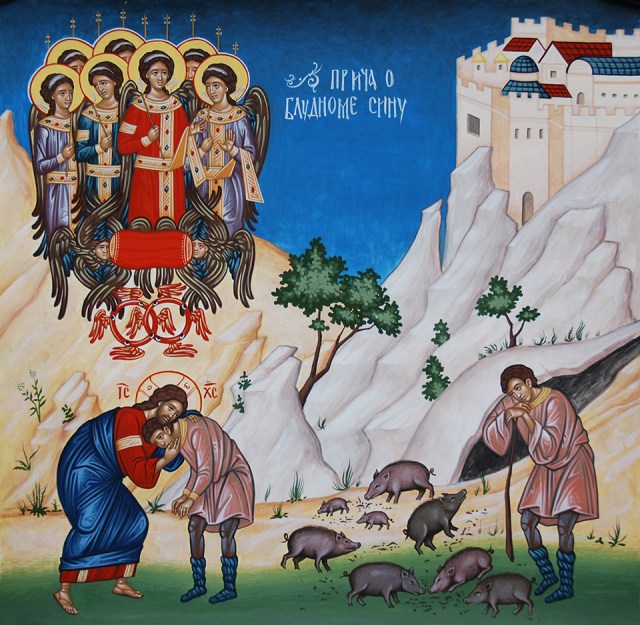
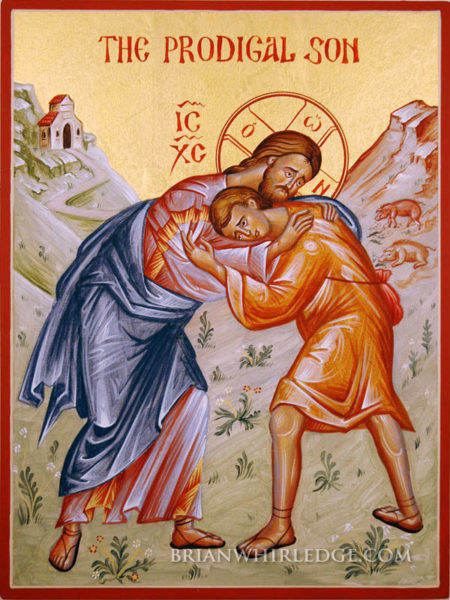
‘your brother was dead and has come to life again; he was lost and has been found.’”
OPENING PRAYER
Prayer of Reconciliation
God of compassion, You sent Jesus to proclaim a time of mercy reaching out to those who had no voice, releasing those trapped by their own shame, and welcoming those scorned by society.
Make us ambassadors of reconciliation. Open our ears that we may listen with respect and understanding. Touch our lips that we may speak your words of peace and forgiveness. Warm our hearts that we may bring wholeness to the broken-hearted and dissolve the barriers of division.
Guide the work of your Church and renew us with the Spirit of your love. Help us and all people to shape a world where all will have a place, where the flames of hatred are quenched, and where all can grow together as one.
Forgive, restore and strengthen us through our Lord Jesus Christ. Amen.
http://www.paulist.org/reconciliation/prayer-reconciliation
COLLECT
O God, who through your Word
reconcile the human race to yourself in a wonderful way,
grant, we pray,
that with prompt devotion and eager faith
the Christian people may hasten
toward the solemn celebrations to come.
Through our Lord Jesus Christ, your Son,
who lives and reigns with you in the unity
of the Holy Spirit,
one God, for ever and ever.
READING I
Jos 5:9a, 10-12
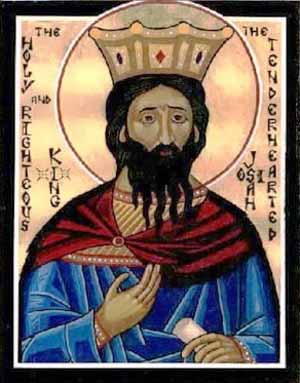
The LORD said to Joshua,
“Today I have removed the reproach of Egypt from you.”
While the Israelites were encamped at Gilgal on the plains of Jericho,
they celebrated the Passover
on the evening of the fourteenth of the month.
On the day after the Passover,
they ate of the produce of the land
in the form of unleavened cakes and parched grain.
On that same day after the Passover,
on which they ate of the produce of the land, the manna ceased.
No longer was there manna for the Israelites,
who that year ate of the yield of the land of Canaan.
APPLICATION
The Pharao of Egypt refused to listen to the pleas of Moses to let the Israelites go. The first nine plagues left him still stubborn. God therefore sent the final plague. The first-born male of man and beast was to be struck dead on the fourteenth night of the first month. On that night the Israelites were to sacrifice an unspotted lamb, smearing their door posts with its blood, so that the avenging angel would pass over their homes and strike death in the homes of the Egyptians. The whole lamb was to be eaten, without breaking any of its bones. It was to be eaten by the family, or by two or more families if the members of one family were not numerous enough to eat it all. They were to eat the lamb with bitter herbs and unleavened bread (a reminder of their slavery) whilst standing, ready to get on their way.
This final plague of death frightened the Pharao and the Jews were given their liberty. Our interest as Christians in this is more than historical. It happened for us. The Israelites were set free so that from them would come the One who was to set all mankind free. The Paschal Lamb and the liberation from Egypt were a foreshadowing of our liberation from sin and our change from slavery to this world into the freedom of the sons of God.
Because Christ was our Pascal Lamb –“Christ our Passover Lamb has been sacrificed,” St. Paul says (1 Cor. 5: 7) – he chose to die for us in the Jewish feast of Passover, and to be raised again on the third day to prove our true liberation. Thus the religion of the Israelites and all their festivals were brought to fruition, and fulfilled for all mankind in our Christian Passover, in Christ’s death and resurrection.
This is why we are reminded today, the fourth Sunday of Lent, of the paschal feast we shall celebrate with joy and gratitude at the end of this holy season of preparation. God’s love for us and his interest in our true welfare dates back to eternity. Before he created all things his plan was to give man, his highest earthly creature, a share in his own divinity. With the call of Abraham, his interest in us was his motive. The liberation from Egypt was a prelude to his plan of redemption for us. The first Good Friday and Easter morning were the culmination of this divine love for mankind. It went to such lengths–the sacrifice of Christ the Son of God – so that we could share in the eternal happiness of heaven.
Cold is the human heart that fails to react to such proofs of true, unselfish love. Weak indeed is the faith of the Christian who can look on the scene enacted on Calvary while throwing his own mean little cross on the ground. Foolish beyond belief is the man who would let the passing things of this world so engage him that he has no time to earn the everlasting life that God’s infinite love has planned for him from all eternity.
RESPONSORIAL PSALM
Ps 34:2-3, 4-5, 6-7
Taste and see the goodness of the Lord.
I will bless the LORD at all times;
his praise shall be ever in my mouth.
Let my soul glory in the LORD;
the lowly will hear me and be glad.
Taste and see the goodness of the Lord.
Glorify the LORD with me,
let us together extol his name.
I sought the LORD, and he answered me
and delivered me from all my fears.
Taste and see the goodness of the Lord.
Look to him that you may be radiant with joy,
and your faces may not blush with shame.
When the poor one called out, the LORD heard,
and from all his distress he saved him.
Taste and see the goodness of the Lord.
READING II
2 Cor 5:17-21
Brothers and sisters:
Whoever is in Christ is a new creation:
the old things have passed away;
behold, new things have come.
And all this is from God,
who has reconciled us to himself through Christ
and given us the ministry of reconciliation,
namely, God was reconciling the world to himself in Christ,
not counting their trespasses against them
and entrusting to us the message of reconciliation.
So we are ambassadors for Christ,
as if God were appealing through us.
We implore you on behalf of Christ,
be reconciled to God.
For our sake he made him to be sin who did not know sin,
so that we might become the righteousness of God in him.
CATECHISM OF THE CATHOLIC CHURCH (CCC)
CCC 433 The name of the Savior God was invoked only once in the year by the high priest in atonement for the sins of Israel, after he had sprinkled the mercy seat in the Holy of Holies with the sacrificial blood. The mercy seat was the place of God’s presence.1 When St. Paul speaks of Jesus whom “God put forward as an expiation by his blood”, he means that in Christ’s humanity “God was in Christ reconciling the world to himself.”2
CCC 602 Consequently, St. Peter can formulate the apostolic faith in the divine plan of salvation in this way: “You were ransomed from the futile ways inherited from your fathers. .. with the precious blood of Christ, like that of a lamb without blemish or spot. He was destined before the foundation of the world but was made manifest at the end of the times for your sake.”3 Man’s sins, following on original sin, are punishable by death.4 By sending his own Son in the form of a slave, in the form of a fallen humanity, on account of sin, God “made him to be sin who knew no sin, so that in him we might become the righteousness of God.”5
CCC 827 “Christ, ‘holy, innocent, and undefiled,’ knew nothing of sin, but came only to expiate the sins of the people. The Church, however, clasping sinners to her bosom, at once holy and always in need of purification, follows constantly the path of penance and renewal.”6 All members of the Church, including her ministers, must acknowledge that they are sinners.7 In everyone, the weeds of sin will still be mixed with the good wheat of the Gospel until the end of time.8 Hence the Church gathers sinners already caught up in Christ’s salvation but still on the way to holiness:
The Church is therefore holy, though having sinners in her midst, because she herself has no other life but the life of grace. If they live her life, her members are sanctified; if they move away from her life, they fall into sins and disorders that prevent the radiation of her sanctity. This is why she suffers and does penance for those offenses, of which she has the power to free her children through the blood of Christ and the gift of the Holy Spirit.9
CCC 859 Jesus unites them to the mission he received from the Father. As “the Son can do nothing of his own accord,” but receives everything from the Father who sent him, so those whom Jesus sends can do nothing apart from him,10 from whom they received both the mandate for their mission and the power to carry it out. Christ’s apostles knew that they were called by God as “ministers of a new covenant,” “servants of God,” “ambassadors for Christ,” “servants of Christ and stewards of the mysteries of God.”11
CCC 981 After his Resurrection, Christ sent his apostles “so that repentance and forgiveness of sins should be preached in his name to all nations.”12 The apostles and their successors carry out this “ministry of reconciliation,” not only by announcing to men God’s forgiveness merited for us by Christ, and calling them to conversion and faith; but also by communicating to them the forgiveness of sins in Baptism, and reconciling them with God and with the Church through the power of the keys, received from Christ:13
[The Church] has received the keys of the Kingdom of heaven so that, in her, sins may be forgiven through Christ’s blood and the Holy Spirit’s action. In this Church, the soul dead through sin comes back to life in order to live with Christ, whose grace has saved us.14
CCC 1214 This sacrament is called Baptism, after the central rite by which it is carried out: to baptize (Greek baptizein) means to “plunge” or “immerse”; the “plunge” into the water symbolizes the catechumen’s burial into Christ’s death, from which he rises up by resurrection with him, as “a new creature.”15
CCC 1265 Baptism not only purifies from all sins, but also makes the neophyte “a new creature,” an adopted son of God, who has become a “partaker of the divine nature,”16 member of Christ and co-heir with him,17 and a temple of the Holy Spirit.18
CCC 1424 It is called the sacrament of confession, since the disclosure or confession of sins to a priest is an essential element of this sacrament. In a profound sense it is also a “confession” – acknowledgment and praise – of the holiness of God and of his mercy toward sinful man.
It is called the sacrament of forgiveness, since by the priest’s sacramental absolution God grants the penitent “pardon and peace.”19
It is called the sacrament of Reconciliation, because it imparts to the sinner the live of God who reconciles: “Be reconciled to God.”20 He who lives by God’s merciful love is ready to respond to the Lord’s call: “Go; first be reconciled to your brother.”21
CCC 1442 Christ has willed that in her prayer and life and action his whole Church should be the sign and instrument of the forgiveness and reconciliation that he acquired for us at the price of his blood. But he entrusted the exercise of the power of absolution to the apostolic ministry which he charged with the “ministry of reconciliation.”22 The apostle is sent out “on behalf of Christ” with “God making his appeal” through him and pleading: “Be reconciled to God.”23
CCC 1461 Since Christ entrusted to his apostles the ministry of reconciliation,24 bishops who are their successors, and priests, the bishops’ collaborators, continue to exercise this ministry. Indeed bishops and priests, by virtue of the sacrament of Holy Orders, have the power to forgive all sins “in the name of the Father, and of the Son, and of the Holy Spirit.”
CCC 1999 The grace of Christ is the gratuitous gift that God makes to us of his own life, infused by the Holy Spirit into our soul to heal it of sin and to sanctify it. It is the sanctifying or deifying grace received in Baptism. It is in us the source of the work of sanctification:25
Therefore if any one is in Christ, he is a new creation; the old has passed away, behold, the new has come. All this is from God, who through Christ reconciled us to himself.26
CCC 2844 Christian prayer extends to the forgiveness of enemies,27 transfiguring the disciple by configuring him to his Master. Forgiveness is a high-point of Christian prayer; only hearts attuned to God’s compassion can receive the gift of prayer. Forgiveness also bears witness that, in our world, love is stronger than sin. The martyrs of yesterday and today bear this witness to Jesus. Forgiveness is the fundamental condition of the reconciliation of the children of God with their Father and of men with one another.28
1 Cf. Ex 25:22; Lev 16:2,15-16; Num 7:89; Sir 50:20; Heb 9:5,7.
2 Rom 3:25; 2 Cor 5:19.
3 I Pt 1:18-20.
4 Cf. Rom 5:12; I Cor 15:56.
5 2 Cor 5:21; cf. Phil 2:7; Rom 8:3.
6 LG 8 § 3; Cf. UR 3; 6; Heb 2:17; 726; 2 Cor 5:21.
7 Cf. 1 Jn 1:8-10.
8 Cf. Mt 13:24-30.
9 Paul VI, CPG § 19.
10 Jn 5:19, 30; cf. Jn 15:5.
11 2 Cor 3:6; 6:4; 5:20; 1 Cor 4:1.
12 Lk 24:47.
13 2 Cor 5:18.
14 St. Augustine, Sermo 214,11:PL 38,1071-1072.
15 2 Cor 5:17; Gal 6:15; Cf. Rom 6:34; Col 2:12.
16 2 Cor 5:17; 2 Pet 1:4; cf. Gal 4:5-7.
17 Cf. l Cor 6:15; 12:27; Rom 8:17.
18 Cf. l Cor 6:19.
19 OP 46 formula of absolution.
20 2 Cor 5:20.
21 MT 5:24.
22 2 Cor 5:18.
23 2 Cor 5:20.
24 Cf. In 20:23; 2 Cor 5:18.
25 Cf. Jn 4:14; 7:38-39.
26 2 Cor 5:17-18.
27 Cf. Mt 5:43-44.
28 Cf. 2 Cor 5:18-21; John Paul II, DM 14.
APPLICATION
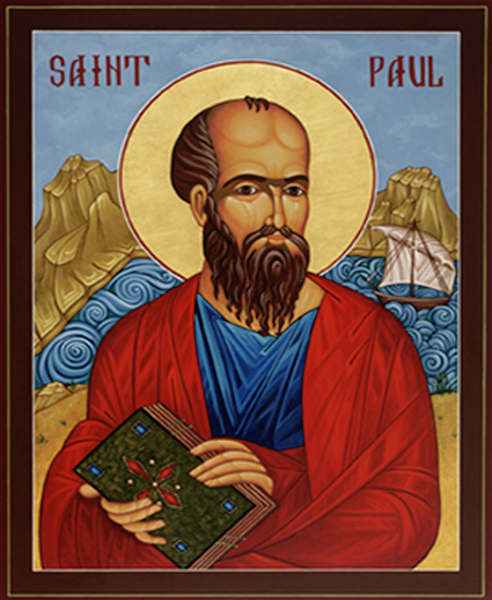
We are Christians. To many perhaps this statement is about as important as if we say we are Americans, we are Germans, we are Irish, we are Italians. But as every sincere Christian knows, and as St. Paul has reminded us today, to be a Christian means something different. It means that our relationship with God and the whole meaning of life has been radically changed. The divine plan of the Incarnation reached its climax in the passion, death and resurrection of Christ. As a result of this plan we are no longer mere human beings. We have been raised up to adopted sonship by God. We are already by baptism citizens of God’s earthly kingdom, and we are legal heirs of his eternal kingdom in heaven. These are not empty words, nor empty titles. Because the Son of God became a man, and one of us, we have been made brothers of his and sons of God. Because we are sons of God we are heirs to heaven, and have a legal right – through the sheer gift of God’s infinite love for us, not through any merit whatsoever of our own – to eternal happiness.
The plan for our eternal happiness was made by God before creation began. It was signed and sealed by the passion, death and resurrection of Christ. At baptism each Christian is handed his bill of rights, his guarantee of eternal citizenship, together with the map which shows him the road he must travel to attain his kingdom.
But reading and following the road map is for many of us the part we like least. We are all thankful to God and to his divine Son for all he has done for us. We are all delighted with the privilege of divine sonship and the promise of a part in the eternal kingdom of God in heaven. But many of us get sleepy and faint-hearted when it comes to following the road mapped out for us. We know that we have been raised above our mere human nature and given a new status in relation to God. We also know and feel that we are still very human, very earthly beings, naturally attracted to the things of this world.
But we can and we must overcome this attraction. This is what St. Paul is exhorting us to do today. “Be reconciled to God,” he says. Repent of past faults, of past sins, he tells us. If we turn to God with a sincere heart, he will accept us back once more into the divine family of which baptism made us members. We are the chosen children of God, not in any metaphorical or figurative sense, but in the true sense of the words. Heaven is the eternal home earned for us by our true brother Christ. Could we be so foolish as to let some earthly passing pleasure or possession deprive us of that everlasting reward?
GOSPEL

 BENEDICAMUS DOMINO
Pingback: Fourth Sunday of Lent – C | BENEDICAMUS DOMINO