
Twenty-Eighth Sunday in Ordinary Time – A
— Read on benedicamusdominoblog.com/2017/10/11/twenty-eighth-sunday-in-ordinary-time-a/
Twenty-Eighth Sunday in Ordinary Time – A
Posted in Catholic
Leave a comment
Twenty-Sixth Sunday in Ordinary Time – A
Twenty-Sixth Sunday in Ordinary Time – A
— Read on benedicamusdominoblog.com/2017/09/27/twenty-sixth-sunday-in-ordinary-time-a/
Twenty-Fifth Sunday in Ordinary Time – A
Twenty-Fifth Sunday in Ordinary Time – A
— Read on benedicamusdominoblog.com/2020/09/16/twenty-fifth-sunday-in-ordinary-time-a/
Posted in Catholic
Leave a comment
Twenty-Fifth Sunday in Ordinary Time – A
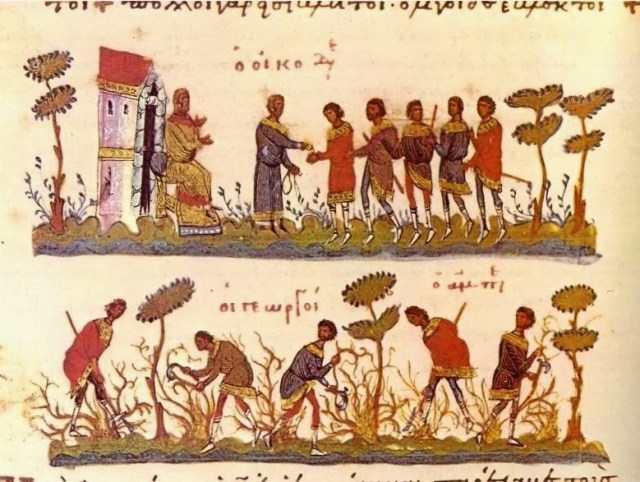
‘My friend, I am not cheating you. Did you not agree with me for the usual daily wage? Take what is yours and go”
OPENING PRAYER
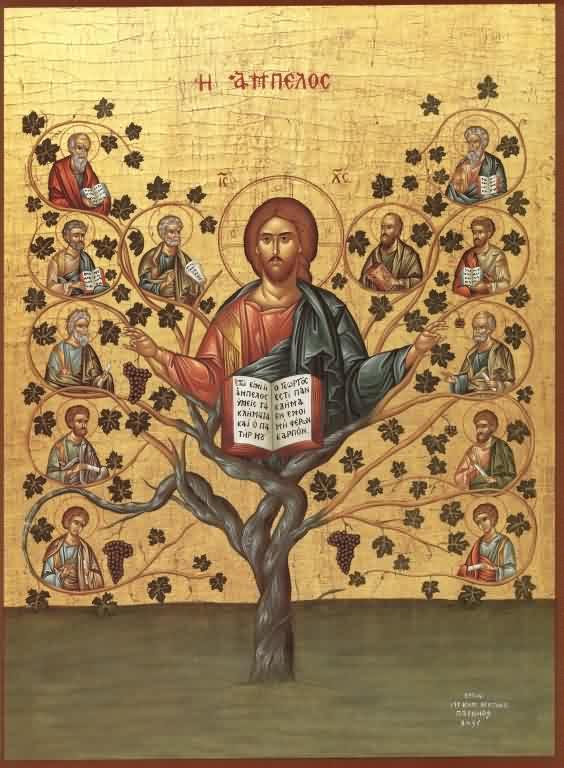
I am the Vine; you are the branches.
Remain in me and you will bear abundant fruit.
I am the true vine, and my Father is the vine-grower.
He trims away every barren branch,
but the faithful ones he trims to increase their yield.
I am the Vine; you are the branches.
Remain in me and you will bear abundant fruit.
Live on in me, as I do in you.
No more than a branch can bear fruit alone,
can you bear fruit apart from me.
I am the Vine; you are the branches.
Remain in me and you will bear abundant fruit.
If you live in me, and my words live on in you,
ask what you will, it will be done for you.
Through your work, God is glorified!
I am the Vine; you are the branches.
Remain in me and you will bear abundant fruit.
I Am The Vine by The University of Notre Dame Folk Choir
COLLECT
O God, who founded all the commands of your
sacred Law
upon love of you and of our neighbor,
grant that, by keeping your precepts,
we may merit to attain eternal life.
Through our Lord Jesus Christ, your Son,
who lives and reigns with you in the unity
of the Holy Spirit,
one God, for ever and ever.
READING I
Is 55:6-9
Seek the LORD while he may be found,
call him while he is near.
Let the scoundrel forsake his way,
and the wicked his thoughts;
let him turn to the LORD for mercy;
to our God, who is generous in forgiving.
For my thoughts are not your thoughts,
nor are your ways my ways, says the LORD.
As high as the heavens are above the earth,
so high are my ways above your ways
and my thoughts above your thoughts.
APPLICATION
There are (and there always have been) intelligent people in our world who, because of the transcendence and infinity of God, cannot imagine him as a true friend of mortal man, a Father who takes a personal interest in man’s spiritual and temporal concerns. For them, therefore, the idea of man praying to God is utter folly. The trouble with such people is that because of their preconceived idea of God’s infinity and transcendence they cannot admit that he has revealed himself to us.
Through the revelation he gave to the Patriarchs and prophets God has told us many things we need to know about himself and about our purpose in life. He has also sent his divine Son as man to prove to us the interest, love and mercy he has in abundance for us all. Yes, God is infinite, supreme and away beyond any idea we can form of him. The important concept of himself which revelation and the Incarnation impress on our minds is that he is at the same time a loving Father who wants to share his eternal happiness with his adopted children, all mankind.
He is transcendent and infinite in his nature, but in his relations with us he is a father and the truest friend we could ever have. If the Jews knew this before the Incarnation (today’s exhortation of the prophet shows that they did) how much more clearly and more convincingly is it not known to us, after Christ’s coming on earth. “He did not spare his own son but gave him up for us all” (Rom. 8: 32). Can any Christian have the slightest doubt of God’s personal interest in him? We may not always understand God’s ways of acting and be tempted to ask: “Why should the innocent suffer, why should cruel tyrants live and prosper, why should the father or mother of a young family die? and so on. Our faith and our conviction that as a loving Father God is ever acting for our good, should allay these doubts.
God is ever near us then in this life, and if we remain near to him while on this earth we can trust in his love and goodness to keep us near him forever in heaven.
RESPONSORIAL PSALM
Ps 145:2-3, 8-9, 17-18
The Lord is near to all who call upon him.
Every day will I bless you,
and I will praise your name forever and ever.
Great is the LORD and highly to be praised;
his greatness is unsearchable.
The Lord is near to all who call upon him.
The LORD is gracious and merciful,
slow to anger and of great kindness.
The LORD is good to all
and compassionate toward all his works.
The Lord is near to all who call upon him.
The LORD is just in all his ways
and holy in all his works.
The LORD is near to all who call upon him,
to all who call upon him in truth.
The Lord is near to all who call upon him.
READING II
Phil 1:20c-24, 27a
Brothers and sisters:
Christ will be magnified in my body, whether by life or by death.
For to me life is Christ, and death is gain.
If I go on living in the flesh,
that means fruitful labor for me.
And I do not know which I shall choose.
I am caught between the two.
I long to depart this life and be with Christ,
for that is far better.
Yet that I remain in the flesh
is more necessary for your benefit.
Only, conduct yourselves in a way worthy of the gospel of Christ.
CATECHISM OF THE CATHOLIC CHURCH
CCC 1005 To rise with Christ, we must die with Christ: we must “be away from the body and at home with the Lord.”1 In that “departure” which is death the soul is separated from the body.2 It will be reunited with the body on the day of resurrection of the dead.3
CCC 1010 Because of Christ, Christian death has a positive meaning: “For to me to live is Christ, and to die is gain.”4 “The saying is sure: if we have died with him, we will also live with him.”5 What is essentially new about Christian death is this: through Baptism, the Christian has already “died with Christ” sacramentally, in order to live a new life; and if we die in Christ’s grace, physical death completes this “dying with Christ” and so completes our incorporation into him in his redeeming act:
It is better for me to die in (eis) Christ Jesus than to reign over the ends of the earth. Him it is I seek – who died for us. Him it is I desire – who rose for us. I am on the point of giving birth. .. Let me receive pure light; when I shall have arrived there, then shall I be a man.6
CCC 1011 In death, God calls man to himself. Therefore the Christian can experience a desire for death like St. Paul’s: “My desire is to depart and be with Christ. ”7 He can transform his own death into an act of obedience and love towards the Father, after the example of Christ:8
My earthly desire has been crucified;. .. there is living water in me, water that murmurs and says within me: Come to the Father.9
I want to see God and, in order to see him, I must die.10
I am not dying; I am entering life.11
CCC 1021 Death puts an end to human life as the time open to either accepting or rejecting the divine grace manifested in Christ.12 The New Testament speaks of judgment primarily in its aspect of the final encounter with Christ in his second coming, but also repeatedly affirms that each will be rewarded immediately after death in accordance with his works and faith. The parable of the poor man Lazarus and the words of Christ on the cross to the good thief, as well as other New Testament texts speak of a final destiny of the soul–a destiny which can be different for some and for others.13
CCC 1025 To live in heaven is “to be with Christ.” The elect live “in Christ,”14 but they retain, or rather find, their true identity, their own name.15
For life is to be with Christ; where Christ is, there is life, there is the kingdom.16
CCC 1692 The Symbol of the faith confesses the greatness of God’s gifts to man in his work of creation, and even more in redemption and sanctification. What faith confesses, the sacraments communicate: by the sacraments of rebirth, Christians have become “children of God,”17 “partakers of the divine nature.”18 Coming to see in the faith their new dignity, Christians are called to lead henceforth a life “worthy of the gospel of Christ.”19 They are made capable of doing so by the grace of Christ and the gifts of his Spirit, which they receive through the sacraments and through prayer.
CCC 1698 The first and last point of reference of this catechesis will always be Jesus Christ himself, who is “the way, and the truth, and the life.”20 It is by looking to him in faith that Christ’s faithful can hope that he himself fulfills his promises in them, and that, by loving him with the same love with which he has loved them, they may perform works in keeping with their dignity:
I ask you to consider that our Lord Jesus Christ is your true head, and that you are one of his members. He belongs to you as the head belongs to its members; all that is his is yours: his spirit, his heart, his body and soul, and all his faculties. You must make use of all these as of your own, to serve, praise, love, and glorify God. You belong to him, as members belong to their head. And so he longs for you to use all that is in you, as if it were his own, for the service and glory of the Father.21
For to me, to live is Christ.22
1 2 Cor 5:8.
2 Cf. Phil 1:23.
3 Cf. Paul VI, CPG § 28.
4 Phil 1:21.
5 2 Tim 2:11.
6 St. Ignatius of Antioch, Ad Rom.,6,1-2:Apostolic Fathers,II/2,217-220.
7 Phil 1:23.
8 Cf. Lk 23:46.
9 St. Ignatius of Antioch, Ad Rom.,6,1-2:Apostolic Fathers,II/2,223-224.
10 St. Teresa of Avila, Life, chap. 1.
11 St. Therese of Lisieux, The Last Conversations.
12 Cf. 2 Tim 1:9-10.
13 Cf. Lk 16:22; 23:43; Mt 16:26; 2 Cor 5:8; Phil 1:23; Heb 9:27; 12:23.
14 Phil 1:23; cf. Jn 14:3; 1 Thess 4:17.
15 Cf. Rev 2:17.
16 St. Ambrose, In Luc., 10, 121: PL 15, 1834A.
17 Jn 1:12; 1 Jn 3:1.
18 2 Pet 1:4.
19 Phil 1:27.
20 Jn 14:6.
21 St. John Eudes, Tract. de admirabili corde Jesu, 1, 5.
22 Phil 1:21.
APPLICATION
The Church has chosen these verses of St. Paul to remind us that as Christians our whole life and our very death must be for Christ and in Christ. St. Paul’s life, which was so completely dedicated to Christ, is set before us as a model–a model, however, which most of us ran only imitate from afar. While we are not asked to give up home and family and go among the pagans to bring Christ to them, we are expected to live our Christian lives daily in the love and grace of God and Christ.
This, of course, is not as easy as it sounds. This world and its attractions are very close to us. We are hemmed in by worldly interests and cares. We seem to have little time for thinking and planning for the world to come, or for the things of God. Yet, Paul’s life was a very busy one too. He had to eat and sleep and by the work of his hands provide for his bodily upkeep. He had worries in plenty–worries and cares for his newly-converted, worries caused by enemies who tried hard to impede the spread of the gospel. He had trials and sufferings, including scourgings and stonings and two or three jail-terms.
This surely was no life of leisure. From 39 A.D., the year of his conversion, to 69 A.D.–thirty years, Paul labored incessantly to make Christ and his message known to all men. He established Christian communities in most of the principal centers of Syria, Asia Minor, and Greece. He did much to spread and build up the Church in Rome, and, between his release from his Roman imprisonment (620 A.D.) and his death in 69, probably went as far as Spain. He was especially successful among the pagan peoples and has been called the Apostle of the Gentiles because of this.
St. Paul is, therefore, our model in a special way. It was through him that the faith reached our Gentile ancestors and eventually came to us. The best way we could thank him, the way that would give him greatest joy, would be to try to love Christ and to live every day of our lives for Christ. This will not mean that we must spend all day long on our knees or in Church; it will mean faithfully fulfilling the duties of our vocation in life out of love for God and Christ.
Paul’s vocation in life was to preach the gospel, the good news of salvation, to as many as possible. Our duty is to live according to that gospel and thus earn the eternal salvation put within our reach by the Incarnation. If we do this faithfully by living in peace and charity, loving God and neighbor, we too are missionaries, for our good example will move many to imitate us. “Let your manner of life be worthy of the gospel of Christ,” St. Paul said to the Philippians. This exhortation is repeated to us in today’s reading. It is by our daily manner of living we prove that we appreciate what Christianity means to us; it is by carrying out our daily tasks for the honor and glory of God, that we can show we are worthy of the divine gift of the faith which Christ has given to us through his great apostle St. Paul.
GOSPEL
Mt 20:1-16a
Jesus told his disciples this parable:
“The kingdom of heaven is like a landowner
who went out at dawn to hire laborers for his vineyard.
After agreeing with them for the usual daily wage,
he sent them into his vineyard.
Going out about nine o’clock,
the landowner saw others standing idle in the marketplace,
and he said to them, ‘You too go into my vineyard,
and I will give you what is just.’
So they went off.
And he went out again around noon,
and around three o’clock, and did likewise.
Going out about five o’clock,
the landowner found others standing around, and said to them,
‘Why do you stand here idle all day?’
They answered, ‘Because no one has hired us.’
He said to them, ‘You too go into my vineyard.’
When it was evening the owner of the vineyard said to his foreman,
‘Summon the laborers and give them their pay,
beginning with the last and ending with the first.’
When those who had started about five o’clock came,
each received the usual daily wage.
So when the first came, they thought that they would receive more,
but each of them also got the usual wage.
And on receiving it they grumbled against the landowner, saying,
‘These last ones worked only one hour,
and you have made them equal to us,
who bore the day’s burden and the heat.’
He said to one of them in reply,
‘My friend, I am not cheating you.
Did you not agree with me for the usual daily wage?
Take what is yours and go.
What if I wish to give this last one the same as you?
Or am I not free to do as I wish with my own money?
Are you envious because I am generous?’
Thus, the last will be first, and the first will be last.”
http://usccb.org/bible/readings/092417.cfm
APPLICATION
The call to the vineyard (to the Church), through God’s gift of faith and the sacrament of baptism, is a gift for which we can never sufficiently thank God. If we remain in the vineyard and labor honestly, that is, if we cooperate with the actual graces God is continually giving us, we are assured of reaching heaven when our earthly days are ended. The work we have to do in God’s vineyard is the fulfilling of the duties of our state in life. By carrying out these duties faithfully and honestly we are doing the will of God and earning heaven. The greater part of our day and indeed of our life, will be taken up with tasks of themselves worldly, but these tasks when done in the state of grace and with the intention of honoring God, have a supernatural value. For this we have to thank God for his goodness and generosity.
He could have made the attainment of heaven so much more difficult. He could have demanded extraordinary mortifications and renunciations and the reward (heaven) would still be exceedingly great. Instead he allows us to live our everyday life, to enjoy the love and friendship of our family and friends, to satisfy the natural desires of our bodies, within the commandments, and yet to merit a supernatural reward while so doing. As he tells us through St. Paul: “whether you eat or drink or whatever else you do, do all to the glory of God” (1 Cor.10:31).
Looking back on our past life, how many years have we really given to God since we came to the use of reason? Those school years, the time spent learning a trade or profession, the weeks, months, years working in an office or factory or farm, the hours among the pots and pans in the kitchen–have we earned some credit in heaven for all of this, or is it all crossed off our pay-sheet through lack of right intention or through sin?
If so, those years are lost to us. We were “idle” all that time. Today’s parable, however, should give us new hope and courage. It may be the sixth or the ninth or even the eleventh hour of our life but we can still earn heaven if we listen to God’s call and set to work diligently in his vineyard. If we put our conscience right with God today and resolve to be loyal to him from now on he will be as generous to us, as the parable promises.
Applications written by Fr. Kevin O’Sullivan O.F.M. and used with permission from Franciscan Press.
BENEDICTUS
God Descends
God loves his creature, man; he even loves him in his fall and does not leave him to himself. He loves him to the end. He is impelled with his love to the very end, to the extreme: he came down from his divine glory. He came down to the extreme lowliness of our fall. He kneels before us and carries out for us the service of a slave: he washes our dirty feet so that we might be admitted to God’s banquet and be made worthy to take our place at his. God is not a remote God, too distant or too great to be bothered with our trifles. Since God is great, he can also be concerned with small things. Since he is great, the soul of man, the same man, created through eternal love, is not a small thing but great, and worthy of God’s love. God’s holiness is not merely an incandescent power before which we are obliged to withdraw, terrified. It is a power of love and therefore a purifying and healing power. God descends and becomes a slave. In this, the entire mystery of Jesus Christ is expressed. In this, what redemption means becomes visible. The basin in which he washes us is his love, ready to face death. Only love has that purifying power which washes the grime from us and elevates us to God’s heights. The basin that purifies us is God himself, who gives himself to us without reserve – to the very depths of his suffering and his death. He is continually on his knees at our feet and carries out for us the service of a slave, the service of purification, making us capable of God. His love is inexhaustible, it truly goes to the very end.
Pope Emeritus Benedict XVI
CLOSING PRAYER
Prayer of Thanksgiving
God of all blessings,
source of all life,
giver of all grace:
We thank you for the gift of life:
for the breath
that sustains life,
for the food of this earth
that nurtures life,
for the love of family and friends
without which there would be no life.
We thank you for the mystery of creation:
for the beauty
that the eye can see,
for the joy
that the ear may hear,
for the unknown
that we cannot behold filling the universe with wonder,
for the expanse of space
that draws us beyond the definitions of our selves.
We thank you for setting us in communities:
for families
who nurture our becoming,
for friends
who love us by choice,
for companions at work,
who share our burdens and daily tasks,
for strangers
who welcome us into their midst,
for people from other lands
who call us to grow in understanding,
for children
who lighten our moments with delight,
for the unborn,
who offer us hope for the future.
We thank you for this day:
for life
and one more day to love,
for opportunity
and one more day to work for justice and peace,
for neighbors
and one more person to love
and by whom be loved,
for your grace
and one more experience of your presence,
for your promise:
to be with us,
to be our God,
and to give salvation.
For these, and all blessings,
we give you thanks, eternal, loving God,
through Jesus Christ we pray. Amen!
Posted in agnostic, athiest, Benedictine oblate, Bible Study, Catholic, Christian, faith, Heaven, hell, Holy Spirit, Liturgy, mercy, Oblate, prayer, The Word of God, Uncategorized
Tagged Benedictine, Benedictine oblate, Bible study, Bless the Lord, Catholic, Christian, Jesus Christ, Liturgical Study, Liturgy, mercy, Pope Benedict XVI, Pope Francis, Pope John Paul II, Sunday Readings, The Word of God, Truth, Word of God
1 Comment
Feast of the Exaltation of the Holy Cross | BENEDICAMUS DOMINO
“For God so loved the world that he gave his only Son, so that everyone who believes in him might not perish but might have eternal life.” OPENING PRAYER Heavenly Father, our lives are in your hands. You work to bring good out of evil, healing out of pain and grace out of sinfulness. As…
— Read on benedicamusdominoblog.com/2017/09/13/feast-of-the-exaltation-of-the-holy-cross/
Twenty-Fourth Sunday in Ordinary Time – A
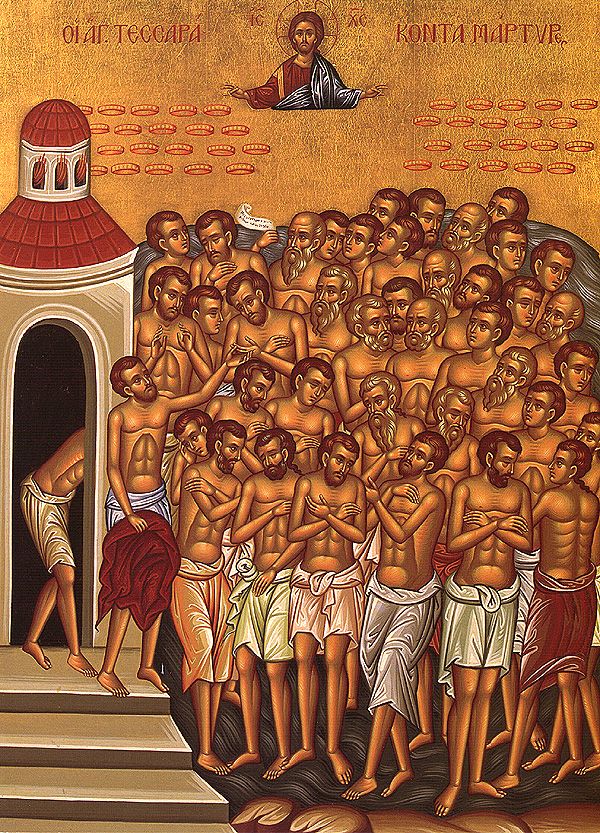
“Lord, if my brother sins against me, how often must I forgive?
As many as seven times?” Jesus answered, “I say to you, not seven times but seventy-seven times.”
Opening Prayer of the Week
Lord Jesus, Savior of this world, I long to have a heart that is humble and that is able to repent even for small mistakes. Send upon me the Spirit of Truth, so that I may truly know who I am before you. Give me Lord, a broken heart. Take away from my heart all self-righteousness and self-centeredness. Give Me Lord, a heart of flesh and remove the heart where there is pride, jealousy, envy, anger, hatred, revenge, lack of mercy and kindness; which thinks and speaks evil of others, which rejoices in the pain of others, which depends on human beings and on the things of the world and not on you, Lord. Lord change my heart. Lord give me a heart like Yours.
Collect
Almighty God, our creator and guide, may we serve you with all our heart and know your forgiveness in our lives. We ask this through our Lord Jesus Christ, your Son, who lives and reigns with you and the Holy Spirit, on God, for ever and ever.
Reading I
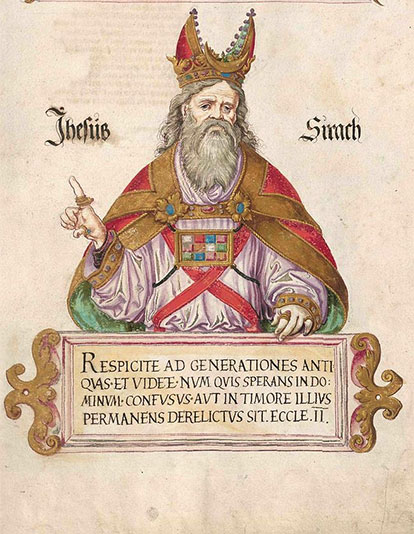
Sir 27:30-28:7
Wrath and anger are hateful things,
yet the sinner hugs them tight.
The vengeful will suffer the LORD’s vengeance,
for he remembers their sins in detail.
Forgive your neighbor’s injustice;
then when you pray, your own sins will be forgiven.
Could anyone nourish anger against another
and expect healing from the LORD?
Could anyone refuse mercy to another like himself,
can he seek pardon for his own sins?
If one who is but flesh cherishes wrath,
who will forgive his sins?
Remember your last days, set enmity aside;
remember death and decay, and cease from sin!
Think of the commandments, hate not your neighbor;
remember the Most High’s covenant, and overlook faults.
Application
Is there one among us here who does not need and cannot profit by the advice of this saintly author? He lived about two hundred years before Christ came on earth. He had not the advantage of the example of God’s infinite love and mercy which was manifested in the Incarnation and practiced to a sublime degree by the Incarnate Son of God. But he can put all of us to shame by his deep understanding of the law of charity and mercy which he placed before his fellow-Jews.
We have seen God’s infinite mercy and forgiveness in sending his Son to raise us up to the dignity of adopted sonship, when we were sunk in sin. We have seen with what superhuman patience Christ put up with the offenses and insults of the leaders of those he had come to save. We cannot forget his prayer for forgiveness, offered to his Father as he slowly and painfully died on the cross. This was a prayer for the very ones who had so unjustly and cruelly condemned him to that death.
We Christians, who claim to follow and to imitate Christ, are absolutely dependent on the mercy and forgiveness of God to obtain salvation. Yet we can forget our leader and our faith when a fellow sinner offends us. We turn on our unfortunate fellowman and use every means in our power to “get our own back,” to wreak vengeance upon him. We forget the command and the example Christ has given us, and we think only of our own offended pride. By so doing we are gravely offending the infinite God because we are violating one of his basic commandments.
While we expect mercy and forgiveness from the infinite God whom we have offended, we often refuse a brother even a small measure of mercy and forgiveness. This is unchristian, unreasonable, and it is fatal for us, if we persevere in this state of mind. St. John says: “To hate your brother is to be a murderer, and murderers as you know do not have eternal life in them (1 Jn. 3: 15). While we are heaping just punishment, as we think, on our fellowman who offended us, it is on ourselves that we are heaping the more serious punishment: we are excluding ourselves from God’s mercy and God’s eternal kingdom.
“Forgive your neighbor…and your sins will be pardoned when you pray,” the saintly Sirach tells us today. Our divine Lord repeated this divine counsel when he told his disciples, and us, to say: “Forgive us our trespasses as we forgive those who trespass against us.” Let the Christian who continues to refuse forgiveness to those who offended him never say that prayer, because what he is saying is, ” God do not forgive me as I don’t forgive my neighbor.” This is calling God’s curse down on his own head. God forbid that any one of us could be so foolish as to let our offended pride prevent us from obtaining God’s forgiveness. Our own offenses against God should make us humble enough to be ready to forgive any offense committed by a neighbor against us. We should not only forgive, but should also be ready to follow our Savior’s example and to pray to our heavenly Father saying, “God, please forgive all those who have offended and injured us, they did not know what they were doing.”
Responsorial Psalm Ps 103:1-2, 3-4, 9-10, 11-12
R. The Lord is kind and merciful, slow to anger, and rich in compassion.
Bless the LORD, O my soul;
and all my being, bless his holy name.
Bless the LORD, O my soul,
and forget not all his benefits.
R. The Lord is kind and merciful, slow to anger, and rich in compassion.
He pardons all your iniquities,
heals all your ills.
redeems your life from destruction,
he crowns you with kindness and compassion.
R. The Lord is kind and merciful, slow to anger, and rich in compassion.
He will not always chide,
nor does he keep his wrath forever.
Not according to our sins does he deal with us,
nor does he requite us according to our crimes.
R. The Lord is kind and merciful, slow to anger, and rich in compassion.
For as the heavens are high above the earth,
so surpassing is his kindness toward those who fear him.
As far as the east is from the west,
so far has he put our transgressions from us.
R. The Lord is kind and merciful, slow to anger, and rich in compassion.
Reading II
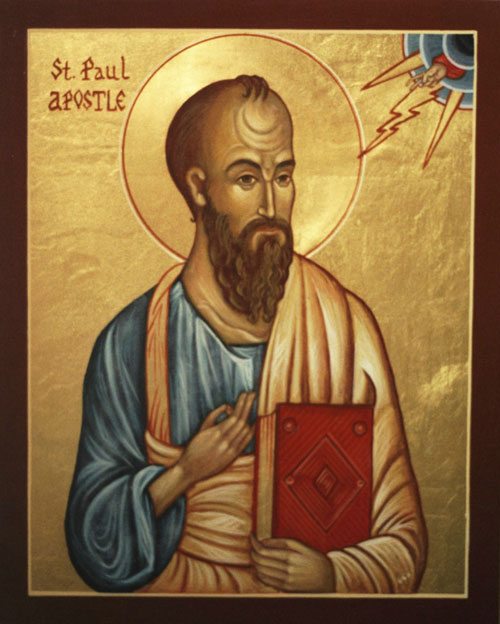
Rom 14:7-9
Brothers and sisters:
None of us lives for oneself, and no one dies for oneself.
For if we live, we live for the Lord,
and if we die, we die for the Lord;
so then, whether we live or die, we are the Lord’s.
For this is why Christ died and came to life,
that he might be Lord of both the dead and the living.
“Catechism of the Catholic Church” (CCC)
CCC 668 “Christ died and lived again, that he might be Lord both of the dead and of the living.”1 Christ’s Ascension into heaven signifies his participation, in his humanity, in God’s power and authority. Jesus Christ is Lord: he possesses all power in heaven and on earth. He is “far above all rule and authority and power and dominion”, for the Father “has put all things under his feet.”2 Christ is Lord of the cosmos and of history. In him human history and indeed all creation are “set forth” and transcendently fulfilled.3
CCC 953 Communion in charity. In the sanctorum communio, “None of us lives to himself, and none of us dies to himself.”4 “If one member suffers, all suffer together; if one member is honored, all rejoice together. Now you are the body of Christ and individually members of it.”5 “Charity does not insist on its own way.”6 In this solidarity with all men, living or dead, which is founded on the communion of saints, the least of our acts done in charity redounds to the profit of all. Every sin harms this communion.
CCC 1971 To the Lord’s Sermon on the Mount it is fitting to add the moral catechesis of the apostolic teachings, such as Romans 12-15, 1 Corinthians 12-13, Colossians 3-4, Ephesians 4-5, etc. This doctrine hands on the Lord’s teaching with the authority of the apostles, particularly in the presentation of the virtues that flow from faith in Christ and are animated by charity, the principal gift of the Holy Spirit. “Let charity be genuine. .. Love one another with brotherly affection. .. Rejoice in your hope, be patient in tribulation, be constant in prayer. Contribute to the needs of the saints, practice hospitality.”7 This catechesis also teaches us to deal with cases of conscience in the light of our relationship to Christ and to the Church.8
1 Rom 14:9.
2 Eph 1:20-22.
3 Eph 1:10; cf. 4:10; 1 Cor 15:24, 27-28.
4 Rom 14:7.
5 1 Cor 12:26-27.
6 1 Cor 13:5; cf. 10:24.
7 Rom 12:9-13.
8 Cf. Rom 14; 1 Cor 5-10.
Application
In these short verses St. Paul reminds the Romans, and us too, of the fundamental privilege which the Incarnation has conferred on us. Too often, perhaps, the Incarnation has been equated with the redemption in the restricted sense of making atonement for our sins. By his life and death Christ did atone for all the sins of the world. But he did something much more basic for our welfare: he fulfilled God’s plan for our elevation to adopted sonship. When the Son of God took our human nature that human nature was united with the Godhead and we became brothers of Christ. We were given a share with God’s real Son in the Father’s kingdom. We ceased to be creatures only; we became intimately associated with Christ and therefore with God. Our earthly death (which would have been the end for us if God in his infinite generosity had not decreed otherwise) cannot now separate us from Christ and God. By his victory over death; his resurrection, Christ has obtained a resurrection for all men.
Today, St. Paul’s words recall this joyful truth to our minds. We are no longer individual creatures with a few years to live on earth: we have an eternity of life and of happiness awaiting us when we die. Death has no longer any terrors for a true Christian. As the preface of the requiem mass says: “by death life is not taken away but is changed.” Our earthly death is the door through which we enter into eternal life. Therefore, instead of being an occasion for grief and tears it should be an occasion for rejoicing. It means not that someone has left this earth and lost this temporal life but that one of Christ’s brothers has reached heaven and gained heaven and gained eternal life and happiness.
If we meditate more often on the basic effect which the Incarnation has had on us, raising us up to son-ship with God and the possibility of an eternal life in God’s kingdom, we will be able to face the trials of life with greater courage; we will resist temptations to sin more strongly, for sin alone can prevent us from gaining possession of our eternal heritage and we will see in our earthly death not a disaster but the welcome call of God to become a chosen member of his heavenly household.
If we live a truly Christian life, we live to the Lord and if we die in God’s grace, as we shall if we have lived a truly Christian life, we die in the Lord. What more could the infinite love of God do for us? The little he asks us to do in return is a trifling wage to pay for such an eternal reward.
Gospel
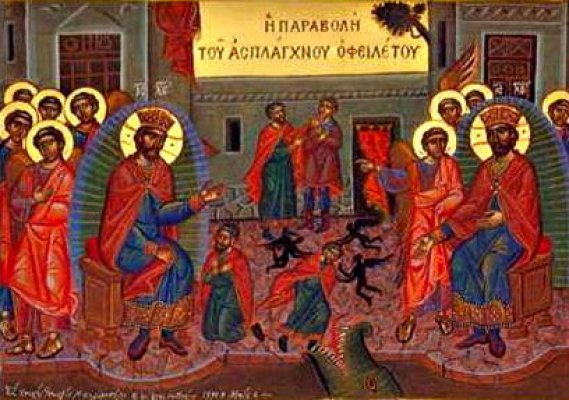
Mt 18:21-35
Peter approached Jesus and asked him,
“Lord, if my brother sins against me,
how often must I forgive?
As many as seven times?”
Jesus answered, “I say to you, not seven times but seventy-seven times.
That is why the kingdom of heaven may be likened to a king
who decided to settle accounts with his servants.
When he began the accounting,
a debtor was brought before him who owed him a huge amount.
Since he had no way of paying it back,
his master ordered him to be sold,
along with his wife, his children, and all his property,
in payment of the debt.
At that, the servant fell down, did him homage, and said,
‘Be patient with me, and I will pay you back in full.’
Moved with compassion the master of that servant
let him go and forgave him the loan.
When that servant had left, he found one of his fellow servants
who owed him a much smaller amount.
He seized him and started to choke him, demanding,
‘Pay back what you owe.’
Falling to his knees, his fellow servant begged him,
‘Be patient with me, and I will pay you back.’
But he refused.
Instead, he had the fellow servant put in prison
until he paid back the debt.
Now when his fellow servants saw what had happened,
they were deeply disturbed, and went to their master
and reported the whole affair.
His master summoned him and said to him, ‘You wicked servant!
I forgave you your entire debt because you begged me to.
Should you not have had pity on your fellow servant,
as I had pity on you?’
Then in anger his master handed him over to the torturers
until he should pay back the whole debt.
So will my heavenly Father do to you,
unless each of you forgives your brother from your heart.”
“Catechism of the Catholic Church” (CCC)
CCC 982 There is no offense, however serious, that the Church cannot forgive. “There is no one, however wicked and guilty, who may not confidently hope for forgiveness, provided his repentance is honest.”1 Christ who died for all men desires that in his Church the gates of forgiveness should always be open to anyone who turns away from sin.2
CCC 2227 Children in turn contribute to the growth in holiness of their parents.3 Each and everyone should be generous and tireless in forgiving one another for offenses, quarrels, injustices, and neglect. Mutual affection suggests this. The charity of Christ demands it.4
CCC 2843 Thus the Lord’s words on forgiveness, the love that loves to the end,5 become a living reality. The parable of the merciless servant, which crowns the Lord’s teaching on ecclesial communion, ends with these words: “So also my heavenly Father will do to every one of you, if you do not forgive your brother from your heart.”6 It is there, in fact, “in the depths of the heart,” that everything is bound and loosed. It is not in our power not to feel or to forget an offense; but the heart that offers itself to the Holy Spirit turns injury into compassion and purifies the memory in transforming the hurt into intercession.
CCC 2845 There is no limit or measure to this essentially divine forgiveness,7 whether one speaks of “sins” as in Luke (11:4), “debts” as in Matthew (6:12). We are always debtors: “Owe no one anything, except to love one another.”8 The communion of the Holy Trinity is the source and criterion of truth in every relation ship. It is lived out in prayer, above all in the Eucharist.9
God does not accept the sacrifice of a sower of disunion, but commands that he depart from the altar so that he may first be reconciled with his brother. For God can be appeased only by prayers that make peace. To God, the better offering is peace, brotherly concord, and a people made one in the unity of the Father, Son, and Holy Spirit.10
1 Roman Catechism I, 11, 5.
2 Cf. Mt 18:21-22.
3 Cf. GS 48 # 4.
4 Cf. Mt 18:21-22; Lk 17:4.
5 Cf. Jn 13:1.
6 Cf. Mt 18:23-35.
7 Cf. Mt 18:21-22; Lk 17:3-4.
8 Rom 13:8.
9 Cf. Mt 5:23-24; 1 Jn 3:19-24.
10 St. Cyprian, De Dom. orat. 23: PL 4, 535-536; cf. Mt 5:24.
Application
On reading or hearing this story of the merciless servant, each one of us would rightly judge him a mean, low type of man, a heartless man, who puts himself outside the pale of mercy. He throttled his fellow servant for a paltry debt of ten dollars, and would not listen to the poor man’s plea for mercy. When we hear what the king did to this heartless servant we heartily approve and say; “It served him right, he got what he richly deserved.”
We had better stop and think for a moment today and reflect that we ourselves may be that merciless servant described in the parable. Every time we have sinned mortally we have incurred an unpayable debt to God. Each time we have received absolution we have come out of God’s courtroom as free men. A weight greater than a million dollar debt has been lifted from our shoulders. A fate worse than generations of earthly imprisonment; that is, eternal slavery, has been spared us because of God’s loving, infinite mercy. How then can it happen that we could be so heartless, mean, and foolish as to refuse to forgive a neighbor for some offense he has committed against us?
Yet it happens, and it may be that there are some among us here today who continue to have enmity in their hearts against neighbors who offended them. In their hard-heartedness they cannot get themselves to forgive and forget. Are these not following in the footsteps of the merciless servant? Will they not receive the punishment of the merciless servant, a punishment richly deserved? This will be the fate of all unforgiving Christians; they will meet an unforgiving God when they are called to settle their accounts.
That day has not yet come for us. We still have time to put our affairs in order. We still can forgive all our enemies from our heart. If we do not, we are cutting ourselves off from the possibility of having our own sins and offenses forgiven by God. We have the solemn word of our divine Lord for this in the lesson he draws from the parable: “So also my heavenly Father will do to every one of you (that is, deliver us up to eternal slavery) if you do not forgive your brother from your heart.
FORGIVENESS
Forgiveness does not mean that God says to me: Your evil deed shall be undone. It was done and remains done. Nor does it mean that he says: It was not so bad. It was bad – I know it and God knows it. And again it does not mean that God is willing to cover up my sin or to look the other way. What help would that be? I want to be rid of my transgression, really rid of it. Again, were one to say: Forgiveness means that I remain a sinner, but that God in his magnanimity attributes me with sanctity, thus giving me a share of his own unimaginable divine grace, the thought would be so complicated and so full of reservations that it would be untenable with the meaning of Scriptures. Forgiveness also does not mean that God gives me the strength never to repeat my sin. Even if this were so, my old sin would still be there; forgiveness could never spirit it away. That would be deceitful and impure. How could God’s immaculateness ever reconcile itself to such a thought?
What possibility then does exist? Only one: that which the simplest interpretation of the Gospel suggests and which the believing heart must feel. Through God’s forgiveness, in the eyes of his sacred truth I am no longer a sinner; in the profoundest depths of my conscience, I am no longer guilty. That is what I wanted – only that! If such complete eradication of my sin cannot be, then it should stand. Bit it can be; that is the sense of Christ’s message.
Whether or not such forgiveness is possible cannot be determined by you or me according to any ethical or religious principles. The question can be answered by revelation only, which clearly reveals who God is. He is the God of Justice, who not only rejects sin, but absolutely condemns it; the holy one who hates sin with divine hatred; the true one who neither veils nor covers, but penetrates to root and essence. And now, Christian revelation continues, in a mysterious and supremely holy sense infinitely far from mitigating the majesty of virtue, God lives beyond the reaches of good, and therefore of evil. He himself is the good – but in inconceivable freedom; freedom from all ties, even from ties as ultimate as the conception of good. Such freedom renders him more powerful than sin. It is the freedom of love. Love is not only kinder, more alive than mere justice, it is more than justice – higher, mightier, in sense and essence. Such then the love that enables God to rise and, without in the least impairing truth and justice, to proclaim: Thy sin no longer exists!
Monsignor Romano Guardini
Magnificat Sept. 2011
Closing Prayer
Prayer for Forgiveness
Forgive me my sins, O Lord; forgive me the sins of my youth and the sins of mine age, the sins of my soul and the sins of my body, my secret and my whispering sins, the sins I have done to please myself and the sins I have done to please others. Forgive those sins which I know, and the sins which I know not; forgive them, O Lord, forgive them all of Thy great goodness. Amen
– Anonymous
Posted in agnostic, athiest, Benedictine oblate, Bible Study, Catholic, Christian, Divine Mercy, faith, Heaven, hell, Holy Spirit, Liturgy, Mary, mercy, Oblate, prayer, The Word of God, Uncategorized
Tagged Benedictine, Bible study, Bless the Lord, Catholic, Christian, Divine Mercy, Jesus Christ, Liturgical Study, Liturgy, mercy, oblate, Pope Benedict XVI, Pope Francis, Pope John Paul II, Sunday Readings, The Word of God, Truth, Word of God
Leave a comment
BENEDICAMUS DOMINO | Let us Bless the Lord – A weekly study of the Catholic Church’s Sunday Sacred Liturgy including Catechism and Applications.
Let us Bless the Lord – A weekly study of the Catholic Church’s Sunday Sacred Liturgy including Catechism and Applications.
— Read on benedicamusdominoblog.com/
Posted in Catholic
Leave a comment
Twenty-Third Sunday in Ordinary Time – A

“Again, amen, I say to you, if two of you agree on earth about anything for which they are to pray, it shall be granted to them by my heavenly Father.”
OPENING PRAYER
Dedication to Jesus
Lord Jesus Christ, take all my freedom, my memory, my understanding, and my will. All that I have and cherish You have given me. I surrender it all to be guided by Your will. Your love and Your grace are wealth enough for me. Give me these, Lord Jesus, and I’ll ask for nothing more.
Amen.
COLLECT
O God, by whom we are redeemed and receive adoption,
look graciously upon your beloved sons and daughters,
that those who believe in Christ
may receive true freedom
and an everlasting inheritance.
Through our Lord Jesus Christ, your Son,
who lives and reigns with you in the unity
of the Holy Spirit,
one God, for ever and ever.
READING I
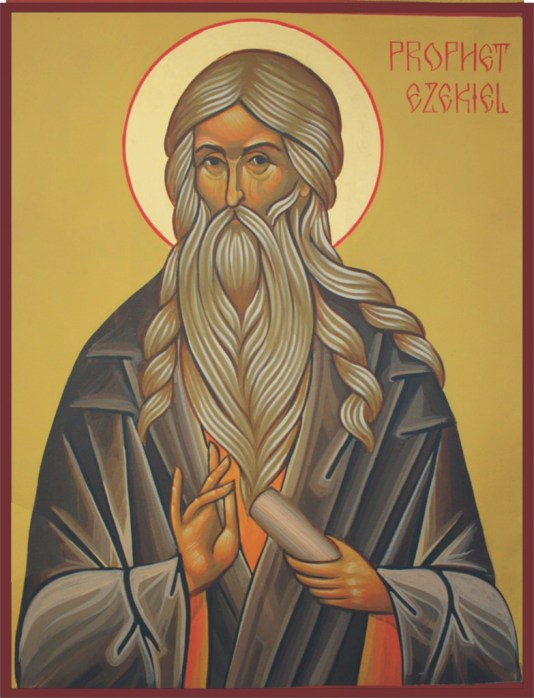
Ez 33:7-9
Thus says the LORD:
You, son of man, I have appointed watchman for the house of Israel;
when you hear me say anything, you shall warn them for me.
If I tell the wicked, “O wicked one, you shall surely die, ”
and you do not speak out to dissuade the wicked from his way,
the wicked shall die for his guilt,
but I will hold you responsible for his death.
But if you warn the wicked,
trying to turn him from his way,
and he refuses to turn from his way,
he shall die for his guilt,
but you shall save yourself.
RESPONSORIAL PSALM
Ps 95:1-2, 6-7, 8-9
If today you hear his voice, harden not your hearts.
Come, let us sing joyfully to the LORD;
let us acclaim the rock of our salvation.
Let us come into his presence with thanksgiving;
let us joyfully sing psalms to him.
If today you hear his voice, harden not your hearts.
Come, let us bow down in worship;
let us kneel before the LORD who made us.
For he is our God,
and we are the people he shepherds, the flock he guides.
If today you hear his voice, harden not your hearts.
Oh, that today you would hear his voice:
“Harden not your hearts as at Meribah,
as in the day of Massah in the desert,
Where your fathers tempted me;
they tested me though they had seen my works.”
If today you hear his voice, harden not your hearts.
READING II
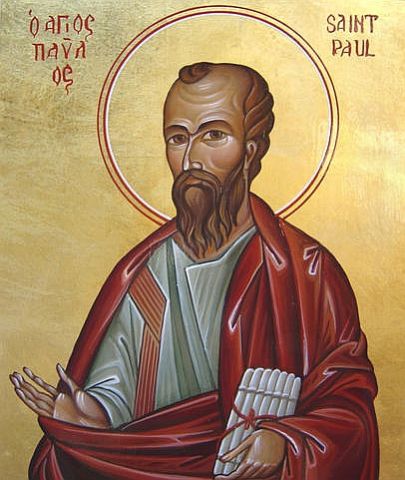
2 Rom 13:8-10
Brothers and sisters:
Owe nothing to anyone, except to love one another;
for the one who loves another has fulfilled the law.
The commandments, “You shall not commit adultery;
you shall not kill; you shall not steal; you shall not covet, ”
and whatever other commandment there may be,
are summed up in this saying, namely,
“You shall love your neighbor as yourself.”
Love does no evil to the neighbor;
hence, love is the fulfillment of the law.
CATECHISM OF THE CATHOLIC CHURCH (CCC)
CCC 1824 Fruit of the Spirit and fullness of the Law, charity keeps the commandments of God and his Christ: “Abide in my love. If you keep my commandments, you will abide in my love.”1
CCC 2055 When someone asks him, “Which commandment in the Law is the greatest?”2 Jesus replies: “You shall love the Lord your God with all your heart, and with all your soul, and with all your mind. This is the greatest and first commandment. And a second is like it: You shall love your neighbor as yourself. On these two commandments hang all the Law and the prophets.”3 The Decalogue must be interpreted in light of this twofold yet single commandment of love, the fullness of the Law:
The commandments: “You shall not commit adultery, You shall not kill, You shall not steal, You shall not covet,” and any other commandment, are summed up in this sentence: “You shall love your neighbor as yourself.” Love does no wrong to a neighbor; therefore love is the fulfilling of the law.4
CCC 2196 In response to the question about the first of the commandments, Jesus says: “The first is, ‘Hear, O Israel: The Lord our God, the Lord is one; and you shall love the Lord your God with all your heart, and with all your soul, and with all your mind, and with all your strength.’ The second is this, ‘You shall love your neighbor as yourself.’ There is no other commandment greater than these.”5
The apostle St. Paul reminds us of this: “He who loves his neighbor has fulfilled the law. The commandments, ‘You shall not commit adultery, You shall not kill, You shall not steal, You shall not covet,‘ and any other commandment, are summed up in this sentence, ‘You shall love your neighbor as yourself.’ Love does no wrong to a neighbor; therefore love is the fulfilling of the law.”6
CCC 2845 There is no limit or measure to this essentially divine forgiveness,7 whether one speaks of “sins” as in Luke (11:4), “debts” as in Matthew (6:12). We are always debtors: “Owe no one anything, except to love one another.”8 The communion of the Holy Trinity is the source and criterion of truth in every relation ship. It is lived out in prayer, above all in the Eucharist.9
God does not accept the sacrifice of a sower of disunion, but commands that he depart from the altar so that he may first be reconciled with his brother. For God can be appeased only by prayers that make peace. To God, the better offering is peace, brotherly concord, and a people made one in the unity of the Father, Son, and Holy Spirit.10
1 Jn 15:9-10; cf. Mt 22:40; Rom 13:8-10.
2 Mt 22:36.
3 Mt 22:37-40; cf. Deut 6:5; Lev 19:18.
4 Rom 13:9-10.
5 Mk 12:29-31; cf. Deut 6:4-5; Lev 19:18; Mt 22:34-40; Lk 10:25-28.
6 Rom 13:8-10.
7 Cf. Mt 18:21-22; Lk 17:3-4.
8 Rom 13:8.
9 Cf. Mt 5:23-24; 1 Jn 3:19-24.
10 St. Cyprian, De Dom. orat. 23: PL 4, 535-536; cf. Mt 5:24.
GOSPEL
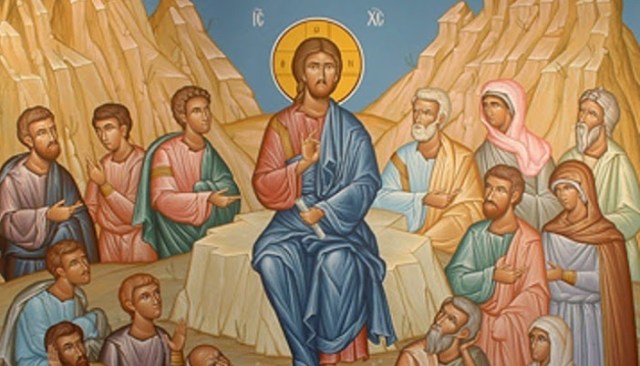
Mt 18:15-20
Jesus said to his disciples:
“If your brother sins against you,
go and tell him his fault between you and him alone.
If he listens to you, you have won over your brother.
If he does not listen,
take one or two others along with you,
so that ‘every fact may be established
on the testimony of two or three witnesses.’
If he refuses to listen to them, tell the church.
If he refuses to listen even to the church,
then treat him as you would a Gentile or a tax collector.
Amen, I say to you,
Again, amen, I say to you,
if two of you agree on earth
about anything for which they are to pray,
it shall be granted to them by my heavenly Father.
For where two or three are gathered together in my name,
there am I in the midst of them.”
http://www.usccb.org/bible/readings/091017.cfm
CATECHISM OF THE CATHOLIC CHURCH (CCC)
CCC 553 Jesus entrusted a specific authority to Peter: “I will give you the keys of the kingdom of heaven, and whatever you bind on earth shall be bound in heaven, and whatever you loose on earth shall be loosed in heaven.”1 The “power of the keys” designates authority to govern the house of God, which is the Church. Jesus, the Good Shepherd, confirmed this mandate after his Resurrection: “Feed my sheep.”2 The power to “bind and loose” connotes the authority to absolve sins, to pronounce doctrinal judgments, and to make disciplinary decisions in the Church. Jesus entrusted this authority to the Church through the ministry of the apostles3 and in particular through the ministry of Peter, the only one to whom he specifically entrusted the keys of the kingdom.
CCC 1088 “To accomplish so great a work” – the dispensation or communication of his work of salvation – “Christ is always present in his Church, especially in her liturgical celebrations. He is present in the Sacrifice of the Mass not only in the person of his minister, ‘the same now offering, through the ministry of priests, who formerly offered himself on the cross,’ but especially in the Eucharistic species. By his power he is present in the sacraments so that when anybody baptizes, it is really Christ himself who baptizes. He is present in his word since it is he himself who speaks when the holy Scriptures are read in the Church. Lastly, he is present when the Church prays and sings, for he has promised ‘where two or three are gathered together in my name there am I in the midst of them.”’4
CCC 1373 “Christ Jesus, who died, yes, who was raised from the dead, who is at the right hand of God, who indeed intercedes for us,” is present in many ways to his Church:5 in his word, in his Church’s prayer, “where two or three are gathered in my name,”6 in the poor, the sick, and the imprisoned,7 in the sacraments of which he is the author, in the sacrifice of the Mass, and in the person of the minister. But “he is present. .. most especially in the Eucharistic species.”8
CCC 1444 In imparting to his apostles his own power to forgive sins the Lord also gives them the authority to reconcile sinners with the Church. This ecclesial dimension of their task is expressed most notably in Christ’s solemn words to Simon Peter: “I will give you the keys of the kingdom of heaven, and whatever you bind on earth shall be bound in heaven, and whatever you loose on earth shall be loosed in heaven.”9 “The office of binding and loosing which was given to Peter was also assigned to the college of the apostles united to its head.”10
CCC 2472 The duty of Christians to take part in the life of the Church impels them to act as witnesses of the Gospel and of the obligations that flow from it. This witness is a transmission of the faith in words and deeds. Witness is an act of justice that establishes the truth or makes it known.11
All Christians by the example of their lives and the witness of their word, wherever they live, have an obligation to manifest the new man which they have put on in Baptism and to reveal the power of the Holy Spirit by whom they were strengthened at Confirmation.
1 Mt 16:19.
2 Jn 21:15-17; Cf. 10:11.
3 Cf. Mt 18:18.
4 SC 7; Mt 18:20.
5 Rom 8:34; cf. LG 48.
6 Mt 18:20.
7 Cf. Mt 25:31-46.
8 SC 7.
9 Mt 16:19; cf. Mt 18:18; 28:16-20.
10 LG 22 # 2.
11 Cf. Mt 18:16.
APPLICATION
The Gospel is from St. Matthew 18:15-20. Unfortunately, there are far too many Christians today who pay no heed to the serious obligation of encouraging an erring brother to give up his sinful ways. They shrug it off by saying : “I have more than enough to do to keep myself from sin” or “am I my brother’s keeper”? The answer is in this lesson we have just read. We are our brothers’ keepers, and even if we have many temptations and inclinations to sin we shall not overcome them if we have no time to think of our neighbors’ need.
There are, alas, millions of lapsed or luke-warm Christians who could and would have been active members of Christ’s mystical body if their neighbors had fulfilled this grave obligation which Christ has imposed on us all. They are now a source of scandal to the weaker and youthful members of the Church, and an impediment to the possible acceptance of the faith by non-Christians. Would the Reformation, which has caused whole countries of the western world to lose almost all faith in Christ and indeed in God, have had such disastrous effects, if those who remained within the Church had put this law of fraternal charity into practice? However, it is no use crying over spilt milk! Let us see our present-day obligations and what we are doing to help our neighbors retain their Christian faith and practice. How much of the indifference to religion which the youth of today seems to be showing is due to lack of parental control and example? How many children of Christian families grow up as practical pagans because their Christian faith meant little or nothing to their parents? It is in the home that the religion of the next generation is firmly established or lost. When parents are loyal to their faith in their daily lives, their children will, as a rule, be loyal to it too; where parents are careless and lax their children will be still more careless and more lax.
Parents! the first neighbors and fellow Christians whom you must kindly and charitably correct are your own children. Their future salvation and your own too will depend on how well you fulfill this obligation. Parents who are obedient to Christ in this will find time and many opportunities to have a charitable word of help for an erring neighbor outside their household. On the other hand, the lax parents, who give little or no thought to getting to heaven or to their children getting there in God’s good time, will hardly bother with their neighbor’s salvation. Thus this cancer of infidelity and irreligion grows and spreads.
Let each one of us look into his past conduct in relation to this law of charity. Have we really tried to help our fellowmen on the road to heaven? Have we given them the good example of a truly Christian way of living? Have we offered advice and encouragement when it was needed, and correction in private where that was possible? If so “we have gained our brother.” We have brought a prodigal son back to a loving Father and that loving Father will repay us a hundred-fold in this life and especially in the next.
Applications written by Fr. Kevin O’Sullivan O.F.M. and used with permission from Franciscan Press.
BENEDICTUS
The Birthday of Mary
Mary’s birthday is exceptional among the feasts in which honor is paid to saints, in that the Church usually does not celebrate the day of birth. The Church’s practice was quite different here from that of pagan Greece or Rome, where the birthday of a great man – a Caesar or an Augustus, for example – was celebrated with great pomp as a day of redemption. The Church always argued that it was premature to celebrate a birthday because the rest of the life of the person born on that day was subject to such ambiguity. It was, in other words, impossible to predict the answers to certain questions simply on the basis of a person’s birthday. Would his life really be a reason for celebrations? Would the person who was born really be able to be glad about the day that he came into the world? Would the world be glad that he was born?… No, the Church has always celebrated the day of death, believing that it is only possible to celebrate a person’s life when he has passed beyond that life into death and judgment… Mary was the gate through which he came into the world and not simply the external gateway. She had already conceived Jesus in her heart before she became his mother according to the body, as Augustine so meaningfully said. Her soul was the space from which God was able to gain access into humanity. Unlike the great and mighty ones of this earth, Mary, the believer who bore the light of God in her heart, was able to play her vital part in changing the very foundation of the world. The world can be truly changed only by the power of the soul.
Pope Emeritus Benedict XVI
CLOSING PRAYER
Prayer of the Church:
Grant to us, Thy servants,
we beseech Thee, O Lord,
the gift of heavenly grace;
that to those for whom the delivery
of the Blessed Virgin
was the commencement of salvation,
the commemoration of her nativity
may give increasing peace.
Through Christ our Lord. Amen.
The Memorare
Remember, O most gracious Virgin Mary,
that never was it known
that anyone who fled to your protection,
implored your help
or sought your intercession,
was left unaided.
Inspired by this confidence,
I fly unto you,
O Virgin of virgins, my Mother.
To you I come,
before you I stand,
sinful and sorrowful.
O Mother of the Word incarnate,
despise not my petitions,
but, in your mercy,
hear and answer me.
Amen.
Posted in agnostic, athiest, Benedictine oblate, Bible Study, Catholic, Christian, Divine Mercy, faith, Heaven, hell, Holy Spirit, Liturgy, Mary, mercy, Oblate, Pentecost, prayer, The Word of God, Uncategorized, Virgin Mary
1 Comment
Twenty-Second Sunday in Ordinary Time – A | BENEDICAMUS DOMINO
“Whoever wishes to come after me must deny himself,
take up his cross, and follow me.
For whoever wishes to save his life will lose it,
but whoever loses his life for my sake will find it.’ OPENING PRAYER Carry Your Cross Take up your cross, the Savior said, If you would my disciple be; Deny yourself,…
— Read on benedicamusdominoblog.com/2017/08/31/twenty-second-sunday-in-ordinary-time-a/
Posted in Catholic
Leave a comment
 BENEDICAMUS DOMINO