Second Sunday of Lent – A

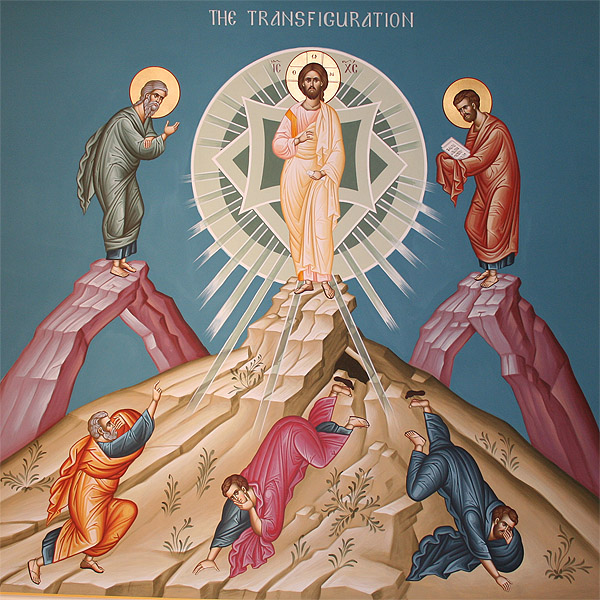
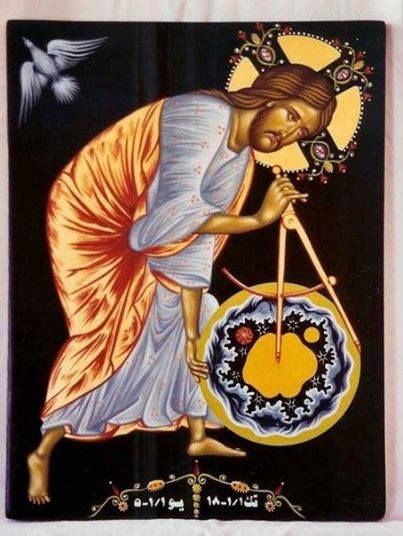
Transfiguration copy.jpg

        “This is my beloved Son, with whom I am well pleased; listen to him.”

OPENING PRAYER

Prayer for the Intercession of St. Joseph

Oh, St. Joseph, whose protection is so great, so strong, so prompt before the throne of God. I place in you all my interests and desires. Oh, St. Joseph, do assist me by your powerful intercession, and obtain for me from your divine Son all spiritual blessings, through Jesus Christ, our Lord. So that, having engaged here below your heavenly power, I may offer my thanksgiving and homage to the most loving of Fathers.

Oh, St. Joseph, I never weary of contemplating you and Jesus asleep in your arms; I dare not approach while He reposes near your heart. Press Him in my name and kiss His fine head for me and ask him to return the Kiss when I draw my dying breath.

St. Joseph, Patron of departing souls – Pray for me.

COLLECT

O God, who have commanded us

to listen to your beloved Son,

be pleased, we pray,

to nourish us inwardly by your word,

that, with spiritual sight made pure,

we may rejoice to behold your glory.

Through our Lord Jesus Christ, your Son,

who lives and reigns with you in the unity

of the Holy Spirit,

one God, for ever and ever.

READING I
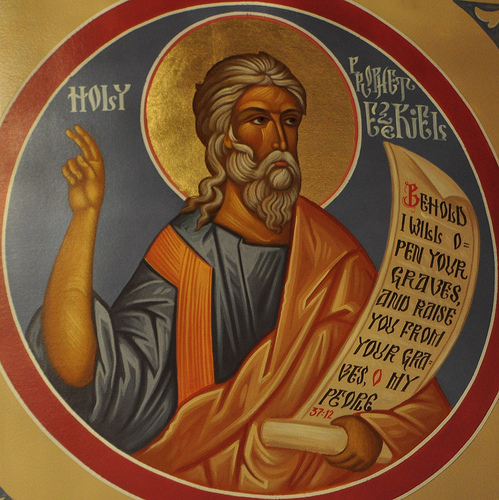
-4.jpg

GN 12:1-4a

The LORD said to Abram:

“Go forth from the land of your kinsfolk

and from your father’s house to a land that I will show you.

“I will make of you a great nation,

and I will bless you;

I will make your name great,

so that you will be a blessing.

I will bless those who bless you

and curse those who curse you.

All the communities of the earth

shall find blessing in you.”

Abram went as the LORD directed him.

CATECHISM OF THE CATHOLIC CHURCH (CCC)

CCC 59 In order to gather together scattered humanity God calls Abram from his country, his kindred and his father’s house,1 and makes him Abraham, that is, “the father of a multitude of nations”. “In you all the nations of the earth shall be blessed.”2

CCC 145 The Letter to the Hebrews, in its great eulogy of the faith of Israel’s ancestors, lays special emphasis on Abraham’s faith: “By faith, Abraham obeyed when he was called to go out to a place which he was to receive as an inheritance; and he went out, not knowing where he was to go.”3 By faith, he lived as a stranger and pilgrim in the promised land.4 By faith, Sarah was given to conceive the son of the promise. And by faith Abraham offered his only son in sacrifice.5

CCC 343 Man is the summit of the Creator’s work, as the inspired account expresses by clearly distinguishing the creation of man from that of the other creatures.6

CCC 706 Against all human hope, God promises descendants to Abraham, as the fruit of faith and of the power of the Holy Spirit.7 In Abraham’s progeny all the nations of the earth will be blessed. This progeny will be Christ himself,8 in whom the outpouring of the Holy Spirit will “gather into one the children of God who are scattered abroad.”9 God commits himself by his own solemn oath to giving his beloved Son and “the promised Holy Spirit. .. [who is] the guarantee of our inheritance until we acquire possession of it.”10

CCC 762 The remote preparation for this gathering together of the People of God begins when he calls Abraham and promises that he will become the father of a great people.11 Its immediate preparation begins with Israel’s election as the People of God. By this election, Israel is to be the sign of the future gathering of All nations.12 But the prophets accuse Israel of breaking the covenant and behaving like a prostitute. They announce a new and eternal covenant. “Christ instituted this New Covenant.”13

CCC 1669 Sacramentals derive from the baptismal priesthood: every baptized person is called to be a “blessing,” and to bless.14 Hence lay people may preside at certain blessings; the more a blessing concerns ecclesial and sacramental life, the more is its administration reserved to the ordained ministry (bishops, priests, or deacons).15

CCC 2570 When God calls him, Abraham goes forth “as the Lord had told him”;16 Abraham’s heart is entirely submissive to the Word and so he obeys. Such attentiveness of the heart, whose decisions are made according to God’s will, is essential to prayer, while the words used count only in relation to it. Abraham’s prayer is expressed first by deeds: a man of silence, he constructs an altar to the Lord at each stage of his journey. Only later does Abraham’s first prayer in words appear: a veiled complaint reminding God of his promises which seem unfulfilled.17 Thus one aspect of the drama of prayer appears from the beginning: the test of faith in the fidelity of God.

CCC 2676 This twofold movement of prayer to Mary has found a privileged expression in the Ave Maria:

Hail Mary [or Rejoice, Mary]: the greeting of the angel Gabriel opens this prayer. It is God himself who, through his angel as intermediary, greets Mary. Our prayer dares to take up this greeting to Mary with the regard God had for the lowliness of his humble servant and to exult in the joy he finds in her.18

Full of grace, the Lord is with thee: These two phrases of the angel’s greeting shed light on one another. Mary is full of grace because the Lord is with her. The grace with which she is filled is the presence of him who is the source of all grace. “Rejoice. .. O Daughter of Jerusalem. .. the Lord your God is in your midst.”19 Mary, in whom the Lord himself has just made his dwelling, is the daughter of Zion in person, the ark of the covenant, the place where the glory of the Lord dwells. She is “the dwelling of God. .. with men.”20 Full of grace, Mary is wholly given over to him who has come to dwell in her and whom she is about to give to the world.

Blessed art thou among women and blessed is the fruit of thy womb, Jesus. After the angel’s greeting, we make Elizabeth’s greeting our own. “Filled with the Holy Spirit,” Elizabeth is the first in the long succession of generations who have called Mary “blessed.”21 “Blessed is she who believed. .. ”22 Mary is “blessed among women” because she believed in the fulfillment of the Lord’s word. Abraham. because of his faith, became a blessing for all the nations of the earth.23 Mary, because of her faith, became the mother of believers, through whom all nations of the earth receive him who is God’s own blessing: Jesus, the “fruit of thy womb.”

1 Gen 12:1.

2 Gen 17:5; 12:3 (LXX); cf. Gal 3:8.

3 Heb 11:8; cf. Gen 12:1-4.

4 Cf. Gen 23:4.

5 Cf. Heb 11:17.

6 Cf. Gen 1-26.

7 Cf. Gen 18:1-15; Lk 1:26-38. 54-55; Jn 1:12-13; Rom 4:16-21.

8 Cf. Gen 12:3; Gal 3:16.

9 Cf. In 11:52.

10 Eph 1:13-14; cf. Gen 22:17-19; Lk 1:73; Jn 3:16; Rom 8:32; Gal 3:14.

11 Cf. Gen 12:2; 15:5-6.

12 Cf. Ex 19:5-6; Deut 7:6; Isa 2:2-5; Mic 4:1-4.

13 LG 9; cf. Hos 1; Isa 1:2-4; Jer 2; 31:31-34; Isa 55:3.

14 Cf. Gen 12:2; Lk 6:28; Rom 12:14; 1 Pet 3:9.

15 Cf. SC 79; CIC, can. 1168; De Ben 16, 18.

16 Gen 12:4.

17 Cf. Gen 15:2 f.

18 Cf. Lk 1:48; Zeph 3:17b.

19 Zeph 3:14,17a.

20 Rev 21:3.

21 Lk 1:41, 48.

22 Lk 1:45.

23 Cf. Gen 12:3.

APPLICATION

God’s mercy and love for us men is the first lesson this call of Abram should teach us. Over 3,800 years ago God began the proximate preparations for opening heaven to us. He converted the pagan Abram and got him to leave his idol–worshiping family, kinsmen and country. He set him up in Canaan and promised him a great posterity with numerous descendants, who would eventually possess that land. His purpose in doing this was to preserve the knowledge of the true God, and continually enlarge on that knowledge, until the “fulness of time” and the fulness of his knowledge would come to all men in the Incarnation.

The story of God’s infinite patience in his dealings with the descendants of Abram, as narrated in the Old Testament, is another convincing proof of his infinite love for us. Only infinite love could have persevered in the face of the stubborn hard-heartedness, repeated ingratitude and infidelities of his Chosen People. But infinite love prevailed; a remnant of that people was preserved until the promised one, the Messiah, through whom all the nations of the earth would be blessed, came on earth.

Another lesson which every Christian should learn from the call of Abram, is that each and every one of us, no matter what our state in life may be, is called like Abram to preserve the knowledge of God in our own life, and to do all in our power to bring that knowledge to our neighbors. Some are asked to leave their home and their country and go to a land that God chooses for their apostolate. These are the missionaries, who are called on to do more than the rest of us. Their task is more arduous; their vocation makes greater demands on human nature; but God is with them and their reward is great.

But those of us, the vast majority of Christians, who are not called to the mission-fields, are still called to the apostolate. Every one of us has the call and the obligation to share his knowledge of God with his neighbors. We are adopted sons of God, true sons of Abram. We are a small part of the whole human race which God wants in heaven. As he looked to the Chosen People of old to help him in bringing eternal life to all nations, so he looks to us now to continue the same divine task.

The Incarnation has made all men sons of God, brothers of Christ and true brothers of one another. Am I really a brother of Christ if I have no interest in the true welfare of my neighbor, my brother? If I shrug my shoulders and say that I have enough to do to try to get to heaven myself, without having to bother with my neighbor, this is a sure sign that I am not trying to get to heaven. If my Christian life does not include the good example of true Christian living, a word of advice for a brother who needs it, a daily prayer for the salvation of all my fellow-travelers to heaven, I am not on the road to heaven myself.

Lent is a very suitable occasion to examine my past conduct in this regard. Christ suffered and died on the cross to open heaven for all men. He rose from the dead–“the first-fruits” of the millions of those who will one day rise from the dead and enter into a new and everlasting life. That some, and maybe many, of my fellowman will reap the reward of what Christ did for them, will and does depend on my true charity. If I fail in this duty, if I turn a deaf ear to this Christian vocation, I am gravely endangering my own participation in the eternal happiness won for me by Christ.

RESPONSORIAL PSALM

PS 33:4-5, 18-19, 20, 22

Lord, let your mercy be on us, as we place our trust in you.

Upright is the word of the LORD,

and all his works are trustworthy.

He loves justice and right;

of the kindness of the LORD the earth is full.

Lord, let your mercy be on us, as we place our trust in you.

See, the eyes of the LORD are upon those who fear him,

upon those who hope for his kindness,

To deliver them from death

and preserve them in spite of famine.

Lord, let your mercy be on us, as we place our trust in you.

Our soul waits for the LORD,

who is our help and our shield.

May your kindness, O LORD, be upon us

who have put our hope in you.

Lord, let your mercy be on us, as we place our trust in you.

READING II

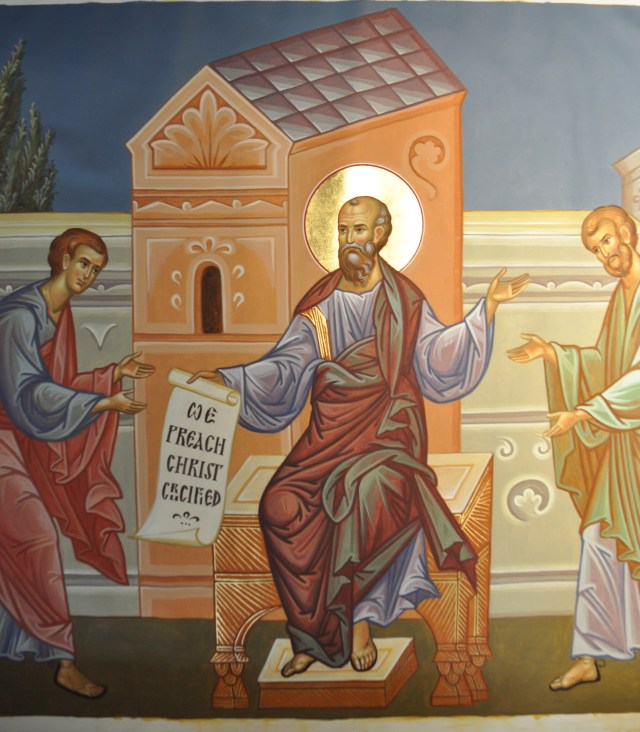
9210106e37433985a2b1e0bd192c49b3.jpg

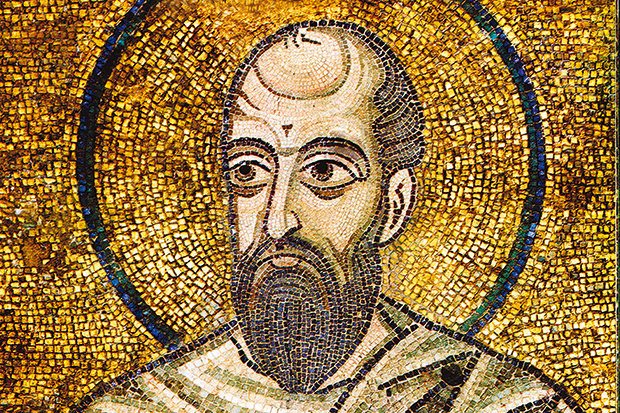
2 Tim 1:8b-10

Beloved:

Bear your share of hardship for the gospel

with the strength that comes from God.

He saved us and called us to a holy life,

not according to our works

but according to his own design

and the grace bestowed on us in Christ Jesus before time began,

but now made manifest

through the appearance of our savior Christ Jesus,

who destroyed death and brought life and immortality

to light through the gospel.

CATECHISM OF THE CATHOLIC CHURCH (CCC)

CCC 257 “O blessed light, O Trinity and first Unity!”1 God is eternal blessedness, undying life, unfading light. God is love: Father, Son and Holy Spirit. God freely wills to communicate the glory of his blessed life. Such is the “plan of his loving kindness”, conceived by the Father before the foundation of the world, in his beloved Son: “He destined us in love to be his sons” and “to be conformed to the image of his Son”, through “the spirit of sonship”.2 This plan is a “grace [which] was given to us in Christ Jesus before the ages began”, stemming immediately from Trinitarian love.3 It unfolds in the work of creation, the whole history of salvation after the fall, and the missions of the Son and the Spirit, which are continued in the mission of the Church.4

CCC 1021 Death puts an end to human life as the time open to either accepting or rejecting the divine grace manifested in Christ.5 The New Testament speaks of judgment primarily in its aspect of the final encounter with Christ in his second coming, but also repeatedly affirms that each will be rewarded immediately after death in accordance with his works and faith. The parable of the poor man Lazarus and the words of Christ on the cross to the good thief, as well as other New Testament texts speak of a final destiny of the soul–a destiny which can be different for some and for others.6

CCC 2471 Before Pilate, Christ proclaims that he “has come into the world, to bear witness to the truth.”7 The Christian is not to “be ashamed then of testifying to our Lord.”8 In situations that require witness to the faith, the Christian must profess it without equivocation, after the example of St. Paul before his judges. We must keep “a clear conscience toward God and toward men.”9

1 LH, Hymn for Evening Prayer.

2 Eph 1:4-5,9; Rom 8:15,29.

3 2 Tim 1:9-10.

4 Cf. AG 2-9.

5 Cf. 2 Tim 1:9-10.

6 Cf. Lk 16:22; 23:43; Mt 16:26; 2 Cor 5:8; Phil 1:23; Heb 9:27; 12:23.

7 Jn 18:37.

8 2 Tim 1:8.

9 Acts 24:16.

APPLICATION

The old saying, “familiarity breeds contempt,” can be true of spiritual as well as material things. We Christians often so take our faith, with all it means for us, for granted, that we fail to appreciate it as we should. If St. Paul felt it necessary to remind Timothy, his faithful co-worker, of vigilance, how much more necessary are his words of exhortation for each one of us today!

Even the holiest of us can get into a rut and forget what our real purpose in life is. We were created by God and given marvelous gifts to make our way through this life, This is already something for which we should be most grateful. But, as God saw, what good would 90 or 100 years of happiness be for a human being on this earth, if he would have to leave it all and end as a little pile of dust in a cemetery?

So, the all-wise and all-loving God decreed that we should not end in the grave, but that instead our real life would begin after our physical death on earth. We would be taken into the eternal life of the Trinity, through the privilege of adoption, which the Incarnation would earn for us. This is the basis of our Christian faith and hope. This is the end and purpose of our Christian way of living while here on earth. This end and purpose we should never forget.

It is true that we have many earthly occupations and concerns, many passing sources of worry and distraction, but these should not, and need not be a hindrance in our daily cares and crosses to lift us up above our earthly status. We must make them aids on our journey, rather than let them be impediments. To do this, we must never forget the plan God has for us. We must never forget what the coming of Christ in our human nature means for us. He has “abolished death” and brought us immortality. Physical death is no longer to be feared; it is not the end for us but the beginning, provided we do the relatively little that is expected of us.

Are we all doing the little that the Christian gospel demands of us? Don’t wait until tomorrow, or next week, to give yourself an honest answer to this question. There may be no tomorrow, no next week, for you. Thank God, that you have today, use it as if it were your last day on earth. It will be the last day for over 100,000–you could easily be one of that large number.

GOSPEL

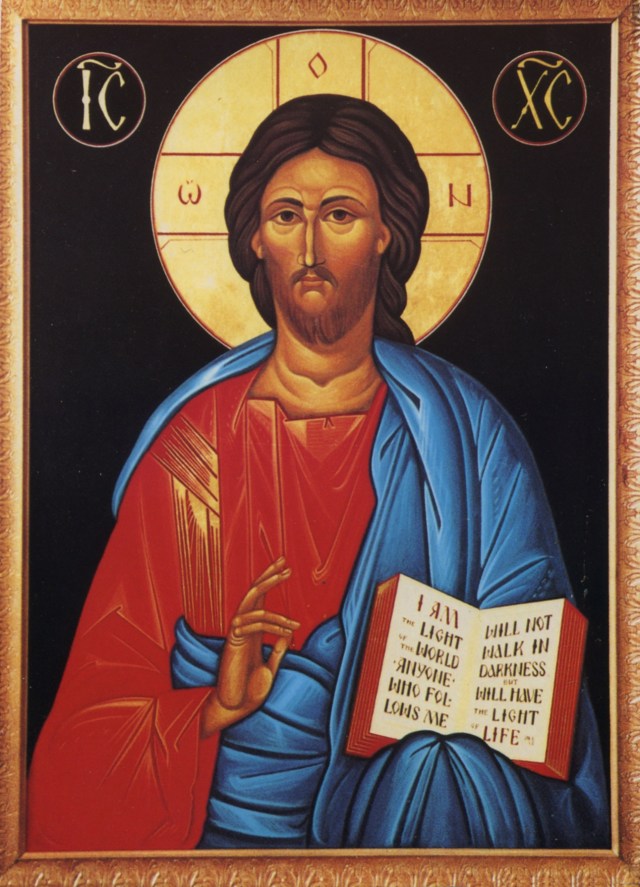
-3.jpg

MT 17:1-9

Jesus took Peter, James, and John his brother,

and led them up a high mountain by themselves.

And he was transfigured before them;

his face shone like the sun

and his clothes became white as light.

And behold, Moses and Elijah appeared to them,

conversing with him.

Then Peter said to Jesus in reply,

“Lord, it is good that we are here.

If you wish, I will make three tents here,

one for you, one for Moses, and one for Elijah.”

While he was still speaking, behold,

a bright cloud cast a shadow over them,

then from the cloud came a voice that said,

“This is my beloved Son, with whom I am well pleased;

listen to him.”

When the disciples heard this, they fell prostrate

and were very much afraid.

But Jesus came and touched them, saying,

“Rise, and do not be afraid.”

And when the disciples raised their eyes,

they saw no one else but Jesus alone.

As they were coming down from the mountain,

Jesus charged them,

“Do not tell the vision to anyone

until the Son of Man has been raised from the dead.”

http://usccb.org/bible/readings/031217.cfm

CATECHISM OF THE CATHOLIC CHURCH (CCC)

CCC 444 The Gospels report that at two solemn moments, the Baptism and the Transfiguration of Christ, the voice of the Father designates Jesus his “beloved Son”.1 Jesus calls himself the “only Son of God”, and by this title affirms his eternal pre-existence.2 He asks for faith in “the name of the only Son of God”.3 In the centurion’s exclamation before the crucified Christ, “Truly this man was the Son of God”,4 that Christian confession is already heard. Only in the Paschal mystery can the believer give the title “Son of God” its full meaning.

CCC 516 Christ’s whole earthly life – his words and deeds, his silences and sufferings, indeed his manner of being and speaking – is Revelation of the Father. Jesus can say: “Whoever has seen me has seen the Father”, and the Father can say: “This is my Son, my Chosen; listen to him!”5 Because our Lord became man in order to do his Father’s will, even the least characteristics of his mysteries manifest “God’s love. .. among us”.6

CCC 554 From the day Peter confessed that Jesus is the Christ, the Son of the living God, the Master “began to show his disciples that he must go to Jerusalem and suffer many things. .. and be killed, and on the third day be raised.”7 Peter scorns this prediction, nor do the others understand it any better than he.8 In this context the mysterious episode of Jesus’ Transfiguration takes place on a high mountain,9 before three witnesses chosen by himself: Peter, James and John. Jesus’ face and clothes become dazzling with light, and Moses and Elijah appear, speaking “of his departure, which he was to accomplish at Jerusalem”.10 A cloud covers him and a voice from heaven says: “This is my Son, my Chosen; listen to him!”11

1 Cf. Mt 3:17; cf. 17:5.

2 Jn 3:16; cf. 10:36.

3 Jn 3:18.

4 Mk 15:39.

5 Jn 14:9; Lk 9:35; cf. Mt 17:5; Mk 9:7, “my beloved Son”.

6 Jn 4:9.

7 Mt 16:21.

8 Cf. Mt 16:22-23; 17:23; Lk 9:45.

9 Cf. Mt 17:1-8 and parallels; 2 Pt 1:16-18.

10 Lk 9:31.

11 Lk 9:35.

APPLICATION

This momentary vision of Christ, in his glory, was given in order to strengthen the three principal Apostles to face the trials to their faith, which the sufferings and crucifixion of their beloved master would bring on them. For the very same reason it is retold to us today, in the early part of Lent, to encourage us to persevere in our lenten mortifications. It reminds us that, very soon, the Easter bells will be ringing out their message of joy once more. If we are sharers with Christ in his sufferings, we shall be sharers with him in his glory as St. Paul reminds us.

This is a truth we all too easily forget, namely, that we cannot and do not get to heaven in a limousine. Our spell on earth is the chance given us by our heavenly Father to earn an eternal reward. This reward surpasses even the wildest imagination of man. We could never earn it, but God accepts the little we can do and provides the balance of his infinite mercy. And yet there are many, far too many, who refuse even that little bit that is asked of them, and are thus running the risk of not partaking in God’s scheme for their eternal happiness.

And are they any happier during their few years on this earth by acting thus towards the God of mercy? Can they, by ignoring God and their duties towards him, remove all pain, all sorrow, all sufferings, from their daily lives? Death, which means a total separation from all we possessed and cherished in this world, is waiting around the corner for all of us. Who can face it more calmly and confidently–the man who is firmly convinced that it is the gateway to a new life, and who has done his best to earn admission through that gateway, or the man who has acted all his life as if death did not exist for him, and who has done everything to have the gate to the new life shut forever in his face?

Illnesses and troubles and disappointments are the lot of all men. They respect neither wealth, nor power, nor position. The man who knows his purpose in life, and is ever striving to reach the goal God’s goodness has planned for him, can and will see in these trials of life the hand of a kind father who is preparing him for greater things. His sufferings become understandable and more bearable because of his attitude to life and its meaning. The man who ignores God and tries to close the eyes of his mind to the real facts of life has nothing to uphold him or console him in his hours of sorrow and pain. Yet, sorrow and pain will dog his footsteps, strive as he will to avoid them, and he can see no value, no divine purpose in these, for him, misfortunes.

Christ has asked us to follow him, carrying our daily cross, and the end of our journey is not Calvary but resurrection, the entrance to a life of glory with our risen Savior. The Christian who grasps his cross closely and willingly, knowing its value for his real life, will find it becomes lighter and often not a burden but a pleasure. The man who tries to shuffle off his cross, and who curses and rebels against him who sent it, will find it doubles its weight and loses all the value it was intended to have for his true welfare.

Let the thought of the Transfiguration encourage each one of us today, to do the little God demands of us, so that when we pass out of this life we may be assured of seeing Christ in his glory, ready to welcome us into his everlasting, glorious kingdom.

Applications written by Fr. Kevin O’Sullivan O.F.M. and used with permission from Franciscan Press.

BENEDICTUS

Lenten Transfiguration

Astonished in the presence of the transfigured Lord, who was speaking with Moses and Elias, Peter, James and John were suddenly enveloped in a cloud from which a voice arose that proclaimed: “This is my beloved Son, listen to him” (Mk 9: 7). When one has the grace to sense a strong experience with God, it is as though seeing something similar to what the disciples experienced during the Transfiguration: For a moment they experienced ahead of time something that will constitute the happiness of paradise. In general, it is brief experiences that God grants on occasions, especially in anticipation of harsh trials. However, no one lives “on Tabor” while on earth. Human existence is a journey of faith and, as such, goes forward more in darkness than in full light, with moments of obscurity and even profound darkness. While we are here, our relationship with God develops more with listening than with seeing; and even contemplation takes place, so to speak, with closed eyes, thanks to the interior light lit in us by the word of God… This is the gift and commitment for each one of us in the Lenten season: To listen to Christ, like Mary. To listen to him in the word, preserved in Sacred Scripture. To listen to him in the very events of our lives, trying to read in them the messages of providence. To listen to him, finally, in our brothers, especially in the little ones and the poor, for whom Jesus himself asked our concrete love. To listen to Christ and to obey his voice. This is the only way that leads to joy and love.

Pope Emeritus Benedict XVI

CLOSING PRAYER
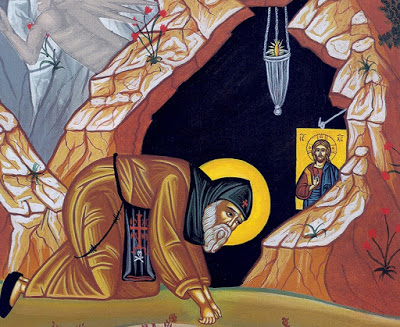
The Prayer of St. Patrick

I arise today

Through the strength of heaven;

Light of the sun,

Splendor of fire,

Speed of lightning,

Swiftness of the wind,

Depth of the sea,

Stability of the earth,

Firmness of the rock.

I arise today

Through God’s strength to pilot me;

God’s might to uphold me,

God’s wisdom to guide me,

God’s eye to look before me,

God’s ear to hear me,

God’s word to speak for me,

God’s hand to guard me,

God’s way to lie before me,

God’s shield to protect me,

God’s hosts to save me

Afar and anear,

Alone or in a multitude.

Christ shield me today

Against wounding

Christ with me, Christ before me, Christ behind me,

Christ in me, Christ beneath me, Christ above me,

Christ on my right, Christ on my left,

Christ when I lie down, Christ when I sit down,

Christ in the heart of everyone who thinks of me,

Christ in the mouth of everyone who speaks of me,

Christ in the eye that sees me,

Christ in the ear that hears me.

I arise today

Through the mighty strength

Of the Lord of creation.

Posted in Catholic | Leave a comment

First Sunday of Lent – A

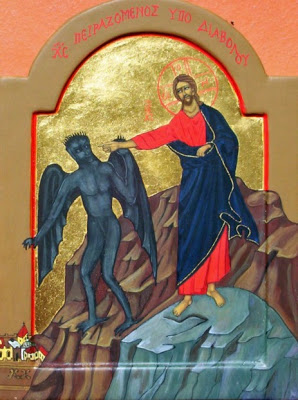
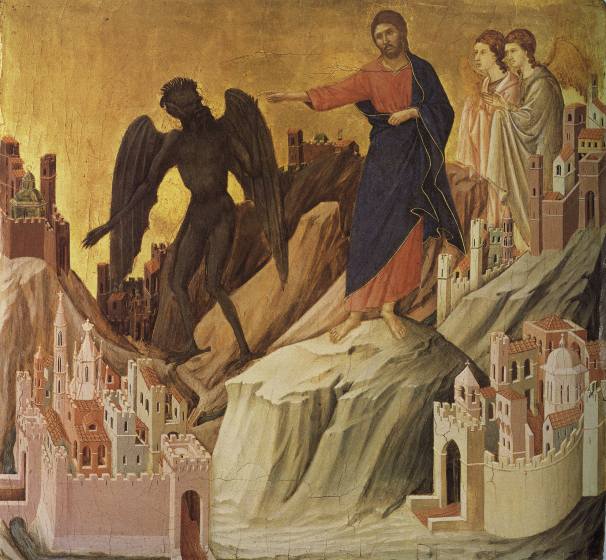
Versuchung+Jesu+2,+2007kk.jpg

“Get away, Satan!  It is written:  The Lord, your God, shall you worship and him alone shall you serve.”  Then the devil left him and, behold, angels came and ministered to him.

OPENING PRAYER

Lenten Prayer of St. Ephrem the Syrian

O Lord and Master of my life, do not give me a spirit of idleness, curiosity, love of power and idle talk.

But grant to me Your servant, the spirit of prudence, humility, patience and love.

Yes, Lord and King, grant that I may see my own faults, and to not judge my brother,

For You are blessed to ages of ages. Amen.
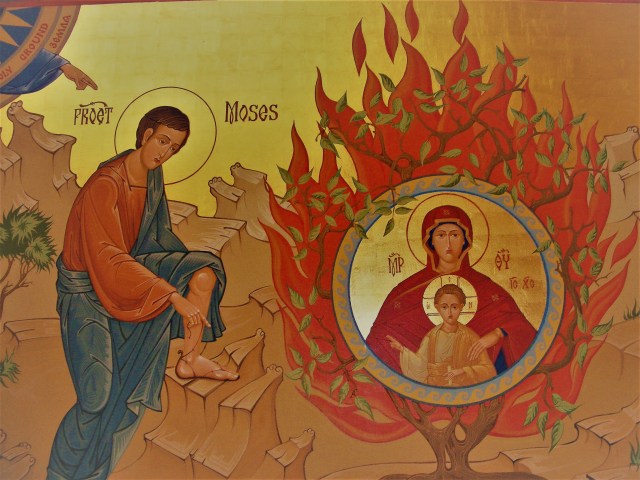
COLLECT

Grant, almighty God,

through the yearly observances of holy Lent,

that we may grow in understanding

of the riches hidden in Christ

and by worthy conduct pursue their effects.

Through our Lord Jesus Christ, your Son,

who lives and reigns with you in the unity

of the Holy Spirit,

one God, for ever and ever.

READING I

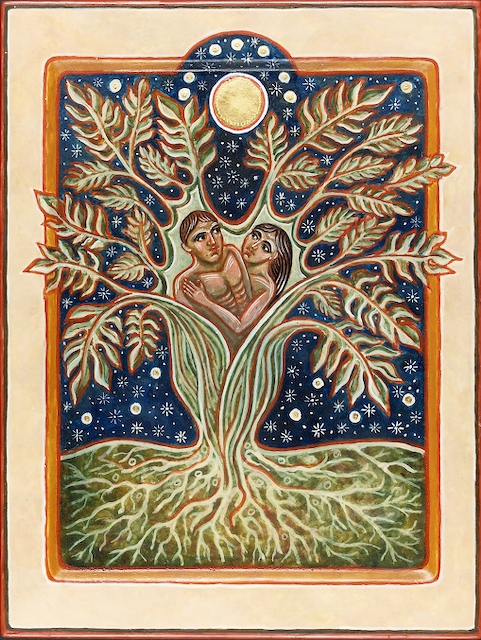
Adam_Eve.jpg

GN 2:7-9; 3:1-7

The LORD God formed man out of the clay of the ground

and blew into his nostrils the breath of life,

and so man became a living being.

Then the LORD God planted a garden in Eden, in the east,

and placed there the man whom he had formed.

Out of the ground the LORD God made various trees grow

that were delightful to look at and good for food,

with the tree of life in the middle of the garden

and the tree of the knowledge of good and evil.

Now the serpent was the most cunning of all the animals

that the LORD God had made.

The serpent asked the woman,

“Did God really tell you not to eat

from any of the trees in the garden?”

The woman answered the serpent:

“We may eat of the fruit of the trees in the garden;

it is only about the fruit of the tree

in the middle of the garden that God said,

‘You shall not eat it or even touch it, lest you die.’”

But the serpent said to the woman:

“You certainly will not die!

No, God knows well that the moment you eat of it

your eyes will be opened and you will be like gods

who know what is good and what is evil.”

The woman saw that the tree was good for food,

pleasing to the eyes, and desirable for gaining wisdom.

So she took some of its fruit and ate it;

and she also gave some to her husband, who was with her,

and he ate it.

Then the eyes of both of them were opened,

and they realized that they were naked;

so they sewed fig leaves together

and made loincloths for themselves.

CATECHISM OF THE CATHOLIC CHURCH (CCC)

CCC 343 Man is the summit of the Creator’s work, as the inspired account expresses by clearly distinguishing the creation of man from that of the other creatures.1

CCC 362 The human person, created in the image of God, is a being at once corporeal and spiritual. The biblical account expresses this reality in symbolic language when it affirms that “then the LORD God formed man of dust from the ground, and breathed into his nostrils the breath of life; and man became a living being.”2 Man, whole and entire, is therefore willed by God.

CCC 369 Man and woman have been created, which is to say, willed by God: on the one hand, in perfect equality as human persons; on the other, in their respective beings as man and woman. “Being man” or “being woman” is a reality which is good and willed by God: man and woman possess an inalienable dignity which comes to them immediately from God their Creator.3 Man and woman are both with one and the same dignity “in the image of God”. In their “being-man” and “being-woman”, they reflect the Creator’s wisdom and goodness.

CCC 378 The sign of man’s familiarity with God is that God places him in the garden.4 There he lives “to till it and keep it”. Work is not yet a burden,5 but rather the collaboration of man and woman with God in perfecting the visible creation.

CCC 703 The Word of God and his Breath are at the origin of the being and life of every creature:6

It belongs to the Holy Spirit to rule, sanctify, and animate creation, for he is God, consubstantial with the Father and the Son. .. Power over life pertains to the Spirit, for being God he preserves creation in the Father through the Son.7

CCC 2795 The symbol of the heavens refers us back to the mystery of the covenant we are living when we pray to our Father. He is in heaven, his dwelling place; the Father’s house is our homeland. Sin has exiled us from the land of the covenant,8 but conversion of heart enables us to return to the Father, to heaven.9 In Christ, then, heaven and earth are reconciled,10 for the Son alone “descended from heaven” and causes us to ascend there with him, by his Cross, Resurrection, and Ascension.11

1 Cf. Gen 1-26.

2 Gen 2:7.

3 Cf. Gen 2:7, 22.

4 Cf. Gen 2:8.

5 Gen 2:15; cf. 3:17-19

6 Cf. Pss 33:6; 104:30; Gen 1:2; 2:7; Eccl 3:20-21; Ezek 37:10.

7 Byzantine liturgy, Sundays of the second mode, Troparion of Morning Prayer.

8 Cf. Gen 3.

9 Jer 3:19-4:1a; Lk 15:18, 21.

10 Cf. Isa 45:8; Ps 85:12.

11 Jn 3:13; 12:32; 14 2-3; 16:28; 20:17; Eph 4:9-10; Heb 1:3; 2:13.

APPLICATION

In recent years theologians have been discussing and arguing about the nature of what is called “Original sin,” and how it is transmitted from generation to generation. The patent fact is that sin abounds, and has abounded in our world from the earliest days of man on earth. The reason why the Church recalls to our minds today the basic facts that God, out of sheer goodness, created man and gave him marvelous gifts, and man in his meanness and foolish pride refused obedience and loyalty to his divine benefactor, is simply to remind us that we are all sinners and descendants of sinners.

While theologians may, and should, try to discover the real nature of original sin and its mode of transmission, the fact that we men of today, centuries and millennia later, are still sinners, still proud, still so often disloyal and ungrateful to the good God, who made us what we are, is and should be our chief preoccupation during this season of Lent.

While we have every reason to regret that our first parents acted so foolishly and so ungratefully, the fact that we ourselves, with far more knowledge of God’s goodness to mankind can and do act even more foolishly and more ungratefully every time we disobey God, should be a greater cause for shame and regret to each one of us.

We know that God, sent his Son on earth in human nature, in order to earn for us a share in God’s own divine happiness. And God did this, even though the human race had proved itself so unworthy of this divine favor. His divine Son had to suffer, not only the humiliation of taking on himself the nature of a mere creature–our human nature but he had to suffer insults and injuries in that human nature, which reached their climax in his crucifixion on Calvary.

That God would deign to share his heaven with the saintly and the good who had never offended him, even though they were mere creatures would be an act of divine love indeed, but that he should want to grant eternal happiness to sinners, at the cost of the torments and sufferings of his beloved Son, is surely a mystery of love beyond our human comprehension. Yet, this is one of the basic truths of our Christian faith. What sinner–and we are all sinners could dare to hope that God would forgive his sins, what right could he have, after his own mean behavior toward the God who gave him everything he has, to expect any pardon? But one sincere look at a crucifix should be enough to dispel any thought of despair or despondency.

Christ took on himself the sins of the world. He nailed them to the cross, in order to open the door to heaven for all men. Through his Incarnation he raised us up to the status of adopted sons of God; through his sufferings and crucifixion he made atonement to his Father for the sins of all men, thus removing the impediment that could prevent us from reaching the reward of sonship, membership in the eternal kingdom of God.

But even God cannot remove our sins unless we do our part; Christ’s sufferings and death for us will be in vain, unless we cooperate. This is just what Lent means for us. It is a period of penance and repentance. We regret the many disobediences and disloyalties we have shown to God up to now, and we try to make some personal atonement for them, by some special acts of mortification and devotion during this holy season.

We want to go to heaven when our life here ends. God wants us in heaven and has proved this beyond a shadow of doubt. Satan–the serpent mentioned in today’s reading–does not want us to go there. He deceived our first parents; could we possibly be so foolish as to let him deceive us too?

READING II

963110b48068c094b8a8651cff95ac2b-1.jpg

ROM 5:12-19

Brothers and sisters:

Through one man sin entered the world,

and through sin, death,

and thus death came to all men, inasmuch as all sinned—

for up to the time of the law, sin was in the world,

though sin is not accounted when there is no law.

But death reigned from Adam to Moses,

even over those who did not sin

after the pattern of the trespass of Adam,

who is the type of the one who was to come.

But the gift is not like the transgression.

For if by the transgression of the one, the many died,

how much more did the grace of God

and the gracious gift of the one man Jesus Christ

overflow for the many.

And the gift is not like the result of the one who sinned.

For after one sin there was the judgment that brought condemnation;

but the gift, after many transgressions, brought acquittal.

For if, by the transgression of the one,

death came to reign through that one,

how much more will those who receive the abundance of grace

and of the gift of justification

come to reign in life through the one Jesus Christ.

In conclusion, just as through one transgression

condemnation came upon all,

so, through one righteous act,

acquittal and life came to all.

For just as through the disobedience of the one man

the many were made sinners,

so, through the obedience of the one,

the many will be made righteous.

CATECHISM OF THE CATHOLIC CHURCH (CCC)

CCC 388 With the progress of Revelation, the reality of sin is also illuminated. Although to some extent the People of God in the Old Testament had tried to understand the pathos of the human condition in the light of the history of the fall narrated in Genesis, they could not grasp this story’s ultimate meaning, which is revealed only in the light of the death and Resurrection of Jesus Christ.1 We must know Christ as the source of grace in order to know Adam as the source of sin. The Spirit-Paraclete, sent by the risen Christ, came to “convict the world concerning sin”,2 by revealing him who is its Redeemer.

CCC 397 Man, tempted by the devil, let his trust in his Creator die in his heart and, abusing his freedom, disobeyed God’s command. This is what man’s first sin consisted of.3 All subsequent sin would be disobedience toward God and lack of trust in his goodness.

CCC 400 The harmony in which they had found themselves, thanks to original justice, is now destroyed: the control of the soul’s spiritual faculties over the body is shattered; the union of man and woman becomes subject to tensions, their relations henceforth marked by lust and domination.4 Harmony with creation is broken: visible creation has become alien and hostile to man.5 Because of man, creation is now subject “to its bondage to decay”.6 Finally, the consequence explicitly foretold for this disobedience will come true: man will “return to the ground”,7 for out of it he was taken. Death makes its entrance into human history.8

CCC 402 All men are implicated in Adam’s sin, as St. Paul affirms: “By one man’s disobedience many (that is, all men) were made sinners”: “sin came into the world through one man and death through sin, and so death spread to all men because all men sinned.”9 The Apostle contrasts the universality of sin and death with the universality of salvation in Christ. “Then as one man’s trespass led to condemnation for all men, so one man’s act of righteousness leads to acquittal and life for all men.”10

CCC 411 The Christian tradition sees in this passage an announcement of the “New Adam” who, because he “became obedient unto death, even death on a cross”, makes amends superabundantly for the disobedience, of Adam.11 Furthermore many Fathers and Doctors of the Church have seen the woman announced in the Protoevangelium as Mary, the mother of Christ, the “new Eve”. Mary benefited first of all and uniquely from Christ’s victory over sin: she was preserved from all stain of original sin and by a special grace of God committed no sin of any kind during her whole earthly life.12

CCC 532 Jesus’ obedience to his mother and legal father fulfils the fourth commandment perfectly and was the temporal image of his filial obedience to his Father in heaven. The everyday obedience of Jesus to Joseph and Mary both announced and anticipated the obedience of Holy Thursday: “Not my will. ..”13 The obedience of Christ in the daily routine of his hidden life was already inaugurating his work of restoring what the disobedience of Adam had destroyed.14

CCC 602 Consequently, St. Peter can formulate the apostolic faith in the divine plan of salvation in this way: “You were ransomed from the futile ways inherited from your fathers. .. with the precious blood of Christ, like that of a lamb without blemish or spot. He was destined before the foundation of the world but was made manifest at the end of the times for your sake.”15 Man’s sins, following on original sin, are punishable by death.16 By sending his own Son in the form of a slave, in the form of a fallen humanity, on account of sin, God “made him to be sin who knew no sin, so that in him we might become the righteousness of God.”17

CCC 605 At the end of the parable of the lost sheep Jesus recalled that God’s love excludes no one: “So it is not the will of your Father who is in heaven that one of these little ones should perish.”18 He affirms that he came “to give his life as a ransom for many”; this last term is not restrictive, but contrasts the whole of humanity with the unique person of the redeemer who hands himself over to save us.19 The Church, following the apostles, teaches that Christ died for all men without exception: “There is not, never has been, and never will be a single human being for whom Christ did not suffer.”20

CCC 612 The cup of the New Covenant, which Jesus anticipated when he offered himself at the Last Supper, is afterwards accepted by him from his Father’s hands in his agony in the garden at Gethsemani,21 making himself “obedient unto death”. Jesus prays: “My Father, if it be possible, let this cup pass from me. ..”22 Thus he expresses the horror that death represented for his human nature. Like ours, his human nature is destined for eternal life; but unlike ours, it is perfectly exempt from sin, the cause of death.23 Above all, his human nature has been assumed by the divine person of the “Author of life”, the “Living One”.24 By accepting in his human will that the Father’s will be done, he accepts his death as redemptive, for “he himself bore our sins in his body on the tree.”25

CCC 615 “For as by one man’s disobedience many were made sinners, so by one man’s obedience many will be made righteous.”26 By his obedience unto death, Jesus accomplished the substitution of the suffering Servant, who “makes himself an offering for sin”, when “he bore the sin of many”, and who “shall make many to be accounted righteous”, for “he shall bear their iniquities”.27 Jesus atoned for our faults and made satisfaction for our sins to the Father.28

CCC 1008 Death is a consequence of sin. The Church’s Magisterium, as authentic interpreter of the affirmations of Scripture and Tradition, teaches that death entered the world on account of man’s sin.29 Even though man’s nature is mortal God had destined him not to die. Death was therefore contrary to the plans of God the Creator and entered the world as a consequence of sin.30 “Bodily death, from which man would have been immune had he not sinned” is thus “the last enemy” of man left to be conquered.31

CCC 1009 Death is transformed by Christ. Jesus, the Son of God, also himself suffered the death that is part of the human condition. Yet, despite his anguish as he faced death, he accepted it in an act of complete and free submission to his Father’s will.32 The obedience of Jesus has transformed the curse of death into a blessing.33

1 Cf. Rom 5:12-21.

2 Jn 16:8.

3 Cf. Gen 3:1-11; Rom 5:19.

4 Cf. Gen 3:7-16.

5 Cf. Gen 3:17,19.

6 Rom 8:21.

7 Gen 3:19; cf. 2:17.

8 Cf. Rom 5:12.

9 Rom 5:12,19.

10 Rom 5:18.

11 Cf. 1 Cor 15:21-22,45; Phil 2:8; Rom 5:19-20.

12 Cf. Pius IX, Ineffabilis Deus: DS 2803; Council of Trent: DS 1573.

13 Lk 22:42.

14 Cf. Rom 5:19.

15 I Pt 1:18-20.

16 Cf. Rom 5:12; I Cor 15:56.

17 2 Cor 5:21; cf. Phil 2:7; Rom 8:3.

18 Mt 18:14.

19 Mt 20:28; cf. Rom 5:18-19.

20 Council of Quiercy (853): DS 624; cf. 2 Cor 5:15; I Jn 2:2.

21 Cf. Mt 26:42; Lk 22:20.

22 Phil 2:8; Mt 26:39; cf. Heb 5:7-8.

23 Cf. Rom 5:12; Heb 4:15.

24 Cf. Acts 3:15; Rev 1:17; Jn 1:4; 5:26.

25 1 Pt 224; cf. Mt 26:42.

26 Rom 5:19.

27 Is 53:10-12.

28 Cf. Council of Trent (1547): DS 1529.

29 Cf. Gen 2:17; 3:3; 3:19; Wis 1:13; Rom 5:12; 6:23; DS 1511.

30 Cf. Wis 2:23-24.

31 GS 18 § 2; cf. 1 Cor 15:26.

32 Cf. Mk 14:33-34; Heb 5:7-8.

33 Cf. Rom 5:19-21.

APPLICATION

The message that should come over “loud and clear, to each one of us today, from these words of St. Paul, is that we are dealing with a God of infinite mercy, and infinite love. He created man and gave him gifts which raised him above all other earthly creatures. Through these gifts, man was able to recognize that he was a mere creature, that he owed all he was and had to a generous Creator, and that therefore he was in duty bound to respect and reverence his benefactor (see Rom. 1: 19-23). But man, moved by pride in the higher gifts he possessed, which were not his own, turned his back on God and refused to revere and obey him. Man sinned and thereby excluded himself from the eternal reward God had planned for him.

What human benefactor would stand for such ingratitude, and would not turn his back on such an ungrateful creature for evermore? But God is infinite in mercy and in love; he is not a human, limited being. He would still carry out his plan to make men his adopted sons, and thus give them a share in his eternal inheritance. The Incarnation as planned from the beginning would still take place. The Son of God would take our human nature, would come down to our level, so that we could share in his divine nature, and be raised up to son ship with God. The Incarnation–this almost incredible act of God’s infinite love for us–was not a “second thought” on God’s part when man sinned, but was willed by God from all eternity as a means of uniting all men with himself and with each other.

The sins of the generations that preceded Christ’s coming were therefore, in comparison, but tiny shadows which brought out all the more strongly the brilliance of divine love as seen in the Incarnation. The effects of the Incarnation were retroactive–sinners who repented before the Incarnation took place, became heirs of heaven, as will also all repentant sinners who have lived and died since Christ came on earth. Learning the lesson Paul teaches us today, let us thank God for his infinite mercy and love, as proved by his making us brothers of Christ and co-heirs with Christ to heaven. Let us also beg pardon with heartfelt contrition for the many, times we have forgotten his goodness to us, and in our pride have followed our own will rather than his. He will forgive and forget our sins if we sincerely seek his pardon. He has prepared heaven for us and wants us there; let us all use this holy season of Lent to help us to get there.

RESPONSORIAL PSALM

PS 51:3-4, 5-6, 12-13, 17

Be merciful, O Lord, for we have sinned.

Have mercy on me, O God, in your goodness;

in the greatness of your compassion wipe out my offense.

Thoroughly wash me from my guilt

and of my sin cleanse me.

Be merciful, O Lord, for we have sinned.

For I acknowledge my offense,

and my sin is before me always:

“Against you only have I sinned,

and done what is evil in your sight.”

Be merciful, O Lord, for we have sinned.

A clean heart create for me, O God,

and a steadfast spirit renew within me.

Cast me not out from your presence,

and your Holy Spirit take not from me.

Be merciful, O Lord, for we have sinned.

Give me back the joy of your salvation,

and a willing spirit sustain in me.

O Lord, open my lips,

and my mouth shall proclaim your praise.

Be merciful, O Lord, for we have sinned.

GOSPEL

2318323039_7cb075e537_o3.jpg

MT 4:1-11

At that time Jesus was led by the Spirit into the desert

to be tempted by the devil.

He fasted for forty days and forty nights,

and afterwards he was hungry.

The tempter approached and said to him,

“If you are the Son of God,

command that these stones become loaves of bread.”

He said in reply,

“It is written:

One does not live on bread alone,

but on every word that comes forth

from the mouth of God.”

Then the devil took him to the holy city,

and made him stand on the parapet of the temple,

and said to him, “If you are the Son of God, throw yourself down.

For it is written:

He will command his angels concerning you

and with their hands they will support you,

lest you dash your foot against a stone.”

Jesus answered him,

“Again it is written,

You shall not put the Lord, your God, to the test.”

Then the devil took him up to a very high mountain,

and showed him all the kingdoms of the world in their magnificence,

and he said to him, “All these I shall give to you,

if you will prostrate yourself and worship me.”

At this, Jesus said to him,

“Get away, Satan!

It is written:

The Lord, your God, shall you worship

and him alone shall you serve.”

Then the devil left him and, behold,

angels came and ministered to him.

http://usccb.org/bible/readings/030517.cfm

CATECHISM OF THE CATHOLIC CHURCH (CCC)

CCC 333 From the Incarnation to the Ascension, the life of the Word incarnate is surrounded by the adoration and service of angels. When God “brings the firstborn into the world, he says: ‘Let all God’s angels worship him.’”1 Their song of praise at the birth of Christ has not ceased resounding in the Church’s praise: “Glory to God in the highest!”2 They protect Jesus in his infancy, serve him in the desert, strengthen him in his agony in the garden, when he could have been saved by them from the hands of his enemies as Israel had been.3 Again, it is the angels who “evangelize” by proclaiming the Good News of Christ’s Incarnation and Resurrection.4 They will be present at Christ’s return, which they will announce, to serve at his judgement.5

CCC 394 Scripture witnesses to the disastrous influence of the one Jesus calls “a murderer from the beginning”, who would even try to divert Jesus from the mission received from his Father.6 “The reason the Son of God appeared was to destroy the works of the devil.”7 In its consequences the gravest of these works was the mendacious seduction that led man to disobey God.

CCC 2084 God makes himself known by recalling his all-powerful loving, and liberating action in the history of the one he addresses: “I brought you out of the land of Egypt, out of the house of bondage.” The first word contains the first commandment of the Law: “You shall fear the LORD your God; you shall serve him. .. You shall not go after other gods.”8 God’s first call and just demand is that man accept him and worship him.

CCC 2835 This petition, with the responsibility it involves, also applies to another hunger from which men are perishing: “Man does not live by bread alone, but. .. by every word that proceeds from the mouth of God,”9 that is, by the Word he speaks and the Spirit he breathes forth. Christians must make every effort “to proclaim the good news to the poor.” There is a famine on earth, “not a famine of bread, nor a thirst for water, but of hearing the words of the LORD.”10 For this reason the specifically Christian sense of this fourth petition concerns the Bread of Life: The Word of God accepted in faith, the Body of Christ received in the Eucharist.11

CCC 2849 Such a battle and such a victory become possible only through prayer. It is by his prayer that Jesus vanquishes the tempter, both at the outset of his public mission and in the ultimate struggle of his agony.12 In this petition to our heavenly Father, Christ unites us to his battle and his agony. He urges us to vigilance of the heart in communion with his own. Vigilance is “custody of the heart,” and Jesus prayed for us to the Father: “Keep them in your name.”13 The Holy Spirit constantly seeks to awaken us to keep watch.14 Finally, this petition takes on all its dramatic meaning in relation to the last temptation of our earthly battle; it asks for final perseverance. “Lo, I am coming like a thief! Blessed is he who is awake.”15

1 Heb 1:6.

2 Lk 2:14.

3 Cf. Mt 1:20; 2:13,19; 4:11; 26:53; Mk 1:13; Lk 22:43; 2 Macc 10:29-30; 11:8.

4 Cf. Lk 2:8-14; Mk 16:5-7.

5 Cf. Acts 1:10-11; Mt 13:41; 24:31; Lk 12:8-9. The angels in the life of the Church

6 Jn 8:44; cf. Mt 4:1-11.

7 1 Jn 3:8.

8 Deut 6:13-14.

9 Deut 8:3; Mt 4:4.

10 Am 8:11.

11 Cf. Jn 6:26-58.

12 Cf. Mt 4:1-11; 26:36-44.

13 Jn 17:11; Cf. Mk 13:9, 23, 33-37; 14:38; Lk 12:35-40.

14 Cf. 1 Cor 16:13; Col 4:2; 1 Thess 5:6; 1 Pet 5:8.

15 Rev 16:15.

APPLICATION

This incident in our Lord’s life, his forty days and nights of fasting followed by temptations, has been chosen as a reading for this first Sunday of Lent for our edification and encouragement. Lent is a period of preparation for the central Christian events of Good Friday and Easter Sunday. Christ, the Son of God in human nature, died the excruciating death of crucifixion on Good Friday, because of the sins of the human race. By this supreme act of obedience to his heavenly Father he made atonement for all our disobediences, and set us free from the slavery of Satan and of sin. In his resurrection his human nature was glorified by God the Father, and in that glorification we are all offered a share and given the right to an eternal life of glory, if we follow Christ faithfully in this life.

For every sincere Christian therefore, who appreciates what Good Friday and Easter Sunday mean for her or him, this period of preparation should be a welcome opportunity. The Church no longer imposes on us any obligatory daily fasting from food, but it urges us to find other means of mortifying ourselves, so as to show that we realize what Christ has done for us and what he has earned for us through his passion, death and resurrection. The example of Christ fasting from food for forty days, should move even the coldest Christian heart to try to do something to make reparation for past negligence and sins. Christ had no sin to atone for; it was for our sins that he mortified himself. We all have much to atone for. If, because of the demands of our present way of life, we cannot fast rigorously as our grandparents did, we can find many other less noticeable, but maybe nonetheless difficult, ways of subduing our human worldly inclinations. Where there is a will there is a way; the willing Christian will find ready substitutes for fasting.

The temptations, to which our Lord allowed himself to be submitted, are for us a source of encouragement and consolation. If our Lord and master under went temptation, we cannot and must not expect to live a Christian life without experiencing similar tests and trials. The three temptations Satan put to our Lord were suggestions to forget his purpose in life–his messianic mission of redemption. He was urged to get all the bodily comforts of life, all the self-glory which men could give him, and all the possessions and power this world has to offer.

Our basic temptations in life are the same: bodily comforts and pleasure, the empty esteem of our fellowman, wealth and power. There are millions of men and women on earth today–many of them nominal Christians–who have given in to these temptations and, are wasting their lives chasing after these unattainable shadows. But even should they manage to catch up with some of them, they soon find out that they are empty baubles. They will have to leave them so very soon.

Today, let each one of us look into his heart and honestly examine his reaction to these temptations. Do we imitate our Savior and leader, and say “begone Satan”? Our purpose in life is not to collect its treasures, its honors or its pleasures. We are here for a few short years, to merit the unending life which Christ has won for us. Would we be so foolish as to swap our inheritance for a mere mess of pottage (see Gen. 25:29-34)?

Lent is a golden opportunity to review our past and make sensible resolutions for our future.

Applications written by Fr. Kevin O’Sullivan O.F.M. and used with permission of Franciscan Press.

BENEDICTUS

The Purpose of Lent

The purpose of Lent is to keep alive in our consciousness and our life the fact that being a Christian can only take the form of becoming a Christian ever anew; that it is not an event now over and done with but a process requiring constant practice. Let us ask, then: What does it mean to become a Christian? How does this take place?… If individuals are to become Christians they need the strength to overcome; they need the power to stand fast against the natural tendency to let themselves be carried along. Life in the most inclusive sense has been defined as “resistance to the pull of gravity.” Only where such effort is expended is there life; where the efforts ceases life too ceases. IF this is true in the biological sphere, it is all the more true in the spiritual. The human person is the being which does not become itself automatically. Nor does it do so simply by letting itself be carried along and surrendering to the natural gravitational pull of a kind of vegetative life. It becomes itself always and only by struggling against the tendency simply to vegetate and by dint of a discipline that is able to rise above the pressures of routine and to liberate the self from the compulsions of utilitarian goals and instincts. Our world is so full of what immediately impinges on our senses that we are in danger of seeing only details and losing sight of the whole. It takes effort to see beyond what is right in front of us and to free ourselves from the tyranny of what directly presses upon us.

Pope Emeritus Benedict XVI

CLOSING PRAYER

Lenten Prayer

Lord Jesus, you spoke peace to a sinful world and brought mankind the gift of reconciliation by the suffering and death you endured. I love you and joyfully bear the name ‘Christian.’ Teach me to follow your example. Increase my faith, hope and charity so that I may struggle to turn hatred to love and conflict to peace. Amen.
 

Posted in Catholic | Leave a comment

Seventh Sunday in Ordinary Time – A

as-panto.jpg

Jesus said to his disciples:

“You have heard that it was said, An eye for an eye and a tooth for a tooth.  But I say to you, offer no resistance to one who is evil.”

OPENING PRAYER

In the name of the Father,

and of the Son,

and of the Holy Spirit. Amen.
The Ten Commandments

1. I am the Lord your God. You shall not have strange gods before me.

2. You shall not take the name of the Lord your God in vain.

3. Remember to keep holy the Lord’s day.

4. Honor your father and your mother.

5. You shall not kill.

6. You shall not commit adultery.

7. You shall not steal.

8. You shall not bear false witness against your neighbor.

9. You shall not covet your neighbor’s wife.

10. You shall not covet your neighbor’s goods.

The Great Commandment

“You shall love the Lord your God with all your heart, with all your soul, with all your strength, and with all your mind; and your neighbor as yourself.” Lk 10:27

Glory be to the Father, and to the Son, and to the Holy Spirit,

as it was in the beginning, is now, and will be forever. Amen

COLLECT

Grant, we pray, almighty God,

that, always pondering spiritual things,

we may carry out in both word and deed

that which is pleasing to you.

Through our Lord Jesus Christ, your Son,

who lives and reigns with you in the unity

of the Holy Spirit,

one god, for ever and ever.

READING I

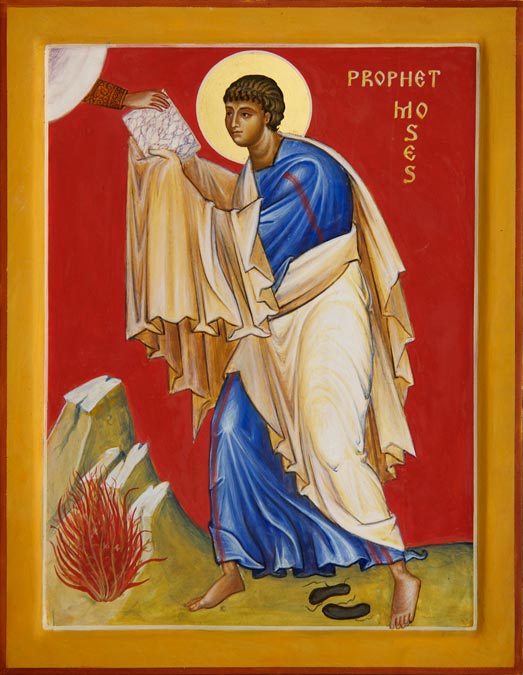
aidan-hart-moses_b.jpg

LV 19:1-2, 17-18

The LORD said to Moses,

“Speak to the whole Israelite community and tell them:

Be holy, for I, the LORD, your God, am holy.

“You shall not bear hatred for your brother or sister in your heart.

Though you may have to reprove your fellow citizen,

do not incur sin because of him.

Take no revenge and cherish no grudge against any of your people.

You shall love your neighbor as yourself.

I am the LORD.”

CATECHISM OF THE CATHOLIC CHURCH (CCC)

CCC 2055 When someone asks him, “Which commandment in the Law is the greatest?”1 Jesus replies: “You shall love the Lord your God with all your heart, and with all your soul, and with all your mind. This is the greatest and first commandment. And a second is like it: You shall love your neighbor as yourself. On these two commandments hang all the Law and the prophets.”2 The Decalogue must be interpreted in light of this twofold yet single commandment of love, the fullness of the Law:

The commandments: “You shall not commit adultery, You shall not kill, You shall not steal, You shall not covet,” and any other commandment, are summed up in this sentence: “You shall love your neighbor as yourself.” Love does no wrong to a neighbor; therefore love is the fulfilling of the law.3

CCC 2196 In response to the question about the first of the commandments, Jesus says: “The first is, ‘Hear, O Israel: The Lord our God, the Lord is one; and you shall love the Lord your God with all your heart, and with all your soul, and with all your mind, and with all your strength.’ The second is this, ‘You shall love your neighbor as yourself.’ There is no other commandment greater than these.”4

The apostle St. Paul reminds us of this: “He who loves his neighbor has fulfilled the law. The commandments, ‘You shall not commit adultery, You shall not kill, You shall not steal, You shall not covet,‘ and any other commandment, are summed up in this sentence, ‘You shall love your neighbor as yourself.’ Love does no wrong to a neighbor; therefore love is the fulfilling of the law.”5

CCC 2811 In spite of the holy Law that again and again their Holy God gives them – “You shall be holy, for I the LORD your God am holy” – and although the Lord shows patience for the sake of his name, the people turn away from the Holy One of Israel and profane his name among the nations.6 For this reason the just ones of the old covenant, the poor survivors returned from exile, and the prophets burned with passion for the name.

1 Mt 22:36.

2 Mt 22:37-40; cf. Deut 6:5; Lev 19:18.

3 Rom 13:9-10.

4 Mk 12:29-31; cf. Deut 6:4-5; Lev 19:18; Mt 22:34-40; Lk 10:25-28.

5 Rom 13:8-10.

6 Ezek 20:9, 14, 22, 39; cf. Lev 19:2.

APPLICATION

“You shall be holy: for I the Lord your God am holy.” This command given by God to the Israelites seems at first sight impossible of fulfillment for weak, human nature. God is holiness itself, he is holy by his nature, which is divine, while man, even the best of men, seems inclined to unholiness or evil by his very nature. But God did not command the Israelites to be as holy as he is–that would be an impossibility. What he does give them is the reason why they should be as holy as men can be. He is the God of holiness, the God of all perfection, they are his chosen ones. They should therefore strive to achieve such human perfection as would make them worthy of the holy state he has planned for them, namely, adopted sonship.

This same command holds for all men still. We Christians should find it much easier to fulfill, since the Incarnation, which was only very vaguely revealed to the Israelites, has taken place in our history–“before our eyes” as it were. Through the Incarnation, we know God’s real purpose for us men. He has made us his adopted sons, he has given us the example of Christ, his divine Son in true human nature, who as man lived a life of perfect holiness, perfect obedience to his heavenly Father. With such an example, and with the clear understanding of what the end and purpose of our journey through life is, we should not find it so hard to strive to make ourselves worthy of the honor and the great future God has in store for us.
We are God’s adopted sons. There is an eternity of happiness awaiting us when we end our sojourn here below The Christian who is convinced of this truth, as every sincere Christian is, will not look on the command to be holy so much as a command, as a necessary preparation for what is to come, a preparation which he gladly undertakes. The bride-to-be who is told by her mother to prepare herself fittingly for her wedding-day would hardly call this a command. We are destined to be brides of Christ for all eternity. We are convinced of this, that is why we are Christians. Now then could we look on the necessary preparations for our wedding-day, the day of our judgment, as something onerous, something we dislike?

We have seen God’s love for us. The Incarnation shows a love which surpasses the wildest hopes or imagination of men. Would we be so mean and so ungrateful as to refuse the puny bit of human love which he asks of us in return? We know for certain what future God has planned for us and earned for us through the God-man Christ–an eternity of happiness with God in heaven. Who would be so foolish, so forgetful of his own best interest, as to let the trifling, fleeting, unsatisfying things of this earth prevent him from reaching such a happy, unending future?
God’s call to us to be holy is really not a command but the kind and loving advice of an infinitely loving Father.

RESPONSORIAL PSALM

PS 103:1-2, 3-4, 8, 10, 12-13

The Lord is kind and merciful.

Bless the LORD, O my soul;

and all my being, bless his holy name.

Bless the LORD, O my soul,

and forget not all his benefits.

The Lord is kind and merciful.

He pardons all your iniquities,

heals all your ills.

He redeems your life from destruction,

crowns you with kindness and compassion.

The Lord is kind and merciful.

Merciful and gracious is the LORD,

slow to anger and abounding in kindness.

Not according to our sins does he deal with us,

nor does he requite us according to our crimes.

The Lord is kind and merciful.

As far as the east is from the west,

so far has he put our transgressions from us.

As a father has compassion on his children,

so the LORD has compassion on those who fear him.

The Lord is kind and merciful.

READING II

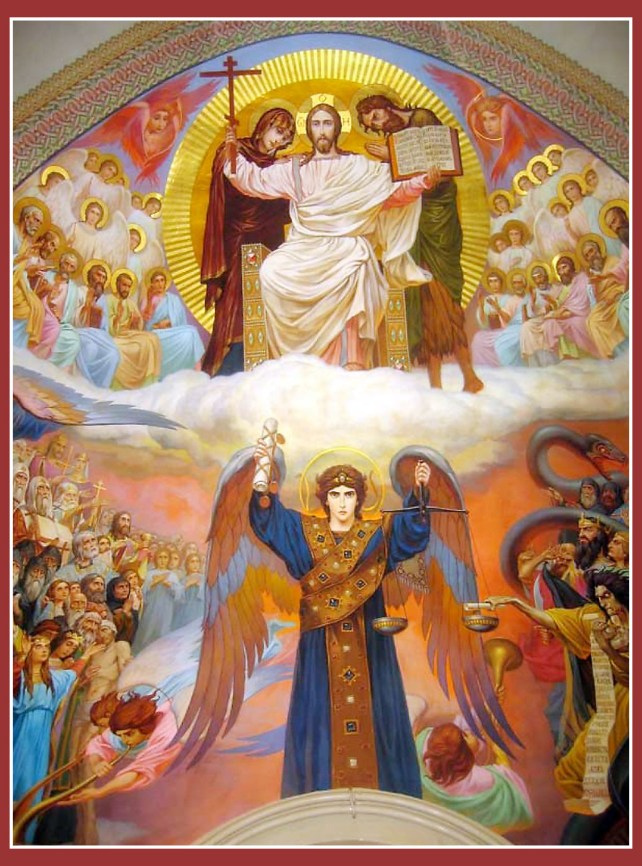
The Last Judgement.jpg

COR 3:16-23

Brothers and sisters:

Do you not know that you are the temple of God,

and that the Spirit of God dwells in you?

If anyone destroys God’s temple, God will destroy that person;

for the temple of God, which you are, is holy.

Let no one deceive himself.

If any one among you considers himself wise in this age,

let him become a fool, so as to become wise.

For the wisdom of this world is foolishness in the eyes of God,

for it is written:

God catches the wise in their own ruses,

and again:

The Lord knows the thoughts of the wise,

that they are vain.

So let no one boast about human beings, for everything belongs to you,

Paul or Apollos or Cephas,

or the world or life or death,

or the present or the future:

all belong to you, and you to Christ, and Christ to God.

CATECHISM OF THE CATHOLIC CHURCH (CCC)

CCC 797 “What the soul is to the human body, the Holy Spirit is to the Body of Christ, which is the Church.”1 “To this Spirit of Christ, as an invisible principle, is to be ascribed the fact that all the parts of the body are joined one with the other and with their exalted head; for the whole Spirit of Christ is in the head, the whole Spirit is in the body, and the whole Spirit is in each of the members.”2 The Holy Spirit makes the Church “the temple of the living God”:3

Indeed, it is to the Church herself that the “Gift of God” has been entrusted. .. In it is in her that communion with Christ has been deposited, that is to say: the Holy Spirit, the pledge of incorruptibility, the strengthening of our faith and the ladder of our ascent to God. .. For where the Church is, there also is God’s Spirit; where God’s Spirit is, there is the Church and every grace.4

1 St. Augustine, Sermo 267, 4: PL 38, 1231D.

2 Pius XII, encyclical, Mystici Corporis: DS 3808.

3 2 Cor 6:16; cf. 1 Cor 3:16-17; Eph 2:21.

4 St. Irenaeus, Adv. haeres. 3, 24, 1: PG 7/1, 966.

APPLICATION

Today these words of St. Paul call on each one of us to stop and think of the divine gift God gave us when he made us Christians. We know where we come from, we know where we are going. God created us–be it through evolution or directly, it matters not–and it is to God that we owe the fact that we are here and now on this planet. But great though the gift of earthly life is, it would be, without the hope of a future life, a source of unhappiness for any thinking man. If after all my striving, all my endeavors, all my attempts to collect all the pleasures, wealth and happiness that this life can give, I were convinced that I would end forever in a hole in the ground, in a few years’ time, what a cloud of unhappiness would hang over even my happiest day!

But thanks to the divine gift of faith, I know that my few years on this earth are only a period given me to prepare for my future. I know that my earthly death is not the end but the beginning of my real life–a life that will never again end. What a consoling, what an uplifting thought this is, not only in my hours of suffering or trouble but in my moments of greatest happiness. I can see in them a foretaste of what is to come, as I can and should see in my sufferings the divine medicine which will one day bring me back to eternal health.

We have the true wisdom; we know the real truths. Let the world-wise wear out their strength collecting this world’s empty packages; let the neo-pagans keep on burying God and straining all their nerves to build a heaven on earth; we know the true value of this world’s goods; we know where the true, lasting heaven is, and please God it is there we are going.

But to get there we must never forget that we are God’s temple, as St. Paul tells us today. We must keep that temple pure and holy. We belong to God; we are his adopted sons. Let us strive every day of our lives to be worthy of this gratuitous divine honor. We could forfeit and lose this privilege–others have done so before us. God forbid that any of us should find himself among their number when he is called from this life.

GOSPEL

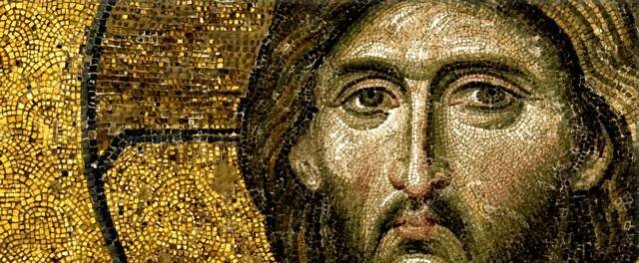
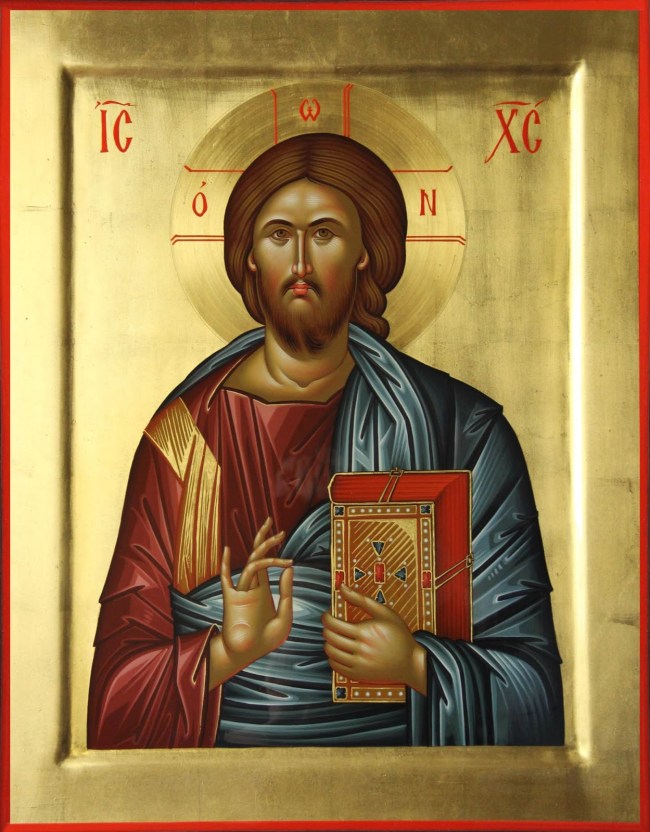
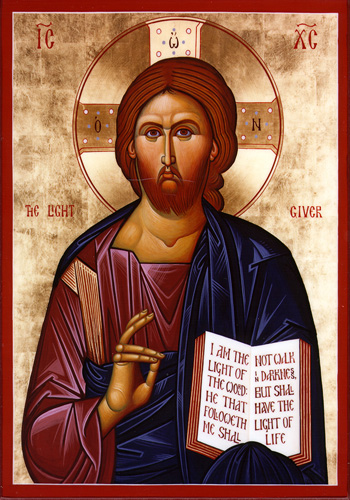
01-jesus-christ-pantocrator_full.jpg


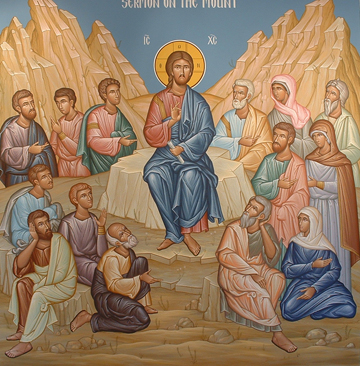
MT 5:38-48

Jesus said to his disciples:

“You have heard that it was said,

An eye for an eye and a tooth for a tooth.

But I say to you, offer no resistance to one who is evil.

When someone strikes you on your right cheek,

turn the other one as well.

If anyone wants to go to law with you over your tunic,

hand over your cloak as well.

Should anyone press you into service for one mile,

go for two miles.

Give to the one who asks of you,

and do not turn your back on one who wants to borrow.

“You have heard that it was said,

You shall love your neighbor and hate your enemy.

But I say to you, love your enemies

and pray for those who persecute you,

that you may be children of your heavenly Father,

for he makes his sun rise on the bad and the good,

and causes rain to fall on the just and the unjust.

For if you love those who love you, what recompense will you have?

Do not the tax collectors do the same?

And if you greet your brothers only,

what is unusual about that?

Do not the pagans do the same?

So be perfect, just as your heavenly Father is perfect.”

http://www.usccb.org/bible/readings/021917.cfm

CATECHISM OF THE CATHOLIC CHURCH (CCC)

CCC 443 Peter could recognize the transcendent character of the Messiah’s divine sonship because Jesus had clearly allowed it to be so understood. To his accusers’ question before the Sanhedrin, “Are you the Son of God, then?” Jesus answered, “You say that I am.”1 Well before this, Jesus referred to himself as “the Son” who knows the Father, as distinct from the “servants” God had earlier sent to his people; he is superior even to the angels.2 He distinguished his sonship from that of his disciples by never saying “our Father”, except to command them: “You, then, pray like this: ‘Our Father’”, and he emphasized this distinction, saying “my Father and your Father”.3

CCC 1693 Christ Jesus always did what was pleasing to the Father,4 and always lived in perfect communion with him. Likewise Christ’s disciples are invited to live in the sight of the Father “who sees in secret,”5 in order to become “perfect as your heavenly Father is perfect.”6

CCC 1825 Christ died out of love for us, while we were still “enemies.”7 The Lord asks us to love as he does, even our enemies, to make ourselves the neighbor of those farthest away, and to love children and the poor as Christ himself.8

The Apostle Paul has given an incomparable depiction of charity: “charity is patient and kind, charity is not jealous or boastful; it is not arrogant or rude. Charity does not insist on its own way; it is not irritable or resentful; it does not rejoice at wrong, but rejoices in the right. Charity bears all things, believes all things, hopes all things, endures all things.”9

CCC 1933 This same duty extends to those who think or act differently from us. The teaching of Christ goes so far as to require the forgiveness of offenses. He extends the commandment of love, which is that of the New Law, to all enemies.10 Liberation in the spirit of the Gospel is incompatible with hatred of one’s enemy as a person, but not with hatred of the evil that he does as an enemy.

CCC 1968 The Law of the Gospel fulfills the commandments of the Law. The Lord’s Sermon on the Mount, far from abolishing or devaluing the moral prescriptions of the Old Law, releases their hidden potential and has new demands arise from them: it reveals their entire divine and human truth. It does not add new external precepts, but proceeds to reform the heart, the root of human acts, where man chooses between the pure and the impure,11 where faith, hope, and charity are formed and with them the other virtues. The Gospel thus brings the Law to its fullness through imitation of the perfection of the heavenly Father, through forgiveness of enemies and prayer for persecutors, in emulation of the divine generosity.12

CCC 2013 “All Christians in any state or walk of life are called to the fullness of Christian life and to the perfection of charity.”13 All are called to holiness: “Be perfect, as your heavenly Father is perfect.”14

In order to reach this perfection the faithful should use the strength dealt out to them by Christ’s gift, so that. .. doing the will of the Father in everything, they may wholeheartedly devote themselves to the glory of God and to the service of their neighbor. Thus the holiness of the People of God will grow in fruitful abundance, as is clearly shown in the history of the Church through the lives of so many saints.13

CCC 2054 Jesus acknowledged the Ten Commandments, but he also showed the power of the Spirit at work in their letter. He preached a “righteousness [which] exceeds that of the scribes and Pharisees”16 as well as that of the Gentiles.17 He unfolded all the demands of the Commandments. “You have heard that it was said to the men of old, ‘You shall not kill.’. .. But I say to you that every one who is angry with his brother shall be liable to judgment.”18

CCC 2262 In the Sermon on the Mount, the Lord recalls the commandment, “You shall not kill,”19 and adds to it the proscription of anger, hatred, and vengeance. Going further, Christ asks his disciples to turn the other cheek, to love their enemies.20 He did not defend himself and told Peter to leave his sword in its sheath.21

CCC 2303 Deliberate hatred is contrary to charity. Hatred of the neighbor is a sin when one deliberately wishes him evil. Hatred of the neighbor is a grave sin when one deliberately desires him grave harm. “But I say to you, Love your enemies and pray for those who persecute you, so that you may be sons of your Father who is in heaven.”22

CCC 2443 God blesses those who come to the aid of the poor and rebukes those who turn away from them: “Give to him who begs from you, do not refuse him who would borrow from you”; “you received without pay, give without pay.”23 It is by what they have done for the poor that Jesus Christ will recognize his chosen ones.24 When “the poor have the good news preached to them,” it is the sign of Christ’s presence.25

CCC 2828 “Give us”: The trust of children who look to their Father for everything is beautiful. “He makes his sun rise on the evil and on the good, and sends rain on the just and on the unjust.”26 He gives to all the living “their food in due season.”27 Jesus teaches us this petition, because it glorifies our Father by acknowledging how good he is, beyond all goodness.

CCC 2842 This “as” is not unique in Jesus’ teaching: “You, therefore, must be perfect, as your heavenly Father is perfect”; “Be merciful, even as your Father is merciful”; “A new commandment I give to you, that you love one another, even as I have loved you, that you also love one another.”28 It is impossible to keep the Lord’s commandment by imitating the divine model from outside; there has to be a vital participation, coming from the depths of the heart, in the holiness and the mercy and the love of our God. Only the Spirit by whom we live can make “ours” the same mind that was in Christ Jesus.29 Then the unity of forgiveness becomes possible and we find ourselves “forgiving one another, as God in Christ forgave” us.30

CCC 2844 Christian prayer extends to the forgiveness of enemies,31 transfiguring the disciple by configuring him to his Master. Forgiveness is a high-point of Christian prayer; only hearts attuned to God’s compassion can receive the gift of prayer. Forgiveness also bears witness that, in our world, love is stronger than sin. The martyrs of yesterday and today bear this witness to Jesus. Forgiveness is the fundamental condition of the reconciliation of the children of God with their Father and of men with one another.32

1 Lk 22:70; cf. Mt 26:64; Mk 14:61-62.

2 Cf. Mt 11:27; 21:34-38; 24:36.

3 Mt 5:48; 6:8-9; 7:21; Lk 11:13; Jn 20:17.

4 Cf. Jn 8:29.

5 Mt 6:6.

6 Mt 5:48.

7 Rom 5:10.

8 Cf. Mt 5:44; Lk 10:27-37; Mk 9:37; Mt 25:40, 45.

9 1 Cor 13:4-7.

10 Cf. Mt 5:43-44.

11 Cf. Mt 15:18-19.

12 Cf. Mt 5:44,48.

13 LG 40 # 2.

14 Mt 5:48.

15 LG 40 # 2.

16 Mt 5:20.

17 Cf. Mt 5:46-47.

18 Mt 5:21-22.

19 Mt 5:21.

20 Cf. Mt 5:22-39; 5:44.

21 Cf. Mt 26:52.

22 Mt 5:44-45.

23 Mt 5:42; 10:8.

24 Cf. Mt 25:31-36.

25 Mt 11:5; cf. Lk 4:18.

26 Mt 5:45.

27 PS 104:27.

28 Mt 5:48; Lk 6:36; Jn 13:34.

29 Cf. Gal 5:25; Phil 2:1,5.

30 Eph 4:32.

31 Cf. Mt 5:43-44.

32 Cf. 2 Cor 5:18-21; John Paul II, DM 14.

APPLICATION

The lesson we have to learn from today’s gospel hardly needs any emphasizing. We must, if we are truly Christian, forgive those who offend or injure us. We must love all men, whether they be friends or enemies. G. K. Chesterton says : “We are commanded to love our neighbors and our enemies; they are generally the same people.” This is very true for all of us. It is very easy for me to love (in a theoretical way) all Japanese, Chinese, Russians and most Europeans–they never come in contact with me and never tread on my corns. But it is my neighbors, those among whom I live and work, who are liable to injure me and thus become my enemies.

Charity begins at home, because it is here that it can and should be learned and practiced. It is first and foremost necessary for Christian peace in the home. Husband and wife must learn to understand and tolerate each other’s imperfections and faults. If one offends in what the other would regard as something serious, the offended one should not demand an apology but should show forgiveness before the other has humbly to apologize. No two persons in the world, not even identical twins, can agree on all things, so it is vain and unrealistic to expect even one’s married partner to agree with one in all points. Christian charity alone can cover the multitude of faults of both partners.

If there is peace and harmony between husband and wife, as there will be if both are truly charitable, the children will learn too to be understanding and forgiving. Such a home will be a truly happy home even if it has little of the world’s riches.

Our charity must spread from the home to our neighbors–to all those with whom we have contact. It is easy to get on with most people, but in every neighborhood and in every village or town there will always be those who are difficult. There will be the dishonest, the tale-bearers, the quarrelsome, the critic of everyone and everything. It is when we have dealings with such people that all our Christian charity is necessary. Most likely we will never be able to change their ways of acting, but charity will enable us to tolerate their faults and will move us to pray for their eternal welfare.

Life for many, if not for most people, has many dark, gloomy and despairing moments. The man or woman who is moved by true Christian charity can bring a beam of sunshine, a ray of hope, into the lives of these people. Fr. Faber in a booklet on kindness has a poem which we could all learn and practice with great profit for ourselves and for a neighbor in need of kindness. He says:

“It was but a sunny smile,

And little it cost in the giving,

But it scattered the night like the

morning light

And made the day worth living.

It was but a kindly word,

A word that was lightly spoken,

Yet not in vain for it chilled the pain

Of a heart that was nearly broken.

It was but a helping hand,

And it seemed of little availing,

But its clasp was warm, it saved from

harm

A brother whose strength was failing.”

Try the sunny smile of true love, the kindly word of Christian encouragement, the helping hand of true charity, and not only will you brighten the darkness and lighten the load of your brother but you will be imitating in your own small way the perfect Father of love who is in heaven.

Applications written by Fr. Kevin O’Sullivan OFM and used with permission from Franciscan Press.

BENEDICTUS

The Commandments

The whole of man is required for the knowledge of God – understanding, will, and heart. In practice this means that we cannot know God unless we are prepared to accept his will, to take it as the yardstick and the orientation for our lives. In still more practical terms, that means that living in accordance with the commandments is a part of belonging to the pilgrim fellowship of faith, the fellowship of those traveling toward God. That is not a heteronomous rule being imposed upon man. It is in assenting to the will of God that our being made truly similar to God is actually effected, and we become what we are: the image of God. And because God is love, that is why the commandments, in which his will is made known, are the essential variations of the single theme of love. They are the practical rules of love for God, for my neighbor, for creation, for ourselves. And because again, there exists in Christ the entire assent to God’s will, the full stature of being in God’s image; that is why living in accordance with love and within the will of God is following Christ, moving toward him and walking together with him.

Pope Emeritus Benedict XVI

CLOSING PRAYER

Act of Contrition

My God, I am sorry for my sins.

In choosing to sin, and failing to do good,

I have sinned against you and your Church.

I firmly intend, with the help of your Son,

to do penance and to sin no more.

Amen.

Posted in Catholic | Leave a comment

Sixth Sunday in Ordinary Time – A

sermon_sm.jpg

Jesus said to his disciples:

“I tell you, unless your righteousness surpasses that of the scribes and Pharisees, you will not enter the kingdom of heaven.”

OPENING PRAYER

Catechism 226

My Lord and my God, take from me everything that distances me from you.

My Lord and my God, give me everything that brings me closer to you.

My Lord and my God, detach me from myself to give my all to you.

COLLECT

O God, who teaches us that you abide

in hearts that are just and true,

grant that we may be so fashioned by your grace

as to become a dwelling pleasing to you.

Through our Lord Jesus Christ, your Son,

who lives and reigns with you in the unity

of the Holy Spirit,

one God, for ever and ever.

READING I

-6.jpg

SIR 15:15-20

If you choose you can

keep the commandments, they will save you;

if you trust in God, you too shall live;

he has set before you fire and water

to whichever you choose, stretch forth your hand.

Before man are life and death, good and evil,

whichever he chooses shall be given him.

Immense is the wisdom of the Lord;

he is mighty in power, and all-seeing.

The eyes of God are on those who fear him;

he understands man’s every deed.

No one does he command to act unjustly,

to none does he give license to sin.

APPLICATION

Any Christian parent or teacher could give us these words of truth and wisdom, and they would be of great value if we heeded them. But this same advice comes to us today not from any human authority but from God himself, who inspired and moved the man called Sirach to write these words of wisdom, which were to last and have value, for all ages and generations of men. We might question a parent’s or a teacher’s wisdom, or their right, to tell us of our personal responsibility for our actions, but who can question or challenge God’s wisdom, or God’s right, to teach us the truth concerning ourselves?

We have received the gift of free-will from God. We know that we can serve God by keeping his commandments, or that we can disrespect his authority and refuse to keep his law. Having given us free-will, he cannot force us to be loyal or grateful to him. But if we had not free-will, we should be like the beast of the field who can neither honor nor dishonor God. From the dumb beast God does not expect, nor much less demand, obedience. But from us men, to whom he gave the gifts which put us above all earthly creatures, intelligence and free-will, he does expect and demand obedience and loyal service.

Let us listen to this man Sirach today who speaks to us in God’s name. We can keep God’s commandments, and we know we can. We can choose to do good or to do evil, but if we choose evil we cannot say we could not help doing so. We might fool a fellowman by this false line of defense, but the all-wise God who “sees everything” and “knows every deed of man” cannot be deceived. But what decent man and especially what decent Christian, who knows the lengths the good God has gone to in order to give us eternal life, would want to deceive him or be disloyal to him?

Ours is a religion of love, we do not and ought not, avoid sin because we should thereby bring sufferings, and perhaps eternal death, upon ourselves. We avoid sin because it is an insult to our loving Father in heaven, who sent his divine Son on earth to live, suffer and die for us, in order to give us eternal life with the Blessed Trinity in heaven. It should be hard for any true Christian deliberately to offend such a kind, loving Father.

For those among us, who may have forgotten God’s love for them, and may have broken his commandments, let them thank God that their hour of reckoning is not already upon them. They may have written many shameful pages in their life’s story, but they have not yet finished writing it. There is still time to tear out, or erase from their biography, those pages they should not have written. The loving Father is also the all-merciful, all-forgiving Father. No sinner, no matter how sordid and shameful his actions and his disrespect for God may have been, will turn to him asking for pardon and find his request was in vain. But the sinner who keeps on postponing this return to God and continues to offend him, may find himself in the presence of the just judge when he least expects it.

God’s mercy is infinite, but he cannot pardon the free agent who does not want pardon. Notwithstanding his infinite love for all men, he cannot welcome home the prodigals who will not return home.

RESPONSORIAL PSALM

Psalm ps 119:1-2, 4-5, 17-18, 33-34

Blessed are they who follow the law of the Lord!

Blessed are they whose way is blameless,

who walk in the law of the LORD.

Blessed are they who observe his decrees,

who seek him with all their heart.

Blessed are they who follow the law of the Lord!

You have commanded that your precepts

be diligently kept.

Oh, that I might be firm in the ways

of keeping your statutes!

Blessed are they who follow the law of the Lord!

Be good to your servant, that I may live

and keep your words.

Open my eyes, that I may consider

the wonders of your law.

Blessed are they who follow the law of the Lord!

Instruct me, O LORD, in the way of your statutes,

that I may exactly observe them.

Give me discernment, that I may observe your law

and keep it with all my heart.

Blessed are they who follow the law of the Lord!

READING II

preaching1.jpg

1 COR 2:6-10

Brothers and sisters:

We speak a wisdom to those who are mature,

not a wisdom of this age,

nor of the rulers of this age who are passing away.

Rather, we speak God’s wisdom, mysterious, hidden,

which God predetermined before the ages for our glory,

and which none of the rulers of this age knew;

for, if they had known it,

they would not have crucified the Lord of glory.

But as it is written:

What eye has not seen, and ear has not heard,

and what has not entered the human heart,

what God has prepared for those who love him,

this God has revealed to us through the Spirit.

For the Spirit scrutinizes everything, even the depths of God.

CATECHISM OF THE CATHOLIC CHURCH (CCC)

CCC 152 One cannot believe in Jesus Christ without sharing in his Spirit. It is the Holy Spirit who reveals to men who Jesus is. For “no one can say ”Jesus is Lord“, except by the Holy Spirit”,1 who “searches everything, even the depths of God. .. No one comprehends the thoughts of God, except the Spirit of God.”2 Only God knows God completely: we believe in the Holy Spirit because he is God.

The Church never ceases to proclaim her faith in one only God: Father, Son and Holy Spirit.

CCC 221 But St. John goes even further when he affirms that “God is love”:3 God’s very being is love. By sending his only Son and the Spirit of Love in the fullness of time, God has revealed his innermost secret:4 God himself is an eternal exchange of love, Father, Son and Holy Spirit, and he has destined us to share in that exchange.

CCC 446 In the Greek translation of the Old Testament, the ineffable Hebrew name YHWH, by which God revealed himself to Moses,5 is rendered as Kyrios, “Lord”. From then on, “Lord” becomes the more usual name by which to indicate the divinity of Israel’s God. The New Testament uses this full sense of the title “Lord” both for the Father and – what is new – for Jesus, who is thereby recognized as God Himself.6

CCC 498 People are sometimes troubled by the silence of St. Mark’s Gospel and the New Testament Epistles about Jesus’ virginal conception. Some might wonder if we were merely dealing with legends or theological constructs not claiming to be history. To this we must respond: Faith in the virginal conception of Jesus met with the lively opposition, mockery or incomprehension of non-believers, Jews and pagans alike;7 so it could hardly have been motivated by pagan mythology or by some adaptation to the ideas of the age. The meaning of this event is accessible only to faith, which understands in it the “connection of these mysteries with one another”8 in the totality of Christ’s mysteries, from his Incarnation to his Passover. St. Ignatius of Antioch already bears witness to this connection: “Mary’s virginity and giving birth, and even the Lord’s death escaped the notice of the prince of this world: these three mysteries worthy of proclamation were accomplished in God’s silence.”9

CCC 598 In her Magisterial teaching of the faith and in the witness of her saints, the Church has never forgotten that “sinners were the authors and the ministers of all the sufferings that the divine Redeemer endured.”10 Taking into account the fact that our sins affect Christ himself,11 the Church does not hesitate to impute to Christians the gravest responsibility for the torments inflicted upon Jesus, a responsibility with which they have all too often burdened the Jews alone:

We must regard as guilty all those who continue to relapse into their sins. Since our sins made the Lord Christ suffer the torment of the cross, those who plunge themselves into disorders and crimes crucify the Son of God anew in their hearts (for he is in them) and hold him up to contempt. And it can be seen that our crime in this case is greater in us than in the Jews. As for them, according to the witness of the Apostle, “None of the rulers of this age understood this; for if they had, they would not have crucified the Lord of glory.” We, however, profess to know him. And when we deny him by our deeds, we in some way seem to lay violent hands on him.12

Nor did demons crucify him; it is you who have crucified him and crucify him still, when you delight in your vices and sins.13

CCC 1027 This mystery of blessed communion with God and all who are in Christ is beyond all understanding and description. Scripture speaks of it in images: life, light, peace, wedding feast, wine of the kingdom, the Father’s house, the heavenly Jerusalem, paradise: “no eye has seen, nor ear heard, nor the heart of man conceived, what God has prepared for those who love him.”14

CCC 1998 This vocation to eternal life is supernatural. It depends entirely on God’s gratuitous initiative, for he alone can reveal and give himself. It surpasses the power of human intellect and will, as that of every other creature.15

CCC 2038 In the work of teaching and applying Christian morality, the Church needs the dedication of pastors, the knowledge of theologians, and the contribution of all Christians and men of good will. Faith and the practice of the Gospel provide each person with an experience of life “in Christ,” who enlightens him and makes him able to evaluate the divine and human realities according to the Spirit of God.16 Thus the Holy Spirit can use the humblest to enlighten the learned and those in the highest positions.

1 I Cor 12:3.

2 I Cor 2:10-11.

3 l Jn 4:8, 16.

4 Cf. I Cor 2:7-16; Eph 3:9-12.

5 Cf. Ex 3:14.

6 Cf. I Cor 2:8.

7 Cf. St. Justin, Dial. 99, 7: PG 6, 708-709; Origen, Contra Celsum 1, 32, 69: PG 11, 720-721; et al.

8 Dei Filius 4: DS 3016.

9 St. Ignatius of Antioch, Ad Eph. 19, 1: AF 11/2 76-80: cf. I Cor 2:8.

10 Roman Catechism I, 5, 11; cf. Heb 12:3.

11 Cf. Mt 25:45; Acts 9:4-5.

12 Roman Catechism I, 5, 11; cf. Heb 6:6; 1 Cor 2:8.

13 St. Francis of Assisi, Admonitio 5, 3.

14 1 Cor 2:9.

15 Cf. 1 Cor 2:7-9.

16 Cf. 1 Cor 2:10-15.

APPLICATION

The mental outlook of the world of today is little changed from that of St. Paul’s day. The philosophy and the wisdom of the rulers of this age, and unfortunately not only of those rulers, is still earth-bound and worldly. The things of God are openly denied in a large section of our world, while he is shamefully ignored and neglected in the remaining sections which nominally believe in him. Nations, and most of their citizens, are bending all their energies to obtain more and more of the passing, perishable wealth and power of this miserable planet. We are living in a welter of international, limited wars, while all the time the threat of global war, and universal destruction, is hanging like a dark thunder cloud on our horizon.

We have advanced technically beyond the wildest dreams of our forebears, but every technical advance which could and should be a boon for humanity, is turned instead into a possible instrument of human extermination. The brotherhood of man is no longer accepted as a basic human tenet, and it is little wonder, since the fatherhood of God is denied in practice as well as in theory. And it is not only in apartheid and color-prejudiced countries that segregation and suppression of the weaker brethren is practiced, but also, and maybe more so, in the so-called free democracies.

The big business tycoons of today are the counterparts of the Roman slave-drivers. Their shares and their bank accounts are their household gods. Their workers and their poorer neighbors are far less concern to them than their Cadillac’s, their yachts and their racehorses. They hold solemn funeral rites for their pet dogs, and erect tombstones over their graves, but their charwomen, living in squalor, are not given a spare thought nor a spare dime. But what is worse, this pagan and inhuman worldly philosophy spreads down like a poison gas through the ranks of the less successful middle and lower-middle classes.

This is the direct result of our forgetfulness of, or rather our ignoring, the only true wisdom of life. The eternal happiness of man, planned by God’s wisdom and love from all eternity, and effected and revealed in the Incarnation, has been forgotten. Modem man, like the pagans of old, thinks his home and his true happiness are on this earth, hence he rides roughshod over his weaker neighbor, to get all he can out of the few years he realizes he has to enjoy himself.

A return to sanity in our world can be brought about only by a return to a recognition of God’s plan for us. Our time on earth is a journey to heaven. The less we load ourselves with this world’s goods or interests, the easier our journey will be. The more we help out fellow-travelers on this journey (and this includes all men), the safer and the smoother will be our own travel. Our true happiness, our everlasting happiness, will begin only when we arrive at our earthly journey’s end. If we keep on the path marked out for us by our loving heavenly Father, and if we practice true brotherly love on the way, we can rest assured that our journey will not have been in vain.

GOSPEL

sermon+on+the+mount.jpg

MT 5:20-22a, 27-28, 33-34a, 37

Jesus said to his disciples:

“I tell you, unless your righteousness surpasses

that of the scribes and Pharisees,

you will not enter the kingdom of heaven.

“You have heard that it was said to your ancestors,

You shall not kill; and whoever kills will be liable to judgment.

But I say to you,

whoever is angry with brother

will be liable to judgment.

“You have heard that it was said, You shall not commit adultery.

But I say to you,

everyone who looks at a woman with lust

has already committed adultery with her in his heart.

“Again you have heard that it was said to your ancestors,

Do not take a false oath,

but make good to the Lord all that you vow.

But I say to you, do not swear at all.

Let your ‘Yes’ mean ‘Yes,’and your ‘No’ mean ‘No.’

Anything more is from the evil one.”

http://www.usccb.org/bible/readings/021217.cfm

CATECHISM OF THE CATHOLIC CHURCH (CCC)

CCC 226 It means making good use of created things: faith in God, the only One, leads us to use everything that is not God only insofar as it brings us closer to him, and to detach ourselves from it insofar as it turns us away from him:

My Lord and my God, take from me everything that distances me from you.

My Lord and my God, give me everything that brings me closer to you.

My Lord and my God, detach me from myself to give my all to you.1

CCC 577 At the beginning of the Sermon on the Mount Jesus issued a solemn warning in which he presented God’s law, given on Sinai during the first covenant, in light of the grace of the New Covenant:

Do not think that I have come to abolish the law or the prophets: I have come not to abolish but to fulfill. For truly I tell you, until heaven and earth pass away, not one letter, not one stroke of a letter, will pass from the law, until all is accomplished. Therefore, whoever breaks one of the least of these commandments, and teaches others to do the same, will be called least in the kingdom of heaven; but whoever does them and teaches them will be called great in the kingdom of heaven.2

CCC 581 The Jewish people and their spiritual leaders viewed Jesus as a rabbi.3 He often argued within the framework of rabbinical interpretation of the Law.4 Yet Jesus could not help but offend the teachers of the Law, for he was not content to propose his interpretation alongside theirs but taught the people “as one who had authority, and not as their scribes”.5 In Jesus, the same Word of God that had resounded on Mount Sinai to give the written Law to Moses, made itself heard anew on the Mount of the Beatitudes.6 Jesus did not abolish the Law but fulfilled it by giving its ultimate interpretation in a divine way: “You have heard that it was said to the men of old. .. But I say to you. ..”7 With this same divine authority, he disavowed certain human traditions of the Pharisees that were “making void the word of God”.8

CCC 678 Following in the steps of the prophets and John the Baptist, Jesus announced the judgment of the Last Day in his preaching.9 Then will the conduct of each one and the secrets of hearts be brought to light.10 Then will the culpable unbelief that counted the offer of God’s grace as nothing be condemned.11 Our attitude to our neighbor will disclose acceptance or refusal of grace and divine love.12 On the Last Day Jesus will say: “Truly I say to you, as you did it to one of the least of these my brethren, you did it to me.”13

CCC 1034 Jesus often speaks of “Gehenna” of “the unquenchable fire” reserved for those who to the end of their lives refuse to believe and be converted, where both soul and body can be lost.14 Jesus solemnly proclaims that he “will send his angels, and they will gather. .. all evil doers, and throw them into the furnace of fire,”15 and that he will pronounce the condemnation: “Depart from me, you cursed, into the eternal fire!”16

CCC 1424 It is called the sacrament of confession, since the disclosure or confession of sins to a priest is an essential element of this sacrament. In a profound sense it is also a “confession” – acknowledgment and praise – of the holiness of God and of his mercy toward sinful man.

It is called the sacrament of forgiveness, since by the priest’s sacramental absolution God grants the penitent “pardon and peace.”17

It is called the sacrament of Reconciliation, because it imparts to the sinner the live of God who reconciles: “Be reconciled to God.”18 He who lives by God’s merciful love is ready to respond to the Lord’s call: “Go; first be reconciled to your brother.”19

CCC 1456 Confession to a priest is an essential part of the sacrament of Penance: “All mortal sins of which penitents after a diligent self-examination are conscious must be recounted by them in confession, even if they are most secret and have been committed against the last two precepts of the Decalogue; for these sins sometimes wound the soul more grievously and are more dangerous than those which are committed openly.”20

When Christ’s faithful strive to confess all the sins that they can remember, they undoubtedly place all of them before the divine mercy for pardon. But those who fail to do so and knowingly withhold some, place nothing before the divine goodness for remission through the mediation of the priest, “for if the sick person is too ashamed to show his wound to the doctor, the medicine cannot heal what it does not know.”21

CCC 1967 The Law of the Gospel “fulfills,” refines, surpasses, and leads the Old Law to its perfection.22 In the Beatitudes, the New Law fulfills the divine promises by elevating and orienting them toward the “kingdom of heaven.” It is addressed to those open to accepting this new hope with faith – the poor, the humble, the afflicted, the pure of heart, those persecuted on account of Christ and so marks out the surprising ways of the Kingdom.

CCC 2053 To this first reply Jesus adds a second: “If you would be perfect, go, sell what you possess and give to the poor, and you will have treasure in heaven; and come, follow me.”23 This reply does not do away with the first: following Jesus Christ involves keeping the Commandments. The Law has not been abolished,24 but rather man is invited to rediscover it in the person of his Master who is its perfect fulfillment. In the three synoptic Gospels, Jesus’ call to the rich young man to follow him, in the obedience of a disciple and in the observance of the Commandments, is joined to the call to poverty and chastity.25 The evangelical counsels are inseparable from the Commandments.

CCC 2142 The second commandment prescribes respect for the Lord’s name. Like the first commandment, it belongs to the virtue of religion and more particularly it governs our use of speech in sacred matters.

CCC 2153 In the Sermon on the Mount, Jesus explained the second commandment: “You have heard that it was said to the men of old, ‘You shall not swear falsely, but shall perform to the Lord what you have sworn.’ But I say to you, Do not swear at all. .. Let what you say be simply ‘Yes’ or ‘No’; anything more than this comes from the evil one.”26 Jesus teaches that every oath involves a reference to God and that God’s presence and his truth must be honored in all speech. Discretion in calling upon God is allied with a respectful awareness of his presence, which all our assertions either witness to or mock.

CCC 2258 “Human life is sacred because from its beginning it involves the creative action of God and it remains for ever in a special relationship with the Creator, who is its sole end. God alone is the Lord of life from its beginning until its end: no one can under any circumstance claim for himself the right directly to destroy an innocent human being.”27

CCC 2262 In the Sermon on the Mount, the Lord recalls the commandment, “You shall not kill,”28 and adds to it the proscription of anger, hatred, and vengeance. Going further, Christ asks his disciples to turn the other cheek, to love their enemies.29 He did not defend himself and told Peter to leave his sword in its sheath.30

CCC 2302 By recalling the commandment, “You shall not kill,”31 our Lord asked for peace of heart and denounced murderous anger and hatred as immoral.

Anger is a desire for revenge. “To desire vengeance in order to do evil to someone who should be punished is illicit,” but it is praiseworthy to impose restitution “to correct vices and maintain justice.”32 If anger reaches the point of a deliberate desire to kill or seriously wound a neighbor, it is gravely against charity; it is a mortal sin. The Lord says, “Everyone who is angry with his brother shall be liable to judgment.”33

CCC 2331 “God is love and in himself he lives a mystery of personal loving communion. Creating the human race in his own image. .. God inscribed in the humanity of man and woman the vocation, and thus the capacity and responsibility, of love and communion.”34

“God created man in his own image. .. male and female he created them”;35 He blessed them and said, “Be fruitful and multiply”;36 “When God created man, he made him in the likeness of God. Male and female he created them, and he blessed them and named them Man when they were created.”37

CCC 2336 Jesus came to restore creation to the purity of its origins. In the Sermon on the Mount, he interprets God’s plan strictly: “You have heard that it was said, ‘You shall not commit adultery.’ But I say to you that every one who looks at a woman lustfully has already committed adultery with her in his heart.”38 What God has joined together, let not man put asunder.39

The tradition of the Church has understood the sixth commandment as encompassing the whole of human sexuality.

CCC 2338 The chaste person maintains the integrity of the powers of life and love placed in him. This integrity ensures the unity of the person; it is opposed to any behavior that would impair it. It tolerates neither a double life nor duplicity in speech.40

CCC 2380 Adultery refers to marital infidelity. When two partners, of whom at least one is married to another party, have sexual relations – even transient ones – they commit adultery. Christ condemns even adultery of mere desire.41 The sixth commandment and the New Testament forbid adultery absolutely.42 The prophets denounce the gravity of adultery; they see it as an image of the sin of idolatry.43

CCC 2382 The Lord Jesus insisted on the original intention of the Creator who willed that marriage be indissoluble.44 He abrogates the accommodations that had slipped into the old Law.45

Between the baptized, “a ratified and consummated marriage cannot be dissolved by any human power or for any reason other than death.”46

CCC 2464 The eighth commandment forbids misrepresenting the truth in our relations with others. This moral prescription flows from the vocation of the holy people to bear witness to their God who is the truth and wills the truth. Offenses against the truth express by word or deed a refusal to commit oneself to moral uprightness: they are fundamental infidelities to God and, in this sense, they undermine the foundations of the covenant.

CCC 2466 In Jesus Christ, the whole of God’s truth has been made manifest. “Full of grace and truth,” he came as the “light of the world,” he is the Truth.47 “Whoever believes in me may not remain in darkness.”48 The disciple of Jesus continues in his word so as to know “the truth [that] will make you free” and that sanctifies.49 To follow Jesus is to live in “the Spirit of truth,” whom the Father sends in his name and who leads “into all the truth.”50 To his disciples Jesus teaches the unconditional love of truth: “Let what you say be simply ‘Yes or No.’”51

CCC 2514 St. John distinguishes three kinds of covetousness or concupiscence: lust of the flesh, lust of the eyes, and pride of life.52 In the Catholic catechetical tradition, the ninth commandment forbids carnal concupiscence; the tenth forbids coveting another’s goods.

CCC 2608 From the Sermon on the Mount onwards, Jesus insists on conversion of heart: reconciliation with one’s brother before presenting an offering on the altar, love of enemies, and prayer for persecutors, prayer to the Father in secret, not heaping up empty phrases, prayerful forgiveness from the depths of the heart, purity of heart, and seeking the Kingdom before all else.53 This filial conversion is entirely directed to the Father.

CCC 2792 Finally, if we pray the Our Father sincerely, we leave individualism behind, because the love that we receive frees us from it. The “our” at the beginning of the Lord’s Prayer, like the “us” of the last four petitions, excludes no one. If we are to say it truthfully, our divisions and oppositions have to be overcome.54

CCC 2841 This petition is so important that it is the only one to which the Lord returns and which he develops explicitly in the Sermon on the Mount.55 This crucial requirement of the covenant mystery is impossible for man. But “with God all things are possible.”56

CCC 2845 There is no limit or measure to this essentially divine forgiveness,57 whether one speaks of “sins” as in Luke (11:4), “debts” as in Matthew (6:12). We are always debtors: “Owe no one anything, except to love one another.”58 The communion of the Holy Trinity is the source and criterion of truth in every relation ship. It is lived out in prayer, above all in the Eucharist.59

God does not accept the sacrifice of a sower of disunion, but commands that he depart from the altar so that he may first be reconciled with his brother. For God can be appeased only by prayers that make peace. To God, the better offering is peace, brotherly concord, and a people made one in the unity of the Father, Son, and Holy Spirit.60

1 St. Nicholas of Flue; cf. Mt 5:29-30; 16:24-26.

2 Mt 5:17-19.

3 Cf Jn 11:28; 3:2; Mt 22:23-24, 34-36.

4 Cf. Mt 12:5; 9:12; Mk 2:23-27; Lk 6:6-g; Jn 7:22-23.

5 Mt 7:28-29.

6 Cf. Mt 5:1.

7 Mt 5:33-34.

8 Mk 7:13; cf. 3:8.

9 Cf. Dan 7:10; Joel 3-4; Mal 3: 19; Mt 3:7-12.

10 Cf Mk 12:38-40; Lk 12:1-3; Jn 3:20-21; Rom 2:16; I Cor 4:5.

11 Cf. Mt 11:20-24; 12:41-42.

12 Cf. Mt 5:22; 7:1-5.

13 Mt 25:40.

14 Cf. Mt 5:22, 29; 10:28; 13:42, 50; Mk 9:43-48.

15 Mt 13:41-42.

16 Mt 25:41.

17 OP 46 formula of absolution.

18 2 Cor 5:20.

19 MT 5:24.

20 Council of Trent (1551): DS 1680 (ND 1626); cf. Ex 20:17; Mt 5:28.

21 Council of Trent (1551): DS 1680 (ND 1626); cf. St. Jerome, In Eccl. 10, 11: PL 23:1096.

22 Cf. Mt 5:17-19.

23 Mt 19:21.

24 Cf. Mt 5:17.

25 Cf. Mt 19:6-12, 21, 23-29.

26 Mt 5:33-34,37; Cf. Jas 5:12.

27 CDF, instruction, Donum vitae, intro. 5.

28 Mt 5:21.

29 Cf. Mt 5:22-39; 5:44.

30 Cf. Mt 26:52.

31 Mt 5:21.

32 St. Thomas Aquinas, STh II-II, 158, 1 ad 3.

33 Mt 5:22.

34 FC 11.

35 Gen 1:27.

36 Gen 1:28.

37 Gen 5:1-2.

38 Mt 5:27-28.

39 Cf. Mt 19:6.

40 Cf. Mt 5:37.

41 Cf. Mt 5:27-28.

42 Cf. Mt 5:32; 19:6; Mk 10:11; 1 Cor 6:9-10.

43 Cf. Hos 2:7; Jer 5:7; 13:27.

44 Cf. Mt 5:31-32; 19:3-9; Mk 10 9; Lk 16:18; 1 Cor 7:10-ll.

45 Cf. Mt 19:7-9.

46 CIC, can. 1141.

47 Jn 1:14; 8:12; Cf. 14:6.

48 Jn 12:46.

49 Jn 8:32; Cf. 17:17.

50 Jn 16:13.

51 Mt 5:37.

52 Cf. 1 Jn 2:16.

53 Cf. Mt 5:23-24, 44-45; 6:7,14-15, 21, 25, 33.

54 Cf. Mt 5:23-24; 6:14-15.

55 Cf. Mt 6:14-15; 5:23-24; Mk 11:25.

56 Mt 19:26.

57 Cf. Mt 18:21-22; Lk 17:3-4.

58 Rom 13:8.

59 Cf. Mt 5:23-24; 1 Jn 3:19-24.

60 St. Cyprian, De Dom. orat. 23: PL 4, 535-536; cf. Mt 5:24.

APPLICATION

In this Sermon on the Mount, we have various sayings of Christ, actually spoken on different occasions. Matthew, in his systematic manner, has gathered these sayings into one continuous discourse here. This makes it easier for his readers, who were Jewish converts, to grasp the new order of salvation as inaugurated by Christ. They knew the ten commandments, but they knew them as their rabbis had taught them. These rabbis, for the most part Pharisees, put all the stress on the letter of the law and on its external observance. Christ’s opening statement, that the attitude of his followers towards the commandments (and other precepts of the law) must be different, and superior to that of the scribes and Pharisees, clearly indicates how Christianity must differ from, and supersede, Judaism.

Christ is not abolishing the ten commandments, but he is demanding of his followers a more perfect, a more sincere, fulfillment of them. The whole moral value of any legal observance (the Mosaic law included), comes from the interior disposition of him who observes or keeps the law. No man serves or honors God by any exterior acts, be they ever so arduous or continuous, unless these acts proceed from an intention and a will to honor and please God. This is the charter, the constitution, of the new law, Christianity. The old law is not abolished, but deepened and given a new life.

Avoiding murder therefore is not enough; the true Christian must remove any inclination to murder by building up true, brotherly love for all men in his heart.

We must not only not injure our neighbor or fellowman in his person, or in his character, but we must be ever ready to help him and prevent injury to him, whenever and wherever we can. We must not only not commit adultery, but must also develop a Christian respect and esteem for purity, the virtue which will preserve us not only from adultery but even from thoughts of adultery, or any other abuse of our sexual gifts given us by God for his sublime purpose.

We must be truthful always, and men of our word. This virtue is not only necessary for man’s salvation, but is the basis of rational intercourse between men in civilized society. While our civil courts still deem it necessary to impose oaths on contestants and witnesses (since they have, unfortunately, to take account of the liars and deceivers who still are a menace to society), the truthful man need not be afraid of insulting or dishonoring God by calling him as his guarantor, if asked to do so.

True and loyal service of God therefore begins in the heart and has its value from this interior disposition. Keeping the ten commandments is our way of proving to God that we are grateful, obedient and loyal to him who gave us all we have and who has promised us future gifts infinitely greater still. And just as our love for God is proved by our true love for our neighbor, so the last seven of the commandments impose on us obligations regarding our neighbor. It is only by fulfilling these seven that we can fulfill the first three which govern our relations with God.

This truth is expressed by our Lord in the words: It you are offering your gift at the altar, and remember that your brother has something against you, leave your gift there… first be reconciled to your brother and then come and offer your gift.

Applications written by Fr. Kevin O’Sullivan O.F.M. and used with permission from Franciscan Press.

BENEDICTUS

The Denial of Sin

It is precisely the existence of sin that modern man is unable to take seriously. Because of this rejection of the concept of sin, no one is directly touched today by the Gospel claim that the evidence of Jesus’ divine nature is based on his power to forgive sin. Most people do not explicitly deny the existence of God, but they do not believe that he is of any importance in the realm of human life. Hardly anyone seriously thinks nowadays that men’s wrong actions may concern God so much that he regards them as sinful and offensive to humself, with the result that such sin must be forgiven by him alone. Even theologians have discussed the possibility of replacing the practice of confessing sin by conversations with psychologists, sociologists, and lawyers. Sin does not really exist. There are only problems, and these can be settled with the help of experts. Sin has disappeared and with it forgiveness, and behind that disappearance there is also the disappearance of a God who is turned thward man. In this situation, Christians can only turn to the Gospel, which can give us courage to grasp the truth. Only the truth can make us free. But the truth is that there is guilt and that we ourselves are guilty. It is Christ’s new truth that there is also forgiveness by the one who has the power to forgive. The Gospel calls on us to accept this truth. There is a God. Sin exists and there is also forgiveness. We need that forgiveness if we are not to seek refuge in the lie of excuses and thus destroy ourselves… Where there is forgiveness, there is also healing.

Pope Emeritus Benedict XVI

CLOSING PRAYER

Psalm 51: 1-12

Have mercy on me, O God, according to your steadfast love;

According to your abundant mercy blot out my transgressions.

Wash me thoroughly from my iniquity, and cleanse me from my sin.

For I know my transgressions, and my sin is ever before me.

Against you, you alone, have I sinned, and done what is evil in your sight,

So that you are justified in your sentence and blameless when you pass judgement.

Indeed, I was born guilty, a sinner when my mother conceived me.

You desire truth in the inward being; therefore teach me wisdom in my secret heart.

Purge me with hyssop, and I shall be clean; wash me and I shall be whiter than snow.

Let me hear joy and gladness; let the bones you have crushed rejoice.

Hide your face from my sins, and blot out all my iniquities.

Create in me a clean heart, O God, and put a new and right spirit within me.

Do not cast me away from your presence, and do not take your holy spirit from me.

Restore to me the joy of your salvation, and sustain in me a willing heart.

Amen

Posted in Catholic | Leave a comment

Fifth Sunday in Ordinary Time – A

ChristTheTeacher smaller.jpg

‘your light must shine before others, that they may see your good deeds and glorify your heavenly Father.”

OPENING PRAYER

Jesus Light of the World

Jesus, Light of the World, For the many that have followed you today through the darkness of temptation, doubt, or pain, you are the promise of an eternal dawn. We give thanks for all that has been given to us through you, and we ask for the grace to be your faithful disciples. May we praise you all the days of our lives. Amen

COLLECT

Keep your family safe, O Lord, with unfailing care,

that, relying solely on the hope of heavenly grace,

they may be defended always by your protection.

Through our Lord Jesus Christ, your Son,

who lives and reigns with you in the unity

of the Holy Spirit,

one God, for ever and ever.

READING I

-1.jpg

Is 58:7-10

Thus says the LORD:

Share your bread with the hungry,

shelter the oppressed and the homeless;

clothe the naked when you see them,

and do not turn your back on your own.

Then your light shall break forth like the dawn,

and your wound shall quickly be healed;

your vindication shall go before you,

and the glory of the LORD shall be your rear guard.

Then you shall call, and the LORD will answer,

you shall cry for help, and he will say: Here I am!

If you remove from your midst

oppression, false accusation and malicious speech;

if you bestow your bread on the hungry

and satisfy the afflicted;

then light shall rise for you in the darkness,

and the gloom shall become for you like midday.

CATECHISM OF THE CATHOLIC CHURCH (CCC)

CCC 2447 The works of mercy are charitable actions by which we come to the aid of our neighbor in his spiritual and bodily necessities.1 Instructing, advising, consoling, comforting are spiritual works of mercy, as are forgiving and bearing wrongs patiently. The corporal works of mercy consist especially in feeding the hungry, sheltering the homeless, clothing the naked, visiting the sick and imprisoned, and burying the dead.2 Among all these, giving alms to the poor is one of the chief witnesses to fraternal charity: it is also a work of justice pleasing to God:3

.4 But give for alms those things which are within; and behold, everything is clean for you.5 If a brother or sister is ill-clad and in lack of daily food, and one of you says to them, “Go in peace, be warmed and filled,” without giving them the things needed for the body, what does it profit?6

1 Cf. Isa 58:6-7; Heb 13:3.

2 Cf. Mt 25:31-46.

3 Cf. Tob 4:5-11; Sir 17:22; Mt 6:2-4.

4 Lk 3:11.

5 Lk 11:41.

6 Jas 2:15-16; cf. 1 Jn 3:17.

APPLICATION

Charity, true love of neighbor which produces good deeds of kindness, is equated with love of God, by Christ himself (Mt. 22:39), and is the proof of one’s true love for God, according to St. John (1 Jn. 4: 20). All our protestations that we love God, and all our devotions and prayers are not only useless, but are lies to God, if we hate one of our neighbors or refuse to help a needy one, when we are able to do so. This is a truth that should make us all stop and think. We may wonder sometimes, if God has forgotten us when all the prayers something we need so badly, are left unanswered. Perhaps it’s for because we have been liars to God’s face, or have professed that we loved him and trusted in his goodness while we hated one his children–our neighbor.

It is true, there are so many calls on our charity today. So many are in dire need at home an abroad, that we can grow tired of sharing our bread or our clothes. But God does not expect, or demand of us, to help everybody, but only as many as we can. However, the obligation of forgiving a neighbor who has offended us, or of ridding ourselves of any racial, color or religious bias, which we hold , costs us only a wee bit of personal pride. Are we so important that nobody should dare ever offend us, or rather do we act as if an offense were meant? Nearly always a friendly word from the one who was offended, or who thought that he was offended, will put the record straight and mutual charity will be restored. Are we so superior because of our color, or our creed, that we can behave insultingly, that is uncharitably, towards a neighbor who hasn’t got these same gifts that we have the good fortune to possess?

Charity begins at home, but it must not end there. Be peaceful, forgiving, cheerful, helpful in the home and you will find how quickly the other members of the family will react and begin to imitate you. Outside of the home our nearest neighbors must be the first to feel the warmth of our charity. Without prying into their private affairs, which is the opposite of charity, we can easily learn, from casual conversation, if any of them are in need of some of the spiritual or corporal works of mercy.

Remember this: he who loves his neighbor with a Christian love, which means that he is always ready to help any neighbor in need, is thereby proving his true love for God. Should the time come when he himself should be in need of help, he is assured of God’s help, and his neighbors will not be found wanting either.

RESPONSORIAL PSALM

Ps 112:4-5, 6-7, 8-9

The just man is a light in darkness to the upright.

Light shines through the darkness for the upright;

he is gracious and merciful and just.

Well for the man who is gracious and lends,

who conducts his affairs with justice.

The just man is a light in darkness to the upright.

He shall never be moved;

the just one shall be in everlasting remembrance.

An evil report he shall not fear;

his heart is firm, trusting in the LORD.

The just man is a light in darkness to the upright.

His heart is steadfast; he shall not fear.

Lavishly he gives to the poor;

His justice shall endure forever;

his horn shall be exalted in glory.

The just man is a light in darkness to the upright.

READING II

-4.jpg

1 Cor 2:1-5

When I came to you, brothers and sisters,

proclaiming the mystery of God,

I did not come with sublimity of words or of wisdom.

For I resolved to know nothing while I was with you

except Jesus Christ, and him crucified.

I came to you in weakness and fear and much trembling,

and my message and my proclamation

were not with persuasive words of wisdom,

but with a demonstration of Spirit and power,

so that your faith might rest not on human wisdom

but on the power of God.

APPLICATION

The movie, “The Song of Bernadette,” which gives the story of Lourdes and its miracles, begins with the following, words which are displayed across the screen: “For him who does not believe in God no explanation is possible; for him who believes in God no explanation is necessary.” These words very aptly describe the lesson to be drawn from today’s reading from St. Paul’s first letter to his Corinthian converts. These had not become Christians, they had not changed their mode of life and their outlook on life, because of any human or earthly influence.

Their conversion was due, exclusively, to the divine power which convinced them that there was a God–a God of power and majesty, but especially a God of love, who so loved mankind that he sent his divine Son on earth to bring all men to heaven. The facts of the Incamation, of Christ’s life, death and resurrection were told to them by Paul, but the gift of faith which enabled them to accept these facts as objective reality and truth was given them by God. Worldly wisdom had no part in getting the Corinthians to give up their pagan life of easy morality and loose living, to take on themselves the restrictions and obligations of the Christian faith. Today, more perhaps than in any previous age in the Church’s history, there are Christians who are looking for human reasons, that they think will justify them in giving up the restrictions and obligations of the faith of Christ, to return to the freedom and self-indulgence of neo-paganism.

Human reasoning alone cannot give one an adequate and sufficient knowledge of God, but it does give us a basis on which God’s gift of faith can solidly rest. But there no human logic, no human reasoning. Which can disprove the existence of God, or the fact that he has revealed to us sufficient knowledge of himself, to enable us to reach the end he has planned for us.

It was “the power of God,” and the merciful kindness of God, that brought the gift of faith to the Corinthians. Paul was but the weak, fragile vessel in which in which that gift came to them. It was the same power, and the same merciful goodness of God, which also brought the gift of faith to each one of us through fragile and weak, human vessels. We freely and gladly accepted it, when we came to the age when we were able to appreciate its value, not only for the after-life, but also for our years on earth. Our faith has been called, by the irreverent, the “opium of the people.” If peace of mind, consolation in sorrow, a knowledge of whither we are going, an understanding of the meaning of suffering, as well as the explanation of true joy, can be called an “opium,” then the more of that opium which this world gets the more human, as well as the more divine, it will become.

May God make his gift of faith grow stronger in each one of us, so that we may learn daily more and more about the infinite love God has for us; about the humiliations the Son of God suffered in his Incarnation for our sakes, and about the great eternal future the Father, Son and Holy Spirit have prepared for us.

GOSPEL

-5.jpg

MT 5:13-16

Jesus said to his disciples:

“You are the salt of the earth.

But if salt loses its taste, with what can it be seasoned?

It is no longer good for anything

but to be thrown out and trampled underfoot.

You are the light of the world.

A city set on a mountain cannot be hidden.

Nor do they light a lamp and then put it under a bushel basket;

it is set on a lampstand,

where it gives light to all in the house.

Just so, your light must shine before others,

that they may see your good deeds

and glorify your heavenly Father.”

http://www.usccb.org/bible/readings/020517.cfm

CATECHISM OF THE CATHOLIC CHURCH (CCC)

CCC 326 The Scriptural expression “heaven and earth” means all that exists, creation in its entirety. It also indicates the bond, deep within creation, that both unites heaven and earth and distinguishes the one from the other: “the earth” is the world of men, while “heaven” or “the heavens” can designate both the firmament and God’s own “place” – “our Father in heaven” and consequently the “heaven” too which is eschatological glory. Finally, “heaven” refers to the saints and the “place” of the spiritual creatures, the angels, who surround God.1

CCC 782 The People of God is marked by characteristics that clearly distinguish it from all other religious, ethnic, political, or cultural groups found in history:

– It is the People of God: God is not the property of any one people. But he acquired a people for himself from those who previously were not a people: “a chosen race, a royal priesthood, a holy nation.”2

– One becomes a member of this people not by a physical birth, but by being “born anew,” a birth “of water and the Spirit,”3 that is, by faith in Christ, and Baptism.

– This People has for its Head Jesus the Christ (the anointed, the Messiah). Because the same anointing, the Holy Spirit, flows from the head into the body, this is “the messianic people.”

– “The status of this people is that of the dignity and freedom of the sons of God, in whose hearts the Holy Spirit dwells as in a temple.”

– “Its law is the new commandment to love as Christ loved us.”4 This is the “new” law of the Holy Spirit.5

– Its mission is to be salt of the earth and light of the world.6 This people is “a most sure seed of unity, hope, and salvation for the whole human race.”

-Its destiny, finally, “is the Kingdom of God which has been begun by God himself on earth and which must be further extended until it has been brought to perfection by him at the end of time.”7

CCC 1243 The white garment symbolizes that the person baptized has “put on Christ,”8 has risen with Christ. The candle, lit from the Easter candle, signifies that Christ has enlightened the neophyte. In him the baptized are “the light of the world.”9

The newly baptized is now, in the only Son, a child of God entitled to say the prayer of the children of God: “Our Father.”

CCC 2821 This petition is taken up and granted in the prayer of Jesus which is present and effective in the Eucharist; it bears its fruit in new life in keeping with the Beatitudes.10

1 Pss 115:16; 19:2; Mt 5:16.

2 1 Pet 2:9.

3 Jn 3:3-5.

4 Cf. Jn 13 34

5 Rom 8:2; Gal 5:25.

6 Cf. Mt 5:13-16.

7 LG 9 # 2.

8 Gal 3:27.

9 Mt 5:14; cf. Phil 2:15.

10 Cf. Jn 17:17-20; Mt 5:13-16; 6:24; 7:12-13.

APPLICATION

No less an authority than Christ himself calls his true followers the “salt of the earth.” and the “light of the world.” These are titles of honor, surely, and of the greatest distinction. Christ is putting his true follower on almost a level with himself. He was the light of the world; he was the salt of the earth. He it was who gave men the knowledge of the true nature of God, as shown by the Incarnation. He it was who gave this life its flavor, who gave this life its meaning, its preservation. By his death and resurrection he took away the sting of death, and removed its eternal corruption, by the guarantee and promise of a resurrection to an eternal life.

This very Christian knows, and this knowledge every Christian helps to bring to those who are ignorant of it, if he lives his life daily and sincerely. The Christian who does this, is really another Christ; he is continuing his work of salvation during his years on earth. He is the salt, of the earth and the light of the world. How many of us, can truly say that these honorable titles, which Christ gives to his followers, are given to us?

In true humility, we can all say that we are far from worthy of any such honorable titles. Yet in all sincerity too, many if not the majority among us, are doing their little bit of Christ’s work, in cultivating their own small comer of his vineyard. The parents who teach the Christian way of life to their children by word, and especially by example, are spreading the Christian faith. The workmen, whether in office or factory, who show that they are Christians by their honesty, charity for their fellowmen, their respect for God, and the things of God, in their speech, are spreading their Christian faith. All those who show moderation in their personal expenditures, and donate some of their savings to help their brothers, their fellow men who are in need, these are true disciples of Christ and are cooperating with him in bringing God’s children back to their Father who is in heaven.

Unlike the salt that has lost its flavor, and the light that is kept under the bushel, the Christian who has thus behaved can change his attitude, provided he is aided by God’s grace which is never refused. He can become once more what he ought to be–a life-preserver for his neighbor.

Life on earth is short. The demands of our Christian life may not always be easy, but we know that if we live up to them, we are other Christs. We are continuing his great work by our own good example to our neighbor, and we are giving glory to God, and are earning for ourselves the eternal light of heaven.

Applications written by Fr. Kevin O’Sullivan O.F.M. and used with permission from Franciscan Press.

BENEDICTUS

Humans are Dependent

Humans are dependent. They cannot live except from others and by trust. But there is nothing degrading about dependence when it takes the form of love, for then it is no longer dependence, the diminishing of self through competition with others. Dependence in the form of love precisely constitutes the self as self and sets it free, because love essentially takes the form of saying, “I want you to be.” It is creativity, the only creative power, which can bring forth the other as other without envy or loss of self. Humans are dependent – that is the primary truth about them. And because it is, only love can redeem them, for only love transforms dependence into freedom. Thus human beings will only succeed in destroying their own redemption, destroying themselves, if they eliminate love “to be on the safe side.” For humans, the crucified God is the visible certainty that creation is already an expression of love: we exist on the foundation of love. It is therefore a constitutive part of Christian faith to accept mystery as the center of reality, that is to say, to accept love, creation as love, and to make that love the foundation of one’s life.

Pope Emeritus Benedict XVI

CLOSING PRAYER

Act of Love

O my God, I love you above all things, with my whole heart and soul, because you are all good and worthy of all my love. I love my neighbor as myself for the love of you. I forgive all who have injured me and I ask pardon of all whom I have injured, through Christ our Lord.  Amen.

Posted in Catholic | Leave a comment

Feast of the Presentation of the Lord – A

   Presentation-Of-Our-Lord.jpg     

      “Every male that opens the womb shall be consecrated to the Lord’

OPENING PRAYER

Heavenly Father, on this Feast of Candlemas, I recall the gift Mary and Joseph gave to the world by offering baby Jesus to You in the temple. I offer up to You all the children in my family. I place them into Your perfect will and I turn their futures over to You. Help me to let go of my ideas of what they should do with their lives, and show me how to guide them into the purposes for which You created them. Help me to learn from the example of the Blessed Mother, whose heart was pierced by the sword of her Son’s pain, how to always trust in Your plans. Holy Family, pray for us.

Amen.

COLLECT

Almighty ever-living God,

we humbly implore your majesty

that, just as your Only Begotten Son

was presented on this day in the Temple

in the substance of our flesh,

so, by your grace,

we may be presented to you with minds made pure.

Through our Lord Jesus Christ, your Son,

who lives and reigns with you in the unity

of the Holy Spirit,

one God, for ever and ever.

READING I

Icon_StJohnTheBaptist.gif

Mal 3:1-4

Thus says the Lord God:

Lo, I am sending my messenger

to prepare the way before me;

And suddenly there will come to the temple

the LORD whom you seek,

And the messenger of the covenant whom you desire.

Yes, he is coming, says the LORD of hosts.

But who will endure the day of his coming?

And who can stand when he appears?

For he is like the refiner’s fire,

or like the fuller’s lye.

He will sit refining and purifying silver,

and he will purify the sons of Levi,

Refining them like gold or like silver

that they may offer due sacrifice to the LORD.

Then the sacrifice of Judah and Jerusalem

will please the LORD,

as in the days of old, as in years gone by.

 APPLICATION

Malachi’s anticipation of the moment God’s “messenger” comes to the Temple is stark. The arrival will come “suddenly” and his mission will be frightening. He will come with “refiner’s fire” and “fuller’s lye” to refine and purify. Why this fearsome appearance? Because, while the people had returned from exile and were rebuilding their devastated land and Temple, their interior reconstruction had lagged. Their worship life was poor and their priests were woefully negligent (1: 12-13; 2:8). The chosen people were in a state of spiritual bankruptcy. No wonder Malachi (his name means “my messenger”) announced such a stark message about the coming of God’s messenger – who would bring about spiritual purification and renewal. “Then the sacrifice of Judah and Jerusalem will please the Lord, as in the days of old, as in years gone by.”

Malachi came speaking a harsh message and he was not well received (3: 12-14). Nevertheless, he persisted in announcing God’s Word, as did the prophets before him. This rough-sounding message was necessary, if the people were to wake up from their indifference to God’s ways. In the middle of the night it is not a gentle summer breeze that wakes us from a deep sleep, but thunder and lighting – enter the prophet Malachi, who sees the people in a spiritual daze and tries to awaken them with verbal fireworks and thunder.

Malachi is the last book in the Old Testament. It doesn’t seem like a very gracious way to end the often eloquent message to the Jewish people. When I was a teenager and would oversleep, my mother would come into my room, shake my feet and call my name, in a voice louder than usual, to wake me for school. I would wake startled – a rough way to begin the day – but I wasn’t late for school! Malachi’s voice was a shout and a warning to wake Israel from its spiritual torpor. The bottom line – his harsh language was a grace, reflecting God’s persistent attempts to call us back into God’s loving embrace.

Malachi prepares the people for the messenger’s abrupt arrival in the Temple to begin the work of “refining and purifying.” His message does get us on the tip-toe of expectation, doesn’t it? It might also get us nervous for what will happen when the messenger arrives. We ask with Malachi, “Who will endure the day of his coming…?”

RESPONSORIAL PSALM

PS 24:7, 8, 9, 10

Who is this king of glory? It is the Lord!

Lift up, O gates, your lintels;

reach up, you ancient portals,

that the king of glory may come in!

Who is this king of glory? It is the Lord!

Who is this king of glory?

The LORD, strong and mighty,

the LORD, mighty in battle.

Who is this king of glory? It is the Lord!

Lift up, O gates, your lintels;

reach up, you ancient portals,

that the king of glory may come in!

Who is this king of glory? It is the Lord!

Who is this king of glory?

The LORD of hosts; he is the king of glory.

Who is this king of glory? It is the Lord!

READING II

1022icon-mpoy-kazan0022.jpg


HEB 2: 14-18

Since the children share in blood and flesh,

Jesus likewise shared in them,

that through death he might destroy the one

who has the power of death, that is, the Devil,

and free those who through fear of death

had been subject to slavery all their life.

Surely he did not help angels

but rather the descendants of Abraham;

therefore, he had to become like his brothers and sisters

in every way,

that he might be a merciful and faithful high priest before God

to expiate the sins of the people.

Because he himself was tested through what he suffered,

he is able to help those who are being tested.

CATECHISM OF THE CATHOLIC CHURCH (CCC)

CCC 407 The doctrine of original sin, closely connected with that of redemption by Christ, provides lucid discernment of man’s situation and activity in the world. By our first parents’ sin, the devil has acquired a certain domination over man, even though man remains free. Original sin entails “captivity under the power of him who thenceforth had the power of death, that is, the devil”.1 Ignorance of the fact that man has a wounded nature inclined to evil gives rise to serious errors in the areas of education, politics, social action2 and morals.

CCC 609 By embracing in his human heart the Father’s love for men, Jesus “loved them to the end”, for “greater love has no man than this, that a man lay down his life for his friends.”3 In suffering and death his humanity became the free and perfect instrument of his divine love which desires the salvation of men.4 Indeed, out of love for his Father and for men, whom the Father wants to save, Jesus freely accepted his Passion and death: “No one takes [my life] from me, but I lay it down of my own accord.”5 Hence the sovereign freedom of God’s Son as he went out to his death.6

CCC 635 Christ went down into the depths of death so that “the dead will hear the voice of the Son of God, and those who hear will live.”7 Jesus, “the Author of life”, by dying destroyed “him who has the power of death, that is, the devil, and [delivered] all those who through fear of death were subject to lifelong bondage.”8 Henceforth the risen Christ holds “the keys of Death and Hades”, so that “at the name of Jesus every knee should bow, in heaven and on earth and under the earth.”9

Today a great silence reigns on earth, a great silence and a great stillness. A great silence because the King is asleep. The earth trembled and is still because God has fallen asleep in the flesh and he has raised up all who have slept ever since the world began. .. He has gone to search for Adam, our first father, as for a lost sheep. Greatly desiring to visit those who live in darkness and in the shadow of death, he has gone to free from sorrow Adam in his bonds and Eve, captive with him – He who is both their God and the son of Eve. .. “I am your God, who for your sake have become your son. .. I order you, O sleeper, to awake. I did not create you to be a prisoner in hell. Rise from the dead, for I am the life of the dead.”10

CCC 827 “Christ, ‘holy, innocent, and undefiled,’ knew nothing of sin, but came only to expiate the sins of the people. The Church, however, clasping sinners to her bosom, at once holy and always in need of purification, follows constantly the path of penance and renewal.”11 All members of the Church, including her ministers, must acknowledge that they are sinners.12 In everyone, the weeds of sin will still be mixed with the good wheat of the Gospel until the end of time.13 Hence the Church gathers sinners already caught up in Christ’s salvation but still on the way to holiness:

The Church is therefore holy, though having sinners in her midst, because she herself has no other life but the life of grace. If they live her life, her members are sanctified; if they move away from her life, they fall into sins and disorders that prevent the radiation of her sanctity. This is why she suffers and does penance for those offenses, of which she has the power to free her children through the blood of Christ and the gift of the Holy Spirit.14

CCC 1520 A particular gift of the Holy Spirit. The first grace of this sacrament is one of strengthening, peace and courage to overcome the difficulties that go with the condition of serious illness or the frailty of old age. This grace is a gift of the Holy Spirit, who renews trust and faith in God and strengthens against the temptations of the evil one, the temptation to discouragement and anguish in the face of death.15 This assistance from the Lord by the power of his Spirit is meant to lead the sick person to healing of the soul, but also of the body if such is God’s will.16 Furthermore, “if he has committed sins, he will be forgiven.”17

CCC 2602 Jesus often draws apart to pray in solitude, on a mountain, preferably at night.18 He includes all men in his prayer, for he has taken on humanity in his incarnation, and he offers them to the Father when he offers himself. Jesus, the Word who has become flesh, shares by his human prayer in all that “his brethren” experience; he sympathizes with their weaknesses in order to free them.19 It was for this that the Father sent him. His words and works are the visible manifestation of his prayer in secret.

1 Council of Trent (1546): DS 1511; cf. Heb 2:14.

2 Cf. John Paul II, CA 25.

3 Jn 13:1; 15:13.

4 Cf. Heb 2:10,17-18; 4:15; 5:7-9.

5 Jn 10:18.

6 Cf. Jn 18:4-6; Mt 26:53.

7 Jn 5:25; cf. Mt 12:40; Rom 10:7; Eph 4:9.

8 Heb 2:14-15; cf. Acts 3:15.

9 Rev 1:18; Phil 2:10.

10 Ancient Homily for Holy Saturday: PG 43, 440A, 452C; LH, Holy Saturday, OR.

11 LG 8 § 3; Cf. UR 3; 6; Heb 2:17; 726; 2 Cor 5:21.

12 Cf. 1 Jn 1:8-10.

13 Cf. Mt 13:24-30.

14 Paul VI, CPG § 19.

15 Cf. Heb 2:15.

16 Cf. Council of Florence (1439): DS 1325.

17 Jas 515; cf. Council of Trent (1551): DS 1717.

18 Cf. Mk 1:35; 6:46; Lk 5:16.

19 Cf. Heb 2:12, 15; 4:15.

APPLICATION

One of the prime teachings in the letter to the Hebrews is of Christ’s high priesthood. This teaching is coupled with the message about Jesus’ willing self-sacrifice on our behalf. We can see why this selection from Hebrews was chosen for the feast we are celebrating – Jesus’ presentation in the Temple by his parents. Jesus was not born into the priestly tribe of Levi, but he is still called a priest. Hebrews teaches that he is both the perfect sacrifice for our sins and the priest who offered himself as that sacrifice. Christ, our priest has saved us by his death, resurrections and exaltation. Christ has made forgiveness possible and given us both access to God and hope for eternal life.

On this feast Hebrews speaks to why Christ became human. From the perspective of this letter, the devil has power over death. To free us from that power and our fear of death, Christ became one of us. As a human he became our “merciful and faithful high priest,” as well as the sacrifice “to expiate the sins of the people.” Today, our high priest has entered the Temple and the two elderly prophets, who recognize him, announce his arrival and the promise he holds out for us.

GOSPEL

371-39presentation.jpg

LK2: 22-32

When the days were completed for their purification

according to the law of Moses,

Mary and Joseph took Jesus up to Jerusalem

to present him to the Lord,

just as it is written in the law of the Lord,

Every male that opens the womb shall be consecrated to the Lord,

and to offer the sacrifice of

a pair of turtledoves or two young pigeons,

in accordance with the dictate in the law of the Lord.

Now there was a man in Jerusalem whose name was Simeon.

This man was righteous and devout,

awaiting the consolation of Israel,

and the Holy Spirit was upon him.

It had been revealed to him by the Holy Spirit

that he should not see death

before he had seen the Christ of the Lord.

He came in the Spirit into the temple;

and when the parents brought in the child Jesus

to perform the custom of the law in regard to him,

he took him into his arms and blessed God, saying:

“Now, Master, you may let your servant go

in peace, according to your word,

for my eyes have seen your salvation,

which you prepared in the sight of all the peoples:

a light for revelation to the Gentiles,

and glory for your people Israel.”

http://www.usccb.org/bible/readings/020214.cfm

CATECHISM OF THE CATHOLIC CHURCH (CCC)

CCC 149 Throughout her life and until her last ordeal1 when Jesus her son died on the cross, Mary’s faith never wavered. She never ceased to believe in the fulfillment of God’s word. And so the Church venerates in Mary the purest realization of faith.

CCC 529 The presentation of Jesus in the temple shows him to be the firstborn Son who belongs to the Lord.2 With Simeon and Anna, all Israel awaits its encounter with the Savior-the name given to this event in the Byzantine tradition. Jesus is recognized as the long-expected Messiah, the “light to the nations” and the “glory of Israel”, but also “a sign that is spoken against”. The sword of sorrow predicted for Mary announces Christ’s perfect and unique oblation on the cross that will impart the salvation God had “prepared in the presence of all peoples”.

CCC 575 Many of Jesus’ deeds and words constituted a “sign of contradiction”,3 but more so for the religious authorities in Jerusalem, whom the Gospel according to John often calls simply “the Jews”,4 than for the ordinary People of God.5 To be sure, Christ’s relations with the Pharisees were not exclusively polemical. Some Pharisees warn him of the danger he was courting;6 Jesus praises some of them, like the scribe of Mark 12:34, and dines several times at their homes.7 Jesus endorses some of the teachings imparted by this religious elite of God’s people: the resurrection of the dead,8 certain forms of piety (almsgiving, fasting and prayer),9 the custom of addressing God as Father, and the centrality of the commandment to love God and neighbor.10

CCC 583 Like the prophets before him Jesus expressed the deepest respect for the Temple in Jerusalem. It was in the Temple that Joseph and Mary presented him forty days after his birth.11 At the age of twelve he decided to remain in the Temple to remind his parents that he must be about his Father’s business.12 He went there each year during his hidden life at least for Passover.13 His public ministry itself was patterned by his pilgrimages to Jerusalem for the great Jewish feasts.14

CCC 587 If the Law and the Jerusalem Temple could be occasions of opposition to Jesus by Israel’s religious authorities, his role in the redemption of sins, the divine work par excellence, was the true stumbling-block for them.15

CCC 618 The cross is the unique sacrifice of Christ, the “one mediator between God and men”.16 But because in his incarnate divine person he has in some way united himself to every man, “the possibility of being made partners, in a way known to God, in the paschal mystery” is offered to all men.17 He calls his disciples to “take up [their] cross and follow [him]”,18 for “Christ also suffered for [us], leaving [us] an example so that [we] should follow in his steps.”19 In fact Jesus desires to associate with his redeeming sacrifice those who were to be its first beneficiaries.20 This is achieved supremely in the case of his mother, who was associated more intimately than any other person in the mystery of his redemptive suffering.21

Apart from the cross there is no other ladder by which we may get to heaven.22

CCC 695 Anointing. The symbolism of anointing with oil also signifies the Holy Spirit,23 to the point of becoming a synonym for the Holy Spirit. In Christian initiation, anointing is the sacramental sign of Confirmation, called “chrismation” in the Churches of the East. Its full force can be grasped only in relation to the primary anointing accomplished by the Holy Spirit, that of Jesus. Christ (in Hebrew “messiah”) means the one “anointed” by God’s Spirit. There were several anointed ones of the Lord in the Old Covenant, pre-eminently King David.24 But Jesus is God’s Anointed in a unique way: the humanity the Son assumed was entirely anointed by the Holy Spirit. The Holy Spirit established him as “Christ.”25 The Virgin Mary conceived Christ by the Holy Spirit who, through the angel, proclaimed him the Christ at his birth, and prompted Simeon to come to the temple to see the Christ of the Lord.26 The Spirit filled Christ and the power of the Spirit went out from him in his acts of healing and of saving.27 Finally, it was the Spirit who raised Jesus from the dead.28 Now, fully established as “Christ” in his humanity victorious over death, Jesus pours out the Holy Spirit abundantly until “the saints” constitute – in their union with the humanity of the Son of God – that perfect man “to the measure of the stature of the fullness of Christ”:29 “the whole Christ,” in St. Augustine’s expression.

CCC 711 “Behold, I am doing a new thing.”30 Two prophetic lines were to develop, one leading to the expectation of the Messiah, the other pointing to the announcement of a new Spirit. They converge in the small Remnant, the people of the poor, who await in hope the “consolation of Israel” and “the redemption of Jerusalem.”31

We have seen earlier how Jesus fulfills the prophecies concerning himself. We limit ourselves here to those in which the relationship of the Messiah and his Spirit appears more clearly.

CCC 713 The Messiah’s characteristics are revealed above all in the “Servant songs.”32 These songs proclaim the meaning of Jesus’ Passion and show how he will pour out the Holy Spirit to give life to the many: not as an outsider, but by embracing our “form as slave.”33 Taking our death upon himself, he can communicate to us his own Spirit of life.

1 Cf. Lk 2:35.

2 Cf. Lk 2:22-39; EX 13:2, 12-13.

3 Lk 2:34.

4 Cf. Jn 1:19; 2:18; 5:10; 7:13; 9:22; 18:12; 19:38; 20:19.

5 Jn 7:48-49.

6 Cf Lk 13:31.

7 Cf. Lk 7:36; 14:1.

8 Cf. Mt 22:23-34; Lk 20:39.

9 Cf. Mt 6:18.

10 Cf. Mk 12:28-34.

11 Lk 2:22-39.

12 Cf. Lk 2 46-49.

13 Cf. Lk 2 41.

14 Cf. Jn 2 13-14; 5:1, 14; 7:1, 10, 14; 8 2; 10:22-23.

15 Cf. Lk 2:34; 20:17-18; Ps 118:22.

16 1 Tim 2:5.

17 GS 22 # 5; cf. # 2.

18 Mt 16:24.

19 I Pt 2:21.

20 Cf Mk 10:39; Jn 21:18-19; Col 1:24.

21 Cf. Lk 2:35.

22 St. Rose of Lima: cf. P. Hansen, Vita mirabilis (Louvain, 1668).

23 Cf. 1 In 2:20:27; 2 Cor 1:21.

24 Cf. Ex 30:22-32; 1 Sam 16:13.

25 Cf. Lk 418-19; Isa 61:1.

26 Cf. Lk 2:11,26-27.

27 Cf. Lk 4:1; 6:19; 8:46.

28 Cf. Rom 1:4; 8:11.

29 Eph 4:13; cf. Acts 2:36.

30 Isa 43:19.

31 Cf. Zeph 2:3; Lk 2:25, 38.

32 Cf. Isa 42:1-9; cf. Mt 12:18-21; Jn 1:32-34; then cf. Isa 49:1-6; cf. Mt 3:17; Lk 2:32; finally cf. Isa 50:4-10 and Isa 52:13-53:12.

33 Phil 2:7.

APPLICATION

Luke describes the arrival to the Temple of the one sent by God. Surprise! God’s messenger is a baby! Just when we expect God to come smashing and overturning, scattering and frightening, for justifiable reasons, God surprises us. Which summarizes the whole Bible, doesn’t it? We expect what we deserve and God comes to our rescue with surprising forgiveness and help.

Who will recognize this long-anticipated arrival? Especially since the one who comes doesn’t fit the previous descriptions and expectations? Not the priests, nor those on the seats of power – but two long-praying and alert seniors. Since our society worships at the altar of youth and looks over the heads of our seniors – here’s a chance, in the spirit of Anna and Simeon, to praise the faithful, courageous and wise citizens in our congregations.

How many years have they come to church? How often have they taught our young; volunteered for parish celebrations; prepared food for those grieving after a funeral; counted the collection on Monday mornings and generously donated to building campaigns and charitable events? I could go on for pages. Anna and Simeon’s prophetic spirits are still with us, opening our ears and eyes to God’s surprising epiphanies among us.

Who were Simeon and Anna? Where did they come from and what theological training did they have for their important roles? We don’t know. They certainly didn’t belong to the ranks of the Temple officials. They were faithful children of Israel who kept their eyes fixed on God and did not lost sight of God’s gracious action on Israel’s behalf. Their training came from God. Luke tells us that Simeon was led by the Spirit; Anna “never left the Temple but worshiped night and day with fasting and prayer.” Both represent the best of Israel, both had “advanced degrees” in prayer and vigilance and hope. They suggest to us that recognizing God’s ways comes through fidelity and prayerful vigilance. Their devotion to God made them available and open to God’s revelation.

Simeon correctly predicts that some will follow Christ and others will turn against him. This is the story of the rest of Luke’s gospel. The choice to follow or reject Jesus’ way is ours to make. The rejection of Mary’s son would be a sword to pierce her heart.

Anna is another example of God’s care for the least. She is a widow and so dependent on family and others for her well being; she is a woman in a male-oriented society and she is aged. Her vulnerabilities are succinctly spelled out in Luke’s description of her. But so is her greatness noted. She persists in her trust of God and is the first to proclaim God’s redemption. “She gave thanks to God and spoke about the child to all who were awaiting the redemption of Jerusalem.”

In a year when our church is reminding each of us of our role as evangelists, Anna might be called “the patron saint of evangelists.” What is our role as evangelists? Anna shows us: we are to be persistent in prayer, despite the difficulties, trusting in God’s goodness and, when the opportunity arises, speak a word of enlightenment, just as Anna did.

Applications written by Fr. Jude Siciliano, O.P. and used with permission from first impressions.com.

BENEDICTUS

God Loved Us First

“God loved you first!” … One should take this sentence as literally as can be, and I try to do that. For it is truly the great power in our lives and the consolation that we need. And it’s not seldom that we need it. He loved me first, before I myself could love at all. It was only because he knew me and loved me that I was made. So I was not thrown into the world by some operation of chance, as Heidegger says, and now have to do my best to swim around in this ocean of life, but I am preceded by a perception of me, an idea and a love of me. They are present in the ground of my being. What is important for all people, what makes their life significant, is the knowledge they are loved. The person in a difficult situation will hold on if he knows Someone is waiting for me, Someone wants me, and needs me. God is there first and loves me. And that is the trustworthy ground on which my life is standing and on which I myself can construct it.

Pope Emeritus Benedict XVI

CLOSING PRAYER

Psalm 24

A Psalm of David.

The earth and all its fullness belong to the Lord: the whole world and all that dwells in it.

For he has founded it upon the seas, and he has prepared it upon the rivers.

Who will ascend to the mountain of the Lord? And who will stand in his holy place?

The innocent of hands and the clean of heart, who has not received his soul in vain, nor sworn deceitfully to his neighbor.

He will receive a blessing from the Lord, and mercy from God, his Savior.

This is the generation that seeks him, that seeks the face of the God of Jacob.

Lift up your gates, you princes, and be lifted up, eternal gates. And the King of Glory shall enter.

Who is this King of Glory? The Lord who is strong and powerful; the Lord powerful in battle.

Lift up your gates, you princes, and be lifted up, eternal gates. And the King of Glory shall enter.

Who is this King of Glory? The Lord of virtue. He himself is the King of Glory.


Posted in Catholic | Leave a comment

Third Sunday in Ordinary Time – A

1808777685e3a94c50823aaa3ab8b255.jpeg

“Come after me, and I will make you fishers of men.”

OPENING PRAYER

Prayer of Charles de Foucauld

Father,

I abandon myself into your hands;

do with me what you will.

Whatever you may do, I thank you:

I am ready for all, I accept all.

Let only your will be done in me

and in all your creatures.

I wish no more than this, O Lord.

Into your hands I commend my soul:

I offer it to you

with all the love of my heart,

for I love you, Lord,

and so need to give myself,

to surrender myself into your hands

without reserve,

and with boundless confidence,

for you are my Father.

COLLECT

Almighty ever-living God,

direct our actions according to your good pleasure,

that in the name of your beloved Son

we may abound in good works.

Through our Lord Jesus Christ, your Son,

who lives and reigns with you in the unity

of the Holy Spirit,

one God, for ever and ever.

READING I

Sadochuk-Christmas-2016-004B.jpg

Is 8:23-9:3

First the Lord degraded the land of Zebulun

and the land of Naphtali;

but in the end he has glorified the seaward road,

the land west of the Jordan,

the District of the Gentiles.

Anguish has taken wing, dispelled is darkness:

for there is no gloom where but now there was distress.

The people who walked in darkness

have seen a great light;

upon those who dwelt in the land of gloom

a light has shone.

You have brought them abundant joy

and great rejoicing,

as they rejoice before you as at the harvest,

as people make merry when dividing spoils.

For the yoke that burdened them,

the pole on their shoulder,

and the rod of their taskmaster

you have smashed, as on the day of Midian.

CATECHISM OF THE CATHOLIC CHURCH (CCC)

CCC 712 The characteristics of the awaited Messiah begin to appear in the “Book of Emmanuel” (“Isaiah said this when he saw his glory,”1 speaking of Christ), especially in the first two verses of Isaiah 11:

There shall come forth a shoot from the stump of Jesse,

and a branch shall grow out of his roots.

And the Spirit of the LORD shall rest upon him,

the spirit of wisdom and understanding,

the spirit of counsel and might,

the spirit of knowledge and the fear of the LORD.2

1 Jn 12:41; cf. Isa 6-12.

2 Isa 11:1-2.

APPLICATION

“The people who walked in darkness have seen a great light.” Before the coming of Christ 98 per cent of the human race lived in the darkness and hopelessness of paganism. They knew nothing of the good God who made them; they knew nothing of their real purpose in this life, and did not know that there was a future life to look forward to. The two percent, or less, of Jews had a knowledge of the true God. But it was a limited knowledge and their service of him was motivated by fear rather than by love. Their belief in a future, endless life was weak in the best of them, and was not accepted at all by many.

The Incarnation has changed all that. The darkness of paganism, and ignorance of the true nature of the God who created us, has been banished forever by the coming of the Son of God among us as man. From it we have learned not only that God loves us, and that he is interested in every one of us, but that he loves us with an infinite, unlimited love, and wants each one of us to share in his own eternal kingdom of happiness forever. For this reason he has raised us up to adopted sonship, through the Incarnation in which his real Son took on himself our lowly created nature and became our brother.

This was God’s plan for mankind for all eternity. Sin had entered the world of men in the meantime. Man became so proud of the gifts he possessed, that he forgot the giver of those gifts, and not only refused to thank his benefactor, but turned against him and made for himself false gods. This, however, did not change God’s plan nor his infinite love for man. Christ, the son of God in our human nature, was the representative of all men. He gave perfect obedience to his heavenly Father in the name of us all. Because he was God, as well as man, he made a perfect atonement for the sins of all men, of all time. No mere human being could ever have done this.

We, Christians today, are walking in the full light of the knowledge of God’s infinite love for us, of God’s eternal plan for our unending happiness, of the almost incredible mystery of that divine love for us sinners, which was shown in the Incarnation. If an earthly king should leave his palace, and go among his peasants, and dress and live like one of them, in order to educate them and clothe them in royal robes, and then bring them to his palace to live with him as his adopted children, what an amazing act of benevolence and love this would be. Yet, the Creator of all things, the King of the universe, did this and more for us.

Does anyone among us really appreciate what God has done for him? Does he realize what the privilege of being a Christian means? Does he ever thank God sufficiently for the benefits he has conferred on him? We have all seen the great light which expelled all darkness. We are living under its heavenly illumination. But are we all benefiting from that light as we should? Will it lead us to the eternal, everlasting light–the purpose for which it was given to us?

This is a question each one of us must ask himself today, and the future fate of every one of us will depend on the answer we can honestly give to this question.

RESPONSORIAL PSALM

PS 27:1, 4, 13-14

The Lord is my light and my salvation.

The LORD is my light and my salvation;

whom should I fear?

The LORD is my life’s refuge;

of whom should I be afraid?

The Lord is my light and my salvation.

One thing I ask of the LORD;

this I seek:

To dwell in the house of the LORD

all the days of my life,

That I may gaze on the loveliness of the LORD

and contemplate his temple.

The Lord is my light and my salvation.

I believe that I shall see the bounty of the LORD

in the land of the living.

Wait for the LORD with courage;

be stouthearted, and wait for the LORD.

The Lord is my light and my salvation.

READING II

111664_original-1.jpg


1 COR 1:10-13, 17

I urge you, brothers and sisters, in the name of our Lord Jesus Christ,

that all of you agree in what you say,

and that there be no divisions among you,

but that you be united in the same mind and in the same purpose.

For it has been reported to me about you, my brothers and sisters,

by Chloe’s people, that there are rivalries among you.

I mean that each of you is saying,

“I belong to Paul,” or “I belong to Apollos,”

or “I belong to Cephas,” or “I belong to Christ.”

Is Christ divided?

Was Paul crucified for you?

Or were you baptized in the name of Paul?

For Christ did not send me to baptize but to preach the gospel,

and not with the wisdom of human eloquence,

so that the cross of Christ might not be emptied of its meaning.

CATECHISM OF THE CATHOLIC CHURCH (CCC)

CCC 489 Throughout the Old Covenant the mission of many holy women prepared for that of Mary. At the very beginning there was Eve; despite her disobedience, she receives the promise of a posterity that will be victorious over the evil one, as well as the promise that she will be the mother of all the living.1 By virtue of this promise, Sarah conceives a son in spite of her old age.2 Against all human expectation God chooses those who were considered powerless and weak to show forth his faithfulness to his promises: Hannah, the mother of Samuel; Deborah; Ruth; Judith and Esther; and many other women.3 Mary “stands out among the poor and humble of the Lord, who confidently hope for and receive salvation from him. After a long period of waiting the times are fulfilled in her, the exalted Daughter of Sion, and the new plan of salvation is established.”4

1 Cf. Gen 3:15, 20.

2 Cf. Gen 18:10-14; 21:1-2.

3 Cf. I Cor 1:17; I Sam 1.

4 LG 55.

APPLICATION

Human nature has changed little through all the centuries. When it has, it has often been a change for the worse not for the better. In today’s lesson, we are a bit shocked to hear that the first generation of Christians were beginning to form factions and divisions in the church of Corinth. Three years had barely passed since they had dedicated their lives to Christ, their one ambition and desire being to follow Christ on the road to heaven. Now, already, personal pride was entering in. Some were looking down on others, because it was the great Paul who instructed and converted them. The others resisted this, and claimed a greater superiority, because they had a more eloquent teacher, Apollos of Alexandria, while others, again, began to despise both of these parties, because they were instructed by the head of the Apostles, the Rock, Peter.

How silly it may seem to us! What does it matter who taught them, if they have learned the truth about Christ and God’s great love, for them? To St. Paul it did not seem silly, but very dangerous, because it showed that human pride, the basic sin, and the first sin of human nature, was beginning to revive once more among them.

This letter of St. Paul, recalling to their minds who their true master and teacher was, very likely put an end to this trouble in Corinth, but it did not banish foolish pride from among men, nor worse still from among Christians who profess to be followers of the humble Christ.

Do we need examples to show the dreadful damage that pride has inflicted on the Church of Christ? The long-standing divisions and separated sects in the Church–a scandal to the followers of Christ and an impediment to the conversion of unbelievers–are the direct result of the actions of proud men. It is not necessary here to apportion blame–Paul did not when reproving the divisions in Corinth–but what is necessary is that all Christians should take to heart Paul’s reminder that it was Christ who died for us all and that Christ is not and must not be divided.

Thank God, and thanks to the saintly Pope John, Christians are today taking active steps to reunite the Church of Christ once more, to bring together once again the separated members of Christ’s mystical body. The Roman soldiers nailed his human body to the cross. We, his professed lovers and followers, have torn his mystical body apart. We have been more cruel to him than the ignorant pagan soldiers.

In this essential and urgent work of reunion each one of us, even the humblest and least educated, can play an important part. First, by fervent prayer that God will give all Christians, ourselves included, the grace to come together in true love of God, and true love of our Christian neighbor, no matter what his interpretation or even misrepresentation of Christ’s teaching may have hitherto been. Secondly, by showing in our daily actions that we recognize all men, not alone Christians, as our brothers. We have all been raised to sonship with God, we have all been redeemed by Christ. We must, if we love God and appreciate what God has done for the human race, want all men to avail themselves of this marvelous supernatural gift that he has intended for them.

The most effective and convincing way, in which we can prove our true concern for the eternal welfare of all our fellowman, is by living a true Christian life ourselves. If we have burning within us the fire of God’s love, its heat will spread and warm the hearts and minds of all those with whom we come in contact.

The leaders and theologians of all the Christian bodies will have their very important part to play in this sincere attempt at reunifying the Church of Christ. But unless we, ordinary Christians, bring down the fire of God’s love on earth, by our prayers and good works, their task will be ever so difficult, if not nearly impossible. We’ll begin to put our own Christian faith into daily and hourly practice and start to storm heaven for the success of this most necessary endeavor. God will not be deaf to the requests in word and deed that come from his humble servants.

GOSPEL

Duccio_di_Buoninsegna_036.jpg

MT 4:12-23

When Jesus heard that John had been arrested,

he withdrew to Galilee.

He left Nazareth and went to live in Capernaum by the sea,

in the region of Zebulun and Naphtali,

that what had been said through Isaiah the prophet

might be fulfilled:

Land of Zebulun and land of Naphtali,

the way to the sea, beyond the Jordan,

Galilee of the Gentiles,

the people who sit in darkness have seen a great light,

on those dwelling in a land overshadowed by death

light has arisen.

From that time on, Jesus began to preach and say,

“Repent, for the kingdom of heaven is at hand.”

As he was walking by the Sea of Galilee, he saw two brothers,

Simon who is called Peter, and his brother Andrew,

casting a net into the sea; they were fishermen.

He said to them,

“Come after me, and I will make you fishers of men.”

At once they left their nets and followed him.

He walked along from there and saw two other brothers,

James, the son of Zebedee, and his brother John.

They were in a boat, with their father Zebedee, mending their nets.

He called them, and immediately they left their boat and their father

and followed him.

He went around all of Galilee,

teaching in their synagogues, proclaiming the gospel of the kingdom,

and curing every disease and illness among the people.

http://www.usccb.org/bible/readings/012217.cfm

CATECHISM OF THE CATHOLIC CHURCH (CCC)

CCC 878 Finally, it belongs to the sacramental nature of ecclesial ministry that it have a personal character. Although Christ’s ministers act in communion with one another, they also always act in a personal way. Each one is called personally: “You, follow me”1 in order to be a personal witness within the common mission, to bear personal responsibility before him who gives the mission, acting “in his person” and for other persons: “I baptize you in the name of the Father and of the Son and of the Holy Spirit. ..”; “I absolve you. ..”

CCC 1720 The New Testament uses several expressions to characterize the beatitude to which God calls man:

– the coming of the Kingdom of God;2 – the vision of God: “Blessed are the pure in heart, for they shall see God”3

– entering into the joy of the Lord;4

– entering into God’s rest:5

There we shall rest and see, we shall see and love, we shall love and praise. Behold what will be at the end without end. For what other end do we have, if not to reach the kingdom which has no end?6

CCC 1989 The first work of the grace of the Holy Spirit is conversion, effecting justification in accordance with Jesus’ proclamation at the beginning of the Gospel: “Repent, for the kingdom of heaven is at hand.”7 Moved by grace, man turns toward God and away from sin, thus accepting forgiveness and righteousness from on high. “Justification is not only the remission of sins, but also the sanctification and renewal of the interior man.”8

1 Jn 21:22; Cf. Mt 4:19. 21; Jn 1:4.

2 Cf. Mt 4:17.

3 Mt 5:8; cf. 1 Jn 2; 1 Cor 13:12.

4 Mt 25:21-23.

5 Cf. Heb 4:7-11.

6 St. Augustine, De civ. Dei 22, 30, 5: PL 41,804.

7 Mt 4:17.

8 Council of Trent (1547): DS 1528.

APPLICATION

The true freedom, and the true light which Christ brought to Galilee nearly 2,000 years ago, were brought on earth for us too. The Christian faith, and the Christian knowledge of God’s love for us and his infinite interest in our real welfare, are his gift to us and to all men of goodwill, who will accept it. Thanks be to God for this marvelous gift of faith, which frees us from the slavery of paganism and sin, and lights the road to heaven for us, amidst the darkness and drudgery of this life.

The lot of the insensitive tree in the forest, and of the dumb beast of the field, would be far and away a better one than the lot of rational man, who knew neither God nor any plan that God had for him. Man with his superior gifts, which raise him above all the other earthly creatures, can experience and enjoy happiness and well-being. The joy of living, the gift of life, is the greatest source and the basis of all his other earthly joys. His short life on earth may be frequently interspersed with troubles and trials, aches and pains, yet to stay alive is so innate a desire, and so strong a determination, that the common opinion of men is that it is only a mentally deranged person who can commit suicide.

But there is a shadow, the shadow of death, over the very greatest of our earthly pleasures. Through our gift of intellect, and the experience of our race, we all know that life on this earth has to end, and no matter how many more years we may think we still have left to us, death will be too soon, far too soon, when it comes. The neo-pagan (the real pagans, who have not heard of the true God, have some god or gods in whom they hope and trust) will do all in his power to forget this dreadful thought of death, but he is reminded of it everyday of his earthly life. To live with this thought that all he shall be in eighty years’ time is a bucket of lifeless and useless dust, must be an anticipation of the hell he may also have to face after his death.

We love life, we too want to live on, we too know that this cannot be on this earth, but thanks to the merciful revelation given us in our faith, we know that the infinite love of God has prepared a future life for us. We know that Christ, by his life and death as man among us, has made us adopted sons of God. We know we have an eternal life awaiting us, when we depart from this life, and that for the Christian who did his best to be a true follower and disciple of Christ, death is not the end but the beginning of our real life. The grave is not our goal forever, but the key which opens the door to eternal life and eternal happiness for us.

With this divine knowledge revealed to us by and through Christ, everything falls into place in our earthly sojourn. We have our joys and our sorrows, our births and our burials, but we know, with the certainty of God’s word, that these are but sign-posts that mark our stages toward, and direct our steps to, our eternal home. We are superior to the tree of the forest therefore, and to the beast of the field, not only because of our earthly gifts of intelligence and will, but because we know that our end on earth will not be like theirs. It will be, instead, the great awakening to a joy and happiness of which, at present, we can only form a very limited and vague idea. We Christians have indeed seen a great, a heaven-sent light.

Applications written by Fr. Kevin O’Sullivan O.F.M. and used with permission from Franciscan Press.

BENEDICTUS

Conversion and Obedience

Faith requires conversion and that conversion is an act of obedience toward a reality which precedes me and which does not originate from me. Moreover, this obedience continues, inasmuch as knowledge never transforms this reality into a constituent element of my own thought, but rather the converse is true; it is I who make myself over to it, while it always remains above me. For Christians, this prior reality is not an “it” but a “he” or, even better, a “you.” It is Christ, the Word made flesh. He is the new beginning of our thought. He is the new “I” which bursts open the limits of subjectivity and the boundaries dividing subject from object, this enabling me to say: “It is no longer I who live.” Conversion does not lead into a private relationship with Jesus, which in reality would be another form of mere monologue. It is delivery into the pattern of doctrine, as Paul says, or, as we discovered in John, entrance into the “we” of the Church. This is the sole guarantee that the obedience which we owe to the truth is concrete… Only the concrete God can be something other than a new projection of one’s own self. Following in Christ’s footsteps is the only way of losing oneself which attains the desired goal… The one who became flesh has remained flesh. He is concrete… Obedience to the Church is the concreteness of our obedience. The Church is that new and greater subject in which past and present, subject and object come into contact. The Church is our contemporaneity with Christ: there is no other.

Pope Emeritus Benedict XVI

CLOSING PRAYER

Gracious God,

You have called me to life

and gifted me in many ways.

Through Baptism You have sent me

to continue the mission of Jesus

by sharing my love with others.

Strengthen me to respond to

Your call each day.

Help me to become all You desire of me.

Inspire me to make a difference in others’ lives.

Lead me to choose the way of life

You have planned for me.

Open the hearts of all to listen to Your call.

Fill us with Your Holy Spirit that we may have listening hearts and the courage to respond to You.

Enkindle in my heart and the hearts of others the desire to make the world a better place, all for your glory.

We ask this through Jesus Christ our Lord. Amen.

http://www.usccb.org/prayer-and-worship/prayers-and-devotions/prayers/prayers-for-vocations.cfm
Posted in Catholic | Leave a comment

Second Sunday in Ordinary Time – A

behold-the-lamb-of-god-icon-peter-murphy.jpg

“I saw the Spirit come down like a dove from heaven and remain upon him.”

OPENING PRAYER

I will bless the Lord who gives me counsel; my heart teaches me, night after night. I have set the Lord always before me; because he is at my right hand, I shall not fall. Psalm 16:7,8

COLLECT

Almighty ever-living God,

who govern all things,

both in heaven and on earth,

mercifully hear the pleading of your people

and bestow your peace on our times.

Through our Lord Jesus Christ, your Son,

who lives and reigns with you in the unity

of the Holy Spirit,

one God, for ever and ever.

READING I

e19bf5eb4b041e2b6133d9efadb6cdb4.jpg

Is 49:3, 5-6

The LORD said to me: You are my servant,

Israel, through whom I show my glory.

Now the LORD has spoken

who formed me as his servant from the womb,

that Jacob may be brought back to him

and Israel gathered to him;

and I am made glorious in the sight of the LORD,

and my God is now my strength!

It is too little, the LORD says, for you to be my servant,

to raise up the tribes of Jacob,

and restore the survivors of Israel;

I will make you a light to the nations,

that my salvation may reach to the ends of the earth.

CATECHISM OF THE CATHOLIC CHURCH (CCC)

CCC 64 Through the prophets, God forms his people in the hope of salvation, in the expectation of a new and everlasting Covenant intended for all, to be written on their hearts.1 The prophets proclaim a radical redemption of the People of God, purification from all their infidelities, a salvation which will include all the nations.2 Above all, the poor and humble of the Lord will bear this hope. Such holy women as Sarah, Rebecca, Rachel, Miriam, Deborah, Hannah, Judith and Esther kept alive the hope of Israel’s salvation. The purest figure among them is Mary.3

CCC 713 The Messiah’s characteristics are revealed above all in the “Servant songs.”4 These songs proclaim the meaning of Jesus’ Passion and show how he will pour out the Holy Spirit to give life to the many: not as an outsider, but by embracing our “form as slave.”5 Taking our death upon himself, he can communicate to us his own Spirit of life.

1 Cf. Isa 2:2-4; Jer 31:31-34; Heb 10:16.

2 Cf. Ezek 36; Isa 49:5-6; 53:11.

3 Cf. Ezek 2:3; Lk 1:38.

4 Cf. Isa 42:1-9; cf. Mt 12:18-21; Jn 1:32-34; then cf. Isa 49:1-6; cf. Mt 3:17; Lk 2:32; finally cf. Isa 50:4-10 and Isa 52:13-53:12.

5 Phil 2:7.

APPLICATION

That these prophecies were remembered and studied by devout Jews is evident from the words of Simeon, who because of his saintly life, had been promised that he would live to see the promised Messiah. The promise was fulfilled. He was inspired to come to the temple on the very day the Blessed Mother brought the Infant Jesus for his presentation, as the Mosaic law prescribed. Simeon recognized in the Infant Jesus the promised Messiah. He took him in his arms, and sang his “Nune dimittis . . . My eyes have seen the salvation you have prepared for all the nations, a light to enlighten the pagans and the glory of your people Israel” (Lk. 2: 27-32).

We too today, twenty centuries later, can sing that “Nune dimittis” with heartfelt joy and gratitude, for we can see, and have seen with the eyes of faith, that our Savior, the Son of God, has come among us, and has enlightened us with the true knowledge of our real purpose in life.

Because of our Christian faith, life has an entirely different meaning for us from what it had for our pagan ancestors. The real pagans today–those who never heard of Christ, or of his all-loving divine Father–and especially the self-made pagans, who have heard of God and of his divine Son who became man, but do not believe in his divinity or his message, must and should, look at human life on earth as a torture invented by some cruel sadistic joker. If they happen to have many of this world’s goods they may he able to avoid some of life’s hardships. But wealth cannot guarantee them good health and peace of mind; in fact, its possession adds to the torture that the thought of having to die very soon must constantly cause them. They must leave it all and end in a hole in the ground, like their pet dog or any other dumb beast of the field.

If, instead, the neo-pagan has little of this world’s possessions, his few years on earth are but a purgatory in preparation for NOTHING.

Let us thank and bless God, with the saintly Simeon and with the millions of devout Christians down through the centuries, for having given us the light of faith, and the source of that light, his beloved Son who came among us. Because of Christ’s coming on earth, and because of the gospel of peace and hope that he has left to us, we know the purpose of life. We know why we are here, we know why we must expect and accept trials and troubles, because we know where we are going, and understand that life’s tribulations, as well as its joys and consolations, are the road which leads us to the true life.

Thank you, God of love, for sending your divine Son to make heaven available to us! Thank you for having given us the Christian faith, which shows us what path to follow in our journey to that real heaven. Please forgive our past forgetfulness of your goodness, and give us the grace to follow our loving Savior more closely in future, so that when death calls us we may be worthy of the eternal life he earned for us. Amen.

RESPONSORIAL PSALM

Ps 40:2, 4, 7-8, 8-9, 10

Here am I, Lord; I come to do your will.

I have waited, waited for the LORD,

and he stooped toward me and heard my cry.

And he put a new song into my mouth,

a hymn to our God.

Here am I, Lord; I come to do your will.

Sacrifice or offering you wished not,

but ears open to obedience you gave me.

Holocausts or sin-offerings you sought not;

then said I, “Behold I come.”

Here I am, Lord; I come to do your will.

“In the written scroll it is prescribed for me,

to do your will, O my God, is my delight,

and your law is within my heart!”

Here am I, Lord; I come to do your will.

I announced your justice in the vast assembly;

I did not restrain my lips, as you, O LORD, know.

R/ Here am I, Lord; I come to do your will.

READING II

Sosthenes,_Apollo,_Cephas,_Tychicus,_Epaphroditus,_Cæsar_and_Onesiphorus_of_70_disciples_(Menologion_of_Basil_II).jpg

1 Cor 1:1-3

Paul, called to be an apostle of Christ Jesus by the will of God,

and Sosthenes our brother,

to the church of God that is in Corinth,

to you who have been sanctified in Christ Jesus, called to be holy,

with all those everywhere who call upon the name of our Lord Jesus Christ,

their Lord and ours.

Grace to you and peace from God our Father

and the Lord Jesus Christ.

CATECHISM OF THE CATHOLIC CHURCH (CCC)

CCC 752 In Christian usage, the word “church” designates the liturgical assembly,1 but also the local community2 or the whole universal community of believers.3 These three meanings are inseparable. “The Church” is the People that God gathers in the whole world. She exists in local communities and is made real as a liturgical, above all a Eucharistic, assembly. She draws her life from the word and the Body of Christ and so herself becomes Christ’s Body.

CCC 1695 “Justified in the name of the Lord Jesus Christ and in the Spirit of our God,”4 “sanctified. .. [and] called to be saints,”5 Christians have become the temple of the Holy Spirit.6 This “Spirit of the Son” teaches them to pray to the Father7 and, having become their life, prompts them to act so as to bear “the fruit of the Spirit”8 by charity in action. Healing the wounds of sin, the Holy Spirit renews us interiorly through a spiritual transformation.9 He enlightens and strengthens us to live as “children of light” through “all that is good and right and true.”10

1 Cf. 1 Cor 11:18; 14:19,28,34,35.

2 Cf. 1 Cor 1:2; 16:1.

3 Cf. 1 Cor 15:9; Gal 1:13; Phil 3:6.

4 2 Cor 6:11.

5 1 Cor 1:2.

6 Cf. 1 Cor 6:19.

7 Cf. Gal 4:6.

8 Gal 5:22, 25.

9 Cf. Eph 4:23.

10 Eph 5:8, 9.

APPLICATION

The conversion of Paul on the road to Damascus–the changing of the arch-enemy of Christianity into an apostle of Christ Jesus–was, after the descent of the Holy Spirit on Pentecost day, the greatest benefit God conferred on the infant Church. From the moment he began his apostolate, he devoted himself wholeheartedly and exclusively to the spreading of Christianity among the Gentiles. Every thought of his mind, every bodily energy, and every gift of grace and nature which he possessed, were given to that one end : to make Christ and his message of salvation known to all men. He did not forget his fellow- Jews, but when they rejected him and his master Christ, he turned to the Gentiles.

During the 34 years of his missionary activity, he founded flourishing Christian churches in the principal towns of Asia Minor and Greece. In Rome itself he played a big part in the spread of the faith, from his prison cell. After his release in 62 from his first imprisonment, he spent another four or five years preaching in Spain and Italy, and re-visiting his earlier converts. Finally, in the year 67 or thereabouts, he laid down his life in Rome for the faith for which he had lived.

His apostolate did not end with his death. He has left to the Church a collection of letters, which are a source of encouragement and instruction for all who would live a true Christian life.

Today, he reminds each one of us that being Christians means we are called to be saints in heaven, when our years on earth come to an end. In heaven we shall certainly be, if we appreciate properly our Christian vocation, and live as true Christians, each day of our earthly lives. This does not mean that we must not take any interest in the affairs of this world, nor does it mean that we should neglect the earthly duties, which our own particular walk in life imposes on us. On the contrary living a truly Christian life means that we carry out faithfully and honestly our daily tasks. Our week-days are as important as our Sundays. In fact, if our week-days are dishonestly, that is sinfully, spent, our Sunday display of “Christian devotion” is not only a sham, it is an attempt at deceiving God. In reality, we are deceiving only ourselves.

Paul is still praying and wishing for us that grace and peace which he wished for the Corinthians. We need God’s grace, and his divine help, to live in peace and union with him, and with our fellowman. Paul’s prayer for us will be heard. Christ our Lord will not refuse his most devoted apostle if, but only if, we heed Paul’s words, and try every day to follow the path of faith which he preached to the Corinthians, and is still preaching to us today.

GOSPEL

429c6ea3c023603be74221abf25ca2b1.jpg

Jn 1:29-34

John the Baptist saw Jesus coming toward him and said,

“Behold, the Lamb of God, who takes away the sin of the world.

He is the one of whom I said,

‘A man is coming after me who ranks ahead of me

because he existed before me.’

I did not know him,

but the reason why I came baptizing with water

was that he might be made known to Israel.”

John testified further, saying,

“I saw the Spirit come down like a dove from heaven

and remain upon him.

I did not know him,

but the one who sent me to baptize with water told me,

‘On whomever you see the Spirit come down and remain,

he is the one who will baptize with the Holy Spirit.’

Now I have seen and testified that he is the Son of God.”

http://www.usccb.org/bible/readings/011517.cfm

CATECHISM OF THE CATHOLIC CHURCH (CCC)

CCC 408 The consequences of original sin and of all men’s personal sins put the world as a whole in the sinful condition aptly described in St. John’s expression, “the sin of the world”.1 This expression can also refer to the negative influence exerted on people by communal situations and social structures that are the fruit of men’s sins.2

CCC 438 Jesus’ messianic consecration reveals his divine mission, “for the name ‘Christ’ implies ‘he who anointed’, ‘he who was anointed’ and ‘the very anointing with which he was anointed’. The one who anointed is the Father, the one who was anointed is the Son, and he was anointed with the Spirit who is the anointing.’”3 His eternal messianic consecration was revealed during the time of his earthly life at the moment of his baptism by John, when “God anointed Jesus of Nazareth with the Holy Spirit and with power”, “that he might be revealed to Israel”4 as its Messiah. His works and words will manifest him as “the Holy One of God”.5

CCC 486 The Father’s only Son, conceived as man in the womb of the Virgin Mary, is “Christ”, that is to say, anointed by the Holy Spirit, from the beginning of his human existence, though the manifestation of this fact takes place only progressively: to the shepherds, to the magi, to John the Baptist, to the disciples.6 Thus the whole life of Jesus Christ will make manifest “how God anointed Jesus of Nazareth with the Holy Spirit and with power.”7

CCC 523 St. John the Baptist is the Lord’s immediate precursor or forerunner, sent to prepare his way.8 “Prophet of the Most High”, John surpasses all the prophets, of whom he is the last.9 He inaugurates the Gospel, already from his mother’s womb welcomes the coming of Christ, and rejoices in being “the friend of the bridegroom”, whom he points out as “the Lamb of God, who takes away the sin of the world”.10 Going before Jesus “in the spirit and power of Elijah”, John bears witness to Christ in his preaching, by his Baptism of conversion, and through his martyrdom.11

CCC 536 The baptism of Jesus is on his part the acceptance and inauguration of his mission as God’s suffering Servant. He allows himself to be numbered among sinners; he is already “the Lamb of God, who takes away the sin of the world”.12 Already he is anticipating the “baptism” of his bloody death.13 Already he is coming to “fulfil all righteousness”, that is, he is submitting himself entirely to his Father’s will: out of love he consents to this baptism of death for the remission of our sins.14 The Father’s voice responds to the Son’s acceptance, proclaiming his entire delight in his Son.15 The Spirit whom Jesus possessed in fullness from his conception comes to “rest on him”.16 Jesus will be the source of the Spirit for all mankind. At his baptism “the heavens were opened”17 – the heavens that Adam’s sin had closed – and the waters were sanctified by the descent of Jesus and the Spirit, a prelude to the new creation.

CCC 608 After agreeing to baptize him along with the sinners, John the Baptist looked at Jesus and pointed him out as the “Lamb of God, who takes away the sin of the world”.18 By doing so, he reveals that Jesus is at the same time the suffering Servant who silently allows himself to be led to the slaughter and who bears the sin of the multitudes, and also the Paschal Lamb, the symbol of Israel’s redemption at the first Passover.19 Christ’s whole life expresses his mission: “to serve, and to give his life as a ransom for many.”20

CCC 613 Christ’s death is both the Paschal sacrifice that accomplishes the definitive redemption of men, through “the Lamb of God, who takes away the sin of the world”,21 and the sacrifice of the New Covenant, which restores man to communion with God by reconciling him to God through the “blood of the covenant, which was poured out for many for the forgiveness of sins”.22

CCC 713 The Messiah’s characteristics are revealed above all in the “Servant songs.”23 These songs proclaim the meaning of Jesus’ Passion and show how he will pour out the Holy Spirit to give life to the many: not as an outsider, but by embracing our “form as slave.”24 Taking our death upon himself, he can communicate to us his own Spirit of life.

CCC 719 John the Baptist is “more than a prophet.”25 In him, the Holy Spirit concludes his speaking through the prophets. John completes the cycle of prophets begun by Elijah.26 He proclaims the imminence of the consolation of Israel; he is the “voice” of the Consoler who is coming.27 As the Spirit of truth will also do, John “came to bear witness to the light.”28 In John’s sight, the Spirit thus brings to completion the careful search of the prophets and fulfills the longing of the angels.29 “He on whom you see the Spirit descend and remain, this is he who baptizes with the Holy Spirit. And I have seen and have borne witness that this is the Son of God. .. Behold, the Lamb of God.”30

CCC 1137 The book of Revelation of St. John, read in the Church’s liturgy, first reveals to us, “A throne stood in heaven, with one seated on the throne”: “the Lord God.”31 It then shows the Lamb, “standing, as though it had been slain”: Christ crucified and risen, the one high priest of the true sanctuary, the same one “who offers and is offered, who gives and is given.”32 Finally it presents “the river of the water of life. .. flowing from the throne of God and of the Lamb,” one of most beautiful symbols of the Holy Spirit.33

CCC 1286 In the Old Testament the prophets announced that the Spirit of the Lord would rest on the hoped-for Messiah for his saving mission.34 The descent of the Holy Spirit on Jesus at his baptism by John was the sign that this was he who was to come, the Messiah, the Son of God.35 He was conceived of the Holy Spirit; his whole life and his whole mission are carried out in total communion with the Holy Spirit whom the Father gives him “without measure.”36

CCC 1505 Moved by so much suffering Christ not only allows himself to be touched by the sick, but he makes their miseries his own: “He took our infirmities and bore our diseases.”.37 But he did not heal all the sick. His healings were signs of the coming of the Kingdom of God. They announced a more radical healing: the victory over sin and death through his Passover. On the cross Christ took upon himself the whole weight of evil and took away the “sin of the world,”.38 of which illness is only a consequence. By his passion and death on the cross Christ has given a new meaning to suffering: it can henceforth configure us to him and unite us with his redemptive Passion.

1 Jn 1:29.

2 Cf. John Paul II, RP 16.

3 St. Irenaeus, Adv. haeres. 3,18,3: PG 7/1, 934.

4 Acts 10:38; Jn 1:31.

5 Mk 1:24; Jn 6:69; Acts 3:14.

6 Cf. Mt 1:20; 2:1-12; Lk 1:35; 2:8-20; Jn 1:3 1-34; 2:11.

7 Acts 10:38.

8 Cf. Acts 13:24; Mt 3:3.

9 Lk 1:76; cf. 7:26; Mt 11:13.

10 Jn 1 29; cf. Acts 1:22; Lk 1:41; 16:16; Jn 3:29.

11 Lk 1:17; cf. Mk 6:17-29.

12 Jn 1:29; cf. Is 53:12.

13 Cf. Mk 10:38; Lk 12:50.

14 Mt 3:15; cf. 26:39.

15 Cf. Lk 3:22; Is 42:1.

16 Jn 1:32-33; cf. Is 11:2.

17 Mt 3:16.

18 Jn 1:29; cf. Lk 3:21; Mt 3:14-15; Jn 1:36.

19 Is 53:7,12; cf. Jer 11:19; Ex 12:3-14; Jn 19:36; 1 Cor 5:7.

20 Mk 10:45.

21 Jn 1:29; cf. 8:34-36; 1 Cor 5:7; 1 Pt 1:19.

22 Mt 26:28; cf. Ex 24:8; Lev 16:15-16; Cor 11:25.

23 Cf. Isa 42:1-9; cf. Mt 12:18-21; Jn 1:32-34; then cf. Isa 49:1-6; cf. Mt 3:17; Lk 2:32; finally cf. Isa 50:4-10 and Isa 52:13-53:12.

24 Phil 2:7.

25 Lk 7:26.

26 Cf. Mt 11:13-14.

27 Jn 1:23; cf. Isa 40:1-3.

28 Jn 1:7; cf. Jn 15:26; 5:35.

29 Cf. 1 Pet 1:10-12.

30 Jn 1:33-36.

31 Rev 4:2, 8; Isa 6:1; cf. Ezek 1:26-28.

32 Rev 5:6; Liturgy of St. John Chrysostom, Anaphora; cf. Jn 1:29; Heb 4:14-15; 10:19-2.

33 Rev 22:1; cf. 21:6; Jn 4:10-14.

34 Cf. Isa 11:2; 61:1; Lk 4:16-22.

35 Cf. Mt 3:13-17; Jn 1:33-34.

36 Jn 3:34.

37 Mt 8:17; cf. Isa 53:4.

38 Jn 1:29; cf. Isa 53:4-6.

APPLICATION

At last the promise, made to Abraham when God commanded him to leave his home, his country, and his kin (Gen. 12:1-3), was fulfilled. The Messiah who would bring blessings to Jew and Gentile (to all mankind) had arrived. Eighteen hundred years of expectation had at last come to an end. During these long years of waiting, God had, through his prophets and through his prophetic actions, renewed the hope in the hearts of his Chosen People. These prophecies and prophetic actions had given indications that the expected one would be someone very close to God, someone who was more than a mere man. Yet, who among the Chosen People could ever have thought that the “Promised One” would be the very Son of God in human nature?

His contemporaries, when he came, refused to believe this truth even though Christ had, during his public ministry, made claims to equality with God the Father, and had proved these claims by miracles (see, for example, the story of the paralytic: “Your sins are forgiven you . . . who can forgive sins but God alone? . . . to prove to you . . . he said to the sick man ‘get up . . . and go home,'” Lk. 5: 17-25).

But we must try to understand how difficult for a strict monotheistic Jew were the thought of three persons in God (the Trinity), and the idea that the infinite God could be in a limited, finite, human nature (the Incarnation). Our Lord himself showed that he understood their lack of faith, when he said on the cross: “Father, forgive them for they know not what they do” (Lk. 23: 24).

We, however, have no reason for any such doubts or scruples. The full story of Christ’s conception, birth, life, preaching and miracles, crowned by his death on the cross and his glorious resurrection, is in itself sufficient guarantee and proof that he was indeed the Son of God-made-man for our sakes. The spread of his Church among the Jews and Gentiles is another convincing proof. What sane man would accept self-mortification, undergo trials and hardships, even martyrdom, or give up all the attractions and pleasures of the body, if he were not convinced that the story of Christ, and therefore his gospel-message, were true?

The sad part is that, while we have every reason, in this world and the next, to believe in Christ and follow his teaching, so many nominal Christians live as if Christ himself had never lived and died for them. Their hearts are centered in the pleasures, the power and the wealth of this earth. These are passing things, which they will have to bid goodbye very soon. They devote their energies to getting all this world can give them. Its final gift to them will be a six-feet-by-three hole in the earth.

If we neglect our vocation as Christians, if we forget God’s infinite love for us, as shown in the Incarnation, and if we fail to learn the lesson he taught us : that our purpose in this short life is to earn the eternal life after death, we, too, could become renegades to Christianity, traitors to Christ and our own greatest enemy.

Christ came to make us his brothers and children of the heavenly Father. He came to die for us so that we could live forever. We can deny our heaven-sent brother, we can leave our father’s home, we can lose the eternal happiness that Christ has won for us. God forbid that we should ever be so foolish, so ungrateful to God and Christ, and so harmful to our own real self-interest.

Applications written by Fr. Kevin O’Sullivan O.F.M. and used with permission from Franciscan Press.

BENEDICTUS

The Process of Spiritual Growth

It is important for the process of spiritual growth that you don’t just pray and study your faith at times when it happens to cross your mind, when it suits you, but that you observe some discipline… I should say, never begin with thinking alone. For if you try to pull God toward you in the laboratory of rational thought, and to attach him to you in what is to some extent a purely theoretical fashion, you find you can’t do it. You always have to combine the questions with action. Pascal once said to an unbelieving friend: Start by doing what believers do, even if it still makes no sense to you… You can never look for faith in isolation; it is only found in an encounter with people who believe, who can understand you, who have perhaps come by way of a similar situation themselves, who can in some way lead you and help you. It is always among us that faith grows. Anyone who wants to go it alone has thus got it wrong from the very start.

Pope Emeritus Benedict XVI

CLOSING PRAYER

The Divine Praises

Blessed be God.
Blessed be His Holy Name.
Blessed be Jesus Christ, true God and true man.
Blessed be the Name of Jesus.
Blessed be His Most Sacred Heart.
Blessed be His Most Precious Blood.
Blessed be Jesus in the Most Holy Sacrament of the Altar.
Blessed be the Holy Spirit, the Paraclete.
Blessed be the great Mother of God, Mary most holy.
Blessed be her holy and Immaculate Conception.
Blessed be her glorious Assumption.
Blessed be the name of Mary, Virgin and Mother.
Blessed be St. Joseph, her most chaste spouse.
Blessed be God in His angels and in His Saints. Amen.

Posted in Catholic | 1 Comment

The Baptism of the Lord – A

BaptismOfLord

‘And a voice came from heaven, “You are my beloved Son; with you I am well pleased.”

OPENING PRAYER

When You, O Lord were baptized in the Jordan

The worship of the Trinity was made manifest,

For the voice of the Father bore witness to You

And called You His beloved Son.

And the Spirit, in the form of a dove,

Confirmed the truthfulness of His word.

O Christ, our God, You have revealed Yourself

And have enlightened the world, glory to You!

COLLECT

Almighty ever-living God,

who, when Christ had been baptized in the River Jordan

and as the Holy Spirit descended upon him,

solemnly declared him your beloved Son,

grant that your children by adoption,

reborn of water and the Holy Spirit,

may always be well pleasing to you.

Thorough our Lord Jesus Christ; your Son,

who lives and reigns with you in the unity

of the Holy Spirit,

one God, for ever and ever.

READING I

Image result for icon Isaiah
Is 42: 1-4, 6-7

Thus says the LORD:
Here is my servant whom I uphold,
my chosen one with whom I am pleased,
upon whom I have put my spirit;
he shall bring forth justice to the nations,
not crying out, not shouting,
not making his voice heard in the street.
and a smoldering wick he shall not quench,
until he establishes justice on the earth;
the coastlands will wait for his teaching.

I, the LORD, have called you for the victory of justice,
I have grasped you by the hand;
I formed you, and set you
as a covenant of the people,
a light for the nations,
to open the eyes of the blind,
to bring out prisoners from confinement,
and from the dungeon, those who live in darkness.

APPLICATION

This prophecy of second-Isaiah was chosen for today, the feast which commemorates the baptism of Christ in the Jordan, because on that occasion the Father’s voice from heaven proclaimed that Christ was “his beloved servant in which he was well pleased.” Following the interpretation of the inspired Evangelists and of the ancient and constant tradition of the Church, we can have no hesitation in seeing in these words of second-Isaiah, written five centuries or so before Christ, a description of the Savior who came on earth to teach Jew and Gentile the new law of God, the law of love and mercy.

He who was the Son of God took our human nature in order to represent us, and as one of us to give our heavenly Father the perfect obedience and service which no mere man had done ever since the creation, and which no mere man could ever do. This perfect obedience or service of God which Christ, the perfect servant, gave the Father, went as far as the acceptance of the shameful and excruciating death on a cross. But all this he accepted gladly for us–it was in our name he did it–and because he did it, we are all raised to a new relationship with God. He has made us all, Jew and Gentile, the whole human race, adopted sons of his heavenly Father.

As members of his mystical body we can now, because he is our Head, give a service to God worthy of our new status, a service which God accepts from us because it is given to him and through “Christ our Lord.”

Today, as we offer the Mass, the sacrifice of Christ renewed before our eyes, let us try to realize the privilege that is ours. We are able, through Christ, to offer a sacrifice which gives infinite honor to God. We are able in spite of all our weaknesses and all our faults to give a service that is pleasing to God and to make some return for all he has done for us. We have become “good and faithful servants” because Christ the Son of God became the perfect servant of God for our sake.

RESPONSORIAL PSALM

Ps 29:1-2, 3-4, 3, 9-10.

The Lord will bless his people with peace.

Give to the LORD, you sons of God,
give to the LORD glory and praise,
Give to the LORD the glory due his name;
adore the LORD in holy attire.
The Lord will bless his people with peace.
The voice of the LORD is over the waters,
the LORD, over vast waters.
The voice of the LORD is mighty;
the voice of the LORD is majestic.                                                     The Lord will bless his people with peace.
The God of glory thunders,
and in his temple all say, “Glory!”
The LORD is enthroned above the flood;
the LORD is enthroned as king forever.
The Lord will bless his people with peace.

READING II

Image result for icon Peter in the house of Cornelius"

Acts 10:34-38

Peter proceeded to speak to those gathered
in the house of Cornelius, saying:
“In truth, I see that God shows no partiality.
Rather, in every nation whoever fears him and acts uprightly
is acceptable to him.
You know the word that he sent to the Israelites
as he proclaimed peace through Jesus Christ, who is Lord of all,
what has happened all over Judea,
beginning in Galilee after the baptism
that John preached,
how God anointed Jesus of Nazareth
with the Holy Spirit and power.
He went about doing good
and healing all those oppressed by the devil,
for God was with him.”

APPLICATION

That day, nearly two thousand years ago, when Christ by his baptism in the Jordan, began his public preaching of salvation for all men, is a day–a feastday–no true Christian can ever forget. The baptism of John was for sinners–a sign of change of heart and a turning to God. Christ had no sin, he had never turned away from God, he was God–but he was the representative of sinful humanity. He represented us sinners that day and opened the door of salvation for us. In that ceremony Christ was proclaimed by the heavenly Father to be his son and faithful servant, and the power of the Holy Spirit came upon him.

But this was all for us; as God he already had all things in common with the Father and the Holy Spirit. But in his human nature–our weak human nature which he took on himself in order to be one of us, and our representative–he was on that day proclaimed God’s true and faithful servant. At the same moment we human beings were accepted in him and through him (i.e. through his perfect obedience even unto the death on the cross) as God’s adopted children. The mission of Christ was for us. The Incarnation took place because God’s infinite love wanted man, the masterpiece of his whole creation, to have a share in the divine gifts of the Blessed Trinity. God united the divine with the human nature in Christ. We mortal men were raised above our human nature; we would become immortal, not that we would never die on this earth–Christ himself died in his human nature-but “he would raise us up on the last day” to share forever with the Father, the Holy Spirit and the Incarnate Son the eternal bliss of heaven.

How could a Christian, one who knows all this, ever refuse to do the little part he is called on to do–“to fear God, that is, to reverence and respect him and to do what is right”? Reverence and respect for God should come easily from anyone who realizes what God has done for him. But true respect for God is not proved by a few distracted prayers and a grudging attendance at Sunday Mass. It is proved by striving to keep the laws Christ gave us, i.e. doing what is right, every day of our lives. This is difficult at times but if we keep our eternity–the unending life–before our eyes, the few short years of hardship and training on earth, will seem very short indeed. There is no comparison between what God has prepared for us, and promises us, and the trifling conditions he asks us to fulfill in order to earn his promised reward.

GOSPEL

Image result for icon Baptism of the Lord"

Lk 3:15-16, 21-22

The people were filled with expectation,
and all were asking in their hearts
whether John might be the Christ.
John answered them all, saying,
“I am baptizing you with water,
but one mightier than I is coming.
I am not worthy to loosen the thongs of his sandals.
He will baptize you with the Holy Spirit and fire.”

After all the people had been baptized
and Jesus also had been baptized and was praying,
heaven was opened and the Holy Spirit descended upon him
in bodily form like a dove.
And a voice came from heaven,
“You are my beloved Son;
with you I am well pleased.”

http://usccb.org/bible/readings/011016.cfm

Catechism of the Catholic Church (CCC)

CCC 536 The baptism of Jesus is on his part the acceptance and inauguration of his mission as God’s suffering Servant. He allows himself to be numbered among sinners; he is already “the Lamb of God, who takes away the sin of the world”.1 Already he is anticipating the “baptism” of his bloody death.2 Already he is coming to “fulfill all righteousness”, that is, he is submitting himself entirely to his Father’s will: out of love he consents to this baptism of death for the remission of our sins.3 The Father’s voice responds to the Son’s acceptance, proclaiming his entire delight in his Son.4 The Spirit whom Jesus possessed in fullness from his conception comes to “rest on him”.5 Jesus will be the source of the Spirit for all mankind. At his baptism “the heavens were opened”6 – the heavens that Adam’s sin had closed – and the waters were sanctified by the descent of Jesus and the Spirit, a prelude to the new creation.

CCC 608 After agreeing to baptize him along with the sinners, John the Baptist looked at Jesus and pointed him out as the “Lamb of God, who takes away the sin of the world”.7 By doing so, he reveals that Jesus is at the same time the suffering Servant who silently allows himself to be led to the slaughter and who bears the sin of the multitudes, and also the Paschal Lamb, the symbol of Israel’s redemption at the first Passover.8 Christ’s whole life expresses his mission: “to serve, and to give his life as a ransom for many.”9

CCC 696 Fire. While water signifies birth and the fruitfulness of life given in the Holy Spirit, fire symbolizes the transforming energy of the Holy Spirit’s actions. The prayer of the prophet Elijah, who “arose like fire” and whose “word burned like a torch,” brought down fire from heaven on the sacrifice on Mount Carmel.10 This event was a “figure” of the fire of the Holy Spirit, who transforms what he touches. John the Baptist, who goes “before [the Lord] in the spirit and power of Elijah,” proclaims Christ as the one who “will baptize you with the Holy Spirit and with fire.”11 Jesus will say of the Spirit: “I came to cast fire upon the earth; and would that it were already kindled!”12 In the form of tongues “as of fire,” the Holy Spirit rests on the disciples on the morning of Pentecost and fills them with himself13 The spiritual tradition has retained this symbolism of fire as one of the most expressive images of the Holy Spirit’s actions.14 “Do not quench the Spirit.”15

CCC 2600 The Gospel according to St. Luke emphasizes the action of the Holy Spirit and the meaning of prayer in Christ’s ministry. Jesus prays before the decisive moments of his mission: before his Father’s witness to him during his baptism and Transfiguration, and before his own fulfillment of the Father’s plan of love by his Passion.16 He also prays before the decisive moments involving the mission of his apostles: at his election and call of the Twelve, before Peter’s confession of him as “the Christ of God,” and again that the faith of the chief of the Apostles may not fail when tempted.17 Jesus’ prayer before the events of salvation that the Father has asked him to fulfill is a humble and trusting commitment of his human will to the loving will of the Father.

1 Jn 1:29; cf. Is 53:12.

2 Cf. Mk 10:38; Lk 12:50.

3 Mt 3:15; cf. 26:39.

4 Cf. Lk 3:22; Is 42:1.

5 Jn 1:32-33; cf. Is 11:2.

6 Mt 3:16.

7 Jn 1:29; cf. Lk 3:21; Mt 3:14-15; Jn 1:36.

8 Is 53:7,12; cf. Jer 11:19; Ex 12:3-14; Jn 19:36; 1 Cor 5:7.

9 Mk 10:45.

10 Sir 48:1; cf. 1 Kings 18:38-39.

11 Lk 1:17; 3:16.

12 Lk 12:49.

13 Acts 2:3-4.

14 Cf. St. John of the Cross, The Living Flame of Love, in The Collected Works of St. John of the Cross, tr. K. Kavanaugh, OCD, and O. Rodriguez, OCD (Washington DC: Institute of Carmelite Studies, 1979), 577 ff.

15 1 Thess 5:1.

16 Cf. Lk 3:21; 9:28; 22:41-44.

17 Cf. Lk 6:12; 9:18-20; 22:32.

APPLICATION

Of the hundreds of Jews who had flocked to hear the Baptist’s message, and who were present when Christ insisted on going through John’s baptismal rite and who had probably heard the words from heaven proclaiming him to be the expected Messiah, only two left the Baptist and followed him. One of these was Andrew and the other was most probably John the Evangelist. Later in that day Andrew told Peter, his brother, that he had found the Messiah and Peter joined him too.

What was wrong with the hundreds of others? We are told they were all agog about the Messiah and were wondering in their hearts if John was not he. Yet when the real Messiah was pointed out to them they did nothing about it. John had told them the Messiah would baptize them, not with water as he did, but with the Holy Spirit of God, and with fire. As Jews they must have understood that this meant he would make of them a holy people, a spiritual people, a people close to God and cleansed from all earthly attachments.

Was it this that held them back? Were their hearts so centered on the things of earth, the things of this life, that they had no time for things spiritual? Were they so anxious for a king, a messiah, who would set them free from the hated pagan Romans and give them once more a powerful earthly kingdom, that talk of the kingdom of God and of a spiritual life made no impression on them? Their dealings with Christ during his public mission amongst them, their disbelief, their opposition, their persecution, which led eventually to the death on the cross answer these questions for us. The vast majority of the Jews of that day did not want a spiritual Messiah or kingdom. They were not interested in a heaven of the future, they wanted their heaven, their happiness, and prosperity here on earth.

Before we pass any judgement on such folly let us have a look into our own hearts today. We are Christians, we are followers of Christ, we know he was God, we believe his word. We are convinced that getting to heaven is more important than getting all the treasures and pleasures this earth has to offer. But do we always live up to these convictions, are we true Christians the seven days of the week? In our work, in our speech, in our dealings with others, in our family life are we truly following Christ and his teaching?

Is my way of life, my daily conduct, such that it would cause a non-Christian to say: “That man has something noble and sensible about him, that man is concerned with the things that really matter; that man has an inward peace and sense of security which I have not got, a sense of peace and security which comes not from the things of this world. I must find out what it is and get it for myself?”

In all sincerity I cannot see any non-Christian speaking thus of me today, but helped by God’s grace, it could and may be truly said of me in the days to come. God grant that this may be so.

Applications written by Fr. Kevin O’Sullivan and used with permission of Franciscan Press

BENEDICTUS

The Baptism of the Lord

In the gospel account of the baptism of Jesus, the mystery of death and Resurrection, sin and redemption, sin and forgiveness is prefigured: Jesus descends into the depths of the Jordan. Being submerged in the river is a symbolic representation of the process of death. An old life is buried, so that a new one can arise. Because Jesus himself is without sin and has no old life to bury, his acceptance of baptism is an anticipation of the cross, whereby he begins to share in our lot and to take upon himself our sins and our death. At the moment when he comes up out of the river, the heavens part, and from them is heard the voice in which the Father acknowledges him as his Son. The opening of heaven is a sign that this descent into our night is the dawning of a new day, that the barrier between God and man is being broken down by this identification of the Son with us: God and man is being broken down by this identification of the Son with us: God is no longer inaccessible; in the depths of our sins, and even of death, he searches for us and brings us into the light again. To this extent the baptism of Jesus anticipates the entire drama of his life and death and at the same time explains them to us.

Pope Emeritus Benedict XVI

CLOSING PRAYER

Almighty, eternal God, when the Spirit descended upon Jesus at his baptism in the Jordan, you revealed him as your own beloved Son. Keep us, your children born of water and the Spirit, faithful to our calling. We ask this through our Lord Jesus Christ, your Son, who lives and reigns with you and the Holy Spirit, one God, for ever and ever. Amen.

http://www.catholic-forum.com/saints/pray0328.htm

Posted in Catholic | Leave a comment

The Epiphany of the Lord

Adoration_of_the_Magi_Tapestry.png

“They were overjoyed at seeing the star,

and on entering the house

they saw the child with Mary his mother”

OPENING PRAYER

Christmas Prayer

Moonless darkness stands between.

Past, the Past, no more be seen!

But the Bethlehem star may lead me

To the sight of Him

Who freed me

From the self that I have been.

Make me pure, Lord: Thou art Holy;

Make me meek, Lord: Thou wert lowly;

Now beginning, and always,

Now begin, on Christmas day.

COLLECT

O God, who on this day

revealed your Only Begotten Son to the nations

by the guidance of a star,

grant in your mercy

that we, who know you already by faith,

may be brought to behold the beauty of your sublime glory.

Through our Lord Jesus Christ, your Son,

who lives and reigns with you in the unity

of the Holy Spirit,

one God, for ever and ever.

READING I

Andrea_Mantegna_Maggi_1641.jpg

Is 60:1-6

Rise up in splendor, Jerusalem! Your light has come,

the glory of the Lord shines upon you.

See, darkness covers the earth,

and thick clouds cover the peoples;

but upon you the LORD shines,

and over you appears his glory.

Nations shall walk by your light,

and kings by your shining radiance.

Raise your eyes and look about;

they all gather and come to you:

your sons come from afar,

and your daughters in the arms of their nurses.

Then you shall be radiant at what you see,

your heart shall throb and overflow,

for the riches of the sea shall be emptied out before you,

the wealth of nations shall be brought to you.

Caravans of camels shall fill you,

dromedaries from Midian and Ephah;

all from Sheba shall come

bearing gold and frankincense,

and proclaiming the praises of the LORD.

APPLICATION

The feast of the Epiphany is the feast which commemorates the manifestation of God to the Gentiles. This manifestation began when the Wise Men from the East came to Bethlehem to pay their respects and offer their gifts to the newly-born king of the Jews (see Mt. 2 in today’s gospel). Though the words of second-Isaiah were not understood by his hearers as referring to this event, it was only in the coming of the Magi, to welcome Christ, that they were really fulfilled. Jerusalem was in no sense an attraction for the nations in the intervening centuries. But the Magi at Bethlehem were the first-fruits of the thousands and millions of Gentiles who have since then seen the glory of God in the Babe of Bethlehem and who have figuratively come to Jerusalem from the West and from the East to form the new Chosen People, the new Kingdom of God.

Let us thank God today for having called us, Gentiles, to his kingdom, his Church, and for giving us the means to reach heaven. Let us never imitate the Chosen People of the Old Testament who so often forgot how good God was to them, and who often so provoked him, that he allowed them to be taken into exile as slaves of a pagan nation. We too could bring exile on ourselves, an exile much more fatal than the Babylonian one. Whatever else may be my lot, whatever hardship I may have to suffer during the few years I am on earth, God forbid that I should ever, through my unfaithfulness, cause myself to be excluded from my true home, heaven, where “the glory of the Lord will shine” forever.

RESPONSORIAL PSALM

adorat10.jpg

Ps 72:1-2, 7-8, 10-11, 12-13.

Lord, every nation on earth will adore you.

O God, with your judgment endow the king,

and with your justice, the king’s son;

He shall govern your people with justice

and your afflicted ones with judgment.

Lord, every nation on earth will adore you.

Justice shall flower in his days,

and profound peace, till the moon be no more.

May he rule from sea to sea,

and from the River to the ends of the earth.

Lord, every nation on earth will adore you.

The kings of Tarshish and the Isles shall offer gifts;

the kings of Arabia and Seba shall bring tribute.

All kings shall pay him homage,

all nations shall serve him.

Lord, every nation on earth will adore you.

For he shall rescue the poor when he cries out,

and the afflicted when he has no one to help him.

He shall have pity for the lowly and the poor;

the lives of the poor he shall save.

Lord, every nation on earth will adore you.

READING II

url].jpg

Eph 3:2-3a, 5-6

Brothers and sisters:

You have heard of the stewardship of God’s grace

that was given to me for your benefit,

namely, that the mystery was made known to me by revelation.

It was not made known to people in other generations

as it has now been revealed

to his holy apostles and prophets by the Spirit:

that the Gentiles are coheirs, members of the same body,

and copartners in the promise in Christ Jesus through the gospel.

APPLICATION

St. Paul’s thoughts in his prison in Rome are not for himself nor for the fate that awaits him. He is thinking instead of the mission Christ gave him, to evangelize the Gentile nations. He has done much already, and even in prison he does all he can to continue the good work. He writes to his Gentile converts from Rome, to remind them of their great privilege in being called to the Christian faith. They are now God’s new Chosen People, they are now members of Christ’s mystical body, they are now guaranteed heaven if they appreciate and live up to their vocation.

Today, on the feast of the Epiphany, we are celebrating the coming of the first Gentiles to the feet of Christ. They were the first of the long stream of Gentile peoples and nations that flowed steadily toward Christ’s mystical body, the Church, down through the years. We have the privilege of being part of that stream, and St. Paul, who today in heaven is as interested in us as he was in his Ephesian converts, is exhorting us, through these words of his, to appreciate the privilege which is ours. Through the grace of God and not through any merits of our own, we are Christians and are on the road to heaven. “Rejoice and persevere” is St. Paul’s advice to us today. If we truly rejoice it means we truly appreciate what the gift of the true faith means. We know where we came from, we know where we are going, and we are certain there is a place, a wonderful, eternal place, to go to. We know too how to get there. This is no mean knowledge in the world of today, where so many seem content to make this world their heaven, and let the future look after itself–if there be a future (and logically to ease their consciences they must hope there isn’t one).

Thank God, our faith and our ordinary intelligence tell us there has to be a future life—God would be a cruel joker if he gave us the nature we possess with its spiritual gifts and desires only to have them end in a grave after a few short years. We can rejoice then because we appreciate the great privilege given us, and if we appreciate it we shall hold on to it and follow the path it indicates. We may have to climb some hills and they may look as steep as Calvary, but after Calvary comes the Mount of Olives, the mount of the Ascension.

GOSPEL

Gentile_da_Fabriano_-_Adorazione_dei_Magi_-_Google_Art_Project_detail-1140x1125.jpg

Mt 2:1-12

When Jesus was born in Bethlehem of Judea,

in the days of King Herod,

behold, magi from the east arrived in Jerusalem, saying,

“Where is the newborn king of the Jews?

We saw his star at its rising

and have come to do him homage.”

When King Herod heard this,

he was greatly troubled,

and all Jerusalem with him.

Assembling all the chief priests and the scribes of the people,

He inquired of them where the Christ was to be born.

They said to him, “In Bethlehem of Judea,

for thus it has been written through the prophet:

And you, Bethlehem, land of Judah,

are by no means least among the rulers of Judah;

since from you shall come a ruler,

who is to shepherd my people Israel.”

Then Herod called the magi secretly

and ascertained from them the time of the star’s appearance.

He sent them to Bethlehem and said,

“Go and search diligently for the child.

When you have found him, bring me word,

that I too may go and do him homage.”

After their audience with the king they set out.

And behold, the star that they had seen at its rising preceded them,

until it came and stopped over the place where the child was.

They were overjoyed at seeing the star,

and on entering the house

they saw the child with Mary his mother.

They prostrated themselves and did him homage.

Then they opened their treasures

and offered him gifts of gold, frankincense, and myrrh.

And having been warned in a dream not to return to Herod,

they departed for their country by another way.

http://usccb.org/bible/readings/010316.cfm

CATECHISM OF THE CATHOLIC CHURCH (CCC)

CCC 430 Jesus means in Hebrew: “God saves.” At the annunciation, the angel Gabriel gave him the name Jesus as his proper name, which expresses both his identity and his mission.1 Since God alone can forgive sins, it is God who, in Jesus his eternal Son made man, “will save his people from their sins”.2 in Jesus, God recapitulates all of his history of salvation on behalf of men.

CCC 439 Many Jews and even certain Gentiles who shared their hope recognized in Jesus the fundamental attributes of the messianic “Son of David”, promised by God to Israel.3 Jesus accepted his rightful title of Messiah, though with some reserve because it was understood by some of his contemporaries in too human a sense, as essentially political.4

CCC 486 The Father’s only Son, conceived as man in the womb of the Virgin Mary, is “Christ”, that is to say, anointed by the Holy Spirit, from the beginning of his human existence, though the manifestation of this fact takes place only progressively: to the shepherds, to the magi, to John the Baptist, to the disciples.5 Thus the whole life of Jesus Christ will make manifest “how God anointed Jesus of Nazareth with the Holy Spirit and with power.”6

CCC 528 The Epiphany is the manifestation of Jesus as Messiah of Israel, Son of God and Savior of the world. The great feast of Epiphany celebrates the adoration of Jesus by the wise men (magi) from the East, together with his baptism in the Jordan and the wedding feast at Cana in Galilee.7 In the magi, representatives of the neighboring pagan religions, the Gospel sees the first-fruits of the nations, who welcome the good news of salvation through the Incarnation. The magi’s coming to Jerusalem in order to pay homage to the king of the Jews shows that they seek in Israel, in the messianic light of the star of David, the one who will be king of the nations.8 Their coming means that pagans can discover Jesus and worship him as Son of God and Savior of the world only by turning towards the Jews and receiving from them the messianic promise as contained in the Old Testament.9 The Epiphany shows that “the full number of the nations” now takes its “place in the family of the patriarchs”, and acquires Israelitica dignitas10 (is made “worthy of the heritage of Israel”).

CCC 724 In Mary, the Holy Spirit manifests the Son of the Father, now become the Son of the Virgin. She is the burning bush of the definitive theophany. Filled with the Holy Spirit she makes the Word visible in the humility of his flesh. It is to the poor and the first representatives of the gentiles that she makes him known.11

1 Cf. Lk 1:31.

2 Mt 1:21; cf. 2:7.

3 Cf Mt 2:2; 9:27; 12:23; 15:22; 20:30; 21:9.15.

4 Cf. Jn 4:25-26; 6:15; 11:27; Mt 22:41-46; Lk 24:21.

5 Cf. Mt 1:20; 2:1-12; Lk 1:35; 2:8-20; Jn 1:3 1-34; 2:11.

6 Acts 10:38.

7 Mt 2:1; cf. LH, Epiphany, Evening Prayer II, Antiphon at the Canticle of Mary.

8 Cf Mt 2:2; Num 24:17-19; Rev 22:16.

9 Cf Jn 4 22; Mt 2:4-6.

10 St. Leo the Great, Sermo 3 in epiphania Domini 1-3, 5: PL 54, 242; LH, Epiphany, OR; Roman Missal, Easter Vigil 26, Prayer after the third reading.

11 Cf. Lk 1:15-19; Mt 2:11.

APPLICATION

The Magi are the central personages in today’s feast of Epiphany. They were pagans who did not know the true God of the Jews. Yet that true God revealed to them that the King he had promised to the Jews had come. The expected Prince was born. They came to Jerusalem, the capital of Judah, expecting, of course, to find the city and the whole country rejoicing. Instead they found suspicion and hatred in the reigning king–a hatred which in a few days turned to murder. Among the religious leaders they found knowledge of their past history, but utter indifference as regards the present and the future. These leaders knew the Messiah would be born in Bethlehem; they must have realized that the Magi were very sure of the truth revealed to them–they would not have come such a long journey on a “fool’s errand.” In spite of that, the thought of going to Bethlehem with the Magi never entered their minds. These were the leaders who some years later refused to listen to Christ and in spite of his miracles refused to admit his claim that he was not only the promised Messiah, but the true Son of God. These were the men who rejected him because he had mercy on sinners, and spoke of a future life. What they wanted from their Messiah was political power and earthly freedom and prosperity. Like Herod they ended with murder–the crucifixion of the “King of the Jews.” The pagan king was not much worse than the indifferent leaders of God’s Chosen People.

We too know the true facts concerning Christ, his mission, and his present and future kingdom. Like the leaders of the Jews of his day, we also could become absorbed in the affairs of this life and the quest for wealth, pleasure and power. We could become so totally absorbed in such things as to have neither the interest nor the time to pay our respects to Christ or to welcome him into our homes and our hearts, as our true Lord. God forbid it should ever be thus with us. Rather let us resolve this morning to make the Magi our models, to follow them to Bethlehem and offer him all that we have and are. He will accept our offering and we will return by another way, wiser and better men.

Applications written by Fr. Kevin O’Sullivan O.F.M. and used with permission from Franciscan Press

BENEDICTUS

eb34d68f6b66304e3681fdd6135ee721.jpg

The Deep Desire of the Magi

Why did the Magi set off from afar to go to Bethlehem? The answer has to do with the mystery of the “star” which they saw “in the East” and which they recognized as the star of the “King of the Jews,” that is to say, the sign of the birth of the Messiah (Mt 2: 2). So their journey was inspired by a powerful hope, strengthened and guided by the star, which led them toward the King of the Jews, toward the kingship of God himself. The Magi set out because of a deep desire which prompted them to leave everything and begin a journey. It was as though they had always been waiting for that star. It was as if the journey had always been a part of their destiny, and was finally about to begin. This is the mystery of God’s call, the mystery of vocation. It is part of the life of every Christian… When the Magi came to Bethlehem, “going into the house they saw the child with Mary his Mother, and they fell down and worshiped him” (Mt 2: 11). Here at last was the long-awaited moment – their encounter with Jesus. “Going into the house”: this house in some sense represents the Church… “They fell down and worshiped him… and offered him gifts: gold, frankincense, and myrrh” (Mt 2: 11-12). Here is the culmination of the whole journey: encounter becomes adoration; it blossoms into an act of faith and love which acknowledges in Jesus, born of Mary, the Son of God made man… The secret of holiness is friendship with Christ and faithful obedience to his will.

Pope Emeritus Benedict XVI

CLOSING PRAYER

A PRAYER FOR THE VIRTUE OF OBEDIENCE

Jesus, Almighty King of kings,

You Who obeyed Your Father to the end,

Teach me the meaning of obedience.

My soul burns to comply to Your Will,

Striving to charm Your Divinity.

While my worldly nature seeks one way,

My spiritual nature seeks another.

Bless me with the strength to obey,

That my soul may subdue both natures,

Blending them as a fair aromatic bloom.

I always seek favor in Your eyes,

To always obey You until my last breath!


Posted in Catholic | Leave a comment

The Octave Day of the Nativity of the Lord – Solemnity of Mary, The Holy Mother of God

Icons_Portable__MG_7237-10.jpg

“When eight days were completed for his circumcision, he was named Jesus, the name given him by the angel before he was conceived in the womb.”

PRAYER OF THE WEEK

Hail Mary,
Full of Grace,
The Lord is with thee.
Blessed art thou among women,
and blessed is the fruit
of thy womb, Jesus.
Holy Mary,
Mother of God,
pray for us sinners now,
and at the hour of death.

Amen.

COLLECT

O God, who through the fruitful virginity

of Blessed Mary

bestowed on the human race

the grace of eternal salvation,

grant, we pray

that we may experience the intercession of her,

through whom we were found worthy

to receive the author of life,

our Lord Jesus Christ, your Son.

Who lives and reigns with you in the unity

of the Holy Spirit,

one God, for ever and ever.

READING I

bdeeb61c57a24fa4e082374a5714ac8a.jpg

Nm 6:22-27

The LORD said to Moses:
“Speak to Aaron and his sons and tell them:
This is how you shall bless the Israelites.
Say to them:
The LORD bless you and keep you!
The LORD let his face shine upon
you, and be gracious to you!
The LORD look upon you kindly and
give you peace!
So shall they invoke my name upon the Israelites,
and I will bless them.

APPLICATION

All God’s dealings with the Chosen People of the Old Testament, the call of Abraham, the Exodus, the liturgy, this special blessing were part of God’s plan of preparation for his greatest act of infinite blessing which was to come in the Incarnation. God’s Son was to take our human nature in order to unite us with God. All God’s promises, all God’s fatherly care for the Chosen People, down through the centuries, all his blessings had their perfect fulfillment and culmination in the coming of Christ on earth.

And the one human being who received the fullness of these promises and blessings was the Virgin Mary when she said. ” Be it done unto me according to thy word,” for at that very moment she conceived the Christ, the Son of God in her womb. As proof of this we have the Angel Gabriel’s words on the occasion of the Annunciation. He salutes her as “full of grace,” that is, she has the full friendship of God. He is truly gracious to her, his “face shines on her,” he is actually with her as the closest of friends: “the Lord is with thee.” He adds: “blessed art thou among women” to show that no woman (or man either) ever received the fullness of God’s blessing until now.

The title the Church has always given her, a title confirmed by the Council of Ephesus (431): “Mother of God,” aptly expresses all this. She became the Mother of Christ who was the Messiah and the Son of God, an honor and a dignity which no human imagination could have thought possible. But nothing is impossible to God. As she says herself in her Magnificat : “He who is mighty has done great things for me.” And let us not forget it: in honoring Mary, one of us, he has honored us all. Through that act of divine love and condescension which brought about the Incarnation, we, the whole human race, with Mary as the most perfect example, have been raised up to a new status, a supernatural condition—we have been made children of God, brothers of Christ and heirs of heaven.

Let us thank God today for all the graces conferred upon Mary, graces through which we all profit. Being the Mother of Christ, she is our Mother too. She will not forget us – she has a greater interest in our true welfare than any earthly mother could have – she will help us on the road to heaven if we place ourselves under her motherly care.

RESPONSORIAL PSALM

Theotokos_Icon_Outside_Hajdudorog-622-620x350.jpg

Ps 67:2-3, 5, 6, 8.

May God bless us in his mercy.

May God have pity on us and bless us;
may he let his face shine upon us.
So may your way be known upon earth;
among all nations, your salvation.

May God bless us in his mercy.

May the nations be glad and exult
because you rule the peoples in equity;
the nations on the earth you guide.

May God bless us in his mercy.

May the peoples praise you, O God;
may all the peoples praise you!
May God bless us,
and may all the ends of the earth fear him!

May God bless us in his mercy.

READING II

ob_31374b_10502003-944339265587797-2455285248591.jpg

Gal 4:4-7

Brothers and sisters:
When the fullness of time had come, God sent his Son,
born of a woman, born under the law,
to ransom those under the law,
so that we might receive adoption as sons.
As proof that you are sons,
God sent the Spirit of his Son into our hearts,
crying out, “Abba, Father!”
So you are no longer a slave but a son,
and if a son then also an heir, through God.

APPLICATION

The Galatians – pagans recently converted to Christianity by Paul – were being disturbed in their faith by Judaizers, that is, by Jews who pretended to be Christians but were not. These were telling the new converts that Christianity was not something really new, but only a new form of Judaism, and therefore the converts must accept circumcision and other practices of the old law. Paul in his letter reacts strongly to this falsehood. Christianity is not a reform of Judaism, he states, but is its replacement. Judaism was only a preparation, Christianity is the fulfillment; the old law was but a shadow of things to come, Christianity is the reality.

The “fullness of time has come,” the period of preparation and promise has ended. Men are no longer slaves of the law or slaves of their past pagan polytheism and its practices. They are now free men and new men, sons of God. They can now truly call God “Abba Father,” “for God sent his Son born of a woman.” The Incarnation has taken place, men are no longer mere human beings, they have a new life given them in Baptism. They now share in the divine life because Christ has shared their human life with them.

Do we Christians of today really appreciate the privileges the Incarnation has brought to us? Do we really realize what our Christianity means to us? When we say the “Our Father who art in heaven” do we understand even vaguely what we are saying? If we were allowed to salute God as our Creator it would be a reminder of all we owe him, and our duty, but to have the right to call him our Father, the Father who loves us so much, that he has made us his sons, and is gladly ready to share his eternal happiness with us, is so great a privilege that we almost find it hard to believe it.

Yet this is the result and consequence of that great mystery of God’s love – the Incarnation, the basic tenet of our Christianity. Today’s feast-day – the feast of Mary, Mother of God – recalls to our minds this fundamental truth of our faith. “God sent his son born of a woman ” – the woman was Mary “our tainted nature’s solitary boast” as Wordsworth describes her. She, among all the daughters and sons of men, was the most closely connected with God’s gift of the Incarnation to us. She conceived Christ in his human nature, in her womb. She bore him within her for nine months, she gave birth to him in Bethlehem, she fed him at her breast in his infancy – she provided and cared for him in his boyhood and youth. She finally offered him for us on Calvary And this son of hers was the Son of God from all eternity.

We Christians are privileged to have been made sons of God by the Incarnation. But how much greater was and is the privilege of the one who was made the Mother of God, and his nearest and dearest human assistant in this mystery of his love for us! God loves us, of that we can have no doubt; Mary too loves us, for we are brothers of the Son of God whom she loves so dearly. She wants us to reap the reward of the Incarnation, in which she played such a privileged part, which reward is to share in the happiness of God for all eternity. This reward she will obtain for us when our moment of judgement comes, if we have tried to love and respect her in life. If we say devoutly, thoughtfully and frequently that simple prayer the Church has taught us’: “Holy Mary, Mother of God, pray for us sinners now” we can face “the hour of our death” with confidence. Amen.

CATECHISM OF THE CATHOLIC CHURCH (CCC)

CCC 422 ‘But when the time had fully come, God sent forth his Son, born of a woman, born under the law, to redeem those who were under the law, so that we might receive adoption as sons.’1 This is ‘the gospel of Jesus Christ, the Son of God’:’2 God has visited his people. He has fulfilled the promise he made to Abraham and his descendants. He acted far beyond all expectation – he has sent his own ‘beloved Son’.3

CCC 484 The Annunciation to Mary inaugurates “the fullness of time”,4 the time of the fulfillment of God’s promises and preparations. Mary was invited to conceive him in whom the “whole fullness of deity” would dwell “bodily”.5 The divine response to her question, “How can this be, since I know not man?”, was given by the power of the Spirit: “The Holy Spirit will come upon you.”6

CCC 488 “God sent forth his Son”, but to prepare a body for him,7 he wanted the free co-operation of a creature. For this, from all eternity God chose for the mother of his Son a daughter of Israel, a young Jewish woman of Nazareth in Galilee, “a virgin betrothed to a man whose name was Joseph, of the house of David; and the virgin’s name was Mary”:8
The Father of mercies willed that the Incarnation should be preceded by assent on the part of the predestined mother, so that just as a woman had a share in the coming of death, so also should a woman contribute to the coming of life.9

CCC 527 Jesus’ circumcision, on the eighth day after his birth,10 is the sign of his incorporation into Abraham’s descendants, into the people of the covenant. It is the sign of his submission to the Law11 and his deputation to Israel’s worship, in which he will participate throughout his life. This sign prefigures that “circumcision of Christ” which is Baptism.12

CCC 531 During the greater part of his life Jesus shared the condition of the vast majority of human beings: a daily life spent without evident greatness, a life of manual labor. His religious life was that of a Jew obedient to the law of God,13 a life in the community. From this whole period it is revealed to us that Jesus was “obedient” to his parents and that he “increased in wisdom and in stature, and in favor with God and man.”14

CCC 580 The perfect fulfillment of the Law could be the work of none but the divine legislator, born subject to the Law in the person of the Son.15 In Jesus, the Law no longer appears engraved on tables of stone but “upon the heart” of the Servant who becomes “a covenant to the people”, because he will “faithfully bring forth justice”.16 Jesus fulfills the Law to the point of taking upon himself “the curse of the Law” incurred by those who do not “abide by the things written in the book of the Law, and do them”, for his death took place to redeem them “from the transgressions under the first covenant”.17

CCC 683 “No one can say ‘Jesus is Lord’ except by the Holy Spirit.”18 “God has sent the Spirit of his Son into our hearts, crying, ‘Abba! Father!”’19 This knowledge of faith is possible only in the Holy Spirit: to be in touch with Christ, we must first have been touched by the Holy Spirit. He comes to meet us and kindles faith in us. By virtue of our Baptism, the first sacrament of the faith, the Holy Spirit in the Church communicates to us, intimately and personally, the life that originates in the Father and is offered to us in the Son.
Baptism gives us the grace of new birth in God the Father, through his Son, in the Holy Spirit. For those who bear God’s Spirit are led to the Word, that is, to the Son, and the Son presents them to the Father, and the Father confers incorruptibility on them. And it is impossible to see God’s Son without the Spirit, and no one can approach the Father without the Son, for the knowledge of the Father is the Son, and the knowledge of God’s Son is obtained through the Holy Spirit.20

CCC 689 The One whom the Father has sent into our hearts, the Spirit of his Son, is truly God.21 Consubstantial with the Father and the Son, the Spirit is inseparable from them, in both the inner life of the Trinity and his gift of love for the world. In adoring the Holy Trinity, life-giving, consubstantial, and indivisible, the Church’s faith also professes the distinction of persons. When the Father sends his Word, he always sends his Breath. In their joint mission, the Son and the Holy Spirit are distinct but inseparable. To be sure, it is Christ who is seen, the visible image of the invisible God, but it is the Spirit who reveals him.

1 Gal 4:4-5.
2 Mk 1:1.
3 Mk 1:11; cf. Lk 1:5, 68.
4 Gal 4:4.
5 Col 2:9.
6 Lk 1:34-35 (Greek).
7 Gal 4:4; Heb 10:5.
8 Lk 1:26-27.
9 LG 56; cf. LG 61.
10 Cf. Lk 2:21.
11 Cf. Gal 4:4.
12 Cf. Col 2:11-13.
13 Cf. Gal 4:4.
14 Lk 2:51-52.
15 Cf. Gal 4:4.
16 Jer 31:33; Is 42:3, 6.
17 Gal 3:13; 3:10; Heb 9:15.
18 1 Cor 12:3.
19 Gal 4:6.
20 St. Irenaeus, Dem. ap. 7: SCh 62, 41-42.
21 Cf. Gal 4:6.

GOSPEL

Adoration-of-Magi%28SKU008239%29__34374.1469058210.1280.1280.gif

Lk 2:16-21

The shepherds went in haste to Bethlehem and found Mary and Joseph,
and the infant lying in the manger.
When they saw this,
they made known the message
that had been told them about this child.
All who heard it were amazed
by what had been told them by the shepherds.
And Mary kept all these things,
reflecting on them in her heart.
Then the shepherds returned,
glorifying and praising God
for all they had heard and seen,
just as it had been told to them.

When eight days were completed for his circumcision,
he was named Jesus, the name given him by the angel
before he was conceived in the womb.

http://www.usccb.org/bible/readings/010117.cfm

APPLICATION

This story of the humble shepherds of Bethlehem coming to find Jesus “in the manger wrapped in swaddling clothes” already read at the Dawn Mass on Christmas Day, is repeated today because of the feast we are celebrating, the Divine Motherhood of Mary. It is the feast of Christmas again, the feast of the Incarnation and birth of our Savior, but it is Mary’s part in this wonderful mystery of God’s love for men that the Church is stressing today.

There have been Christians who could see no importance in the part played by Mary in our redemption, yet it was God himself who chose her from all eternity for this role and it was God’s messenger at the Annunciation who proclaimed she was “full of grace” and that she was God’s special friend—“The Lord was with her.” The humble shepherds searching for the Savior whose birth “God had made known to them” found Mary first, then Joseph (the one after Mary who had a very important part in God’s plan) and then “the babe lying in the manger.”

In following the inspired words of the gospels of Matthew and Luke who stress the importance of Mary’s role in the Incarnation, and the constant teaching of the Catholic Church ever since, we need have no fear of taking anything from the honor, glory and gratitude we owe to God, when we honor, as our Mother, the Virgin he first honored by making her the Mother of his Son. Furthermore the last act of our Savior, before dying on the cross, was to make his Mother our Mother, through our representative St. John, to whom he said: “behold thy Mother” (Jn. 1: 27). It would be disloyalty to Christ not to accept her as our Mother, and it would be disloyalty to the revealed word of God if we denied her divine maternity. God made her Mother of the Messiah, the Savior, who was his divine Son.

Mary was, and is, a human creature, a mere human creature but a human creature selected by God to be the mother of the Savior’s human nature, the human nature his divine sonship assumed in order to redeem man and raise him up. It was through no merit of her own that Mary earned this dignity – this honor given her was a sheer gift of God. She was the first to realize and declare this when she said God had “regarded the lowliness of his handmaid” (Lk. 1 : 48). When we honor her therefore we are in fact and in intention honoring and thanking God for the marvelous gifts and privileges he conferred on one of us.

God could have sent his Son on earth without the help of a human mother. He could have created directly for him a human nature in the prime of manhood. He chose instead to make the Son “like unto us in all things except sin” and as man he was born of a human mother, “born of a woman,” as St. Paul puts it. That woman was Mary ever-Virgin, she was God’s privileged handmaid. And when we honor that privilege of hers we are honoring the loving condescension of God who not only deigned to send us his Son to be our Savior, but deigned that he should be born of one of our own weak human nature to whom he had given and continued to give the necessary graces.

Thank you God, for the Incarnation, thank you God, for the honorable part you gave to “one of us” to play in that drama of divine love. May we ever be worthy of your gifts of infinite love to us!

Applications written by Fr. Kevin O’Sullivan OFM and used with permission from Franciscan Press

CATECHISM OF THE CATHOLIC CHURCH (CCC)

CCC 94 Thanks to the assistance of the Holy Spirit, the understanding of both the realities and the words of the heritage of faith is able to grow in the life of the Church:
– “through the contemplation and study of believers who ponder these things in their hearts”;1 it is in particular “theological research [which] deepens knowledge of revealed truth”.2
– “from the intimate sense of spiritual realities which [believers] experience”,3 the sacred Scriptures “grow with the one who reads them.”3
– “from the preaching of those who have received, along with their right of succession in the episcopate, the sure charism of truth”.5

CCC 2599 The Son of God who became Son of the Virgin also learned to pray according to his human heart. He learns the formulas of prayer from his mother, who kept in her heart and meditated upon all the “great things” done by the Almighty.6 He learns to pray in the words and rhythms of the prayer of his people, in the synagogue at Nazareth and the Temple at Jerusalem. But his prayer springs from an otherwise secret source, as he intimates at the age of twelve: “I must be in my Father’s house.”7 Here the newness of prayer in the fullness of time begins to be revealed: his filial prayer, which the Father awaits from his children, is finally going to be lived out by the only Son in his humanity, with and for men.

1 DV 8 § 2; cf. Lk 2:19,51.
2 GS 62 § 7; cf. GS 44 § 2; DV 23; 24; UR 4.
3 DV 8 § 2.
4 DV 8 § 2.
5 St. Gregory the Great, Hom. in Ez. 1,7,8:PL 76,843D.
6 Cf. Lk 1:49; 2:19; 2:51.
7 Lk 2:49.

BENEDICTUS

594px-botticelli_uffizi_37.jpg

The Magnificat

The Magnificat reveals the spirituality of those faithful who not only recognize themselves as “poor” in the detachment from all idolatry of riches and power, but also in the profound humility of a heart emptied of the temptation to pride and open to the bursting in of the divine saving grace. The soul of the prayer is the celebration of the divine grace which has burst into the heart and life of Mary, making her Mother of the Lord. We hear the Virgin’s own voice speaking of her Savior who has done great things in her soul and body. The intimate structure of her prayerful canticle, therefore, is praise, thanksgiving, and grateful joy. But this personal witness is neither solitary nor purely individualistic, because the Virgin Mother is aware that she has a mission to fulfill for humanity and her experience fits into the history of salvation. The Lord takes the part of the lowly. His plan is one that is often hidden beneath the opaque context of human events that see “the proud, the mighty and the rich” triumph. Let us accept the invitation of Saint Ambrose: “May Mary’s soul be in each one to magnify the Lord, may Mary’s spirit be in each one to rejoice in God; if, according to the flesh, the Mother of Christ; each welcomes the Word of God within… Mary’s soul magnifies the Lord and her spirit rejoices in God because she adores with devout affection one God, from whom come all things… If, according to the flesh, the Mother of Christ is one alone, according to the faith all souls bring forth Christ: each one intimately welcomes the Word of God.”

Pope Emeritus Benedict XVI

CANTICLE OF MARY

c3094d0c5463b57645bfd80389d4a958.jpg

Lk 1:46-55

My soul proclaims the greatness of the Lord,

My Spirit rejoices in God my Savior

For He has looked with favor on His lowly servant.

From this day all generations will call me blessed:

The Almighty has done great things for me,

And holy is His Name.

He has mercy on those who fear Him

In every generation.

He has shown the strength of His arm,

He has scattered the proud in their conceit.

He has cast down the mighty from their thrones,

And has lifted up the lowly.

He has filled the hungry with good things,

And the rich He has sent away empty.

He has come to the help of His servant Israel

For He has remembered His promise of mercy,

The promise He made to our fathers,

To Abraham and his children for ever.

Glory to the Father,

and to the Son,

and to the Holy Spirit.

As it was in the beginning.

is now, and will be forever. Amen

A PRAYER TO OUR BELOVED MOTHER

Αγνή-Παρθένε-Δέσποινα-Αγίου-Νεκταρίου-Θεοτοκάριον-.jpg

Beloved Mother, I come to you with prayers for healing of mind, body and spirit. I ask you to hear my special concern and to place my needs before your Son who you nurtured and cared for with all your heart. Help me to release all fears and doubts that cause me anxiety and bring me peace and comfort through your blessed intercession.

Let me be receptive of God’s will and help me to learn compassion through my suffering. Teach me to love others as brothers and sisters in Christ. Give me the strength and understanding to forgive and to receive others’ forgiveness. Blessed Mother, help me to grow closer to your Son in everything I do. Renew my spirit and restore my soul through your intercession.

I seek your guidance and protection, remembering these words: “Create a pure heart in me, O God, and put a new and loyal spirit in me”.
All this I pray in Jesus’ name.
Amen.

http://www.marypages.com/PrayerstoMary.htm


Posted in Catholic | Leave a comment

Holy Family of Jesus, Mary and Joseph – A


7a3108cf0229ed2ec5448add4d24fa61.jpg

“He went down with them and came to Nazareth, and was obedient to them; and his mother kept all these things in her heart.”

PRAYER OF THE WEEK

A Prayer for a Family

O dear Jesus,

I humbly implore You to grant Your special graces to our family.

May our home be the shrine of peace, purity, love, labor and faith.

I beg You, dear Jesus, to protect and bless all of us, absent and present,

living and dead.

O Mary,

loving Mother of Jesus, and our Mother,

pray to Jesus for our family,

for all the families of the world,

to guard the womb of the unborn,

the cradle of the newborn,

the schools of the young and their vocations.

Blessed Saint Joseph,

holy guardian of Jesus and Mary,

assist us by your prayers

in all the necessities of life.

Ask of Jesus that special grace

which He granted to you,

to watch over our home

at the pillow of the sick and the dying,

so that with Mary and with you,

heaven may find our family unbroken

in the Sacred Heart of Jesus.

Amen.

COLLECT

O God, who were pleased to give us

the shining example of the Holy Family,

graciously grant that we may imitate them

in practicing the virtues of family life and in

the bonds of charity,

and so, in the joy of your house,

delight one day in eternal rewards.

Through our Lord Jesus Christ, your Son,

who lives and reigns with you in the unity

of the Holy Spirit,

one God, for ever and ever.

READING I

Holy Family.jpeg

Sir 3:2-6, 12-14

God sets a father in honor over his children;

a mother’s authority he confirms over her sons.

Whoever honors his father atones for sins,

and preserves himself from them.

When he prays, he is heard;

he stores up riches who reveres his mother.

Whoever honors his father is gladdened by children,

and, when he prays, is heard.

Whoever reveres his father will live a long life;

he who obeys his father brings comfort to his mother.

My son, take care of your father when he is old;

grieve him not as long as he lives.

Even if his mind fail, be considerate of him;

revile him not all the days of his life;

kindness to a father will not be forgotten,

firmly planted against the debt of your sins

–a house raised in justice to you.

APPLICATION

Although all the emphasis, in these verses of holy Scripture just read to us, seems to be on the obligation of children to their parents, there is a profound lesson here for parents too. “Like father like son” is an old and a true saying very often. If the parents fail to do what is right and just in the sight of God they can hardly complain if their children turn out disobedient to God and to them. The young learn more from example than from precept. If parents give their children the example of a life of obedience to the laws of God, and their country–the children will in turn carry out their duties to God, to their parents and to their fellowman. There have been and there will be exceptions, of course, to this rule but they are exceptions; the vast majority follow the pattern laid down for them by their parents.

As you heard during your marriage ceremony: “children are a gift from God to you,” a gift for this life to be the joy of your young years and a help and comfort in your old age; but above and beyond that, they are a gift which you must do all in your power to return to God when their hour comes. You must not only strive to make them good citizens of this world but you must never forget that God gave them to you primarily so that you would make them citizens of heaven. You may fail, in spite of your best intentions and endeavors, but God will reward you nonetheless–the failure will not be laid to your door.

Today, on the feast-day of the only perfect family that ever lived on this earth, I would ask all parents to examine themselves and see how they are fulfilling this grave responsibility–which God has placed on them. Are they preparing their children by word and example, especially by example, to be worthy citizens of heaven where they will be their parents’ crown and glory?

RESPONSORIAL PSALM

.

Ps 128:1-2, 3, 4-5.

Blessed are those who fear the Lord and walk in his ways.

Blessed is everyone who fears the LORD,

who walks in his ways!

For you shall eat the fruit of your handiwork;

blessed shall you be, and favored.

Blessed are those who fear the Lord and walk in his ways.

Your wife shall be like a fruitful vine

in the recesses of your home;

your children like olive plants

around your table.

Blessed are those who fear the Lord and walk in his ways.

Behold, thus is the man blessed

who fears the LORD.

The LORD bless you from Zion:

may you see the prosperity of Jerusalem

all the days of your life.

Blessed are those who fear the Lord and walk in his ways.

READING II

4802288181_91f26423aa_b.jpg

Col 3:12-21

Brothers and sisters:

Put on, as God’s chosen ones, holy and beloved,

heartfelt compassion, kindness, humility, gentleness, and patience,

bearing with one another and forgiving one another,

if one has a grievance against another;

as the Lord has forgiven you, so must you also do.

And over all these put on love,

that is, the bond of perfection.

And let the peace of Christ control your hearts,

the peace into which you were also called in one body.

And be thankful.

Let the word of Christ dwell in you richly,

as in all wisdom you teach and admonish one another,

singing psalms, hymns, and spiritual songs

with gratitude in your hearts to God.

And whatever you do, in word or in deed,

do everything in the name of the Lord Jesus,

giving thanks to God the Father through him.

Wives, be subordinate to your husbands,

as is proper in the Lord.

Husbands, love your wives,

and avoid any bitterness toward them.

Children, obey your parents in everything,

for this is pleasing to the Lord.

Fathers, do not provoke your children,

so they may not become discouraged.

APPLICATION

Ninety per cent of the first readers of St. Paul’s letter–the first Christian converts of the town of Colossae–were pagans before their conversion. To practice the new Christian virtues was no easy task for people reared in the laxity and license of the paganism of their day. Yet they did practice these virtues and produced many saints and martyrs. After twenty centuries of Christianity one would expect that to live a full Christian life today should be less difficult but unfortunately it is not so. For the fact is our world is rapidly sinking back again into paganism–a paganism more inimical to truth and morality than the paganism of St. Paul’s day. The pagans of the Roman Empire were tired of vice and worldliness–they were looking for the truth and the real purpose of life. They found it in Christianity and cherished it. Today’s neo-pagans are tired of Christianity–they have found it wanting, because they are found wanting in its observance.

GOSPEL

12 year old christ in the temple.jpg

Lk 2:41-52

Each year Jesus’ parents went to Jerusalem for the feast

of Passover,

and when he was twelve years old,

they went up according to festival custom.

After they had completed its days, as they were returning,

the boy Jesus remained behind in Jerusalem,

but his parents did not know it.

Thinking that he was in the caravan,

they journeyed for a day

and looked for him among their relatives and acquaintances,

but not finding him,

they returned to Jerusalem to look for him.

After three days they found him in the temple,

sitting in the midst of the teachers,

listening to them and asking them questions,

and all who heard him were astounded

at his understanding and his answers.

When his parents saw him,

they were astonished,

and his mother said to him,

“Son, why have you done this to us?

Your father and I have been looking for you with great anxiety.”

And he said to them,

“Why were you looking for me?

But they did not understand what he said to them.

He went down with them and came to Nazareth,

and was obedient to them;

and his mother kept all these things in her heart.

And Jesus advanced in wisdom and age and favor

before God and man.

http://usccb.org/bible/readings/122715.cfm

CATECHISM OF THE CATHOLIC CHURCH (CCC)

CCC 94 Thanks to the assistance of the Holy Spirit, the understanding of both the realities and the words of the heritage of faith is able to grow in the life of the Church:

– “through the contemplation and study of believers who ponder these things in their hearts”;1 it is in particular “theological research [which] deepens knowledge of revealed truth”.2

– “from the intimate sense of spiritual realities which [believers] experience”,3 the sacred Scriptures “grow with the one who reads them.”3

– “from the preaching of those who have received, along with their right of succession in the episcopate, the sure charism of truth”.5

CCC 472 This human soul that the Son of God assumed is endowed with a true human knowledge. As such, this knowledge could not in itself be unlimited: it was exercised in the historical conditions of his existence in space and time. This is why the Son of God could, when he became man, “increase in wisdom and in stature, and in favor with God and man”,6 and would even have to inquire for himself about what one in the human condition can learn only from experience.7 This corresponded to the reality of his voluntary emptying of himself, taking “the form of a slave”.8

CCC 503 Mary’s virginity manifests God’s absolute initiative in the Incarnation. Jesus has only God as Father. “He was never estranged from the Father because of the human nature which he assumed… He is naturally Son of the Father as to his divinity and naturally son of his mother as to his humanity, but properly Son of the Father in both natures.”9

CCC 517 Christ’s whole life is a mystery of redemption. Redemption comes to us above all through the blood of his cross,10 but this mystery is at work throughout Christ’s entire life:

– already in his Incarnation through which by becoming poor he enriches us with his poverty;11

– in his hidden life which by his submission atones for our disobedience;12

– in his word which purifies its hearers;13

– in his healings and exorcisms by which “he took our infirmities and bore our diseases”;14

– and in his Resurrection by which he justifies us.15

CCC 531 During the greater part of his life Jesus shared the condition of the vast majority of human beings: a daily life spent without evident greatness, a life of manual labor. His religious life was that of a Jew obedient to the law of God,16 a life in the community. From this whole period it is revealed to us that Jesus was “obedient” to his parents and that he “increased in wisdom and in stature, and in favor with God and man.”17

CCC 534 The finding of Jesus in the temple is the only event that breaks the silence of the Gospels about the hidden years of Jesus.18 Here Jesus lets us catch a glimpse of the mystery of his total consecration to a mission that flows from his divine sonship: “Did you not know that I must be about my Father’s work?”19 Mary and Joseph did not understand these words, but they accepted them in faith. Mary “kept all these things in her heart” during the years Jesus remained hidden in the silence of an ordinary life.

CCC 583 Like the prophets before him Jesus expressed the deepest respect for the Temple in Jerusalem. It was in the Temple that Joseph and Mary presented him forty days after his birth.20 At the age of twelve he decided to remain in the Temple to remind his parents that he must be about his Father’s business.21 He went there each year during his hidden life at least for Passover.22 His public ministry itself was patterned by his pilgrimages to Jerusalem for the great Jewish feasts.23

CCC 2197 The fourth commandment opens the second table of the Decalogue. It shows us the order of charity. God has willed that, after him, we should honor our parents to whom we owe life and who have handed on to us the knowledge of God. We are obliged to honor and respect all those whom God, for our good, has vested with his authority.

CCC 2599 The Son of God who became Son of the Virgin also learned to pray according to his human heart. He learns the formulas of prayer from his mother, who kept in her heart and meditated upon all the “great things” done by the Almighty.24 He learns to pray in the words and rhythms of the prayer of his people, in the synagogue at Nazareth and the Temple at Jerusalem. But his prayer springs from an otherwise secret source, as he intimates at the age of twelve: “I must be in my Father’s house.”25 Here the newness of prayer in the fullness of time begins to be revealed: his filial prayer, which the Father awaits from his children, is finally going to be lived out by the only Son in his humanity, with and for men.

1 DV 8 § 2; cf. Lk 2:19,51.

2 GS 62 § 7; cf. GS 44 § 2; DV 23; 24; UR 4.

3 DV 8 § 2.

4 DV 8 § 2.

5 St. Gregory the Great, Hom. in Ez. 1,7,8:PL 76,843D.

6 Lk 2:52.

7 Cf. Mk 6 38; 8 27; Jn 11:34; etc.

8 Phil 2:7.

9 Council of Friuli (796): DS 619; cf. Lk 2:48-49.

10 Cf. Eph 1:7; Col 1:13-14; 1 Pt 1:18-19.

11 Cf. 2 Cor 8:9.

12 Cf. Lk 2:51.

13 Cf. Jn 15:3.

14 Mt 8:17; cf. Is 53:4.

15 Cf. Rom 4:25.

16 Cf. Gal 4:4.

17 Lk 2:51-52.

18 Cf. Lk 2:41-52.

19 Lk 2:49 alt.

20 Lk 2:22-39.

21 Cf. Lk 2 46-49.

22 Cf. Lk 2 41.

23 Cf. Jn 2 13-14; 5:1, 14; 7:1, 10, 14; 8 2; 10:22-23.

24 Cf. Lk 1:49; 2:19; 2:51.

25 Lk 2:49.

APPLICATION

The Church has appointed this Friday within the octave of Christmas as the Feast of the Holy Family of Nazareth. She wants all Christian families to try to model their lives on this, the holiest of families that ever lived on earth. No family can ever hope to be as perfect as this one was, but every family must strive to imitate it if only from afar.

In Joseph, the father of the family has his model. Patiently and humbly he worked at his carpenter’s bench to provide the necessities of life for his wife and for the child Jesus. He could not always give them all he would wish for them but he did what he could gladly and humbly. To his neighbors he was just another carpenter, unknown to the world, of no importance in their eyes, yet his name will be known and revered until the end of time. Fathers, many (if not most) of you too, are living a life of obscurity–a life of monotonous toil–a daily struggle to provide bread for your family. You will never make the headlines in the newspapers because of what you are doing, but you are playing an important, an essential part, in God’s plan for providing citizens for heaven.

If you carry out faithfully the task God has given you, if you provide for and protect the wife and family God has committed to your care you will make the headlines in the world to come, your names will be written in the Book of Life.

Mothers of families, in Mary you have the perfect example you should strive to follow. She was a dutiful, faithful wife and an ideal and loving mother. How often she must have regretted that her beloved spouse had to struggle so hard to earn their meager, daily bread. How great must have been her grief that she could not give her beloved Child more comforts in his infancy and youth. She had days of sorrow and anxiety, sorrow which culminated at the foot of the cross on Calvary, but she accepted it all as God’s will for the salvation of the world. You too have your days of anxiety and your years perhaps of worry–worries which will not end till you draw your last breath. But think of your Model, turn to Mary for courage and for help. She can and will get you the strength to keep going on the hard road of motherhood.

Like her, you too have a great task to perform for God. You have the eternal salvation of your family in your hands. Their future in this world and in the more important world–the next–will depend largely on how you behave as mother of the family. Your greatest joy in heaven, after the beatific vision, will be, please God, that you will be surrounded by your family which, aided by God’s grace, you did so much to bring there.

Children : your duty in the family is to love, honor and obey your parents. And your model is none other than Jesus of Nazareth who, though he was God, made himself subject to Joseph and Mary. He who was God, has set you an example which you must follow. Your obedience will never be as perfect as his but it can and should be as perfect as you can make it. Be a comfort and a consolation to your parents. Remember always what they have done for you in your infancy when you could not help yourself. Remember what they have done and are still doing for you in order to fit you to take your place in this life and in the next.

Show your thankfulness and appreciation by doing what they tell you. You may not see the reason for all their restrictions and all their commands but it is because they have your welfare at heart and because they truly love you that such commands and restrictions are placed on you. It is only later on in life that you will fully understand the true love they had for you and the great sacrifices they made for you so that you would be worthy of them and worthy of your heavenly father who gave you to them. Show your appreciation now while you have them.

Applications written by Fr. Kevin O’Sullivan O.F.M. and used with permission of Franciscan Press.

BENEDICTUS

Passover and Family

In the course of a year, a people is always in danger of disintegrating, not only through external causes, but also interiorly, and of losing hold of the inner motivation which sustains it. It needs to return to its fundamental origin… We experience the primal, chaotic powers rising up from the very midst of a progressive society – which seems to know everything and to be able to do anything – and attacking the very progress of which it is so proud. We see how, in the midst of prosperity, technological achievement, and the scientific domination of the world, a nation can be destroyed from within; we see how the creation can be threatened by the chaotic powers which lurk in the depths of the human heart. We realize that neither money nor technology nor organizational ability alone can banish chaos. Only the real protective wall given to us by the Lord, the new family he has created for us, can do this… Passover is a summons, urgently reminding us that the family is the living home in which humanity is nurtured, which banishes chaos and futility, and which must be protected as such… The individual family cannot survive; it will disintegrate unless it is kept safe within the larger family which guarantees it and gives it security. So this night needs to be the night in which we set out once again on our twin paths: we set out on the path to the new city, the new family, the Church, and dedicate ourselves irrevocably to her, to our heart’s true home; and then, on the basis of this family of Jesus Christ, we can proceed to grasp what it meant by the human family and by the humanity which sustains and protects us.

Pope Emeritus Benedict XVI

CLOSING PRAYER

Jesus-Mary-Joseph-713x1024.jpeg

Act of Consecration of a Christian Family to the Holy Family 

O Jesus,

our most loving Redeemer,

who having come to enlighten the world

with Thy teaching and example,

didst will to pass the greater part of Thy life

in humility and subjection to Mary and Joseph

in the poor home of Nazareth,

thus sanctifying the Family

that was to be an example for all Christian families,

graciously receive our family as it dedicates

and consecrates itself to Thee this day.

Do Thou protect us,

guard us and establish amongst us Thy holy fear,

true peace and concord in Christian love:

in order that by living according to the divine pattern

of Thy family we may be able,

all of us without exception,

to attain to eternal happiness.

Mary, dear Mother of Jesus and Mother of us,

by the kindly intercession make this our humble offering

acceptable in the sight of Jesus,

and obtain for us His graces and blessings.

O Saint Joseph, most holy Guardian of Jesus and Mary,

help us by thy prayers in all our spiritual and temporal needs;

that so we may be enabled to praise our divine Savior Jesus,

together with Mary and thee, for all eternity.

Amen.

http://www.catholic.org/prayers/prayer.php?p=861

Posted in Catholic | Leave a comment