Third Sunday of Easter – B

Road to Emmaus.jpg

The two disciples recounted what had taken place on the way, and how Jesus was made known to them in the breaking of bread.

OPENING PRAYER

Mighty God,

in whom we know the power of redemption,

you stand among us in the shadows of our time.

As we move through every sorrow and trial of this life,

uphold us with knowledge of the final morning

when, in the glorious presence of your risen Son,

we will share in his resurrection,

redeemed and restored to the fullness of life

and forever freed to be your people.

We ask this through Jesus Christ, our Lord and Savior.

Amen.

COLLECT

May your people exult for ever, O God,

in renewed youthfulness of spirit,

so that, rejoicing now in the restored glory of our adoption,

we may look forward in confident hope

to the rejoicing of the day of resurrection.

Through our Lord Jesus Christ, your Son,

who lives and reigns with you

in the unity of the Holy Spirit,

one God, for ever and ever.

READING I
Crucifixion.jpg

Acts 3:13-15, 17-19

Peter said to the people:

“The God of Abraham,

the God of Isaac, and the God of Jacob,

the God of our fathers, has glorified his servant Jesus,

whom you handed over and denied in Pilate’s presence

when he had decided to release him.

You denied the Holy and Righteous One

and asked that a murderer be released to you.

The author of life you put to death,

but God raised him from the dead; of this we are witnesses.

Now I know, brothers,

that you acted out of ignorance, just as your leaders did;

but God has thus brought to fulfillment

what he had announced beforehand

through the mouth of all the prophets,

that his Christ would suffer.

Repent, therefore, and be converted, that your sins may be wiped away.”

CATECHISM OF THE CATHOLIC CHURCH (CCC)

CCC 952 “They had everything in common.”1 “Everything the true Christian has is to be regarded as a good possessed in common with everyone else. All Christians should be ready and eager to come to the help of the needy. .. and of their neighbors in want.”2 A Christian is a steward of the Lord’s goods.3

CCC 995 To be a witness to Christ is to be a “witness to his Resurrection,” to “[have eaten and drunk] with him after he rose from the dead.”4 Encounters with the risen Christ characterize the Christian hope of resurrection. We shall rise like Christ, with him, and through him.

CCC 2790 Grammatically, “our” qualifies a reality common to more than one person. There is only one God, and he is recognized as Father by those who, through faith in his only Son, are reborn of him by water and the Spirit.5 The Church is this new communion of God and men. United with the only Son, who has become “the firstborn among many brethren,” she is in communion with one and the same Father in one and the same Holy Spirit.6 In praying “our” Father, each of the baptized is praying in this communion: “The company of those who believed were of one heart and soul.”7

1 Acts 4:32.

2 Roman Catechism 1, 10, 27.

3 Cf. Lk 16:1, 3.

4 Acts 1:22; 10:41; cf. 4:33.

5 Cf. 1 Jn 5:1; Jn 3:5.

6 Rom 8:29; Cf. Eph 4:4-6.

7 Acts 4:32.

APPLICATION

In the early days of the Church in Jerusalem the resurrection was the topic of conversation among the friends and enemies of Jesus. The latter did their best to deny the fact, but in vain; the followers of Jesus kept claiming that it was a fact, and worked miracles in proof of that claim. In today’s reading the cure of the cripple-from-birth is one such miracle. Peter worked this miracle ” in the name (that is, the person and power) of Jesus of Nazareth (3: 6), whom the God of the Jews had glorified and had raised from the dead.” If Christ had been an impostor, as the Pharisees and scribes had stated (Mt. 27: 63), God would not have raised him from the dead and glorified him. Before a large gathering in the temple precincts in Jerusalem, Peter makes this claim only a few weeks after Christ’s death on the cross. The people were impressed. In spite of the opposition of their leaders the number of Jews who became followers of Christ increased daily, “the total number of whom had now risen to something like five thousand” (see 4: 4, the same day this miracle took place). This was a large percentage of the inhabitants of Jerusalem at that time.

No true Christian can have the slightest doubt about the fact of the resurrection of Jesus. The growth of the infant Church in Jerusalem and in Gentile lands is sufficient proof of it. Men and women do not attach themselves to one who has failed, nor do they take on a new and demanding form of life without sufficient conviction. Yet, there are men and women who, like the leaders of the Jews, still refuse to open their eyes to the light and who shut their minds against the most convincing evidence. Such people need help. One of the best ways of showing how grateful we are for the true faith is a willingness and eagerness to spread that faith to our fellowman. Christ became man for them too, he died on the cross for their sakes, and God the Father raised him from the dead so that they too may rise in glory one day. As true Christians, and true lovers of Christ, it is our duty to give a helping hand to those brothers of ours who are sorely in need of help.

However, you may say: “What can we do; we are not missionaries nor preachers? We are not theologically equipped to enter into dialog and convince unbelievers.” The fact is, that without becoming missionaries, preachers or theologians every Christian can act as a missionary, or preacher, or theologian without leaving his home and employment and without opening a book. The Christian who prays often and fervently for his fellowman and who lives his Christian life to the full, is a preacher and a missionary wherever he lives and works. In his daily actions he is showing forth Christ. His abounding faith and charity, his unshakable hope in the eternal future which awaits him, will do more to enlighten the mind and will of unbelievers than all the skill of preachers and all the theology of great writers.

Are we not grateful to God and Christ? We are convinced that heaven is the pearl of great price compared with which everything this world has to offer is but as a grain of sand to the desert. We know that God wants all his adopted children in heaven. For that purpose we know that Christ humbled himself even to the death of the cross. We know also that Christ is counting on us to help him to bring them to heaven. Would we refuse him this return for all he has done for us? Would we be true Christians who love God above all things if we did not love our neighbor as ourselves? We want heaven for ourselves; we must want it for them too. Through the grace and mercy of God our prayers and the good example of our Christian lives will be the means of converting many sinners and unbelievers to Christ. He in turn will reward them and us with eternal life.

CATECHISM OF THE CATHOLIC CHURCH (CCC)

CCC 438 Jesus’ messianic consecration reveals his divine mission, “for the name ‘Christ’ implies ‘he who anointed’, ‘he who was anointed’ and ‘the very anointing with which he was anointed’. The one who anointed is the Father, the one who was anointed is the Son, and he was anointed with the Spirit who is the anointing.’”1 His eternal messianic consecration was revealed during the time of his earthly life at the moment of his baptism by John, when “God anointed Jesus of Nazareth with the Holy Spirit and with power”, “that he might be revealed to Israel”2 as its Messiah. His works and words will manifest him as “the Holy One of God”.3

CCC 591 Jesus asked the religious authorities of Jerusalem to believe in him because of the Father’s works which he accomplished.4 But such an act of faith must go through a mysterious death to self, for a new “birth from above” under the influence of divine grace.5 Such a demand for conversion in the face of so surprising a fulfillment of the promises6 allows one to understand the Sanhedrin’s tragic misunderstanding of Jesus: they judged that he deserved the death sentence as a blasphemer.7 The members of the Sanhedrin were thus acting at the same time out of “ignorance” and the “hardness” of their “unbelief”.8

CCC 597 The historical complexity of Jesus’ trial is apparent in the Gospel accounts. The personal sin of the participants (Judas, the Sanhedrin, Pilate) is known to God alone. Hence we cannot lay responsibility for the trial on the Jews in Jerusalem as a whole, despite the outcry of a manipulated crowd and the global reproaches contained in the apostles’ calls to conversion after Pentecost.9 Jesus himself, in forgiving them on the cross, and Peter in following suit, both accept “the ignorance” of the Jews of Jerusalem and even of their leaders.10 Still less can we extend responsibility to other Jews of different times and places, based merely on the crowd’s cry: “His blood be on us and on our children!”, a formula for ratifying a judicial sentence.11 As the Church declared at the Second Vatican Council:

… [N]either all Jews indiscriminately at that time, nor Jews today, can be charged with the crimes committed during his Passion. .. [T]he Jews should not be spoken of as rejected or accursed as if this followed from holy Scripture.12

CCC 599 Jesus’ violent death was not the result of chance in an unfortunate coincidence of circumstances, but is part of the mystery of God’s plan, as St. Peter explains to the Jews of Jerusalem in his first sermon on Pentecost: “This Jesus [was] delivered up according to the definite plan and foreknowledge of God.”13 This Biblical language does not mean that those who handed him over were merely passive players in a scenario written in advance by God.14

CCC 600 To God, all moments of time are present in their immediacy. When therefore he establishes his eternal plan of “predestination”, he includes in it each person’s free response to his grace: “In this city, in fact, both Herod and Pontius Pilate, with the Gentiles and the peoples of Israel, gathered together against your holy servant Jesus, whom you anointed, to do whatever your hand and your plan had predestined to take place.”15 For the sake of accomplishing his plan of salvation, God permitted the acts that flowed from their blindness.16

CCC 601 The Scriptures had foretold this divine plan of salvation through the putting to death of “the righteous one, my Servant” as a mystery of universal redemption, that is, as the ransom that would free men from the slavery of sin.17 Citing a confession of faith that he himself had “received”, St. Paul professes that “Christ died for our sins in accordance with the scriptures.”18 In particular Jesus’ redemptive death fulfills Isaiah’s prophecy of the suffering Servant.19 Indeed Jesus himself explained the meaning of his life and death in the light of God’s suffering Servant.20 After his Resurrection he gave this interpretation of the Scriptures to the disciples at Emmaus, and then to the apostles.21

CCC 612 The cup of the New Covenant, which Jesus anticipated when he offered himself at the Last Supper, is afterwards accepted by him from his Father’s hands in his agony in the garden at Gethsemani,22 making himself “obedient unto death”. Jesus prays: “My Father, if it be possible, let this cup pass from me. ..”23 Thus he expresses the horror that death represented for his human nature. Like ours, his human nature is destined for eternal life; but unlike ours, it is perfectly exempt from sin, the cause of death.24 Above all, his human nature has been assumed by the divine person of the “Author of life”, the “Living One”.25 By accepting in his human will that the Father’s will be done, he accepts his death as redemptive, for “he himself bore our sins in his body on the tree.”26

CCC 626 Since the “Author of life” who was killed27 is the same “living one [who has] risen”,28 the divine person of the Son of God necessarily continued to possess his human soul and body, separated from each other by death:

By the fact that at Christ’s death his soul was separated from his flesh, his one person is not itself divided into two persons; for the human body and soul of Christ have existed in the same way from the beginning of his earthly existence, in the divine person of the Word; and in death, although separated from each other, both remained with one and the same person of the Word.29

CCC 632 The frequent New Testament affirmations that Jesus was “raised from the dead” presuppose that the crucified one sojourned in the realm of the dead prior to his resurrection.30 This was the first meaning given in the apostolic preaching to Christ’s descent into hell: that Jesus, like all men, experienced death and in his soul joined the others in the realm of the dead. But he descended there as Savior, proclaiming the Good News to the spirits imprisoned there.31

CCC 635 Christ went down into the depths of death so that “the dead will hear the voice of the Son of God, and those who hear will live.”32 Jesus, “the Author of life”, by dying destroyed “him who has the power of death, that is, the devil, and [delivered] all those who through fear of death were subject to lifelong bondage.”33 Henceforth the risen Christ holds “the keys of Death and Hades”, so that “at the name of Jesus every knee should bow, in heaven and on earth and under the earth.”34

Today a great silence reigns on earth, a great silence and a great stillness. A great silence because the King is asleep. The earth trembled and is still because God has fallen asleep in the flesh and he has raised up all who have slept ever since the world began. .. He has gone to search for Adam, our first father, as for a lost sheep. Greatly desiring to visit those who live in darkness and in the shadow of death, he has gone to free from sorrow Adam in his bonds and Eve, captive with him – He who is both their God and the son of Eve. .. “I am your God, who for your sake have become your son. .. I order you, O sleeper, to awake. I did not create you to be a prisoner in hell. Rise from the dead, for I am the life of the dead.”35

CCC 674 The glorious Messiah’s coming is suspended at every moment of history until his recognition by “all Israel”, for “a hardening has come upon part of Israel” in their “unbelief” toward Jesus.36 St. Peter says to the Jews of Jerusalem after Pentecost: “Repent therefore, and turn again, that your sins may be blotted out, that times of refreshing may come from the presence of the Lord, and that he may send the Christ appointed for you, Jesus, whom heaven must receive until the time for establishing all that God spoke by the mouth of his holy prophets from of old.”37 St. Paul echoes him: “For if their rejection means the reconciliation of the world, what will their acceptance mean but life from the dead?”38 The “full inclusion” of the Jews in the Messiah’s salvation, in the wake of “the full number of the Gentiles”,39 will enable the People of God to achieve “the measure of the stature of the fullness of Christ”, in which “God may be all in all”.40

CCC 1042 At the end of time, the Kingdom of God will come in its fullness. After the universal judgment, the righteous will reign for ever with Christ, glorified in body and soul. The universe itself will be renewed:

The Church. .. will receive her perfection only in the glory of heaven, when will come the time of the renewal of all things. At that time, together with the human race, the universe itself, which is so closely related to man and which attains its destiny through him, will be perfectly re-established in Christ.41

CCC 2666 But the one name that contains everything is the one that the Son of God received in his incarnation: JESUS. The divine name may not be spoken by human lips, but by assuming our humanity The Word of God hands it over to us and we can invoke it: “Jesus,” “YHWH saves.”42 The name “Jesus” contains all: God and man and the whole economy of creation and salvation. To pray “Jesus” is to invoke him and to call him within us. His name is the only one that contains the presence it signifies. Jesus is the Risen One, and whoever invokes the name of Jesus is welcoming the Son of God who loved him and who gave himself up for him.43

1 St. Irenaeus, Adv. haeres. 3,18,3: PG 7/1, 934.

2 Acts 10:38; Jn 1:31.

3 Mk 1:24; Jn 6:69; Acts 3:14.

4 Jn 10:36-38.

5 Cf. Jn 3:7; 6:44.

6 Cf. Is 53:1.

7 Cf. Mk 3:6; Mt 26:64-66.

8 Cf. Lk 23 34; Acts 3: 17-18; Mk 3:5; Rom 11:25, 20.

9 Cf. Mk 15:11; Acts 2:23, 36; 3:13-14; 4:10; 5:30; 7:52; 10:39; 13:27-28; I Th 2:14-15.

10 Cf. Lk 23:34; Acts 3:17.

11 Mt 27:25; cf. Acts 5:28; 18:6.

12 NA 4.

13 Acts 2:23.

14 Cf. Acts 3:13.

15 Acts 4:27-28; cf. Ps 2:1-2.

16 Cf. Mt 26:54; Jn 18:36; 19:11; Acts 3:17-18.

17 Is 53:11; cf. 53:12; Jn 8 34-36; Acts 3:14.

18 1 Cor 15:3; cf. also Acts 3:18; 7:52; 13:29; 26:22-23.

19 Cf. Is 53:7-8 and Acts 8:32-35.

20 Cf. Mt 20:28.

21 Cf. Lk 24:25-27, 44-45.

22 Cf. Mt 26:42; Lk 22:20.

23 Phil 2:8; Mt 26:39; cf. Heb 5:7-8.

24 Cf. Rom 5:12; Heb 4:15.

25 Cf. Acts 3:15; Rev 1:17; Jn 1:4; 5:26.

26 1 Pt 224; cf. Mt 26:42.

27 Acts 3:15.

28 Lk 24:5-6.

29 St. John Damascene, De fide orth. 3, 27: PG 94, 1097.

30 Acts 3:15; Rom 8:11; I Cor 15:20; cf. Heb 13:20.

31 Cf. I Pt 3:18-19.

32 Jn 5:25; cf. Mt 12:40; Rom 10:7; Eph 4:9.

33 Heb 2:14-15; cf. Acts 3:15.

34 Rev 1:18; Phil 2:10.

35 Ancient Homily for Holy Saturday: PG 43, 440A, 452C; LH, Holy Saturday, OR.

36 Rom I 1:20-26; cf. Mt 23:39.

37 Acts 3:19-21.

38 Rom 11:15.

39 Rom 11:12, 25; cf. Lk 21:24.

40 Eph 4:13; I Cor 15:28.

41 LG 48; Cf. Acts 3:21; Eph 1:10; Col 1:20; 2 Pet 3:10-13.

42 Cf. Ex 3:14; 33: 19-23; Mt 1:21.

43 Rom 10:13; Acts 2:21; 3:15-16; Gal 2:20.

RESPONSORIAL PSALM

Ps 4:2, 4, 7-8, 9

(7a) Lord, let your face shine on us.

When I call, answer me, O my just God,

you who relieve me when I am in distress;

have pity on me, and hear my prayer!

Lord, let your face shine on us.

Know that the LORD does wonders for his faithful one;

the LORD will hear me when I call upon him.

Lord, let your face shine on us.

O LORD, let the light of your countenance shine upon us!

You put gladness into my heart.

Lord, let your face shine on us.

As soon as I lie down, I fall peacefully asleep,

for you alone, O LORD,

bring security to my dwelling.

Lord, let your face shine on us.

READING II

Exomologisi-Confession.jpg

1 Jn 2:1-5a

My children, I am writing this to you

so that you may not commit sin.

But if anyone does sin, we have an Advocate with the Father,

Jesus Christ the righteous one.

He is expiation for our sins,

and not for our sins only but for those of the whole world.

The way we may be sure that we know him is to keep

his commandments.

Those who say, “I know him,” but do not keep his commandments

are liars, and the truth is not in them.

But whoever keeps his word,

the love of God is truly perfected in him.

CATECHISM OF THE CATHOLIC CHURCH (CCC)

CCC 519 All Christ’s riches “are for every individual and are everybody’s property.”1 Christ did not live his life for himself but for us, from his Incarnation “for us men and for our salvation” to his death “for our sins” and Resurrection “for our justification”.2 He is still “our advocate with the Father”, who “always lives to make intercession” for us.3 He remains ever “in the presence of God on our behalf, bringing before him all that he lived and suffered for us.”4

CCC 605 At the end of the parable of the lost sheep Jesus recalled that God’s love excludes no one: “So it is not the will of your Father who is in heaven that one of these little ones should perish.”5 He affirms that he came “to give his life as a ransom for many”; this last term is not restrictive, but contrasts the whole of humanity with the unique person of the redeemer who hands himself over to save us.6 The Church, following the apostles, teaches that Christ died for all men without exception: “There is not, never has been, and never will be a single human being for whom Christ did not suffer.”7

CCC 606 The Son of God, who came down “from heaven, not to do [his] own will, but the will of him who sent [him]”,8 said on coming into the world, “Lo, I have come to do your will, O God.” “And by that will we have been sanctified through the offering of the body of Jesus Christ once for all.”9 From the first moment of his Incarnation the Son embraces the Father’s plan of divine salvation in his redemptive mission: “My food is to do the will of him who sent me, and to accomplish his work.”10 The sacrifice of Jesus “for the sins of the whole world”11 expresses his loving communion with the Father. “The Father loves me, because I lay down my life”, said the Lord, “[for] I do as the Father has commanded me, so that the world may know that I love the Father.”12

CCC 675 Before Christ’s second coming the Church must pass through a final trial that will shake the faith of many believers.13 The persecution that accompanies her pilgrimage on earth14 will unveil the “mystery of iniquity” in the form of a religious deception offering men an apparent solution to their problems at the price of apostasy from the truth. The supreme religious deception is that of the Antichrist, a pseudo-messianism by which man glorifies himself in place of God and of his Messiah come in the flesh.15

CCC 692 When he proclaims and promises the coming of the Holy Spirit, Jesus calls him the “Paraclete,” literally, “he who is called to one’s side,” ad-vocatus.16 “Paraclete” is commonly translated by “consoler,” and Jesus is the first consoler.17 The Lord also called the Holy Spirit “the Spirit of truth.”18

CCC 1460 The penance the confessor imposes must take into account the penitent’s personal situation and must seek his spiritual good. It must correspond as far as possible with the gravity and nature of the sins committed. It can consist of prayer, an offering, works of mercy, service of neighbor, voluntary self-denial, sacrifices, and above all the patient acceptance of the cross we must bear. Such penances help configure us to Christ, who alone expiated our sins once for all. They allow us to become co-heirs with the risen Christ, “provided we suffer with him.”19

The satisfaction that we make for our sins, however, is not so much ours as though it were not done through Jesus Christ. We who can do nothing ourselves, as if just by ourselves, can do all things with the cooperation of “him who strengthens” us. Thus man has nothing of which to boast, but all our boasting is in Christ. .. in whom we make satisfaction by bringing forth “fruits that befit repentance.” These fruits have their efficacy from him, by him they are offered to the Father, and through him they are accepted by the Father.20

CCC 1720 The New Testament uses several expressions to characterize the beatitude to which God calls man:

the coming of the Kingdom of God;21 – the vision of God: “Blessed are the pure in heart, for they shall see God”22

entering into the joy of the Lord;23

entering into God’s rest:24

There we shall rest and see, we shall see and love, we shall love and praise. Behold what will be at the end without end. For what other end do we have, if not to reach the kingdom which has no end?25

CCC 2634 Intercession is a prayer of petition which leads us to pray as Jesus did. He is the one intercessor with the Father on behalf of all men, especially sinners.26 He is “able for all time to save those who draw near to God through him, since he always lives to make intercession for them.”27 The Holy Spirit “himself intercedes for us. .. and intercedes for the saints according to the will of God.”28

1 John Paul II, RH II.

2 I Cor 15:3; Rom 4:25.

3 I Jn 2:1 Heb 7:25.

4 Heb 9:24.

5 Mt 18:14.

6 Mt 20:28; cf. Rom 5:18-19.

7 Council of Quiercy (853): DS 624; cf. 2 Cor 5:15; I Jn 2:2.

8 Jn 6:38.

9 Heb 10:5-10.

10 Jn 4:34.

11 1 Jn 2:2.

12 Jn 10:17; 14:31.

13 Cf. Lk 18:8; Mt 24:12.

14 Cf. Lk 21:12; Jn 15:19-20.

15 Cf. 2 Th 2:4-12; I Th 5:2-3; 2 Jn 7; I Jn 2:1 8, 22.

16 In 14:16, 26; 15:26; 16:7.

17 Cf. I Jn 2:1.

18 In 16:13.

19 Rom 8:17; Rom 3:25; 1 Jn 2:1-2; cf. Council of Trent (1551): DS 1690.

20 Council of Trent (1551): DS 1691; cf. Phil 4:13; 1 Cor 1:31; 2 Cor 10:17; Gal 6:14; Lk 3:8.

21 Cf. Mt 4:17.

22 Mt 5:8; cf. 1 Jn 2; 1 Cor 13:12.

23 Mt 25:21-23.

24 Cf. Heb 4:7-11.

25 St. Augustine, De civ. Dei 22, 30, 5: PL 41,804.

26 Cf. Rom 8:34; 1 Jn 2:1; 1 Tim 2:5-8.

27 Heb 7:25.

28 Rom 8:26-27.

APPLICATION

It is a consolation for us to hear the saintly St. John, the beloved disciple, declare that any one of us, even the best of us, can sin. He loved God and fully realized what lengths God has gone to in order to share heaven with us. The very thought of offending God must have been something abhorrent, something detestable. Yet he knew that all Christians had not received as many graces as he had, and he, therefore, understood that their love could grow cold at times and that they could occasionally offend God. Coming from so great a saint as the beloved disciple, this understanding is consoling. He is but reflecting the mind of Christ, his Master, whom he loved so much. John had lived with Jesus for about three years. He saw how kindly he treated sinners.

The Mary Magdalenes of Galilee, the adultress of Jerusalem, the tax-collectors all over Palestine, were all treated with kindness and understanding. If they but asked for forgiveness, even if only indirectly, they were forgiven their sins. In the apostolic circle too, Jesus had been merciful and patient with his worldly-minded disciples. Many months after they had joined him, John himself and his brother James were angling for positions of power (and maybe wealth) in the earthly messianic kingdom which they thought he would set up (Mt. 20: 20). All the Apostles deserted Jesus when he was arrested in Gethsemane. That night Peter denied that he ever knew him. However, when they later realized their faults and repented they were freely forgiven. Even Judas would have been forgiven his act of betrayal had he but repented.

We sinners–and we are all sinners in many ways–are dealing with a forgiving God. What is more we have the forgiving Christ as our Advocate in heaven. Through his passion and cross he has already earned for us the right of forgiveness. On our part all that is needed is the humility to admit that we are sinners and the resolve to turn away from our sins. God and Christ will do the rest. Our Lord has left to his Church his sacrament of mercy. From a delegate empowered by Christ to do so, we can not only receive forgiveness for our sins but a declaration that they are forgiven us. This mercy of God and his divine Son should arouse in us a desire and urge to try to return a little bit of love for all that had been and is being done for our salvation. “Whoever keeps his word,” St. John says, “in him truly the love of God is perfected.” If we strive to keep the laws of God, if we try to live the Christian life, we will have the true love of God in us, we will be moving towards the state of perfection which will be ours in heaven.

Should some over-powering temptation, or some unexpected assault of the enemy make us lapse momentarily, we have the guarantee that God will accept us back, if we but avail ourselves of the means his mercy has placed so easily within our reach – sincere repentance and, where possible and as soon as possible, the placing of our sins at the feet of his representative in the sacrament of penance.

What earthly mother was ever so kind, so patient, so tolerant toward the children of her womb as our God in heaven is tolerant, patient, kind and merciful toward us his weak mortal children?

GOSPEL

Revealing Christ in the Scriptures.jpg

Lk 24:35-48

The two disciples recounted what had taken place on the way,

and how Jesus was made known to them

in the breaking of bread.

While they were still speaking about this,

he stood in their midst and said to them,

“Peace be with you.”

But they were startled and terrified

and thought that they were seeing a ghost.

Then he said to them, “Why are you troubled?

And why do questions arise in your hearts?

Look at my hands and my feet, that it is I myself.

Touch me and see, because a ghost does not have flesh and bones

as you can see I have.”

And as he said this,

he showed them his hands and his feet.

While they were still incredulous for joy and were amazed,

he asked them, “Have you anything here to eat?”

They gave him a piece of baked fish;

he took it and ate it in front of them.

He said to them,

“These are my words that I spoke to you while I was still with you,

that everything written about me in the law of Moses

and in the prophets and psalms must be fulfilled.”

Then he opened their minds to understand the Scriptures.

And he said to them,

“Thus it is written that the Christ would suffer

and rise from the dead on the third day

and that repentance, for the forgiveness of sins,

would be preached in his name

to all the nations, beginning from Jerusalem.

You are witnesses of these things.”

http://usccb.org/bible/readings/041518.cfm

CATECHISM OF THE CATHOLIC CHURCH (CCC)

CCC 108 Still, the Christian faith is not a “religion of the book.” Christianity is the religion of the “Word” of God, a word which is “not a written and mute word, but the Word is incarnate and living”.1 If the Scriptures are not to remain a dead letter, Christ, the eternal Word of the living God, must, through the Holy Spirit, “open [our] minds to understand the Scriptures.”2

CCC 112 1. Be especially attentive “to the content and unity of the whole Scripture”. Different as the books which compose it may be, Scripture is a unity by reason of the unity of God’s plan, of which Christ Jesus is the center and heart, open since his Passover.3

The phrase “heart of Christ” can refer to Sacred Scripture, which makes known his heart, closed before the Passion, as the Scripture was obscure. But the Scripture has been opened since the Passion; since those who from then on have understood it, consider and discern in what way the prophecies must be interpreted.4

CCC 572 The Church remains faithful to the interpretation of “all the Scriptures” that Jesus gave both before and after his Passover: “Was it not necessary that the Christ should suffer these things and enter into his glory?”5 Jesus’ sufferings took their historical, concrete form from the fact that he was “rejected by the elders and the chief priests and the scribes”, who handed “him to the Gentiles to be mocked and scourged and crucified”.6

CCC 601 The Scriptures had foretold this divine plan of salvation through the putting to death of “the righteous one, my Servant” as a mystery of universal redemption, that is, as the ransom that would free men from the slavery of sin.7 Citing a confession of faith that he himself had “received”, St. Paul professes that “Christ died for our sins in accordance with the scriptures.”8 In particular Jesus’ redemptive death fulfills Isaiah’s prophecy of the suffering Servant.9 Indeed Jesus himself explained the meaning of his life and death in the light of God’s suffering Servant.10 After his Resurrection he gave this interpretation of the Scriptures to the disciples at Emmaus, and then to the apostles.11

CCC 627 Christ’s death was a real death in that it put an end to his earthly human existence. But because of the union which the person of the Son retained with his body, his was not a mortal corpse like others, for “it was not possible for death to hold him” 12 13 and therefore “divine power preserved Christ’s body from corruption.” Both of these statements can be said of Christ: “He was cut off out of the land of the living”,14 and “My flesh will dwell in hope. For you will not abandon my soul to Hades, nor let your Holy One see corruption.”15 Jesus’ resurrection “on the third day” was the sign of this, also because bodily decay was held to begin on the fourth day after death.16

CCC 641 Mary Magdalene and the holy women who came to finish anointing the body of Jesus, which had been buried in haste because the Sabbath began on the evening of Good Friday, were the first to encounter the Risen One.17 Thus the women were the first messengers of Christ’s Resurrection for the apostles themselves.18 They were the next to whom Jesus appears: first Peter, then the Twelve. Peter had been called to strengthen the faith of his brothers,19 and so sees the Risen One before them; it is on the basis of his testimony that the community exclaims: “The Lord has risen indeed, and has appeared to Simon!”20

CCC 644 Even when faced with the reality of the risen Jesus the disciples are still doubtful, so impossible did the thing seem: they thought they were seeing a ghost. “In their joy they were still disbelieving and still wondering.”21 Thomas will also experience the test of doubt and St. Matthew relates that during the risen Lord’s last appearance in Galilee “some doubted.”22 Therefore the hypothesis that the Resurrection was produced by the apostles’ faith (or credulity) will not hold up. On the contrary their faith in the Resurrection was born, under the action of divine grace, from their direct experience of the reality of the risen Jesus.

CCC 645 By means of touch and the sharing of a meal, the risen Jesus establishes direct contact with his disciples. He invites them in this way to recognize that he is not a ghost and above all to verify that the risen body in which he appears to them is the same body that had been tortured and crucified, for it still bears the traces of his Passion.23 Yet at the same time this authentic, real body possesses the new properties of a glorious body: not limited by space and time but able to be present how and when he wills; for Christ’s humanity can no longer be confined to earth, and belongs henceforth only to the Father’s divine realm.24 For this reason too the risen Jesus enjoys the sovereign freedom of appearing as he wishes: in the guise of a gardener or in other forms familiar to his disciples, precisely to awaken their faith.25

CCC 652 Christ’s Resurrection is the fulfillment of the promises both of the Old Testament and of Jesus himself during his earthly life.26 The phrase “in accordance with the Scriptures”27 indicates that Christ’s Resurrection fulfilled these predictions.

CCC 702 From the beginning until “the fullness of time,”28 the joint mission of the Father’s Word and Spirit remains hidden, but it is at work. God’s Spirit prepares for the time of the Messiah. Neither is fully revealed but both are already promised, to be watched for and welcomed at their manifestation. So, for this reason, when the Church reads the Old Testament, she searches there for what the Spirit, “who has spoken through the prophets,” wants to tell us about Christ.29

By “prophets” the faith of the Church here understands all whom the Holy Spirit inspired in the composition of the sacred books, both of the Old and the New Testaments. Jewish tradition distinguishes first the Law (the five first books or Pentateuch), then the Prophets (our historical and prophetic books) and finally the Writings (especially the wisdom literature, in particular the Psalms).30

CCC 999 How? Christ is raised with his own body: “See my hands and my feet, that it is I myself”;31 but he did not return to an earthly life. So, in him, “all of them will rise again with their own bodies which they now bear,” but Christ “will change our lowly body to be like his glorious body,” into a “spiritual body”:32

But someone will ask, “How are the dead raised? With what kind of body do they come?” You foolish man! What you sow does not come to life unless it dies. And what you sow is not the body which is to be, but a bare kernel. .. What is sown is perishable, what is raised is imperishable. .. The dead will be raised imperishable. .. For this perishable nature must put on the imperishable, and this mortal nature must put on immortality.33

CCC 1094 It is on this harmony of the two Testaments that the Paschal catechesis of the Lord is built,34 and then, that of the Apostles and the Fathers of the Church. This catechesis unveils what lay hidden under the letter of the Old Testament: the mystery of Christ. It is called “typological” because it reveals the newness of Christ on the basis of the “figures” (types) which announce him in the deeds, words, and symbols of the first covenant. By this re-reading in the Spirit of Truth, starting from Christ, the figures are unveiled.35 Thus the flood and Noah’s ark prefigured salvation by Baptism,36 as did the cloud and the crossing of the Red Sea. Water from the rock was the figure of the spiritual gifts of Christ, and manna in the desert prefigured the Eucharist, “the true bread from heaven.”37

CCC 1329 The Lord’s Supper, because of its connection with the supper which the Lord took with his disciples on the eve of his Passion and because it anticipates the wedding feast of the Lamb in the heavenly Jerusalem.38

The Breaking of Bread, because Jesus used this rite, part of a Jewish meat when as master of the table he blessed and distributed the bread,39 above all at the Last Supper.40 It is by this action that his disciples will recognize him after his Resurrection,41 and it is this expression that the first Christians will use to designate their Eucharistic assemblies;42 by doing so they signified that all who eat the one broken bread, Christ, enter into communion with him and form but one body in him.43

The Eucharistic assembly (synaxis), because the Eucharist is celebrated amid the assembly of the faithful, the visible expression of the Church.44

CCC 1347 Is this not the same movement as the Paschal meal of the risen Jesus with his disciples? Walking with them he explained the Scriptures to them; sitting with them at table “he took bread, blessed and broke it, and gave it to them.”45

CCC 2625 In the first place these are prayers that the faithful hear and read in the Scriptures, but also that they make their own – especially those of the Psalms, in view of their fulfillment in Christ.46 The Holy Spirit, who thus keeps the memory of Christ alive in his Church at prayer, also leads her toward the fullness of truth and inspires new formulations expressing the unfathomable mystery of Christ at work in his Church’s life, sacraments, and mission. These formulations are developed in the great liturgical and spiritual traditions. The forms of prayer revealed in the apostolic and canonical Scriptures remain normative for Christian prayer.

CCC 2763 All the Scriptures – the Law, the Prophets, and the Psalms – are fulfilled in Christ.47 The Gospel is this “Good News.” Its first proclamation is summarized by St. Matthew in the Sermon on the Mount;48 the prayer to our Father is at the center of this proclamation. It is in this context that each petition bequeathed to us by the Lord is illuminated:

The Lord’s Prayer is the most perfect of prayers… In it we ask, not only for all the things we can rightly desire, but also in the sequence that they should be desired. This prayer not only teaches us to ask for things, but also in what order we should desire them.49

1 St. Bernard, S. missus est hom. 4, 11: PL 183, 86.

2 Cf. Lk 24:45.

3 Cf. Lk 24:25-27, 44-46.

4 St. Thomas Aquinas, Expos. in Ps. 21, 11; cf. Ps 22:14.

5 Lk 24:26-27,44-45.

6 Mk 8:31; Mt 20:19.

7 Is 53:11; cf. 53:12; Jn 8 34-36; Acts 3:14.

8 1 Cor 15:3; cf. also Acts 3:18; 7:52; 13:29; 26:22-23.

9 Cf. Is 53:7-8 and Acts 8:32-35.

10 Cf. Mt 20:28.

11 Cf. Lk 24:25-27, 44-45.

12 St. Thomas Aquinas, STh III, 51, 3.

13 Acts 2:24.

14 Is 53:8.

15 Acts 2:26-27; cf. Ps 16:9-10.

16 Cf. I Cor 15:4; Lk 24:46; Mt 12:40; Jon 2:1; Hos 6:2; cf. Jn 11:39.

17 Mk 16:1; Lk 24:1; Jn 19:31,42.

18 Cf Lk 24:9-10; Mt 28:9-10; Jn 20:11-18.

19 Cf I Cor 15:5; Lk 22:31-32.

20 Lk 24:34, 36.

21 Lk 24:38-41.

22 Cf Jn 20:24-27; Mt 28:17.

23 Cf. Lk 24:30,39-40, 41-43; Jn 20:20, 27; 21:9,13-15.

24 Cf. Mt 28:9, 16-17; Lk 24:15, 36; Jn 20:14, 17, 19, 26; 21:4.

25 Cf. Mk 16:12; Jn 20:14-16; 21:4, 7.

26 Cf. Mt 28:6; Mk 16:7; Lk 24:6-7, 26-27, 44-48.

27 Cf. I Cor 15:3-4; cf. the Nicene Creed.

28 Gal 4:4.

29 Cf. 2 Cor 3:14; Jn 5:39, 46.

30 Cf. Lk 24:44.

31 Lk 24:39.

32 Lateran Council IV (1215): DS 801; Phil 3:21; 2 Cor 15:44.

33 1 Cor 15:35-37,42,52,53.

34 Cf. DV 14-16; Lk 24:13-49.

35 Cf. 2 Cor 3:14-16.

36 Cf. 1 Pet 3:21.

37 Jn 6:32; cf. 1 Cor 10:1-6.

38 Cf. 1 Cor 11:20; Rev 19:9.

39 Cf. Mt 14:19; 15:36; Mk 8:6, 19.

40 Cf. Mt 26:26; 1 Cor 11:24.

41 Cf. Lk 24:13-35.

42 Cf. Acts 2:42, 46; 20:7, 11.

43 Cf. 1 Cor 10:16-17.

44 Cf. 1 Cor 11:17-34.

45 Cf. Lk 24:13-35.

46 Cf. Lk 24:27, 44.

47 Cf. Lk 24:44.

48 Cf. Mt 5-7.

49 St. Thomas Aquinas, STh II-II, 83, 9.

APPLICATION

Our Lord’s glorious resurrection is the crowning miracle of his sojourn on earth among men. It is the foundation and cornerstone of our Christian religion. His death on Calvary proved that he was really human; his resurrection proved he was also divine. During his public life he had claimed to be God. Had that claim been untrue God the Father could not have raised him from the dead. By his death he made atonement for the sins of the world–“he nailed them to the tree of the cross”; by his resurrection he opened the gates of death for all men and made them heirs to the eternal life.

We need hardly delay to prove the fact of the resurrection of Christ, for without it there would have been no Christianity, no Christian Church. In the story of the appearance which precedes today’s Gospel, we are told how two of Christ’s disciples were so depressed and disorientated by his death that they were giving up all interest in the dead Master and were returning home at the first opportunity (the Sabbath, Saturday, had intervened and they could not travel on that day). The Apostles were no better since Good Friday. They had remained behind locked doors for fear of the Jews. They had no hope left. They too would have left Jerusalem that Sunday were it not for the story brought by Mary Magdalene that Christ’s body had been taken from the tomb. When the risen Christ appeared to the ten Apostles (Thomas was absent) they thought he was a ghost, so far were their thoughts from a possible resurrection.

When the truth sank into their minds, however, they became changed men. After Pentecost day they fearlessly proclaimed to the Jews, of whom they had been frightened, that Christ whom those same Jews had crucified, had risen and was now glorified by the Father. Thousands of Jews in Jerusalem had come to believe in Christ, because they were convinced he had risen and was the Messiah and the Son of God, as he claimed to be. The four Evangelists testify to the truth of the resurrection and we have the exceptional witness of St. Paul whose radical change of life can have only one explanation – he saw the risen Christ on the road to Damascus.

Of the fact of the resurrection we can have no doubts; Christianity is inexplicable without it, and Christianity has existed for more than two thousand years. A more important point for consideration today is what this resurrection means to us. “If Christ has not risen,” says St. Paul (1 Cor. 15: 17), “vain is your faith, for you are still in your sins.” But “Christ has risen from the dead, the first fruits of those who have fallen asleep.” Our faith then is not in vain, for the founder and foundation of our faith is the Word of God who cannot deceive or be deceived, and his resurrection is the guarantee of our resurrection. He is the “first fruits,” the earnest of the full harvest that was to follow after our earthly death. We shall all rise again, in glory if we have been faithful during our time on earth, in a less pleasant state, if we have not followed Christ here below.

Human life has always been the great enigma for philosophers down through the ages. The resurrection of Christ, which causes and guarantees our resurrection, is the one and only explanation of that enigma. If death were the end of man, with all his gifts of intellect and will; if the grave were to enclose forever this noble being whom God has raised above all other earthly creatures and has endowed with super-mundane gifts and aspirations, then indeed man’s sojourn on earth would be an inexplicable enigma. But the gifts God gave to man were not simply to help him to make a precarious living and enjoy a fleeting happiness, interspersed with much sadness, for sixty, seventy or even a hundred years. No, they were intended to last for eternity and to reach their real fruition in eternity.

With St. Paul then, we may well sing out today : “O death where is thy victory, O death where is thy sting? … thanks be to God who has given us the victory through our Lord Jesus Christ” (1 Cor. 15: 55-57). Yes, Easter time is a time of rejoicing for every true Christian. It is a time for Alleluias, for praising and thanking God. Our happy future is within our reach. Our eternal happiness has been won for us by Christ and is within our grasp, if only we hold fast to the true faith of Christ, taking the rough with the smooth, going through our lesser Gethsemanes and Calvaries as Christ went through his great ones. If we do this we can hopefully await the angel who will roll back the stone from our grave one day, and allow us to enter into the glory of the eternal Easter in heaven.

Applications written by Fr. Kevin O’Sullivan O.F.M. and used with permission from Franciscan Press.

BENEDICTUS

Giving Form to Fellowship

The most beautiful portrayal of the way we are traveling is offered by Luke in the story of the disciples going to Emmaus. This is traveling together with Christ the living Word, who interprets for us the written word, the Bible, and turns that into the path, the path along which our heart starts to burn and thus our eyes are finally opened: Scripture, the true tree of knowledge, opens our eyes for us if at the same time we are eating of Christ, the tree of life. Then we become truly able to see, and then we are truly alive. Three things belong together on this path: the fellowship of the disciples, the Scriptures, and the living presence of Christ. Thus, this journey of the disciples to Emmaus is at the same time a description of the Church – a description of how knowledge that touches on God grows and deepens. This knowledge becomes a fellowship with one another; it ends up with the Breaking of Bread, in which man becomes God’s guest and God becomes man’s host. Christ is not someone we can have for ourselves alone. He leads us, not just to God, but to each other. That is why Christ and the Church belong together, just as the Church and the Bible belong together. Giving actual form to this great fellowship in the concrete individual fellowships of diocese, of parish, of ecclesial movements, is and remains the central task of the Church, yesterday, today, and tomorrow. It must become possible to experience this fellowship as a pilgrim fellowship with our cares, with the Word of God, and with Christ, and it has to lead us onward to the gift of the Sacrament.

Pope Emeritus Benedict XVI

CLOSING PRAYER

Breathe into me, Holy Spirit, that my thoughts may all be holy. Move in me, Holy Spirit, that my work, too, may be holy. Attract my heart, Holy Spirit, that I may love only what is holy. Strengthen me, Holy Spirit, that I may defend all that is holy. Protect me, Holy Spirit, that I may always be holy.

Saint Augustine

Posted in agnostic, athiest, Benedictine oblate, Bible Study, Catholic, Christian, Easter, faith, Heaven, hell, Holy Spirit, Liturgy, mercy, Pentecost, prayer, Resurrection, The Word of God, Uncategorized, Virgin Mary | Tagged , , , , , , , , , , , , , , , , , , , , | 1 Comment

Divine Mercy Sunday – B

The-Maesta-Altarpiece-The-Incredulity-of-Saint-Thomas-1461_Duccio.jpg

Jesus said to him, “Have you come to believe because you have seen me?  Blessed are those who have not seen and have believed.”

OPENING PRAYER

Prayer to the Divine Mercy from the Diary of St. Sister Faustina

You expired, O Jesus, but the source of life gushed forth for souls and an ocean of mercy opened up for the whole world. O Fount of Life, unfathomable Divine Mercy, envelop the whole world and empty Yourself out upon us. O Blood and Water, which gushed forth from the Heart of Jesus as a fount of mercy for us, I trust in You.

Amen. (Diary 187)

COLLECT

God of everlasting mercy,

who in the very recurrence of the paschal feast

kindle the faith of the people you have made your own,

increase, we pray, the grace you have bestowed,

that all may grasp and rightly understand

in what font they have ben washed,

by whose Spirit they have been reborn,

by whose Blood they have been redeemed.

Through our Lord Jesus Christ, your Son,

who lives and reigns with you in the unity

of the Holy Spirit,

one God, for ever and ever.

READING I

early-chruch.jpg

Acts 4:32-35

The community of believers was of one heart and mind,

and no one claimed that any of his possessions was his own,

but they had everything in common.

With great power the apostles bore witness

to the resurrection of the Lord Jesus,

and great favor was accorded them all.

There was no needy person among them,

for those who owned property or houses would sell them,

bring the proceeds of the sale,

and put them at the feet of the apostles,

and they were distributed to each according to need.

CATECHISM OF THE CATHOLIC CHURCH (CCC)

CCC 952 “They had everything in common.”1 “Everything the true Christian has is to be regarded as a good possessed in common with everyone else. All Christians should be ready and eager to come to the help of the needy. .. and of their neighbors in want.”2 A Christian is a steward of the Lord’s goods.3

CCC 995 To be a witness to Christ is to be a “witness to his Resurrection,” to “[have eaten and drunk] with him after he rose from the dead.”4 Encounters with the risen Christ characterize the Christian hope of resurrection. We shall rise like Christ, with him, and through him.

CCC 2790 Grammatically, “our” qualifies a reality common to more than one person. There is only one God, and he is recognized as Father by those who, through faith in his only Son, are reborn of him by water and the Spirit.5 The Church is this new communion of God and men. United with the only Son, who has become “the firstborn among many brethren,” she is in communion with one and the same Father in one and the same Holy Spirit.6 In praying “our” Father, each of the baptized is praying in this communion: “The company of those who believed were of one heart and soul.”7

1 Acts 4:32.

2 Roman Catechism 1, 10, 27.

3 Cf. Lk 16:1, 3.

4 Acts 1:22; 10:41; cf. 4:33.

5 Cf. 1 Jn 5:1; Jn 3:5.

6 Rom 8:29; Cf. Eph 4:4-6.

7 Acts 4:32.

APPLICATION

In this brief glimpse of the life of the first Christian community in Jerusalem, St. Luke (the author of Acts) emphasizes the ideal of Christian brotherhood, which animated the first Christians so much that many of them gave their possessions gladly for distribution among those of their brothers who were short of the necessities of life. As is clear from the incident of Ananias and Sapphira nobody was compelled to sell his possessions or to give all he possessed to the community (see 5: 4), but those who did so were setting a lofty and praiseworthy ideal for all time.

While the vow of poverty, taken by religious, is an imitation of this early Christian ideal – the religious gives all that he or she has or may have to the community – such an act of abdication is of necessity restricted to relatively very few. The vast majority of men and women need personal possessions to support themselves and their dependents. The life of religious is governed by two other vows, obedience and chastity, which make the observance of poverty not only feasible but desirable. The life of a religious is regulated by obedience: he can be moved not only from one occupation to another but from one place to another, even from one country to another. Personal property would be a serious impediment here. The vow of chastity means that the religious will have no spouse and/or family to provide for, and so the chief need for personal possessions is removed.

But, granted that our Christian religion does not demand of all of us that we should follow the example of the first Christian community in Jerusalem, we still have an important lesson to learn from today’s reading. While we can, and the vast majority of us must, retain our personal possessions, we must still be always ready to share them with those in need. We are not the real owners of what we possess; we are only the administrators of the property God has given us. He is the real owner, and he expects us to use what he has given us justly and charitably.

We use our possessions first and foremost to provide for our own needs and the needs of those depending on us. That charity and justice begin at home is true in this sense, but they do not end at home. While we provide for the needs of the home let us not exaggerate these needs; let us not indulge in luxuries for ourselves and our family, while there are neighbors on the brink of starvation. We need, today especially, a revival of that wonderful spirit of fraternal feeling which led many of the first Christians to sell all they possessed and distribute the proceeds to the needy. However, instead of selling our possessions, we need to use them well and wisely, so that we can give a helping hand not only to our fellow-Christians but to men and women of every nation and creed who are in need of help.

Four-fifths of the world’s population today are living in poverty, and some on the starvation line, through no fault of their own. One-fifth are living a life of comfort and sufficiency, many of them actually in luxury. While we may not be and most likely are not, among the latter, there are things we too could and should do without if we allow Christian charity to govern our lives.

Have a good look at your home, your way of dressing, your meals, your recreations and entertainments and you may find many occasions for saving a dollar to give to relief organizations. When you put on your heavy winter overcoat think of the poor, naked children in Africa and elsewhere who have not even a little shirt to keep out the cold. When you sit down to your four-course dinner think of the unfortunates who would be glad of one bowl of rice a day. When tempted to spend a night drinking with your friends stop and think of the thousands of children dying for want of a bottle of milk. The Christian community in Jerusalem earned the respect of all for their charitable behavior. All you can do for your needy neighbor may not earn you any headlines in the daily papers, but if you do what you can you will be printing your name where alone it matters. You will be inscribing yourself in the Book of Life which is kept in heaven.

RESPONSORIAL PSALM

Ps 118:2-4, 13-15, 22-24

Give thanks to the LORD, for he is good, his love is everlasting.

Let the house of Israel say,

“His mercy endures forever.”

Let the house of Aaron say,

“His mercy endures forever.”

Let those who fear the LORD say,

“His mercy endures forever.”

Give thanks to the LORD, for he is good, his love is everlasting.

I was hard pressed and was falling,

but the LORD helped me.

My strength and my courage is the LORD,

and he has been my savior.

The joyful shout of victory

in the tents of the just:

Give thanks to the LORD, for he is good, his love is everlasting.

The stone which the builders rejected

has become the cornerstone.

By the LORD has this been done;

it is wonderful in our eyes.

This is the day the LORD has made;

let us be glad and rejoice in it.

Give thanks to the LORD, for he is good, his love is everlasting.

READING II

Cor Jesu Sacred Heart.jpg

1 Jn 5:1-6

Beloved:

Everyone who believes that Jesus is the Christ is begotten by God,

and everyone who loves the Father

loves also the one begotten by him.

In this way we know that we love the children of God

when we love God and obey his commandments.

For the love of God is this,

that we keep his commandments.

And his commandments are not burdensome,

for whoever is begotten by God conquers the world.

And the victory that conquers the world is our faith.

Who indeed is the victor over the world

but the one who believes that Jesus is the Son of God?

This is the one who came through water and blood, Jesus Christ,

not by water alone, but by water and blood.

The Spirit is the one that testifies,

and the Spirit is truth.

CATECHISM OF THE CATHOLIC CHURCH (CCC)

CCC 694 Water. The symbolism of water signifies the Holy Spirit’s action in Baptism, since after the invocation of the Holy Spirit it becomes the efficacious sacramental sign of new birth: just as the gestation of our first birth took place in water, so the water of Baptism truly signifies that our birth into the divine life is given to us in the Holy Spirit. As “by one Spirit we were all baptized,” so we are also “made to drink of one Spirit.”1 Thus the Spirit is also personally the living water welling up from Christ crucified2 as its source and welling up in us to eternal life.3

CCC 1225 In his Passover Christ opened to all men the fountain of Baptism. He had already spoken of his Passion, which he was about to suffer in Jerusalem, as a “Baptism” with which he had to be baptized.4 The blood and water that flowed from the pierced side of the crucified Jesus are types of Baptism and the Eucharist, the sacraments of new life.5 From then on, it is possible “to be born of water and the Spirit”6 in order to enter the Kingdom of God.

See where you are baptized, see where Baptism comes from, if not from the cross of Christ, from his death. There is the whole mystery: he died for you. In him you are redeemed, in him you are saved.7

CCC 1847 “God created us without us: but he did not will to save us without us.”8 To receive his mercy, we must admit our faults. “If we say we have no sin, we deceive ourselves, and the truth is not in us. If we confess our sins, he is faithful and just, and will forgive our sins and cleanse us from all unrighteousness.”9

CCC 2780 We can invoke God as “Father” because he is revealed to us by his Son become man and because his Spirit makes him known to us. The personal relation of the Son to the Father is something that man cannot conceive of nor the angelic powers even dimly see: and yet, the Spirit of the Son grants a participation in that very relation to us who believe that Jesus is the Christ and that we are born of God.10

CCC 2790 Grammatically, “our” qualifies a reality common to more than one person. There is only one God, and he is recognized as Father by those who, through faith in his only Son, are reborn of him by water and the Spirit.11 The Church is this new communion of God and men. United with the only Son, who has become “the firstborn among many brethren,” she is in communion with one and the same Father in one and the same Holy Spirit.12 In praying “our” Father, each of the baptized is praying in this communion: “The company of those who believed were of one heart and soul.”13

1 1 Cor 12:13.

2 Jn 19:34; 1 Jn 5:8.

3 Cf. Jn 4:10-14; 738; Ex 17:1-6; Isa 55:1; Zech 14:8; 1 Cor 10:4; Rev 21:6; 22:17.

4 Mk 10:38; cf. Lk 12:50.

5 Cf. Jn 19:34; 1 Jn 5:6-8.

6 Cf. Jn 3:5.

7 St. Ambrose, De sacr. 2, 2, 6: PL 16, 444; cf. Jn 3:5.

8 St. Augustine, Sermo 169, 11, 13: PL 38, 923.

9 1 Jn 8-9.

10 Cf. Jn 1:1; 1 Jn 5:1.

11 Cf. 1 Jn 5:1; Jn 3:5.

12 Rom 8:29; Cf. Eph 4:4-6.

13 Acts 4:32.

APPLICATION

“This is the victory that overcomes the world, our faith.” In one short sentence, St. John, the beloved disciple of Christ, expresses the profoundest philosophy ever put before thinking man. We have had many philosophers and many searchers after the meaning and purpose of rational life on earth. We have had many attempts at explanations, but all have failed, for none of them satisfied the innate desires and total capacity of human nature. Of all the beings on our planet, man alone has the faculties for perceiving the truth and for enjoying the beautiful. While he shares with the animal kingdom the impulse to self-preservation and the perpetuation of the species, he has within him powers that surpass all animal instincts and raise him above the material world where he lives and moves. He can perceive beauty, truth, love, joy and happiness. With his will, which is motivated by the good, he can and does desire to possess these supra-mundane “goods,” not only for a few short years but forever.

How can man do this? How can he fulfill that desire for perpetual happiness, that longing for unending love, that craving for eternal beauty and joy especially if his life is to end forever in the grave and if the same dreary fate is to await him as awaits the dumb animals? This is where the goodness and infinite generosity of God steps in. It was he who gave us these spiritual faculties. Of their very nature they seek for spiritual fulfillment, and therefore he has planned for us an existence after our earthly death, in which all our rational desires will be fulfilled.

This is the message of the Christian faith. St. John says that it conquers and puts in its proper place, in relation to man, our world and all its false attractions. This is the good news which Christ came on earth to establish and announce to men. God has planned a future life of perfect happiness for all who will accept it. Through sending his divine Son in our human nature, he has elevated our nature and given us a new status, the status of adopted sons. It gives us a right to the eternal kingdom of the Father. Our mortal life, if left to itself, would end naturally in the grave. But through the incarnation it is transformed into a new and everlasting life. As the preface of the Mass for the dead says : “life is not taken away (from us) rather it is changed.” Death for the adopted son of God is not the end but the beginning of the true, beautiful and happy, unending life.

This is surely a story of victory and the true philosophy of life. Our Christian faith alone gives the answer to all the problems which have disturbed men down through the ages. We, therefore, have the truth. We know the real facts of life and death. We have God’s revelation through Christ, but we must put our knowledge into daily practice. It is not enough to be a Christian, nor enough to know where we are going, “it is not those who say to me ‘Lord, Lord’ who will enter into the kingdom of heaven but the person who does the will of my Father in heaven” (Mt. 7: 2 1). We must live as Christians, and travel the road marked out for us by Christ. We must do the will of God every day of our lives.

We must love God, then, and love our neighbor who is a fellow-child of God like ourselves. We must keep God’s commandments. When we truly realize what reward awaits us, the keeping of the commandments will not be a burden but, as St. John says, a pleasure and a privilege. Our Christian faith is surely the victory which overcomes the world.

GOSPEL

King of Mercy.jpg

Jn 20:19-31

On the evening of that first day of the week,

when the doors were locked, where the disciples were,

for fear of the Jews,

Jesus came and stood in their midst

and said to them, “Peace be with you.”

When he had said this, he showed them his hands and his side.

The disciples rejoiced when they saw the Lord.

Jesus said to them again, “Peace be with you.

As the Father has sent me, so I send you.”

And when he had said this, he breathed on them and said to them,

“Receive the Holy Spirit.

Whose sins you forgive are forgiven them,

and whose sins you retain are retained.”

Thomas, called Didymus, one of the Twelve,

was not with them when Jesus came.

So the other disciples said to him, “We have seen the Lord.”

But he said to them,

“Unless I see the mark of the nails in his hands

and put my finger into the nailmarks

and put my hand into his side, I will not believe.”

Now a week later his disciples were again inside

and Thomas was with them.

Jesus came, although the doors were locked,

and stood in their midst and said, “Peace be with you.”

Then he said to Thomas, “Put your finger here and see my hands,

and bring your hand and put it into my side,

and do not be unbelieving, but believe.”

Thomas answered and said to him, “My Lord and my God!”

Jesus said to him, “Have you come to believe because you have seen me?

Blessed are those who have not seen and have believed.”

Now Jesus did many other signs in the presence of his disciples

that are not written in this book.

But these are written that you may come to believe

that Jesus is the Christ, the Son of God,

and that through this belief you may have life in his name.

http://usccb.org/bible/readings/040818.cfm

CATECHISM OF THE CATHOLIC CHURCH (CCC)

CCC 105 God is the author of Sacred Scripture. “The divinely revealed realities, which are contained and presented in the text of Sacred Scripture, have been written down under the inspiration of the Holy Spirit.”1

For Holy Mother Church, relying on the faith of the apostolic age, accepts as sacred and canonical the books of the Old and the New Testaments, whole and entire, with all their parts, on the grounds that, written under the inspiration of the Holy Spirit, they have God as their author, and have been handed on as such to the Church herself.”2

CCC 442 Such is not the case for Simon Peter when he confesses Jesus as “the Christ, the Son of the living God”, for Jesus responds solemnly: “Flesh and blood has not revealed this to you, but my Father who is in heaven.”3 Similarly Paul will write, regarding his conversion on the road to Damascus, “When he who had set me apart before I was born, and had called me through his grace, was pleased to reveal his Son to me, in order that I might preach him among the Gentiles. ..”4 “And in the synagogues immediately [Paul] proclaimed Jesus, saying, ‘He is the Son of God.’”5 From the beginning this acknowledgment of Christ’s divine sonship will be the center of the apostolic faith, first professed by Peter as the Church’s foundation.6

CCC 448 Very often in the Gospels people address Jesus as “Lord”. This title testifies to the respect and trust of those who approach him for help and healing.7 At the prompting of the Holy Spirit, “Lord” expresses the recognition of the divine mystery of Jesus.8 In the encounter with the risen Jesus, this title becomes adoration: “My Lord and my God!” It thus takes on a connotation of love and affection that remains proper to the Christian tradition: “It is the Lord!”9

CCC 514 Many things about Jesus of interest to human curiosity do not figure in the Gospels. Almost nothing is said about his hidden life at Nazareth, and even a great part of his public life is not recounted.10 What is written in the Gospels was set down there “so that you may believe that Jesus is the Christ, the Son of God, and that believing you may have life in his name.”11

CCC 575 Many of Jesus’ deeds and words constituted a “sign of contradiction”,12 but more so for the religious authorities in Jerusalem, whom the Gospel according to John often calls simply “the Jews”,13 than for the ordinary People of God.14 To be sure, Christ’s relations with the Pharisees were not exclusively polemical. Some Pharisees warn him of the danger he was courting;15 Jesus praises some of them, like the scribe of Mark 12:34, and dines several times at their homes.16 Jesus endorses some of the teachings imparted by this religious elite of God’s people: the resurrection of the dead,17 certain forms of piety (almsgiving, fasting and prayer),18 the custom of addressing God as Father, and the centrality of the commandment to love God and neighbor.19

CCC 643 Given all these testimonies, Christ’s Resurrection cannot be interpreted as something outside the physical order, and it is impossible not to acknowledge it as an historical fact. It is clear from the facts that the disciples’ faith was drastically put to the test by their master’s Passion and death on the cross, which he had foretold.20 The shock provoked by the Passion was so great that at least some of the disciples did not at once believe in the news of the Resurrection. Far from showing us a community seized by a mystical exaltation, the Gospels present us with disciples demoralized (“looking sad”21) and frightened. For they had not believed the holy women returning from the tomb and had regarded their words as an “idle tale”.22 When Jesus reveals himself to the Eleven on Easter evening, “he upbraided them for their unbelief and hardness of heart, because they had not believed those who saw him after he had risen.”23

CCC 644 Even when faced with the reality of the risen Jesus the disciples are still doubtful, so impossible did the thing seem: they thought they were seeing a ghost. “In their joy they were still disbelieving and still wondering.”24 Thomas will also experience the test of doubt and St. Matthew relates that during the risen Lord’s last appearance in Galilee “some doubted.”25 Therefore the hypothesis that the Resurrection was produced by the apostles’ faith (or credulity) will not hold up. On the contrary their faith in the Resurrection was born, under the action of divine grace, from their direct experience of the reality of the risen Jesus.

CCC 645 By means of touch and the sharing of a meal, the risen Jesus establishes direct contact with his disciples. He invites them in this way to recognize that he is not a ghost and above all to verify that the risen body in which he appears to them is the same body that had been tortured and crucified, for it still bears the traces of his Passion.26 Yet at the same time this authentic, real body possesses the new properties of a glorious body: not limited by space and time but able to be present how and when he wills; for Christ’s humanity can no longer be confined to earth, and belongs henceforth only to the Father’s divine realm.27 For this reason too the risen Jesus enjoys the sovereign freedom of appearing as he wishes: in the guise of a gardener or in other forms familiar to his disciples, precisely to awaken their faith.28

CCC 659 “So then the Lord Jesus, after he had spoken to them, was taken up into heaven, and sat down at the right hand of God.”29 Christ’s body was glorified at the moment of his Resurrection, as proved by the new and supernatural properties it subsequently and permanently enjoys.30 But during the forty days when he eats and drinks familiarly with his disciples and teaches them about the kingdom, his glory remains veiled under the appearance of ordinary humanity.31 Jesus’ final apparition ends with the irreversible entry of his humanity into divine glory, symbolized by the cloud and by heaven, where he is seated from that time forward at God’s right hand.32 Only in a wholly exceptional and unique way would Jesus show himself to Paul “as to one untimely born”, in a last apparition that established him as an apostle.33

CCC 730 At last Jesus’ hour arrives:34 he commends his spirit into the Father’s hands35 at the very moment when by his death he conquers death, so that, “raised from the dead by the glory of the Father,”36 he might immediately give the Holy Spirit by “breathing” on his disciples.37 From this hour onward, the mission of Christ and the Spirit becomes the mission of the Church: “As the Father has sent me, even so I send you.”38

CCC 788 When his visible presence was taken from them, Jesus did not leave his disciples orphans. He promised to remain with them until the end of time; he sent them his Spirit.39 As a result communion with Jesus has become, in a way, more intense: “By communicating his Spirit, Christ mystically constitutes as his body those brothers of his who are called together from every nation.”40

CCC 858 Jesus is the Father’s Emissary. From the beginning of his ministry, he “called to him those whom he desired;. .. And he appointed twelve, whom also he named apostles, to be with him, and to be sent out to preach.”41 From then on, they would also be his “emissaries” (Greek apostoloi). In them, Christ continues his own mission: “As the Father has sent me, even so I send you.”42 The apostles’ ministry is the continuation of his mission; Jesus said to the Twelve: “he who receives you receives me.”43

CCC 976 The Apostle’s Creed associates faith in the forgiveness of sins not only with faith in the Holy Spirit, but also with faith in the Church and in the communion of saints. It was when he gave the Holy Spirit to his apostles that the risen Christ conferred on them his own divine power to forgive sins: “Receive the Holy Spirit. If you forgive the sins of any, they are forgiven; if you retain the sins of any, they are retained.”44

CCC 1087 Thus the risen Christ, by giving the Holy Spirit to the apostles, entrusted to them his power of sanctifying:45 they became sacramental signs of Christ. By the power of the same Holy Spirit they entrusted this power to their successors. This “apostolic succession” structures the whole liturgical life of the Church and is itself sacramental, handed on by the sacrament of Holy Orders.

CCC 1120 The ordained ministry or ministerial priesthood is at the service of the baptismal priesthood.46 The ordained priesthood guarantees that it really is Christ who acts in the sacraments through the Holy Spirit for the Church. The saving mission entrusted by the Father to his incarnate Son was committed to the apostles and through them to their successors: they receive the Spirit of Jesus to act in his name and in his person.47 The ordained minister is the sacramental bond that ties the liturgical action to what the apostles said and did and, through them, to the words and actions of Christ, the source and foundation of the sacraments.

CCC 1287 This fullness of the Spirit was not to remain uniquely the Messiah’s, but was to be communicated to the whole messianic people.48 On several occasions Christ promised this outpouring of the Spirit,49 a promise which he fulfilled first on Easter Sunday and then more strikingly at Pentecost.50 Filled with the Holy Spirit the apostles began to proclaim “the mighty works of God,” and Peter declared this outpouring of the Spirit to be the sign of the messianic age.51 Those who believed in the apostolic preaching and were baptized received the gift of the Holy Spirit in their turn.52

CCC 1441 Only God forgives sins.53 Since he is the Son of God, Jesus says of himself, “The Son of man has authority on earth to forgive sins” and exercises this divine power: “Your sins are forgiven.”54 Further, by virtue of his divine authority he gives this power to men to exercise in his name.55

CCC 1461 Since Christ entrusted to his apostles the ministry of reconciliation,56 bishops who are their successors, and priests, the bishops’ collaborators, continue to exercise this ministry. Indeed bishops and priests, by virtue of the sacrament of Holy Orders, have the power to forgive all sins “in the name of the Father, and of the Son, and of the Holy Spirit.”

CCC 1556 To fulfill their exalted mission, “the apostles were endowed by Christ with a special outpouring of the Holy Spirit coming upon them, and by the imposition of hands they passed on to their auxiliaries the gift of the Spirit, which is transmitted down to our day through episcopal consecration.”57

CCC 2839 With bold confidence, we began praying to our Father. In begging him that his name be hallowed, we were in fact asking him that we ourselves might be always made more holy. But though we are clothed with the baptismal garment, we do not cease to sin, to turn away from God. Now, in this new petition, we return to him like the prodigal son and, like the tax collector, recognize that we are sinners before him.58 Our petition begins with a “confession” of our wretchedness and his mercy. Our hope is firm because, in his Son, “we have redemption, the forgiveness of sins.”59 We find the efficacious and undoubted sign of his forgiveness in the sacraments of his Church.60

1 DV 11.

2 DV 11; cf. Jn 20:31; 2 Tim 3:16; 2 Pt 1:19-21; 3:15-16.

3 Mt 16:16-17.

4 Gal 1:15-16.

5 Acts 9:20.

6 Cf. I Th 1:10; Jn 20:31; Mt 16:18.

7 Cf Mt 8:2; 14:30; 15:22; et al.

8 Cf. Lk 1:43; 2:11.

9 Jn 20:28,21:7.

10 Cf. Jn 20:30.

11 Jn 20:31.

12 Lk 2:34.

13 Cf. Jn 1:19; 2:18; 5:10; 7:13; 9:22; 18:12; 19:38; 20:19.

14 Jn 7:48-49.

15 Cf Lk 13:31.

16 Cf. Lk 7:36; 14:1.

17 Cf. Mt 22:23-34; Lk 20:39.

18 Cf. Mt 6:18.

19 Cf. Mk 12:28-34.

20 Cf. Lk 22:31-32.

21 1 Lk 24:17; cf. Jn 20:19.

22 Lk 24:11; cf. Mk 16:11, 13.

23 Mk 16:14.

24 Lk 24:38-41.

25 Cf Jn 20:24-27; Mt 28:17.

26 Cf. Lk 24:30,39-40, 41-43; Jn 20:20, 27; 21:9,13-15.

27 Cf. Mt 28:9, 16-17; Lk 24:15, 36; Jn 20:14, 17, 19, 26; 21:4.

28 Cf. Mk 16:12; Jn 20:14-16; 21:4, 7.

29 Mk 16:19.

30 Cf Lk 24:31; Jn 20:19, 26.

31 Cf. Acts 1:3; 10:41; Mk 16:12; Lk 24:15; Jn 20:14-15; 21:4.

32 Cf. Acts 1:9; 2:33; 7:56; Lk 9:34-35; 24:51; Ex 13:22; Mk 16:19; Ps 110:1.

33 1 Cor 15:8; cf. 9:1; Gal 1:16.

34 Cf. Jn 13:1; 17:1.

35 Cf. Lk 23:46; Jn 19:30.

36 Rom 6:4.

37 Cf. Jn 20:22.

38 Jn 20:21; cf. Mt 28:19; Lk 24:47-48; Acts 1:8.

39 Cf. Jn 14:18; 20:22; Mt 28:20; Acts 2:33.

40 LG 7.

41 Mk 3:13-14.

42 Jn 20:21; cf. 13:20; 17:18.

43 Mt 10:40; cf. Lk 10:16.

44 Jn 20:22-23.

45 Cf. Jn 20:21-23.

46 Cf. LG 10 # 2.

47 Cf. Jn 20:21-23; Lk 24:47; Mt 28:18-20.

48 Cf. Ezek 36:25-27; Joel 3:1-2.

49 Cf. Lk 12:12; Jn 3:5-8; 7:37-39; 16:7-15; Acts 1:8.

50 Cf. Jn 20:22; Acts 2:1-14.

51 Acts 2:11; Cf. 2:17-18.

52 Cf. Acts 2:38.

53 Cf. Mk 2:7.

54 Mk 2:5, 10; Lk 7:48.

55 Cf. Jn 20:21-23.

56 Cf. In 20:23; 2 Cor 5:18.

57 LG 21; cf. Acts 1:8; 24; Jn 20:22-23; 1 Tim 4:14; 2 Tim 1:6-7.

58 Cf. Lk 15:11-32, 18:13.

59 Col 1:14; Eph 1:7.

60 Cf. Mt 26:28; Jn 20:23.

APPLICATION

It may surprise and amaze us that the Apostles were so reluctant to believe that Christ had risen from the dead, to live forever in glory with his Father in heaven. But we must remember that during their two or three years with him they saw nothing in him but a mere man, one with divine powers, but yet a man; certain prophets of the old covenant had some such powers also. Christ had “emptied himself” of his divine nature, and he had foretold his resurrection many times. But that he could be really God, as well as man, was something they could not then grasp, and if he was a mere man death had to be the end.

Their slowness of faith had its value for the future Church and for all of us. If they had been expecting the resurrection, and anxiously looking forward to it, people could say that they imagined it, that they persuaded themselves it had happened. Indeed, there have been men proud of their acuteness of judgement, who have said that the story of the resurrection is a story of mass hallucination, although all the evidence proves the opposite. Their conviction that it could not happen, could not be removed from their minds except by impressive evidence that it had. Hallucination is born in a mind already expecting and hoping for the imagined fact.

We can thank the Apostles and especially Thomas, the last to give in, that our faith in the resurrection and divine glorification of Christ is that much the stronger. Our Christianity which would have ended before the first Easter week had passed, if Christ had not risen in glory, spread rapidly to the then known world and is still spreading, because its author was none other than Christ “our Lord and our God.” How prophetic were the words of Gamaliel at the meeting of the Sanhedrin which tried to prevent the Apostles from preaching the new Christian faith: “If this plan or work is of men, it will be overthrown; but if it is of God, you will not be able to overthrow it” (Acts 5: 38-39).


Applications written by Fr. Kevin O’Sullivan O.F.M. and used with permission from Franciscan Press.

BENEDICTUS

On this occasion we encounter two mysteries: the mystery of human suffering and the mystery of Divine Mercy. At first sight these two mysteries seem to be opposed to one another. But when we study them more deeply in the light of faith, we find that they are placed in reciprocal harmony through the mystery of the Cross of Christ. As Pope John Paul II said in this place: “The Cross is the most profound bowing down of the Divinity towards man … the Cross is like a touch of eternal love on the most painful wounds of humanity’s earthly existence” (August 17, 2002). Dear friends who are sick, who are marked by suffering in body or soul, you are most closely united to the Cross of Christ, and at the same time, you are the most eloquent witnesses of God’s mercy. Through you and through your suffering, he bows down toward humanity with love. You who say in silence: “Jesus, I trust in you” teach us that there is no faith more profound, no hope more alive and no love more ardent than the faith, hope and love of a person who in the midst of suffering places himself securely in God’s hands.

Address to the Sick at the Shrine of Divine Mercy in Krakow-Lagiewniki on May 27, 2006.

Pope Emeritus Benedict XVI

CLOSING PRAYER

divine mercy 03-1.jpg


A Prayer of St. Sister Faustina

“O Lord. I want to be completely transformed into Your mercy and to be Your living reflection. May the greatest of all divine attributes, that of Your unfathomable mercy, pass through my heart and soul to my neighbor.

Help me, O Lord, that my eyes may be merciful, so that I may never suspect or judge from appearances, but look for what is beautiful in my neighbors’ souls and come to their rescue.

Help me, O Lord, that my ears may be merciful, so that I may give heed to my neighbors’ needs and not be indifferent to their pains and moanings.

Help me, O Lord, that my tongue may be merciful, so that I should never speak negatively of my neighbor, but have a word of comfort and forgiveness for all.

Help me, O Lord, that my hands may be merciful and filled with good deeds, so that I may do only good to my neighbors and take upon myself the more difficult and toilsome tasks.

Help me, O Lord, that my feet may be merciful, so that I may hurry to assist my neighbor, overcoming my own fatigue and weariness.

Help me, O Lord, that my heart may be merciful so that I myself may feel all the sufferings of my neighbor.

May Your mercy, O Lord, rest upon me” (Diary 163).

Posted in agnostic, athiest, Benedictine oblate, Bible Study, Catholic, Christian, Divine Mercy, Easter, faith, Heaven, hell, Holy Spirit, Lent, Liturgy, Mary, mercy, Pentecost, prayer, Resurrection, The Word of God, Uncategorized, Virgin Mary | Tagged , , , , , , , , , , , , , , , , , , , | 2 Comments

Easter Sunday – The Resurrection of the Lord – The Mass of Easter Day

Magdalene at the tomb.jpg

“They have taken the Lord from the tomb, and we don’t know where they put him.”

OPENING PRAYER

Open to me the gates of holiness:

I will enter and give thanks.

This is the Lord’s own gate

where the just may enter.

I will thank you for you have answered

and you are my savior.

The stone which the builders rejected

has become the cornerstone.

This is the work of the Lord,

a marvel in our eyes.

This day was made by the Lord:

we rejoice and are glad.

O Lord, grand us salvation;

O Lord, grant success.

Blessed in the name of the Lord

is he who comes.

We bless you from the house of the Lord;

the Lord God is our light.

Go forward in procession with branches

even to the alter.

You are my God, I thank you.

My God, I praise you.

Give thanks to the Lord for he is good;

for his love endures for ever.

Psalm 118: 19-29

COLLECT

O God, who on this day,

through your Only Begotten Son,

have conquered death

and unlocked for us the path to eternity,

grant, we pray, that we who keep

the solemnity of the Lord’s Resurrection

may, through the renewal brought by your Spirit,

rise up in the light of life.

Through our Lord Jesus Christ, your Son,

who lives and reigns with you in the unity

of the Holy Spirit,

one God, for ever and ever.

READING I

sign-of-jonah.jpg

Acts 10:34a, 37-43

Peter proceeded to speak and said:

“You know what has happened all over Judea,

beginning in Galilee after the baptism

that John preached,

how God anointed Jesus of Nazareth

with the Holy Spirit and power.

He went about doing good

and healing all those oppressed by the devil,

for God was with him.

We are witnesses of all that he did

both in the country of the Jews and in Jerusalem.

They put him to death by hanging him on a tree.

This man God raised on the third day and granted that he be visible,

not to all the people, but to us,

the witnesses chosen by God in advance,

who ate and drank with him after he rose from the dead.

He commissioned us to preach to the people

and testify that he is the one appointed by God

as judge of the living and the dead.

To him all the prophets bear witness,

that everyone who believes in him

will receive forgiveness of sins through his name.”

APPLICATION

This passage from Acts has been selected for Easter Sunday not only because the resurrection is mentioned in it, but especially because St. Peter in his first discourse to a Gentile makes the resurrection the basic doctrine and the crowning proof of the truth of the Christian faith. As St. Paul says: “If Christ has not risen, vain is our preaching, vain too is your faith” (1 Cor. 15: 14). And like Paul, St. Peter stresses the truth of the resurrection by citing witnesses, including himself, who had not only seen the risen Jesus but had spoken to him and actually eaten with him.

There is no room for doubt but that Apostles and disciples had thought that the sad events of Good Friday had put an end forever to the mission of love and mercy of their beloved Master. In spite of his previous references to his resurrection, they had completely forgotten it and were convinced that the tomb near Calvary was the end of all their hopes. They had locked themselves into the room of the Last Supper for fear of the Jews – two of them had set off for home on the Sunday morning, down-hearted at the Master’s failure; the others were waiting for an opportunity to slip out of the city quietly. But the resurrection changed all this. The unexpected, the unhoped-for happened. Even the most skeptical of them all, doubting Thomas, was eventually convinced of its reality. Had they been hoping for it, or even thinking of it, there might be some reason to suspect it was only an hallucination, the result of their “wishful thinking,” but the very opposite was the case. They were hard to convince even when it happened.

All this was intended by God – the basis of our Christian faith was proved beyond doubt. Christ, who had died on the cross on Good Friday, was raised from the dead by his Father on Easter morning. He returned to heaven in the full glory of the divinity which he had hidden while on earth, together with his human body, now also glorified. There (in heaven), as God and Man, he pleads for us at the right hand of the Father until the day when he who redeemed all men will come to judge them all.

The Alleluia is repeated often during the Easter ceremonies. It is a Hebrew word, which means “praise ye the Lord.” It is our attempt to give verbal expression to our joy and gratitude for all that God has done for us. We are no longer mere humans living on this planet for a few short years. We are citizens of heaven, made children of God the Father by Christ our Brother. And he has gone before us to his and our kingdom to prepare a place for us. He conquered death. Our earthly death has, therefore, now no real fears for us: it is not the end but the beginning of our true lives. It is only after our earthly death that we truly begin to live.

There is only one death now which we can fear – the spiritual death of serious sin which can keep us from our true heavenly life. But while this is a possibility for all of us, it is only a possibility. The sincere Christian who realizes what God has done for him and what is in store for him, will never be so ungrateful to God or so forgetful of his own best interests as to let some temporal and passing pleasure, pride, or profit, come between him and the eternal home which God’s love has prepared and planned for him.

CATECHISM OF THE CATHOLIC CHURCH (CCC)

CCC 438 Jesus’ messianic consecration reveals his divine mission, “for the name ‘Christ’ implies ‘he who anointed’, ‘he who was anointed’ and ‘the very anointing with which he was anointed’. The one who anointed is the Father, the one who was anointed is the Son, and he was anointed with the Spirit who is the anointing.’”1 His eternal messianic consecration was revealed during the time of his earthly life at the moment of his baptism by John, when “God anointed Jesus of Nazareth with the Holy Spirit and with power”, “that he might be revealed to Israel”2 as its Messiah. His works and words will manifest him as “the Holy One of God”.3

CCC 486 The Father’s only Son, conceived as man in the womb of the Virgin Mary, is “Christ”, that is to say, anointed by the Holy Spirit, from the beginning of his human existence, though the manifestation of this fact takes place only progressively: to the shepherds, to the magi, to John the Baptist, to the disciples.4 Thus the whole life of Jesus Christ will make manifest “how God anointed Jesus of Nazareth with the Holy Spirit and with power.”5

CCC 597 The historical complexity of Jesus’ trial is apparent in the Gospel accounts. The personal sin of the participants (Judas, the Sanhedrin, Pilate) is known to God alone. Hence we cannot lay responsibility for the trial on the Jews in Jerusalem as a whole, despite the outcry of a manipulated crowd and the global reproaches contained in the apostles’ calls to conversion after Pentecost.6 Jesus himself, in forgiving them on the cross, and Peter in following suit, both accept “the ignorance” of the Jews of Jerusalem and even of their leaders.7 Still less can we extend responsibility to other Jews of different times and places, based merely on the crowd’s cry: “His blood be on us and on our children!”, a formula for ratifying a judicial sentence.8 As the Church declared at the Second Vatican Council:

… [N]either all Jews indiscriminately at that time, nor Jews today, can be charged with the crimes committed during his Passion. .. [T]he Jews should not be spoken of as rejected or accursed as if this followed from holy Scripture.9

CCC 659 “So then the Lord Jesus, after he had spoken to them, was taken up into heaven, and sat down at the right hand of God.”10 Christ’s body was glorified at the moment of his Resurrection, as proved by the new and supernatural properties it subsequently and permanently enjoys.11 But during the forty days when he eats and drinks familiarly with his disciples and teaches them about the kingdom, his glory remains veiled under the appearance of ordinary humanity.12 Jesus’ final apparition ends with the irreversible entry of his humanity into divine glory, symbolized by the cloud and by heaven, where he is seated from that time forward at God’s right hand.13 Only in a wholly exceptional and unique way would Jesus show himself to Paul “as to one untimely born”, in a last apparition that established him as an apostle.14

CCC 679 Christ is Lord of eternal life. Full right to pass definitive judgment on the works and hearts of men belongs to him as redeemer of the world. He “acquired” this right by his cross. The Father has given “all judgment to the Son”.15 Yet the Son did not come to judge, but to save and to give the life he has in himself.16 By rejecting grace in this life, one already judges oneself, receives according to one’s works, and can even condemn oneself for all eternity by rejecting the Spirit of love.17

CCC 761 The gathering together of the People of God began at the moment when sin destroyed the communion of men with God, and that of men among themselves. The gathering together of the Church is, as it were, God’s reaction to the chaos provoked by sin. This reunification is achieved secretly in the heart of all peoples: “In every nation anyone who fears him and does what is right is acceptable” to God.18

CCC 781 “At all times and in every race, anyone who fears God and does what is right has been acceptable to him. He has, however, willed to make men holy and save them, not as individuals without any bond or link between them, but rather to make them into a people who might acknowledge him and serve him in holiness. He therefore chose the Israelite race to be his own people and established a covenant with it. He gradually instructed this people. .. All these things, however, happened as a preparation for and figure of that new and perfect covenant which was to be ratified in Christ. .. the New Covenant in his blood; he called together a race made up of Jews and Gentiles which would be one, not according to the flesh, but in the Spirit.”19

CCC 995 To be a witness to Christ is to be a “witness to his Resurrection,” to “[have eaten and drunk] with him after he rose from the dead.”20 Encounters with the risen Christ characterize the Christian hope of resurrection. We shall rise like Christ, with him, and through him.

CCC 1289 Very early, the better to signify the gift of the Holy Spirit, an anointing with perfumed oil (chrism) was added to the laying on of hands. This anointing highlights the name “Christian,” which means “anointed” and derives from that of Christ himself whom God “anointed with the Holy Spirit.”21 This rite of anointing has continued ever since, in both East and West. For this reason the Eastern Churches call this sacrament Chrismation, anointing with chrism, or myron which means “chrism.” In the West, the term Confirmation suggests that this sacrament both confirms and strengthens baptismal grace.

1 St. Irenaeus, Adv. haeres. 3,18,3: PG 7/1, 934.

2 Acts 10:38; Jn 1:31.

3 Mk 1:24; Jn 6:69; Acts 3:14.

4 Cf. Mt 1:20; 2:1-12; Lk 1:35; 2:8-20; Jn 1:3 1-34; 2:11.

5 Acts 10:38.

6 Cf. Mk 15:11; Acts 2:23, 36; 3:13-14; 4:10; 5:30; 7:52; 10:39; 13:27-28; I Th 2:14-15.

7 Cf. Lk 23:34; Acts 3:17.

8 Mt 27:25; cf. Acts 5:28; 18:6.

9 NA 4.

10 Mk 16:19.

11 Cf Lk 24:31; Jn 20:19, 26.

12 Cf. Acts 1:3; 10:41; Mk 16:12; Lk 24:15; Jn 20:14-15; 21:4.

13 Cf. Acts 1:9; 2:33; 7:56; Lk 9:34-35; 24:51; Ex 13:22; Mk 16:19; Ps 110:1.

14 1 Cor 15:8; cf. 9:1; Gal 1:16.

15 Jn 5:22; cf. 5:27; Mt 25:31; Acts 10:42; 17:31; 2 Tim 4:1.

16 Cf. Lk 21:12; Jn 15:19-20.

17 Cf. Jn 3:17; 5:26. 588 Cf. Jn 3:18; 12:48; Mt 12:32; I Cor 3:12-15; Heb 6:4-6; 10:26-31.

18 Acts 10:35; cf. LG 9; 13; 16.

19 LG 9; Cf. Acts 10:35; 1 Cor 11:25.

20 Acts 1:22; 10:41; cf. 4:33.

21 Acts 10:38.

RESPONSORIAL PSALM

Ps 118:1-2, 16-17, 22-23.

(24) This is the day the Lord has made; let us rejoice and be glad.

or:

Alleluia.

Give thanks to the LORD, for he is good,

for his mercy endures forever.

Let the house of Israel say,

“His mercy endures forever.”

This is the day the Lord has made; let us rejoice and be glad.

or:

Alleluia.

“The right hand of the LORD has struck with power;

the right hand of the LORD is exalted.

I shall not die, but live,

and declare the works of the LORD.”

This is the day the Lord has made; let us rejoice and be glad.

or:

Alleluia.

The stone which the builders rejected

has become the cornerstone.

By the LORD has this been done;

it is wonderful in our eyes.

This is the day the Lord has made; let us rejoice and be glad.

or:

Alleluia.

READING II


Risen with Christ.jpg

Col 3:1-4

Brothers and sisters:

If then you were raised with Christ, seek what is above,

where Christ is seated at the right hand of God.

Think of what is above, not of what is on earth.

For you have died, and your life is hidden with Christ in God.

When Christ your life appears,

then you too will appear with him in glory.

APPLICATION

Children at boarding schools draw up calendars and mark off each day which brings them one day nearer to the end of the term. Finances mark off the months, the weeks, the days that separate them from, the great day when they will be united forever, they say, to their beloved one. Seminarians count the years, months, weeks to the great day when they will be ordained and say their first Masses. Parents look forward anxiously to the day when their children will be educated and safely settled in life. In fact, we are all always looking forward to a happier day which is to come some time. All this is very natural and very human, because our present life is not our permanent life; our present home, this earth, is not the real home destined for us by our loving Creator.

We were created for unending happiness in heaven, and it is only when we get there that our desire and our quest for some greater happiness will end. From then on, we will always enjoy and possess that all-satisfying happiness.

Today, Easter Sunday, St. Paul reminds us that we have this happiness within our grasp. We are moving steadily and more quickly than we realize toward it. The Holy Trinity, God the Father, the Son and the Holy Spirit, have already done, and are daily continuing, to do for us, all within their power. All that is needed is that we do the little that is asked of us.

St. Paul tells us we must “mind the things that are above not the things that are on earth.” We must never let the “things of earth,” the pleasures, the power, the possessions which we can or could, have in this life, block or impede us on our upward journey. Does this mean that we must all return to the deserts of Egypt, as some early Christians did? By no means. We are not forbidden to have the lawful pleasures of life. We are not forbidden possessions or power if they are used justly. All we are forbidden is the unlawful use of the things of this world.

And as regards minding the things that are above, this is not something calling for extraordinary self-sacrifice or unnatural mental activity. All we are asked to do is to try to stay in God’s grace, and do our daily chores whatever they be, as well and as diligently as we can. We are expected to recognize our natural weakness and to turn to God frequently for pardon and for help.

Whilst there are saints in heaven who lived lives of extreme self-mortification and did extraordinary things for God and for their neighbor, it is an encouraging and consoling thought that there are millions of unknown saints in heaven who lived normal lives, unnoticed by the world and maybe even by themselves. They are people who kept in God’s friendship all their lives, or got back quickly to it, if they sometimes forgot or offended their heavenly Father.

What millions of others have done, I can do too. We are aided by God’s grace as they were. God wants us in heaven. He has an Easter resurrection planned for us.

CATECHISM OF THE CATHOLIC CHURCH (CCC)

CCC 655 Finally, Christ’s Resurrection – and the risen Christ himself is the principle and source of our future resurrection: “Christ has been raised from the dead, the first fruits of those who have fallen asleep. .. For as in Adam all die, so also in Christ shall all be made alive.”1 The risen Christ lives in the hearts of his faithful while they await that fulfillment. In Christ, Christians “have tasted. .. the powers of the age to come”2 and their lives are swept up by Christ into the heart of divine life, so that they may “live no longer for themselves but for him who for their sake died and was raised.”3

CCC 1002 Christ will raise us up “on the last day”; but it is also true that, in a certain way, we have already risen with Christ. For, by virtue of the Holy Spirit, Christian life is already now on earth a participation in the death and Resurrection of Christ:

And you were buried with him in Baptism, in which you were also raised with him through faith in the working of God, who raised him from the dead. .. If then you have been raised with Christ, seek the things that are above, where Christ is, seated at the right hand of God.4

CCC 1003 United with Christ by Baptism, believers already truly participate in the heavenly life of the risen Christ, but this life remains “hidden with Christ in God.”5 The Father has already “raised us up with him, and made us sit with him in the heavenly places in Christ Jesus.”6 Nourished with his body in the Eucharist, we already belong to the Body of Christ. When we rise on the last day we “also will appear with him in glory.”7

CCC 1420 Through the sacraments of Christian initiation, man receives the new life of Christ. Now we carry this life “in earthen vessels,” and it remains “hidden with Christ in God.”8 We are still in our “earthly tent,” subject to suffering, illness, and death.9 This new life as a child of God can be weakened and even lost by sin.

CCC 2772 From this unshakeable faith springs forth the hope that sustains each of the seven petitions, which express the groanings of the present age, this time of patience and expectation during which “it does not yet appear what we shall be.”10 The Eucharist and the Lord’s Prayer look eagerly for the Lord’s return, “until he comes.”11

CCC 2796 When the Church prays “our Father who art in heaven,” she is professing that we are the People of God, already seated “with him in the heavenly places in Christ Jesus” and “hidden with Christ in God;”12 yet at the same time, “here indeed we groan, and long to put on our heavenly dwelling.”13

[Christians] are in the flesh, but do not live according to the flesh. They spend their lives on earth, but are citizens of heaven.14

1 I Cor 15:20-22.

2 Heb 6:5.

3 2 Cor 5:15; cf. Col 3:1-3.

4 Col 2:12; 3:1.

5 Col 3:3; cf. Phil 3:20.

6 Eph 2:6.

7 Col 3:4.

8 2 Cor 4:7; Col 3:3.

9 2 Cor 5:1.

10 1 Jn 3:2; Cf. Col 3:4.

11 1 Cor 11:26.

12 Eph 2:6; Col 3:3.

13 2 Cor 5:2; cf. Phil 3:20; Heb 13:14.

14 Ad Diognetum 5: PG 2, 1173.

GOSPEL

magdelene at tomb.jpg

Jn 20:1-9

On the first day of the week,

Mary of Magdala came to the tomb early in the morning,

while it was still dark,

and saw the stone removed from the tomb.

So she ran and went to Simon Peter

and to the other disciple whom Jesus loved, and told them,

“They have taken the Lord from the tomb,

and we don’t know where they put him.”

So Peter and the other disciple went out and came to the tomb.

They both ran, but the other disciple ran faster than Peter

and arrived at the tomb first;

he bent down and saw the burial cloths there, but did not go in.

When Simon Peter arrived after him,

he went into the tomb and saw the burial cloths there,

and the cloth that had covered his head,

not with the burial cloths but rolled up in a separate place.

Then the other disciple also went in,

the one who had arrived at the tomb first,

and he saw and believed.

For they did not yet understand the Scripture

that he had to rise from the dead.

http://usccb.org/bible/readings/040118.cfm

APPLICATION

As we said above, the accounts of the resurrection of Christ differ in many details in the different writings of the New Testament, but the fact of the resurrection stressed in all of them, was the basis of the new Christian Faith. Had it not happened, Christianity would have been stillborn. It would have disappeared from Jerusalem and the world on that first Easter Sunday. Peter and his companions would have returned to their fishing-nets and boats on Lake Genesareth, and Christ the good and the kind man who had helped so many, would have been forgotten in half a generation.

But Christ was no mere man of kindly acts and words of wisdom. He was the Messiah, promised for centuries. He was the suffering servant foretold by Isaiah, whose perfect obedience to his Father had led him to the Cross and the grave. But above all, he was the Son of God who had emptied himself (St. Paul) of his divine glory in order to be the perfect human servant of the Father, and who was now raised by the Father with his divine glory restored, and his glorified resurrected body sharing in that glory. This was the divine plan of God for mankind, through Christ, and because of Christ’s (the new Adam’s) perfect obedience, all mankind would be made worthy of divine sonship, and worthy of one day rising like Christ from the grave in glorified bodies.

Is all this too good to be true? It is, if we make God to our image and likeness, as so many opponents of Christianity do. He is God and his love is infinite and incomprehensible to us. What God can see in me and my fellowman will always be mystery to me, but then I have not the mind of God. All I know and all I need to know is that I have sufficient proofs that God loves all men. The Incarnation, death and resurrection of his Divine Son for man’s sake is the greatest proof of love for us that even the omnipotent God could give. He has given it. As a necessary consequence from this act of divine love, we are guaranteed our resurrection from the dead to a life of unending happiness and glory if we do not, in extreme folly, reject God’s offer.

Today, let us thank God once more for Easter and for all that it means for us. Our personal Easter mornings not far away from even the youngest among us. We have a few Calvaries to climb perhaps in the meantime but what are they when we see our glorious Easter on the horizon?

Applications written by Fr. Kevin O’Sullivan O.F.M. and used with permission of Franciscian Press.

CATECHISM OF THE CATHOLIC CHURCH (CCC)

CCC 515 The Gospels were written by men who were among the first to have the faith1 and wanted to share it with others. Having known in faith who Jesus is, they could see and make others see the traces of his mystery in all his earthly life. From the swaddling clothes of his birth to the vinegar of his Passion and the shroud of his Resurrection, everything in Jesus’ life was a sign of his mystery.2 His deeds, miracles and words all revealed that “in him the whole fullness of deity dwells bodily.”3 His humanity appeared as “sacrament”, that is, the sign and instrument, of his divinity and of the salvation he brings: what was visible in his earthly life leads to the invisible mystery of his divine sonship and redemptive mission

CCC 640 “Why do you seek the living among the dead? He is not here, but has risen.”4 The first element we encounter in the framework of the Easter events is the empty tomb. In itself it is not a direct proof of Resurrection; the absence of Christ’s body from the tomb could be explained otherwise.5 Nonetheless the empty tomb was still an essential sign for all. Its discovery by the disciples was the first step toward recognizing the very fact of the Resurrection. This was the case, first with the holy women, and then with Peter.6 The disciple “whom Jesus loved” affirmed that when he entered the empty tomb and discovered “the linen cloths lying there”, “he saw and believed”.7 This suggests that he realized from the empty tomb’s condition that the absence of Jesus’ body could not have been of human doing and that Jesus had not simply returned to earthly life as had been the case with Lazarus.8

CCC 2174 Jesus rose from the dead “on the first day of the week.”9 Because it is the “first day,” the day of Christ’s Resurrection recalls the first creation. Because it is the “eighth day” following the sabbath,10 it symbolizes the new creation ushered in by Christ’s Resurrection. For Christians it has become the first of all days, the first of all feasts, the Lord’s Day (he kuriake hemera, dies dominica) Sunday:

We all gather on the day of the sun, for it is the first day [after the Jewish sabbath, but also the first day] when God, separating matter from darkness, made the world; and on this same day Jesus Christ our Savior rose from the dead.11

1 Cf. Mk 1:1; Jn 21:24.

2 Cf Lk 2:7; Mt 27: 48; Jn 20:7.

3 Col 2:9.

4 Lk 24:5-6.

5 Cf. Jn 20:13; Mt 28:11-15.

6 Cf. Lk 24:3, 12, 22-23.

7 Jn 20:2, 6, 8.

8 Cf. Jn 11:44; 20:5-7.

9 Cf. Mt 28:1; Mk 16:2; Lk 24:1; Jn 20:1.

10 Cf. Mk 16:1; Mt 28:1.

11 St. Justin, I Apol. 67: PG 6, 429 and 432.

BENEDICTUS

The Easter Flame

As we wait in the night-dark church for the Easter light to be struck, we should experience the consoling realization that God is fully aware of the night by which we are surrounded. In fact, he has already struck his light at the heart of it… The night enables us to appreciate what the light really is. It is brightness or luminousness that enables us to see; that shows the way and gives direction; that helps us to know both others and ourselves. It is warmth that strengthens and brings mobility; that consoles and gladdens. Finally, it is life, and this tiny quivering flame is an image of the wonderful mystery that we call “life” and that is in fact profoundly dependent on light… At this moment we are not only celebrating the Resurrection; we are also being given a distant glimpse of the second coming of the Lord, whom we are advancing to meet with lamps lit… Something of the joy that marks a wedding should be ours on this night so bright with candles. We should also ask ourselves the question: “Will I be one of those who sit at God’s table? Will my lamp have enough oil for the everlasting wedding feast?” But perhaps it is even more Christian to ask ourselves the right questions about the present. The world is indeed dark, but even a single candle suffices to bring light into the deepest darkness. Did not God give us a candle at baptism and the means of lighting it? We must be courageous enough to light the candle of our patience, our trust, our love. Instead of bewailing the night, we must dare to light the little lamp God has loaned us: “The light of Christ! – Thanks be to God!”

Pope Benedict XVI

CLOSING PRAYER

Dear Jesus,

help me to spread

Thy fragrance everywhere I go.

Flood my soul with Thy spirit and love.

Penetrate and possess my whole being

so utterly that all my life

may only be a radiance of Thine.

Shine through me and be so in me

that every soul I come in contact with

may feel Thy presence in my soul.

Let them look up and see no longer me

but only Jesus.

Stay with me and then I shall begin

to shine as you shine,

so to shine as to be

a light to others.

-Mother Teresa of Calcutta

Posted in agnostic, Ascension, athiest, Benedictine oblate, Bible Study, Catholic, Christian, Easter, faith, Heaven, hell, Holy Spirit, Holy Week, Lent, Liturgy, Mary, mercy, prayer, Resurrection, The Word of God, Uncategorized, Virgin Mary | Tagged , , , , , , , , , , , , , , , , , , | 1 Comment

Palm Sunday of the Lord’s Passion

entryjerusalem1-333.jpg

Then Jesus said to them,  “All of you will have your faith shaken, for it is written:  I will strike the shepherd, and the sheep will be dispersed.  But after I have been raised up, I shall go before you to Galilee.”

OPENING PRAYER

Prayer for the Grace of the Passion

O Lord, for the redemption of the world, you willed to be born among human beings, subjected to the rite of circumcision, rejected by the people, betrayed by Judas with a kiss, bound with cords, led like an innocent lamb to slaughter, shamelessly exposed to the gaze of Annas as well as Caiaphas, Pilate, and Herod, accused by false witnesses, tormented by scourges and insults, spat upon and crowned with thorns, struck with blows of hand and reed, blindfolded and stripped of your garments, affixed to the wood and lifted high on the Cross, numbered among thieves, given gall and vinegar to drink, and pierced by a lance.

Lord, by these most holy sufferings which we, your unworthy servants, devoutly call to mind, and by your holy Cross and death, deliver us from the pains of hell, and be pleased to take us where you took the penitent thief who was crucified with you. You live and reign with the Father and the Holy Spirit, one God, forever. Amen.

COLLECT

Almighty and ever-living God,

who as an example of humility for the human race to follow

caused our Savior to take flesh and submit to the Cross,

graciously grant that we may heed his lesson of patient sufferings

and so merit a share in his Resurrection.

Who lives and reigns with you in the unity of the Holy Spirit,

one God, for ever and ever.

AT THE PROCESSION WITH PALMS

Entry into Jeresalem.jpg

Mk. 11: 1-10

When Jesus and his disciples drew near to Jerusalem,

to Bethphage and Bethany at the Mount of Olives,

he sent two of his disciples and said to them,

“Go into the village opposite you,

and immediately on entering it,

you will find a colt tethered on which no one has ever sat.

Untie it and bring it here.

If anyone should say to you,

‘Why are you doing this?’ reply,

‘The Master has need of it

and will send it back here at once.'”

So they went off

and found a colt tethered at a gate outside on the street,

and they untied it.

Some of the bystanders said to them,

“What are you doing, untying the colt?”

They answered them just as Jesus had told them to,

and they permitted them to do it.

So they brought the colt to Jesus

and put their cloaks over it.

And he sat on it.

Many people spread their cloaks on the road,

and others spread leafy branches

that they had cut from the fields.

Those preceding him as well as those following kept crying out:

“Hosanna!

Blessed is he who comes in the name of the Lord!

Blessed is the kingdom of our father David that is to come!

Hosanna in the highest!”

READING I

suffering servant icon.jpg

Is 50: 4-7


The Lord GOD has given me

a well-trained tongue,

that I might know how to speak to the weary

a word that will rouse them.

Morning after morning

he opens my ear that I may hear;

and I have not rebelled,

have not turned back.

I gave my back to those who beat me,

my cheeks to those who plucked my beard;

my face I did not shield

from buffets and spitting.

The Lord GOD is my help,

therefore I am not disgraced;

I have set my face like flint,

knowing that I shall not be put to shame.

APPLICATION

The sufferings and crucifixion of our divine Lord in his humanity are the Christian’s source of strength and encouragement in his daily struggles against, the enemies of God and of his own spiritual progress. Because of our earthly bodies, and because of the close grip that this world of the senses has on us, to keep free from sin and to keep close to God on our journey to heaven is a daily struggle for even the best among us. But we have the example before our eyes, the example of our true brother. He was one of ourselves, the truly human Christ. He not only traveled the road before us and made the journey, to heaven possible for us, but he is with us every day, close beside us, to encourage and help us on the way.

We need to remind ourselves daily of this. We have the crucifix in our Christian homes, on our rosary beads, on our altars, on the very steeples of our churches. These crucifixes are not ornaments, but stark reminders that our Savior’s path to heaven led through Calvary and through all that preceded Calvary. They are also stern reminders to us that the carrying of our crosses on the road to heaven is not an unbearable burden for us, but an essential aid to our progress.

When you are tried by temptations, when you are tested by bodily pain or mental suffering, worried to death perhaps by the bodily needs of yourself or your family or by the disobedience and insults of ungrateful children, stop and think on the Leader and his humiliations and sufferings. He came to open the road to heaven for us, to make us all sons of God, to preach the message of divine forgiveness and mercy to mankind. What did he get in return? He was scourged, tied to a pillar, spat upon and insulted, jeered at and mocked. He was nailed to a cross on Calvary between two thieves!

How light is my cross in comparison, how easy my Calvary. But he was sin less; his obedience, as man, to the Father was perfect. Can we or should we complain, we whose life up to now has often been far from perfect?  Stop, think and listen to today’s lesson.

RESPONSORIAL PSALM

Ps 22:8-9, 17-18, 19-20, 23-24

My God, my God, why have you abandoned me?

All who see me scoff at me;

they mock me with parted lips, they wag their heads:

“He relied on the LORD; let him deliver him,

let him rescue him, if he loves him.”

My God, my God, why have you abandoned me?

Indeed, many dogs surround me,

a pack of evildoers closes in upon me;

They have pierced my hands and my feet;

I can count all my bones.

My God, my God, why have you abandoned me?

They divide my garments among them,

and for my vesture they cast lots.

But you, O LORD, be not far from me;

O my help, hasten to aid me.

My God, my God, why have you abandoned me?

I will proclaim your name to my brethren;

in the midst of the assembly I will praise you:

“You who fear the LORD, praise him;

all you descendants of Jacob, give glory to him;

revere him, all you descendants of Israel!”

My God, my God, why have you abandoned me?

READING II

crucifixion.jpg


Phil 2:6-11

Christ Jesus, though he was in the form of God,

did not regard equality with God

something to be grasped.

Rather, he emptied himself,

taking the form of a slave,

coming in human likeness;

and found human in appearance,

he humbled himself,

becoming obedient to the point of death,

even death on a cross.

Because of this, God greatly exalted him

and bestowed on him the name

which is above every name,

that at the name of Jesus

every knee should bend,

of those in heaven and on earth and under the earth,

and every tongue confess that

Jesus Christ is Lord,

to the glory of God the Father.

APPLICATION

As Christians we have no doubt as to the two natures of our Savior. He was the God-man. He humbled himself so low in order to represent us before his Father and by his perfect obedience. (“even unto the death on a cross”) earn for us not only God’s forgiveness but a sharing in the divinity, through his being our brother but also the Son of God. These words of Paul, or rather of the early Christian hymn he is quoting, are for us today a consolation and an encouragement.

Surely every sincere Christian must be consoled by the thought of Gods infinite love for him, as shown in the Incarnation. We are not dealing with some distant, cold, legal God of justice who spends his time marking up our sins and failures against us. We are dealing with a loving Father who sent his own beloved Son to live among us and die for us in order to bring home to us the greatness of divine love. Could any human mind, even the minds of the greatest of this world’s philosophers, have invented such a humanly incredible story of true love? No, it was only in the infinite mind of God that such a proof of love could have its source.

What encouragement this should and does give to every sincere Christian. We know we are weak. We can and do sin often. We know we are mean and ungrateful and that we seldom stop to thank God for the love he has shown us. If we were dealing with a human, narrow-visioned God, we should have reason to despair, but when our Judge is the all-loving, all-merciful God how can even the worst sinner ever lose hope?

No, there is no place for despair in the Christian faith. But there is room for gratitude and confidence. We can never thank God sufficiently for all that he has done for us. Eternity itself will not be long enough for this, but we must do the little we can. Let us face this coming Holy Week with hearts full of thanks to God and to his divine Son for all they have done for us. When meditating on the passion of Christ on Good Friday let us look with gratitude and confidence on the Son of God who died on the cross in order to earn eternal life for us.

He did not die to lose us but to save us. He has done ninety per cent of the work of our salvation. And, even as regards the remaining ten per cent that he asks us to do, he is with us helping us to do it. Could we be so mean and so foolish as to refuse the little he asks of us?

GOSPEL

lamentation_ikon.jpg


Mk 14:1-15:47

The Passover and the Feast of Unleavened Bread

were to take place in two days’ time.

So the chief priests and the scribes were seeking a way

to arrest him by treachery and put him to death.

They said, “Not during the festival,

for fear that there may be a riot among the people.”

When he was in Bethany reclining at table

in the house of Simon the leper,

a woman came with an alabaster jar of perfumed oil,

costly genuine spikenard.

She broke the alabaster jar and poured it on his head.

There were some who were indignant.

“Why has there been this waste of perfumed oil?

It could have been sold for more than three hundred days’ wages

and the money given to the poor.”

They were infuriated with her.

Jesus said, “Let her alone.

Why do you make trouble for her?

She has done a good thing for me.

The poor you will always have with you,

and whenever you wish you can do good to them,

but you will not always have me.

She has done what she could.

She has anticipated anointing my body for burial.

Amen, I say to you,

wherever the gospel is proclaimed to the whole world,

what she has done will be told in memory of her.”

Then Judas Iscariot, one of the Twelve,

went off to the chief priests to hand him over to them.

When they heard him they were pleased and promised to pay him money.

Then he looked for an opportunity to hand him over.

On the first day of the Feast of Unleavened Bread,

when they sacrificed the Passover lamb,

his disciples said to him,

“Where do you want us to go

and prepare for you to eat the Passover?”

He sent two of his disciples and said to them,

“Go into the city and a man will meet you,

carrying a jar of water.

Follow him.

Wherever he enters, say to the master of the house,

‘The Teacher says, “Where is my guest room

where I may eat the Passover with my disciples?”‘

Then he will show you a large upper room furnished and ready.

Make the preparations for us there.”

The disciples then went off, entered the city,

and found it just as he had told them;

and they prepared the Passover.

When it was evening, he came with the Twelve.

And as they reclined at table and were eating, Jesus said,

“Amen, I say to you, one of you will betray me,

one who is eating with me.”
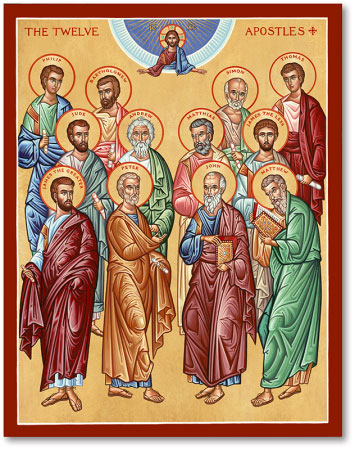
They began to be distressed and to say to him, one by one,

“Surely it is not I?”

He said to them,

“One of the Twelve, the one who dips with me into the dish.

For the Son of Man indeed goes, as it is written of him,

but woe to that man by whom the Son of Man is betrayed.

It would be better for that man if he had never been born.”

While they were eating,

he took bread, said the blessing,

broke it, and gave it to them, and said,

“Take it; this is my body.”

Then he took a cup, gave thanks, and gave it to them,

and they all drank from it.

He said to them,

“This is my blood of the covenant,

which will be shed for many.

Amen, I say to you,

I shall not drink again the fruit of the vine

until the day when I drink it new in the kingdom of God.”

Then, after singing a hymn,

they went out to the Mount of Olives.

Then Jesus said to them,

“All of you will have your faith shaken, for it is written:

I will strike the shepherd,

and the sheep will be dispersed.

But after I have been raised up,

I shall go before you to Galilee.”

Peter said to him,

“Even though all should have their faith shaken,

mine will not be.”

Then Jesus said to him,

“Amen, I say to you,

this very night before the cock crows twice

you will deny me three times.”

But he vehemently replied,

“Even though I should have to die with you,

I will not deny you.”

And they all spoke similarly.

Then they came to a place named Gethsemane,

and he said to his disciples,

“Sit here while I pray.”

He took with him Peter, James, and John,

and began to be troubled and distressed.

Then he said to them, “My soul is sorrowful even to death.

Remain here and keep watch.”

He advanced a little and fell to the ground and prayed

that if it were possible the hour might pass by him;

he said, “Abba, Father, all things are possible to you.

Take this cup away from me,

but not what I will but what you will.”

When he returned he found them asleep.

He said to Peter, “Simon, are you asleep?

Could you not keep watch for one hour?

Watch and pray that you may not undergo the test.

The spirit is willing but the flesh is weak.”

Withdrawing again, he prayed, saying the same thing.

Then he returned once more and found them asleep,

for they could not keep their eyes open

and did not know what to answer him.

He returned a third time and said to them,

“Are you still sleeping and taking your rest?

It is enough. The hour has come.

Behold, the Son of Man is to be handed over to sinners.

Get up, let us go.

See, my betrayer is at hand.”

Then, while he was still speaking,

Judas, one of the Twelve, arrived,

accompanied by a crowd with swords and clubs

who had come from the chief priests,

the scribes, and the elders.

His betrayer had arranged a signal with them, saying,

“The man I shall kiss is the one;

arrest him and lead him away securely.”

He came and immediately went over to him and said,

“Rabbi.” And he kissed him.

At this they laid hands on him and arrested him.

One of the bystanders drew his sword,

struck the high priest’s servant, and cut off his ear.

Jesus said to them in reply,

“Have you come out as against a robber,

with swords and clubs, to seize me?

Day after day I was with you teaching in the temple area,

yet you did not arrest me;

but that the Scriptures may be fulfilled.”

And they all left him and fled.

Now a young man followed him

wearing nothing but a linen cloth about his body.

They seized him,

but he left the cloth behind and ran off naked.

They led Jesus away to the high priest,

and all the chief priests and the elders and the scribes came together.

Peter followed him at a distance into the high priest’s courtyard

and was seated with the guards, warming himself at the fire.

The chief priests and the entire Sanhedrin

kept trying to obtain testimony against Jesus

in order to put him to death, but they found none.

Many gave false witness against him,

but their testimony did not agree.

Some took the stand and testified falsely against him,

alleging, “We heard him say,

‘I will destroy this temple made with hands

and within three days I will build another

not made with hands.'”

Even so their testimony did not agree.

The high priest rose before the assembly and questioned Jesus,

saying, “Have you no answer?

What are these men testifying against you?”

But he was silent and answered nothing.

Again the high priest asked him and said to him,

“Are you the Christ, the son of the Blessed One?”

Then Jesus answered, “I am;

and ‘you will see the Son of Man

seated at the right hand of the Power

and coming with the clouds of heaven.'”

At that the high priest tore his garments and said,

“hat further need have we of witnesses?

You have heard the blasphemy.

What do you think?”

They all condemned him as deserving to die.

Some began to spit on him.

They blindfolded him and struck him and said to him, “Prophesy!”

And the guards greeted him with blows.

While Peter was below in the courtyard,

one of the high priest’s maids came along.

Seeing Peter warming himself,

she looked intently at him and said,

“You too were with the Nazarene, Jesus.”

But he denied it saying,

“I neither know nor understand what you are talking about.”

So he went out into the outer court.

Then the cock crowed.

The maid saw him and began again to say to the bystanders,

“This man is one of them.”

Once again he denied it.

A little later the bystanders said to Peter once more,

“Surely you are one of them; for you too are a Galilean.”

He began to curse and to swear,

“I do not know this man about whom you are talking.”

And immediately a cock crowed a second time.

Then Peter remembered the word that Jesus had said to him,

“Before the cock crows twice you will deny me three times.”

He broke down and wept.

As soon as morning came,

the chief priests with the elders and the scribes,

that is, the whole Sanhedrin held a council.

They bound Jesus, led him away, and handed him over to Pilate.

Pilate questioned him,

“Are you the king of the Jews?”

He said to him in reply, “You say so.”

The chief priests accused him of many things.

Again Pilate questioned him,

“Have you no answer?

See how many things they accuse you of.”

Jesus gave him no further answer, so that Pilate was amazed.

Now on the occasion of the feast he used to release to them

one prisoner whom they requested.

A man called Barabbas was then in prison

along with the rebels who had committed murder in a rebellion.

The crowd came forward and began to ask him

to do for them as he was accustomed.

Pilate answered,

“Do you want me to release to you the king of the Jews?”

For he knew that it was out of envy

that the chief priests had handed him over.

But the chief priests stirred up the crowd

to have him release Barabbas for them instead.

Pilate again said to them in reply,

“Then what do you want me to do

with the man you call the king of the Jews?”

They shouted again, “Crucify him.”

Pilate said to them, “Why? What evil has he done?”

They only shouted the louder, “Crucify him.”

So Pilate, wishing to satisfy the crowd,

released Barabbas to them and, after he had Jesus scourged,

handed him over to be crucified.

The soldiers led him away inside the palace,

that is, the praetorium, and assembled the whole cohort.

They clothed him in purple and,

weaving a crown of thorns, placed it on him.

They began to salute him with, All Hail, King of the Jews!”

and kept striking his head with a reed and spitting upon him.

They knelt before him in homage.

And when they had mocked him,

they stripped him of the purple cloak,

dressed him in his own clothes,

and led him out to crucify him.

They pressed into service a passer-by, Simon,

a Cyrenian, who was coming in from the country,

the father of Alexander and Rufus,

to carry his cross.

They brought him to the place of Golgotha

which is translated Place of the Skull —

They gave him wine drugged with myrrh,

but he did not take it.

Then they crucified him and divided his garments

by casting lots for them to see what each should take.

It was nine o’clock in the morning when they crucified him.

The inscription of the charge against him read,

“The King of the Jews.”

With him they crucified two revolutionaries,

one on his right and one on his left.

Those passing by reviled him,

shaking their heads and saying,

“Aha! You who would destroy the temple

and rebuild it in three days,

save yourself by coming down from the cross.”

Likewise the chief priests, with the scribes,

mocked him among themselves and said,

“He saved others; he cannot save himself.

Let the Christ, the King of Israel,

come down now from the cross

that we may see and believe.”

Those who were crucified with him also kept abusing him.

At noon darkness came over the whole land

until three in the afternoon.

And at three o’clock Jesus cried out in a loud voice,

“Eloi, Eloi, lema sabachthani?”

which is translated,

“My God, my God, why have you forsaken me?”

Some of the bystanders who heard it said,

“Look, he is calling Elijah.”

One of them ran, soaked a sponge with wine, put it on a reed

and gave it to him to drink saying,

“Wait, let us see if Elijah comes to take him down.”

Jesus gave a loud cry and breathed his last.

Here all kneel and pause for a short time.

The veil of the sanctuary was torn in two from top to bottom.

When the centurion who stood facing him

saw how he breathed his last he said,

“Truly this man was the Son of God!”

There were also women looking on from a distance.

Among them were Mary Magdalene,

Mary the mother of the younger James and of Joses, and Salome.

These women had followed him when he was in Galilee

and ministered to him.

There were also many other women

who had come up with him to Jerusalem.

When it was already evening,

since it was the day of preparation,

the day before the sabbath, Joseph of Arimathea,

a distinguished member of the council,

who was himself awaiting the kingdom of God,

came and courageously went to Pilate

and asked for the body of Jesus.

Pilate was amazed that he was already dead.

He summoned the centurion

and asked him if Jesus had already died.

And when he learned of it from the centurion,

he gave the body to Joseph.

Having bought a linen cloth, he took him down,

wrapped him in the linen cloth,

and laid him in a tomb that had been hewn out of the rock.

Then he rolled a stone against the entrance to the tomb.

Mary Magdalene and Mary the mother of Jesus

watched where he was laid.

http://usccb.org/bible/readings/032518.cfm

CATECHISM OF THE CATHOLIC CHURCH (CCC)

CCC 443 Peter could recognize the transcendent character of the Messiah’s divine sonship because Jesus had clearly allowed it to be so understood. To his accusers’ question before the Sanhedrin, “Are you the Son of God, then?” Jesus answered, “You say that I am.”1 Well before this, Jesus referred to himself as “the Son” who knows the Father, as distinct from the “servants” God had earlier sent to his people; he is superior even to the angels.2 He distinguished his sonship from that of his disciples by never saying “our Father”, except to command them: “You, then, pray like this: ‘Our Father’”, and he emphasized this distinction, saying “my Father and your Father”.3

CCC 444 The Gospels report that at two solemn moments, the Baptism and the Transfiguration of Christ, the voice of the Father designates Jesus his “beloved Son”.4 Jesus calls himself the “only Son of God”, and by this title affirms his eternal pre-existence.5 He asks for faith in “the name of the only Son of God”.6 In the centurion’s exclamation before the crucified Christ, “Truly this man was the Son of God”,7 that Christian confession is already heard. Only in the Paschal mystery can the believer give the title “Son of God” its full meaning.

CCC 473 But at the same time, this truly human knowledge of God’s Son expressed the divine life of his person.8 “The human nature of God’s Son, not by itself but by its union with the Word, knew and showed forth in itself everything that pertains to God.”9 Such is first of all the case with the intimate and immediate knowledge that the Son of God made man has of his Father.10 The Son in his human knowledge also showed the divine penetration he had into the secret thoughts of human hearts.11

CCC 474 By its union to the divine wisdom in the person of the Word incarnate, Christ enjoyed in his human knowledge the fullness of understanding of the eternal plans he had come to reveal.12 What he admitted to not knowing in this area, he elsewhere declared himself not sent to reveal.13

CCC 574 From the beginning of Jesus’ public ministry, certain Pharisees and partisans of Herod together with priests and scribes agreed together to destroy him.14 Because of certain acts of his expelling demons, forgiving sins, healing on the sabbath day, his novel interpretation of the precepts of the Law regarding purity, and his familiarity with tax collectors and public sinners15 –- some ill-intentioned persons suspected Jesus of demonic possession.16 He is accused of blasphemy and false prophecy, religious crimes which the Law punished with death by stoning.17

CCC 585 On the threshold of his Passion Jesus announced the coming destruction of this splendid building, of which there would not remain “one stone upon another”.18 By doing so, he announced a sign of the last days, which were to begin with his own Passover.19 But this prophecy would be distorted in its telling by false witnesses during his interrogation at the high priest’s house, and would be thrown back at him as an insult when he was nailed to the cross.20

CCC 597 The historical complexity of Jesus’ trial is apparent in the Gospel accounts. The personal sin of the participants (Judas, the Sanhedrin, Pilate) is known to God alone. Hence we cannot lay responsibility for the trial on the Jews in Jerusalem as a whole, despite the outcry of a manipulated crowd and the global reproaches contained in the apostles’ calls to conversion after Pentecost.21 Jesus himself, in forgiving them on the cross, and Peter in following suit, both accept “the ignorance” of the Jews of Jerusalem and even of their leaders.22 Still less can we extend responsibility to other Jews of different times and places, based merely on the crowd’s cry: “His blood be on us and on our children!”, a formula for ratifying a judicial sentence.23 As the Church declared at the Second Vatican Council:

… [N]either all Jews indiscriminately at that time, nor Jews today, can be charged with the crimes committed during his Passion. .. [T]he Jews should not be spoken of as rejected or accursed as if this followed from holy Scripture.24

CCC 603 Jesus did not experience reprobation as if he himself had sinned.25 But in the redeeming love that always united him to the Father, he assumed us in the state of our waywardness of sin, to the point that he could say in our name from the cross: “My God, my God, why have you forsaken me?”26 Having thus established him in solidarity with us sinners, God “did not spare his own Son but gave him up for us all”, so that we might be “reconciled to God by the death of his Son”.27

CCC 1009 Death is transformed by Christ. Jesus, the Son of God, also himself suffered the death that is part of the human condition. Yet, despite his anguish as he faced death, he accepted it in an act of complete and free submission to his Father’s will.28 The obedience of Jesus has transformed the curse of death into a blessing.29

CCC 1328 The inexhaustible richness of this sacrament is expressed in the different names we give it. Each name evokes certain aspects of it. It is called:

Eucharist, because it is an action of thanksgiving to God. The Greek words eucharistein30 and eulogein31 recall the Jewish blessings that proclaim – especially during a meal – God’s works: creation, redemption, and sanctification.

CCC 1335 The miracles of the multiplication of the loaves, when the Lord says the blessing, breaks and distributes the loaves through his disciples to feed the multitude, prefigure the superabundance of this unique bread of his Eucharist.32 The sign of water turned into wine at Cana already announces the Hour of Jesus’ glorification. It makes manifest the fulfillment of the wedding feast in the Father’s kingdom, where the faithful will drink the new wine that has become the Blood of Christ.33

CCC 1339 Jesus chose the time of Passover to fulfill what he had announced at Capernaum: giving his disciples his Body and his Blood:

Then came the day of Unleavened Bread, on which the passover lamb had to be sacrificed. So Jesus sent Peter and John, saying, “Go and prepare the passover meal for us, that we may eat it. ..” They went. .. and prepared the passover. And when the hour came, he sat at table, and the apostles with him. And he said to them, “I have earnestly desired to eat this passover with you before I suffer; for I tell you I shall not eat it again until it is fulfilled in the kingdom of God.”… And he took bread, and when he had given thanks he broke it and gave it to them, saying, “This is my body which is given for you. Do this in remembrance of me.” And likewise the cup after supper, saying, “This cup which is poured out for you is the New Covenant in my blood.”34
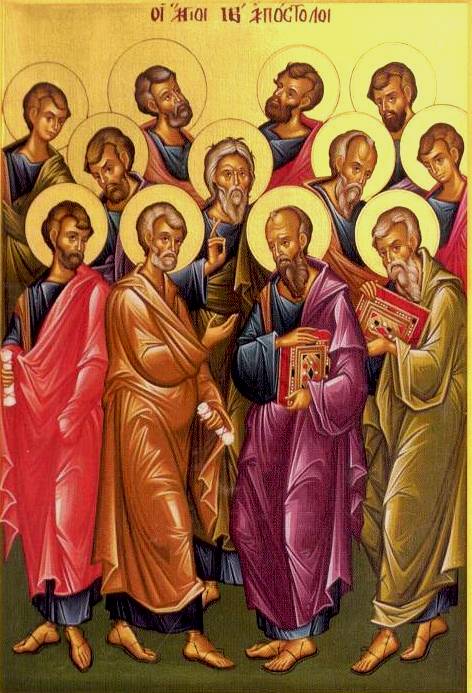
CCC 1376 The Council of Trent summarizes the Catholic faith by declaring: “Because Christ our Redeemer said that it was truly his body that he was offering under the species of bread, it has always been the conviction of the Church of God, and this holy Council now declares again, that by the consecration of the bread and wine there takes place a change of the whole substance of the bread into the substance of the body of Christ our Lord and of the whole substance of the wine into the substance of his blood. This change the holy Catholic Church has fittingly and properly called transubstantiation.”35

CCC 1403 At the Last Supper the Lord himself directed his disciples’ attention toward the fulfillment of the Passover in the kingdom of God: “I tell you I shall not drink again of this fruit of the vine until that day when I drink it new with you in my Father’s kingdom.”36 Whenever the Church celebrates the Eucharist she remembers this promise and turns her gaze “to him who is to come.” In her prayer she calls for his coming: “Marana tha!” “Come, Lord Jesus!”37 “May your grace come and this world pass away!”38

CCC 2605 When the hour had come for him to fulfill the Father’s plan of love, Jesus allows a glimpse of the boundless depth of his filial prayer, not only before he freely delivered himself up (“Abba. .. not my will, but yours.”),39 but even in his last words on the Cross, where prayer and the gift of self are but one: “Father, forgive them, for they know not what they do”;40 “Truly, I say to you, today you will be with me in Paradise”, “Woman, behold your son” – “Behold your mother”;41 “I thirst.”;42 “My God, My God, why have you forsaken me?”;43 “It is finished”;44 “Father, into your hands I commit my spirit!”45 until the “loud cry” as he expires, giving up his spirit.46

CCC 2701 Vocal prayer is an essential element of the Christian life. To his disciples, drawn by their Master’s silent prayer, Jesus teaches a vocal prayer, the Our Father. He not only prayed aloud the liturgical prayers of the synagogue but, as the Gospels show, he raised his voice to express his personal prayer, from exultant blessing of the Father to the agony of Gesthemani.47

CCC 2849 Such a battle and such a victory become possible only through prayer. It is by his prayer that Jesus vanquishes the tempter, both at the outset of his public mission and in the ultimate struggle of his agony.48 In this petition to our heavenly Father, Christ unites us to his battle and his agony. He urges us to vigilance of the heart in communion with his own. Vigilance is “custody of the heart,” and Jesus prayed for us to the Father: “Keep them in your name.”49 The Holy Spirit constantly seeks to awaken us to keep watch.50 Finally, this petition takes on all its dramatic meaning in relation to the last temptation of our earthly battle; it asks for final perseverance. “Lo, I am coming like a thief! Blessed is he who is awake.”51

1 Lk 22:70; cf. Mt 26:64; Mk 14:61-62.

2 Cf. Mt 11:27; 21:34-38; 24:36.

3 Mt 5:48; 6:8-9; 7:21; Lk 11:13; Jn 20:17.

4 Cf. Mt 3:17; cf. 17:5.

5 Jn 3:16; cf. 10:36.

6 Jn 3:18.

7 Mk 15:39.

8 Cf. St. Gregory the Great, “Sicut aqua” ad Eulogium, Epist. Lib. 10, 39 PL 77, 1097 Aff.; DS 475.

9 St. Maximus the Confessor, Qu. et dub. 66 PG 90, 840A.

10 Cf. Mk 14:36; Mt 11:27; Jn 1:18; 8:55; etc.

11 Cf. Mk 2:8; Jn 2 25; 6:61; etc.

12 Cf. Mk 8:31; 9:31; 10:33-34; 14:18-20, 26-30.

13 Cf. Mk 13:32, Acts 1:7.

14 Cf. Mk 3:6; 14:1.

15 Cf. Mt 12:24; Mk 2:7,14-17; 3:1-6; 7:14-23.

16 Cf. Mk 3:22; Jn 8:48; 10:20.

17 Cf. Mk 2:7; Jn 5:18; 7:12, 52; 8:59; 10:31, 33.

18 Cf. Mt 24:1-2.

19 Cf. Mt 24:3; Lk 13:35.

20 Cf Mk 14:57-58; Mt 27 39-40.

21 Cf. Mk 15:11; Acts 2:23, 36; 3:13-14; 4:10; 5:30; 7:52; 10:39; 13:27-28; I Th 2:14-15.

22 Cf. Lk 23:34; Acts 3:17.

23 Mt 27:25; cf. Acts 5:28; 18:6.

24 NA 4.

25 Cf. Jn 8:46.

26 Mk 15:34; Ps 22:2; cf. Jn 8:29.

27 Rom 8:32; 5:10.

28 Cf. Mk 14:33-34; Heb 5:7-8.

29 Cf. Rom 5:19-21.

30 Cf. Lk 22:19; 1 Cor 11:24.

31 Cf. Mt 26:26; Mk 14:22.

32 Cf. Mt 14:13-21; 15:32-39.

33 Cf. Jn 2:11; Mk 14:25.

34 Lk 22:7-20; Cf. Mt 26:17-29; Mk 14:12-25; 1 Cor 11:23-26.

35 Council of Trent (1551): DS 1642; cf. Mt 26:26 ff.; Mk 14:22 ff.; Lk 22:19 ff.; 1 Cor 11:24 ff.

36 Mt 26:29; cf. Lk 22:18; Mk 14 25.

37 Rev 1:4; 22 20; 1 Cor 16 22.

38 Didache 10, 6: SCh 248,180.

39 Lk 22:42.

40 Lk 23:34.

41 Jn 19:26-27.

42 Jn 19:28.

43 Mk 15:34; cf. Ps 22:2.

44 Jn 19:30.

45 Lk 23:46.

46 Cf. Mk 15:37; Jn 19:30b.

47 Cf. Mt 11:25-26; Mk 14:36.

48 Cf. Mt 4:1-11; 26:36-44.

49 Jn 17:11; Cf. Mk 13:9, 23, 33-37; 14:38; Lk 12:35-40.

50 Cf. 1 Cor 16:13; Col 4:2; 1 Thess 5:6; 1 Pet 5:8.

51 Rev 16:15.

APPLICATION

The story and most, if not all, of the details of our divine Lord’s sufferings at the hands of his fellow-Jews, his Father’s Chosen People, on that first Holy Thursday night in Jerusalem and the subsequent sentence of crucifixion pronounced by a pagan Roman judge on one he had declared innocent of any crime, is well known to any Christian, worthy of the name. But theoretical knowledge is not what makes a Christian or a follower of Christ. Down through the ages great men have lived and died and their lives and deeds have benefited others in many ways, for greater or lesser periods. But the life and death of Christ has not only benefited man’s life on earth, it has changed the very purpose of man’s existence, for it has changed his relationship with God and with his eternal destiny.

Through and by the Incarnation, death, resurrection of Christ, we, mere human mortals, have been made sons of God by divine decree, and heirs of God’s eternal kingdom of heaven. This was God’s original plan in creating the universe. Man was to be the masterpiece of the divine act of creation and the master of the universe. He contains within himself a part of every created being and has the necessary faculties to dominate all the lesser creatures. But he was to be more than that. His human nature was to be raised to union with the Godhead in the Incarnation. This completed plan was eventually fulfilled in Christ.

Therefore, the life and death of Christ is not just some recorded bit of history of the past, rather it is for all men, not Christians only, a fact of the past which dominates and basically affects rational man’s purpose in life today and always as well as his day-to-day mode of living that life. There are millions on our earth today who, through no fault of their own, have not yet heard of God’s infinite love for them as proved in the Incarnation, but God will find ways of extending its benefits to them if they do their part. There are millions too who have heard the good news but refuse to believe it or to act according to it; those too we can safely leave to the all merciful God. But for ourselves, professed followers of Christ, who during this Holy Week will be reminded daily of what God has done and is continuing to do for us, our only answer is to beat our breasts in humble contrition like some of the crowds returning from Calvary on that first Good Friday.

We know we are utterly unworthy of the unfathomable love that God has shown us. When we look at the crucifix and see the Son of God nailed hands and feet to that cross, slowly shedding his heart’s blood for us, what can we do but bow our heads in shame? If we did not jeer at him and mock him openly as the Pharisees did that day on Calvary, we did so indirectly by our coldness, our forgetfulness, and worse still by our many deliberate sins against God and neighbor. Pilate condemned the innocent Christ “for fear of the Jews, for fear of losing his job” (St. John says); Judas betrayed him for 30 pieces of silver; the Pharisees forced Pilate to crucify him because of their pride. If we look into our past, how often have we offended him, that is, condemned him for similar reasons, and we are less excusable than these people were. We do, or should, know so much better than they did what Christ means to us.

But while we have reason, all of us, to repent of our past faults during this Holy Week, we have also every reason not to despair but to hope. In the very height of his agony on the cross, our loving Savior uttered a fervent plea to his heavenly Father, asking for forgiveness for all those who had brought his death-agony on him. The words, “Father, forgive them for they know not what they do,” hold for all time; we too were included there, and God’s merciful answer to his dying Christ is for us too if we avail of it.

Holy Week will be truly a holy week and a turning point in our lives if we repent of our past and turn to our loving God. Through the life, sufferings and resurrection of his beloved Servant and Son, he has made us his adopted sons and heirs of heaven. He will not fail us now.

Applications written by Fr. Kevin O’Sullivan O.F.M. and used with permission from Franciscan Press.

BENEDICTUS

Christ the Burning Fire

When Jesus talks about fire, he means in the first place his own Passion, which was a Passion of love and was therefore a fire; the new burning bush, which burns and is not consumed; a fire that is to be handed on. Jesus does not come to make us comfortable; rather he sets fire to the earth; he brings the great living fire of divine love, which is what the Holy Spirit is, a fire that burns. In an apocryphal saying of Jesus that has been transmitted by Origen, he says: “Whoever comes close to me comes close to the fire.” Whoever comes close to him, accordingly, must be prepared to be burned… It burns, yet this is not a destructive fire but one that makes things bright and pure and free and grand. Being a Christian, then, is daring to entrust oneself to this burning fire… Christ is the one who brings peace. And I would say that this is the saying that is preeminent and determinative. But we only properly comprehend this peace that Christ brings if we do not understand it in banal fashion as a way of cheating one’s way out of pain, or out of the truth and the conflicts that truth brings with it… If the Church simply aims to avoid conflict, merely to ensure that no disturbances arise anywhere, then her real message can no longer make any impact. For this message is in fact there precisely in order to conflict with our behavior, to tear man out of his life of lies and to bring clarity and truth. Truth does not come cheap. It makes demands, and it also burns.
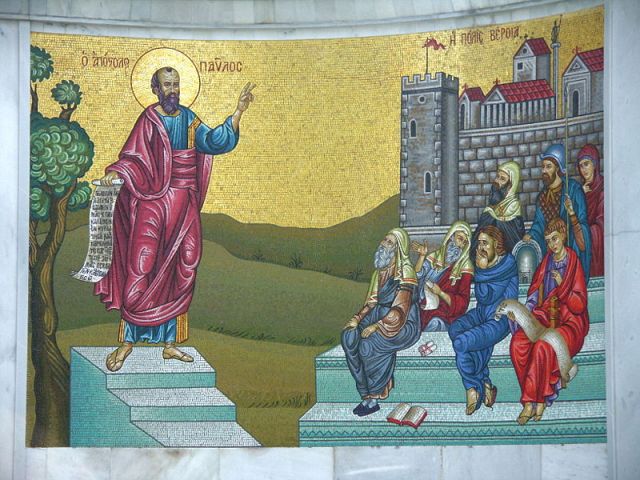
Pope Emeritus Benedict XVI

CLOSING PRAYER

The Anima Christi of St. Elizabeth Ann Seaton

Soul of Jesus, Sanctify me.

Blood of Jesus, Wash me,

Passion of Jesus, Comfort me.

Wounds of Jesus, Hide me.

Heart of Jesus, Receive me.

Spirit of Jesus, Enliven me.

Goodness of Jesus, Pardon me.

Beauty of Jesus, Draw me.

Humility of Jesus, Humble me.

Peace of Jesus, Pacify me.

Love of Jesus, Inflame me.

Kingdom of Jesus, Come to me.

Grace of Jesus, Replenish me.

Mercy of Jesus, Pity me.

Sanctity of Jesus, Sanctify me.

Purity of Jesus, Purify me.

Cross of Jesus, Support me.

Nails of Jesus, Hold me.

Mouth of Jesus, Bless me in life, in death, in time and eternity.

Mouth of Jesus, Defend me in the hour of death.

Mouth of Jesus, Call me to come to Thee.

Mouth of Jesus, Receive me with Thy saints in glory evermore.

Let Us Pray

Unite me to Thyself, O adorable Victim. Life-giving heavenly Bread, feed me, sanctify me, reign in me, transform me to Thyself, live in me; let me live in Thee; let me adore Thee in Thy life-giving Sacrament as my God, listen to Thee as to my Master, obey Thee as my King, imitate Thee as my Model, follow Thee as my Shepherd, love Thee as my Father, seek Thee as my Physician who wilt heal all the maladies of my soul. Be indeed my Way, Truth and Life; sustain me, O heavenly Manna, through the desert of this world, till I shall behold Thee unveiled in Thy glory.

Amen.


Posted in Catholic | 3 Comments

Fifth Sunday of Lent – B

4e6ee03acfe064808716d7652bf087d4

“This voice did not come for my sake but for yours.  Now is the time of judgment on this world; now the ruler of this world will be driven out.  And when I am lifted up from the earth.  I will draw everyone to myself.”

OPENING PRAYER

A Prayer for the Forgiveness of Sins

By St. Gemma Galgani

My Jesus,

I place all my sins before you.

In my estimation

They do not deserve pardon,

But I ask you

To close your eyes

To my want of merit

And open them

To your infinite merit.

Since you willed

To die for my sins,

Grant me forgiveness

For all of them.

Thus, I may no longer feel

The burden of my sins,

A burden that oppresses me

Beyond measure.

Assist me, dear Jesus,

For I desire to become holy

No matter what the cost.

Take away, destroy,

And utterly root out

Whatever you find in me

That is contrary

To your holy will.

At the same time, dear Jesus,

Illumine me

So that I may walk in your holy light.

COLLECT

By your help, we beseech you, Lord our God,

may we walk eagerly in that same charity

with which, out of love for the world,

your Son handed himself over to death.

Through our Lord Jesus Christ, your Son,

who lives and reigns with you in the unity

of the Holy Spirit,

one God, for ever and ever.

READING I

jeremiah-prophet

Jer 31:31-34

The days are coming, says the LORD,

when I will make a new covenant with the house of Israel

and the house of Judah.

It will not be like the covenant I made with their fathers

the day I took them by the hand

to lead them forth from the land of Egypt;

for they broke my covenant,

and I had to show myself their master, says the LORD.

But this is the covenant that I will make

with the house of Israel after those days, says the LORD.

I will place my law within them and write it upon their hearts;

I will be their God, and they shall be my people.

No longer will they have need to teach their friends and relatives

how to know the LORD.

All, from least to greatest, shall know me, says the LORD,

for I will forgive their evildoing and remember their sin no more.

CATECHISM OF THE CATHOLIC CHURCH (CCC)

CCC 64 Through the prophets, God forms his people in the hope of salvation, in the expectation of a new and everlasting Covenant intended for all, to be written on their hearts.1 The prophets proclaim a radical redemption of the People of God, purification from all their infidelities, a salvation which will include all the nations.2 Above all, the poor and humble of the Lord will bear this hope. Such holy women as Sarah, Rebecca, Rachel, Miriam, Deborah, Hannah, Judith and Esther kept alive the hope of Israel’s salvation. The purest figure among them is Mary.3

CCC 368 The spiritual tradition of the Church also emphasizes the heart, in the biblical sense of the depths of one’s being, where the person decides for or against God.4

CCC 580 The perfect fulfillment of the Law could be the work of none but the divine legislator, born subject to the Law in the person of the Son.5 In Jesus, the Law no longer appears engraved on tables of stone but “upon the heart” of the Servant who becomes “a covenant to the people”, because he will “faithfully bring forth justice”.6 Jesus fulfills the Law to the point of taking upon himself “the curse of the Law” incurred by those who do not “abide by the things written in the book of the Law, and do them”, for his death took place to redeem them “from the transgressions under the first covenant”.7

CCC 715 The prophetic texts that directly concern the sending of the Holy Spirit are oracles by which God speaks to the heart of his people in the language of the promise, with the accents of “love and fidelity.”8 St. Peter will proclaim their fulfillment on the morning of Pentecost.9 According to these promises, at the “end time” the Lord’s Spirit will renew the hearts of men, engraving a new law in them. He will gather and reconcile the scattered and divided peoples; he will transform the first creation, and God will dwell there with men in peace.

CCC 762 The remote preparation for this gathering together of the People of God begins when he calls Abraham and promises that he will become the father of a great people.10 Its immediate preparation begins with Israel’s election as the People of God. By this election, Israel is to be the sign of the future gathering of All nations.11 But the prophets accuse Israel of breaking the covenant and behaving like a prostitute. They announce a new and eternal covenant. “Christ instituted this New Covenant.”12

CCC 1965 The New Law or the Law of the Gospel is the perfection here on earth of the divine law, natural and revealed. It is the work of Christ and is expressed particularly in the Sermon on the Mount. It is also the work of the Holy Spirit and through him it becomes the interior law of charity: “I will establish a New Covenant with the house of Israel. .. I will put my laws into their hands, and write them on their hearts, and I will be their God, and they shall be my people.”13

CCC 2713 Contemplative prayer is the simplest expression of the mystery of prayer. It is a gift, a grace; it can be accepted only in humility and poverty. Contemplative prayer is a covenant relationship established by God within our hearts.14 Contemplative prayer is a communion in which the Holy Trinity conforms man, the image of God, “to his likeness.”

1 Cf. Isa 2:2-4; Jer 31:31-34; Heb 10:16.

2 Cf. Ezek 36; Isa 49:5-6; 53:11.

3 Cf. Ezek 2:3; Lk 1:38.

4 Cf. Jer 31:33; Dt 6:5; 29:3; Is 29:13; Ezek 36:26; Mt 6:21; Lk 8:15; Rom 5:5.

5 Cf. Gal 4:4.

6 Jer 31:33; Is 42:3, 6.

7 Gal 3:13; 3:10; Heb 9:15.

8 Cf. Ezek 11:19; 36:25-28; 37:1-14; Jer 31:31-34; and cf. Joel 3:1-5.

9 Cf. Acts 2:17-21.

10 Cf. Gen 12:2; 15:5-6.

11 Cf. Ex 19:5-6; Deut 7:6; Isa 2:2-5; Mic 4:1-4.

12 LG 9; cf. Hos 1; Isa 1:2-4; Jer 2; 31:31-34; Isa 55:3.

13 Heb 8:8, 10; cf. Jer 31:31-34.

14 Cf. Jer 31:33.

APPLICATION

It must have grieved and offended a devout lover of God, and an appointed prophet as Jeremiah was, to see the laws of his God broken and trampled on day after day, and this by the leaders of the people who were especially bound to give good example to their followers. The kings and people of Judah were facing a terrible trial. However, instead of relying on the good God who had so often helped them out of impossible difficulties in the past, they were seeking earthly aid from a pagan neighbor–a pagan neighbor who would not help them. Having chastised them in the strongest language for this gross infidelity, he now promises that even though they have deserted God, God will not desert them. The Chosen People were elected by God with the incarnation in mind. Abraham and his descendants were chosen to prepare the way for the coming of God’s Son. Unworthy though they had proved themselves for this noble role, God would still carry out his eternal purpose for all men. The Chosen People would be decimated. Their temple, his visible abode amongst them, would be razed to the ground, for they had despised and betrayed him. But a remnant would be saved–a purified remnant from which would come God’s Son in human nature.

We are the beneficiaries of this infinite act of God’s mercy toward, and patience with, sinful humanity. We have seen the New Covenant established between God and all men (not Abraham’s descendants only). We have seen the depth of God’s love for us, as illustrated on Mount Calvary. Our New Covenant was not mediated to us by any mere human being like Moses, but by the Son of God himself in his human nature. The blood with which this Covenant was ratified was not the blood of sheep and oxen which Moses used for the ratification of the first Covenant. It was the precious blood of Jesus Christ: “This is the blood of the New and everlasting Covenant which will be shed for you and all men so that sins may be forgiven.” This is a universal covenant “for all men.” It is not made between God and one race or people but between God and all men of all races and nations.

This is what we mean when we speak of the “New Testament.” It is not merely the books which describe what happened, but the happening itself. The Messiah promised in the Old Covenant and for whom the Old was a preparation, has come on earth and has proved to be not a mere messenger or delegate from God but his own dearly-beloved Son. This Son of God has brought about a pact, an agreement, between God and all men–an agreement through which all men are now elevated to the position of sons of God and heirs to God’s eternal kingdom. By the sacrifice of himself on the cross, the Son of God has removed any impediment (sins) which could prevent us from possessing that promised inheritance. This is the happy lot of man on earth today. But how many know of this pearl of great price, which is theirs for the taking? How many who do know of it are willing to “sell the few possessions they have” in order to acquire this treasure? How many, in other words, are willing to live the Christian life on earth in all sincerity, so that they can be Christians and brothers of Christ for all eternity in heaven?

Let each one of us ask these questions today, and give an honest answer. Living in the Christian era now will mean nothing to us hereafter, if we do not live as true Christians. Having the new pact with God written in our hearts by baptism will not help us to get to heaven unless we observe the two great commandments, love of God and love of neighbor. The fact that Christ has left a means for washing away our sins will not cleanse us unless we repent and confess our sins. The fact that we were made “spouses” of the Lord when we became Christians will give us no rights or privileges if we have divorced ourselves from him by unworthy conduct.

There is still hope. We are still alive. Lent is a very suitable occasion to examine ourselves: to see our faults and failings, to repent of them and ask from God forgiveness and the necessary grace to remain his true spouses, his true “chosen ones” for the future.

RESPONSORIAL PSALM

Ps 51:3-4, 12-13, 14-15.

(12a) Create a clean heart in me, O God.

Have mercy on me, O God, in your goodness;

in the greatness of your compassion wipe out my offense.

Thoroughly wash me from my guilt

and of my sin cleanse me.

Create a clean heart in me, O God.

A clean heart create for me, O God,

and a steadfast spirit renew within me.

Cast me not out from your presence,

and your Holy Spirit take not from me.

Create a clean heart in me, O God.

Give me back the joy of your salvation,

and a willing spirit sustain in me.

I will teach transgressors your ways,

and sinners shall return to you.

Create a clean heart in me, O God.

READING II


Jesus Praying to His Father

Heb 5:7-9

In the days when Christ Jesus was in the flesh,

he offered prayers and supplications with loud cries and tears

to the one who was able to save him from death,

and he was heard because of his reverence.

Son though he was, he learned obedience from what he suffered;

and when he was made perfect,

he became the source of eternal salvation for all who obey him.

CATECHISM OF THE CATHOLIC CHURCH (CCC)

CCC 609 By embracing in his human heart the Father’s love for men, Jesus “loved them to the end”, for “greater love has no man than this, that a man lay down his life for his friends.”1 In suffering and death his humanity became the free and perfect instrument of his divine love which desires the salvation of men.2 Indeed, out of love for his Father and for men, whom the Father wants to save, Jesus freely accepted his Passion and death: “No one takes [my life] from me, but I lay it down of my own accord.”3 Hence the sovereign freedom of God’s Son as he went out to his death.4

CCC 612 The cup of the New Covenant, which Jesus anticipated when he offered himself at the Last Supper, is afterwards accepted by him from his Father’s hands in his agony in the garden at Gethsemani,5 making himself “obedient unto death”. Jesus prays: “My Father, if it be possible, let this cup pass from me. ..”6 Thus he expresses the horror that death represented for his human nature. Like ours, his human nature is destined for eternal life; but unlike ours, it is perfectly exempt from sin, the cause of death.7 Above all, his human nature has been assumed by the divine person of the “Author of life”, the “Living One”.8 By accepting in his human will that the Father’s will be done, he accepts his death as redemptive, for “he himself bore our sins in his body on the tree.”9

CCC 617 The Council of Trent emphasizes the unique character of Christ’s sacrifice as “the source of eternal salvation”10 and teaches that “his most holy Passion on the wood of the cross merited justification for us.”11 And the Church venerates his cross as she sings: “Hail, O Cross, our only hope.”12

CCC 1009 Death is transformed by Christ. Jesus, the Son of God, also himself suffered the death that is part of the human condition. Yet, despite his anguish as he faced death, he accepted it in an act of complete and free submission to his Father’s will.13 The obedience of Jesus has transformed the curse of death into a blessing.14

CCC 1564 “Whilst not having the supreme degree of the pontifical office, and notwithstanding the fact that they depend on the bishops in the exercise of their own proper power, the priests are for all that associated with them by reason of their sacerdotal dignity; and in virtue of the sacrament of Holy Orders, after the image of Christ, the supreme and eternal priest, they are consecrated in order to preach the Gospel and shepherd the faithful as well as to celebrate divine worship as true priests of the New Testament.”15

CCC 2606 All the troubles, for all time, of humanity enslaved by sin and death, all the petitions and intercessions of salvation history are summed up in this cry of the incarnate Word. Here the Father accepts them and, beyond all hope, answers them by raising his Son. Thus is fulfilled and brought to completion the drama of prayer in the economy of creation and salvation. The Psalter gives us the key to prayer in Christ. In the “today” of the Resurrection the Father says: “You are my Son, today I have begotten you. Ask of me, and I will make the nations your heritage, and the ends of the earth your possession.”16

The Letter to the Hebrews expresses in dramatic terms how the prayer of Jesus accomplished the victory of salvation: “In the days of his flesh, Jesus offered up prayers and supplications, with loud cries and tears, to him who was able to save him from death, and he was heard for his godly fear. Although he was a Son, he learned obedience through what he suffered, and being made perfect, he became the source of eternal salvation to all who obey him.”17

CCC 2741 Jesus also prays for us – in our place and on our behalf. All our petitions were gathered up, once for all, in his cry on the Cross and, in his Resurrection, heard by the Father. This is why he never ceases to intercede for us with the Father.18 If our prayer is resolutely united with that of Jesus, in trust and boldness as children, we obtain all that we ask in his name, even more than any particular thing: the Holy Spirit himself, who contains all gifts.

CCC 2825 “Although he was a Son, [Jesus] learned obedience through what he suffered.”19 How much more reason have we sinful creatures to learn obedience – we who in him have become children of adoption. We ask our Father to unite our will to his Son’s, in order to fulfill his will, his plan of salvation for the life of the world. We are radically incapable of this, but united with Jesus and with the power of his Holy Spirit, we can surrender our will to him and decide to choose what his Son has always chosen: to do what is pleasing to the Father.20

In committing ourselves to [Christ], we can become one spirit with him, and thereby accomplish his will, in such wise that it will be perfect on earth as it is in heaven.21

Consider how Jesus Christ] teaches us to be humble, by making us see that our virtue does not depend on our work alone but on grace from on high. He commands each of the faithful who prays to do so universally, for the whole world. For he did not say “thy will be done in me or in us,” but “on earth,” the whole earth, so that error may be banished from it, truth take root in it, all vice be destroyed on it, virtue flourish on it, and earth no longer differ from heaven.22

1 Jn 13:1; 15:13.

2 Cf. Heb 2:10,17-18; 4:15; 5:7-9.

3 Jn 10:18.

4 Cf. Jn 18:4-6; Mt 26:53.

5 Cf. Mt 26:42; Lk 22:20.

6 Phil 2:8; Mt 26:39; cf. Heb 5:7-8.

7 Cf. Rom 5:12; Heb 4:15.

8 Cf. Acts 3:15; Rev 1:17; Jn 1:4; 5:26.

9 1 Pt 224; cf. Mt 26:42.

10 Heb 5:9.

11 Council of Trent: DS 1529.

12 LH, Lent, Holy Week, Evening Prayer, Hymn Vexilla Regis.

13 Cf. Mk 14:33-34; Heb 5:7-8.

14 Cf. Rom 5:19-21.

15 LG 28 cf. Heb 5:1-10; 7:24; 9:11-28; Innocent I, Epist. ad Decentium:PL 20,554A; St. Gregory of Nazianzus, Oratio 2,22:PG 35,432B.

16 Ps 2:7-8; cf. Acts 13:33.

17 Heb 5:7-9.

18 Cf. Heb 5:7; 7:25; 9:24

19 Heb 5:8.

20 Cf. Jn 8:29.

21 Origen, De orat. 26 PG 11, 501B.

22 St. John Chrysostom, Hom. in Mt. 19, 5 PG 57, 280.

APPLICATION

When we are asked to live as true Christians we are being told to be obedient to the will of a heavenly Father who wants us to go to heaven. It is through obeying that divine will that we shall be working toward our best and truest interest. We all have sins and failings to atone for; we all have weaknesses and evil inclinations which we want to overcome. Hence the need for the self-mortification which living the true Christian life imposes on us. God gave us the marvelous gifts of intellect and free-will and we are all – without exception – tempted to dislike being ordered or commanded by another. We can easily get, the foolish idea that we are masters of our own destiny, whereas the truth is that our eternal destiny depends on God’s good-will toward us. That good-will is promised and secured, by those who obey him.

This reading from Hebrews today sets before us the inspiring example of the perfect obedience of Christ, who was the Son of God. He had no sins, he had nothing to atone for, eternal happiness was his by virtue of his sonship. Yet God the Father asked him to undergo the tortures and torments of crucifixion in his human nature for our sakes, and he obeyed! This is the sublime model of perfect obedience, the unparalleled example of complete submission to God’s will. It is set before us in this short reading. How could we be expected to imitate the perfect Christ? Yet St. Paul not only says we are expected to do so, but commands his Philippian converts to do so when he says. “In your minds you must be the same as Christ Jesus… who was divine but emptied himself to assume the condition of a slave, being born in the likeness of men. And being found in human form he humbled himself and became obedient unto death even death on a cross (Phil. 2: 5-8). St. Paul and his disciple, the author of Hebrews, call on Christians to imitate the obedience of Christ. In doing this they are asking no more than he himself asked when he laid down the condition for discipleship: “if any man would come after me, let him deny himself and take up his cross and follow me” (Mt. 16: 24, see today’s gospel also).

The truly sincere Christian must be ready to suffer torture and crucifixion, if called on for the sake of Christ. Many have done so but true obedience for most of us consists in carrying our own crosses, our sicknesses, our loneliness, our struggles for earthly existence our sorrows and bereavements. These may not lead to the Calvary of martyrdom, but they lead us over very rough roads – roads, however, which bring us, in God’s good time, to the reward won for us on Calvary.

Are we on that rough road of true obedience, or have we sought the smoother path of giving in to our weaknesses? Lent is a suitable time to examine ourselves and then to return to the road of true obedience if we have strayed off it.


GOSPEL

4e6ee03acfe064808716d7652bf087d4

Jn 12:20-33

Some Greeks who had come to worship at the Passover Feast

came to Philip, who was from Bethsaida in Galilee,

and asked him, “Sir, we would like to see Jesus.”

Philip went and told Andrew;

then Andrew and Philip went and told Jesus.

Jesus answered them,

“The hour has come for the Son of Man to be glorified.

Amen, amen, I say to you,

unless a grain of wheat falls to the ground and dies,

it remains just a grain of wheat;

but if it dies, it produces much fruit.

Whoever loves his life loses it,

and whoever hates his life in this world

will preserve it for eternal life.

Whoever serves me must follow me,

and where I am, there also will my servant be.

The Father will honor whoever serves me.

“I am troubled now. Yet what should I say?

‘Father, save me from this hour?’

But it was for this purpose that I came to this hour.

Father, glorify your name.”

Then a voice came from heaven,

“I have glorified it and will glorify it again.”

The crowd there heard it and said it was thunder;

but others said, “An angel has spoken to him.”

Jesus answered and said,

“This voice did not come for my sake but for yours.

Now is the time of judgment on this world;

now the ruler of this world will be driven out.

And when I am lifted up from the earth,

I will draw everyone to myself.”

http://usccb.org/bible/readings/031818-year-b.cfm

CATECHISM OF THE CATHOLIC CHURCH (CCC)

CCC 160 To be human, “man’s response to God by faith must be free, and. .. therefore nobody is to be forced to embrace the faith against his will. The act of faith is of its very nature a free act.”1 “God calls men to serve him in spirit and in truth. Consequently they are bound to him in conscience, but not coerced. .. This fact received its fullest manifestation in Christ Jesus.”2 Indeed, Christ invited people to faith and conversion, but never coerced them. “For he bore witness to the truth but refused to use force to impose it on those who spoke against it. His kingdom. .. grows by the love with which Christ, lifted up on the cross, draws men to himself.”3

CCC 363 In Sacred Scripture the term “soul” often refers to human life or the entire human person.4 But “soul” also refers to the innermost aspect of man, that which is of greatest value in him,5 that by which he is most especially in God’s image: “soul” signifies the spiritual principle in man.

CCC 434 Jesus’ Resurrection glorifies the name of the Savior God, for from that time on it is the name of Jesus that fully manifests the supreme power of the “name which is above every name”.6 The evil spirits fear his name; in his name his disciples perform miracles, for the Father grants all they ask in this name.7

CCC 542 Christ stands at the heart of this gathering of men into the “family of God”. By his word, through signs that manifest the reign of God, and by sending out his disciples, Jesus calls all people to come together around him. But above all in the great Paschal mystery – his death on the cross and his Resurrection – he would accomplish the coming of his kingdom. “And I, when I am lifted up from the earth, will draw all men to myself.” Into this union with Christ all men are called.8

CCC 550 The coming of God’s kingdom means the defeat of Satan’s: “If it is by the Spirit of God that I cast out demons, then the kingdom of God has come upon you.”9 Jesus’ exorcisms free some individuals from the domination of demons. They anticipate Jesus’ great victory over “the ruler of this world”.10 The kingdom of God will be definitively established through Christ’s cross: “God reigned from the wood.”11

CCC 607 The desire to embrace his Father’s plan of redeeming love inspired Jesus’ whole life,12 for his redemptive passion was the very reason for his Incarnation. And so he asked, “And what shall I say? ‘Father, save me from this hour’? No, for this purpose I have come to this hour.”13 And again, “Shall I not drink the cup which the Father has given me?”14 From the cross, just before “It is finished”, he said, “I thirst.”15

CCC 662 “And I, when I am lifted up from the earth, will draw all men to myself.”16 The lifting up of Jesus on the cross signifies and announces his lifting up by his Ascension into heaven, and indeed begins it. Jesus Christ, the one priest of the new and eternal Covenant, “entered, not into a sanctuary made by human hands. .. but into heaven itself, now to appear in the presence of God on our behalf.”17 There Christ permanently exercises his priesthood, for he “always lives to make intercession” for “those who draw near to God through him”.18 As “high priest of the good things to come” he is the center and the principal actor of the liturgy that honors the Father in heaven.19

CCC 786 Finally, the People of God shares in the royal office of Christ. He exercises his kingship by drawing all men to himself through his death and Resurrection.20 Christ, King and Lord of the universe, made himself the servant of all, for he came “not to be served but to serve, and to give his life as a ransom for many.”21 For the Christian, “to reign is to serve him,” particularly when serving “the poor and the suffering, in whom the Church recognizes the image of her poor and suffering founder.”22 The People of God fulfills its royal dignity by a life in keeping with its vocation to serve with Christ.

The sign of the cross makes kings of all those reborn in Christ and the anointing of the Holy Spirit consecrates them as priests, so that, apart from the particular service of our ministry, all spiritual and rational Christians are recognized as members of this royal race and sharers in Christ’s priestly office. What, indeed, is as royal for a soul as to govern the body in obedience to God? And what is as priestly as to dedicate a pure conscience to the Lord and to offer the spotless offerings of devotion on the altar of the heart?23

CCC 1428 Christ’s call to conversion continues to resound in the lives of Christians. This second conversion is an uninterrupted task for the whole Church who, “clasping sinners to her bosom, [is] at once holy and always in need of purification, [and] follows constantly the path of penance and renewal.”24 This endeavor of conversion is not just a human work. It is the movement of a “contrite heart,” drawn and moved by grace to respond to the merciful love of God who loved us first.25

CCC 2731 Another difficulty, especially for those who sincerely want to pray, is dryness. Dryness belongs to contemplative prayer when the heart is separated from God, with no taste for thoughts, memories, and feelings, even spiritual ones. This is the moment of sheer faith clinging faithfully to Jesus in his agony and in his tomb. “Unless a grain of wheat falls into the earth and dies, it remains alone; but if dies, it bears much fruit.”26 If dryness is due to the lack of roots, because the word has fallen on rocky soil, the battle requires conversion.27

CCC 2795 The symbol of the heavens refers us back to the mystery of the covenant we are living when we pray to our Father. He is in heaven, his dwelling place; the Father’s house is our homeland. Sin has exiled us from the land of the covenant,28 but conversion of heart enables us to return to the Father, to heaven.29 In Christ, then, heaven and earth are reconciled,30 for the Son alone “descended from heaven” and causes us to ascend there with him, by his Cross, Resurrection, and Ascension.31

CCC 2853 Victory over the “prince of this world”32 was won once for all at the Hour when Jesus freely gave himself up to death to give us his life. This is the judgment of this world, and the prince of this world is “cast out.”33 “He pursued the woman”34 but had no hold on her: the new Eve, “full of grace” of the Holy Spirit, is preserved from sin and the corruption of death (the Immaculate Conception and the Assumption of the Most Holy Mother of God, Mary, ever virgin). “Then the dragon was angry with the woman, and went off to make war on the rest of her offspring.”35 Therefore the Spirit and the Church pray: “Come, Lord Jesus,”36 since his coming will deliver us from the Evil One.

1 DH 10; cf. CIC, can. 748 # 2.

2 DH 11.

3 DH 11; cf. Jn 18:37; 12:32.

4 Cf. Mt 16:25-26; Jn 15:13; Acts 2:41.

5 Cf. Mt 10:28; 26:38; Jn 12:27; 2 Macc 6 30.

6 Phil 2:9-10; cf. Jn 12:28.

7 Cf. Acts 16:16-18; 19:13-16; Mk 16:17; Jn 15:16.

8 Jn 12:32; cf. LG 3.

9 Mt 12:26, 28.

10 Jn 12:31; cf. Lk 8:26-39.

11 LH, Lent, Holy Week, Evening Prayer, Hymn Vexilla Regis: Regnavit a ligno Deus.

12 Cf Lk 12:50; 22:15; Mt 16:21-23.

13 Jn 12:27.

14 Jn 18:11.

15 Jn 19:30; 19:28.

16 Jn 12:32.

17 Heb 9:24.

18 Heb 7:25.

19 Heb 9:11; cf. Rev 4:6-11.

20 Cf. Jn 12:32.

21 Mt 20:28.

22 LG 8; Cf. 36.

23 St. Leo the Great, Sermo 4, 1: PL 54, 149.

24 LG 8 # 3.

25 Ps 51:17; cf. Jn 6:44; 12:32; 1 Jn 4:10.

26 Jn 12:24.

27 Cf. Lk 8:6, 13.

28 Cf. Gen 3.

29 Jer 3:19-4:1a; Lk 15:18, 21.

30 Cf. Isa 45:8; Ps 85:12.

31 Jn 3:13; 12:32; 14 2-3; 16:28; 20:17; Eph 4:9-10; Heb 1:3; 2:13.

32 Jn 14:30.

33 Jn 12:31; Rev 12:10.

34 Rev 12:13-16.

35 Rev 12:17.

APPLICATION

On the first Palm Sunday, as Christ entered Jerusalem not as a conquering king on a charger but “riding on an ass” to show that he was the humble servant of all men, he clearly foresaw the sufferings and torments that would be his in that city, before the week was out. Among those who waved palm branches to honor him and who sang aloud: “Hosanna to the son of David, Hosanna in the highest,” there were perhaps some who, urged on by the leaders, would be shouting the following Friday, “away with him, crucify him,” and “we have no king but Caesar.” Such was the fickleness of human nature then. Unfortunately it has not changed much, if at all, in the two thousand years that have since elapsed. We are still fickle when it comes to choosing between Christ and the things of this world. Yet he knew all of this, and was still willing to carry the cross for us who are such unworthy mortals!

This very thought should put us all to shame, for what repayment does the very best of us make for the incredible love he has shown for us? We grumble and complain when some small cross is laid on our shoulders; we are full of laments if life is not running smoothly for us; we cannot understand why God should let certain things happen to us, his friends! But see for a moment what the lot of his beloved Son was on earth. Born and reared in extreme poverty; insulted and offended by those he wanted to teach; quickly forgotten by those he benefited by his miracles; hounded by his enemies and betrayed by one who had been his disciple for over two years and who had sat at table with him that same night; deserted in his moment of trial by those very ones who had sworn undying allegiance to him. Then followed the torments wished on him by his enemies – those he had come to save; the mock trial and illegal condemnation; the scourging at the pillar; the crowning with thorns; the carrying of the cross and finally the three hours of intense torture and agony while his body hung on the cross! The next time we are tempted to grumble and complain about our sad lot, let us look thoughtfully at a crucifix for a few moments!

“He who loves his life loses it,” this is a truth stated by Christ at the solemn moment when he was speaking of the purpose of his own painful death. He died so that we might live, not for sixty or even a hundred years on earth, but forever in heaven. We can, we know, lose the eternal life Christ won for us if we are too attached to our transitory, earthly life. If we love our own comforts, pleasures, temporal gains, our own worldly will, more than we love our unending, happy future, then we are loving our earthly lives wrongly, and we are gravely risking the loss of the future, true life.

If, on the other hand, we do our best to be faithful servants of Christ, we shall always judge all our actions with eternity in view. We can use the things of this life which God gives us, and still be close followers of Christ. The lawful possession of the goods of this world, the enjoyment of the licit pleasures of life, are allowed to the fervent Christian. If these possessions and pleasures are accepted with Christian gratitude, they will become stepping-stones that will help us across the river of life to our everlasting home beyond.

Each one of us should look fervently and devoutly on the crucifix today, and try to compare our willingness to suffer those crosses sent to us by God, with the crushing cross and passion our Savior Jesus Christ gladly accepted for us and not for his own sake. Do not let the conclusion you draw stun you into inactivity, but rather let it shock you into a new outlook on life; a now resolve to serve, follow and imitate our loving Christ more closely in future. So may it be for all of us.

Applications written by Fr. Kevin O’Sullivan O.F.M. and used with permission from Franciscan Press.

BENEDICTUS

Love and Eternity

Our life tends in the end toward a discovery of love, toward receiving love, and giving love. And the crucified Christ, who presents us with love lived out to the end, as he himself says in the Gospel of John, lifts this principle up into the realm of absolute reality. God himself is love. In this sense, love is indeed both the fundamental rule and the ultimate aim of life. Here we come again to the mystery of the grain of wheat, to the mystery of losing oneself and finding oneself. And we must link to this the observation that, as we know, no one can make love. It is given to us. It just happens; it comes to me from someone else; it enters into me. Human love always lays claim to eternity. Love contradicts death, as the human love is turned from a promise into the fulfillment of reality only that to say to a person “I love you” meant: I refuse to accept your death; I protest your death. Thus we see that human love, in and for itself, represents an unredeemable promise. It strives for eternity, and yet it can offer only mortality. Yet, on the other hand, it knows that this promise is not meaningless and contradictory, and thereby destructive, since ultimately eternity is alive within it nonetheless. Even from a purely human point of view, then, love is what we are looking for and is the goal toward which our lives are directed. But within its own framework and on its own terms it directs our view toward God and brings us to wait upon God.

Pope Emeritus Benedict XVI

CLOSING PRAYER

Psalm 138

I thank you, Lord, with all my heart,

you have heard the words of my mouth.

In the presence of the angels I will bless you.

I will adore before your holy temple.

I thank you for your faithfulness and love

which excel all we ever knew of you.

On the day I called, you answered;

you increased the strength of my soul.

All earth’s kings shall thank you

when they hear the words of your mouth.

They shall sing of the Lord’s ways:

How great is the glory of the Lord!”

The Lord is high yet he looks on the lowly

and the haughty he knows from afar.

Though I walk in the midst of affliction

you give me life and frustrate my foes.

You stretch out your hand and save me,

your hand will do all things for me.

Your love, O Lord, is eternal,

discard not the work of your hands.

Glory to the Father

and to the Son

and to the Holy Spirit,

as it was in the beginning,

is now, and shall be for ever.

Amen.

Posted in agnostic, athiest, Benedictine oblate, Bible Study, Catholic, Christian, Divine Mercy, faith, Heaven, hell, Holy Spirit, Lent, Liturgy, Mary, prayer, Resurrection, The Word of God, Uncategorized, Virgin Mary | Tagged , , , , , , , , , , , , , , , , | 1 Comment

Third Sunday in Lent – B

Angel's Escort Souls to Heaven.png

“For God so loved the world that he gave his only Son, so that everyone who believes in him might not perish but might have eternal life.”

OPENING PRAYER

Prayer to St. Joseph by Pope St. Pius X

Glorious St. Joseph, model of all who are devoted to labor, obtain for me the grace to work in the spirit of penance in expiation of my many sins; to work conscientiously by placing love of duty above my inclinations; to gratefully and joyously deem it an honor to employ and to develop by labor the gifts I have received from God, to work methodically, peacefully, and in moderation and patience, without ever shrinking from it through weariness or difficulty to work; above all, with purity of intention and unselfishness, having unceasingly before my eyes death and the account I have to render of time lost, talents unused, good not done, and vain complacency in success, so baneful to the work of God. All for Jesus, all for Mary, all to imitate thee, O patriarch St. Joseph! This shall be my motto for life and eternity.

COLLECT

O God, who through your Word

reconcile the human race to yourself in a wonderful way.

Grant, we pray,

that with prompt devotion and eager faith

the Christian people may hasten

toward the solemn celebrations to come.

Through our Lord Jesus Christ, your Son,

who lives and reigns with you in the unity

of the Holy Spirit,

one God, for ever and ever. Amen

READING I

th.jpeg


2 Chr 36:14-16, 19-23

In those days, all the princes of Judah, the priests, and the people

added infidelity to infidelity,

practicing all the abominations of the nations

and polluting the LORD’s temple

which he had consecrated in Jerusalem.

Early and often did the LORD, the God of their fathers,

send his messengers to them,

for he had compassion on his people and his dwelling place.

But they mocked the messengers of God,

despised his warnings, and scoffed at his prophets,

until the anger of the LORD against his people was so inflamed

that there was no remedy.

Their enemies burnt the house of God,

tore down the walls of Jerusalem,

set all its palaces afire,

and destroyed all its precious objects.

Those who escaped the sword were carried captive to Babylon,

where they became servants of the king of the Chaldeans and his sons

until the kingdom of the Persians came to power.

All this was to fulfill the word of the LORD spoken by Jeremiah:

“Until the land has retrieved its lost sabbaths,

during all the time it lies waste it shall have rest

while seventy years are fulfilled.”

In the first year of Cyrus, king of Persia,

in order to fulfill the word of the LORD spoken by Jeremiah,

the LORD inspired King Cyrus of Persia

to issue this proclamation throughout his kingdom,

both by word of mouth and in writing:

“Thus says Cyrus, king of Persia:

All the kingdoms of the earth

the LORD, the God of heaven, has given to me,

and he has also charged me to build him a house

in Jerusalem, which is in Judah.

Whoever, therefore, among you belongs to any part of his people,

let him go up, and may his God be with him!”

APPLICATION

When this world of ours shall end and we shall see the complicated and multicolored tapestry that the history of men on earth has woven, we shall clearly recognize the hand of God putting the varied and intricate strands of that history into their proper place. “The old order changeth giving place to the new and God fulfills himself in many ways,” says the great poet Tennyson. Yes, even those who now think that they are running this world themselves, without any assistance or what they call interference, from God, will see who moved them–for his own long-distance purpose. The history of the Chosen People of the Old Testament is evident proof of God’s big part in the regulating of their world. He worked extraordinary miracles to bring them into Canaan, the land he promised Abraham. But on the way and during their sojourn there, again and again, he used their enemies, and his, in order to make them realize their dependence on him. God’s plan was that the future Messiah would come from his Chosen People in the land of Canaan, yet he allowed the northern tribes, because of their disloyalty, to lose all ownership of their part of the territory. As we saw in today’s reading, Judah (Benjamin) and Levi almost suffered the same fate. “Almost only,” for here God’s plan steps in. While they had to be punished for their infidelities, the punishment was to be a purification, they would be chastised. In later days, we see Cromwell of England and Bismarck of Germany unwitting doing more to spread the Catholic Church in the western continent than all the zealous Catholic missionaries who had gone there up to that time.

The history of the Christian era is no different. God’s Chosen People of the New Testament have often, been disloyal to him. They have often provoked his wrath, and God allows their enemies and probably his own enemies to purify and cleanse them. There have been times too When God allowed sinful despots to torture and kill innocent Christians for their own criminal motives, but out of the sufferings of his faithful ones God built a bigger and more loyal following. Nero, Caligula and Diocletian, for instance, sent more martyr saints to heaven than even the great Apostle St. Paul–saints, perhaps, who might otherwise not have got there.

What holds true of people and nations is true also in the life of each individual. God is working in our lives in a way that we do not always realize. He has an active interest in each one of us from the cradle to the grave. The devout Christian family which was ever loyal to God is suddenly deprived of the bread-winner, the mother of a young family is called away leaving a helpless father to face the difficult future. The young boy or girl in whom the parents had set their hopes and on whom they had spent much of their limited income, and most of their love, is stricken down as he or she graduates from college. These do not look like the doings of a loving and benevolent God when seen from our side of eternity. But when we shall see the tapestry of our life on the last day, we shall then see why such “misfortunes” had to happen. In fact, we shall see that they were blessings from God in disguise–someone or other of the actors in the scene would not have reached heaven had these so-called misfortunes not occurred in the family.

God is looking after us, he can write straight with “crooked” lines, the crookedness indeed is the result of our angle of view. When the whole picture is painted we shall see how necessary it was for our salvation that we should take the rough with the smooth. Fair-weather sailors are not fit for long and difficult voyages. Our journey to heaven is a long and often stormy voyage we need to be trained in dealing with storms if we are to arrive safely in the place that God has destined for us. While very often we can attribute the storms of life to the wickedness of evil neighbors or anti-religious governments, let us not forget it, God is using these crooked lines and these worldly agents to write for us that beautiful sentence: “well done, thou good and faithful servant … enter into the joy of the Lord.” So may it be for all of us!

RESPONSORIAL PSALM

Ps 137:1-2, 3, 4-5, 6.

Let my tongue be silenced, if I ever forget you!

By the streams of Babylon

we sat and wept

when we remembered Zion.

On the aspens of that land

we hung up our harps.

Let my tongue be silenced, if I ever forget you!

For there our captors asked of us

the lyrics of our songs,

And our despoilers urged us to be joyous:

“Sing for us the songs of Zion!”

Let my tongue be silenced, if I ever forget you!

How could we sing a song of the LORD

in a foreign land?

If I forget you, Jerusalem,

may my right hand be forgotten!

Let my tongue be silenced, if I ever forget you!

May my tongue cleave to my palate

if I remember you not,

If I place not Jerusalem

ahead of my joy.

Let my tongue be silenced, if I ever forget you!

READING II

St. Paul 4.jpg

Eph 2:4-10

Brothers and sisters:

God, who is rich in mercy,

because of the great love he had for us,

even when we were dead in our transgressions,

brought us to life with Christ -by grace you have been saved-,

raised us up with him,

and seated us with him in the heavens in Christ Jesus,

that in the ages to come

He might show the immeasurable riches of his grace

in his kindness to us in Christ Jesus.

For by grace you have been saved through faith,

and this is not from you; it is the gift of God;

it is not from works, so no one may boast.

For we are his handiwork, created in Christ Jesus for the good works

that God has prepared in advance,

that we should live in them.

CATECHISM OF THE CATHOLIC CHURCH (CCC)

CCC 211 The divine name, “I Am” or “He Is”, expresses God’s faithfulness: despite the faithlessness of men’s sin and the punishment it deserves, he keeps “steadfast love for thousands”.1 By going so far as to give up his own Son for us, God reveals that he is “rich in mercy”.2 By giving his life to free us from sin, Jesus reveals that he himself bears the divine name: “When you have lifted up the Son of man, then you will realize that ”I AM“.”3

CCC 654 The Paschal mystery has two aspects: by his death, Christ liberates us from sin; by his Resurrection, he opens for us the way to a new life. This new life is above all justification that reinstates us in God’s grace, “so that as Christ was raised from the dead by the glory of the Father, we too might walk in newness of life.”4 Justification consists in both victory over the death caused by sin and a new participation in grace.5 It brings about filial adoption so that men become Christ’s brethren, as Jesus himself called his disciples after his Resurrection: “Go and tell my brethren.”6 We are brethren not by nature, but by the gift of grace, because that adoptive filiation gains us a real share in the life of the only Son, which was fully revealed in his Resurrection.

CCC 1003 United with Christ by Baptism, believers already truly participate in the heavenly life of the risen Christ, but this life remains “hidden with Christ in God.”7 The Father has already “raised us up with him, and made us sit with him in the heavenly places in Christ Jesus.”8 Nourished with his body in the Eucharist, we already belong to the Body of Christ. When we rise on the last day we “also will appear with him in glory.”9

CCC 1073 The liturgy is also a participation in Christ’s own prayer addressed to the Father in the Holy Spirit. In the liturgy, all Christian prayer finds its source and goal. Through the liturgy the inner man is rooted and grounded in “the great love with which [the Father] loved us” in his beloved Son.10 It is the same “marvelous work of God” that is lived and internalized by all prayer, “at all times in the Spirit.”11

CCC 2796 When the Church prays “our Father who art in heaven,” she is professing that we are the People of God, already seated “with him in the heavenly places in Christ Jesus” and “hidden with Christ in God;”12 yet at the same time, “here indeed we groan, and long to put on our heavenly dwelling.”13

[Christians] are in the flesh, but do not live according to the flesh. They spend their lives on earth, but are citizens of heaven.14

1 Ex 34:7.

2 Eph 2:4.

3 Jn 8:28 (Greek).

4

5 Cf. Eph 2:4-5; I Pt 1:3.

6 Mt 28:10; Jn 20:17.

7 Col 3:3; cf. Phil 3:20.

8 Eph 2:6.

9 Col 3:4.

10 Eph 2:4; 3:16-17.

11 Eph 6:18.

12 Eph 2:6; Col 3:3.

13 2 Cor 5:2; cf. Phil 3:20; Heb 13:14.

14 Ad Diognetum 5: PG 2, 1173.

APPLICATION

The holy season of Lent ends with the great drama of the “Triumph of Failure” on Calvary. On that first Good Friday the Son of God as man died the most shameful and painful death on the cross. He did so that we men might live forever. It is, therefore, most fitting that in our preparation during Lent for the worthy commemoration of that world-shaking event, we should be reminded of the immense and almost incredible love of God for us which caused this to happen. Think on it as we may, and meditate on it as often as possible, we could still never fathom the depths of pure, unalloyed love which made God go to such lengths for our sakes. But we can see and understand enough of that divine love to make us utter frequently a heartfelt and sincere “thank you” to our heavenly Father.

Having created us and having given us the intellectual gifts which raise us above all other created things on earth, God could have left us in that natural state. We could have a certain amount of happiness, mixed with suffering of course, and we should be grateful for this, but could we really have any true happiness, any real contentment in a life which moved irrevocably and swiftly toward its eternal end in the grave? The merciful and loving Creator saw this before he ever created us. We were never intended for a mere natural life on this earth. The special faculties that he intended giving us deserved and, one could say, almost demanded something immensely greater than a few fleeting years of joy mixed with sorrow on this little planet. Therefore, our loving Creator ordained from eternity that we should share his eternal happiness with him.

That God could have found many ways of doing this, there is no sound reason to doubt, but the way he chose–the uniting of our human nature with the divine in his incarnate Son—was surely the way that expressed his true and fatherly love in the most emphatic manner possible. This is what our heavenly Father has done for us. He did so, as St. Paul says today: ” out of the great love with which he loved us.” The superior intellectual faculties which he gave man in creation can now have, as their object, infinite love and happiness, infinite truth and beauty. Multiply any earthly joy and happiness you have ever experienced, by infinity (if that can be done) and you have some vague idea of what your future life in heaven will be.

To help us appreciate how privileged we are–God’s friends on our way to God’s home–let us think often during Lent of our unfortunate neighbors, who have no such faith, no such hope, no such consolation in their day after day struggles. This may be their own fault or that of their parents or grandparents, but it matters not who is responsible, these neighbors of ours were created for heaven, God wants them there and unless they get there, their life on earth has been a dreadful failure. We can help them in many ways and if we really appreciate all that God has done and is doing for ourselves, we will gladly do a little bit for him in return, by assisting his prodigal sons on the road back to their Father. This act of true charity toward our fellowman in need will not impede us on our journey to heaven. It will be an immense help to keep us closer to God and more faithful to our Christian calling. A very special additional joy for us in our eternal life will be to have with us in heaven those whom we helped to bring there with us.

GOSPEL

JESUS LIGHT OF THE WORLD.JPG

Jn 3:14-21

Jesus said to Nicodemus:

“Just as Moses lifted up the serpent in the desert,

so must the Son of Man be lifted up,

so that everyone who believes in him may have eternal life.”

For God so loved the world that he gave his only Son,

so that everyone who believes in him might not perish

but might have eternal life.

For God did not send his Son into the world to condemn the world,

but that the world might be saved through him.

Whoever believes in him will not be condemned,

but whoever does not believe has already been condemned,

because he has not believed in the name of the only Son of God.

And this is the verdict,

that the light came into the world,

but people preferred darkness to light,

because their works were evil.

For everyone who does wicked things hates the light

and does not come toward the light,

so that his works might not be exposed.

But whoever lives the truth comes to the light,

so that his works may be clearly seen as done in God.

http://usccb.org/bible/readings/031118-year-b.cfm

CATECHISM OF THE CATHOLIC CHURCH (CCC)

CCC 219 God’s love for Israel is compared to a father’s love for his son. His love for his people is stronger than a mother’s for her children. God loves his people more than a bridegroom his beloved; his love will be victorious over even the worst infidelities and will extend to his most precious gift: “God so loved the world that he gave his only Son.”1

CCC 444 The Gospels report that at two solemn moments, the Baptism and the Transfiguration of Christ, the voice of the Father designates Jesus his “beloved Son”.2 Jesus calls himself the “only Son of God”, and by this title affirms his eternal pre-existence.3 He asks for faith in “the name of the only Son of God”.4 In the centurion’s exclamation before the crucified Christ, “Truly this man was the Son of God”,5 that Christian confession is already heard. Only in the Paschal mystery can the believer give the title “Son of God” its full meaning.

CCC 458 The Word became flesh so that thus we might know God’s love: “In this the love of God was made manifest among us, that God sent his only Son into the world, so that we might live through him.”6 “For God so loved the world that he gave his only Son, that whoever believes in him should not perish but have eternal life.”7

CCC 678 Following in the steps of the prophets and John the Baptist, Jesus announced the judgment of the Last Day in his preaching.8 Then will the conduct of each one and the secrets of hearts be brought to light.9 Then will the culpable unbelief that counted the offer of God’s grace as nothing be condemned.10 Our attitude to our neighbor will disclose acceptance or refusal of grace and divine love.11 On the Last Day Jesus will say: “Truly I say to you, as you did it to one of the least of these my brethren, you did it to me.”12

CCC 679 Christ is Lord of eternal life. Full right to pass definitive judgment on the works and hearts of men belongs to him as redeemer of the world. He “acquired” this right by his cross. The Father has given “all judgment to the Son”.13 Yet the Son did not come to judge, but to save and to give the life he has in himself.14 By rejecting grace in this life, one already judges oneself, receives according to one’s works, and can even condemn oneself for all eternity by rejecting the Spirit of love.15

CCC 706 Against all human hope, God promises descendants to Abraham, as the fruit of faith and of the power of the Holy Spirit.16 In Abraham’s progeny all the nations of the earth will be blessed. This progeny will be Christ himself,17 in whom the outpouring of the Holy Spirit will “gather into one the children of God who are scattered abroad.”18 God commits himself by his own solemn oath to giving his beloved Son and “the promised Holy Spirit. .. [who is] the guarantee of our inheritance until we acquire possession of it.”19

CCC 1458 Without being strictly necessary, confession of everyday faults (venial sins) is nevertheless strongly recommended by the Church.20 Indeed the regular confession of our venial sins helps us form our conscience, fight against evil tendencies, let ourselves be healed by Christ and progress in the life of the Spirit. By receiving more frequently through this sacrament the gift of the Father’s mercy, we are spurred to be merciful as he is merciful:21

Whoever confesses his sins. .. is already working with God. God indicts your sins; if you also indict them, you are joined with God. Man and sinner are, so to speak, two realities: when you hear “man” – this is what God has made; when you hear “sinner” – this is what man himself has made. Destroy what you have made, so that God may save what he has made. .. When you begin to abhor what you have made, it is then that your good works are beginning, since you are accusing yourself of your evil works. The beginning of good works is the confession of evil works. You do the truth and come to the light.22

CCC 2130 Nevertheless, already in the Old Testament, God ordained or permitted the making of images that pointed symbolically toward salvation by the incarnate Word: so it was with the bronze serpent, the ark of the covenant, and the cherubim.23

1 Jn 3:16; cf. Hos 11:1; Is 49:14-15; 62: 4-5; Ezek 16; Hos 11.

2 Cf. Mt 3:17; cf. 17:5.

3 Jn 3:16; cf. 10:36.

4 Jn 3:18.

5 Mk 15:39.

6 I Jn 4:9.

7 Jn 3:16.

8 Cf. Dan 7:10; Joel 3-4; Mal 3: 19; Mt 3:7-12.

9 Cf Mk 12:38-40; Lk 12:1-3; Jn 3:20-21; Rom 2:16; I Cor 4:5.

10 Cf. Mt 11:20-24; 12:41-42.

11 Cf. Mt 5:22; 7:1-5.

12 Mt 25:40.

13 Jn 5:22; cf. 5:27; Mt 25:31; Acts 10:42; 17:31; 2 Tim 4:1.

14 Cf. Lk 21:12; Jn 15:19-20.

15 Cf. Jn 3:17; 5:26. 588 Cf. Jn 3:18; 12:48; Mt 12:32; I Cor 3:12-15; Heb 6:4-6; 10:26-31.

16 Cf. Gen 18:1-15; Lk 1:26-38. 54-55; Jn 1:12-13; Rom 4:16-21.

17 Cf. Gen 12:3; Gal 3:16.

18 Cf. In 11:52.

19 Eph 1:13-14; cf. Gen 22:17-19; Lk 1:73; Jn 3:16; Rom 8:32; Gal 3:14.

20 Cf. Council of Trent: DS 1680; CIC, can. 988 # 2.

21 Cf. Lk 6:36.

22 St. Augustine, In Jo. ev. 12, 13: PL 35, 1491.

23 Cf. Num 21:4-9; Wis 16:5-14; Jn 3:14-15; Ex 25:10-22; 1 Kings 6:23-28; 7:23-26.

APPLICATION

This man Nicodemus had a half-open mind as regards Jesus. He was moved by his teaching and miracles. He defended him when his companions were out to have Jesus arrested. He helped to have him properly buried when his enemies had him put to death, but that was as far as he went, apparently. There is no mention of him in the first Christian community of Jerusalem. What held him back, what kept him from giving himself fully to Jesus who spoke so kindly and told him so clearly that he himself was indeed a teacher who had come from God, that he had been offered by God as the sacrificial victim who would save the world? All Nicodemus had to do was to accept his word, “believe in him” and be baptized and he too would have eternal life.

Why did he not do this? The answer is given in the beginning of his story: “He came to Jesus by night.” He was one of the leading Pharisees and evidently was afraid of what they would think of him had they seen him associating with Jesus. How much more so did he dread what their reactions would be had he become a follower of him whom they called “this impostor.” Nicodemus had only half of his mind open to the truth, the other half was closed and barred by his fear of what his own class–the leaders of the Jews–would think of him. He risked his own future happiness in order not to lose the present respect of his sinful associates.

What a foolish man we would all say! Yet, are not many of us often like Nicodemus, when it comes to living up to our following of Christ? There are Catholic men who would like to, and should, go much more often to Holy Communion but are afraid of what their fellow-parishioners, who receive but rarely, would think of them. There are many, far to many, Christians who will not defend or stand up for their religion when it is insulted and attacked in their place of work or in a saloon. There are Christians who stand idly by, and give at least implied, approval, when grave injustices are being carried out by individuals or by local or national groups. These and many more like them are Christian types of Nicodemus, who through fear of losing the approval, the worthless esteem, of their sinful associates, are prepared to forfeit the esteem of God and their own eternal welfare.

Nicodemus probably thought he had made reparation for his lack of openness to Jesus when he assisted at his burial. What value, however, had that work of mercy for one of his frame of mind? There are amongst us today, humanists, most of them ex-Christians, men and women who make assisting their neighbor, while excluding Christ and God, the essence of religion. While the, assistance the neighbor receives will benefit him materially, what spiritual or religious value can it have for the humanist who excluded God and our Savior Jesus Christ? Humanism or concentrating on our neighbor to the exclusion of God, is an imitation of religion and a very false imitation at that. Helping our neighbor because he is a son of God is part of our true religion, and the second of the two great commandments of love; but helping a neighbor from whom we have effaced the image of God has not and cannot have any religious value or significance whatever. It is as meaningless as lighting a candle before the photograph of a wife one has deliberately deserted.

Thank God, we have accepted Christ with our whole heart and our whole mind. It is through him that we have been made sons of God. It is through him that we have learned to love God and learned of God’s infinite love for us. Because all men are God’s sons also, and our brothers in Christ, we will gladly help them whenever and wherever we can because God has commanded us to do so. This is true humanism which sees in the neighbor the workmanship of the almighty Creator, and what is more important the elevating effects of the divine Savior, as well.

Applications written by Fr. Kevin O’Sullivan O.F.M. and used with permission from Franciscan Press.

BENEDICTUS

We are Meant to Rely on Receiving

Man is redeemed by the cross; the crucified Christ, as the completely opened being, as the true redemption of man – this is the central principle of Christian faith… in the last analysis of man, it expresses the primacy of acceptance over action, over one’s own achievement… Accordingly, from the point of view of the Christian faith, man comes in the profoundest sense to himself not through what he does but through what he accepts. He must wait for the gift of love, and love can only be received as a gift. It cannot be “made” on one’s own, without anyone else; one must wait for it, let it be given to one. And one cannot become wholly man in any other way than by being loved, by letting oneself be loved. That love represents simultaneously both man’s highest possibility and his deepest need, and that this most necessary thing is at the same time the freest and the most unenforceable means precisely that for his “salvation” man is meant to rely on receiving. If he declines to met himself be presented with the gift, then he destroys himself. Activity that makes itself into an absolute, that aims at achieving humanity by its own efforts alone, is in contradiction with man’s being… The primacy of acceptance is not intended to condemn man to passivity; it does not mean that man can now sit idle. On the contrary. It alone makes it possible to do the things of this world in a spirit of responsibility, yet at the same time in an uncramped, cheerful, free way, and to put them at the service of redemptive love.

Pope Emeritus Benedict XVI

CLOSING PRAYER

O gracious Master, infuse in our hearts the spotless light of Your Divine Wisdom and open the eyes of our mind that we may understand the teachings of Your Gospel. Instill in us also the fear of Your blessed commandments, so that having curbed all carnal desires, we may lead a spiritual life, both thinking and doing everything to please You. For You, O Christ, our God, are the enlightenment of our souls and bodies; and to You we render glory, together with Your eternal Father, and with Your all holy, life-creating Spirit, now and forever. Amen.

Please pray for the Catechumens and Candidates as they prepare for the sacraments this Easter

Father of love and power,

guide our catechumens and candidates in the days and weeks ahead:

strengthen them in their vocation,

build them into the kingdom of your Son,

and seal them with the Spirit of your promise,

We ask this through Christ our Lord.

Posted in Catholic | 1 Comment

Third Sunday in Lent – B

christ-drives-the-merchants-from-the-temple-duomo-di-monreale-monreale-sicily-it.jpg

“Take these out of here, and stop making my Father’s house a marketplace.”

OPENING PRAYER

Lord God almighty, you sent your only Son to bring peace to the world through his death and resurrection. Draw into the fullness of your peace all those who are preparing to bind themselves to you in the new and eternal covenant of Jesus Christ through baptism and the profession of faith, through the same Christ our Lord. Amen.

COLLECT

O God, author of every mercy and of all goodness,

who in fasting, prayer and almsgiving

have shown us a remedy for sin,

look graciously on this confession of our lowliness,

that we, who are bowed down by our conscience,

may always be lifted up by your mercy.

Through our Lord Jesus Christ, your Son,

who lives and reigns with you in the unity

of the Holy Spirit,

one God, for ever and ever.

READING I

Moses receives Commandments from God.jpg

Ex 20:1-17

In those days, God delivered all these commandments:

“I, the LORD, am your God,

who brought you out of the land of Egypt, that place of slavery.

You shall not have other gods besides me.

You shall not carve idols for yourselves

in the shape of anything in the sky above

or on the earth below or in the waters beneath the earth;

you shall not bow down before them or worship them.

For I, the LORD, your God, am a jealous God,

inflicting punishment for their fathers’ wickedness

on the children of those who hate me,

down to the third and fourth generation;

but bestowing mercy down to the thousandth generation

on the children of those who love me and keep my commandments.

“You shall not take the name of the LORD, your God, in vain.

For the LORD will not leave unpunished

the one who takes his name in vain.

“Remember to keep holy the sabbath day.

Six days you may labor and do all your work,

but the seventh day is the sabbath of the LORD, your God.

No work may be done then either by you, or your son or daughter,

or your male or female slave, or your beast,

or by the alien who lives with you.

In six days the Lord made the heavens and the earth,

the sea and all that is in them;

but on the seventh day he rested.

That is why the LORD has blessed the sabbath day and made it holy.

“Honor your father and your mother,

that you may have a long life in the land

which the LORD, your God, is giving you.

You shall not kill.

You shall not commit adultery.

You shall not steal.

You shall not bear false witness against your neighbor.

You shall not covet your neighbor’s house.

You shall not covet your neighbor’s wife,

nor his male or female slave, nor his ox or ass,

nor anything else that belongs to him.”

CATECHISM OF THE CATHOLIC CHURCH (CCC)

CCC 708 This divine pedagogy appears especially in the gift of the Law.1 God gave the Law as a “pedagogue” to lead his people toward Christ.2 But the Law’s powerlessness to save man deprived of the divine “likeness,” along with the growing awareness of sin that it imparts,3 enkindles a desire for the Holy Spirit. The lamentations of the Psalms bear witness to this.

CCC 1456 Confession to a priest is an essential part of the sacrament of Penance: “All mortal sins of which penitents after a diligent self-examination are conscious must be recounted by them in confession, even if they are most secret and have been committed against the last two precepts of the Decalogue; for these sins sometimes wound the soul more grievously and are more dangerous than those which are committed openly.”4

When Christ’s faithful strive to confess all the sins that they can remember, they undoubtedly place all of them before the divine mercy for pardon. But those who fail to do so and knowingly withhold some, place nothing before the divine goodness for remission through the mediation of the priest, “for if the sick person is too ashamed to show his wound to the doctor, the medicine cannot heal what it does not know.”5

CCC 2056 The word “Decalogue” means literally “ten words.”6 God revealed these “ten words” to his people on the holy mountain. They were written “with the finger of God,”7 unlike the other commandments written by Moses.8 They are pre-eminently the words of God. They are handed on to us in the books of Exodus9 and Deuteronomy.10 Beginning with the Old Testament, the sacred books refer to the “ten words,”11 but it is in the New Covenant in Jesus Christ that their full meaning will be revealed.

CCC 2061 The Commandments take on their full meaning within the covenant. According to Scripture, man’s moral life has all its meaning in and through the covenant. The first of the “ten words” recalls that God loved his people first:

Since there was a passing from the paradise of freedom to the slavery of this world, in punishment for sin, the first phrase of the Decalogue, the first word of God’s commandments, bears on freedom “I am the LORD your God, who brought you out of the land of Egypt, out of the house of slavery.”12

CCC 2084 God makes himself known by recalling his all-powerful loving, and liberating action in the history of the one he addresses: “I brought you out of the land of Egypt, out of the house of bondage.” The first word contains the first commandment of the Law: “You shall fear the LORD your God; you shall serve him. .. You shall not go after other gods.”13 God’s first call and just demand is that man accept him and worship him.

CCC 2142 The second commandment prescribes respect for the Lord’s name. Like the first commandment, it belongs to the virtue of religion and more particularly it governs our use of speech in sacred matters.

CCC 2168 The third commandment of the Decalogue recalls the holiness of the sabbath: “The seventh day is a sabbath of solemn rest, holy to the LORD.”14

CCC 2169 In speaking of the sabbath Scripture recalls creation: “For in six days the LORD made heaven and earth, the sea, and all that is in them, and rested the seventh day; therefore the Lord blessed the sabbath day and hallowed it.”15

CCC 2200 Observing the fourth commandment brings its reward: “Honor your father and your mother, that your days may be long in the land which the LORD your God gives you.”16 Respecting this commandment provides, along with spiritual fruits, temporal fruits of peace and prosperity. Conversely, failure to observe it brings great harm to communities and to individuals.

CCC 2214 The divine fatherhood is the source of human fatherhood;17 this is the foundation of the honor owed to parents. The respect of children, whether minors or adults, for their father and mother18 is nourished by the natural affection born of the bond uniting them. It is required by God’s commandment.19

CCC 2258 “Human life is sacred because from its beginning it involves the creative action of God and it remains for ever in a special relationship with the Creator, who is its sole end. God alone is the Lord of life from its beginning until its end: no one can under any circumstance claim for himself the right directly to destroy an innocent human being.”20

CCC 2331 “God is love and in himself he lives a mystery of personal loving communion. Creating the human race in his own image. .. God inscribed in the humanity of man and woman the vocation, and thus the capacity and responsibility, of love and communion.”21

God created man in his own image. .. male and female he created them”;22 He blessed them and said, “Be fruitful and multiply”;23 “When God created man, he made him in the likeness of God. Male and female he created them, and he blessed them and named them Man when they were created.”24

CCC 2401 The seventh commandment forbids unjustly taking or keeping the goods of one’s neighbor and wronging him in any way with respect to his goods. It commands justice and charity in the care of

earthly goods and the fruits of men’s labor. For the sake of the common good, it requires respect for the universal destination of goods and respect for the right to private property. Christian life strives to order this world’s goods to God and to fraternal charity.

CCC 2464 The eighth commandment forbids misrepresenting the truth in our relations with others. This moral prescription flows from the vocation of the holy people to bear witness to their God who is the truth and wills the truth. Offenses against the truth express by word or deed a refusal to commit oneself to moral uprightness: they are fundamental infidelities to God and, in this sense, they undermine the foundations of the covenant.

CCC 2514 St. John distinguishes three kinds of covetousness or concupiscence: lust of the flesh, lust of the eyes, and pride of life.25 In the Catholic catechetical tradition, the ninth commandment forbids carnal concupiscence; the tenth forbids coveting another’s goods.

CCC 2534 The tenth commandment unfolds and completes the ninth, which is concerned with concupiscence of the flesh. It forbids coveting the goods of another, as the root of theft, robbery, and fraud, which the seventh commandment forbids. “Lust of the eyes” leads to the violence and injustice forbidden by the fifth commandment.26 Avarice, like fornication, originates in the idolatry prohibited by the first three prescriptions of the Law.27 The tenth commandment concerns the intentions of the heart; with the ninth, it summarizes all the precepts of the Law.

1 Cf. Ex 19-20; Deut 1-11; 29-30.

2 Gal 3:24.

3 Cf. Rom 3:20.

4 Council of Trent (1551): DS 1680 (ND 1626); cf. Ex 20:17; Mt 5:28.

5 Council of Trent (1551): DS 1680 (ND 1626); cf. St. Jerome, In Eccl. 10, 11: PL 23:1096.

6 Ex 34:28; Deut 4:13; 10:4.

7 Ex 31:18; Deut 5:22.

8 Cf. Deut 31:9. 24.

9 Cf. Ex 20:1-17.

10 Cf. Deut 5:6-22.

11 Cf. for example Hos 4:2; Jer 7:9; Ezek 18:5-9.

12 Origen, Hom. in Ex. 8,1: PG 12, 350; cf. Ex 20:2; Deut 5:6.

13 Deut 6:13-14.

14 Ex 31:15.

15 Ex 20:11.

16 Ex 20:12; Deut 5:16.

17 Cf. Eph 314.

18 Cf. Prov 1:8; Tob 4:3-4.

19 Cf. Ex 20:12.

20 CDF, instruction, Donum vitae, intro. 5.

21 FC 11.

22 Gen 1:27.

23 Gen 1:28.

24 Gen 5:1-2.

25 Cf. 1 Jn 2:16.

26 Cf. 1 Jn 2:16; Mic 2:2.

27 Cf. Wis 14:12.

APPLICATION

The Ten Commandments of God were the basis of the religious life of the Chosen People of the Old Testament. They are still the foundation of the spiritual life of the new chosen people–the Christian Church. Unfortunately, the Israelites too often forgot all that they owed to God, and failed to show their gratitude by keeping his commandments, as the Covenant made on Sinai expected them to do. For this reason many of them lost their faith and with it the eternal reward that God was anxious to give them. There are Christians too who forget all that God has done for them and who ignore the Covenant he has made with them–“if you would enter into life (eternal) keep my commandments.” In this respect Christians are far more blameworthy than the Israelites, because they have greater proofs of God’s love for them, including the outstanding proof which he gave us in the incarnation.

The Ten Commandments can be summed up in two, as our Lord summed them up when questioned by the Pharisees. “Thou shalt love the Lord thy God with thy whole heart and thy whole mind, this is the first and greatest of the commandments, and the second is like unto this: thou shalt love thy neighbor as thyself; on these two depend the whole law and the prophets.” In other words, he who truly loves God and his neighbor fulfills the whole of God’s law and will earn heaven as his reward. The command to love God is more a privilege than an obligation for any thinking man. It was out of his infinite goodness and love that God created us and raised us to the status of his adopted sons. Could we ever show God how much we appreciate these privileges, and the goodness and love he has shown toward us? Even if we lived a thousand years on this earth, we could not of ourselves alone make any return which would remotely repay God for all that he has done for us. But once we have been made brothers of Christ by the incarnation, a new and superior value has been added to all our good acts, and these acts are therefore acceptable to God as signs and proofs of our desire to return love for love, within our human limits. As adopted sons of God, our heavenly Father is pleased with our filial love. He appreciates and rewards every proof, that we give in our daily lives, of our desire to thank him for all that he has done for us.

The second commandment, the obligation to love our neighbors as ourselves, includes all from the fourth to the tenth of the Decalog given on Mount Sinai. It is here that most of us are more liable to be found wanting. How can we love those who injure us, or those who are so thankless when we help them, or those who seem to have no interest in their own welfare, or those who deny the very existence of the true God who has imposed this obligation on us? Humanly speaking, it would indeed be impossible to love such people with the same love that we have for ourselves, but neither we nor these unattractive neighbors are any longer mere humans. We have been given a much higher status because of the incarnation. Our unlikeable neighbors are also sons and daughters of God by adoption. They have the same destiny as ourselves. Their inheritance is heaven and they too are on the way there. Therefore, the more they falter on the way, the more they refuse to recognize their duties of gratitude to God, and even deny his very existence, the more need they have of a helping hand from us who know where we are going and know how to get there.

We must overcome any natural antipathy which comes between us and the true love of all neighbors, because our own eternal salvation depends on this. All our declarations of love for God, and all the good acts we think we are doing to prove that love, are empty and false if we refuse to love our neighbor. St. John is very emphatic on this when he says: “If anyone says ‘I love God’ and hates his brother, he is a liar; for he who does not love his brother whom he has seen cannot love God whom he has not seen” (1 Jn. 4: 20). Therefore. it is by the love that we show our neighbor that the true love of God is made manifest in our lives. We must show respect for what he is and what he has. We must be willing to help him in his temporal and especially his spiritual needs. There is no saint in heaven who hated or despised his neighbor. There is no one damned in hell who really fulfilled the command to love and help his neighbor during his time on earth. Ask yourself today: “Do I really love God; am I on the right road to heaven?” The answer will depend on a truthful answer to this other question: “Do I love my neighbor as myself?”

RESPONSORIAL PSALM

Ps 19:8, 9, 10, 11

(John 6:68c) Lord, you have the words of everlasting life.

The law of the LORD is perfect,

refreshing the soul;

The decree of the LORD is trustworthy,

giving wisdom to the simple.

Lord, you have the words of everlasting life.

The precepts of the LORD are right,

rejoicing the heart;

the command of the LORD is clear,

enlightening the eye.

Lord, you have the words of everlasting life.

The fear of the LORD is pure,

enduring forever;

the ordinances of the LORD are true,

all of them just.

Lord, you have the words of everlasting life.

They are more precious than gold,

than a heap of purest gold;

sweeter also than syrup

or honey from the comb.

Lord, you have the words of everlasting life.

READING II

CRUCIFXN.jpg

1 Cor 1:22-25


Brothers and sisters:

Jews demand signs and Greeks look for wisdom,

but we proclaim Christ crucified,

a stumbling block to Jews and foolishness to Gentiles,

but to those who are called, Jews and Greeks alike,

Christ the power of God and the wisdom of God.

For the foolishness of God is wiser than human wisdom,

and the weakness of God is stronger than human strength.

CATECHISM OF THE CATHOLIC CHURCH (CCC)

CCC 272 Faith in God the Father Almighty can be put to the test by the experience of evil and suffering. God can sometimes seem to be absent and incapable of stopping evil. But in the most mysterious way God the Father has revealed his almighty power in the voluntary humiliation and Resurrection of his Son, by which he conquered evil. Christ crucified is thus “the power of God and the wisdom of God. For the foolishness of God is wiser than men, and the weakness of God is stronger than men.”1 It is in Christ’s Resurrection and exaltation that the Father has shown forth “the immeasurable greatness of his power in us who believe”.2

1 1 Cor 1:24-25.

2 Eph 1:19-22.

APPLICATION

These few lines from St. Paul’s letter to the Corinthians should make us stop and think how fortunate and blessed we are to have the gift of the true faith. We know that Christ was and is for us the power and the wisdom of God. Through that power and wisdom God proved his infinite love for us. In creation he made man the masterpiece of his work and the master of all other created things on earth. He gave us the gifts of intellect and will by means of which we can see the good and the beautiful and come to love both. This in itself was a marvelous privilege but the fact that we are finite, that our span of life on earth may be all too short could spoil and mar our enjoyment of the good and the beautiful and render earthly sufferings almost unbearable. Man might well envy the beasts which have no knowledge of the good and the beautiful, and no remembrance of happy days gone by nor any desire for future happiness–if he had all these and saw no fulfillment for them. But the wisdom of God was at work when creating us. He planned to raise us above merely human status so that we could have our natural desire for everlasting enjoyment of the good and beautiful fulfilled. This he did through Christ–his divine Son who “was made man.” By joining our human nature to his divine nature he made us his brothers and heirs to the eternal life.

We must still die, as Christ himself died in his humanity, but like him, we shall be raised from the dead to begin our new eternal life in the presence of the Good and the Beautiful–God himself–who will be the source and cause of happiness to us for all eternity. This is what the power and wisdom of God has arranged for us. This is for us the true philosophy of life. It explains our sufferings as well as our joys; it answers all our hopes and explains our earthly disappointments. The coming of Christ was surely the proof of God’s power and wisdom for us and should be so for all men.

Yet, unfortunately, there are millions alive today, who have the same innate desire for lasting happiness and the same dislike for life’s trials and disappointments, but have not the light of the Christian faith to answer their basic question ” what is it all for? Why am I here? Must all my desires and ambitions and hopes end in the grave?” The answer is there. But they will not heed it. The crucified Christ, whom St. Paul preached in Corinth, is still a stumbling block and a folly to too many, Jews and Gentiles, who will not open their eyes to look beyond earthly interests or who have long since closed their ears to the pleading voice of conscience. They think they are stronger than God and can do without him. They imagine themselves wiser than God, and consider that they do not need any solution to their problem from him. But there is only one real wisdom, there is only one who is powerful. To reject him is to reject hope, and to face a very short but a very bleak future. Far better to be an animal who does not remember yesterday and has no idea of, or thought for, the morrow.

We appreciate then, the gift of the true faith which we have received, and see the folly of those who deliberately reject that gift of God. Let us, however, not forget that God wants all men in heaven, and that a big part of our duty as Christians is to help by every means in our power, to bring our fellowman to a knowledge of their loving Father. The willing apostle will find many ways of spreading the gospel message, but for all of us there is the simple but effective means of good example. The follower of Christ who lives his daily life in a truly Christian manner is a constant reminder to his family and neighbors of the true meaning of life. His example may not be copied immediately but it will eventually have its effect.

Today, let us say two short prayers. First, a prayer of sincere thanks to God for being so good as to give us the gift of the true faith. Second, a prayer of petition, let us ask God to open the eyes and ears of those of our fellowman who have shut them against God and his Son, Jesus Christ. Lord, that they may see; Lord that they may hear!

GOSPEL

christ-drives-the-merchants-from-the-temple-duomo-di-monreale-monreale-sicily-it.jpg

Jn 2:13-25

Since the Passover of the Jews was near,

Jesus went up to Jerusalem.

He found in the temple area those who sold oxen, sheep, and doves,

as well as the money changers seated there.

He made a whip out of cords

and drove them all out of the temple area, with the sheep and oxen,

and spilled the coins of the money changers

and overturned their tables,

and to those who sold doves he said,

“Take these out of here,

and stop making my Father’s house a marketplace.”

His disciples recalled the words of Scripture,

Zeal for your house will consume me.

At this the Jews answered and said to him,

“What sign can you show us for doing this?”

Jesus answered and said to them,

“Destroy this temple and in three days I will raise it up.”

The Jews said,

“This temple has been under construction for forty-six years,

and you will raise it up in three days?”

But he was speaking about the temple of his body.

Therefore, when he was raised from the dead,

his disciples remembered that he had said this,

and they came to believe the Scripture

and the word Jesus had spoken.

While he was in Jerusalem for the feast of Passover,

many began to believe in his name

when they saw the signs he was doing.

But Jesus would not trust himself to them because he knew them all,

and did not need anyone to testify about human nature.

He himself understood it well.

http://usccb.org/bible/readings/030418-year-b.cfm

CATECHISM OF THE CATHOLIC CHURCH (CCC)

CCC 473 But at the same time, this truly human knowledge of God’s Son expressed the divine life of his person.1 “The human nature of God’s Son, not by itself but by its union with the Word, knew and showed forth in itself everything that pertains to God.”2 Such is first of all the case with the intimate and immediate knowledge that the Son of God made man has of his Father.3 The Son in his human knowledge also showed the divine penetration he had into the secret thoughts of human hearts.4

CCC 575 Many of Jesus’ deeds and words constituted a “sign of contradiction”,5 but more so for the religious authorities in Jerusalem, whom the Gospel according to John often calls simply “the Jews”,6 than for the ordinary People of God.7 To be sure, Christ’s relations with the Pharisees were not exclusively polemical. Some Pharisees warn him of the danger he was courting;8 Jesus praises some of them, like the scribe of Mark 12:34, and dines several times at their homes.9 Jesus endorses some of the teachings imparted by this religious elite of God’s people: the resurrection of the dead,10 certain forms of piety (almsgiving, fasting and prayer),11 the custom of addressing God as Father, and the centrality of the commandment to love God and neighbor.12

CCC 583 Like the prophets before him Jesus expressed the deepest respect for the Temple in Jerusalem. It was in the Temple that Joseph and Mary presented him forty days after his birth.13 At the age of twelve he decided to remain in the Temple to remind his parents that he must be about his Father’s business.14 He went there each year during his hidden life at least for Passover.15 His public ministry itself was patterned by his pilgrimages to Jerusalem for the great Jewish feasts.16

CCC 584 Jesus went up to the Temple as the privileged place of encounter with God. For him, the Temple was the dwelling of his Father, a house of prayer, and he was angered that its outer court had become a place of commerce.17 He drove merchants out of it because of jealous love for his Father: “You shall not make my Father’s house a house of trade. His disciples remembered that it was written, ‘Zeal for your house will consume me.’”18 After his Resurrection his apostles retained their reverence for the Temple.19

CCC 586 Far from having been hostile to the Temple, where he gave the essential part of his teaching, Jesus was willing to pay the Temple-tax, associating with him Peter, whom he had just made the foundation of his future Church.20 He even identified himself with the Temple by presenting himself as God’s definitive dwelling-place among men.21 Therefore his being put to bodily death22 presaged the destruction of the Temple, which would manifest the dawning of a new age in the history of salvation: “The hour is coming when neither on this mountain nor in Jerusalem will you worship the Father.”23

CCC 994 But there is more. Jesus links faith in the resurrection to his own person: “I am the Resurrection and the life.”24 It is Jesus himself who on the last day will raise up those who have believed in him, who have eaten his body and drunk his blood.25 Already now in this present life he gives a sign and pledge of this by restoring some of the dead to life,26 announcing thereby his own Resurrection, though it was to be of another order. He speaks of this unique event as the “sign of Jonah,”27 the sign of the temple: he announces that he will be put to death but rise thereafter on the third day.28

1 Cf. St. Gregory the Great, “Sicut aqua” ad Eulogium, Epist. Lib. 10, 39 PL 77, 1097 Aff.; DS 475.

2 St. Maximus the Confessor, Qu. et dub. 66 PG 90, 840A.

3 Cf. Mk 14:36; Mt 11:27; Jn 1:18; 8:55; etc.

4 Cf. Mk 2:8; Jn 2 25; 6:61; etc.

5 Lk 2:34.

6 Cf. Jn 1:19; 2:18; 5:10; 7:13; 9:22; 18:12; 19:38; 20:19.

7 Jn 7:48-49.

8 Cf Lk 13:31.

9 Cf. Lk 7:36; 14:1.

10 Cf. Mt 22:23-34; Lk 20:39.

11 Cf. Mt 6:18.

12 Cf. Mk 12:28-34.

13 Lk 2:22-39.

14 Cf. Lk 2 46-49.

15 Cf. Lk 2 41.

16 Cf. Jn 2 13-14; 5:1, 14; 7:1, 10, 14; 8 2; 10:22-23.

17 Cf. Mt 21:13.

18 Jn 2:16-17; cf. Ps 69:10.

19 Cf. Acts 2:46; 3:1; 5:20, 21; etc.

20 Cf. Mt 8:4; 16:18; 17:24-27; Lk 17:14; Jn 4:22; 18:20.

21 Cf. Jn 2:21; Mt 12:6.

22 Cf. Jn 2:18-22.

23 Jn 4:21; cf. 4:23-24; Mt 27:5; Heb 9:11; Rev 21:22.

24 Jn 11:25.

25 Cf. Jn 5:24-25; 6:40,54.

26 Cf. Mk 5:21-42; Lk 7:11-17; Jn 11.

27 Mt 12:39.

28 Cf. Mk 10:34; Jn 2:19-22.

APPLICATION

If we had only the Synoptic gospels (Mt., Mk., Lk.) we could easily conclude that Jesus spent almost all his public life and did all his preaching in Galilee and its neighborhood. St. John who wrote his gospel several years later corrects this false impression by mentioning visits made by our Lord to Jerusalem. He gave the “leaders of the people” in Jerusalem plenty of opportunity of hearing his message and his claims. He also worked some astounding miracles in or near the City. For instance, the man crippled for thirty-eight years (Jn. 5); the man born blind (Jn. 9), the raising of Lazarus; who had been four days buried (Jn. 11). St. John makes it very clear that the leaders (the priests and Pharisees) in Jerusalem were given every opportunity to learn who Jesus was, and every help to believe in him, but they would not. The fault was theirs, therefore, and the loss.

On this particular visit he made it clear to them that he was someone special, someone close to God whose house they were desecrating, and whom he even called his Father. In hidden language he told them that they would put him to death but that would not be the end, for he would rise again. Some of them seem to have remembered this saying of his after they had put him to death, for they asked Pilate to place a guard at his tomb lest his disciples should remove the body and pretend he had risen for: “we recall,” they said, “that this impostor said while he was still living, ‘after three days I shall rise again’ ” (Mt. 27: 63). But even the miracle of his resurrection did not affect the majority of them. They had made up their minds and “there are none so blind as those who will not see.”

The reasons for their blindness were the same as those that keep millions of the neo-pagans of today from accepting and living the Christian faith. These, like the priests and Pharisees of Jerusalem in the year 28, are so immersed in the affairs of this world that they can give no thought to their own future. Their eyes are so fixed on the earthly objectives that they have set themselves, that they can see nothing else. The priests and Pharisees wanted more than political freedom from Rome. They had hopes that their Messiah would give them a great world empire, and with it wealth and power without limit. Our contemporaries’ aims may not go so far, but, worldly aims are important enough in their eyes to make them exclude from their minds the thought of anything higher. Yet, they have more than enough reminders whichever way they turn to recall their minds to the historical facts of Christianity. This is 1999 A.D., that is 1999 years since the birth of Christ. Who was he, why was he born, why does the world divide its history into before he came, B.C., and after he came, A.D.? In every town and village of our once Christian western world there is a church or two with steeples pointing to the sky. Why? What do churches mean to men? Near every town there are cemeteries or “sleeping places,” according to the meaning of that Greek word. Are those buried there only sleeping and waiting to be called, if not already called, or are they finished forever just like the ox or the unthinking cow that may be buried in the next field.

The agnostics and freethinkers of our day should start to think about the real facts of life,–the central ones of which are that Christ, who was the Son of God, took our human nature and lived for some time on this earth, so that he would raise us up to sonship with God. He suffered crucifixion, because the world was full of sin when he came. But his death made atonement to the heavenly Father for all the sins of the world. His resurrection from the dead was the prelude and the guarantee that we shall all rise to a life of glory in heaven, if only we have followed him faithfully during our years on earth.

Applications written by Fr. Kevin O’Sullivan O.F.M. and used with permission from Franciscan Press.

BENEDICTUS

Learning to Love

We are not spared dark nights. They are clearly necessary, so that we can learn through suffering, so that we can acquire freedom and maturity and above all else a capacity for sympathy with others… A part of every human love is that it is only truly great and enriching if I am ready to deny myself for this other person, to come out of myself, to give of myself. And that is certianly true of our relationship with God, out of which, in the end, all our other relationships must grow. I must begin by no longer looking at myself, but by asking what he wants. I must begin by learning to love. That consists precisely in turning my gaze away from myself and toward him. With this attitude I no longer ask, What can I get for myself, but I simply let myself be guided by him, truly lose myself in Christ; when I abandon myself, let go of myself, then I see, yes, life is right at last, because otherwise I am far too narrow for myself. When, so to speak, I go outside, then it truly begins, then life attains its greatness. Of course it isn’t a journey you can make from one day to the next. If you’re interested in quick happiness, then faith doesn’t work. And perhaps that is one of the reasons for the crisis in faith nowadays, that we want our pleasure and our happiness at once, and not to take the risk of a lifelong venture – a venture made in the trust that this leap will not end in nothingness, but that it is by its nature that act of love for which we were created. And which alone gives me what I want: loving and being loved and thereby finding true happiness.

Pope Emeritus Benedict XVI

CLOSING PRAYER

Lenten Prayer for Spiritual Renewal

God, heavenly Father, look upon me and hear my prayer during this holy Season of Lent. By the good works You inspire, help me to discipline my body and to be renewed in spirit.

Without You I can do nothing. By Your Spirit help me to know what is right and to be eager in doing Your will. Teach me to find new life through penance. Keep me from sin, and help me live by Your commandment of love. God of love, bring me back to You. Send Your Spirit to make me strong in faith and active in good works. May my acts of penance bring me Your forgiveness, open my heart to Your love, and prepare me for the coming feast of the Resurrection of Jesus.

Lord, during this Lenten Season, nourish me with Your Word of life and make me one with You in love and prayer.

Fill my heart with Your love and keep me faithful to the Gospel of Christ. Give me the grace to rise above my human weakness. Give me new life by Your Sacraments, especially the Mass.

Father, our source of life, I reach out with joy to grasp Your hand; let me walk more readily in Your ways. Guide me in Your gentle mercy, for left to myself I cannot do Your Will.

Father of love, source of all blessings, help me to pass from my old life of sin to the new life of grace. Prepare me for the glory of Your Kingdom. I ask this through our Lord Jesus Christ, Your Son, Who lives and reigns with You and the Holy Spirit, one God, forever.

Amen

Posted in athiest, Benedictine oblate, Bible Study, Catholic, Christian, faith, Heaven, hell, Lent, Liturgy, Mary, mercy, Oblate, prayer, The Word of God, Uncategorized, Virgin Mary | Tagged , , , , , , , , , , , , , , , | 2 Comments

Second Sunday of Lent – B

Transfiguration-icon6-706453.jpg

                                     “This is my beloved Son. Listen to him.”

OPENING PRAYER

Jesus, Son of God, open our ears and our hearts so that we listen to you. Amen!

COLLECT

O God, who have commanded us

to listen to your beloved Son,

be pleased, we pray,

to nourish us inwardly by your word,

that, with spiritual sight made pure,

we may rejoice to behold your glory.

Through our Lord Jesus Christ, your Son,

who lives and reigns with you in the unity

of the Holy Spirit,

one God, for ever and ever.

READING I

09-AVRAAM 8x10Email.jpg

Gn 22:1-2, 9a, 10-13, 15-18

God put Abraham to the test.

He called to him, “Abraham!”

“Here I am!” he replied.

Then God said:

“Take your son Isaac, your only one, whom you love,

and go to the land of Moriah.

There you shall offer him up as a holocaust

on a height that I will point out to you.”

When they came to the place of which God had told him,

Abraham built an altar there and arranged the wood on it.

Then he reached out and took the knife to slaughter his son.

But the LORD’s messenger called to him from heaven,

“Abraham, Abraham!”

“Here I am!” he answered.

“Do not lay your hand on the boy,” said the messenger.

“Do not do the least thing to him.

I know now how devoted you are to God,

since you did not withhold from me your own beloved son.”

As Abraham looked about,

he spied a ram caught by its horns in the thicket.

So he went and took the ram

and offered it up as a holocaust in place of his son.

Again the LORD’s messenger called to Abraham from heaven and said:

“I swear by myself, declares the LORD,

that because you acted as you did

in not withholding from me your beloved son,

I will bless you abundantly

and make your descendants as countless

as the stars of the sky and the sands of the seashore;

your descendants shall take possession

of the gates of their enemies,

and in your descendants all the nations of the earth

shall find blessing-

all this because you obeyed my command.”

CATECHISM OF THE CATHOLIC CHURCH (CCC)

CCC 332 Angels have been present since creation and throughout the history of salvation, announcing this salvation from afar or near and serving the accomplishment of the divine plan: they closed the earthly paradise; protected Lot; saved Hagar and her child; stayed Abraham’s hand; communicated the law by their ministry; led the People of God; announced births and callings; and assisted the prophets, just to cite a few examples.1 Finally, the angel Gabriel announced the birth of the Precursor and that of Jesus himself.2

CCC 343 Man is the summit of the Creator’s work, as the inspired account expresses by clearly distinguishing the creation of man from that of the other creatures.3

CCC 706 Against all human hope, God promises descendants to Abraham, as the fruit of faith and of the power of the Holy Spirit.4 In Abraham’s progeny all the nations of the earth will be blessed. This progeny will be Christ himself,5 in whom the outpouring of the Holy Spirit will “gather into one the children of God who are scattered abroad.”6 God commits himself by his own solemn oath to giving his beloved Son and “the promised Holy Spirit. .. [who is] the guarantee of our inheritance until we acquire possession of it.”7

CCC 1819 Christian hope takes up and fulfills the hope of the chosen people which has its origin and model in the hope of Abraham, who was blessed abundantly by the promises of God fulfilled in Isaac, and who was purified by the test of the sacrifice.8 “Hoping against hope, he believed, and thus became the father of many nations.”9

CCC 2572 As a final stage in the purification of his faith, Abraham, “who had received the promises,”10 is asked to sacrifice the son God had given him. Abraham’s faith does not weaken (“God himself will provide the lamb for a burnt offering.”), for he “considered that God was able to raise men even from the dead.”11 And so the father of believers is conformed to the likeness of the Father who will not spare his own Son but will deliver him up for us all.12 Prayer restores man to God’s likeness and enables him to share in the power of God’s love that saves the multitude.13

1 Cf. Job 38:7 (where angels are called “sons of God”); Gen 3:24; 19; 21: 17; 22:11; Acts 7:53; Ex 23:20-23; Judg 13; 6:11-24; Is 6:6; 1 Kings 19:5.

2 Cf. Lk 1:11, 26.

3 Cf. Gen 1-26.

4 Cf. Gen 18:1-15; Lk 1:26-38. 54-55; Jn 1:12-13; Rom 4:16-21.

5 Cf. Gen 12:3; Gal 3:16.

6 Cf. In 11:52.

7 Eph 1:13-14; cf. Gen 22:17-19; Lk 1:73; Jn 3:16; Rom 8:32; Gal 3:14.

8 Cf. Gen 17:4-8; 22:1-18.

9 Rom 4:18.

10 Heb 11:17.

11 Gen 22:8; Heb 11:19

12 Rom 8:32.

13 Cf. Rom 8:16-21.

APPLICATION

The faith and trust of Abraham in the true God whom he had got to know only late in life, and about whose power and love he did not know a fraction of what we know, should well put us to shame. Abraham left his country, his home, and his kin at a time when one’s life depended on the strength of one’s clan. He came to a foreign land about which he knew nothing. There he lived among strangers who had no time for invaders and “foreigners.” All of this looks easy on paper but what a sacrifice it must have been for Abraham to leave his own people, to travel the long desert journey from Haran in Assyria to Canaan, and then to try to earn his daily bread in unfriendly, if not positively hostile, surroundings. All of this Abraham did because he was convinced of this true God’s omnipotence and fidelity to his promises. Abraham was glad of the role that God had chosen for him—the human agent through whom the great divine blessing for all peoples would come.

Abraham’s second test of obedience and trust, of which we have just read, was even a more severe trial than the first. He was asked to give up forever his only real son and thereby be unable to fulfill the role God had promised him. Here again Abraham’s trust in God gave him the strength and the courage to do what he was told. Abraham’s prompt, unquestioning obedience pleased God—he did not have to sacrifice his only Son. His goodwill, his desire and readiness to obey God’s command, were proof enough of his justice, fidelity, sanctity.

How many of us could imitate Abraham? How many of us who have seen God the Father sacrificing his beloved Son in his human nature, offering him as sacrifice for our sins on the cross, could or would measure up to Abraham’s prompt obedience when God demands some sacrifice of us? How many of us who can devoutly make the Stations of the Cross, and see and feel the insults, degradation, tortures that the innocent Lamb of God suffered for our sins, will turn around soon after and refuse to give up some sinful association, some personal and unlawful gain, some habit of gluttony, or personal animosity against a neighbor? Such unwillingness to sacrifice something much less important than an only son, for the sake of God and our own eternal welfare, is far indeed from the prompt and ready obedience of Abraham.

We all have much to learn from this saintly man who lived nearly four thousand years ago. He is our father in the faith, for it was through his descendants that the knowledge of the true God was preserved on earth, and it was from one of his descendants that our Savior – the Messiah – took his human nature. We should, therefore, remember him with gratitude and we should show that gratitude especially by our endeavors to imitate his spirit of obedience and submission to God’s will. Let each one of us look into his or her own heart today. There are desires and plans and attachments there, which God is asking us to sacrifice, to burn up, to destroy during this lent. They are trifling sacrifices compared with that demanded of Abraham, but they are big enough to keep us from true loyalty to God in this life and are a very positive impediment to our entrance into heaven in the next.

RESPONSORIAL PSALM

Ps 116:10, 15, 16-17, 18-19

(116:9) I will walk before the Lord, in the land of the living.

I believed, even when I said,

“I am greatly afflicted.”

Precious in the eyes of the LORD

is the death of his faithful ones.

I will walk before the Lord, in the land of the living.

O LORD, I am your servant;

I am your servant, the son of your handmaid;

you have loosed my bonds.

To you will I offer sacrifice of thanksgiving,

and I will call upon the name of the LORD.

I will walk before the Lord, in the land of the living.

My vows to the LORD I will pay

in the presence of all his people,

In the courts of the house of the LORD,

in your midst, O Jerusalem.

I will walk before the Lord, in the land of the living.

READING II


th-1.jpeg


Rom 8:31b-34

Brothers and sisters:

If God is for us, who can be against us?

He who did not spare his own Son

but handed him over for us all,

how will he not also give us everything else along with him?

Who will bring a charge against God’s chosen ones?

It is God who acquits us, who will condemn?

Christ Jesus it is who died-or, rather, was raised-

who also is at the right hand of God,

who indeed intercedes for us.

CATECHISM OF THE CATHOLIC CHURCH (CCC)

CCC 603 Jesus did not experience reprobation as if he himself had sinned.1 But in the redeeming love that always united him to the Father, he assumed us in the state of our waywardness of sin, to the point that he could say in our name from the cross: “My God, my God, why have you forsaken me?”2 Having thus established him in solidarity with us sinners, God “did not spare his own Son but gave him up for us all”, so that we might be “reconciled to God by the death of his Son”.3

CCC 706 Against all human hope, God promises descendants to Abraham, as the fruit of faith and of the power of the Holy Spirit.4 In Abraham’s progeny all the nations of the earth will be blessed. This progeny will be Christ himself,5 in whom the outpouring of the Holy Spirit will “gather into one the children of God who are scattered abroad.”6 God commits himself by his own solemn oath to giving his beloved Son and “the promised Holy Spirit. .. [who is] the guarantee of our inheritance until we acquire possession of it.”7

CCC 1373 “Christ Jesus, who died, yes, who was raised from the dead, who is at the right hand of God, who indeed intercedes for us,” is present in many ways to his Church:8 in his word, in his Church’s prayer, “where two or three are gathered in my name,”9 in the poor, the sick, and the imprisoned,10 in the sacraments of which he is the author, in the sacrifice of the Mass, and in the person of the minister. But “he is present. .. most especially in the Eucharistic species.”11

CCC 2572 As a final stage in the purification of his faith, Abraham, “who had received the promises,”12 is asked to sacrifice the son God had given him. Abraham’s faith does not weaken (“God himself will provide the lamb for a burnt offering.”), for he “considered that God was able to raise men even from the dead.”13 And so the father of believers is conformed to the likeness of the Father who will not spare his own Son but will deliver him up for us all.14 Prayer restores man to God’s likeness and enables him to share in the power of God’s love that saves the multitude.15

CCC 2634 Intercession is a prayer of petition which leads us to pray as Jesus did. He is the one intercessor with the Father on behalf of all men, especially sinners.16 He is “able for all time to save those who draw near to God through him, since he always lives to make intercession for them.”17 The Holy Spirit “himself intercedes for us. .. and intercedes for the saints according to the will of God.”18

CCC 2739 For St. Paul, this trust is bold, founded on the prayer of the Spirit in us and on the faithful love of the Father who has given us his only Son.19 Transformation of the praying heart is the first response to our petition.

CCC 2852 “A murderer from the beginning,. .. a liar and the father of lies,” Satan is “the deceiver of the whole world.”20 Through him sin and death entered the world and by his definitive defeat all creation will be “freed from the corruption of sin and death.”21 Now “we know that anyone born of God does not sin, but He who was born of God keeps him, and the evil one does not touch him. We know that we are of God, and the whole world is in the power of the evil one.”22

The Lord who has taken away your sin and pardoned your faults also protects you and keeps you from the wiles of your adversary the devil, so that the enemy, who is accustomed to leading into sin, may not surprise you. One who entrusts himself to God does not dread the devil. “If God is for us, who is against us?”23

1 Cf. Jn 8:46.

2 Mk 15:34; Ps 22:2; cf. Jn 8:29.

3 Rom 8:32; 5:10.

4 Cf. Gen 18:1-15; Lk 1:26-38. 54-55; Jn 1:12-13; Rom 4:16-21.

5 Cf. Gen 12:3; Gal 3:16.

6 Cf. In 11:52.

7 Eph 1:13-14; cf. Gen 22:17-19; Lk 1:73; Jn 3:16; Rom 8:32; Gal 3:14.

8 Rom 8:34; cf. LG 48.

9 Mt 18:20.

10 Cf. Mt 25:31-46.

11 SC 7.

12 Heb 11:17.

13 Gen 22:8; Heb 11:19

14 Rom 8:32.

15 Cf. Rom 8:16-21.

16 Cf. Rom 8:34; 1 Jn 2:1; 1 Tim 2:5-8.

17 Heb 7:25.

18 Rom 8:26-27.

19 Cf. Rom 10:12-13; 8:26-39.

20 Jn 8:44; Rev 12:9.

21 Roman Missal, Eucharistic Prayer IV, 125.

22 1 Jn 5:18-19.

23 St. Ambrose, De Sacr. 5, 4, 30: PL 16, 454; cf. Rom 8:31.

APPLICATION

These four short verses of St. Paul’s letter to the Romans are among the most encouraging and consoling scripture passages in the whole Bible. He tells us God and Christ are entirely in favor of admitting us to heaven. He admits that there are some enemies who would try to prevent us from getting there, but he logically concludes: what can any enemy or number of enemies do if God and Christ are our defending Counsels and Judges? In brief “if God is for us who is against us?” Paul’s whole letter is full of proofs that God is for us, the greatest proof of all being the fact of the incarnation and crucifixion of his Son, for us sinners. If God went to those lengths in order to bring us to heaven it is more than logical that he will give us the lesser gifts and the assistance that each one of us needs in order to get there.

The Christian who keeps vivid this consoling knowledge of God’s love for him and God’s interest in his eternal welfare should never have a sad moment in his life. The things that cause us worry and trouble in life are trifles, when compared with the assurance and certainty we have of final triumph. That assurance comes from God’s infinite love, so definitely proved to us by the incarnation. St. Paul goes on in the very next verse after the text which is read today (8: 35): “who shall separate us from the love of Christ? Shall tribulation, or distress or persecution or famine or nakedness or peril or sword”. . . No, in all these things we are more than conquerors through him who loved us. . . no created thing can ever come between us and the love of God made visible in Christ Jesus our Lord.”

This is the assurance that St. Paul gives the newly converted Christians of Rome and it was not based on any speculation or wishful thinking, but on the solid proofs of God’s love for us which the incarnation so definitely demonstrated. Let no one say: this might be all very true as regards the early Christians, they were full of zeal and full of the love of God; they were not likely to feel all the weaknesses of the flesh and all the attractions of the world which we feel today; life was easier then, they could give more time to the things of God than we can today, the struggle for existence was not so hard for them. St. Paul who knew human nature very well and who had dealt with thousands of converts would deny such statements absolutely. He knew the Roman converts were subject to the same human weaknesses as are all men of all ages. He knew they could, and very likely did, sin occasionally but he also knew that they had been instructed on how to repent of their sins and had enough interest in their eternal welfare to do so.

They had the same weakness that we have, they had the same enemies opposing their salvation. We have the same remedies and protections as they had; they used these remedies and were saved. Shall we not be as active in our own best interests as they were? God is as much for us as he was for the Romans, he wants us in heaven and he has done all that was necessary (and much more) to get us there. If we fail in our final examination one of our greatest causes of grief will be that the fault is completely and entirely our own. We can blame no person or thing in heaven or on earth for our dreadful failure except ourselves. Pray God today, that you shall avoid such grief. You will, if you try always to keep before your mind what God, the Father, Son and Holy Spirit, has done and continues to do daily for you. “If God is with us who is against us?” God is ever with us if we do not deliberately and seriously separate ourselves from him.

GOSPEL

The Transfiguration of the Lord.jpeg

Mk 9:2-10

Jesus took Peter, James, and John

and led them up a high mountain apart by themselves.

And he was transfigured before them,

and his clothes became dazzling white,

such as no fuller on earth could bleach them.

Then Elijah appeared to them along with Moses,

and they were conversing with Jesus.

Then Peter said to Jesus in reply,

“Rabbi, it is good that we are here!

Let us make three tents:

one for you, one for Moses, and one for Elijah.”

He hardly knew what to say, they were so terrified.

Then a cloud came, casting a shadow over them;

from the cloud came a voice,

“This is my beloved Son. Listen to him.”

Suddenly, looking around, they no longer saw anyone

but Jesus alone with them.

As they were coming down from the mountain,

he charged them not to relate what they had seen to anyone,

except when the Son of Man had risen from the dead.

So they kept the matter to themselves,

questioning what rising from the dead meant.

http://usccb.org/bible/readings/022518.cfm

CATECHISM OF THE CATHOLIC CHURCH (CCC)

CCC 151 For a Christian, believing in God cannot be separated from believing in the One he sent, his “beloved Son”, in whom the Father is “well pleased”; God tells us to listen to him.1 The Lord himself said to his disciples: “Believe in God, believe also in me.”2 We can believe in Jesus Christ because he is himself God, the Word made flesh: “No one has ever seen God; the only Son, who is in the bosom of the Father, he has made him known.”3 Because he “has seen the Father”, Jesus Christ is the only one who knows him and can reveal him.4

CCC 459 The Word became flesh to be our model of holiness: “Take my yoke upon you, and learn from me.” “I am the way, and the truth, and the life; no one comes to the Father, but by me.”5 On the mountain of the Transfiguration, the Father commands: “Listen to him!”6 Jesus is the model for the Beatitudes and the norm of the new law: “Love one another as I have loved you.”7 This love implies an effective offering of oneself, after his example.8

CCC 516 Christ’s whole earthly life – his words and deeds, his silences and sufferings, indeed his manner of being and speaking – is Revelation of the Father. Jesus can say: “Whoever has seen me has seen the Father”, and the Father can say: “This is my Son, my Chosen; listen to him!”9 Because our Lord became man in order to do his Father’s will, even the least characteristics of his mysteries manifest “God’s love. .. among us”.10

CCC 552 Simon Peter holds the first place in the college of the Twelve;11 Jesus entrusted a unique mission to him. Through a revelation from the Father, Peter had confessed: “You are the Christ, the Son of the living God.” Our Lord then declared to him: “You are Peter, and on this rock I will build my Church, and the gates of Hades will not prevail against it.”12 Christ, the “living Stone”,13 thus assures his Church, built on Peter, of victory over the powers of death. Because of the faith he confessed Peter will remain the unshakable rock of the Church. His mission will be to keep this faith from every lapse and to strengthen his brothers in it.14

CCC 649 As for the Son, he effects his own Resurrection by virtue of his divine power. Jesus announces that the Son of man will have to suffer much, die, and then rise.15 Elsewhere he affirms explicitly: “I lay down my life, that I may take it again. .. I have power to lay it down, and I have power to take it again.”16 “We believe that Jesus died and rose again.”17

1 Mk 1:11; cf. 9:7.

2 Jn 14:1.

3 Jn 1:18.

4 Jn 6:46; cf. Mt 11:27.

5 Mt 11:29; Jn 14:6.

6 Mk 9:7; cf. Dt 6:4-5.

7 Jn 15:12.

8 Cf. Mk 8:34.

9 Jn 14:9; Lk 9:35; cf. Mt 17:5; Mk 9:7, “my beloved Son”.

10 Jn 4:9.

11 Cf Mk 3:16; 9:2; Lk 24:34; I Cor 15:5.

12 Mt 16:18.

13 I Pt 2:4.

14 Cf. Lk 22:32.

15 Cf. Mk 8:31; 9:9-31; 10:34.

16 Jn 10:17-18.

17 I Th 4:14.

APPLICATION

This vision of Christ glorified, given to these Apostles on Mount Tabor (the traditional site of Transfiguration) was surely a very special privilege, and it was one they did not forget. “We saw his glory,” St. John says in his gospel, written over sixty years later. In his epistles John also refers to this privilege (1 Jn. 1: 1-4). St. Peter, writing from Rome to the churches in Asia Minor about thirty years later, mentions this outstanding experience: “For we were not following fictitious tales when we made known to you the power and coming of our Lord Jesus Christ, but we had been eye-witnesses of his majesty. For he received from God the Father honor and glory, when from out the majestic glory a voice came down to him saying: ‘this is my beloved Son in whom I am well pleased.’ And this voice we ourselves heard borne from heaven when we were with him on the holy mountain” (2 Pt. 1:16-18).

Yes, the three Apostles were privileged and we too are sharers in their privilege. The Transfiguration of Christ is but one among many of the incontrovertible proofs of the divine Sonship of Christ which we have in the gospel narratives and in the twenty centuries-long history of the Church which he founded. Were he not divine, that Church would long since have crumbled and fallen under the many vicious assaults from outside which it has undergone, as well as from the many human weaknesses which have beset it from within. But Christ is God and the Church has his divine protection and assistance. Therefore, it will go on to the end of time to continue his work of elevating and redeeming mankind.

This enlightening glimpse of Christ’s future glory – a glory in which they would share – was given to these Apostles to strengthen and encourage them in the terrible test of their faith which the passion and death of Jesus would be for them very soon. It is for a similar reason that the Church orders this story of the Transfiguration to be read to us during this season of Lent. We are or should be mortifying ourselves during this season. This mortification can earn for us a glorious and unending future life. To encourage us to continue it, we are reminded that the One we are following, the One whose voice we listen to, is none other than the Son of God. There are the voices of many false prophets shouting around us, telling us to enjoy ourselves in this life, to “eat, sleep, drink and be merry for tomorrow we die,” but there is the rub – tomorrow we shall die, but where shall we go then?

Let us thank our divine Lord today, for giving this consoling and encouraging vision of his glory to his Apostles and through them to us. It was for them, and it is for us, a guarantee and a foretaste of the joys and the glory that will be ours for eternity, if we but persevere in our struggles against the world, the flesh and the devil. This struggle is not easy for our weak nature, but our loving Savior is ever beside us to “raise us up and tell us not to fear” if we but rely on him. When we are tempted to give way to our human weaknesses, or to give way under the weight of the crosses that sometimes are about to crush us, let us think of Mount Tabor, and the glorified Jesus, who a few weeks later faced his own real passion and cross cheerfully for our sakes. This thought will help us to carry our crosses as the thought of the future glory which will be ours should make us thank God that we have been created and thank his beloved Son for setting us on the road to that future glory.

Applications written by Fr. Kevin O’Sullivan O.F.M. and used with permission from Franciscan Press.

BENEDICTUS

Lenten Transfiguration

Astonished in the presence of the transfigured Lord, who was speaking with Moses and Elias, Peter, James, and John were suddenly enveloped in a cloud from which a voice arose that proclaimed: “This is my beloved Son, listen to him” (Mk 9: 7). When one has the grace to sense a strong experience of God, it is as though seeing something similar to what the disciples experienced during the Transfiguration: For a moment they experienced ahead of time something that will constitute the happiness of paradise. In general, it is brief experiences that God grants on occasions, especially in anticipation of harsh trials. However, no one lives “on Tabor” while on earth. Human existence is a journey of faith and, as such, goes forward more in darkness than in full light, with moments of obscurity and even profound darkness. While we are here, our relationship with God develops more with listening than with seeing; and even contemplation takes place, so to speak, with closed eyes, thanks to the interior light lit in us by the word of God… This is the gift and commitment for each one of us in the Lenten season: To listen to Christ, like Mary. To listen to him in every word, preserved in Sacred Scripture. To listen to him in the very events of our lives, trying to read in them the messages of providence. To listen to him, finally, in our brothers, especially in the little ones and the poor, for whom Jesus himself asked our concrete love. To listen to Christ and to obey his voice. This is the only way that leads to joy and love.

Pope Emeritus Benedict XVI

CLOSING PRAYER

God, our Father, in the transfigured glory of Christ your Son, you strengthen our faith by confirming the witness of your prophets and by showing to us the splendor of your beloved Son, help us to become heirs to the eternal life with Him, who lives and reigns with you and the Holy Spirit, one God, forever and ever. Amen.


Posted in agnostic, Ascension, athiest, Benedictine oblate, Catholic, Christian, Divine Mercy, faith, Heaven, hell, Holy Spirit, Lent, Liturgy, Mary, prayer, Resurrection, The Word of God, Uncategorized, Virgin Mary | Tagged , , , , , , , , , , , , , , , , | 2 Comments

First Sunday of Lent – B

0e6013643_1489171710_clark-prodigal-piece.jpg

“Whoever loves his life loses it, and whoever hates his life in this world will preserve it for eternal life.”

OPENING PRAYER

A Prayer for the Forgiveness of Sins

By St. Gemma Galgani

My Jesus,

I place all my sins before you.

In my estimation

They do not deserve pardon,

But I ask you

To close your eyes

To my want of merit

And open them

To your infinite merit.

Since you willed

To die for my sins,

Grant me forgiveness

For all of them.

Thus, I may no longer feel

The burden of my sins,

A burden that oppresses me

Beyond measure.

Assist me, dear Jesus,

For I desire to become holy

No matter what the cost.

Take away, destroy,

And utterly root out

Whatever you find in me

That is contrary

To your holy will.

At the same time, dear Jesus,

Illumine me

So that I may walk in your holy light.

COLLECT

By your help, we beseech you, Lord our God,

may we walk eagerly in that same charity

with which, out of love for the world,

your Son handed himself over to death.

Through our Lord Jesus Christ, your Son,

who lives and reigns with you in the unity

of the Holy Spirit,

one God, for ever and ever.

READING I

the-holy-prophet-jeremiah.jpg

Jer 31:31-34

The days are coming, says the LORD,

when I will make a new covenant with the house of Israel

and the house of Judah.

It will not be like the covenant I made with their fathers

the day I took them by the hand

to lead them forth from the land of Egypt;

for they broke my covenant,

and I had to show myself their master, says the LORD.

But this is the covenant that I will make

with the house of Israel after those days, says the LORD.

I will place my law within them and write it upon their hearts;

I will be their God, and they shall be my people.

No longer will they have need to teach their friends and relatives

how to know the LORD.

All, from least to greatest, shall know me, says the LORD,

for I will forgive their evildoing and remember their sin no more.

CATECHISM OF THE CATHOLIC CHURCH (CCC)

CCC 64 Through the prophets, God forms his people in the hope of salvation, in the expectation of a new and everlasting Covenant intended for all, to be written on their hearts.1 The prophets proclaim a radical redemption of the People of God, purification from all their infidelities, a salvation which will include all the nations.2 Above all, the poor and humble of the Lord will bear this hope. Such holy women as Sarah, Rebecca, Rachel, Miriam, Deborah, Hannah, Judith and Esther kept alive the hope of Israel’s salvation. The purest figure among them is Mary.3

CCC 368 The spiritual tradition of the Church also emphasizes the heart, in the biblical sense of the depths of one’s being, where the person decides for or against God.4

CCC 580 The perfect fulfillment of the Law could be the work of none but the divine legislator, born subject to the Law in the person of the Son.5 In Jesus, the Law no longer appears engraved on tables of stone but “upon the heart” of the Servant who becomes “a covenant to the people”, because he will “faithfully bring forth justice”.6 Jesus fulfills the Law to the point of taking upon himself “the curse of the Law” incurred by those who do not “abide by the things written in the book of the Law, and do them”, for his death took place to redeem them “from the transgressions under the first covenant”.7

CCC 715 The prophetic texts that directly concern the sending of the Holy Spirit are oracles by which God speaks to the heart of his people in the language of the promise, with the accents of “love and fidelity.”8 St. Peter will proclaim their fulfillment on the morning of Pentecost.9 According to these promises, at the “end time” the Lord’s Spirit will renew the hearts of men, engraving a new law in them. He will gather and reconcile the scattered and divided peoples; he will transform the first creation, and God will dwell there with men in peace.

CCC 762 The remote preparation for this gathering together of the People of God begins when he calls Abraham and promises that he will become the father of a great people.10 Its immediate preparation begins with Israel’s election as the People of God. By this election, Israel is to be the sign of the future gathering of All nations.11 But the prophets accuse Israel of breaking the covenant and behaving like a prostitute. They announce a new and eternal covenant. “Christ instituted this New Covenant.”12

CCC 1965 The New Law or the Law of the Gospel is the perfection here on earth of the divine law, natural and revealed. It is the work of Christ and is expressed particularly in the Sermon on the Mount. It is also the work of the Holy Spirit and through him it becomes the interior law of charity: “I will establish a New Covenant with the house of Israel. .. I will put my laws into their hands, and write them on their hearts, and I will be their God, and they shall be my people.”13

CCC 2713 Contemplative prayer is the simplest expression of the mystery of prayer. It is a gift, a grace; it can be accepted only in humility and poverty. Contemplative prayer is a covenant relationship established by God within our hearts.14 Contemplative prayer is a communion in which the Holy Trinity conforms man, the image of God, “to his likeness.”

1 Cf. Isa 2:2-4; Jer 31:31-34; Heb 10:16.

2 Cf. Ezek 36; Isa 49:5-6; 53:11.

3 Cf. Ezek 2:3; Lk 1:38.

4 Cf. Jer 31:33; Dt 6:5; 29:3; Is 29:13; Ezek 36:26; Mt 6:21; Lk 8:15; Rom 5:5.

5 Cf. Gal 4:4.

6 Jer 31:33; Is 42:3, 6.

7 Gal 3:13; 3:10; Heb 9:15.

8 Cf. Ezek 11:19; 36:25-28; 37:1-14; Jer 31:31-34; and cf. Joel 3:1-5.

9 Cf. Acts 2:17-21.

10 Cf. Gen 12:2; 15:5-6.

11 Cf. Ex 19:5-6; Deut 7:6; Isa 2:2-5; Mic 4:1-4.

12 LG 9; cf. Hos 1; Isa 1:2-4; Jer 2; 31:31-34; Isa 55:3.

13 Heb 8:8, 10; cf. Jer 31:31-34.

14 Cf. Jer 31:33.

APPLICATION

It must have grieved and offended a devout lover of God, and an appointed prophet as Jeremiah was, to see the laws of his God broken and trampled on day after day, and this by the leaders of the people who were especially bound to give good example to their followers. The kings and people of Judah were facing a terrible trial. However, instead of relying on the good God who had so often helped them out of impossible difficulties in the past, they were seeking earthly aid from a pagan neighbor–a pagan neighbor who would not help them. Having chastised them in the strongest language for this gross infidelity, he now promises that even though they have deserted God, God will not desert them. The Chosen People were elected by God with the incarnation in mind. Abraham and his descendants were chosen to prepare the way for the coming of God’s Son. Unworthy though they had proved themselves for this noble role, God would still carry out his eternal purpose for all men. The Chosen People would be decimated. Their temple, his visible abode amongst them, would be razed to the ground, for they had despised and betrayed him. But a remnant would be saved–a purified remnant from which would come God’s Son in human nature.

We are the beneficiaries of this infinite act of God’s mercy toward, and patience with, sinful humanity. We have seen the New Covenant established between God and all men (not Abraham’s descendants only). We have seen the depth of God’s love for us, as illustrated on Mount Calvary. Our New Covenant was not mediated to us by any mere human being like Moses, but by the Son of God himself in his human nature. The blood with which this Covenant was ratified was not the blood of sheep and oxen which Moses used for the ratification of the first Covenant. It was the precious blood of Jesus Christ: “This is the blood of the New and everlasting Covenant which will be shed for you and all men so that sins may be forgiven.” This is a universal covenant “for all men.” It is not made between God and one race or people but between God and all men of all races and nations.

This is what we mean when we speak of the “New Testament.” It is not merely the books which describe what happened, but the happening itself. The Messiah promised in the Old Covenant and for whom the Old was a preparation, has come on earth and has proved to be not a mere messenger or delegate from God but his own dearly-beloved Son. This Son of God has brought about a pact, an agreement, between God and all men–an agreement through which all men are now elevated to the position of sons of God and heirs to God’s eternal kingdom. By the sacrifice of himself on the cross, the Son of God has removed any impediment (sins) which could prevent us from possessing that promised inheritance. This is the happy lot of man on earth today. But how many know of this pearl of great price, which is theirs for the taking? How many who do know of it are willing to “sell the few possessions they have” in order to acquire this treasure? How many, in other words, are willing to live the Christian life on earth in all sincerity, so that they can be Christians and brothers of Christ for all eternity in heaven?


Let each one of us ask these questions today, and give an honest answer. Living in the Christian era now will mean nothing to us hereafter, if we do not live as true Christians. Having the new pact with God written in our hearts by baptism will not help us to get to heaven unless we observe the two great commandments, love of God and love of neighbor. The fact that Christ has left a means for washing away our sins will not cleanse us unless we repent and confess our sins. The fact that we were made “spouses” of the Lord when we became Christians will give us no rights or privileges if we have divorced ourselves from him by unworthy conduct.

 There is still hope. We are still alive. Lent is a very suitable occasion to examine ourselves: to see our faults and failings, to repent of them and ask from God forgiveness and the necessary grace to remain his true spouses, his true “chosen ones” for the future.

RESPONSORIAL PSALM

Ps 51:3-4, 12-13, 14-15.

(12a) Create a clean heart in me, O God.

Have mercy on me, O God, in your goodness;

in the greatness of your compassion wipe out my offense.

Thoroughly wash me from my guilt

and of my sin cleanse me.

Create a clean heart in me, O God.

A clean heart create for me, O God,

and a steadfast spirit renew within me.

Cast me not out from your presence,

and your Holy Spirit take not from me.

Create a clean heart in me, O God.

Give me back the joy of your salvation,

and a willing spirit sustain in me.

I will teach transgressors your ways,

and sinners shall return to you.

Create a clean heart in me, O God.

READING II

6ad400cf6a68dbac3ea634a92f42b76d--byzantine-icons-religious-icons.jpg

Heb 5:7-9

In the days when Christ Jesus was in the flesh,

he offered prayers and supplications with loud cries and tears

to the one who was able to save him from death,

and he was heard because of his reverence.

Son though he was, he learned obedience from what he suffered;

and when he was made perfect,

he became the source of eternal salvation for all who obey him.

CATECHISM OF THE CATHOLIC CHURCH (CCC)

CCC 609 By embracing in his human heart the Father’s love for men, Jesus “loved them to the end”, for “greater love has no man than this, that a man lay down his life for his friends.”1 In suffering and death his humanity became the free and perfect instrument of his divine love which desires the salvation of men.2 Indeed, out of love for his Father and for men, whom the Father wants to save, Jesus freely accepted his Passion and death: “No one takes [my life] from me, but I lay it down of my own accord.”3 Hence the sovereign freedom of God’s Son as he went out to his death.4

CCC 612 The cup of the New Covenant, which Jesus anticipated when he offered himself at the Last Supper, is afterwards accepted by him from his Father’s hands in his agony in the garden at Gethsemani,5 making himself “obedient unto death”. Jesus prays: “My Father, if it be possible, let this cup pass from me. ..”6 Thus he expresses the horror that death represented for his human nature. Like ours, his human nature is destined for eternal life; but unlike ours, it is perfectly exempt from sin, the cause of death.7 Above all, his human nature has been assumed by the divine person of the “Author of life”, the “Living One”.8 By accepting in his human will that the Father’s will be done, he accepts his death as redemptive, for “he himself bore our sins in his body on the tree.”9

CCC 617 The Council of Trent emphasizes the unique character of Christ’s sacrifice as “the source of eternal salvation”10 and teaches that “his most holy Passion on the wood of the cross merited justification for us.”11 And the Church venerates his cross as she sings: “Hail, O Cross, our only hope.”12

CCC 1009 Death is transformed by Christ. Jesus, the Son of God, also himself suffered the death that is part of the human condition. Yet, despite his anguish as he faced death, he accepted it in an act of complete and free submission to his Father’s will.13 The obedience of Jesus has transformed the curse of death into a blessing.14

CCC 1564 “Whilst not having the supreme degree of the pontifical office, and notwithstanding the fact that they depend on the bishops in the exercise of their own proper power, the priests are for all that associated with them by reason of their sacerdotal dignity; and in virtue of the sacrament of Holy Orders, after the image of Christ, the supreme and eternal priest, they are consecrated in order to preach the Gospel and shepherd the faithful as well as to celebrate divine worship as true priests of the New Testament.”15

CCC 2606 All the troubles, for all time, of humanity enslaved by sin and death, all the petitions and intercessions of salvation history are summed up in this cry of the incarnate Word. Here the Father accepts them and, beyond all hope, answers them by raising his Son. Thus is fulfilled and brought to completion the drama of prayer in the economy of creation and salvation. The Psalter gives us the key to prayer in Christ. In the “today” of the Resurrection the Father says: “You are my Son, today I have begotten you. Ask of me, and I will make the nations your heritage, and the ends of the earth your possession.”16

The Letter to the Hebrews expresses in dramatic terms how the prayer of Jesus accomplished the victory of salvation: “In the days of his flesh, Jesus offered up prayers and supplications, with loud cries and tears, to him who was able to save him from death, and he was heard for his godly fear. Although he was a Son, he learned obedience through what he suffered, and being made perfect, he became the source of eternal salvation to all who obey him.”17

CCC 2741 Jesus also prays for us – in our place and on our behalf. All our petitions were gathered up, once for all, in his cry on the Cross and, in his Resurrection, heard by the Father. This is why he never ceases to intercede for us with the Father.18 If our prayer is resolutely united with that of Jesus, in trust and boldness as children, we obtain all that we ask in his name, even more than any particular thing: the Holy Spirit himself, who contains all gifts.

CCC 2825 “Although he was a Son, [Jesus] learned obedience through what he suffered.”19 How much more reason have we sinful creatures to learn obedience – we who in him have become children of adoption. We ask our Father to unite our will to his Son’s, in order to fulfill his will, his plan of salvation for the life of the world. We are radically incapable of this, but united with Jesus and with the power of his Holy Spirit, we can surrender our will to him and decide to choose what his Son has always chosen: to do what is pleasing to the Father.20

In committing ourselves to [Christ], we can become one spirit with him, and thereby accomplish his will, in such wise that it will be perfect on earth as it is in heaven.21

Consider how Jesus Christ] teaches us to be humble, by making us see that our virtue does not depend on our work alone but on grace from on high. He commands each of the faithful who prays to do so universally, for the whole world. For he did not say “thy will be done in me or in us,” but “on earth,” the whole earth, so that error may be banished from it, truth take root in it, all vice be destroyed on it, virtue flourish on it, and earth no longer differ from heaven.22

1 Jn 13:1; 15:13.

2 Cf. Heb 2:10,17-18; 4:15; 5:7-9.

3 Jn 10:18.

4 Cf. Jn 18:4-6; Mt 26:53.

5 Cf. Mt 26:42; Lk 22:20.

6 Phil 2:8; Mt 26:39; cf. Heb 5:7-8.

7 Cf. Rom 5:12; Heb 4:15.

8 Cf. Acts 3:15; Rev 1:17; Jn 1:4; 5:26.

9 1 Pt 224; cf. Mt 26:42.

10 Heb 5:9.

11 Council of Trent: DS 1529.

12 LH, Lent, Holy Week, Evening Prayer, Hymn Vexilla Regis.

13 Cf. Mk 14:33-34; Heb 5:7-8.

14 Cf. Rom 5:19-21.

15 LG 28 cf. Heb 5:1-10; 7:24; 9:11-28; Innocent I, Epist. ad Decentium:PL 20,554A; St. Gregory of Nazianzus, Oratio 2,22:PG 35,432B.

16 Ps 2:7-8; cf. Acts 13:33.

17 Heb 5:7-9.

18 Cf. Heb 5:7; 7:25; 9:24

19 Heb 5:8.

20 Cf. Jn 8:29.

21 Origen, De orat. 26 PG 11, 501B.

22 St. John Chrysostom, Hom. in Mt. 19, 5 PG 57, 280.

APPLICATION

When we are asked to live as true Christians we are being told to be obedient to the will of a heavenly Father who wants us to go to heaven. It is through obeying that divine will that we shall be working toward our best and truest interest.  We all have sins and failings to atone for; we all have weaknesses and evil inclinations which we want to overcome.  Hence the need for the self-mortification which living the true Christian life imposes on us. God gave us the marvelous gifts of intellect and free-will and we are all – without exception – tempted to dislike being ordered or commanded by another. We can easily get, the foolish idea that we are masters of our own destiny, whereas the truth is that our eternal destiny depends on God’s good-will toward us.  That good-will is promised and secured, by those who obey him.

 This reading from Hebrews today sets before us the inspiring example of the perfect obedience of Christ, who was the Son of God. He had no sins, he had nothing to atone for, eternal happiness was his by virtue of his sonship. Yet God the Father asked him to undergo the tortures and torments of crucifixion in his human nature for our sakes, and he obeyed! This is the sublime model of perfect obedience, the unparalleled example of complete submission to God’s will. It is set before us in this short reading. How could we be expected to imitate the perfect Christ? Yet St. Paul not only says we are expected to do so, but commands his Philippian converts to do so when he says. “In your minds you must be the same as Christ Jesus… who was divine but emptied himself to assume the condition of a slave, being born in the likeness of men.  And being found in human form he humbled himself and became obedient unto death even death on a cross (Phil. 2: 5-8). St. Paul and his disciple, the author of Hebrews, call on Christians to imitate the obedience of Christ. In doing this they are asking no more than he himself asked when he laid down the condition for discipleship: “if any man would come after me, let him deny himself and take up his cross and follow me” (Mt. 16: 24, see today’s gospel also).

 The truly sincere Christian must be ready to suffer torture and crucifixion, if called on for the sake of Christ. Many have done so but true obedience for most of us consists in carrying our own crosses, our sicknesses, our loneliness, our struggles for earthly existence our sorrows and bereavements.  These may not lead to the Calvary of martyrdom, but they lead us over very rough roads – roads, however, which bring us, in God’s good time, to the reward won for us on Calvary.

Are we on that rough road of true obedience, or have we sought the smoother path of giving in to our weaknesses? Lent is a suitable time to examine ourselves and then to return to the road of true obedience if we have strayed off it.

GOSPEL

ladder_of_divine_ascent_sinai_12th_century.jpg

Jn 12:20-33

Some Greeks who had come to worship at the Passover Feast

came to Philip, who was from Bethsaida in Galilee,

and asked him, “Sir, we would like to see Jesus.”

Philip went and told Andrew;

then Andrew and Philip went and told Jesus.

Jesus answered them,

“The hour has come for the Son of Man to be glorified.

Amen, amen, I say to you,

unless a grain of wheat falls to the ground and dies,

it remains just a grain of wheat;

but if it dies, it produces much fruit.

Whoever loves his life loses it,

and whoever hates his life in this world

will preserve it for eternal life.

Whoever serves me must follow me,

and where I am, there also will my servant be.

The Father will honor whoever serves me.

“I am troubled now. Yet what should I say?

‘Father, save me from this hour?’

But it was for this purpose that I came to this hour.

Father, glorify your name.”

Then a voice came from heaven,

“I have glorified it and will glorify it again.”

The crowd there heard it and said it was thunder;

but others said, “An angel has spoken to him.”

Jesus answered and said,

“This voice did not come for my sake but for yours.

Now is the time of judgment on this world;

now the ruler of this world will be driven out.

And when I am lifted up from the earth,

I will draw everyone to myself.”

http://usccb.org/bible/readings/021818.cfm

CATECHISM OF THE CATHOLIC CHURCH (CCC)

CCC 160 To be human, “man’s response to God by faith must be free, and. .. therefore nobody is to be forced to embrace the faith against his will. The act of faith is of its very nature a free act.”1 “God calls men to serve him in spirit and in truth. Consequently they are bound to him in conscience, but not coerced. .. This fact received its fullest manifestation in Christ Jesus.”2 Indeed, Christ invited people to faith and conversion, but never coerced them. “For he bore witness to the truth but refused to use force to impose it on those who spoke against it. His kingdom. .. grows by the love with which Christ, lifted up on the cross, draws men to himself.”3

CCC 363 In Sacred Scripture the term “soul” often refers to human life or the entire human person.4 But “soul” also refers to the innermost aspect of man, that which is of greatest value in him,5 that by which he is most especially in God’s image: “soul” signifies the spiritual principle in man.

CCC 434 Jesus’ Resurrection glorifies the name of the Savior God, for from that time on it is the name of Jesus that fully manifests the supreme power of the “name which is above every name”.6 The evil spirits fear his name; in his name his disciples perform miracles, for the Father grants all they ask in this name.7

CCC 542 Christ stands at the heart of this gathering of men into the “family of God”. By his word, through signs that manifest the reign of God, and by sending out his disciples, Jesus calls all people to come together around him. But above all in the great Paschal mystery – his death on the cross and his Resurrection – he would accomplish the coming of his kingdom. “And I, when I am lifted up from the earth, will draw all men to myself.” Into this union with Christ all men are called.8

CCC 550 The coming of God’s kingdom means the defeat of Satan’s: “If it is by the Spirit of God that I cast out demons, then the kingdom of God has come upon you.”9 Jesus’ exorcisms free some individuals from the domination of demons. They anticipate Jesus’ great victory over “the ruler of this world”.10 The kingdom of God will be definitively established through Christ’s cross: “God reigned from the wood.”11

CCC 607 The desire to embrace his Father’s plan of redeeming love inspired Jesus’ whole life,12 for his redemptive passion was the very reason for his Incarnation. And so he asked, “And what shall I say? ‘Father, save me from this hour’? No, for this purpose I have come to this hour.”13 And again, “Shall I not drink the cup which the Father has given me?”14 From the cross, just before “It is finished”, he said, “I thirst.”15

CCC 662 “And I, when I am lifted up from the earth, will draw all men to myself.”16 The lifting up of Jesus on the cross signifies and announces his lifting up by his Ascension into heaven, and indeed begins it. Jesus Christ, the one priest of the new and eternal Covenant, “entered, not into a sanctuary made by human hands. .. but into heaven itself, now to appear in the presence of God on our behalf.”17 There Christ permanently exercises his priesthood, for he “always lives to make intercession” for “those who draw near to God through him”.18 As “high priest of the good things to come” he is the center and the principal actor of the liturgy that honors the Father in heaven.19

CCC 786 Finally, the People of God shares in the royal office of Christ. He exercises his kingship by drawing all men to himself through his death and Resurrection.20 Christ, King and Lord of the universe, made himself the servant of all, for he came “not to be served but to serve, and to give his life as a ransom for many.”21 For the Christian, “to reign is to serve him,” particularly when serving “the poor and the suffering, in whom the Church recognizes the image of her poor and suffering founder.”22 The People of God fulfills its royal dignity by a life in keeping with its vocation to serve with Christ.

The sign of the cross makes kings of all those reborn in Christ and the anointing of the Holy Spirit consecrates them as priests, so that, apart from the particular service of our ministry, all spiritual and rational Christians are recognized as members of this royal race and sharers in Christ’s priestly office. What, indeed, is as royal for a soul as to govern the body in obedience to God? And what is as priestly as to dedicate a pure conscience to the Lord and to offer the spotless offerings of devotion on the altar of the heart?23

CCC 1428 Christ’s call to conversion continues to resound in the lives of Christians. This second conversion is an uninterrupted task for the whole Church who, “clasping sinners to her bosom, [is] at once holy and always in need of purification, [and] follows constantly the path of penance and renewal.”24 This endeavor of conversion is not just a human work. It is the movement of a “contrite heart,” drawn and moved by grace to respond to the merciful love of God who loved us first.25

CCC 2731 Another difficulty, especially for those who sincerely want to pray, is dryness. Dryness belongs to contemplative prayer when the heart is separated from God, with no taste for thoughts, memories, and feelings, even spiritual ones. This is the moment of sheer faith clinging faithfully to Jesus in his agony and in his tomb. “Unless a grain of wheat falls into the earth and dies, it remains alone; but if dies, it bears much fruit.”26 If dryness is due to the lack of roots, because the word has fallen on rocky soil, the battle requires conversion.27

CCC 2795 The symbol of the heavens refers us back to the mystery of the covenant we are living when we pray to our Father. He is in heaven, his dwelling place; the Father’s house is our homeland. Sin has exiled us from the land of the covenant,28 but conversion of heart enables us to return to the Father, to heaven.29 In Christ, then, heaven and earth are reconciled,30 for the Son alone “descended from heaven” and causes us to ascend there with him, by his Cross, Resurrection, and Ascension.31

CCC 2853 Victory over the “prince of this world”32 was won once for all at the Hour when Jesus freely gave himself up to death to give us his life. This is the judgment of this world, and the prince of this world is “cast out.”33 “He pursued the woman”34 but had no hold on her: the new Eve, “full of grace” of the Holy Spirit, is preserved from sin and the corruption of death (the Immaculate Conception and the Assumption of the Most Holy Mother of God, Mary, ever virgin). “Then the dragon was angry with the woman, and went off to make war on the rest of her offspring.”35 Therefore the Spirit and the Church pray: “Come, Lord Jesus,”36 since his coming will deliver us from the Evil One.

1 DH 10; cf. CIC, can. 748 # 2.

2 DH 11.

3 DH 11; cf. Jn 18:37; 12:32.

4 Cf. Mt 16:25-26; Jn 15:13; Acts 2:41.

5 Cf. Mt 10:28; 26:38; Jn 12:27; 2 Macc 6 30.

6 Phil 2:9-10; cf. Jn 12:28.

7 Cf. Acts 16:16-18; 19:13-16; Mk 16:17; Jn 15:16.

8 Jn 12:32; cf. LG 3.

9 Mt 12:26, 28.

10 Jn 12:31; cf. Lk 8:26-39.

11 LH, Lent, Holy Week, Evening Prayer, Hymn Vexilla Regis: Regnavit a ligno Deus.

12 Cf Lk 12:50; 22:15; Mt 16:21-23.

13 Jn 12:27.

14 Jn 18:11.

15 Jn 19:30; 19:28.

16 Jn 12:32.

17 Heb 9:24.

18 Heb 7:25.

19 Heb 9:11; cf. Rev 4:6-11.

20 Cf. Jn 12:32.

21 Mt 20:28.

22 LG 8; Cf. 36.

23 St. Leo the Great, Sermo 4, 1: PL 54, 149.

24 LG 8 # 3.

25 Ps 51:17; cf. Jn 6:44; 12:32; 1 Jn 4:10.

26 Jn 12:24.

27 Cf. Lk 8:6, 13.

28 Cf. Gen 3.

29 Jer 3:19-4:1a; Lk 15:18, 21.

30 Cf. Isa 45:8; Ps 85:12.

31 Jn 3:13; 12:32; 14 2-3; 16:28; 20:17; Eph 4:9-10; Heb 1:3; 2:13.

32 Jn 14:30.

33 Jn 12:31; Rev 12:10.

34 Rev 12:13-16.

35 Rev 12:17.

APPLICATION

On the first Palm Sunday, as Christ entered Jerusalem not as a conquering king on a charger but “riding on an ass” to show that he was the humble servant of all men, he clearly foresaw the sufferings and torments that would be his in that city, before the week was out. Among those who waved palm branches to honor him and who sang aloud: “Hosanna to the son of David, Hosanna in the highest,” there were perhaps some who, urged on by the leaders, would be shouting the following Friday, “away with him, crucify him,” and “we have no king but Caesar.” Such was the fickleness of human nature then. Unfortunately it has not changed much, if at all, in the two thousand years that have since elapsed. We are still fickle when it comes to choosing between Christ and the things of this world. Yet he knew all of this, and was still willing to carry the cross for us who are such unworthy mortals!

This very thought should put us all to shame, for what repayment does the very best of us make for the incredible love he has shown for us? We grumble and complain when some small cross is laid on our shoulders; we are full of laments if life is not running smoothly for us; we cannot understand why God should let certain things happen to us, his friends! But see for a moment what the lot of his beloved Son was on earth. Born and reared in extreme poverty; insulted and offended by those he wanted to teach; quickly forgotten by those he benefited by his miracles; hounded by his enemies and betrayed by one who had been his disciple for over two years and who had sat at table with him that same night; deserted in his moment of trial by those very ones who had sworn undying allegiance to him. Then followed the torments wished on him by his enemies – those he had come to save; the mock trial and illegal condemnation; the scourging at the pillar; the crowning with thorns; the carrying of the cross and finally the three hours of intense torture and agony while his body hung on the cross! The next time we are tempted to grumble and complain about our sad lot, let us look thoughtfully at a crucifix for a few moments!

“He who loves his life loses it,” this is a truth stated by Christ at the solemn moment when he was speaking of the purpose of his own painful death. He died so that we might live, not for sixty or even a hundred years on earth, but forever in heaven. We can, we know, lose the eternal life Christ won for us if we are too attached to our transitory, earthly life. If we love our own comforts, pleasures, temporal gains, our own worldly will, more than we love our unending, happy future, then we are loving our earthly lives wrongly, and we are gravely risking the loss of the future, true life.

If, on the other hand, we do our best to be faithful servants of Christ, we shall always judge all our actions with eternity in view. We can use the things of this life which God gives us, and still be close followers of Christ. The lawful possession of the goods of this world, the enjoyment of the licit pleasures of life, are allowed to the fervent Christian. If these possessions and pleasures are accepted with Christian gratitude, they will become stepping-stones that will help us across the river of life to our everlasting home beyond.

Each one of us should look fervently and devoutly on the crucifix today, and try to compare our willingness to suffer those crosses sent to us by God, with the crushing cross and passion our Savior Jesus Christ gladly accepted for us and not for his own sake. Do not let the conclusion you draw stun you into inactivity, but rather let it shock you into a new outlook on life; a now resolve to serve, follow and imitate our loving Christ more closely in future. So may it be for all of us.

Applications written by Fr. Kevin O’Sullivan O.F.M. and used with permission from Franciscan Press.

BENEDICTUS

Love and Eternity

Our life tends in the end toward a discovery of love, toward receiving love, and giving love.  And the crucified Christ, who presents us with love lived out to the end, as he himself says in the Gospel of John, lifts this principle up into the realm of absolute reality.  God himself is love.  In this sense, love is indeed both the fundamental rule and the ultimate aim of life.  Here we come again to the mystery of the grain of wheat, to the mystery of losing oneself and finding oneself.  And we must link to this the observation that, as we know, no one can make love.  It is given to us.  It just happens; it comes to me from someone else; it enters into me.  Human love always lays claim to eternity.  Love contradicts death, as the human love is turned from a promise into the fulfillment of reality only that to say to a person “I love you” meant: I refuse to accept your death; I protest your death.  Thus we see that human love, in and for itself, represents an unredeemable promise.  It strives for eternity, and yet it can offer only mortality.  Yet, on the other hand, it knows that this promise is not meaningless and contradictory, and thereby destructive, since ultimately eternity is alive within it nonetheless.  Even from a purely human point of view, then, love is what we are looking for and is the goal toward which our lives are directed.  But within its own framework and on its own terms it directs our view toward God and brings us to wait upon God.

Pope Emeritus Benedict XVI

CLOSING PRAYER

Psalm 138 

I thank you, Lord, with all my heart,

you have heard the words of my mouth.

In the presence of the angels I will bless you.

I will adore before your holy temple.

I thank you for your faithfulness and love

which excel all we ever knew of you.

On the day I called, you answered;

you increased the strength of my soul.

All earth’s kings shall thank you

when they hear the words of your mouth.

They shall sing of the Lord’s ways:

How great is the glory of the Lord!”

The Lord is high yet he looks on the lowly

and the haughty he knows from afar.

Though I walk in the midst of affliction

you give me life and frustrate my foes.

You stretch out your hand and save me,

your hand will do all things for me.

Your love, O Lord, is eternal,

discard not the work of your hands.

Glory to the Father

and to the Son

and to the Holy Spirit,

as it was in the beginning,

is now, and shall be for ever.

Amen.

Posted in agnostic, athiest, Benedictine oblate, Bible Study, Catholic, Divine Mercy, faith, Heaven, hell, Lent, Liturgy, Mary, mercy, prayer, The Word of God, Uncategorized, Virgin Mary | Tagged , , , , , , , , , , , , , , , , , | 1 Comment

Sixth Sunday in Ordinary Time – B


jesus christ heals blind.jpg

“A leper came to Jesus and kneeling down begged him and said,
“If you wish, you can make me clean.  ”
Moved with pity, he stretched out his hand,
touched him, and said to him,
“I do will it.  Be made clean.”

OPENING PRAYER

Daily Offering to the Immaculate Heart of Mary

O Jesus, through the Immaculate Heart of Mary, I offer you my prayers, works, joys, and suffering of this day in union with the Holy Sacrifice of the Mass throughout the world. I offer them for all the intentions of Your Sacred Heart: the salvation of souls, reparation for sins, the reunion of all Christians; I offer them for the intentions of our Bishops and of all Apostles of Prayer and in particular for those recommended by our Holy Father this month.  Amen.

COLLECT

 O God, who teach us that you abide

in hearts that are just and true,

grant that we may be so fashioned by your grace

as to become a dwelling pleasing to you.

Through our Lord Jesus Christ, your Son,

who lives and reigns with you in the unity of the Holy Spirit,

one God, for ever and ever.

READING I

Moses and Aaron.png

Lv 13:1-2, 44-46

The Lord said to Moses and Aaron,
“If someone has on his skin a scab or pustule or blotch
which appears to be the sore of leprosy,
he shall be brought to Aaron, the priest,
or to one of the priests among his descendants.
If the man is leprous and unclean,
the priest shall declare him unclean
by reason of the sore on his head.

  “The one who bears the sore of leprosy
shall keep his garments rent and his head bare,
and shall muffle his beard;
he shall cry out, ‘Unclean, unclean! ‘
As long as the sore is on him he shall declare himself unclean,
since he is in fact unclean.
  He shall dwell apart, making his abode outside the camp.”

APPLICATION

 Man was made to live in the society of his fellowman. His nature needs the comfort and the sustaining support of his family and neighbors. To be isolated from them, to be compelled to live a life apart must be the hardest lot that could befall a human being. This was the sad lot of lepers in the Old Testament times and well into New Testament days as well. Thanks to the progress of medicine and of Christian charity there are hardly any cases of complete isolation today. There are cures for all infectious and contagious diseases including most forms of leprosy, today. There are medical means of protection against infection and contagion which means that no patients need to be in strict isolation. They can be visited and consoled by their relatives, friends and charitable neighbors, and their cross of suffering in loneliness is lightened for them.

There are, however, other cases of isolation not caused by any disease but rather resulting from lack of thought or lack of true fraternal charity on the part of fellowman. There are elderly people in hospitals and in homes for the aged whose relatives are all dead and who have no one to visit them or to cheer them and help them to carry their cross. Here is an occasion for the true Christian to put his religion into practice. “I was sick and you visited me,” Christ says to the just on the last day. Yes, if we visit and console a fellowman, a brother of Christ, we are visiting and consoling Christ. There are, thank God, a few who practice this very necessary form of charity, but many more are needed.

There are also individuals and sometimes families in almost every community, who seem to be isolated or left coldly to themselves. It may be partly their own fault – they show no inclination to mix with their neighbors, they may even resent any intrusion on their privacy – but this does not excuse the truly Christian neighbor from trying to make such individuals or families feel at home and welcome in their neighborhood. The charitable person will find ways and means of integrating such people into their local community, and of making life less solitary and therefore, more bearable for them.

Think again on the sad fate of the lepers of old, cut off from all human fellowship, compelled to warn all to keep at a safe distance, lest they become infected. If you had been there, would you not have tried to help those poor unfortunate people, if only with a word of encouragement and consolation from afar? You were not there, but you have today plenty of opportunities to exercise charity toward lonely or isolated neighbors, who are within the reach of your kindness, if you are truly kind. You need not fear any contamination of body or mind, in fact, the kindly, friendly encounter with such people who are so much in need of friendship and kindness will have an elevating effect on your own life and cannot but bring you closer to God. “I was a stranger and you made me welcome; I was sick and I you visited me; I tell you solemnly insofar as you did this to the least of these brothers of mine, you did it to me” (Mt. 25: 35-40).

RESPONSORIAL PSALM

Ps 32:1-2, 5, 11

I turn to you, Lord, in time of trouble, and you fill me with the joy of salvation.

Blessed is he whose fault is taken away,
whose sin is covered.
Blessed the man to whom the LORD imputes not guilt,
in whose spirit there is no guile.

I turn to you, Lord, in time of trouble, and you fill me with the joy of salvation.

Then I acknowledged my sin to you,
my guilt I covered not.
I said, “I confess my faults to the LORD, ”
and you took away the guilt of my sin.

I turn to you, Lord, in time of trouble, and you fill me with the joy of salvation.

Be glad in the LORD and rejoice, you just;
exult, all you upright of heart.

I turn to you, Lord, in time of trouble, and you fill me with the joy of salvation.

 READING II

th.jpeg

1 Cor 10:31-11:1

Brothers and sisters,
Whether you eat or drink, or whatever you do,
do everything for the glory of God. 
Avoid giving offense, whether to the Jews or Greeks or
the church of God,
just as I try to please everyone in every way,
not seeking my own benefit but that of the many,
that they may be saved.
  Be imitators of me, as I am of Christ.

 CATECHISM OF THE CATHOLIC CHURCH (CCC)

 CCC 24 By design, this Catechism does not set out to provide the adaptation of doctrinal presentations and catechetical methods required by the differences of culture, age, spiritual maturity, and social and ecclesial condition among all those to whom it is addressed. Such indispensable adaptations are the responsibility of particular catechisms and, even more, of those who instruct the faithful:

Whoever teaches must become “all things to all men” (1 Cor 9:22), to win everyone to Christ. .. Above all, teachers must not imagine that a single kind of soul has been entrusted to them, and that consequently it is lawful to teach and form equally all the faithful in true piety with one and the same method! Let them realize that some are in Christ as newborn babes, others as adolescents, and still others as adults in full command of their powers. .. Those who are called to the ministry of preaching must suit their words to the maturity and understanding of their hearers, as they hand on the teaching of the mysteries of faith and the rules of moral conduct.1

 CCC 848 “Although in ways known to himself God can lead those who, through no fault of their own, are ignorant of the Gospel, to that faith without which it is impossible to please him, the Church still has the obligation and also the sacred right to evangelize all men.”2

CCC 876 Intrinsically linked to the sacramental nature of ecclesial ministry is its character as service. Entirely dependent on Christ who gives mission and authority, ministers are truly “slaves of Christ,”3 in the image of him who freely took “the form of a slave” for us.4 Because the word and grace of which they are ministers are not their own, but are given to them by Christ for the sake of others, they must freely become the slaves of all.5

 1 Roman Catechism, Preface II; cf. I Cor 9:22; I Pt 2:2.

2 AG 7; cf. Heb 11:6; 1 Cor 9:16.

3 Cf. Rom 1:1.

4 Phil 2:7.

5 Cf. 1 Cor 9:19.

APPLICATION

If  I were to ask each one of you: “what did you do for God’s honor and glory since last Sunday?” would you have to stop and think and maybe answer: “I did nothing except a few hurried prayers said at night. “Those who would answer thus have not a proper understanding of what living the Christian life means. From the moment of his baptism a Christian’s life is a life dedicated to God’s glory and leading to his own eternal reward on his last day. Every act of a Christian’s day, his recreation as well as his work, his joys as well as his sorrows, his sleeping as well as his waking hour, gives honor and glory to God, and earns heaven for the Christian. This is the real meaning of living a Christian life. This is what St. Paul tells us today when he says : “Whether you eat or drink or whatever you do, do all to the glory of God.” This is how St. Paul himself lived and acted and became a great saint. Undoubtedly, he gave most of his time to teaching the gospel to others, but he also worked with his hands, ate some meals, slept some hours at least each night, had moments of recreation or relaxation with friends, but he offered it all to God and it all added to God’s gory and to his own sanctification. God lived more and more in him and with him each day that dawned. There are millions of saints in heaven who did nothing extraordinary in their whole lives but they lived their ordinary lives honestly and well. It should not be too hard for the weakest of us to do this. It will help us to do our daily tasks more faithfully if each morning we offer our day to the honor and glory of God. This morning offering can be made while dressing, or while on our way to work and if sometimes we forget it, God will understand.

So the true answer to what did you do for God’s honor and glory since last Sunday is: I have given him seven days’ service; I have honored him in all my doings’ This will be true for every Christian who has been honest in all his doings and who has lived within the laws of God, of his Church, and of his country. We cannot honor God with a dishonest act, we can give no glory to God while willfully disobeying in serious matters the commandments of God or of his Church, or the lawful enactment’s of the State. But our merciful God knows how weak our human nature can be at times, and has given us an easy means of rising again should we fall into disobedience. The sincere Christian who realizes that our daily tasks, if they are carried out while we are not in God’s friendship, are not capable of honoring God or earning our own eternal salvation, will rise quickly from sin and return to God’s friendship. To sin is partly human frailty and partly human folly; to remain deliberately in sin is criminal injustice to God and to ourselves, because all those days, weeks, and months perhaps, are squandered and wasted as far as God and our eternal destiny are concerned.

Let us try, from now on, to imitate St. Paul by devoting twenty-four hours each day to the honor and glory of God. We do not have to say any extra prayers; we do not have to do any unusual mortification’s but if we do each task of each day faithfully and truly, we shall be honoring God daily and storing up a priceless reward for ourselves in heaven.

GOSPEL

tyflou.jpg

Mk 1:40-45


A leper came to Jesus and kneeling down begged him and said,
“If you wish, you can make me clean.  ”
Moved with pity, he stretched out his hand,
touched him, and said to him,
“I do will it. Be made clean.  ”
The leprosy left him immediately, and he was made clean.
  Then, warning the him sternly, he dismissed him at once.

He said to him, “See that you tell no one anything,
but go, show yourself to the priest
and offer for your cleansing what Moses prescribed;
that will be proof for them.  ”

The man went away and began to publicize the whole matter.
  He spread the report abroad
so that it was impossible for Jesus to enter a town openly. 
He remained outside in deserted places,
and people kept coming to him from everywhere.

 http://usccb.org/bible/readings/021118.cfm

CATECHISM OF THE CATHOLIC CHURCH (CCC)

 CCC 2602 Jesus often draws apart to pray in solitude, on a mountain, preferably at night.1 He includes all men in his prayer, for he has taken on humanity in his incarnation, and he offers them to the Father when he offers himself. Jesus, the Word who has become flesh, shares by his human prayer in all that “his brethren” experience; he sympathizes with their weaknesses in order to free them.2 It was for this that the Father sent him. His words and works are the visible manifestation of his prayer in secret.

1 Cf. Mk 1:35; 6:46; Lk 5:16.
2 Cf. Heb 2:12, 15; 4:15.

 APPLICATION

We see both the divine power and the divine compassion of Jesus in this act of healing. The divine power was necessary in all instantaneous cures. Even if the diseases were curable, the ordinary process of nature took time to fight off the causes and to return to normality. Therefore, where there was an instantaneous recovery some power above nature, some supernatural cause brought it about. But where the disease was incurable, as real leprosy then was, to remove it by a simple word of command was more emphatically still the result of divine power. This divine power Jesus had, for he was himself divine, the Son of God.

His compassion for suffering humanity was, however, co-terminus with his power, it was also divine. It was out of compassion for the sad lot of the human race on earth that he descended to man’s level, becoming man, equal to us in all things except sin, in order to suffer with us and for us. By his human sufferings he made an atonement, a satisfaction for all the sins of the world – a satisfaction which all mankind could never make — to his heavenly Father, and so obtained for us God’s pardon. At the same time, by joining our human nature to his divine nature, he brought us into the divine orbit and made us adopted sons of God and heirs of the eternal life of the Blessed Trinity. Because this seems almost too good to be true, there are men who deny it or refuse to accept it. Such men make the mistake of measuring the infinite compassion of God with the limited yard-stick of their own finite and puny compassion.

Thanks be to God, for his infinite compassion! Thanks be to God, for Christ his Son, who came and dwelt amongst us! He put heaven and a share in the life of God within our reach; he has, shown us how to attain them, giving in his Church and the sacraments, all the necessary aids. But we still need all of Christ’s compassion if we are to get there. Because of our inclination to sin and because of the many times we unfortunately give in to that inclination, nothing but the mercy of God can save us from our own folly. However, that mercy is available, if only we ask for it. What we sinners need is the faith and confidence of the leper in today’s gospel reading. He believed firmly in the power and the mercy of Jesus. “If you will, you can make me clean,” was his approach to Jesus.

This should be our approach too, if we have the misfortune to fall into serious sin. Jesus does will and does want our salvation. His incarnation, and death on the cross, proves that. The fact that he left the power to forgive sins to his Church is another proof of both his will and desire to help us. “All power has been given to me in heaven and on earth,” he stated. Part of that power which he left to his Church is in the sacrament of penance where the leprosy of sin can be washed away and the sinner restored to new and perfect spiritual health. What folly for any Christian then, to commit sin and isolate himself, like the unclean leper, from God. But it is greater folly still, to remain in this unclean state when the cure for his disease is so easily available to any sincere penitent.

Applications written by Fr. Kevin O’Sullivan O.F.M. and used with permission from Franciscan Press.

 BENEDICTUS

 The Attempt to Save Ourselves

 It is clear that human beings alone cannot save themselves.  There innate error is precisely that they want to do this by themselves.  We can only be saved – that is, become ourselves – when we engage in the proper relationship.  But our interpersonal relationships occur in the context of our utter creatureliness, and it is there that the damage lies.  Since the relationship with creation has been damaged, only the Creator himself can be our savior.  We can be saved only when he from whom we have cut ourselves off takes the initiative with us and stretches out his hand to us.  Only being loved is being saved, and only God’s love can purify damaged human love and radically reestablish the network of relationships that have suffered from alienation… The One who is truly like God does not hold graspingly to his autonomy, to the limitlessness of his ability and his willing.  He does the contrary:  he becomes completely dependent, he becomes a slave.  Because he does not go the route of power but that of love, he can descend into the depths of Adam’s lie, into the depths of death, and there raise up truth and life.  Thus Christ is the new Adam, with whom humankind begins anew.  The Son., who is by nature relationship and relatedness, reestablishes relationships.  His arms, spread out on the cross, are an open invitation to relationship, which is continually offered to us.  The cross, the place of his obedience, is the true tree of life.

 Pope Emeritus Benedict XVI

 CLOSING PRAYER

 The Universal Prayer

(attributed to Pope Clement XI)


Lord, I believe in you: increase my faith.

I trust in you: strengthen my trust.

I love you: let me love you more and more.

I am sorry for my sins: deepen my sorrow.

I worship you as my first beginning,

I long for you as my last end,

I praise you as my constant helper,

And call on you as my loving protector.


Guide me by your wisdom,

Correct me with your justice,

Comfort me with your mercy,

Protect me with your power.


I offer you, Lord, my thoughts: to be fixed on you;

My words: to have you for their theme;

My actions: to reflect my love for you;

My sufferings: to be endured for your greater glory.


I want to do what you ask of me:

In the way you ask,

For as long as you ask,

Because you ask it.


Lord, enlighten my understanding,

Strengthen my will,

Purify my heart,

and make me holy.


Help me to repent of my past sins

And to resist temptation in the future.

Help me to rise above my human weaknesses

And to grow stronger as a Christian.


Let me love you, my Lord and my God,

And see myself as I really am:

A pilgrim in this world,

A Christian called to respect and love

All whose lives I touch,

Those under my authority,

My friends and my enemies.


Help me to conquer anger with gentleness,

Greed by generosity,

Apathy by fervor.

Help me to forget myself

And reach out toward others.


Make me prudent in planning,

Courageous in taking risks.

Make me patient in suffering,

unassuming in prosperity.


Keep me, Lord, attentive at prayer,

Temperate in food and drink,

Diligent in my work,

Firm in my good intentions.


Let my conscience be clear,

My conduct without fault,

My speech blameless,

My life well-ordered.

Put me on guard against my human weaknesses.

Let me cherish your love for me,

Keep your law,

And come at last to your salvation.

Teach me to realize that this world is passing,

That my true future is the happiness of heaven,

That life on earth is short,

And the life to come eternal.

Help me to prepare for death

With a proper fear of judgment,

But a greater trust in your goodness.

Lead me safely through death

To the endless joy of heaven.


Grant this through Christ our Lord. Amen.

Posted in agnostic, Ascension, athiest, Benedictine oblate, Bible Study, Catholic, Christian, Divine Mercy, faith, Heaven, hell, Holy Spirit, Liturgy, Mary, mercy, Oblate, prayer, The Word of God, Uncategorized, Virgin Mary | Leave a comment

Fifth Sunday in Ordinary Time – B

jesus-heals-peters-mother-in-law.jpg

“Simon’s mother-in-law lay sick with a fever.  They immediately told him about her.  He approached, grasped her hand, and helped her up.  Then the fever left her and she waited on them.”

PRAYER OF THE WEEK

A Stewardship Prayer

Almighty and ever-faithful Lord, gratefully acknowledging Your mercy and humbly admitting our need, we pledge our trust in You and each other.

Filled with desire, we respond to Your call for discipleship by shaping our lives in imitation of Christ. We profess that the call requires us to be stewards of Your gifts. As stewards, we receive Your gifts gratefully, cherish and tend them in a responsible manner, share them in practice and love with others, and return them with increase to the Lord.

We pledge to our ongoing formation as stewards and our responsibility to call others to that same endeavor. Almighty and ever-faithful God, it is our fervent hope and prayer that You who have begun this good work in us will bring it to fulfillment in Jesus Christ, our Lord.

Amen.

Catholiconline.com

COLLECT

Keep your family safe, O Lord, with unfailing care,

that, relying solely on the hope of heavenly grace,

they may be defended always by your protection.

Through our Lord Jesus Christ, your Son,

who lives and reigns with you in the unity of the Holy Spirit,

one God, for ever and ever.

READING I

06_may_job_the_long_suffering.jpg

Jb 7:1-4, 6-7

Job spoke, saying:
Is not man’s life on earth a drudgery?
Are not his days those of hirelings?
He is a slave who longs for the shade,
a hireling who waits for his wages.
So I have been assigned months of misery,
and troubled nights have been allotted to me.
If in bed I say, “When shall I arise?”
then the night drags on;
I am filled with restlessness until the dawn.
My days are swifter than a weaver’s shuttle;
they come to an end without hope.
Remember that my life is like the wind;
I shall not see happiness again.

APPLICATION

While the book of Job points out that earthly sufferings are not always a punishment for previous sins committed by the sufferer – Job was an innocent man – it does not solve the problem of human pain. The author could not solve this age-old problem because his world-view was restricted to life on this earth. It was only when the full revelation of man’s purpose in life and God’s loving plans for him, were made known through Christ that the full answer to this question was given. When life on this earth was thought to be the sum total of a man’s existence it seemed hard and cruel that his few short years should be marred and saddened by bodily and/or mental ailments. But with our new knowledge and certainty that this life is only a preparation, an apprenticeship, for the eternal life that awaits us after death, we are able to see our earthly sufferings in their proper perspective. They may be punishment for past sins – God’s loving way of giving us an opportunity of making atonement for our offenses – or these sufferings may be laid on our shoulders to atone for fellowmen who are incapable of carrying their own saving cross.

For whichever reason these trials are sent us, we Christians should, with the example of Christ before us, be able to accept them with good will and bear them patiently because they come to us from God. But the objection can be raised: it is not God but sinful men, wicked neighbors or even wicked members of our own family who are the cause of my ill-health, my mental and bodily sufferings. Granted that this is often true and that many, if not most of the pains and hardships people have to suffer, are caused by wicked fellowman, yet all of this is happening with God’s knowledge. He could prevent it but he will not because out of evil he can produce good. The sufferings of the innocent bring down God’s grace not only on themselves but on the very wicked who caused their sufferings.

God wants all his adopted children in heaven. His all-wise way of bringing this to pass may often seem to our limited intellects to be almost unjust to the innocent while the guilty ones seem to be favored. But it is not so. God’s innocent children will be rewarded where the reward will be everlasting, and when they reach that reward they will have an added source of joy in the knowledge that it was their patient endurance of suffering brought on them by wicked men, which earned for their one-time oppressors a place in the eternal kingdom. In heaven there will be no narrow-mindedness, no sense of resentment or desire for revenge. Remember the words of Job: “man has a hard service upon earth . . . he is like a hireling and a slave.” Most of us can see this fulfilled in our own lives. However, our conscription, our military service or slavery, is of relatively short duration. If we put up patiently with our tribulations (having done all that is humanly and lawfully possible to ameliorate our condition), we will soon see that what looked like the heavy hand of an enemy was instead the caressing hand of the eternal Father, who loved us and so sent us crosses which he would turn into eternal crowns.

Knowing, then, that this life is only an apprenticeship through which we can earn our eternal life of happiness, we should all be able to face “the slings and arrows of outrageous fortune” which come our way. We should, in fact, be able to welcome them for they are reminders kindly sent us by God, lest we forget our real purpose in life. What is more: they are means given us to make us apostles in our own homes. Through patiently-borne sufferings, we can bring God’s grace down on fellowman who have no time or no thought of asking for it.

Christ suffered for us and died the excruciating death of the cross, so that we might have eternal life. He asks us to take up our cross daily and follow him. That daily cross of ours can never be as heavy as his, for he was the innocent God-man. If, however, we carry our cross patiently, it will be turned into our crown of glory when we meet Christ at the moment of our death.

RESPONSORIAL PSALM

Ps 147:1-2, 3-4, 5-6

Praise the Lord, who heals the brokenhearted.

Praise the LORD, for he is good;
sing praise to our God, for he is gracious;
it is fitting to praise him.
The LORD rebuilds Jerusalem;
the dispersed of Israel he gathers.

Praise the Lord, who heals the brokenhearted.

He heals the brokenhearted
and binds up their wounds.
He tells the number of the stars;
he calls each by name.

Praise the Lord, who heals the brokenhearted.

Great is our Lord and mighty in power;
to his wisdom there is no limit.
The LORD sustains the lowly;
the wicked he casts to the ground.

Praise the Lord, who heals the brokenhearted.

READING II

st-paul22.jpg

1 Cor 9:16-19, 22-23


Brothers and sisters:
If I preach the gospel, this is no reason for me to boast,
for an obligation has been imposed on me,
and woe to me if I do not preach it!
If I do so willingly, I have a recompense,
but if unwillingly, then I have been entrusted with a stewardship.
What then is my recompense?
That, when I preach,
I offer the gospel free of charge
so as not to make full use of my right in the gospel.

Although I am free in regard to all,
I have made myself a slave to all
so as to win over as many as possible.
To the weak I became weak, to win over the weak.
I have become all things to all, to save at least some.
All this I do for the sake of the gospel,
so that I too may have a share in it.

APPLICATION

St. Paul is the single Apostle about whom we know most. From the accounts of him given in the Acts, and from his own letters to the various churches, we have not only the principal events of his life but clear glimpses into his character. He was never a man of half- measures but put his whole heart and mind into whatever cause he espoused. As a young Pharisee – a student of the Mosaic law in Jerusalem – he exceeded in zeal even his teachers and elders. To the Pharisees Christ was a false Messiah. He was not what they expected and what was worse, he was a blasphemer for he claimed to be God, so they had him condemned to death. But his followers began to proclaim that he had risen from the dead and was not only Messiah but the Son of God. For this they were persecuted and imprisoned – this heretical sect had to be wiped out.

In this persecution of the infant Church, Saul of Tarsus took a leading part. But Christ intervened on behalf of his Church. On his way to Damascus, with authority to arrest any believers in Christ that he found there, and bring them prisoner to Jerusalem, he was converted. The vision of the risen Christ gave him a new outlook on life, the persecutor was turned into an Apostle of the new faith. Baptized in Damascus, he spent some time in solitary meditation in the desert and later in his native Tarsus. Then he began his mission to the Gentiles, the mission given him by Jesus (Acts 9: 15). From Antioch in Syria he traveled through Cyprus (where he changed the name Saul into Paul), Asia Minor, Greece and as far as Rome. He spent the last twenty-four years of his life bringing the message of Christ to the Gentiles. In doing so he suffered hardship after hardship. Apart from fatiguing journeys during which he frequently suffered from hunger and thirst, he was often beaten up by mobs. Five times he was scourged by the opposing Jews. He was stoned, ship-wrecked and imprisoned at least three times (see 2 Cor. 11 :23-29).

The vision of Christ which Paul had on the road to Damascus remained his guiding-light all through these years. He gladly and completely became the slave of Christ and put every ounce of energy he possessed into serving his master. Because his fellowman were brothers of Christ, Paul made himself their slave also. For him there was neither Jew nor Gentile, Greek nor Barbarian, slave nor freeman – all were brothers of Christ, adopted sons of God, and his all-burning desire was to help them all reach the eternal inheritance that God, through Christ, had in store for them.

We can hardly hope to emulate the true brotherly-love, the total dedication, the complete self-giving of Paul, but we must all try to follow him if only from afar. We cannot and need not take on distant missionary journeys, we cannot and need not give up all our earthly cares and responsibilities, but we all can and must take an active interest in the temporal and spiritual welfare of our fellowman. Some of this obligation, which is on every true Christian, we can fulfill by helping missionary societies, but nearer home, in our own very neighborhood, there are works of charity which each one of us can carry out. There are neighbors, fellow-sons and daughters of God who are in dire need of the ordinary necessities of life – we can spare a little from our own resources to help them out. There are many heirs to heaven who, alas, are leading lives which will not bring them to their everlasting home. A word of advice, an encouraging example, a few devout prayers, can still work miracles. Let us try to imitate St. Paul, if only from afar. Every least effort, every smallest sacrifice for Christ and our fellowman, will have its reward when our day of reckoning comes.

We can all be apostles in our own limited surroundings; we must all be apostles if we hope to reign one day soon with Christ in heaven.

CATECHISM OF THE CATHOLIC CHURCH (CCC)

CCC 24 By design, this Catechism does not set out to provide the adaptation of doctrinal presentations and catechetical methods required by the differences of culture, age, spiritual maturity, and social and ecclesial condition among all those to whom it is addressed. Such indispensable adaptations are the responsibility of particular catechisms and, even more, of those who instruct the faithful:
Whoever teaches must become “all things to all men” (1 Cor 9:22), to win everyone to Christ. .. Above all, teachers must not imagine that a single kind of soul has been entrusted to them, and that consequently it is lawful to teach and form equally all the faithful in true piety with one and the same method! Let them realize that some are in Christ as newborn babes, others as adolescents, and still others as adults in full command of their powers. .. Those who are called to the ministry of preaching must suit their words to the maturity and understanding of their hearers, as they hand on the teaching of the mysteries of faith and the rules of moral conduct.1

CCC848 “Although in ways known to himself God can lead those who, through no fault of their own, are ignorant of the Gospel, to that faith without which it is impossible to please him, the Church still has the obligation and also the sacred right to evangelize all men.”2

CCC 876 Intrinsically linked to the sacramental nature of ecclesial ministry is its character as service. Entirely dependent on Christ who gives mission and authority, ministers are truly “slaves of Christ,”3 in the image of him who freely took “the form of a slave” for us.4 Because the word and grace of which they are ministers are not their own, but are given to them by Christ for the sake of others, they must freely become the slaves of all.5

1 Roman Catechism, Preface II; cf. I Cor 9:22; I Pt 2:2.
2 AG 7; cf. Heb 11:6; 1 Cor 9:16.
3 Cf. Rom 1:1.
4 Phil 2:7.
5 Cf. 1 Cor 9:19.

GOSPEL

Mk 1:29-39

On leaving the synagogue
Jesus entered the house of Simon and Andrew with James and John.
Simon’s mother-in-law lay sick with a fever.
They immediately told him about her.
He approached, grasped her hand, and helped her up.
Then the fever left her and she waited on them.

When it was evening, after sunset,
they brought to him all who were ill or possessed by demons.
The whole town was gathered at the door.
He cured many who were sick with various diseases,
and he drove out many demons,
not permitting them to speak because they knew him.

Rising very early before dawn, he left
and went off to a deserted place, where he prayed.
Simon and those who were with him pursued him
and on finding him said, “Everyone is looking for you.”
He told them, “Let us go on to the nearby villages
that I may preach there also.
For this purpose have I come.”
So he went into their synagogues,
preaching and driving out demons throughout the whole of Galilee.

http://usccb.org/bible/readings/020418.cfm

APPLICATION

Surely the people of Capernaum saw enough that first day of Christ’s public ministry among them to make them realize that this man from Nazareth who had come amongst them was no ordinary preacher, no ordinary rabbi, no ordinary man. They saw that he preached as one having authority; they saw that by a simple command he cast out demons and removed all bodily ailments. Yet though they were astonished and amazed at his power, their worldly outlook did not let them rise above their own small interests. Our Lord did not blame them or criticize them, he knew and fully understood their slowness of mind in regard to things spiritual, and he knew also that they would eventually give themselves wholeheartedly to his kingdom.

While he was prepared to wait for the desired effects which his miracles and preaching would eventually have on them, he hastened the arrival of that day by praying to his heavenly Father to send the graces necessary for their conversion into their hearts. When the four Apostles found him praying in a lonely place, they told him that all Capernaum was searching for him, but he knew why they were searching for him. They wanted to see more miracles and very likely they were hoping that he would stay on in Capernaum and the sick and the maimed from the whole of Galilee would be brought there for healing. This would increase their earthly business and prosperity. His answer to the Apostles, while not directly condemning this worldly outlook, shows that his mission had an entirely different objective. He had come on earth not to bring earthly prosperity to any town or country but to bring spiritual salvation and blessing on all people. That very morning he began to carry out his mission and for the remaining two years or more he went from town to town preaching the kingdom of God.

We Christians of today have many advantages over the people of Capernaum of that day. They saw Christ with their bodily eyes as a man of power amongst them; we see him with the eyes of faith as he really was and is – the Son of God who came on earth as man in order to make us sons of God. We know who he really was and we know the full meaning of his mission. We have seen that mission completed amongst us by his death on the cross and his resurrection. By his death he conquered death for us; by his resurrection he opened the gates of heaven for us and led the way there for all who will follow him.

This is the good news Christ brought to our world. This is the meaning of Christianity; this is why we are Christians. We are members of Christ’s kingdom on earth, so that when our life here ends we shall be members of his everlasting heavenly kingdom. Yet, with all of this knowledge and with the example of the thousands and millions of saints who have lived according to this knowledge over the past nineteen hundred years and more, and who are now enjoying the reward Christianity promised them, how active and how effective is our Christian faith in our daily thoughts and deeds? In my daily dealings with my fellowman would I be picked out as a Christian? Do I, by my words and deeds, prove to those with whom I live and work that I am convinced there is a future life after death, that reaching that life is the most important thing in this world for me, and that it is through living my short earthly life as a true Christian that I can earn that eternal life?

If I can say yes to these questions I am, thank God, on the right road. But if my answer is “no” then it is time I had another good look to see where I went off the road, and to find out that I can return to that right road once more. God is merciful; Christ is patient with followers who straggle and wander, but it could be fatal to postpone for too long our call to the God of mercy. It will be too late if we delay turning to our patient Christ until we are about to die. Stop straggling and wandering off the highway today and the patient Christ will welcome you and help you back. There may be no tomorrow for you, you have no guarantee of it.

Applications written by Fr. Kevin O’Sullivan OFM and used with permission from Franciscan Press.

CATECHISM OF THE CATHOLIC CHURCH (CCC)

CCC 2602 Jesus often draws apart to pray in solitude, on a mountain, preferably at night.1 He includes all men in his prayer, for he has taken on humanity in his incarnation, and he offers them to the Father when he offers himself. Jesus, the Word who has become flesh, shares by his human prayer in all that “his brethren” experience; he sympathizes with their weaknesses in order to free them.2 It was for this that the Father sent him. His words and works are the visible manifestation of his prayer in secret.

1 Cf. Mk 1:35; 6:46; Lk 5:16.
2 Cf. Heb 2:12, 15; 4:15.

BENEDICTUS

Entrance into Sonship

To share in the Son’s relationship: How is this to be done? What did it mean for Jesus himself? It manifests itself in the Gospels primarily in the prayer of Jesus. The fact that he is Son means, above all, that he prays. That, in the ground of his being, whether he works among men or takes his rest, he is always open to the living God, always has his place in him, always regards his existence as an exchange with him and so always lives from this innermost depth… The Son does not simply design his own existence; he receives it in a most profound dialogue with God. It is this dialogue that makes him free to walk among men and makes him free to serve. It is this dialogue that teaches him, without school or teacher, to know Scripture more deeply than anyone else – to know it truly from God himself… Whoever becomes the son of this Father no longer stands alone. Entrance into this Sonship is entrance into the great family of those who are sons along with us. It creates a relationship. To draw near to Christ means always to draw near to all those of whom he wants to make a single body.

Pope Benedict XVI

CLOSING PRAYER

Prayer to the Apostle Paul

Glorious St. Paul,

Most zealous Apostle,

Martyr for the love of Christ,

Give us a deep faith,

A steadfast hope,

A burning love for our Lord;

So that we can proclaim with you,

It is no longer I who live, but Christ

who lives in me.”

Help us to become apostles

Serving the Church with a pure heart,

Witnesses to her truth and beauty

Amidst the darkness of our days.

With you we praise God our Father:

To Him be the glory, in the Church

and in Christ, now and forever.”

Amen.

Posted in agnostic, athiest, Benedictine, Bible Study, Catholic, Christian, Divine Mercy, faith, Heaven, hell, Holy Spirit, Lent, Liturgy, Mary, mercy, Oblate, prayer, The Word of God, Uncategorized, Virgin Mary | Tagged , , , , , , , , , , , , , , , , | Leave a comment

Fourth Sunday in Ordinary Time – B

4f05ae4b5b05740362982ad7157ac365--december--demons.jpg

“What have you to do with us, Jesus of Nazareth?  Have you come to destroy us?  I know who you are, the Holy One of God!”  Jesus rebuked him and said,  “Quiet! Come out of him!”

OPENING PRAYER

Help Me To Know

You gift me with all the good gifts that make me the person you created me to be. Help me to know and find your will and to trust that you will help me to understand the path you call me to journey in life. Where there is doubt give me courage. Give me a heart open to your quiet voice so I can hear your call to me. Help me to know your faithfulness and help me to be faithful to that which you call me to.  

We ask this and all things through Christ our Lord. Amen.

COLLECT

Grant us, Lord our God,

that we may honor you with all our mind,

and love everyone in truth of heart.

Through our Lord Jesus Christ, your Son,

who lives and reigns with you in the unity

of the Holy Spirit,

one God, for ever and ever.

READING I

0901joshua-righteousEmail.jpg


Dt 18:15-20

Moses spoke to all the people, saying:
“A prophet like me will the LORD, your God, raise up for you
from among your own kin;
to him you shall listen.
This is exactly what you requested of the LORD, your God, at Horeb
on the day of the assembly, when you said,
‘Let us not again hear the voice of the LORD, our God,
nor see this great fire any more, lest we die.’
And the LORD said to me, ‘This was well said.
I will raise up for them a prophet like you from among their kin,
and will put my words into his mouth;
he shall tell them all that I command him.
Whoever will not listen to my words which he speaks in my name,
I myself will make him answer for it.
But if a prophet presumes to speak in my name
an oracle that I have not commanded him to speak,
or speaks in the name of other gods, he shall die.'”

APPLICATION

That God fulfilled his promise to send prophets to speak in his name and with his authority is evident from the pages of the Old Testament. Beginning with Joshua, the immediate successor of Moses, there was a continuous line of representatives of God, who directed the people, corrected their faults and filled them with hopes for a better future, right down to John the Baptist who was the precursor of the final and greatest of all prophets. God could, of course, have spoken directly to his people, but through Moses the people had asked him not to do so, because the hearing of his voice on Mount Sinai had struck terror into their hearts. In his mercy and love Yahweh granted their request.

Had the Chosen People listened to those prophets and obeyed their instructions, their history would have been different. They would have avoided much temporal suffering, and more important still, their large percentage who lost faith in God and his promises of future happiness would have remained faithful and would now be enjoying that promised happiness. But when they got full possession of the land God gave them, they began to get too interested in the economic and political affairs of their world. They forgot God who had been so generous toward them, and took credit to themselves for all that they were and had.

Who are we, living as we are in glass-houses, to throw stones? The prophets of the Old Testament were but fore-shadowings or types of the real prophet, God’s divine Son. He humbled himself to share in our humanity so that we could share in his divinity. Of this astounding fact every Christian is aware, and yet how many millions of “ex-Christians” are there in our world today? How many live their lives in total disregard of Christ’s teaching and complete oblivion of what he did and suffered for them, or, what is worse still for themselves, with complete disinterest in their own future state. Yet this is the sad fact of history. More than half the people of what were once the Christian nations are no longer interested in the Christian message today. Their days and their lives are so given to acquiring things and pleasures that every thought of a future life is blotted from their minds.

This neo-paganism which has been developing over the past centuries, has reached frightening proportions today. God has little, if any, place in the councils of nations. Man-made laws have replaced the ten commandments, and the result is, of course, a world in turmoil. There is not and there cannot be any brotherhood of man if we exclude the Fatherhood of God. There will never be “peace on earth among men” until all men make their peace with the God of heaven. False prophets and promoters of false gods, advertisers of pornography and permissiveness surround us on all sides today. There are those who are trying to prevent the pollution of land, water and atmosphere but too few, if any, who oppose the mental and moral pollution of people which is being propagated daily in our midst. All would like this world of ours to be a beautiful place to live in, only very few think to provide for a beautiful place to which they can go after they leave this world.

Please God we are among that few, but instead of clapping one another on the back for this, let us rather beat our breasts in repentance for our past faults and resolve to let the light of our Christian faith shine before our neighbors in future. Every good-living Christian is a prophet, a representative, of God among his neighbors. His example will speak and its message will be the word of God and it will produce fruit in God’s good time. We are our brothers’ keepers in that they are God’s adopted children too, and he wants them. He is looking to us to give them a helping hand. Would we refuse him, the all-loving Father who sent his Son to open heaven for us? Would we be so ungrateful as to refuse the little he asks of us in return?

RESPONSORIAL PSALM

Ps 95:1-2, 6-7, 7-9

If today you hear his voice, harden not your hearts.

Come, let us sing joyfully to the LORD;
let us acclaim the rock of our salvation.
Let us come into his presence with thanksgiving;
let us joyfully sing psalms to him.

If today you hear his voice, harden not your hearts.

Come, let us bow down in worship;
let us kneel before the LORD who made us.
For he is our God,
and we are the people he shepherds, the flock he guides.

If today you hear his voice, harden not your hearts.

Oh, that today you would hear his voice:
“Harden not your hearts as at Meribah,
as in the day of Massah in the desert,
Where your fathers tempted me;
they tested me though they had seen my works.”

If today you hear his voice, harden not your hearts.

READING II

Saint_Paul_5__29569.1413670613.1000.1200_grande.jpeg

1 Cor 7:32-35

Brothers and sisters:
I should like you to be free of anxieties.
An unmarried man is anxious about the things of the Lord,
how he may please the Lord.
But a married man is anxious about the things of the world,
how he may please his wife, and he is divided.
An unmarried woman or a virgin is anxious about the things of the Lord,
so that she may be holy in both body and spirit.
A married woman, on the other hand,
is anxious about the things of the world,
how she may please her husband.
I am telling you this for your own benefit,
not to impose a restraint upon you,
but for the sake of propriety
and adherence to the Lord without distraction.

CATECHISM OF THE CATHOLIC CHURCH (CCC)

CCC 922 From apostolic times Christian virgins1 and widows2, called by the Lord to cling only to him with greater freedom of heart, body, and spirit, have decided with the Church’s approval to live in the respective status of virginity or perpetual chastity “for the sake of the Kingdom of heaven.”3

CCC 1579 All the ordained ministers of the Latin Church, with the exception of permanent deacons, are normally chosen from among men of faith who live a celibate life and who intend to remain celibate “for the sake of the kingdom of heaven.”4 Called to consecrate themselves with undivided heart to the Lord and to “the affairs of the Lord,”5 they give themselves entirely to God and to men. Celibacy is a sign of this new life to the service of which the Church’s minister is consecrated; accepted with a joyous heart celibacy radiantly proclaims the Reign of God.6

CCC 1618 Christ is the center of all Christian life. The bond with him takes precedence over all other bonds, familial or social.7 From the very beginning of the Church there have been men and women who have renounced the great good of marriage to follow the Lamb wherever he goes, to be intent on the things of the Lord, to seek to please him, and to go out to meet the Bridegroom who is coming.8 Christ himself has invited certain persons to follow him in this way of life, of which he remains the model:

For there are eunuchs who have been so from birth, and there are eunuchs who have been made eunuchs by men, and there are eunuchs who have made themselves eunuchs for the sake of the kingdom of heaven. He who is able to receive this, let him receive it.”9

1 Cf. Cor 7:34-36.

2 Cf. John Paul II, Vita consecrata 7.

3 Mt 19:12

4 Mt 19:12.

5 1 Cor 7:32.

6 Cf. PO 16.

7 Cf. Lk 14:26; Mk 10:28-31.

8 Cf. Rev 14:4; 1 Cor 7:32; Mt 2:56.

9 Mt 19:12.

APPLICATION

While it is true that St. Paul recommended a celibate life to those who were still single because of the general feeling at the time that the end of this world was at hand, his recommendation of celibacy and its advantages have been accepted through the ages down to our own day. The truth of his statement: “the unmarried man (or woman) is anxious about the affairs of the Lord, the married man (or woman) is anxious about worldly affairs (as well as about the affairs of God) and his interests are divided,” needs no demonstration, it is self-evident. For this reason we have had a line of men (and later of women also) through the nineteen centuries of the Church’s life who gladly deprived themselves of earthly comforts in order to devote their lives exclusively to God’s service. The voluntary celibates of the early Church were followed by the Fathers of the Desert, later by the Eastern and Western monks, then the religious orders and in more recent centuries by various congregations for men and women.

These celibates, of course, were always a small minority of the body of the faithful and it was always understood (as it was by St. Paul) that while their vocation was a call to the exclusive service of God it was by no means the only way of serving God and earning heaven. The married life is also a Christian vocation, a vocation indeed ordained by God for the vast majority. For the Christian who is sincere in his service of God, it entails many difficulties and trials from which his celibate life sets the religious free. On the other hand the life of a religious, of a celibate for God, has its own difficulties. But for both the married and the religious there is always available for the asking, the grace of God to help them over life’s hurdles. When God calls a man or woman for a task, he gives him or her the strength to carry it out, he fits the shoulder for the cross.

While the married life is indeed a vocation, a means of earning heaven, and an ordinance of God necessary for the procreation of citizens of heaven, the religious life, this voluntary abstention from marriage, by those so called, is a divine plan to help the married (as well as the religious themselves). Apart from the spiritual and material help which religious give to their married neighbors–teaching their children, caring for the disabled, running homes for the aged, helping families in need and the thousand other ways in which the spiritual and corporal works of mercy are joyously done in our midst each day–the special value of this total dedication of self to God, which the religious life demands and gives, is that it is a sign, a reminder, not only to all Christians but to all men, of the real purpose of life on earth.

God created us in order to raise us up after death to a new and endless life of happiness. Our few years on this earth are but the apprenticeship we must serve in order to earn our eternal standing or status as heirs of God in the eternal kingdom. But because man’s human nature can, and does so often, get so enmeshed in the things of earth we need reminders. We need signs and sign-posts to keep our true purpose in life before our minds. This is exactly what the few of our members who dedicate their whole life to God’s exclusive service, do for us. They remind us, urge us on by their noble example to serve God in our own limited, but sufficient way so that we too can reach the future life prepared for us.

Both the married life and the religious celibate life are vocations from God. While the religious help the married and their families on the road to heaven, the married can and must help the religious to continue their exclusive and devoted service to God, by providing them with the material necessities of life. This is part of their own devoted service of God, this is one of the ways in which they fulfill, their vocation. Heaven is the goal of both religious and married people. Where each of the parties devotedly and loyally fulfills the duties arising from each one’s vocation, that goal will be successfully reached by both.

GOSPEL

exorcism-tres-riches-heures.jpg


Mk 1:21-28

Then they came to Capernaum,
and on the sabbath Jesus entered the synagogue and taught.
The people were astonished at his teaching,
for he taught them as one having authority and not as the scribes.
In their synagogue was a man with an unclean spirit;
he cried out, “What have you to do with us, Jesus of Nazareth?
Have you come to destroy us?
I know who you are, the Holy One of God!”
Jesus rebuked him and said,
“Quiet! Come out of him!”
The unclean spirit convulsed him and with a loud cry came out of him.
All were amazed and asked one another,
“What is this?
A new teaching with authority.
He commands even the unclean spirits and they obey him.”
His fame spread everywhere throughout the whole region of Galilee.

http://usccb.org/bible/readings/012818.cfm

CATECHISM OF THE CATHOLIC CHURCH (CCC)

CCC 438 Jesus’ messianic consecration reveals his divine mission, “for the name ‘Christ’ implies ‘he who anointed’, ‘he who was anointed’ and ‘the very anointing with which he was anointed’. The one who anointed is the Father, the one who was anointed is the Son, and he was anointed with the Spirit who is the anointing.’”1 His eternal messianic consecration was revealed during the time of his earthly life at the moment of his baptism by John, when “God anointed Jesus of Nazareth with the Holy Spirit and with power”, “that he might be revealed to Israel”2 as its Messiah. His works and words will manifest him as “the Holy One of God”.3

CCC 1673 When the Church asks publicly and authoritatively in the name of Jesus Christ that a person or object be protected against the power of the Evil One and withdrawn from his dominion, it is called exorcism. Jesus performed exorcisms and from him the Church has received the power and office of exorcizing.4 In a simple form, exorcism is performed at the celebration of Baptism. The solemn exorcism, called “a major exorcism,” can be performed only by a priest and with the permission of the bishop. The priest must proceed with prudence, strictly observing the rules established by the Church. Exorcism is directed at the expulsion of demons or to the liberation from demonic possession through the spiritual authority which Jesus entrusted to his Church. Illness, especially psychological illness, is a very different matter; treating this is the concern of medical science. Therefore, before an exorcism is performed, it is important to ascertain that one is dealing with the presence of the Evil One, and not an illness.5

CCC 2173 The Gospel reports many incidents when Jesus was accused of violating the sabbath law. But Jesus never fails to respect the holiness of this day.6 He gives this law its authentic and authoritative interpretation: “The sabbath was made for man, not man for the sabbath.”7 With compassion, Christ declares the sabbath for doing good rather than harm, for saving life rather than killing.8 The sabbath is the day of the Lord of mercies and a day to honor God.9 “The Son of Man is lord even of the sabbath.”10

1 St. Irenaeus, Adv. haeres. 3,18,3: PG 7/1, 934.

2 Acts 10:38; Jn 1:31.

3 Mk 1:24; Jn 6:69; Acts 3:14.

4 Cf. Mk 1:25-26; 3:15; 6:7, 13; 16:17.

5 Cf. CIC, can. 1172.

6 Cf. Mk 1:21; Jn 9:16.

7 Mk 2:27.

8 Cf. Mk 3:4.

9 Cf. Mt 12:5; Jn 7:23.

10 Mk 2:28.

APPLICATION

St. Mark makes it clear that, from the very first day of Christ’s public ministry, his messianic power began to be manifested to those who saw and heard him. The Jews of Capernaum were “astonished” at his teaching and “amazed” at his power over the evil spirits. “What is this,” they asked one another, “a new teaching and the unclean spirits obey him!” But they were still a long way from recognizing him for what he was, the Messiah and Son of God. This is as might be expected, the astounding mystery of the incarnation was away beyond human expectation or human imagination. And it was our Lord’s own plan to reveal this mystery, slowly and gradually, so that when the chain of evidence had been completed by his resurrection, his followers could look back and see each link in that chain. Then they would be ready to accept without hesitation the mystery of the incarnation and realize the infinite love and power of God that brought it about. We look back today through, the eyes of the Evangelists, and, like them, know that Christ was God as well as man-two natures in one person. We should not therefore be “amazed” at the teaching of Jesus or at his power over the unclean spirits. What should amaze us really is the love that God showed mankind in becoming one of our race.

We are creatures with nothing of our own to boast of. We were created by God, and every talent or power we possess was given us by God. God’s benevolence could have stopped them and we would have no right to complain. But when we recall the special gifts he gave man, which raise him above all other created things, we see that he could not, because of his own infinitely benevolent nature, leave us to an earthly fate. What thinking man could be content with a short span of life on earth? What real purpose in life could an intelligent being have who knew that nothing awaited him but eternal oblivion in the, grave? What fulfillment would man’s intellectual faculties find in a few years of what is for the majority of people perpetual struggle for earthly survival? No, God created us to elevate us, after our earthly sojourn, to an eternal existence where all our desires and potentialities would have their true fulfillment. Hence the incarnation, hence the life, death and resurrection of Christ, who was God’s Son, as the central turning point of man’s history.

Today, while amazed at God’s love for us, let us also be justly amazed at the shabby and grudging return we make for love. Many amongst us even deny that act of God’s infinite love, not from convincing historical and logical proofs, but in order to justify their own unwillingness to cooperate with the divine plan for their eternal future. This is not to say that their future, after death, does not concern them; it is a thought which time and again intrudes on all men, but they have allowed the affairs of this world which should be stepping stones to their future life, to become instead mill-stones which crush their spirits and their own true self-interests.

While we sincerely hope that we are not in that class, we can still find many facets in our daily Christian lives which can and should make us amazed at our lack of gratitude to God and to his incarnate Son. Leaving out serious sin which turns us away from God if not against him, how warm is our charity, our love of God and neighbor? How much of our time do we give to the things of God and how much to the things of Caesar? How often does our daily struggle for earthly existence and the grumbles and grouses which it causes, blot out from our view the eternal purpose God had in giving us this earthly existence. How often during the past year have we said from our heart: “Thank you, God, for putting me in this world, and thank you a thousand times more, for giving me the opportunity and the means of reaching the next world where I shall live happily for evermore in your presence”? If the true answer for many of us is “not once,” then begin today. Let us say it now with all sincerity, and say it often in the years that are left to us.

Applications written by Fr. Kevin O’Sullivan O.F.M. and used with permission from Franciscan Press.

BENEDICTUS

Returning to the Sabbath Source

In the creation account the Sabbath is depicted as the day when the human being, in the freedom of worship, participates in God’s freedom, in God’s rest, and thus in God’s peace. To celebrate the sabbath means to celebrate the covenant. It means to return to the source and to sweep away all the defilement that our work has brought with it. It also means going forth into a new world in which there will no longer be slaves and masters but only free children of God – into a world in which humans and animals and the earth itself will share together as kin in God’s peace and freedom… People had rejected God’s rest, its leisure, its worship, its peace, and its freedom, and so they fell into the slavery of activity. They brought the earth into the slavery of their activity and thereby enslaved themselves. Therefore God had to give them the Sabbath that they denied themselves. In their “no” to the God-given rhythm of freedom and leisure they departed from their likeness to God and so did damage to the earth. Therefore they had to be snatched from their obstinate attachment to their own work. God had to begin afresh to make them his very own, and he had to free them from the domination of activity. Operi Dei nibil praeponatur: The worship of God, his freedom, and his rest come first. Thus and only thus can the human being truly live.

Pope Emeritus Benedict XVI

CLOSING PRAYER

Suscipe

St. Ignatius of Loyola

Take, Lord, and receive all my liberty,

my memory, my understanding,

and my entire will,

All I have and call my own.

You have given all to me.

To you, Lord, I return it.

Everything is yours; do with it what you will.

Give me only your love and your grace,

that is enough for me.

Posted in agnostic, athiest, Benedictine, Benedictine oblate, Bible Study, Catholic, Christian, Epiphany, faith, Heaven, hell, Holy Spirit, Liturgy, Mary, prayer, The Word of God, Uncategorized, Virgin Mary | Tagged , , , , , , , , , , , , , , , | 1 Comment