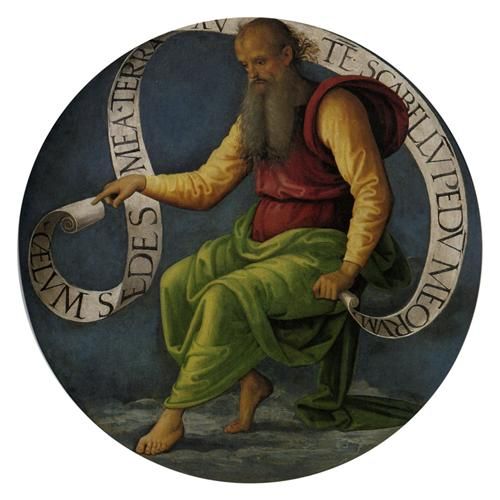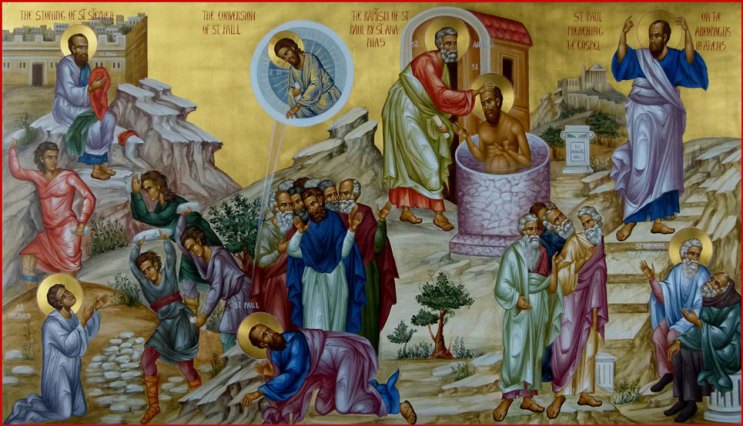
Feast of the Exaltation of the Holy Cross

Exaltation_Holy_CrossEmail.jpg

“For God so loved the world that he gave his only Son, so that everyone who believes in him might not perish but might have eternal life.”

OPENING PRAYER

Heavenly Father,

our lives are in your hands.

You work to bring good out of evil,

healing out of pain

and grace out of sinfulness.

As we make our way through

life’s ups and downs

give us trust in your providence,

hope in your justice,

and confidence in your love,

so that we can see your healing hand at work

in our lives and in the lives of those we serve.

Through Christ our Lord.

Amen

COLLECT

O God, who willed that your Only Begotten Son

should undergo the Cross to save the human race,

grant, we pray,

that we, who have known his mystery on earth,

may merit the grace of his redemption in heaven.

Through our Lord Jesus Christ, your Son,

who lives and reigns with you in the unity

of the Holy Spirit,

one God, for ever and ever.

READING I
aca0a4c6b39dc8d575b857ab453dd4bf.jpg

Nm 21:4b-9


With their patience worn out by the journey,

the people complained against God and Moses,

“Why have you brought us up from Egypt to die in this desert,

where there is no food or water?

We are disgusted with this wretched food!”

In punishment the LORD sent among the people saraph serpents,

which bit the people so that many of them died.

Then the people came to Moses and said,

“We have sinned in complaining against the LORD and you.

Pray the LORD to take the serpents from us.”

So Moses prayed for the people, and the LORD said to Moses,

“Make a saraph and mount it on a pole,

and if any who have been bitten look at it, they will live.”

Moses accordingly made a bronze serpent and mounted it on a pole,

and whenever anyone who had been bitten by a serpent

looked at the bronze serpent, he lived.

CATECHISM OF THE CATHOLIC CHURCH (CCC)

CCC 2130 Nevertheless, already in the Old Testament, God ordained or permitted the making of images that pointed symbolically toward salvation by the incarnate Word: so it was with the bronze serpent, the ark of the covenant, and the cherubim.1

1 Cf. Num 21:4-9; Wis 16:5-14; Jn 3:14-15; Ex 25:10-22; 1 Kings 6:23-28; 7:23-26.

RESPONSORIAL PSALM

Ps 78:1bc-2, 34-35, 36-37, 38

Do not forget the works of the Lord!

Hearken, my people, to my teaching;

incline your ears to the words of my mouth.

I will open my mouth in a parable,

I will utter mysteries from of old.

Do not forget the works of the Lord!

While he slew them they sought him

and inquired after God again,

Remembering that God was their rock

and the Most High God, their redeemer.

Do not forget the works of the Lord!

But they flattered him with their mouths

and lied to him with their tongues,

Though their hearts were not steadfast toward him,

nor were they faithful to his covenant.

Do not forget the works of the Lord!

But he, being merciful, forgave their sin

and destroyed them not;

Often he turned back his anger

and let none of his wrath be roused.

Do not forget the works of the Lord!

READING II

Santíssimo+Nome+de+Jesus.jpg

Phil 2:6-11

Brothers and sisters:

Christ Jesus, though he was in the form of God,

did not regard equality with God something to be grasped.

Rather, he emptied himself,

taking the form of a slave,

coming in human likeness;

and found human in appearance,

he humbled himself,

becoming obedient to death,

even death on a cross.

Because of this, God greatly exalted him

and bestowed on him the name

that is above every name,

that at the name of Jesus

every knee should bend,

of those in heaven and on earth and under the earth,

and every tongue confess that

Jesus Christ is Lord,

to the glory of God the Father.

CATECHISM OF THE CATHOLIC CHURCH (CCC)

CCC 201 To Israel, his chosen, God revealed himself as the only One: “Hear, O Israel: The LORD our God is one LORD; and you shall love the LORD your God with all your heart, and with all your soul, and with all your might.”1 Through the prophets, God calls Israel and all nations to turn to him, the one and only God: “Turn to me and be saved, all the ends of the earth! For I am God, and there is no other. .. To me every knee shall bow, every tongue shall swear. ‘Only in the LORD, it shall be said of me, are righteousness and strength.’”2

CCC 411 The Christian tradition sees in this passage an announcement of the “New Adam” who, because he “became obedient unto death, even death on a cross”, makes amends superabundantly for the disobedience, of Adam.3 Furthermore many Fathers and Doctors of the Church have seen the woman announced in the Protoevangelium as Mary, the mother of Christ, the “new Eve”. Mary benefited first of all and uniquely from Christ’s victory over sin: she was preserved from all stain of original sin and by a special grace of God committed no sin of any kind during her whole earthly life.4

CCC 434 Jesus’ Resurrection glorifies the name of the Savior God, for from that time on it is the name of Jesus that fully manifests the supreme power of the “name which is above every name”.5 The evil spirits fear his name; in his name his disciples perform miracles, for the Father grants all they ask in this name.6

CCC 449 By attributing to Jesus the divine title “Lord”, the first confessions of the Church’s faith affirm from the beginning that the power, honor and glory due to God the Father are due also to Jesus, because “he was in the form of God”,7 and the Father manifested the sovereignty of Jesus by raising him from the dead and exalting him into his glory.8

CCC 461 Taking up St. John’s expression, “The Word became flesh”,9 the Church calls “Incarnation” the fact that the Son of God assumed a human nature in order to accomplish our salvation in it. In a hymn cited by St. Paul, the Church sings the mystery of the Incarnation:

Have this mind among yourselves, which is yours in Christ Jesus, who, though he was in the form of God, did not count equality with God a thing to be grasped, but emptied himself, taking the form of a servant, being born in the likeness of men. And being found in human form he humbled himself and became obedient unto death, even death on a cross.10

CCC 472 This human soul that the Son of God assumed is endowed with a true human knowledge. As such, this knowledge could not in itself be unlimited: it was exercised in the historical conditions of his existence in space and time. This is why the Son of God could, when he became man, “increase in wisdom and in stature, and in favor with God and man”,11 and would even have to inquire for himself about what one in the human condition can learn only from experience.12 This corresponded to the reality of his voluntary emptying of himself, taking “the form of a slave”.13

CCC 602 Consequently, St. Peter can formulate the apostolic faith in the divine plan of salvation in this way: “You were ransomed from the futile ways inherited from your fathers. .. with the precious blood of Christ, like that of a lamb without blemish or spot. He was destined before the foundation of the world but was made manifest at the end of the times for your sake.”14 Man’s sins, following on original sin, are punishable by death.15 By sending his own Son in the form of a slave, in the form of a fallen humanity, on account of sin, God “made him to be sin who knew no sin, so that in him we might become the righteousness of God.”16

CCC 612 The cup of the New Covenant, which Jesus anticipated when he offered himself at the Last Supper, is afterwards accepted by him from his Father’s hands in his agony in the garden at Gethsemani,17 making himself “obedient unto death”. Jesus prays: “My Father, if it be possible, let this cup pass from me. ..”18 Thus he expresses the horror that death represented for his human nature. Like ours, his human nature is destined for eternal life; but unlike ours, it is perfectly exempt from sin, the cause of death.19 Above all, his human nature has been assumed by the divine person of the “Author of life”, the “Living One”.20 By accepting in his human will that the Father’s will be done, he accepts his death as redemptive, for “he himself bore our sins in his body on the tree.”21

CCC 633 Scripture calls the abode of the dead, to which the dead Christ went down, “hell” – Sheol in Hebrew or Hades in Greek – because those who are there are deprived of the vision of God.22 Such is the case for all the dead, whether evil or righteous, while they await the Redeemer: which does not mean that their lot is identical, as Jesus shows through the parable of the poor man Lazarus who was received into “Abraham’s bosom”:23 “It is precisely these holy souls, who awaited their Savior in Abraham’s bosom, whom Christ the Lord delivered when he descended into hell.”24 Jesus did not descend into hell to deliver the damned, nor to destroy the hell of damnation, but to free the just who had gone before him.25

CCC 635 Christ went down into the depths of death so that “the dead will hear the voice of the Son of God, and those who hear will live.”26 Jesus, “the Author of life”, by dying destroyed “him who has the power of death, that is, the devil, and [delivered] all those who through fear of death were subject to lifelong bondage.”27 Henceforth the risen Christ holds “the keys of Death and Hades”, so that “at the name of Jesus every knee should bow, in heaven and on earth and under the earth.”28

Today a great silence reigns on earth, a great silence and a great stillness. A great silence because the King is asleep. The earth trembled and is still because God has fallen asleep in the flesh and he has raised up all who have slept ever since the world began. .. He has gone to search for Adam, our first father, as for a lost sheep. Greatly desiring to visit those who live in darkness and in the shadow of death, he has gone to free from sorrow Adam in his bonds and Eve, captive with him – He who is both their God and the son of Eve. .. “I am your God, who for your sake have become your son. .. I order you, O sleeper, to awake. I did not create you to be a prisoner in hell. Rise from the dead, for I am the life of the dead.”29

CCC 705 Disfigured by sin and death, man remains “in the image of God,” in the image of the Son, but is deprived “of the glory of God,”30 of his “likeness.” The promise made to Abraham inaugurates the economy of salvation, at the culmination of which the Son himself will assume that “image”31 and restore it in the Father’s “likeness” by giving it again its Glory, the Spirit who is “the giver of life.”

CCC 713 The Messiah’s characteristics are revealed above all in the “Servant songs.”32 These songs proclaim the meaning of Jesus’ Passion and show how he will pour out the Holy Spirit to give life to the many: not as an outsider, but by embracing our “form as slave.”33 Taking our death upon himself, he can communicate to us his own Spirit of life.

CCC 876 Intrinsically linked to the sacramental nature of ecclesial ministry is its character as service. Entirely dependent on Christ who gives mission and authority, ministers are truly “slaves of Christ,”34 in the image of him who freely took “the form of a slave” for us.35 Because the word and grace of which they are ministers are not their own, but are given to them by Christ for the sake of others, they must freely become the slaves of all.36

CCC 908 By his obedience unto death,37 Christ communicated to his disciples the gift of royal freedom, so that they might “by the self-abnegation of a holy life, overcome the reign of sin in themselves”:38

That man is rightly called a king who makes his own body an obedient subject and, by governing himself with suitable rigor, refuses to let his passions breed rebellion in his soul, for he exercises a kind of royal power over himself. And because he knows how to rule his own person as king, so too does he sit as its judge. He will not let himself be imprisoned by sin, or thrown headlong into wickedness.39

CCC 1224 Our Lord voluntarily submitted himself to the baptism of St. John, intended for sinners, in order to “fulfill all righteousness.”40 Jesus’ gesture is a manifestation of his self-emptying.41 The Spirit who had hovered over the waters of the first creation descended then on the Christ as a prelude of the new creation, and the Father revealed Jesus as his “beloved Son.”42

CCC 1850 Sin is an offense against God: “Against you, you alone, have I sinned, and done that which is evil in your sight.”43 Sin sets itself against God’s love for us and turns our hearts away from it. Like the first sin, it is disobedience, a revolt against God through the will to become “like gods,”44 knowing and determining good and evil. Sin is thus “love of oneself even to contempt of God.”45 In this proud self- exaltation, sin is diametrically opposed to the obedience of Jesus, which achieves our salvation.46

CCC 2641 “[Address] one another in psalms and hymns and spiritual songs, singing and making melody to the Lord with all your heart.”47 Like the inspired writers of the New Testament, the first Christian communities read the Book of Psalms in a new way, singing in it the mystery of Christ. In the newness of the Spirit, they also composed hymns and canticles in the light of the unheard-of event that God accomplished in his Son: his Incarnation, his death which conquered death, his Resurrection, and Ascension to the right hand of the Father.48 Doxology, the praise of God, arises from this “marvelous work” of the whole economy of salvation.49

CCC 2812 Finally, in Jesus the name of the Holy God is revealed and given to us, in the flesh, as Savior, revealed by what he is, by his word, and by his sacrifice.50 This is the heart of his priestly prayer: “Holy Father. .. for their sake I consecrate myself, that they also may be consecrated in truth.”51 Because he “sanctifies” his own name, Jesus reveals to us the name of the Father.52 At the end of Christ’s Passover, the Father gives him the name that is above all names: “Jesus Christ is Lord, to the glory of God the Father.”53

1 Dt 6:45.

2 Is 45:22-24; cf. Phil 2:10-11.

3 Cf. 1 Cor 15:21-22,45; Phil 2:8; Rom 5:19-20.

4 Cf. Pius IX, Ineffabilis Deus: DS 2803; Council of Trent: DS 1573.

5 Phil 2:9-10; cf. Jn 12:28.

6 Cf. Acts 16:16-18; 19:13-16; Mk 16:17; Jn 15:16.

7 Cf. Acts 2:34 – 36; Rom 9:5; Titus 2:13; Rev 5:13; Phil 2:6.

8 Cf. Rom 10:9; I Cor 12:3; Phil 2:9-11.

9 Jn 1:14.

10 Phil 2:5-8; cf. LH, Saturday, Canticle at Evening Prayer.

11 Lk 2:52.

12 Cf. Mk 6 38; 8 27; Jn 11:34; etc.

13 Phil 2:7.

14 I Pt 1:18-20.

15 Cf. Rom 5:12; I Cor 15:56.

16 2 Cor 5:21; cf. Phil 2:7; Rom 8:3.

17 Cf. Mt 26:42; Lk 22:20.

18 Phil 2:8; Mt 26:39; cf. Heb 5:7-8.

19 Cf. Rom 5:12; Heb 4:15.

20 Cf. Acts 3:15; Rev 1:17; Jn 1:4; 5:26.

21 1 Pt 224; cf. Mt 26:42.

22 Cf. Phil 2:10; Acts 2:24; Rev 1:18; Eph 4:9; Pss 6:6; 88:11-13.

23 Cf. Ps 89:49; I Sam 28:19; Ezek 32:17-32; Lk 16:22-26.

24 Roman Catechism 1, 6, 3.

25 Cf. Council of Rome (745): DS 587; Benedict XII, Cum dudum (1341): DS 1011; Clement VI, Super quibusdam (1351): DS 1077; Council of Toledo IV (625): DS 485; Mt 27:52-53.

26 Jn 5:25; cf. Mt 12:40; Rom 10:7; Eph 4:9.

27 Heb 2:14-15; cf. Acts 3:15.

28 Rev 1:18; Phil 2:10.

29 Ancient Homily for Holy Saturday: PG 43, 440A, 452C; LH, Holy Saturday, OR.

30 Rom 3:23.

31 Cf. Jn 1:14; Phil 2:7.

32 Cf. Isa 42:1-9; cf. Mt 12:18-21; Jn 1:32-34; then cf. Isa 49:1-6; cf. Mt 3:17; Lk 2:32; finally cf. Isa 50:4-10 and Isa 52:13-53:12.

33 Phil 2:7.

34 Cf. Rom 1:1.

35 Phil 2:7.

36 Cf. 1 Cor 9:19.

37 Cf. Phil 2:8-9.

38 LG 36.

39 St. Ambrose, Psal 118:14:30: PL 15:1476.

40 Mt 3:15.

41 Cf. Phil 2:7.

42 Mt 3:16-17.

43 Ps 51:4.

44 Gen 3:5.

45 St. Augustine, De civ. Dei 14, 28: PL 41, 436.

46 Cf. Phil 2:6-9.

47 Eph 5:19; Col 3:16.

48 Cf. Phil 2:6-11; Col 1:15-20; Eph 5:14; 1 Tim 3:16; 6:15-16; 2 Tim 2:11-13.

49 Cf. Eph 1:3-14; Rom 16:25-27; Eph 3:20-21; Jude 24-25.

50 Cf. Mt 1:21; Lk 1:31, Jn 8:28; 17:8; 17:17-19.

51 Jn 17:11, 19.

52 Cf. Ezek 20:39; 36:20-21; Jn 17:6.

53 Phil 2:9-11.

GOSPEL

Exaltation of the Holy Cross.jpg

Jn 3:13-17

Jesus said to Nicodemus:

“No one has gone up to heaven

except the one who has come down from heaven, the Son of Man.

And just as Moses lifted up the serpent in the desert,

so must the Son of Man be lifted up,

so that everyone who believes in him may have eternal life.”

For God so loved the world that he gave his only Son,

so that everyone who believes in him might not perish

but might have eternal life.

For God did not send his Son into the world to condemn the world,

but that the world might be saved through him.

CATECHISM OF THE CATHOLIC CHURCH (CCC)

CCC 219 God’s love for Israel is compared to a father’s love for his son. His love for his people is stronger than a mother’s for her children. God loves his people more than a bridegroom his beloved; his love will be victorious over even the worst infidelities and will extend to his most precious gift: “God so loved the world that he gave his only Son.”1

CCC 423 We believe and confess that Jesus of Nazareth, born a Jew of a daughter of Israel at Bethlehem at the time of King Herod the Great and the emperor Caesar Augustus, a carpenter by trade, who died crucified in Jerusalem under the procurator Pontius Pilate during the reign of the emperor Tiberius, is the eternal Son of God made man. He ‘came from God’,2 ‘descended from heaven’,3 and ‘came in the flesh’.4 For ‘the Word became flesh and dwelt among us, full of grace and truth; we have beheld his glory, glory as of the only Son from the Father. .. And from his fullness have we all received, grace upon grace.’5

CCC 440 Jesus accepted Peter’s profession of faith, which acknowledged him to be the Messiah, by announcing the imminent Passion of the Son of Man.6 He unveiled the authentic content of his messianic kingship both in the transcendent identity of the Son of Man “who came down from heaven”, and in his redemptive mission as the suffering Servant: “The Son of Man came not to be served but to serve, and to give his life as a ransom for many.”7 Hence the true meaning of his kingship is revealed only when he is raised high on the cross.8 Only after his Resurrection will Peter be able to proclaim Jesus’ messianic kingship to the People of God: “Let all the house of Israel therefore know assuredly that God has made him both Lord and Christ, this Jesus whom you crucified.”9

CCC 444 The Gospels report that at two solemn moments, the Baptism and the Transfiguration of Christ, the voice of the Father designates Jesus his “beloved Son”.10 Jesus calls himself the “only Son of God”, and by this title affirms his eternal pre-existence.11 He asks for faith in “the name of the only Son of God”.12 In the centurion’s exclamation before the crucified Christ, “Truly this man was the Son of God”,13 that Christian confession is already heard. Only in the Paschal mystery can the believer give the title “Son of God” its full meaning.

CCC 458 The Word became flesh so that thus we might know God’s love: “In this the love of God was made manifest among us, that God sent his only Son into the world, so that we might live through him.”14 “For God so loved the world that he gave his only Son, that whoever believes in him should not perish but have eternal life.”15

CCC 661 This final stage stays closely linked to the first, that is, to his descent from heaven in the Incarnation. Only the one who “came from the Father” can return to the Father: Christ Jesus.16 “No one has ascended into heaven but he who descended from heaven, the Son of man.”17 Left to its own natural powers humanity does not have access to the “Father’s house”, to God’s life and happiness.18 Only Christ can open to man such access that we, his members, might have confidence that we too shall go where he, our Head and our Source, has preceded us.19

CCC 679 Christ is Lord of eternal life. Full right to pass definitive judgment on the works and hearts of men belongs to him as redeemer of the world. He “acquired” this right by his cross. The Father has given “all judgment to the Son”.20 Yet the Son did not come to judge, but to save and to give the life he has in himself.21 By rejecting grace in this life, one already judges oneself, receives according to one’s works, and can even condemn oneself for all eternity by rejecting the Spirit of love.22

CCC 706 Against all human hope, God promises descendants to Abraham, as the fruit of faith and of the power of the Holy Spirit.23 In Abraham’s progeny all the nations of the earth will be blessed. This progeny will be Christ himself,24 in whom the outpouring of the Holy Spirit will “gather into one the children of God who are scattered abroad.”25 God commits himself by his own solemn oath to giving his beloved Son and “the promised Holy Spirit. .. [who is] the guarantee of our inheritance until we acquire possession of it.”26

CCC 2130 Nevertheless, already in the Old Testament, God ordained or permitted the making of images that pointed symbolically toward salvation by the incarnate Word: so it was with the bronze serpent, the ark of the covenant, and the cherubim.27

CCC 2795 The symbol of the heavens refers us back to the mystery of the covenant we are living when we pray to our Father. He is in heaven, his dwelling place; the Father’s house is our homeland. Sin has exiled us from the land of the covenant,28 but conversion of heart enables us to return to the Father, to heaven.29 In Christ, then, heaven and earth are reconciled,30 for the Son alone “descended from heaven” and causes us to ascend there with him, by his Cross, Resurrection, and Ascension.31

1 Jn 3:16; cf. Hos 11:1; Is 49:14-15; 62: 4-5; Ezek 16; Hos 11.

2 Jn 13:3.

3 Jn 3:13; 6:33.

4 1 Jn 4:2.

5 Jn 1:14,16.

6 Cf. Mt 16:16-23.

7 Jn 3:13; Mt 20:28; cf. Jn 6:62; Dan 7:13; Is 53:10-12.

8 Cf. Jn 19:19-22; Lk 23:39-43.

9 Acts 2:36.

10 Cf. Mt 3:17; cf. 17:5.

11 Jn 3:16; cf. 10:36.

12 Jn 3:18.

13 Mk 15:39.

14 I Jn 4:9.

15 Jn 3:16.

16 Cf. Jn 16:28.

17 Jn 3:13; cf. Eph 4:8-10.

18 Jn 14:2.

19 Missale Romanum, Preface of the Ascension: sed ut illuc confideremus, sua membra, nos subsequi quo ipse, caput nostrum principiumque, praecessit.

20 Jn 5:22; cf. 5:27; Mt 25:31; Acts 10:42; 17:31; 2 Tim 4:1.

21 Cf. Lk 21:12; Jn 15:19-20.

22 Cf. Jn 3:17; 5:26. 588 Cf. Jn 3:18; 12:48; Mt 12:32; I Cor 3:12-15; Heb 6:4-6; 10:26-31.

23 Cf. Gen 18:1-15; Lk 1:26-38. 54-55; Jn 1:12-13; Rom 4:16-21.

24 Cf. Gen 12:3; Gal 3:16.

25 Cf. In 11:52.

26 Eph 1:13-14; cf. Gen 22:17-19; Lk 1:73; Jn 3:16; Rom 8:32; Gal 3:14.

27 Cf. Num 21:4-9; Wis 16:5-14; Jn 3:14-15; Ex 25:10-22; 1 Kings 6:23-28; 7:23-26.

28 Cf. Gen 3.

29 Jer 3:19-4:1a; Lk 15:18, 21.

30 Cf. Isa 45:8; Ps 85:12.

31 Jn 3:13; 12:32; 14 2-3; 16:28; 20:17; Eph 4:9-10; Heb 1:3; 2:13.

APPLICATION

O Crux, ave spes unica! Hail, O Cross, our only hope!

Dear Brothers and Sisters, we are invited to look upon the Cross. It is the “privileged place” where the love of God is revealed and shown to us.… On the Cross human misery and divine mercy meet. The adoration of this unlimited mercy is for man the only way to open himself to the mystery which the Cross reveals.

The Cross is planted in the earth and would seem to extend its roots in human malice, but it reaches up, pointing as it were to the heavens, pointing to the goodness of God. By means of the Cross of Christ, the Evil One has been defeated, death is overcome, life is given to us, hope is restored, light is imparted. O Crux, ave spes unica!…

“As Moses lifted up the serpent in the wilderness, so must the Son of man be lifted up, that whoever believes in Him may have eternal life” (John 3:14-15), says Jesus. What do we see then when we bring our eyes to bear on the cross where Jesus was nailed (cf. John 19:37)? We contemplate the sign of God’s infinite love for humanity.

O Crux, ave spes unica! Saint Paul speaks of the same theme in the letter to the Ephesians…. Not only did Christ Jesus become man, in everything similar to human beings, but He took on the condition of a servant and humbled Himself even more by becoming obedient to the point of death, even death on a cross (cf. Philippians 2:6-8).

Yes, “God so loved the world that He gave His only Son” (John 3:16). We admire — overwhelmed and gratified — the breadth and length and height and depth of the love of Christ which surpasses all knowledge (cf. Ephesians 3:18-19)! O Crux, ave spes unica!

Through the mystery of your Cross and your Resurrection, save us O Lord! Amen

— Pope John Paul II — Excerpts from homily September 14, 2003

What it Means to Exalt the Cross

In A.D. 326, St. Helena, the mother of the Roman emperor Constantine, discovered the true cross of Jesus near the site that generations had venerated as the Mount of Crucifixion. Upon discovering the cross, everyone fell to their knees and cried out, “Lord, have mercy!” A church was built on the site—the Church of the Holy Sepulcher—and the cross was placed in a prominent position within the building. The church was consecrated on September 13, 335, and the feast of the Exaltation of the Cross was celebrated annually on the following day, September 14th.

About three hundred years later, the cross was taken as plunder by the Persian emperor Khosrau II but was reclaimed fourteen years later by the Roman emperor Heraclius, who brought it to Constantinople where it was once again triumphantly exalted.

This short history lesson has some resemblance to the way we live out our faith. For instance, when we see the glory of the cross and the sacrifice Jesus made for us, we rejoice. With grateful hearts we say, “Lord, I love you; have mercy on me.” But then we lose sight of this gift of salvation. Without even realizing it, we let the cross get buried underneath our many priorities and responsibilities.

Then, when we are touched, maybe by a tragic event, by a book we read, or by a moving homily at Mass, we “excavate” the cross and exalt it once more. We give it a place of prominence in the sanctuary of our hearts. But then we lose our focus and let our guard down. A stronger foe conquers us and steals the joy of the cross from us. Finally, with newfound determination we take the cross back and we say once more, “Jesus, I exalt your cross. I make it my foundation. Lord, have mercy on me!”

May we all do our best to exalt the cross and make it the first foundation of our lives!

“Lord, as I lift up the cross, I ask you to have mercy on me.”

Used with permission. The Word Among Us Mass Edition http://www.wau.org.

BENEDICTUS

The Sign of the Cross

The most basic Christian gesture of prayer is and always will be the sign of the cross. It is a way of confessing Christ crucified with one’s very body… To seal oneself with the sign of the cross is a visible and public Yes to him who suffered for us; to him who in the body has made God’s love visible, even to the utmost; to the God who reigns not by destruction but by the humility of suffering and love, which is stronger than all the power of the world and wiser than all the calculating intelligence of men. The sign of the cross is a confession of faith: I believe in him who suffered for me and rose again; in him who has transformed the sign of shame into the sign of hope and of the love of God that is present with us. The confession of faith is a confession of hope: I believe in him who in his weakness is the Almighty; in him who can and will save me even in apparent absence and impotence. By signing ourselves with the cross, we place ourselves under the protection of the cross, hold it in front of us like a shield that will guard us in all the distress of daily life and give us the courage to go on. We accept it as a signpost that we follow… The cross shows us the road of life – the imitation of Christ … Whenever we make the sign of the cross, we accept our Baptism anew; Christ from the cross draws us, so to speak, to himself … We make the sign of the cross on ourselves and thus enter the power of the blessing of Jesus Christ. We make the sign over people to whom we wish a blessing … Through the cross, we can become sources of blessing for one another.

Pope Emeritus Benedict XVI

CLOSING PRAYER

God thank you for the gift of salvation through your Son on the cross.

Help us to be consumed by the power of the cross, t

he forgiveness, mercy, hope and love to fuel our actions

embedded with compassion and the humbleness of servants.

When we see condemnation in the world,

percolating from our actions or the acts of other,

help us to realize your only desire for us is to manifest the love

from the gift of your Son.

Help us never to shrink from this path,

but continually transform our minds and hearts

to courageously live this journey into eternity.

We pray in the name of the Father, Son and Holy Spirit, Amen.

Holy Mother of God, pray for us.

Posted in agnostic, athiest, Benedictine oblate, Bible Study, Catholic, Christian, faith, Heaven, hell, Holy Spirit, Liturgy, mercy, Oblate, prayer, The Word of God, Uncategorized | Tagged , , , , , , , , , , , , , , | 2 Comments

Twenty-Second Sunday in Ordinary Time – A

Take up your cross and follow me.jpg

“Whoever wishes to come after me must deny himself,
take up his cross, and follow me. 
For whoever wishes to save his life will lose it,
but whoever loses his life for my sake will find it.’

OPENING PRAYER

Carry Your Cross

Take up your cross, the Savior said,

If you would my disciple be;

Deny yourself, the world forsake,

And humbly follow after me.

Take up your cross, let not its weight

Fill your weak spirit with alarm;

His strength shall bear your heart

And nerve your arm.

Take up your cross then in his strength,

And ev’ry danger calmly brave,

To guide you to a better home,

And vict’ry over death and grave.

Take up your cross and follow Christ,

Nor think till death to lay it down;

For only he who bears the cross

May hope to wear the glorious crown.

To you, great Lord, the One in three,

All praise for evermore ascend;

O grant us here below to see

The heav’nly life that knows no end.

~~by Charles William Everest

COLLECT

God of might, giver of every good gift,

put into our hearts the love of your name,

so that, by deepening our sense of reverence,

you may nurture in us what is good

and, by your watchful care,

keep safe what you have nurtured.

Through our Lord Jesus Christ, your Son,

who lives and reigns with you in the unity

of the Holy Spirit,

one God, for ever and ever.

READING I

jeremiah-prophet.jpg

Jer 20:7-9


You duped me, O LORD, and I let myself be duped;
you were too strong for me, and you triumphed.
  All the day I am an object of laughter;
everyone mocks me.

Whenever I speak, I must cry out,
 violence and outrage is my message;
 the word of the LORD has brought me
 derision and reproach all the day.

I say to myself, I will not mention him,
 I will speak in his name no more.
  But then it becomes like fire burning in my heart, 
imprisoned in my bones;
 I grow weary holding it in, I cannot endure it.

CATECHISM OF THE CATHOLIC CHURCH (CCC)

CCC 2584 In their “one to one” encounters with God, the prophets draw light and strength for their mission. Their prayer is not flight from this unfaithful world, but rather attentiveness to The Word of God. At times their prayer is an argument or a complaint, but it is always an intercession that awaits and prepares for the intervention of the Savior God, the Lord of history.1

1 Cf. Am 7:2, 5; Isa 6:5, 8, 11; Jer 1:6; 15: 15-18; 20: 7-18.

APPLICATION

Among all the prophets of the Old Testament Jeremiah is the one who most closely resembled Christ in his sufferings. Other prophets were martyred by their own people, but the whole public life of Jeremiah was one long drawn-out martyrdom. He loved his country and his countrymen, but he had to forewarn them of the fate which would follow from their worldliness and their worldly politics. For this they hated and derided him, and, refusing to listen to God’s warning, which he spoke to them, they went headlong toward the destruction of Jeremiah, of Jerusalem with God’s temple, and the slavery of exile.

Christ too loved his country and his fellow-Jews. The aim of his mission was to bring them into the new kingdom of God on earth from which they would pass in due course, to God’s eternal kingdom.  However, they were more interested in worldliness and worldly politics than in their eternal happiness. They refused to see in him the Messiah whom God had promised to their forefathers. They rejected his message as not being from God. They mocked and insulted him during his mission among them, and they ended up by having the pagan Romans nail him to the cross. Christ loved his fellow-Jews notwithstanding their insults and their rejection of him. Sitting on Mount Olivet one day shortly before his crucifixion, “he shed tears over the city and said: If you had only understood . . . the message of peace! but alas it is hidden from your eyes . . . your enemies will not leave one stone standing on another within you, because you did not recognize your opportunity when God offered it (Lk. 19: 41-44). And again: “Jerusalem, Jerusalem, you that kill the prophets and stone those that are sent to you! How often have I longed to gather your children (your inhabitants) as a hen gathers her brood under her wings, but you refused” (Lk. 13: 34).

Jeremiah’s sufferings, endured because he was God’s chosen prophet, should encourage us to bear whatever sufferings the practice of our Christian religion may bring on us. To those around us who ignore God, we too are prophets of God, if we put our Christian faith into daily practice. Christian living is a clear message from God, to those whose lives are totally engrossed in this world. In our daily lives we are God’s mouth-pieces, preaching the true purpose of life by our actions. We may be mocked and derided for this, but it must not prevent us from carrying out our Christian duty–the giving of good example to our neighbor, whether he accepts it or not.

Like Jeremiah and like our Savior Christ, we must continue to love our neighbors even if they revile and mock us because of our fidelity to God. They especially need our love and our prayers. They are putting their eternal welfare in jeopardy. Our good example, together with our prayers, may be the means God has ordained to bring them to heaven. Let us not be found wanting in this mission, given by God to each one of us. If we are loyal to our faith, during our short spell on earth, we shall merit eternal happiness for ourselves and those who were influenced by our exemplary lives.

RESPONSORIAL PSALM

Ps 63:2, 3-4, 5-6, 8-9

My soul is thirsting for you, O Lord my God.

O God, you are my God whom I seek;

for you my flesh pines and my soul thirsts

like the earth, parched, lifeless and without water.

My soul is thirsting for you, O Lord my God.

Thus have I gazed toward you in the sanctuary

to see your power and your glory,

For your kindness is a greater good than life;

my lips shall glorify you.

My soul is thirsting for you, O Lord my God.

Thus will I bless you while I live;

lifting up my hands, I will call upon your name.

As with the riches of a banquet shall my soul be satisfied,

and with exultant lips my mouth shall praise you.

My soul is thirsting for you, O Lord my God.

You are my help,

and in the shadow of your wings I shout for joy.

My soul clings fast to you;

your right hand upholds me.

My soul is thirsting for you, O Lord my God.

READING II

SAINT_PAUL_AND_SCENES_FROM_HIS_LIFE_11.jpg

Rom 12: 1-2

I urge you, brothers and sisters, by the mercies of God,

to offer your bodies as a living sacrifice,

holy and pleasing to God, your spiritual worship.

Do not conform yourselves to this age

but be transformed by the renewal of your mind,

that you may discern what is the will of God,

what is good and pleasing and perfect.

CATECHISM OF THE CATHOLIC CHURCH (CCC)

CCC 1105 The Epiclesis (“invocation upon”) is the intercession in which the priest begs the Father to send the Holy Spirit, the Sanctifier, so that the offerings may become the body and blood of Christ and that the faithful by receiving them, may themselves become a living offering to God.1

CCC 1454 The reception of this sacrament ought to be prepared for by an examination of conscience made in the light of the Word of God. The passages best suited to this can be found in the Ten Commandments, the moral catechesis of the Gospels and the apostolic letters, such as the Sermon on the Mount and the apostolic teachings.2

CCC 2031 The moral life is spiritual worship. We “present [our] bodies as a living sacrifice, holy and acceptable to God,”3 within the Body of Christ that we form and in communion with the offering of his Eucharist. In the liturgy and the celebration of the sacraments, prayer and teaching are conjoined with the grace of Christ to enlighten and nourish Christian activity. As does the whole of the Christian life, the moral life finds its source and summit in the Eucharistic sacrifice.

CCC 2520 Baptism confers on its recipient the grace of purification from all sins. But the baptized must continue to struggle against concupiscence of the flesh and disordered desires. With God’s grace he will prevail
– by the virtue and gift of chastity, for chastity lets us love with upright and undivided heart;
– by purity of intention which consists in seeking the true end of man: with simplicity of vision, the baptized person seeks to find and to fulfill God’s will in everything;4
– by purity of vision, external and internal; by discipline of feelings and imagination; by refusing all complicity in impure thoughts that incline us to turn aside from the path of God’s commandments: “Appearance arouses yearning in fools”;5
– by prayer: I thought that continence arose from one’s own powers, which I did not recognize in myself. I was foolish enough not to know. .. that no one can be continent unless you grant it. For you would surely have granted it if my inner groaning had reached your ears and I with firm faith had cast my cares on you.6

CCC 2826 By prayer we can discern “what is the will of God” and obtain the endurance to do it.7 Jesus teaches us that one enters the kingdom of heaven not by speaking words, but by doing “the will of my Father in heaven.”8

1 Cf. Rom 12:1.
2 Cf. Mt 5-7; Rom 12-15; 1 Cor 12-13; Gal 5; Eph 4-6; etc.
3 Rom 12:1.
4 Cf. Rom 12:2; Col 1:105 Wis 15:5. 6 St. Augustine, Conf. 6, 11, 20: PL 32, 729-730.
7 Rom 12:2; Cf. Eph 5:17; Cf. Heb 10:36.
8 Mt 7:21.

APPLICATION

These words were written over nineteen hundred years ago, but they are as obligatory for us and as instructive for us today as they were for the Roman converts of the year 58 A.D. We have the very same Christian life to live as they had. We have the self-same road to travel to heaven and the same marvelous mercies of God to be grateful for. Therefore, we have the same obligation of showing our gratitude to the good God who called us to be followers and co-heirs of his divine Son.

St. Paul tells us how we are to show that gratitude to God. He tells us we must live our lives as true Christians, that is, our daily lives must conform to the will of God. The prime motive in all our actions must ever be the honor and glory of God. When we do this our lives are living sacrifices, we are offering ourselves daily to God. Because God accepts our offering this makes our Christian lives good and acceptable and perfect in his sight.

Is not this too high a standard to set for a weak mortal? How can a man be always thinking of God when he has so many earthly cares and worries which demand his attention? The answer is, of course, that it is exactly by attending to our earthly worries and problems, and by carrying out our duties faithfully, that we honor God. He does not ask us or want us to be always on our knees saying “Lord, Lord.” He wants us to work honestly and faithfully and from the right motive..

While we must not imitate the foolish ones who try to make their heaven in this world neither must we despise this world. It is God who gave it with all its products so that we could use it as the testing ground in which we are to earn our eternal happiness. God does not forbid us to possess and to use the goods of this world: it is precisely for our use that he put them there. It is the abuse, not the lawful use, of this world’s goods that is wrong; it is not the possession of earthly goods, but the folly of allowing earthly goods to possess us, that is forbidden.

It is God’s will for all Christians that they should always remember to be dedicated to his service by their baptism. They are destined for heaven, and they will reach their destination, by justly and honestly using the things of this life, as means to that end and not as ends in themselves.

GOSPEL


Get Behind Me Satan.jpg

Mt 16: 21-27

Jesus began to show his disciples
that he must go to Jerusalem and suffer greatly
from the elders, the chief priests, and the scribes,
 and be killed and on the third day be raised. 
Then Peter took Jesus aside and began to rebuke him,
“God forbid, Lord! No such thing shall ever happen to you.” 
He turned and said to Peter,
“Get behind me, Satan! You are an obstacle to me. 
You are thinking not as God does, but as human beings do.”

Then Jesus said to his disciples,
“Whoever wishes to come after me must deny himself,
take up his cross, and follow me. 
For whoever wishes to save his life will lose it,
but whoever loses his life for my sake will find it.
What profit would there be for one to gain the whole world
and forfeit his life? 
Or what can one give in exchange for his life? 
For the Son of Man will come with his angels in his Father’s glory,
and then he will repay all according to his conduct.”

http://usccb.org/bible/readings/090317.cfm

CATECHISM OF THE CATHOLIC CHURCH (CCC)

CCC 226 It means making good use of created things: faith in God, the only One, leads us to use everything that is not God only insofar as it brings us closer to him, and to detach ourselves from it insofar as it turns us away from him:
My Lord and my God, take from me everything that distances me from you.
My Lord and my God, give me everything that brings me closer to you.
My Lord and my God, detach me from myself to give my all to you.1

CCC 363 In Sacred Scripture the term “soul” often refers to human life or the entire human person.2 But “soul” also refers to the innermost aspect of man, that which is of greatest value in him,3 that by which he is most especially in God’s image: “soul” signifies the spiritual principle in man.

CCC 540 Jesus’ temptation reveals the way in which the Son of God is Messiah, contrary to the way Satan proposes to him and the way men wish to attribute to him.4 This is why Christ vanquished the Tempter for us: “For we have not a high priest who is unable to sympathize with our weaknesses, but one who in every respect has been tested as we are, yet without sinning.”5 By the solemn forty days of Lent the Church unites herself each year to the mystery of Jesus in the desert.

CCC 554 From the day Peter confessed that Jesus is the Christ, the Son of the living God, the Master “began to show his disciples that he must go to Jerusalem and suffer many things. .. and be killed, and on the third day be raised.”6 Peter scorns this prediction, nor do the others understand it any better than he.7 In this context the mysterious episode of Jesus’ Transfiguration takes place on a high mountain,8 before three witnesses chosen by himself: Peter, James and John. Jesus’ face and clothes become dazzling with light, and Moses and Elijah appear, speaking “of his departure, which he was to accomplish at Jerusalem”.9 A cloud covers him and a voice from heaven says: “This is my Son, my Chosen; listen to him!”10

CCC 607 The desire to embrace his Father’s plan of redeeming love inspired Jesus’ whole life,11 for his redemptive passion was the very reason for his Incarnation. And so he asked, “And what shall I say? ‘Father, save me from this hour’? No, for this purpose I have come to this hour.”12 And again, “Shall I not drink the cup which the Father has given me?”13 From the cross, just before “It is finished”, he said, “I thirst.”14

CCC 618 The cross is the unique sacrifice of Christ, the “one mediator between God and men”.15 But because in his incarnate divine person he has in some way united himself to every man, “the possibility of being made partners, in a way known to God, in the paschal mystery” is offered to all men.16 He calls his disciples to “take up [their] cross and follow [him]”,17 for “Christ also suffered for [us], leaving [us] an example so that [we] should follow in his steps.”18 In fact Jesus desires to associate with his redeeming sacrifice those who were to be its first beneficiaries.19 This is achieved supremely in the case of his mother, who was associated more intimately than any other person in the mystery of his redemptive suffering.20 Apart from the cross there is no other ladder by which we may get to heaven.21

CCC 736 By this power of the Spirit, God’s children can bear much fruit. He who has grafted us onto the true vine will make us bear “the fruit of the Spirit:. .. love, joy, peace, patience, kindness, goodness, faithfulness, gentleness, self-control.”22 “We live by the Spirit”; the more we renounce ourselves, the more we “walk by the Spirit.”23
Through the Holy Spirit we are restored to paradise, led back to the Kingdom of heaven, and adopted as children, given confidence to call God “Father” and to share in Christ’s grace, called children of light and given a share in eternal glory.24

CCC 1021 Death puts an end to human life as the time open to either accepting or rejecting the divine grace manifested in Christ.25 The New Testament speaks of judgment primarily in its aspect of the final encounter with Christ in his second coming, but also repeatedly affirms that each will be rewarded immediately after death in accordance with his works and faith. The parable of the poor man Lazarus and the words of Christ on the cross to the good thief, as well as other New Testament texts speak of a final destiny of the soul–a destiny which can be different for some and for others.26

CCC 2232 Family ties are important but not absolute. Just as the child grows to maturity and human and spiritual autonomy, so his unique vocation which comes from God asserts itself more clearly and forcefully. Parents should respect this call and encourage their children to follow it. They must be convinced that the first vocation of the Christian is to follow Jesus: “He who loves father or mother more than me is not worthy of me; and he who loves son or daughter more than me is not worthy of me.”27

1 St. Nicholas of Flue; cf. Mt 5:29-30; 16:24-26.
2 Cf. Mt 16:25-26; Jn 15:13; Acts 2:41.
3 Cf. Mt 10:28; 26:38; Jn 12:27; 2 Macc 6 30.
4 Cf Mt 16:2 1-23.
5 Heb 4:15.
6 Mt 16:21.
7 Cf. Mt 16:22-23; 17:23; Lk 9:45.
8 Cf. Mt 17:1-8 and parallels; 2 Pt 1:16-18.
9 Lk 9:31.
10 Lk 9:35.
11 Cf Lk 12:50; 22:15; Mt 16:21-23.
12 Jn 12:27.
13 Jn 18:11.
14 Jn 19:30; 19:28.
15 1 Tim 2:5.
16 GS 22 # 5; cf. # 2.
17 Mt 16:24.
18 I Pt 2:21.
19 Cf Mk 10:39; Jn 21:18-19; Col 1:24.
20 Cf. Lk 2:35.
21 St. Rose of Lima: cf. P. Hansen, Vita mirabilis (Louvain, 1668).
22 Gal 5:22-23.
23 Gal 5:25; cf. Mt 16:24-26.
24 St. Basil, De Spiritu Sancto, 15,36: PG 32,132.
25 Cf. 2 Tim 1:9-10.
26 Cf. Lk 16:22; 23:43; Mt 16:26; 2 Cor 5:8; Phil 1:23; Heb 9:27; 12:23.
27 Mt 10:37; cf. 16:25.

APPLICATION

By becoming man… equal to us in all things save sin… the Son of God joined our human nature to the divine and so made all men his brothers and adopted sons of the Father. From all eternity this was God’s plan for mankind. But because sin had entered into the world before the Incarnation took place, the Son of God in his human nature had to suffer the violent death of the cross at the hands of sinners. In this very suffering he became the Lamb of God who took away the sins of the world, as the second-Isaiah had foretold in his “suffering servant” prophecies (Is. 53: 1-7; 42: 1-9 etc). His death, because he was God as well as man, was a sacrifice, an atonement, of infinite value, and therefore obtained forgiveness from the Father for all the sins of the human race.

In foretelling his sufferings and death, which took place some months later, Christ intended to prepare his disciples and other followers for what he knew would be for them a severe crisis of faith. He also took occasion from it to remind his disciples, and all others who would follow him, of what their attitude to suffering and death should be. He told them, and us too, that we must be ever ready to accept sufferings in this life, and even an untimely death if that should be demanded of us, rather than deny our Christian faith.

To prove their loyalty to their faith in Christ thousands of Christians in the early Church, and thousands more during persecutions in later centuries, gladly took him at his word and went joyfully to their martyrdom. It is to be hoped that, aided by God’s grace, we would all be ready to imitate their example, if called on to prove our fidelity to Christ and our Christian faith. But at the moment what Christ expects and asks of us is that we should bear the sufferings and hardships of daily life cheerfully and gladly for his sake.

This daily carrying of our Christian cross can be, and is for many, a prolonged martyrdom. Poverty, ill-health, cruelty and hardheartedness met with in the home and in one’s neighbors, are heavy crosses which only a truly Christian shoulder can bear. But, if we were offered health, happiness, peace, wealth and power for the next fifty or seventy years on this earth, in exchange for an eternal heaven after death, what rational one among us would accept that offer?

Christians know that this life is a period of training, which makes us ready hereafter to receive the eternal reward which Christ has won for us. Every trainee knows that one must endure certain hardships and sufferings in order to merit graduation into one’s chosen profession or trade. On our Christian graduation day we shall, please God, hear the welcome words: “Well done good and faithful servant; because you have been faithful in small things, I will trust you with greater, come and join in your Master’s happiness” (Mt. 25:21). May God grant that every one of us will hear these words of welcome.

Applications written by Fr. Kevin O’Sullivan O.F.M. and used with permission from Franciscan Press.

BENEDICTUS

Following, Believing Loving

“To follow’ means to entrust oneself to the Word of God, to rate it higher than the laws of money and bread and to live by it. In short, to follow means to believe, but to “believe’ in the sense of making a radical decision between the two and, in the last analysis, the only two possibilities for human life: bread and the word. The human person does not live on bread alone but also and primarily on the word, the spirit, meaning. It is always this same radical decision that confronts disciples when they hear the call “Follow me!”; the radical decision to stake one’s life either on profit and gain or on truth and love; the radical decision to live for oneself or to surrender one’s self… Only in losing themselves can human beings find themselves. The real and radical martyrdom of genuine self-renunciation is and remains the basic condition for following Christ… To follow Christ means to accept the inner essence of the cross, namely the radical love expressed therein, and thus to imitate God himself. For on the cross God who surrenders his glory in order to be present for us; who desires to rule the world not by power but by love, and in the weakness of the cross reveals his power which operates so differently from the power of this world’s mighty rulers. To follow Christ, then, means to enter into the self-surrender that is the real heart of love. To follow Christ means to become one who loves as God has loved… In the last analysis, to follow Christ is simply for man to become human by integration into the humanity of God.

Pope Emeritus Benedict XVI

CLOSING PRAYER

Prayer of Resignation in Suffering

Merciful Lord of life, I lift up my heart to You in my suffering, and ask for your comforting help. I know that You would withhold the thorns of this life, if I could attain eternal life without them. So, I throw myself on your mercy, resigning myself to this suffering. Grant me the grace to bear it and to offer it in union with your sufferings. No matter what suffering may come my way, let me always trust in You. Amen.

Posted in agnostic, Benedictine oblate, Bible Study, Catholic, Christian, faith, Heaven, hell, Holy Spirit, Liturgy, Mary, prayer, The Word of God, Uncategorized, Virgin Mary | Tagged , , , , , , , , , , , , | 2 Comments

Twenty-first Sunday in Ordinary Time – A

Mosaic-of-St.-Peter-in-Basilica-Saint-Peter-Vatican-Rome-ItalyOPENING PRAYER

Prayer to St. Peter

Thou art the Shepherd of the sheep, the Prince of the Apostles, unto thee were given the keys of the kingdom of heaven. “Thou art Peter; and upon this rock I will build my Church.” Raise us up, we beseech Thee, O Lord, by the apostolic assistance of blessed Peter, Thine Apostle; so that the weaker we are, the more mightily we may be helped by the power of his intercession; and that being perpetually defended by the same holy apostle, we may neither yield to any iniquity, nor be overcome by any adversity. Through Christ, Our Lord. Amen.

COLLECT

O God, who cause the minds of the faithful

to unite in a single purpose,

grant your people to love what you command

and to desire what you promise,

that, amid the uncertainties of this world,

our hearts may be fixed on that place

where true gladness is found.

Through our Lord Jesus Christ, your Son,

who lives and reigns with you in the unity

of the Holy Spirit,

one God, for ever and ever.

READING I

unashamedcatholic – A Catholic Just posting about the faith.

Is 22:19-23

Thus says the LORD to Shebna, master of the palace:

I will thrust you from your office

and pull you down from your station.

On that day I will summon my servant

Eliakim, son of Hilkiah;

I will clothe him with your robe,

and gird him with your sash,

and give over to him your authority.

He shall be a father to the inhabitants of Jerusalem,

and to the house of Judah.

I will place the key of the House of David on Eliakim’s shoulder;

when he opens, no one shall shut

when he shuts, no one shall open.

I will fix him like a peg in a sure spot,

to be a place of honor for his family.”

APPLICATION

Just as in the days of King Hezekiah, seven hundred years before Christ came on earth, the man in charge of the appointed family (the major-domo), the chief authority (next to the king) in the household, was deposed because of his disloyalty to Yahweh and his worldly ambitions, so also when Christ came the kingdom of God passed from the Chosen People of old and was given to the Gentiles, with Peter as chief steward representing Christ and next to him in authority.

Shebna lost his position because of worldliness and infidelity to God. The Scribes and Pharisees lost their leadership and their place in the new kingdom of God, for the very same reasons. This should surely be a lesson to us. But how many Christians fail to learn this lesson? They forget the exalted position they hold in God’s plan, and through their worldliness and disloyalty to God in his earthly kingdom, they put at risk their inheritance in the eternal kingdom.

The profound saying of Christ. “What does it profit a man if he gains the whole world and loses his life?” is forgotten by many Christians today. They make the possessing of all this world’s goods their sole purpose in life. They therefore neglect, and eventually forget, their own best interests, their eternal interests. Could folly be greater? Our world today is full of such foolish people. More than ever before in the two thousand years of Christianity there are ex-Christians who have become atheists in practice if not in theory.

There are many causes for this state of affairs. The basic cause is the reluctance of human nature to accept the need for self-restraint and sacrifice. Man does not like obligations or duties, but he is ever ready to grasp at privilege and freedom. The false doctrine that each one is captain of his own soul, sole master of his own life, is much more attractive to human nature than the call to obedience and submission to the Creator. But the cure for this sad state of our present-day world is much more important than diagnosing its causes. We, practicing Christians, want all our fellowman to reach heaven; we want them all to recognize what they are, whence they came, and whither they are going. We want them in other words to have their own eternal interests at heart.

Apart from fervent prayer for all our neighbors, whatever their color, creed or non-creed, the next best remedy we can apply to the infidel world, is to give to all men the example of a truly Christian life. Good, practicing Christian parents must hand down to their children untarnished the Christian faith they themselves received from their own parents. They do this especially by good example. Outside of the home, every good Christian must strive to let his non-practicing neighbor see that he lives according to Christ’s gospel, and that he appreciates and esteems it.

If each loyal Christian won back three lapsed Christians each year, in thirty years time most of the western countries would be Christian once again! We have heard too many lamentations and condemnations of the paganism which has gripped our present-day society. It is time we were up and doing our part to bring our neighbors back to God and Christ. Sitting and lamenting has not helped; action will.

RESPONSORIAL PSALM

Ps 138:1-2, 2-3, 6, 8

Lord, your love is eternal; do not forsake the work of your hands.


I will give thanks to you, O LORD, with all my heart,
for you have heard the words of my mouth;
in the presence of the angels I will sing your praise;
I will worship at your holy temple.


Lord, your love is eternal; do not forsake the work of your hands.


I will give thanks to your name,
because of your kindness and your truth:
When I called, you answered me;
you built up strength within me.


Lord, your love is eternal; do not forsake the work of your hands.


The LORD is exalted, yet the lowly he sees,
and the proud he knows from afar.
Your kindness, O LORD, endures forever;
forsake not the work of your hands.


Lord, your love is eternal; do not forsake the work of your hands.

READING II

God the Father, Son and Holy Spirit Icon - OrthodoxGifts.com

Rom 11:33-36

Oh, the depth of the riches and wisdom and knowledge of God! 
 How inscrutable are his judgments and how unsearchable his ways!
  For who has known the mind of the Lord
 or who has been his counselor?
  Or who has given the Lord anything
 that he may be repaid?  
For from him and through him and for him are all things.  
To him be glory forever. Amen.

APPLICATION

What strange creatures we are! We admire and exalt great scientists, men who have discovered more of the laws of nature than any others who went before them. Yet, we do not stop to admire and praise the One who made all the laws, discovered by science, and millions more as yet undiscovered! We praise and extol great painters who can reproduce in color faces of men and women and beautiful landscapes, but we forget or ignore the maker of these landscapes and the creator of these faces!

Yes, we praise and admire our fellow-creatures who have greater gifts than ordinary men, but we forget the good God from whom these gifts came, and who possessed them to an infinite degree. We fail to praise and admire him. How illogical!

In a very real sense it may be said that no true scientist and no true student of nature has ever been an atheist. Because of the perfection of the natural laws and the proofs of supreme intelligence evident in creation the inference is almost inevitable that some supremely intelligent Being (in other words, God) was the originator and inventor of all this created perfection. It is the pseudo-scientists and the self-styled intelligentsia who fail to see God in his marvelous creation. As some writer put it: “The pseudo-scientist says: ‘Look what I found in the atom,’ while the scientist says: ‘Look what God put into the atom’.”

Without being scientists or highly versed in the intricate nature of created things, we have a knowledge of God sufficient for our purpose in life, because God in his love and mercy revealed himself to us. He has told us he is our Creator, our Sustainer, our Savior, and our Last End, our Goal in life. While with St. Paul we must marvel at, and admire, the infinite wisdom and knowledge of God, we must marvel still more at the infinite love which moved him to reveal himself and his purpose to us.

However, because of that same infinite love of God, we are no longer unworthy creatures: we are finite and limited, but we are still important in God’s eyes, because through the Incarnation he has made us his adopted children in order to give us a share in his eternal life. It is because of this relationship that we can approach the infinite God as a loving father, as one who, though infinitely above and beyond us, has a father’s interest in our eternal and temporal welfare. We need not fear his infinite power and majesty, for in the Incarnation he has proved to us how he can descend to our level in order to give us a place and make us feel at home in his eternal kingdom.

Today, with St. Paul, let us say from the depths of our hearts: “To the infinitely wise and merciful God may all honor and glory be forever offered by all his adopted children.” And may we never fail to thank him for this almost incredible privilege. May we ever show in our daily lives that we appreciate and treasure all he has done and is continuing to do for our temporal and eternal welfare.

GOSPEL

... Perugino entitled "Christ Giving the Keys to St. Peter" (1480-81

MT 16: 13-20

Jesus went into the region of Caesarea Philippi and
 he asked his disciples, “Who do people say that the Son of Man is?” 
They replied, “Some say John the Baptist, others Elijah, still others Jeremiah or one of the prophets.” He said to them, “But who do you say that I am?” 
Simon Peter said in reply, “You are the Christ, the Son of the living God.” 
Jesus said to him in reply, “Blessed are you, Simon son of Jonah. 
For flesh and blood has not revealed this to you, but my heavenly Father. 
And so I say to you, you are Peter, and upon this rock I will build my church,
and the gates of the netherworld shall not prevail against it. I will give you the keys to the kingdom of heaven. Whatever you bind on earth shall be bound in heaven; 
and whatever you loose on earth shall be loosed in heaven.” Then he strictly ordered his disciples to tell no one that he was the Christ.

http://usccb.org/bible/readings/082717.cfm

CATECHISM OF THE CATHOLIC CHURCH (CCC)

CCC 153 When St. Peter confessed that Jesus is the Christ, the Son of the living God, Jesus declared to him that this revelation did not come “from flesh and blood”, but from “my Father who is in heaven”.1 Faith is a gift of God, a supernatural virtue infused by him. “Before this faith can be exercised, man must have the grace of God to move and assist him; he must have the interior helps of the Holy Spirit, who moves the heart and converts it to God, who opens the eyes of the mind and ‘makes it easy for all to accept and believe the truth.’”2

CCC 424 Moved by the grace of the Holy Spirit and drawn by the Father, we believe in Jesus and confess: ‘You are the Christ, the Son of the living God.’3 On the rock of this faith confessed by St. Peter, Christ built his Church.4

CCC 440 Jesus accepted Peter’s profession of faith, which acknowledged him to be the Messiah, by announcing the imminent Passion of the Son of Man.5 He unveiled the authentic content of his messianic kingship both in the transcendent identity of the Son of Man “who came down from heaven”, and in his redemptive mission as the suffering Servant: “The Son of Man came not to be served but to serve, and to give his life as a ransom for many.”6 Hence the true meaning of his kingship is revealed only when he is raised high on the cross.7 Only after his Resurrection will Peter be able to proclaim Jesus’ messianic kingship to the People of God: “Let all the house of Israel therefore know assuredly that God has made him both Lord and Christ, this Jesus whom you crucified.”8

CCC 442 Such is not the case for Simon Peter when he confesses Jesus as “the Christ, the Son of the living God”, for Jesus responds solemnly: “Flesh and blood has not revealed this to you, but my Father who is in heaven.”9 Similarly Paul will write, regarding his conversion on the road to Damascus, “When he who had set me apart before I was born, and had called me through his grace, was pleased to reveal his Son to me, in order that I might preach him among the Gentiles. ..”10 “And in the synagogues immediately [Paul] proclaimed Jesus, saying, ‘He is the Son of God.’”11 From the beginning this acknowledgment of Christ’s divine sonship will be the center of the apostolic faith, first professed by Peter as the Church’s foundation.12

CCC 552 Simon Peter holds the first place in the college of the Twelve;13 Jesus entrusted a unique mission to him. Through a revelation from the Father, Peter had confessed: “You are the Christ, the Son of the living God.” Our Lord then declared to him: “You are Peter, and on this rock I will build my Church, and the gates of Hades will not prevail against it.”14 Christ, the “living Stone”,15 thus assures his Church, built on Peter, of victory over the powers of death. Because of the faith he confessed Peter will remain the unshakable rock of the Church. His mission will be to keep this faith from every lapse and to strengthen his brothers in it.16

CCC 553 Jesus entrusted a specific authority to Peter: “I will give you the keys of the kingdom of heaven, and whatever you bind on earth shall be bound in heaven, and whatever you loose on earth shall be loosed in heaven.”17 The “power of the keys” designates authority to govern the house of God, which is the Church. Jesus, the Good Shepherd, confirmed this mandate after his Resurrection: “Feed my sheep.”18 The power to “bind and loose” connotes the authority to absolve sins, to pronounce doctrinal judgements, and to make disciplinary decisions in the Church. Jesus entrusted this authority to the Church through the ministry of the apostles19 and in particular through the ministry of Peter, the only one to whom he specifically entrusted the keys of the kingdom.

CCC 586 Far from having been hostile to the Temple, where he gave the essential part of his teaching, Jesus was willing to pay the Temple-tax, associating with him Peter, whom he had just made the foundation of his future Church.20 He even identified himself with the Temple by presenting himself as God’s definitive dwelling-place among men.21 Therefore his being put to bodily death22 presaged the destruction of the Temple, which would manifest the dawning of a new age in the history of salvation: “The hour is coming when neither on this mountain nor in Jerusalem will you worship the Father.”23

CCC 849 The missionary mandate. “Having been divinely sent to the nations that she might be ‘the universal sacrament of salvation,’ the Church, in obedience to the command of her founder and because it is demanded by her own essential universality, strives to preach the Gospel to all men”:24 “Go therefore and make disciples of all nations, baptizing them in the name of the Father and of the Son and of the Holy Spirit, teaching them to observe all that I have commanded you; and Lo, I am with you always, until the close of the age.”25

CCC 881 The Lord made Simon alone, whom he named Peter, the “rock” of his Church. He gave him the keys of his Church and instituted him shepherd of the whole flock.26 “The office of binding and loosing which was given to Peter was also assigned to the college of apostles united to its head.”27 This pastoral office of Peter and the other apostles belongs to the Church’s very foundation and is continued by the bishops under the primacy of the Pope.

CCC 1444 In imparting to his apostles his own power to forgive sins the Lord also gives them the authority to reconcile sinners with the Church. This ecclesial dimension of their task is expressed most notably in Christ’s solemn words to Simon Peter: “I will give you the keys of the kingdom of heaven, and whatever you bind on earth shall be bound in heaven, and whatever you loose on earth shall be loosed in heaven.”28 “The office of binding and loosing which was given to Peter was also assigned to the college of the apostles united to its head.”29

1 Mt 16:17; cf. Gal 1:15; Mt 11:25.

2 DV 5; cf. DS 377; 3010.

3 Mt 16:16.

4 Cf. Mt 16:18; St. Leo the Great, Sermo 4 3: PL 54,150 – 152; 51,1: PL 54, 309B; 62, 2: PL 54, 350-351; 83, 3: PL 54, 431-432.

5 Cf. Mt 16:16-23.

6 Jn 3:13; Mt 20:28; cf. Jn 6:62; Dan 7:13; Is 53:10-12.

7 Cf. Jn 19:19-22; Lk 23:39-43.

8 Acts 2:36.

9 Mt 16:16-17.

10 Gal 1:15-16.

11 Acts 9:20.

12 Cf. I Th 1:10; Jn 20:31; Mt 16:18.

13 Cf Mk 3:16; 9:2; Lk 24:34; I Cor 15:5.

14 Mt 16:18.

15 I Pt 2:4.

16 Cf. Lk 22:32.

17 Mt 16:19.

18 Jn 21:15-17; Cf. 10:11.

19 Cf. Mt 18:18.

20 Cf. Mt 8:4; 16:18; 17:24-27; Lk 17:14; Jn 4:22; 18:20.

21 Cf. Jn 2:21; Mt 12:6.

22 Cf. Jn 2:18-22.

23 Jn 4:21; cf. 4:23-24; Mt 27:5; Heb 9:11; Rev 21:22.

24 AG 1; cf. Mt 16:15.

25 Mt 28:19-20.

26 Cf. Mt 16:18-19; Jn 21:15-17.

27 LG 22 # 2.

28 Mt 16:19; cf. Mt 18:18; 28:16-20.

29 LG 22 # 2.

APPLICATION

Jesus, the true Son of God, became man in order to make all men his brothers and co-heirs with him, to the divine, eternal kingdom. To carry on his divine mission on earth (after he had ascended into heaven), he founded the Church on the twelve Apostles. This Church was to be God’s new Chosen People (hence perhaps the twelve Apostles take the place of the heads of the twelve tribes of the Chosen People of old). It was to be made up of all races from all parts of the world. As its mission was to bring the message of salvation to all men, it was to go on until the end of time.

For this Church, this divinely instituted society of human beings, to carry out its mission of helping all men to reach their eternal kingdom, it was necessary to be sure of the road and the aids offered to its members. In other words, the Church should be certain that what it told men to believe and to practice was what God wanted them to believe and to practice. Today’s reading from St. Matthew tells us how Christ provided for this necessity. In making Peter the head of the Apostolic College, the foundation stone of his Church, the guarantor of its stability in the symbol of the keys and the promise that all his decisions would be ratified in heaven, Christ gave him the power of freedom from error when officially teaching the universal Church.

In other words, Peter received the primacy in the Church and the gift of infallibility in his official teaching on matters of faith and morals. As the Church was to continue long after Peter had died, it was rightly understood from the beginning that the privileges given to him and which were necessary for the successful mission of the Church, were given to his lawful successors–the Popes.

This has been the constant belief in the Church from its very beginning. The first Vatican Council solemnly defined this dogma and it was reconfirmed recently in the second Vatican Council. In giving these powers to Peter and to his lawful successors Christ was planning for our needs. In order to preserve and safeguard the right conduct of all its members he provided a central seat of authoritative power in his Church. Through the gift of infallibility he assured us that whatever we were commanded to believe (faith) or to do (morals) would always be what he and his heavenly Father wanted us to believe and to do.

How can we ever thank Christ for these marvelous gifts to his Church, that is, to us? Let us say a fervent: “thank you, Lord; you have foreseen all our needs and provided for them, grant us the grace to do the little part you ask of us in order to continue our progress on the one direct road to heaven.”

Applications written by Fr. Kevin O’Sullivan O.F.M. and used with permission from Franciscan Press.

BENEDICTUS

Peter the Rock

But how are we to understand the new first name Peter? It certainly does not portray the character of this man whom Favius Josephus’ description of the Galilean national temperament so recognizably fits: “brave, kind-hearted, trusting, but also easily influenced and eager for change.” The designation “rock” yields no pedagogical or psychological meaning; it can be understood only in terms of mystery, that is to say, christologically and ecclesiologically: Simon Peter will be by Jesus commission precisely what he is not by “flesh and blood”… A rabbinical text may shed some light on what is meant here: “Yahweh spoke: ‘How can I create the world, when these godless men will arise to vex me?’ But when God looked upon Abraham, who was also to be born, he spoke: “Behold, I have found a rock upon which I can build and found the world.’ He therefore called Abraham a rock: ‘Look upon the rock from which you have been hewn’” (Is 51: 12). Abraham, the father of faith, is by his faith the rock that holds back chaos, the onrushing primordial flood of destruction, and this sustains creation. Simon, the first to confess Jesus as the Christ and the first witness of the Resurrection, now becomes by virtue of his Abrahamic faith, which is renewed in Christ, the rock that stands against the impure tide of unbelief and its destruction of man.

His Holiness Benedict XVI Pope Emeritus

CLOSING PRAYER

Prayer to Saint Peter

O Holy Apostle, because you are the Rock upon which Almighty God has built His Church, obtain for me I pray you: lively faith, firm hope, and burning love, complete detachment from myself, contempt of the world, patience in adversity, humility in prosperity, recollection in prayer, purity of heart, a right intention in all my works, diligence in fulfilling the duties of my state of life, constancy in my resolutions, resignation to the will of God and perseverance in the grace of God even unto death; that so, by means of your intercession and your glorious merits, I may be made worthy to appear before the Chief and Eternal Shepherd of Souls, Jesus Christ, Who with the Father and the Holy Spirit, lives and reigns forever. Amen.


Posted in Catholic | Leave a comment

Nineteenth Sunday in Ordinary Time – A

Twentieth Sunday in Ordinary Time – A

miracle-exorcism-of-daughter-of-the-canaanite-woman.jpeg

“Have pity on me, Lord, Son of David! My daughter is tormented by a demon.” But Jesus did not say a word in answer to her.

OPENING PRAYER

Come, Holy Spirit, Creator blest,

and in our souls take up Thy rest;

come with Thy grace and heavenly aid

to fill the hearts which Thou hast made.

O comforter, to Thee we cry,

O heavenly gift of God Most High,

O fount of life and fire of love,

and sweet anointing from above.

Thou in Thy sevenfold gifts are known;

Thou, finger of God’s hand we own;

Thou, promise of the Father,

Thou
 Who dost the tongue with power imbue.

Kindle our sense from above,

and make our hearts o’erflow with love;

with patience firm and virtue high

the weakness of our flesh supply.

Far from us drive the foe we dread,

and grant us Thy peace instead;

so shall we not,

with Thee for guide,

turn from the path of life aside.

Oh, may Thy grace on us bestow

the Father and the Son to know;

and Thee, through endless times confessed,

of both the eternal Spirit blest.

Now to the Father and the Son,

Who rose from death,

be glory given,

with Thou,

O Holy Comforter,

henceforth by all in earth and heaven. Amen.

COLLECT

O God, who have prepared for those who live you

good things which no eye can see,

full our hearts, we pray, with the warmth of your love,

so that, loving you in all things and above all things,

we may attain your promises,

which surpass every human desire.

Through our Lord Jesus Christ, your Son,

who lives and reigns with you in the unity

of the Holy Spirit,

one God, for ever and ever.

READING I

AllSeeingEyeofGod.jpeg

Isaiah 56: 1, 6-7

Thus says the LORD:

Observe what is right, do what is just;

for my salvation is about to come,

my justice, about to be revealed.

And the foreigners who join themselves to the LORD,

ministering to him, loving the name of the LORD,

and becoming his servants–

All who keep the Sabbath free from profanation

and hold to my covenant,

them I will bring to my holy mountain

and make joyful in my house of prayer;

their holocausts and sacrifices

will be acceptable on my altar,

for my house shall be called a house of prayer for all peoples.

APPLICATION

The liberation of the Jews from the exile of Babylon (538 B.C.) was, like the first liberation from Egypt, seven centuries earlier, but a preparation for the real liberation to come. The promised Messiah would bring this final liberation to all mankind. He would set all men free from the slavery of sin and the estrangement from God which sin brought with it into the world, and he would make them citizens-to-be, not of a small corner of this earth, but of the eternal kingdom of heaven.

This liberation has taken place, and we are the new Chosen People of God. The Christian Church is the new temple of God. It is open to all nations and peoples. It is the place where, through baptism, all men become children of God, brothers of Christ and heirs to the eternal kingdom. But it is a “house of prayer,” a place where all must strive to keep God’s laws and be loyal subjects of his kingdom on earth, if they want to earn their place in his heavenly kingdom.

While proud of the privileges God had given them, the Jews, God’s Chosen People of old, neglected their obligations to him and, content with keeping the external shell of the law, forgot to give God true reverence and gratitude from their hearts. This pride and purely external observance blinded them to the true meaning of God’s promises; they were unable to see in Christ the Son of God, which he claimed to be, or the long-promised Messiah. They had grown worldly and politically minded, and had gradually lost interest in God’s eternal kingdom. All they wanted was a worldly kingdom of power and plenty. But Christ’s kingdom was “not of this world.”

The same fate, alas, has befallen many members of the new Chosen People and it can happen to any one of us. This world and its passing interests can blind us to the real facts of life. We can become so enmeshed in the search for the goods of this earth that we leave ourselves no time or no inclination to think about and prepare for the goods of the after-life. Yet, these are the goods that matter!

The industry and zeal with which many–far too many–Christians, use their energies in amassing the goods and comforts of this world would perhaps be understandable, or at least a little less foolish, if they expected to live on here for seven or eight hundred years. But they cannot guarantee themselves even one hundred. Their zeal and industry are surely misplaced. When they have to leave this world they can take none of its goods with them. All that they can produce at the judgment seat are the virtues or vices they accumulated during life. The millionaire and the beggar will be judged by the same yardstick. We will not be asked for our bank account; we will be asked to account for the years God has given us in which to earn eternal credit.

Like the Jews of old, many Christians have in the past let the cares and interests of this life blind them to the true purpose of life. To their grief they have now learned what folly this was. Any one of us could make the same mistake. Today’s lesson reminds us not to follow in that foolish path and end as they did. If we love and reverence the name of the Lord and keep his commandments, we may enjoy God’s gift in this life while making sure of the gift of eternal life, when we are called from this world.

The word of the Lord.

RESPONSORIAL PSALM

Ps 67:2-3, 5, 6, 8

O God, let all the nations praise you!

May God have pity on us and bless us; 
may he let his face shine upon us.
 So may your way be known upon earth;
 among all nations, your salvation.

O God, let all the nations praise you!

May the nations be glad and exult
 because you rule the peoples in equity;
 the nations on the earth you guide.

O God, let all the nations praise you!

May the peoples praise you, O God; 
may all the peoples praise you! 
May God bless us,
and may all the ends of the earth fear him!

O God, let all the nations praise you!

READING II

prodigal-son.jpeg

Rom 11:13-15, 29-32

Brothers and sisters:
 I am speaking to you Gentiles. Inasmuch as I am the apostle to the Gentiles, 
I glory in my ministry in order to make my race jealous and thus save some of them. For if their rejection is the reconciliation of the world, what will their acceptance be but life from the dead?

For the gifts and the call of God are irrevocable. Just as you once disobeyed God but have now received mercy because of their disobedience, so they have now disobeyed in order that, by virtue of the mercy shown to you, they too may now receive mercy.  For God delivered all to disobedience, that he might have mercy upon all.

CATECHISM OF THE CATHOLIC CHURCH (CCC)

CCC 674 The glorious Messiah’s coming is suspended at every moment of history until his recognition by “all Israel”, for “a hardening has come upon part of Israel” in their “unbelief” toward Jesus.1 St. Peter says to the Jews of Jerusalem after Pentecost: “Repent therefore, and turn again, that your sins may be blotted out, that times of refreshing may come from the presence of the Lord, and that he may send the Christ appointed for you, Jesus, whom heaven must receive until the time for establishing all that God spoke by the mouth of his holy prophets from of old.”2 St. Paul echoes him: “For if their rejection means the reconciliation of the world, what will their acceptance mean but life from the dead?”3 The “full inclusion” of the Jews in the Messiah’s salvation, in the wake of “the full number of the Gentiles”,4 will enable the People of God to achieve “the measure of the stature of the fullness of Christ”, in which “God may be all in all”.5

CCC 755 “The Church is a cultivated field, the tillage of God. On that land the ancient olive tree grows whose holy roots were the prophets and in which the reconciliation of Jews and Gentiles has been brought about and will be brought about again. That land, like a choice vineyard, has been planted by the heavenly cultivator. Yet the true vine is Christ who gives life and fruitfulness to the branches, that is, to us, who through the Church remain in Christ, without whom we can do nothing.”6

CCC 839 “Those who have not yet received the Gospel are related to the People of God in various ways. ”7The relationship of the Church with the Jewish People. When she delves into her own mystery, the Church, the People of God in the New Covenant, discovers her link with the Jewish People,8 “the first to hear the Word of God. ”9 The Jewish faith, unlike other non-Christian religions, is already a response to God’s revelation in the Old Covenant. To the Jews “belong the sonship, the glory, the covenants, the giving of the law, the worship, and the promises; to them belong the patriarchs, and of their race, according to the flesh, is the Christ”,10 “for the gifts and the call of God are irrevocable.”11

1 Rom I 1:20-26; cf. Mt 23:39.
2 Acts 3:19-21.
3 Rom 11:15.
4 Rom 11:12, 25; cf. Lk 21:24.
5 Eph 4:13; I Cor 15:28.
6 LG 6; cf. 1 Cor 39; Rom 11:13-26; Mt 21:32-43 and parallels; Isa 51-7; Jn 15:1-5.
7 LG 16.
8 Cf. NA 4.
9 Roman Missal, Good Friday 13:General Intercessions,VI.
10 Rom 9:4-5.
11 Rom 11:29.

APPLICATION

The lesson for us today in these words of St. Paul is that our Christian faith–the greatest gift in life, the pearl of great price–is a free gift from God. Through it we Gentiles, whose pagan ancestors knew nothing of God, have been brought to know and love the God who created us and who will bring us to heaven through the Incarnation of his only-begotten Son.

This is a gift we must cherish and nourish daily in our lives if we hope to earn the eternal happiness which God intended for us when he gave us this gift. Through the sacrament of baptism we have been made brothers of Christ and heirs to heaven, but if we are to die as brothers of Christ and be worthy of our eternal inheritance, we have to live the years given us on earth as true brothers of this same Christ.

This is no easy task, but neither is it impossible, as is proved by the millions who have gone through the same difficulties before us, and have earned their reward. All those who are now in heaven have one thing in common–their great love for God and true appreciation of his gifts to them. If we can imitate these two basic points we too shall, with God’s assured help, make a success of our lives.

A second point we should learn from St. Paul’s message to us today, is that we should pray fervently and often for the conversion of the members of the Jewish race. They are really our brothers in God, for their father Abraham was our father too. He was asked to leave his home and his kindred, his family and his country so that God’s plan for bringing all the peoples of the world to heaven could be put into action. Abraham’s call was the first step in the long journey of preparation for the coming of the Messiah on earth.

For eighteen centuries the direct descendants of Abraham were dear to God, and sometimes they were very near to him. It was through them that God brought Christ and the new covenant to us; it would be fitting now that we, through our prayers and good works, should be instrumental under God, in bringing them to Christ. St. Paul was confident that one day God’s mercy would reach out to them and bring them into his new kingdom. Let us help to hasten that day, so that they will become not only our brothers in Abraham but our brothers in Christ, and our fellow-citizens in heaven.

GOSPEL

miracle-exorcism-of-daughter-of-the-canaanite-woman.jpeg

Mt. 15: 21-28

At that time, Jesus withdrew to the region of Tyre and Sidon. And behold, a Canaanite woman of that district came and called out, “Have pity on me, Lord, Son of David! My daughter is tormented by a demon.” But Jesus did not say a word in answer to her. Jesus’ disciples came and asked him, “Send her away, for she keeps calling out after us.” He said in reply, “I was sent only to the lost sheep of the house of Israel.” But the woman came and did Jesus homage, saying, “Lord, help me.” He said in reply, “It is not right to take the food of the children and throw it to the dogs.” She said, “Please, Lord, for even the dogs eat the scraps that fall from the table of their masters.” Then Jesus said to her in reply, “O woman, great is your faith! Let it be done for you as you wish.” And the woman’s daughter was healed from that hour.

http://usccb.org/bible/readings/082017.cfm

CATECHISM OF THE CATHOLIC CHURCH (CCC)

CCC 439 Many Jews and even certain Gentiles who shared their hope recognized in Jesus the fundamental attributes of the messianic “Son of David”, promised by God to Israel.1 Jesus accepted his rightful title of Messiah, though with some reserve because it was understood by some of his contemporaries in too human a sense, as essentially political.2

CCC 448 Very often in the Gospels people address Jesus as “Lord”. This title testifies to the respect and trust of those who approach him for help and healing.3 At the prompting of the Holy Spirit, “Lord” expresses the recognition of the divine mystery of Jesus.4 In the encounter with the risen Jesus, this title becomes adoration: “My Lord and my God!” It thus takes on a connotation of love and affection that remains proper to the Christian tradition: “It is the Lord!”5

CCC 2610 Just as Jesus prays to the Father and gives thanks before receiving his gifts, so he teaches us filial boldness: “Whatever you ask in prayer, believe that you receive it, and you will.”6 Such is the power of prayer and of faith that does not doubt: “all things are possible to him who believes.”7 Jesus is as saddened by the “lack of faith” of his own neighbors and the “little faith” of his own disciples8 as he is struck with admiration at the great faith of the Roman centurion and the Canaanite woman.9

1 Cf Mt 2:2; 9:27; 12:23; 15:22; 20:30; 21:9.15.
2 Cf. Jn 4:25-26; 6:15; 11:27; Mt 22:41-46; Lk 24:21.
3 Cf Mt 8:2; 14:30; 15:22; et al. 4 Cf. Lk 1:43; 2:11.
5 Jn 20:28,21:7. 6 Mk 11:24.
7 Mk 9:23; cf. Mt 21:22. 8 Cf. Mk 6:6; Mt 8:26.
9 Cf. Mt 8:10; 15:28.

APPLICATION

There is a lesson, a very necessary one, for all of us in this episode of Christ’s public life. It is the necessity of perseverance in our prayers of petition. Prayer is an essential part of our Christian life, and the essential part of prayer is that of adoration and thanksgiving, but prayer of petition has a big part in our daily prayers. We have so many spiritual and temporal needs, needs which we cannot provide by ourselves. Christ himself has told us to ask him for these needs: “ask and you shall receive.”

Do we ask with the fervor and perseverance which prove that we have “great faith”? That faith is the proof which Christ needs before he grants our requests. The Canaanite woman of whom we have just heard is for us an example of that deep-seated faith and trust in Christ’s power and Christ’s goodness. Even though he ignored her she continued to beseech him, and when he answered with what seemed a direct refusal her faith and trust did not waver. She answered his reason for refusal with another statement which showed that the granting of her petition would not in any way interfere with or impede his primary task, his mission to his fathers chosen people. This was the proof of great faith which he required. He granted her request.

We must imitate and learn from this pagan mother. Her love for her child made her ready to undergo every hardship or suffering for the restoration to health of her loved one. When we turn to Christ in our needs is our faith in him as sincere and unwavering as was this woman’s? No doubt it often is, and yet we do not get the desired answer. As Christians we know that our particular request may not always be for our good, or for the final good of the person for whom we are praying. In that case, the good God will not grant what would be to our eternal disadvantage. But if our prayer is sincere and persevering–we shall always get an answer, and one which is better than what we asked for.

How often do we wonder at or perhaps doubt God’s mercy when we see, for example, the young father of a family being taken from his loved and helpless ones, notwithstanding the prayers and tears of his wife and children. Where is God’s mercy here? Where is his answer to these sincere prayers? But who are we to question God’s mercy? The answer is there and often clear enough: that death brings out in his relatives and neighbors virtues which they would otherwise never have had occasion to practice– virtues that will earn for them eternal life.

It is only when we get to heaven–and getting to heaven is our purpose in life–that we shall see how our prayers, sincere and persevering, were answered by God.

Applications written by Fr. Kevin O’Sullivan O.F.M. and used with permission from Franciscan Press.

BENEDICTUS

The Prayer of Jesus

Since the center of the person of Jesus is prayer, it is essential to participate in his prayer if we are to know and understand him… Prayer is the act of self-surrender by which we enter the Body of Christ. Thus it is an act of love. As love, in and with the Body of Christ, it is always both love of God and love of neighbor, knowing and fulfilling itself as love for the members of this Body… The person Jesus is constituted by the act of prayer, of unbroken communication with the one he calls “Father.” If this is the case, it is only possible really to understand this person by entering into this act of prayer, by participating in it. This is suggested by Jesus saying that no one can come to him unless the Father draws him (Jn 6: 44). Where there is no Father, there is no Son. Where there is no relationship with God, there can be no understanding of him who, in his innermost self, is nothing but relationship with God, the Father… Therefore a participation in the mind of Jesus, i.e., in his prayer,… is the basic precondition if real understanding, in the sense of modern hermeneutics – i.e., the entering-in to the same time and the same meaning – is to take place.

His Holiness Benedict XVI Pope Emeritus

CLOSING PRAYER

A Prayer for Healing

Lord, You invite all who are burdened to come to You. Allow your healing hand to heal us. Touch our souls with Your compassion for others. Touch our hearts with Your courage and infinite love for all. Touch our minds with Your wisdom, that our mouths may always proclaim Your praise. Teach us to reach out to You in our need, and help us to lead others to You by our example. Most loving Sacred Heart of Jesus, bring us health in body and spirit that we may serve You with all our strength. Touch gently these lives which You have created, now and forever and we humbly ask this through your son, our Lord Jesus Christ. Amen.

REFLECTION

Inspiration of the Holy Spirit – From the Sacred Heart of Jesus

I reward faith, therefore have faith in me. I came to my own people and they rejected me, with the exception of the humble, who recognized the value of the gift from God. Only those open to the Holy Spirit accepted me as the son of David, the Messiah who was empowered to save the people of God.

All my miracles were granted to those who had faith; I wanted to impress upon everyone the importance of believing in me the Son of the Living God. It is only by accepting me that you can accept the Heavenly Father, it is only by believing in me and having faith in me, that even now you can expect the power of God to manifest in your life through a miracle.

Miracles are not as popular now as in my time, because there is no faith. To pray for a miracle is the perfect prayer, but it must come from a heart full of faith, otherwise the petition remains a prayer and is not answered as a miracle.

Many people during the profession of my healing ministry were attracted to me by my miracles, not by their faith; they were curious people in search of the supernatural. However there was also a large number of people who were genuine, they accepted the dignity of my presence among them, they firmly believed in the power of God at my disposal and they merited all the miracles that I performed.

It is in my power to grant any petition I like, but I desire to cultivate faith in human hearts. A prayer to me is most attractive when it comes from a humble and contrite heart. If I were to grant miracles for every petition, men would become very proud and would sin thinking that they had the power to control God’s power.

The true saint prays very humbly for a miracle, echoing my prayer in Gethsemane, “Father, not my will, but yours be done”. The man of faith puts all his trust in the Lord, not in his human effort, and he is prepared to give all the credit to God for every good thing that he receives.

The one who desires a miracle must first acknowledge that he is not worthy to be in my presence, and that he does not even deserve to be heard. Yet, by confessing his sinfulness, his unworthiness, and by acknowledging my holiness, he calls on my compassion for his good desires and may be fortunate to receive.

Do not underestimate the great power of God that is at your disposal if you have faith. Pray for your faith to increase. Believe that I can grant you any good desire of your heart, pray in accordance to my will and wait patiently for my answer.

theworkofgod.org

Advertisements

Occasionally, some of your visitors may see an advertisement here
You can hide these ads completely by upgrading to one of our paid plans.

Upgrade now Dismiss message

About Benedicamus Domino

Let Us Bless The Lord – A Benedictine oblate’s weekly study of the Catholic Church’s Sunday Sacred Liturgy. I hope that families and friends will benefit from this as a prayerful way to prepare and actively participate in the holy sacrifice of the Mass.

This entry was posted in agnostic, athiest, Benedictine oblate, Catholic, Christian, faith, Heaven, hell, Holy Spirit, Liturgy, Mary, mercy, prayer, The Word of God, Uncategorized, Virgin Mary and tagged , , , , , , , , , , , , , , , . Bookmark the permalink. Edit

:)

Posted in Catholic | Leave a comment

Twentieth Sunday in Ordinary Time – A

miracle-exorcism-of-daughter-of-the-canaanite-woman.jpeg

“Have pity on me, Lord, Son of David! My daughter is tormented by a demon.” But Jesus did not say a word in answer to her.

OPENING PRAYER

Come, Holy Spirit, Creator blest,

and in our souls take up Thy rest;

come with Thy grace and heavenly aid

to fill the hearts which Thou hast made.

O comforter, to Thee we cry,

O heavenly gift of God Most High,

O fount of life and fire of love,

and sweet anointing from above. 


Thou in Thy sevenfold gifts are known;

Thou, finger of God’s hand we own;

Thou, promise of the Father,

ThouWho dost the tongue with power imbue. 


Kindle our sense from above,

and make our hearts o’erflow with love;

with patience firm and virtue high

the weakness of our flesh supply. 


Far from us drive the foe we dread,

and grant us Thy peace instead;

so shall we not,

with Thee for guide,

turn from the path of life aside.


Oh, may Thy grace on us bestow

the Father and the Son to know;

and Thee, through endless times confessed,

of both the eternal Spirit blest. 


Now to the Father and the Son,

Who rose from death,

be glory given,

with Thou,

O Holy Comforter,

henceforth by all in earth and heaven. Amen.

COLLECT

O God, who have prepared for those who live you

good things which no eye can see,

full our hearts, we pray, with the warmth of your love,

so that, loving you in all things and above all things,

we may attain your promises,

which surpass every human desire.

Through our Lord Jesus Christ, your Son,

who lives and reigns with you in the unity

of the Holy Spirit,

one God, for ever and ever.

READING I

AllSeeingEyeofGod.jpeg

Isaiah 56: 1, 6-7

Thus says the LORD:

Observe what is right, do what is just;

for my salvation is about to come,

my justice, about to be revealed.

And the foreigners who join themselves to the LORD,

ministering to him, loving the name of the LORD,

and becoming his servants–

All who keep the Sabbath free from profanation

and hold to my covenant,

them I will bring to my holy mountain

and make joyful in my house of prayer;

their holocausts and sacrifices

will be acceptable on my altar,

for my house shall be called a house of prayer for all peoples.

APPLICATION

The liberation of the Jews from the exile of Babylon (538 B.C.) was, like the first liberation from Egypt, seven centuries earlier, but a preparation for the real liberation to come. The promised Messiah would bring this final liberation to all mankind. He would set all men free from the slavery of sin and the estrangement from God which sin brought with it into the world, and he would make them citizens-to-be, not of a small corner of this earth, but of the eternal kingdom of heaven.

This liberation has taken place, and we are the new Chosen People of God. The Christian Church is the new temple of God. It is open to all nations and peoples. It is the place where, through baptism, all men become children of God, brothers of Christ and heirs to the eternal kingdom. But it is a “house of prayer,” a place where all must strive to keep God’s laws and be loyal subjects of his kingdom on earth, if they want to earn their place in his heavenly kingdom.

While proud of the privileges God had given them, the Jews, God’s Chosen People of old, neglected their obligations to him and, content with keeping the external shell of the law, forgot to give God true reverence and gratitude from their hearts. This pride and purely external observance blinded them to the true meaning of God’s promises; they were unable to see in Christ the Son of God, which he claimed to be, or the long-promised Messiah. They had grown worldly and politically minded, and had gradually lost interest in God’s eternal kingdom. All they wanted was a worldly kingdom of power and plenty. But Christ’s kingdom was “not of this world.”

The same fate, alas, has befallen many members of the new Chosen People and it can happen to any one of us. This world and its passing interests can blind us to the real facts of life. We can become so enmeshed in the search for the goods of this earth that we leave ourselves no time or no inclination to think about and prepare for the goods of the after-life. Yet, these are the goods that matter!

The industry and zeal with which many–far too many–Christians, use their energies in amassing the goods and comforts of this world would perhaps be understandable, or at least a little less foolish, if they expected to live on here for seven or eight hundred years. But they cannot guarantee themselves even one hundred. Their zeal and industry are surely misplaced. When they have to leave this world they can take none of its goods with them. All that they can produce at the judgment seat are the virtues or vices they accumulated during life. The millionaire and the beggar will be judged by the same yardstick. We will not be asked for our bank account; we will be asked to account for the years God has given us in which to earn eternal credit.

Like the Jews of old, many Christians have in the past let the cares and interests of this life blind them to the true purpose of life. To their grief they have now learned what folly this was. Any one of us could make the same mistake. Today’s lesson reminds us not to follow in that foolish path and end as they did. If we love and reverence the name of the Lord and keep his commandments, we may enjoy God’s gift in this life while making sure of the gift of eternal life, when we are called from this world.

The word of the Lord.

RESPONSORIAL PSALM

Ps 67:2-3, 5, 6, 8

O God, let all the nations praise you!

May God have pity on us and bless us; may he let his face shine upon us.So may your way be known upon earth;among all nations, your salvation.

O God, let all the nations praise you!

May the nations be glad and exultbecause you rule the peoples in equity;the nations on the earth you guide.

O God, let all the nations praise you!

May the peoples praise you, O God; may all the peoples praise you! May God bless us,and may all the ends of the earth fear him!

O God, let all the nations praise you!

READING II

prodigal-son.jpeg

Rom 11:13-15, 29-32

Brothers and sisters:I am speaking to you Gentiles. Inasmuch as I am the apostle to the Gentiles, I glory in my ministry in order to make my race jealous and thus save some of them. For if their rejection is the reconciliation of the world, what will their acceptance be but life from the dead?

For the gifts and the call of God are irrevocable. Just as you once disobeyed God but have now received mercy because of their disobedience, so they have now disobeyed in order that, by virtue of the mercy shown to you, they too may now receive mercy.  For God delivered all to disobedience, that he might have mercy upon all.

CATECHISM OF THE CATHOLIC CHURCH (CCC)

CCC 674 The glorious Messiah’s coming is suspended at every moment of history until his recognition by “all Israel”, for “a hardening has come upon part of Israel” in their “unbelief” toward Jesus.1 St. Peter says to the Jews of Jerusalem after Pentecost: “Repent therefore, and turn again, that your sins may be blotted out, that times of refreshing may come from the presence of the Lord, and that he may send the Christ appointed for you, Jesus, whom heaven must receive until the time for establishing all that God spoke by the mouth of his holy prophets from of old.”2 St. Paul echoes him: “For if their rejection means the reconciliation of the world, what will their acceptance mean but life from the dead?”3 The “full inclusion” of the Jews in the Messiah’s salvation, in the wake of “the full number of the Gentiles”,4 will enable the People of God to achieve “the measure of the stature of the fullness of Christ”, in which “God may be all in all”.5

CCC 755 “The Church is a cultivated field, the tillage of God. On that land the ancient olive tree grows whose holy roots were the prophets and in which the reconciliation of Jews and Gentiles has been brought about and will be brought about again. That land, like a choice vineyard, has been planted by the heavenly cultivator. Yet the true vine is Christ who gives life and fruitfulness to the branches, that is, to us, who through the Church remain in Christ, without whom we can do nothing.”6

CCC 839 “Those who have not yet received the Gospel are related to the People of God in various ways. ”7The relationship of the Church with the Jewish People. When she delves into her own mystery, the Church, the People of God in the New Covenant, discovers her link with the Jewish People,8 “the first to hear the Word of God. ”9 The Jewish faith, unlike other non-Christian religions, is already a response to God’s revelation in the Old Covenant. To the Jews “belong the sonship, the glory, the covenants, the giving of the law, the worship, and the promises; to them belong the patriarchs, and of their race, according to the flesh, is the Christ”,10 “for the gifts and the call of God are irrevocable.”11

1 Rom I 1:20-26; cf. Mt 23:39.2 Acts 3:19-21.3 Rom 11:15.4 Rom 11:12, 25; cf. Lk 21:24.5 Eph 4:13; I Cor 15:28.6 LG 6; cf. 1 Cor 39; Rom 11:13-26; Mt 21:32-43 and parallels; Isa 51-7; Jn 15:1-5.7 LG 16.8 Cf. NA 4.9 Roman Missal, Good Friday 13:General Intercessions,VI.10 Rom 9:4-5.11 Rom 11:29.

APPLICATION

The lesson for us today in these words of St. Paul is that our Christian faith–the greatest gift in life, the pearl of great price–is a free gift from God. Through it we Gentiles, whose pagan ancestors knew nothing of God, have been brought to know and love the God who created us and who will bring us to heaven through the Incarnation of his only-begotten Son.

This is a gift we must cherish and nourish daily in our lives if we hope to earn the eternal happiness which God intended for us when he gave us this gift. Through the sacrament of baptism we have been made brothers of Christ and heirs to heaven, but if we are to die as brothers of Christ and be worthy of our eternal inheritance, we have to live the years given us on earth as true brothers of this same Christ.

This is no easy task, but neither is it impossible, as is proved by the millions who have gone through the same difficulties before us, and have earned their reward. All those who are now in heaven have one thing in common–their great love for God and true appreciation of his gifts to them. If we can imitate these two basic points we too shall, with God’s assured help, make a success of our lives.

A second point we should learn from St. Paul’s message to us today, is that we should pray fervently and often for the conversion of the members of the Jewish race. They are really our brothers in God, for their father Abraham was our father too. He was asked to leave his home and his kindred, his family and his country so that God’s plan for bringing all the peoples of the world to heaven could be put into action. Abraham’s call was the first step in the long journey of preparation for the coming of the Messiah on earth.

For eighteen centuries the direct descendants of Abraham were dear to God, and sometimes they were very near to him. It was through them that God brought Christ and the new covenant to us; it would be fitting now that we, through our prayers and good works, should be instrumental under God, in bringing them to Christ. St. Paul was confident that one day God’s mercy would reach out to them and bring them into his new kingdom. Let us help to hasten that day, so that they will become not only our brothers in Abraham but our brothers in Christ, and our fellow-citizens in heaven.

GOSPEL

miracle-exorcism-of-daughter-of-the-canaanite-woman.jpeg

Mt. 15: 21-28

At that time, Jesus withdrew to the region of Tyre and Sidon. And behold, a Canaanite woman of that district came and called out, “Have pity on me, Lord, Son of David! My daughter is tormented by a demon.” But Jesus did not say a word in answer to her. Jesus’ disciples came and asked him, “Send her away, for she keeps calling out after us.” He said in reply, “I was sent only to the lost sheep of the house of Israel.” But the woman came and did Jesus homage, saying, “Lord, help me.” He said in reply, “It is not right to take the food of the children and throw it to the dogs.” She said, “Please, Lord, for even the dogs eat the scraps that fall from the table of their masters.” Then Jesus said to her in reply, “O woman, great is your faith! Let it be done for you as you wish.” And the woman’s daughter was healed from that hour.

http://usccb.org/bible/readings/082017.cfm

CATECHISM OF THE CATHOLIC CHURCH (CCC)

CCC 439 Many Jews and even certain Gentiles who shared their hope recognized in Jesus the fundamental attributes of the messianic “Son of David”, promised by God to Israel.1 Jesus accepted his rightful title of Messiah, though with some reserve because it was understood by some of his contemporaries in too human a sense, as essentially political.2

CCC 448 Very often in the Gospels people address Jesus as “Lord”. This title testifies to the respect and trust of those who approach him for help and healing.3 At the prompting of the Holy Spirit, “Lord” expresses the recognition of the divine mystery of Jesus.4 In the encounter with the risen Jesus, this title becomes adoration: “My Lord and my God!” It thus takes on a connotation of love and affection that remains proper to the Christian tradition: “It is the Lord!”5

CCC 2610 Just as Jesus prays to the Father and gives thanks before receiving his gifts, so he teaches us filial boldness: “Whatever you ask in prayer, believe that you receive it, and you will.”6 Such is the power of prayer and of faith that does not doubt: “all things are possible to him who believes.”7 Jesus is as saddened by the “lack of faith” of his own neighbors and the “little faith” of his own disciples8 as he is struck with admiration at the great faith of the Roman centurion and the Canaanite woman.9

1 Cf Mt 2:2; 9:27; 12:23; 15:22; 20:30; 21:9.15.
2 Cf. Jn 4:25-26; 6:15; 11:27; Mt 22:41-46; Lk 24:21.
3 Cf Mt 8:2; 14:30; 15:22; et al. 4 Cf. Lk 1:43; 2:11.
5 Jn 20:28,21:7. 6 Mk 11:24.
7 Mk 9:23; cf. Mt 21:22. 8 Cf. Mk 6:6; Mt 8:26.
9 Cf. Mt 8:10; 15:28.

APPLICATION

There is a lesson, a very necessary one, for all of us in this episode of Christ’s public life. It is the necessity of perseverance in our prayers of petition. Prayer is an essential part of our Christian life, and the essential part of prayer is that of adoration and thanksgiving, but prayer of petition has a big part in our daily prayers. We have so many spiritual and temporal needs, needs which we cannot provide by ourselves. Christ himself has told us to ask him for these needs: “ask and you shall receive.”

Do we ask with the fervor and perseverance which prove that we have “great faith”? That faith is the proof which Christ needs before he grants our requests. The Canaanite woman of whom we have just heard is for us an example of that deep-seated faith and trust in Christ’s power and Christ’s goodness. Even though he ignored her she continued to beseech him, and when he answered with what seemed a direct refusal her faith and trust did not waver. She answered his reason for refusal with another statement which showed that the granting of her petition would not in any way interfere with or impede his primary task, his mission to his fathers chosen people. This was the proof of great faith which he required. He granted her request.

We must imitate and learn from this pagan mother. Her love for her child made her ready to undergo every hardship or suffering for the restoration to health of her loved one. When we turn to Christ in our needs is our faith in him as sincere and unwavering as was this woman’s? No doubt it often is, and yet we do not get the desired answer. As Christians we know that our particular request may not always be for our good, or for the final good of the person for whom we are praying. In that case, the good God will not grant what would be to our eternal disadvantage. But if our prayer is sincere and persevering–we shall always get an answer, and one which is better than what we asked for.

How often do we wonder at or perhaps doubt God’s mercy when we see, for example, the young father of a family being taken from his loved and helpless ones, notwithstanding the prayers and tears of his wife and children. Where is God’s mercy here? Where is his answer to these sincere prayers? But who are we to question God’s mercy? The answer is there and often clear enough: that death brings out in his relatives and neighbors virtues which they would otherwise never have had occasion to practice– virtues that will earn for them eternal life.

It is only when we get to heaven–and getting to heaven is our purpose in life–that we shall see how our prayers, sincere and persevering, were answered by God.

Applications written by Fr. Kevin O’Sullivan O.F.M. and used with permission from Franciscan Press.

BENEDICTUS

The Prayer of Jesus

Since the center of the person of Jesus is prayer, it is essential to participate in his prayer if we are to know and understand him… Prayer is the act of self-surrender by which we enter the Body of Christ. Thus it is an act of love. As love, in and with the Body of Christ, it is always both love of God and love of neighbor, knowing and fulfilling itself as love for the members of this Body… The person Jesus is constituted by the act of prayer, of unbroken communication with the one he calls “Father.” If this is the case, it is only possible really to understand this person by entering into this act of prayer, by participating in it. This is suggested by Jesus saying that no one can come to him unless the Father draws him (Jn 6: 44). Where there is no Father, there is no Son. Where there is no relationship with God, there can be no understanding of him who, in his innermost self, is nothing but relationship with God, the Father… Therefore a participation in the mind of Jesus, i.e., in his prayer,… is the basic precondition if real understanding, in the sense of modern hermeneutics – i.e., the entering-in to the same time and the same meaning – is to take place.

His Holiness Benedict XVI Pope Emeritus

CLOSING PRAYER

A Prayer for Healing

Lord, You invite all who are burdened to come to You. Allow your healing hand to heal us. Touch our souls with Your compassion for others. Touch our hearts with Your courage and infinite love for all. Touch our minds with Your wisdom, that our mouths may always proclaim Your praise. Teach us to reach out to You in our need, and help us to lead others to You by our example. Most loving Sacred Heart of Jesus, bring us health in body and spirit that we may serve You with all our strength. Touch gently these lives which You have created, now and forever and we humbly ask this through your son, our Lord Jesus Christ. Amen.

REFLECTION

Inspiration of the Holy Spirit – From the Sacred Heart of Jesus

I reward faith, therefore have faith in me. I came to my own people and they rejected me, with the exception of the humble, who recognized the value of the gift from God. Only those open to the Holy Spirit accepted me as the son of David, the Messiah who was empowered to save the people of God.

All my miracles were granted to those who had faith; I wanted to impress upon everyone the importance of believing in me the Son of the Living God. It is only by accepting me that you can accept the Heavenly Father, it is only by believing in me and having faith in me, that even now you can expect the power of God to manifest in your life through a miracle.

Miracles are not as popular now as in my time, because there is no faith. To pray for a miracle is the perfect prayer, but it must come from a heart full of faith, otherwise the petition remains a prayer and is not answered as a miracle.

Many people during the profession of my healing ministry were attracted to me by my miracles, not by their faith; they were curious people in search of the supernatural. However there was also a large number of people who were genuine, they accepted the dignity of my presence among them, they firmly believed in the power of God at my disposal and they merited all the miracles that I performed.

It is in my power to grant any petition I like, but I desire to cultivate faith in human hearts. A prayer to me is most attractive when it comes from a humble and contrite heart. If I were to grant miracles for every petition, men would become very proud and would sin thinking that they had the power to control God’s power.

The true saint prays very humbly for a miracle, echoing my prayer in Gethsemane, “Father, not my will, but yours be done”. The man of faith puts all his trust in the Lord, not in his human effort, and he is prepared to give all the credit to God for every good thing that he receives.

The one who desires a miracle must first acknowledge that he is not worthy to be in my presence, and that he does not even deserve to be heard. Yet, by confessing his sinfulness, his unworthiness, and by acknowledging my holiness, he calls on my compassion for his good desires and may be fortunate to receive.

Do not underestimate the great power of God that is at your disposal if you have faith. Pray for your faith to increase. Believe that I can grant you any good desire of your heart, pray in accordance to my will and wait patiently for my answer.

theworkofgod.org

Posted in agnostic, athiest, Benedictine oblate, Catholic, Christian, faith, Heaven, hell, Holy Spirit, Liturgy, Mary, mercy, prayer, The Word of God, Uncategorized, Virgin Mary | Tagged , , , , , , , , , , , , , , , | 3 Comments

Solemnity of the Assumption of the Blessed Virgin Mary into Heaven

DORMIZIONE-FOTO-INTERA-400x467

“Blessed are you who believed that what was spoken to you by the Lord would be fulfilled’

OPENING PRAYER

MATINS. Quem terra, pontus, sidera

The God whom earth and sea and sky
Adore and laud and magnify,
WHO o’er their threefold fabric reigns,
The Virgin’s spotless womb contains.

The God whose will by moon and sun
And all things in due course is done,
Is borne upon a Maiden’s breast
By fullest heavenly grace possessed.

How blest that Mother, in whose shrine
The great artifices Divine,
Whose hand contains the earth and sky,
Vouchsafed, as in his ark to lie.

Blest, in the message Gabriel brought;
Blest by the work the Spirit wrought:
From whom the great Desire of earth
Took human flesh and human birth.

All honor, laud and glory be,
O Jesu, Virgin-born, to thee!
All glory, as is ever meet,
To Father and to Paraclete.

(Ascribed to Venantius Fortunatus, 530-609. Tr. J. M. Neale, 1818-66)

COLLECT

Almighty ever-living God,

who assumed the Immaculate Virgin Mary, the Mother of your Son,

body and soul into heavenly glory,

grant we pray,

that, always attentive to the things that are above,

we may merit to be sharers of her glory.

Through our Lord Jesus Christ, your Son,

who lives and reigns with you in the unity of the Holy Spirit,

one God, for ever and ever.

READING I

Poklad-z-dob-Stolete-valky_v

Rv 11:19a; 12:1-6a, 10ab

God’s temple in heaven was opened,

and the ark of his covenant could be seen in the temple.

A great sign appeared in the sky, a woman clothed with the sun,

with the moon under her feet,

and on her head a crown of twelve stars.

She was with child and wailed aloud in pain as she labored to give birth.

Then another sign appeared in the sky;

it was a huge red dragon, with seven heads and ten horns,

and on its heads were seven diadems.

Its tail swept away a third of the stars in the sky

and hurled them down to the earth.

Then the dragon stood before the woman about to give birth,

to devour her child when she gave birth.

She gave birth to a son, a male child,

destined to rule all the nations with an iron rod.

Her child was caught up to God and his throne.

The woman herself fled into the desert

where she had a place prepared by God.

Then I heard a loud voice in heaven say:

“Now have salvation and power come,

and the Kingdom of our God

and the authority of his Anointed One.”

APPLICATION

This text from the Book of Revelation or Apocalypse was chosen for the feast of the Assumption of Our Lady, because of the close link between Christ our Messiah and Savior and his blessed Mother. John stresses it in these verses. In God’s plan for our elevation to divine son-ship by adoption, Mary was chosen from all eternity to be the Mother of his divine Son’s human nature. She was thus intimately connected with her son in the carrying out of this divine plan. As this plan was to be opposed by sin, and by Satan, the head and representative of all sinners, it was to be expected that opposition would concentrate on his blessed Mother, as well as on her offspring, Christ the Messiah.

In chapter three of Genesis this opposition was already foretold in the poetic description of the first sin of disobedience, attributed to the wiles of Satan. God said to the serpent, who represented Satan, as the Dragon in Revelation does: “I will put enmity between you and the woman, between your offspring and hers” (Gn. 3 :15). St. John in his apocalyptic imagery, describes this opposition. We know from the Gospel story how Mary suffered with her divine Son. The culmination of that suffering was the three hours of incredible and indescribable agony she had to bear while her beloved one slowly shed his life’s blood on the cross.

Today, on the feast of our Blessed Mother’s triumph, we can omit the tragic events of her life and, like St. John, pass quickly to the victorious outcome of the struggle between the Dragon and the Messiah, a victory in which Mary had played her part. In return she received a reward far exceeding any earthly pains which she had endured.

Today the Church celebrates Mary’s assumption into heaven which took place immediately after her death. She was then given the same glorified existence which her divine Son’s human nature had been given by the Father at his moment of death, and which all the elect will be given at their moment of resurrection. We believe that, after Christ, she has occupied the next highest place of glory in heaven from the moment that her earthly life ended. This has been the constant belief of the Church from the very beginning, a belief confirmed and guaranteed by the infallible declaration of Pope Pius XII in 1950.

Mary was Mother of Christ, the God-man and our Savior. She cooperated with him in his saivific mission. She suffered, as we saw above, because of our sins. She saw her beloved Son suffer and die on the cross for our sins. She is now enjoying eternal glory in heaven. Is it likely that she could lose interest in us, her other children who are brothers of Christ? No, her divine Son has not lost interest in us and therefore his blessed Mother cannot fail to be interested in our eternal welfare. We can feel certain that she will intercede for us if we ask her, and we can rest assured that her intercession will not be ignored.

Let us honor her today in the manner in which she wants us to honor her, that is, by thanking God for all the graces which he conferred on her, graces which flowed from her privileged position as Mother of Christ. Her immediate assumption into heaven was the crowning grace and the divine reward which the infinitely loving God conferred on the woman whom he had chosen to cooperate in the messianic mission of his beloved Son. For having been made sons of God and heirs to heaven we owe a debt of thanks, after God, Father, Incarnate Son and Holy Spirit, to the Mother of God and our Mother.

RESPONSORIAL PSALM

Ps 45:10, 11, 12, 16

The queen stands at your right hand, arrayed in gold.

The queen takes her place at your right hand in gold of Ophir.

The queen stands at your right hand, arrayed in gold.

Hear, O daughter, and see; turn your ear,

forget your people and your father’s house.

The queen stands at your right hand, arrayed in gold.

So shall the king desire your beauty;

for he is your lord.

The queen stands at your right hand, arrayed in gold.

They are borne in with gladness and joy;

they enter the palace of the king.

The queen stands at your right hand, arrayed in gold.

READING II

ResurrectionIcon3

1 Cor 15:20-27

Brothers and sisters:

Christ has been raised from the dead, the first-fruits of those who have fallen asleep.

For since death came through man, the resurrection of the dead came also through man.

For just as in Adam all die, so too in Christ shall all be brought to life,

but each one in proper order:

Christ the first-fruits;

then, at his coming, those who belong to Christ;

then comes the end,

when he hands over the Kingdom to his God and Father,

when he has destroyed every sovereignty

and every authority and power.

For he must reign until he has put all his enemies under his feet.

The last enemy to be destroyed is death,

for “he subjected everything under his feet.”

APPLICATION

St. Paul says in the verse that immediately precedes today’s reading (15: 19): “If it is for this life only that we had hope in Christ, we of all men are most to be pitied.” How true this is! If all were to end for us in the grave how foolish we would be to deprive ourselves of any of the pleasure, power or wealth of this life! What folly it would be for any man to mortify himself, to keep laws that were restricting his personal liberty, to waste time on prayer and other practices which produced no earthly pleasure or gain! In other words, being a Christian would mean taking on oneself unpleasant obligations which earned nothing for us but the grave!

However, St. Paul proves in this same chapter that there is a life beyond the grave, an eternal life which Christ has won for us and which God has planned for us from all eternity. We shall all rise from the dead and enter into this new life. Christ’s own resurrection is the proof that this will be so. We have another proof of this basic truth of our faith in the feast we are celebrating today. This proof has been infallibly defined by the successor of St. Peter, the head of the Church.

Our blessed Lady, Mother of Christ and our Mother, has been raised from the dead and is now in heaven in a glorified state next to the incarnate Son of God who is her Son also. The blessed Mother is one of us, a mere creature who was made of flesh and blood as we are. She differs from us in this, that because of her honored and most special relationship with God’s incarnate Son she received greater graces than any other human being, and she cooperated with these graces. If we cooperate with them each one of us is guaranteed enough graces and favors to win our own resurrection to the eternal life.

As the resurrection or assumption of our blessed Lady is a further proof and guarantee that we too shall one day rise in triumph from our graves, so also is it a source of greater confidence and hope for each one of us. She, our Mother, is in heaven. She is interested in each one of us. She has influence with her Son and with the Holy Trinity. She will use that influence on our behalf if we ask her. This fact of her power of intercession has been proved again and again down through the history of the Church. She has obtained material blessings for thousands. The spiritual blessings she has obtained for those devoted to her are innumerable. They will be known to all only on the last day.

Today, then, let us thank God first and foremost for the incarnation, for sending his Son on earth as a man in order to lift us up to sonship with his Father. Then let us thank him for choosing this human Mother—one of ourselves—for his incarnate Son, and for giving her all the graces necessary for the position he gave her in life. She suffered with her divine Son on Calvary and that suffering was for us. She, like her beloved Son, wants us in heaven. She is able and willing to help us to get there. At the wedding feast in Cana she successfully interceded with him to save a bridal pair from temporary embarrassment. Will she not be even more successful still in her intercession to save all her devoted children from eternal embarrassment, now that she is with her Son in heaven?

All that is needed is trust and confidence on our part. Let us ask her today, on this great feast of her triumph, to be ever watching over us, directing and encouraging us to persevere in our loyalty to her divine Son. Let us resolve to follow her example and climb our Calvary as she climbed hers. If we do so, the day is not far distant when we too will rise from the dead and join her and him in the home prepared for us through the incarnation and the infinite love of God.

CATECHISM OF THE CATHOLIC CHURCH (CCC)

CCC 411 The Christian tradition sees in this passage an announcement of the “New Adam” who, because he “became obedient unto death, even death on a cross”, makes amends superabundantly for the disobedience, of Adam.1 Furthermore many Fathers and Doctors of the Church have seen the woman announced in the Protoevangelium as Mary, the mother of Christ, the “new Eve”. Mary benefited first of all and uniquely from Christ’s victory over sin: she was preserved from all stain of original sin and by a special grace of God committed no sin of any kind during her whole earthly life.2

CCC 655 Finally, Christ’s Resurrection – and the risen Christ himself is the principle and source of our future resurrection: “Christ has been raised from the dead, the first fruits of those who have fallen asleep. .. For as in Adam all die, so also in Christ shall all be made alive.”3 The risen Christ lives in the hearts of his faithful while they await that fulfillment. In Christ, Christians “have tasted. .. the powers of the age to come”4 and their lives are swept up by Christ into the heart of divine life, so that they may “live no longer for themselves but for him who for their sake died and was raised.”5

CCC 668 “Christ died and lived again, that he might be Lord both of the dead and of the living.”6 Christ’s Ascension into heaven signifies his participation, in his humanity, in God’s power and authority. Jesus Christ is Lord: he possesses all power in heaven and on earth. He is “far above all rule and authority and power and dominion”, for the Father “has put all things under his feet.”7 Christ is Lord of the cosmos and of history. In him human history and indeed all creation are “set forth” and transcendently fulfilled.8

CCC 954 The three states of the Church. “When the Lord comes in glory, and all his angels with him, death will be no more and all things will be subject to him. But at the present time some of his disciples are pilgrims on earth. Others have died and are being purified, while still others are in glory, contemplating ‘in full light, God himself triune and one, exactly as he is”’:9

All of us, however, in varying degrees and in different ways share in the same charity towards God and our neighbors, and we all sing the one hymn of glory to our God. All, indeed, who are of Christ and who have his Spirit form one Church and in Christ cleave together.10

CCC 1008 Death is a consequence of sin. The Church’s Magisterium, as authentic interpreter of the affirmations of Scripture and Tradition, teaches that death entered the world on account of man’s sin.11 Even though man’s nature is mortal God had destined him not to die. Death was therefore contrary to the plans of God the Creator and entered the world as a consequence of sin.12 “Bodily death, from which man would have been immune had he not sinned” is thus “the last enemy” of man left to be conquered.13

CCC 2855 The final doxology, “For the kingdom, the power and the glory are yours, now and forever,” takes up again, by inclusion, the first three petitions to our Father: the glorification of his name, the coming of his reign, and the power of his saving will. But these prayers are now proclaimed as adoration and thanksgiving, as in the liturgy of heaven.14 The ruler of this world has mendaciously attributed to himself the three titles of kingship, power, and glory.15 Christ, the Lord, restores them to his Father and our Father, until he hands over the kingdom to him when the mystery of salvation will be brought to its completion and God will be all in all.16

1 Cf. 1 Cor 15:21-22,45; Phil 2:8; Rom 5:19-20.

2 Cf. Pius IX, Ineffabilis Deus: DS 2803; Council of Trent: DS 1573.

3 I Cor 15:20-22.

4 Heb 6:5.

5 2 Cor 5:15; cf. Col 3:1-3.

6 Rom 14:9.

7 Eph 1:20-22.

8 Eph 1:10; cf. 4:10; 1 Cor 15:24, 27-28.

9 LG 49; cf. Mt 25:31; 1 Cor 15:26-27; Council of Florence (1439): DS 1305.

10 LG 49; cf. Eph 4:16.

11 Cf. Gen 2:17; 3:3; 3:19; Wis 1:13; Rom 5:12; 6:23; DS 1511.

12 Cf. Wis 2:23-24.

13 GS 18 § 2; cf. 1 Cor 15:26.

14 Cf. Rev 1:6; 4:11; 5:13.

15 Cf. Lk 4:5-6.

16 1 Cor 15:24-28.

GOSPEL

a434d8149803198f873e12fe804090f0

Lk 1:39-56

Mary set out

and traveled to the hill country in haste

to a town of Judah,

where she entered the house of Zechariah

and greeted Elizabeth.

When Elizabeth heard Mary’s greeting,

and Elizabeth, filled with the Holy Spirit,

cried out in a loud voice and said,

“Blessed are you among women,

and blessed is the fruit of your womb.

And how does this happen to me,

that the mother of my Lord should come to me?

For at the moment the sound of your greeting reached my ears,

the infant in my womb leaped for joy.

Blessed are you who believed

that what was spoken to you by the Lord

would be fulfilled.”

And Mary said:

“My soul proclaims the greatness of the Lord;

my spirit rejoices in God my Savior

for he has looked with favor on his lowly servant.

From this day all generations will call me blessed:

the Almighty has done great things for me

and holy is his Name.

He has mercy on those who fear him

in every generation.

He has shown the strength of his arm,

and has scattered the proud in their conceit.

He has cast down the mighty from their thrones,

and has lifted up the lowly.

He has filled the hungry with good things,

and the rich he has sent away empty.

He has come to the help of his servant Israel

for he has remembered his promise of mercy,

the promise he made to our fathers,

to Abraham and his children forever.”

Mary remained with her about three months

and then returned to her home.

http://usccb.org/bible/readings/081516-mass-during-day.cfm

APPLICATION

“All ages to come shall call me blessed” was a prophecy uttered by our Lady and was not a boast. She who was chosen by God to be the Mother of his incarnate Son, saw in herself nothing but a maidservant, completely and entirely unworthy of the dignity conferred on her. Elizabeth had called her “blessed among women” but Mary attributes this blessedness to the “greatness of the Lord” who had “looked on his servant in her lowliness.” She had no doubts about her own unworthiness and her unfitness for the dignity conferred on her by God, but she recognized how great, how sublime that dignity was. She had been made the Mother of God.

Her prophecy has been fulfilled from the very first days of the Church. She has been given the highest place among all of God’s creatures—Queen of Angels and Queen of all Saints—right through the history of Christianity. In giving her this place of honor above all other angelic or saintly creatures, we are but following God’s own initiative—he made her the Mother of his divine Son and gave her all the graces which that position of unparalleled dignity demanded. When we honor her it is really his infinite love for, and his unbounded generosity toward, the human race that we are honoring. It was for us men and for our salvation that the Son of God came down from heaven. It was for us that he chose Mary as his Mother. She was but the human intermediary in God’s plan of salvation for mankind.

Today’s feastday of God’s Mother and ours is the climax and crowning of all the other graces and honors which God conferred on her. The assumption or the transferring of our blessed Lady to heaven, in her glorified but identical, total personality, immediately after her death on earth, was not only the triumph of Mary but a triumph for all humanity. Where the Mother is, there will be all her loyal children. She played a large part in the redemption-work of her divine Son on earth. She continues in heaven to play a very effective part in applying the fruits of that redemption to all her children. If we follow Mary we are following Christ. If we remain close to the Mother we can never wander away from her Son. If we put ourselves under the mantle of her protection, Christ will shelter us from the enemies of our salvation. If we call on her to intercede for us our petitions will be answered by Christ.

This climax of all God’s gifts to Mary—the assumption into heaven, not of her separated soul, but of her total person, is a gift which God has ready for all of us, provided we imitate Mary on earth and be loyal to her Son and God’s Son. We cannot expect the same degree of heavenly glory which is hers, but we shall be perfectly happy with what we shall receive. All eternity will not be long enough for us to thank the Blessed Trinity, Christ in his humanity and his Blessed Mother who did so much to save us.

Applications written by Fr. Kevin O’Sullivan O.F.M. and used with permission of Ignatius Press.

CATECHISM OF THE CATHOLIC CHURCH (CCC)

CCC 148 The Virgin Mary most perfectly embodies the obedience of faith. By faith Mary welcomes the tidings and promise brought by the angel Gabriel, believing that “with God nothing will be impossible” and so giving her assent: “Behold I am the handmaid of the Lord; let it be [done] to me according to your word.”1 Elizabeth greeted her: “Blessed is she who believed that there would be a fulfillment of what was spoken to her from the Lord.”2 It is for this faith that all generations have called Mary blessed.3

CCC 448 Very often in the Gospels people address Jesus as “Lord”. This title testifies to the respect and trust of those who approach him for help and healing.4 At the prompting of the Holy Spirit, “Lord” expresses the recognition of the divine mystery of Jesus.5 In the encounter with the risen Jesus, this title becomes adoration: “My Lord and my God!” It thus takes on a connotation of love and affection that remains proper to the Christian tradition: “It is the Lord!”6

CCC 495 Called in the Gospels “the mother of Jesus”, Mary is acclaimed by Elizabeth, at the prompting of the Spirit and even before the birth of her son, as “the mother of my Lord”.7 In fact, the One whom she conceived as man by the Holy Spirit, who truly became her Son according to the flesh, was none other than the Father’s eternal Son, the second person of the Holy Trinity. Hence the Church confesses that Mary is truly “Mother of God” (Theotokos).8

CCC 523 St. John the Baptist is the Lord’s immediate precursor or forerunner, sent to prepare his way.9 “Prophet of the Most High”, John surpasses all the prophets, of whom he is the last.10 He inaugurates the Gospel, already from his mother’s womb welcomes the coming of Christ, and rejoices in being “the friend of the bridegroom”, whom he points out as “the Lamb of God, who takes away the sin of the world”.11 Going before Jesus “in the spirit and power of Elijah”, John bears witness to Christ in his preaching, by his Baptism of conversion, and through his martyrdom.12

CCC 706 Against all human hope, God promises descendants to Abraham, as the fruit of faith and of the power of the Holy Spirit.13 In Abraham’s progeny all the nations of the earth will be blessed. This progeny will be Christ himself,14 in whom the outpouring of the Holy Spirit will “gather into one the children of God who are scattered abroad.”15 God commits himself by his own solemn oath to giving his beloved Son and “the promised Holy Spirit. .. [who is] the guarantee of our inheritance until we acquire possession of it.”16

CCC 717 “There was a man sent from God, whose name was John.”17 John was “filled with the Holy Spirit even from his mother’s womb”18 by Christ himself, whom the Virgin Mary had just conceived by the Holy Spirit. Mary’s visitation to Elizabeth thus became a visit from God to his people.19

CCC 2676 This twofold movement of prayer to Mary has found a privileged expression in the Ave Maria:

Hail Mary [or Rejoice, Mary]: the greeting of the angel Gabriel opens this prayer. It is God himself who, through his angel as intermediary, greets Mary. Our prayer dares to take up this greeting to Mary with the regard God had for the lowliness of his humble servant and to exult in the joy he finds in her.20

Full of grace, the Lord is with thee: These two phrases of the angel’s greeting shed light on one another. Mary is full of grace because the Lord is with her. The grace with which she is filled is the presence of him who is the source of all grace. “Rejoice. .. O Daughter of Jerusalem. .. the Lord your God is in your midst.”21 Mary, in whom the Lord himself has just made his dwelling, is the daughter of Zion in person, the ark of the covenant, the place where the glory of the Lord dwells. She is “the dwelling of God. .. with men.”22 Full of grace, Mary is wholly given over to him who has come to dwell in her and whom she is about to give to the world.

Blessed art thou among women and blessed is the fruit of thy womb, Jesus. After the angel’s greeting, we make Elizabeth’s greeting our own. “Filled with the Holy Spirit,” Elizabeth is the first in the long succession of generations who have called Mary “blessed.”23 “Blessed is she who believed. .. ”24 Mary is “blessed among women” because she believed in the fulfillment of the Lord’s word. Abraham. because of his faith, became a blessing for all the nations of the earth.25 Mary, because of her faith, became the mother of believers, through whom all nations of the earth receive him who is God’s own blessing: Jesus, the “fruit of thy womb.”

CCC 2677 Holy Mary, Mother of God: With Elizabeth we marvel, “And why is this granted me, that the mother of my Lord should come to me?”26 Because she gives us Jesus, her son, Mary is Mother of God and our mother; we can entrust all our cares and petitions to her: she prays for us as she prayed for herself: “Let it be to me according to your word.”27 By entrusting ourselves to her prayer, we abandon ourselves to the will of God together with her: “Thy will be done.”

Pray for us sinners, now and at the hour of our death: By asking Mary to pray for us, we acknowledge ourselves to be poor sinners and we address ourselves to the “Mother of Mercy,” the All-Holy One. We give ourselves over to her now, in the Today of our lives. And our trust broadens further, already at the present moment, to surrender “the hour of our death” wholly to her care. May she be there as she was at her son’s death on the cross. May she welcome us as our mother at the hour of our passing28 to lead us to her son, Jesus, in paradise.

1 Lk 1:37-38; cf. Gen 18:14.

2 Lk 1:45.

3 Cf. Lk 1:48.

4 Cf Mt 8:2; 14:30; 15:22; et al.

5 Cf. Lk 1:43; 2:11.

6 Jn 20:28,21:7.

7 Lk 1:43; Jn 2:1; 19:25; cf. Mt 13:55; et al.

8 Council of Ephesus (431): DS 251.

9 Cf. Acts 13:24; Mt 3:3.

10 Lk 1:76; cf. 7:26; Mt 11:13.

11 Jn 1 29; cf. Acts 1:22; Lk 1:41; 16:16; Jn 3:29.

12 Lk 1:17; cf. Mk 6:17-29.

13 Cf. Gen 18:1-15; Lk 1:26-38. 54-55; Jn 1:12-13; Rom 4:16-21.

14 Cf. Gen 12:3; Gal 3:16.

15 Cf. In 11:52.

16 Eph 1:13-14; cf. Gen 22:17-19; Lk 1:73; Jn 3:16; Rom 8:32; Gal 3:14.

17 Jn 1:6.

18 Lk 1:15, 41.

19 Cf. Lk 1:68.

20 Cf. Lk 1:48; Zeph 3:17b.

21 Zeph 3:14,17a.

22 Rev 21:3.

23 Lk 1:41, 48.

24 Lk 1:45.

25 Cf. Gen 12:3.

26 Lk 1:43.

27 Lk 1:38.

28 Cf. Jn 19:27.

BENEDICTUS

The feast of the Assumption is a day of joy. God has won. Love has won. It has won life. Love has shown that it is stronger than death, that God possesses the true strength and that his strength is goodness and love. Mary was taken up body and soul into heaven: There is even room in God for the body. Heaven is no longer a very remote sphere unknown to us. We have a Mother in heaven. Heaven is open, heaven has a heart… Only if God is great is humankind also great. With Mary, we must begin to understand that this is so. We must not drift away from God but make God present; we must ensure that he is great in our lives. Thus, we too will become divine; all the splendor of the divine dignity will then be ours. Let us apply this to our own lives… Precisely because Mary is with God and in God, she is very close to each one of us. While God, who is close to us, actually, “within” all of us, Mary shares in this closeness of God. Being in God and with God, she is close to each one of us, knows our hearts, can hear our prayers, can help us with her motherly kindness and has been given to us, as the Lord said, precisely as a “mother” to whom we can turn at every moment. She always listens to us, she is always close to us, and being Mother of the Son, participates in the power of the Son and in his goodness. We can always entrust the whole of our lives to this Mother, who is not far from any one of us.

Pope Emeritus Benedict XVI

CLOSING PRAYER

Prayer to our Lady, Assumed in Heaven

Immaculate Virgin, Mother of Jesus and our Mother, we believe in your triumphant assumption into heaven where the angels and saints acclaim you as Queen.

We join them in praising you and bless the Lord who raised you above all creatures. With them we offer you our devotion and love.

We are confident that you watch over our daily efforts and needs, and we take comfort from the faith in the coming resurrection.

We look to you, our life, our sweetness, and our hope. After this earthly life, show us Jesus, the blest fruit of your womb, O kind, O loving, O sweet virgin Mary. Pray for us most holy Mother of God, that we may be worthy of the promises of Christ.

Posted in Uncategorized | 1 Comment

Nineteenth Sunday in Ordinary Time – A

christ-pulling-peter-from-water-mosaic-500x724.png‘Immediately Jesus stretched out his hand and caught Peter, and said to him, “O you of little faith, why did you doubt?”

OPENING PRAYER

 Be Still & Know That I am God! (Psalm 46)                                                                            St. Francis de Sales

If the heart wanders or is distracted, bring it back to the point quite gently and replace it tenderly in its Master’s presence.  And even if you did nothing during the whole of your hour but bring your heart back and place it again in Our Lord’s presence, though it went away every time you brought it back, your hour would be very well employed.  The Lord himself will fight for you; you have only to keep still. (Exodus 14:14)  Be still and know that I am God!  Amen!

COLLECT

Almighty ever-living God,

whom, taught by the Holy Spirit,

we dare to call our Father,

bring, we pray, to perfection in our hearts

the spirit of adoption as your sons and daughters,

that we may merit to enter into the inheritance

which you have promised.

Through our Lord Jesus Christ, your Son,

who lives and reigns with you in the unity

of the Holy Spirit,

one God, for ever and ever.

READING I

Elijah.jpg

1 Kgs 19:9a, 11-13a

At the mountain of God, Horeb,

Elijah came to a cave where he took shelter.

Then the LORD said to him,

“Go outside and stand on the mountain before the LORD;

the LORD will be passing by.”

A strong and heavy wind was rending the mountains

and crushing rocks before the LORD—

but the LORD was not in the wind.

After the wind there was an earthquake—

but the LORD was not in the earthquake.

After the earthquake there was fire—

but the LORD was not in the fire.

After the fire there was a tiny whispering sound.

When he heard this,

Elijah hid his face in his cloak

and went and stood at the entrance of the cave.

CATECHISM OF THE CATHOLIC CHURCH (CCC)

CCC 2583 After Elijah had learned mercy during his retreat at the Wadi Cherith, he teaches the widow of Zarephath to believe in The Word of God and confirms her faith by his urgent prayer: God brings the widow’s child back to life.1

The sacrifice on Mount Carmel is a decisive test for the faith of the People of God. In response to Elijah’s plea, “Answer me, O LORD, answer me,” the Lord’s fire consumes the holocaust, at the time of the evening oblation. The Eastern liturgies repeat Elijah’s plea in the Eucharistic epiclesis.

Finally, taking the desert road that leads to the place where the living and true God reveals himself to his people, Elijah, like Moses before him, hides “in a cleft of he rock” until the mysterious presence of God has passed by.2 But only on the mountain of the Transfiguration will Moses and Elijah behold the unveiled face of him whom they sought; “the light of the knowledge of the glory of God [shines] in the face of Christ,” crucified and risen.3

1 Cf. 1 Kings 17:7-24.

2 Cf. 1 Kings 19:1-14; cf. Ex 33:19-23.

3 2 Cor 4:6; cf. Lk 9:30-35

APPLICATION

Elijah was a great prophet, a great defender of the true faith in Israel, where a defense was needed–but, being of a fiery, violent nature, he was evidently not quite satisfied with the help God was giving him. He wanted fire and brimstone poured abundantly on all God’s enemies, but God did not always see things as Elijah did. When running away in despair, or with the hope of collecting reinforcements in the form of more active cooperation (according to his ideas), on the part of God, he was taught a lesson and, to his credit, he learned it.

Many of us have at least a little of the spirit of the pre-Horeb Elijah in us. When we see wickedness prosper and open opponents of God continuing to live and to thrive, we begin to wish God would step in and show his power by exterminating them, in a way that would prevent others from daring to imitate them. An earthquake could so easily swallow up the leaders of atheistic policy when they all meet in Moscow; and what a blessing for the world and for the true religion We wonder, perhaps, why God doesn’t show his power and his presence in some such way to those who deny his existence.

But, as Christians, we should know better. We have the great advantage (which Elijah lacked) of Christ’s teaching on God’s mercy. God is the father, and the loving father, of the sinner as well as of the saint. He does not wish the death of the sinner, but that he should be converted and live. He gives his grace to all men; he lets his sun shine on the sinners and the just. He has infinite patience and is ready, up to the last moment, to welcome back the greatest sinner who turns to him. How many saints are in heaven today, who would have been cut down in their sins, if God acted as Elijah and some other devout lovers of God would have him act?

No, the lesson for each one of us today is that God is especially a God of mercy in his dealings with us. He would have us deal mercifully with our fellowman who are not serving him or who, worse still, are even denying his existence. Tornadoes of blame and abuse, thundering condemnations and threats of fire and brimstone are not the means God uses to bring back his prodigal sons, and they are not the means he wants us, his friends, to use either.

God is to be found in “the tiny gentle breeze,” in the kind, charitable understanding word spoken out of a true brotherly heart. In the sinner God sees his child and still loves him. We too should see in the sinner our brother, and we should love him and wish him to reach the happy end God intends for him. A kindly word will do more to produce his conversion than torrents of abuse and condemnation. There are few of us who have not sinned and offended God during our adult years. How fortunate we were that God was not Elijah’s type of God while we were in our sins! He gave us a chance because he was a merciful, understanding God. Let us be merciful and understanding to our brothers who now are what we once were. Let us pray for them and ask God to continue to be merciful towards them. Let us help them kindly and charitably whenever we can. If we are instrumental in bringing back a prodigal son to his loving Father in heaven, we can rest assured that our Father will help us on our road back to him in heaven.

RESPONSORIAL PSALM

Ps 85:9, 10, 11-12, 13-14

Lord, let us see your kindness, and grant us your salvation.

I will hear what God proclaims;

the LORD — for he proclaims peace.

Near indeed is his salvation to those who fear him,

glory dwelling in our land.

Lord, let us see your kindness, and grant us your salvation.

Kindness and truth shall meet;

justice and peace shall kiss.

Truth shall spring out of the earth,

and justice shall look down from heaven.

Lord, let us see your kindness, and grant us your salvation.

The LORD himself will give his benefits;

our land shall yield its increase.

Justice shall walk before him,

and prepare the way of his steps.

Lord, let us see your kindness, and grant us your salvation.

READING II

gold-5.jpg

Rom 9:1-5

Brothers and sisters:

I speak the truth in Christ, I do not lie;

my conscience joins with the Holy Spirit in bearing me witness

that I have great sorrow and constant anguish in my heart.

For I could wish that I myself were accursed and cut off from Christ

for the sake of my own people,

my kindred according to the flesh.

They are Israelites;

theirs the adoption, the glory, the covenants,

the giving of the law, the worship, and the promises;

theirs the patriarchs, and from them,

according to the flesh, is the Christ,

who is over all, God blessed forever. Amen.

CATECHISM OF THE CATHOLIC CHURCH (CCC)

CCC 105 God is the author of Sacred Scripture. “The divinely revealed realities, which are contained and presented in the text of Sacred Scripture, have been written down under the inspiration of the Holy Spirit.”1

“For Holy Mother Church, relying on the faith of the apostolic age, accepts as sacred and canonical the books of the Old and the New Testaments, whole and entire, with all their parts, on the grounds that, written under the inspiration of the Holy Spirit, they have God as their author, and have been handed on as such to the Church herself.”2

CCC 517 Christ’s whole life is a mystery of redemption. Redemption comes to us above all through the blood of his cross,3 but this mystery is at work throughout Christ’s entire life:

– already in his Incarnation through which by becoming poor he enriches us with his poverty;4

– in his hidden life which by his submission atones for our disobedience;5

– in his word which purifies its hearers;6

– in his healings and exorcisms by which “he took our infirmities and bore our diseases”;7

– and in his Resurrection by which he justifies us.8

CCC 554 From the day Peter confessed that Jesus is the Christ, the Son of the living God, the Master “began to show his disciples that he must go to Jerusalem and suffer many things. .. and be killed, and on the third day be raised.”9 Peter scorns this prediction, nor do the others understand it any better than he.10 In this context the mysterious episode of Jesus’ Transfiguration takes place on a high mountain,11 before three witnesses chosen by himself: Peter, James and John. Jesus’ face and clothes become dazzling with light, and Moses and Elijah appear, speaking “of his departure, which he was to accomplish at Jerusalem”.12 A cloud covers him and a voice from heaven says: “This is my Son, my Chosen; listen to him!”13

CCC 613 Christ’s death is both the Paschal sacrifice that accomplishes the definitive redemption of men, through “the Lamb of God, who takes away the sin of the world”,14 and the sacrifice of the New Covenant, which restores man to communion with God by reconciling him to God through the “blood of the covenant, which was poured out for many for the forgiveness of sins”.15

1 DV 11.

2 DV 11; cf. Jn 20:31; 2 Tim 3:16; 2 Pt 1:19-21; 3:15-16.

3 Cf. Eph 1:7; Col 1:13-14; 1 Pt 1:18-19.

4 Cf. 2 Cor 8:9.

5 Cf. Lk 2:51.

6 Cf. Jn 15:3.

7 Mt 8:17; cf. Is 53:4.

8 Cf. Rom 4:25.

9 Mt 16:21.

10 Cf. Mt 16:22-23; 17:23; Lk 9:45.

11 Cf. Mt 17:1-8 and parallels; 2 Pt 1:16-18.

12 Lk 9:31.

13 Lk 9:35.

14 Jn 1:29; cf. 8:34-36; 1 Cor 5:7; 1 Pt 1:19.

15 Mt 26:28; cf. Ex 24:8; Lev 16:15-16; Cor 11:25.

APPLICATION

Like St. Paul we too can and should grieve that God’s Chosen People of the Old Testament refused, and still refuse, as a nation to accept the last and greatest of the many gifts he gave them, his Messiah, Christ. For eighteen centuries he treated them as a people apart. He let the other nations go their way, but to them he revealed himself as the true and only God, who made and regulated the whole universe and all it contains. And his reason for this special treatment was that his Son (according to the flesh), whom he was going to send on earth to make all nations his new Chosen People, would be a descendant of Abraham, a member of their race.

While we regret that they are not our brothers in Christ, and while we must always pray that one day they will become our Christian brothers, we must realize that they are a small percentage of those who reject Christ today. There are millions living among us—men and women—who know nothing and care nothing for God or for their own eternal future. If they were not baptized then their parents were, but indifference followed by disbelief has ousted the faith in families, and almost in whole nations, in much of the so-called civilized part of our world.

What is the cause of this? It is the same as that which prevented the Jews of St. Paul’s day from accepting Christ: pride and worldliness. The leaders of the Jews, the Pharisees and the priestly caste, could not bear to be taught by Christ. What was he but a country carpenter, while they were doctors of the law! They had nothing to learn, they thought. Our ex-Christians and anti-Christians today think they have all the answers to all questions too. Because they know a little more than their grand-parents about the things of this world, they think they can ignore or deny the existence of what does not come within the range of their bodily senses.

As well as being proud, the priests and Pharisees of Paul’s day were worldly and politically minded. They looked for a Messiah who would not only set them free from the hated Roman rule, but who would make of their country a world-power. And in this new empire they would, of course, have the seats of honor. Christ’s teaching was concerned not with power or wealth in this world but with the eternal joy and happiness that men could obtain for themselves in the next. Our ex-Christians today have no time, and no thought, for God or for Christ’s teaching, because they are totally occupied with obtaining the pleasures, the wealth, the comforts of this world. They may not think in terms of world-power for themselves, but they have put themselves completely and entirely in the power of this world. Talk of a future-life is to them sheer folly–the present is what counts: “eat, sleep, drink and be merry” is their motto, their creed. They are reluctant to add “for tomorrow you die’!–that might disturb their present bliss!

What should be our reaction to this sad state of so many of our fellowmen? Our first reaction should be a fervent “Thank you, God, for the true faith we have; please give us the grace to live in it until we draw our last breath.” Our second thought must be to ask the good God to send the light of faith to the descendants of Abraham, and to re-light it among those Gentiles who have extinguished it. It is not enough for a true Christian that he should live his own life according to the laws of Christ, true charity demands that he be seriously interested in the spiritual welfare of his neighbors.

GOSPEL

christ-pulling-peter-from-water-mosaic-500x724.png   Mt 14:22-33

After he had fed the people, Jesus made the disciples get into a boat

and precede him to the other side,

while he dismissed the crowds.

After doing so, he went up on the mountain by himself to pray.

When it was evening he was there alone.

Meanwhile the boat, already a few miles offshore,

was being tossed about by the waves, for the wind was against it.

During the fourth watch of the night,

he came toward them walking on the sea.

When the disciples saw him walking on the sea they were terrified.

“It is a ghost,” they said, and they cried out in fear.

At once Jesus spoke to them, “Take courage, it is I; do not be afraid.”

Peter said to him in reply,

“Lord, if it is you, command me to come to you on the water.”

He said, “Come.”

Peter got out of the boat and began to walk on the water toward Jesus.

But when he saw how strong the wind was he became frightened;

and, beginning to sink, he cried out, “Lord, save me!”

Immediately Jesus stretched out his hand and caught Peter,

and said to him, “O you of little faith, why did you doubt?”

After they got into the boat, the wind died down.

Those who were in the boat did him homage, saying,

“Truly, you are the Son of God.”

http://www.usccb.org/bible/readings/081317.cfm

APPLICATION

Our Lord sent his disciples to row across the lake, knowing that they would meet strong, gale-force head-winds and be in danger. He did this because he wanted to strengthen their faith and trust in himself. He intended to come to them at the right moment, working two miracles–walking on the water and calming the storm. This he did and the result was as he had intended–their faith in him was strengthened, they declared he was the Messiah, the Chosen of God. Peter, already the recognized leader, and always the most daring among them, showed himself ready to risk drowning in order to prove his trust and confidence in Christ. While he trusted in Christ, all went well, but when his faith weakened he would have been lost were it not for the outstretched helping hand of his master. This was also a very necessary lesson in the education of Peter and his companions.

For us, too, there is a necessary lesson in this incident. It is that we must continue to trust in Christ and his loving Father, even when God seems to have deserted us. Most of the troubles and trials of our lives are caused by the injustice and lack of charity of our fellowman. The remainder can be attributed to our own defects and sins or to some weakness in our mental and bodily make-up. But God foresees all these misfortunes, and can prevent them. Instead he lets them take their course, because they can and should be the means of educating us in our knowledge of life’s true meaning and they should draw us closer to him.

Christ foresaw the storm and the grave risk his Apostles would run when he sent them off across the lake. But that trial and the grave danger they ran was for their own good, because they learned to realize that he was from God and they could always trust him. Our trials and our earthly ailments are also foreseen by God and permitted by him (even if inflicted on us by a sinful fellowman) so that they will draw us closer to him and help us on the road to heaven.

This they will do, if we accept them and bear with them until he comes to our aid. Our troubles in life are like the growing pains of our youth–they are necessary if we are to arrive at our full stature as sons of God. They form, mold and shape our religious character and bring us closer to God–if we allow them to do so. For the lukewarm Christian who rebels against God because of his earthly sufferings, they can do the opposite. He cannot see the purpose and value of suffering because he has never seriously pondered or grasped the real meaning of this life and God’s loving plans for him.

As in the first reading today, God may not be in the tornadoes or earthquakes or roaring fires, nor does he cause them perhaps, but he is ever near to his true children when such calamities occur. He has a purpose in every trial or tribulation which crosses the path of our lives, a purpose always to our eternal advantage if only we will see and accept his will in these trials.

Applications written by Fr. Kevin O’Sullivan O.F.M. and used with permission from Franciscan Press.

BENEDICTUS

The Profound Meaning of Being a Priest

Faith in Jesus, Son of the living God, is the means through which, time and again, we can take hold of Jesus’ hand and in which he takes our hands and guides us. The Lord makes us priests his friends; he entrusts everything to us; he entrusts himself to us, so that we can speak with him himself – in persona Christi capitis. What trust! He has truly delivered himself into our hands. I no longer call you servants but friends. This is the profound meaning of being a priest: becoming the friend of Jesus Christ. For this friendship we must daily recommit ourselves. This means that we should know Jesus in an increasingly personal way, listening to him, living together with him, staying with him. The core of the priesthood is being friends of Jesus Christ. Only in this way can we truly speak in persona Christi, even if our inner remoteness from Christ cannot jeopardize the validity of the Sacrament. Being a friend of Jesus, being a priest, means being a man of prayer. In this way we recognize him and emerge from the ignorance of simple servants. We thus learn to live, suffer and act with him and for him. Being a priest means becoming an ever closer friend of Jesus Christ with the whole of our existence. The world needs God – the God of Jesus Christ, the God who made himself flesh and blood, who loved us to the point of dying for us, who rose and created within himself room for man. This God must live in us and we in him. This is our priestly call: only in this way can our action as priests bear fruit. Jesus assumed our flesh; let us give him our own. In this way he can come into the world and transform it.

His Holiness Benedict XVI Pope Emeritus

CLOSING PRAYER

A Prayer to Jesus my Friend

(By Blessed Claude de la Colombiere, S.J.)

Jesus! You are my true Friend, my only Friend.

You take a part in all my misfortunes;

You take them on Yourself;

You know how to change them into blessings;

You listen to me with the greatest kindness when I relate my troubles to You,

and You have always balm to pour on my wounds.

I find You at all times;

I find You everywhere,

You never go away:

if I have to change my dwelling,

I find You there wherever I go.

You are never weary of listening to me,

You are never tired of doing me good.

I am certain of being beloved by You,

if I love You; my goods are nothing to You,

and by bestowing Yours on me, You never grow poor;

however miserable I may be,

no one nobler or cleverer or even holier can come between You and me,

and deprive me of Your friendship;

and death, which tears us away from all other friends,

will unite me forever to You.

All the humiliations attached to old age,

or to the loss of honor,

will never detach You from me;

on the contrary, I shall never enjoy You more fully,

and You will never be closer to me

than when everything seems to conspire against me

to overwhelm me and to cast me down.

You bear with all my faults with extreme patience,

and even my want of fidelity and my ingratitude

do not wound You to such a degree

as to make You unwilling to receive me when I return to You.

O Jesus, grant that I may die praising You,

that I may die loving You,

that I may die for the love of you.

Amen

Posted in agnostic, athiest, Benedictine oblate, Bible Study, Catholic, Christian, faith, Heaven | 2 Comments

Seventeenth Sunday in Ordinary Time – A

65EAF7A7-0315-4CD3-B403-97441E0BB443

‘Thus it will be at the end of the age.  The angels will go out and separate the wicked from the righteous and throw them into the fiery furnace, where there will be wailing and grinding of teeth.”

OPENING PRAYER

LORD, teach me the way of Your laws;

I shall observe them with care.

Give me insight to observe Your teaching,

to keep it with all my heart.

Lead me in the path of Your commands,

for that is my delight.

Direct my heart toward Your decrees and away from unjust gain.

Avert my eyes from what is worthless;

by Your way, give me life.

For Your servant fulfill Your promise made to those who fear You.

Turn away from me the taunts I dread,

for Your edicts bring good.

See how I long for Your precepts;

in Your justice, give me life.

Psalms 119: 33-40

COLLECT

O God, protector of those who hope in you,

without whom nothing has firm foundation,

nothing is holy,

bestow in abundance your mercy upon us

and grant that, with you as our ruler and guide,

we may use the good things that pass

in such a way as to hold fast even now

to those that ever endure.

Through our Lord Jesus Christ, your Son,

who lives and reigns with you in the unity

of the Holy Spirit,

one God, for ever and ever.

READING I

Related image

1 Kgs 3:5, 7-12

The LORD appeared to Solomon in a dream at night.

God said, “Ask something of me and I will give it to you.”

Solomon answered:

O LORD, my God, you have made me, your servant, king

to succeed my father David;

but I am a mere youth, not knowing at all how to act.

I serve you in the midst of the people whom you have chosen,

a people so vast that it cannot be numbered or counted.

Give your servant, therefore, an understanding heart

to judge your people and to distinguish right from wrong.

For who is able to govern this vast people of yours?”

The LORD was pleased that Solomon made this request.

So God said to him:

Because you have asked for this—

not for a long life for yourself,

nor for riches,

nor for the life of your enemies,

but for understanding so that you may know what is right—

I do as you requested.

I give you a heart so wise and understanding

that there has never been anyone like you up to now,

and after you there will come no one to equal you.”

APPLICATION

What particular gift would each one of us ask of God if he spoke to us in a dream tonight and gave us our choice? There are so many pressing needs which we will have at the moment. Many would ask for badly needed health for themselves or for some close relatives. Others would ask for financial help, just to pay off debts and keep the family in comfort, not riches but just enough. Others would wish to be spared to their family for many long years. Some, not many, would ask for the virtue of temperance for themselves, while many would want that virtue for their husbands or sons.

But those who would ask for the gift of true wisdom to govern their earthly lives according to justice and charity would, I fear, be a small percentage. And yet that is the only gift that has eternal value. It is even greater than the gift Solomon asked for and got. He wanted the wisdom to govern others, but he failed pretty badly in governing his own personal life. The really wise man wants to make a success of his own personal life, but that can only be done by regulating his living according to the wisdom God has enshrined in his revelation to us.

If we got all the other gifts mentioned above–a healthy, long life for ourselves and all in the family, a life of comfort free from all financial cares, a life of peace and temperance in the home, with all the other earthly blessings that we think we need thrown in, would the ending of our life-story be necessarily a happy one?

We all like a story to end happily. We do not mind how many scrapes and tight shaves our hero has during the course of the story, but we want him to come out a success in the end. Surely, there is no story of greater interest, or of greater importance to us, than our own life-story, and there can be no story whose happy ending could be more desirable. There is only one happy ending for the story of our life on earth, and it is the attainment of heaven when we die.

If we lived on earth for 200 years, if we never had an ache or pain in that time, if we had all the riches of this world, and all the comforts imaginable which those riches could buy for us, and a life of perpetual peace and plenty, but if we failed to reach heaven what a sad and irreparable conclusion our life-story would have!

Wisdom is the gift we all need–wisdom greater than that of Solomon–the wisdom to govern and direct our own lives according to God’s laws. God will not refuse this gift if we ask for it. And having got it we must use it. We are surrounded on all sides by worldly wisdom–the opposite of what we need. Today, more than ever perhaps, the stress is on the present–what we can get out of this life. The future life is either denied or ignored. A future there is, and try to forget it as we may, it is drawing nearer daily to each one of us. On the entrance gates of the city cemetery of Rome this truthful inscription stands out in its awful truth: “Hodie mihi cras tibe”– “today my fate is decided, tomorrow yours.” We can decide our fate today before it is too late. Will we?

RESPONSORIAL PSALM

Ps 119:57, 72, 76-77, 127-128, 129-130

Lord, I love your commands.

I have said, O LORD, that my part

is to keep your words.

The law of your mouth is to me more precious

than thousands of gold and silver pieces.

Lord, I love your commands.

Let your kindness comfort me

according to your promise to your servants.

Let your compassion come to me that I may live,

for your law is my delight.

Lord, I love your commands.

For I love your command

more than gold, however fine.

For in all your precepts I go forward;

every false way I hate.

Lord, I love your commands.

Wonderful are your decrees;

therefore I observe them.

The revelation of your words sheds light,

giving understanding to the simple.

Lord, I love your commands.

READING II

eucharist-st-paul-and-jesus.jpeg

Rom 8:28-30

Brothers and sisters:

We know that all things work for good for those who love God,

who are called according to his purpose.

For those he foreknew he also predestined

to be conformed to the image of his Son,

so that he might be the firstborn

among many brothers and sisters.

And those he predestined he also called;

and those he called he also justified;

and those he justified he also glorified.

CATECHISM OF THE CATHOLIC CHURCH (CCC)

CCC 257 “O blessed light, O Trinity and first Unity!”1 God is eternal blessedness, undying life, unfading light. God is love: Father, Son and Holy Spirit. God freely wills to communicate the glory of his blessed life. Such is the “plan of his loving kindness”, conceived by the Father before the foundation of the world, in his beloved Son: “He destined us in love to be his sons” and “to be conformed to the image of his Son”, through “the spirit of sonship”.2 This plan is a “grace [which] was given to us in Christ Jesus before the ages began”, stemming immediately from Trinitarian love.3 It unfolds in the work of creation, the whole history of salvation after the fall, and the missions of the Son and the Spirit, which are continued in the mission of the Church.4

CCC 313 “We know that in everything God works for good for those who love him.”5 The constant witness of the saints confirms this truth:

St. Catherine of Siena said to “those who are scandalized and rebel against what happens to them”: “Everything comes from love, all is ordained for the salvation of man, God does nothing without this goal in mind.”6

St. Thomas More, shortly before his martyrdom, consoled his daughter: “Nothing can come but that that God wills. And I make me very sure that whatsoever that be, seem it never so bad in sight, it shall indeed be the best.”7

Dame Julian of Norwich: “Here I was taught by the grace of God that I should steadfastly keep me in the faith. .. and that at the same time I should take my stand on and earnestly believe in what our Lord shewed in this time – that ‘all manner [of] thing shall be well.’”8

CCC 395 The power of Satan is, nonetheless, not infinite. He is only a creature, powerful from the fact that he is pure spirit, but still a creature. He cannot prevent the building up of God’s reign. Although Satan may act in the world out of hatred for God and his kingdom in Christ Jesus, and although his action may cause grave injuries – of a spiritual nature and, indirectly, even of a physical nature- to each man and to society, the action is permitted by divine providence which with strength and gentleness guides human and cosmic history. It is a great mystery that providence should permit diabolical activity, but “we know that in everything God works for good with those who love him.”9

CCC 501 Jesus is Mary’s only son, but her spiritual motherhood extends to all men whom indeed he came to save: “The Son whom she brought forth is he whom God placed as the first-born among many brethren, that is, the faithful in whose generation and formation she co-operates with a mother’s love.”10

CCC 1161 All the signs in the liturgical celebrations are related to Christ: as are sacred images of the holy Mother of God and of the saints as well. They truly signify Christ, who is glorified in them. They make manifest the “cloud of witnesses”11 who continue to participate in the salvation of the world and to whom we are united, above all in sacramental celebrations. Through their icons, it is man “in the image of God,” finally transfigured “into his likeness,”12 who is revealed to our faith. So too are the angels, who also are recapitulated in Christ:

Following the divinely inspired teaching of our holy Fathers and the tradition of the Catholic Church (for we know that this tradition comes from the Holy Spirit who dwells in her) we rightly define with full certainty and correctness that, like the figure of the precious and life-giving cross, venerable and holy images of our Lord and God and Savior, Jesus Christ, our inviolate Lady, the holy Mother of God, and the venerated angels, all the saints and the just, whether painted or made of mosaic or another suitable material, are to be exhibited in the holy churches of God, on sacred vessels and vestments, walls and panels, in houses and on streets.13

CCC 1272 Incorporated into Christ by Baptism, the person baptized is configured to Christ. Baptism seals the Christian with the indelible spiritual mark (character) of his belonging to Christ. No sin can erase this mark, even if sin prevents Baptism from bearing the fruits of salvation.14 Given once for all, Baptism cannot be repeated.

CCC 1821 We can therefore hope in the glory of heaven promised by God to those who love him and do his will.15 In every circumstance, each one of us should hope, with the grace of God, to persevere “to the end”16 and to obtain the joy of heaven, as God’s eternal reward for the good works accomplished with the grace of Christ. In hope, the Church prays for “all men to be saved.”17 She longs to be united with Christ, her Bridegroom, in the glory of heaven:

Hope, O my soul, hope. You know neither the day nor the hour. Watch carefully, for everything passes quickly, even though your impatience makes doubtful what is certain, and turns a very short time into a long one. Dream that the more you struggle, the more you prove the love that you bear your God, and the more you will rejoice one day with your Beloved, in a happiness and rapture that can never end.18

CCC 2012 “We know that in everything God works for good with those who love him. .. For those whom he fore knew he also predestined to be conformed to the image of his Son, in order that he might be the first-born among many brethren. And those whom he predestined he also called; and those whom he called he also justified; and those whom he justified he also glorified.”19

CCC 2739 For St. Paul, this trust is bold, founded on the prayer of the Spirit in us and on the faithful love of the Father who has given us his only Son.20 Transformation of the praying heart is the first response to our petition.

CCC 2790 Grammatically, “our” qualifies a reality common to more than one person. There is only one God, and he is recognized as Father by those who, through faith in his only Son, are reborn of him by water and the Spirit.21 The Church is this new communion of God and men. United with the only Son, who has become “the firstborn among many brethren,” she is in communion with one and the same Father in one and the same Holy Spirit.22 In praying “our” Father, each of the baptized is praying in this communion: “The company of those who believed were of one heart and soul.”23

1 LH, Hymn for Evening Prayer.

2 Eph 1:4-5,9; Rom 8:15,29.

3 2 Tim 1:9-10.

4 Cf. AG 2-9.

5 Rom 8:28.

6 St. Catherine of Siena, Dialogue On Providence, ch. IV, 138.

7 The Correspondence of Sir Thomas More, ed. Elizabeth F. Rogers (Princeton: Princeton University Press, 1947), letter 206, lines 661-663.

8 Julian of Norwich, The Revelations of Divine Love, tr. James Walshe SJ (London: 1961), ch. 32,99-100.

9 Rom 8:28.

10 LG 63; cf. Jn 19:26-27; Rom 8:29; Rev 12:17.

11 Heb 12:1.

12 Cf. Rom 8:29; 1 Jn 3:2.

13 Council of Nicaea II: DS 600.

14 Cf. Rom 8:29; Council of Trent (1547): DS 1609-1619.

15 Cf. Rom 8:28-30; Mt 7:21.

16 Mt 10:22; cf. Council of Trent DS 1541.

17 1 Tim 2:4.

18 St. Teresa of Avila, Excl. 15:3.

19 Rom 8:28-30.

20 Cf. Rom 10:12-13; 8:26-39.

21 Cf. 1 Jn 5:1; Jn 3:5.

22 Rom 8:29; Cf. Eph 4:4-6.

23 Acts 4:32.

APPLICATION

St. Augustine says, “God created us without our consent or cooperation but he will not (and cannot) save us without our cooperation.” This is clear from what St. Paul tells us today. God has done, and continues to do, everything that is necessary to bring us to heaven when we die. However, unless we cooperate and do our part, heaven will not be our future abode.

This should make each one of us stop and think! Are we on the right road? Are we truly followers of Christ? Do we love God? Are our prevailing ambitions worldly or other-worldly? We have to take an interest in the affairs of this world but do all our interests end there? Do the ten commandments of God always govern and direct our conduct, or are they often trampled on in our mad rush for some temporal pleasure or gain?

These are questions every Christian should put to himself and honestly answer. We are living in an era which is daily growing more worldly and more anti-God and anti-Christian. On all sides of us we have bad example, a strong-rushing current of worldliness and immorality, a current difficult to avoid or swim against. But avoid it we must if we really have our real and eternal welfare at heart. What is more, if we love our fellowman as our Christian faith obliges us to do, we must do all in our power to lead them out of that fatal current and bring them to safety with us. We must be life-guards.

There is a future life, revelation tells us, and our reasoning demands it. That future life will be one of eternal happiness for those who strive to love God in this life, and eternal unhappiness for those who refuse to do this. Ask yourself this question: “If I were to die tonight, to which class would I like to belong?” Tonight may not be the night of our departure from this life, but that departure is nearer to us than any of us think, and the state of our conscience at the moment of our death may depend on the resolutions we make today.

Nobody, not even God himself, can give us eternal life. We must earn it for ourselves. Our Christian faith tells us how.

GOSPELRelated imageMt 13:44-52


Jesus said to his disciples:

The kingdom of heaven is like a treasure buried in a field,

which a person finds and hides again,

and out of joy goes and sells all that he has and buys that field.

Again, the kingdom of heaven is like a merchant

searching for fine pearls.

When he finds a pearl of great price,

he goes and sells all that he has and buys it.

Again, the kingdom of heaven is like a net thrown into the sea,

which collects fish of every kind.

When it is full they haul it ashore

and sit down to put what is good into buckets.

What is bad they throw away.

Thus it will be at the end of the age.

The angels will go out and separate the wicked from the righteous

and throw them into the fiery furnace,

where there will be wailing and grinding of teeth.

Do you understand all these things?”

They answered, “Yes.”

And he replied,

Then every scribe who has been instructed in the kingdom of heaven

is like the head of a household

who brings from his storeroom both the new and the old.”

CATECHISM OF THE CATHOLIC CHURCH (CCC)

CCC 546 Jesus’ invitation to enter his kingdom comes in the form of parables, a characteristic feature of his teaching.1 Through his parables he invites people to the feast of the kingdom, but he also asks for a radical choice: to gain the kingdom, one must give everything.2 Words are not enough, deeds are required.3 The parables are like mirrors for man: will he be hard soil or good earth for the word?4 What use has he made of the talents he has received?5 Jesus and the presence of the kingdom in this world are secretly at the heart of the parables. One must enter the kingdom, that is, become a disciple of Christ, in order to “know the secrets of the kingdom of heaven”.6 For those who stay “outside”, everything remains enigmatic.7

CCC 1034 Jesus often speaks of “Gehenna” of “the unquenchable fire” reserved for those who to the end of their lives refuse to believe and be converted, where both soul and body can be lost.8 Jesus solemnly proclaims that he “will send his angels, and they will gather. .. all evil doers, and throw them into the furnace of fire,”9 and that he will pronounce the condemnation: “Depart from me, you cursed, into the eternal fire!”10

CCC 1117 As she has done for the canon of Sacred Scripture and for the doctrine of the faith, the Church, by the power of the Spirit who guides her “into all truth,” has gradually recognized this treasure received from Christ and, as the faithful steward of God’s mysteries, has determined its “dispensation.”11 Thus the Church has discerned over the centuries that among liturgical celebrations there are seven that are, in the strict sense of the term, sacraments instituted by the Lord.

1 Cf. Mk 4:33-34.

2 Cf. Mt 13:44-45; 22:1-14.

3 Cf. Mt 21:28-32.

4 Cf. Mt 13:3-9.

5 Cf. Mt 25:14-30.

6 Mt 13:11.

7 Mk 4:11; cf. Mt 13:10-15.

8 Cf. Mt 5:22, 29; 10:28; 13:42, 50; Mk 9:43-48.

9 Mt 13:41-42.

10 Mt 25:41.

11 Jn 16:13; cf. Mt 13:52; 1 Cor 4:1.

APPLICATION

The lesson of these two parables is as true for us today, as it was for those Palestinians to whom Christ spoke. All Christians are called on to imitate these two wise men, and surrender all their earthly possessions if necessary in order to gain eternal life. Does this “giving all” mean that we are all expected to abandon the world and take on the religious vows of poverty, chastity and obedience? There are many who do just this. But it is not the only way, nor the normal way, to purchase the eternal treasure. Heaven is within the reach of all, who follow the ordinary vocations of life and partake of this world’s joys and pleasures within the framework of God’s commandments, but never lose sight of the goal toward which they are moving.

Keeping within the framework of God’s commandments is the difficulty. We need not have a vow of obedience, but we must obey all legitimate authority. We may possess the goods of this world, but only such goods as we lawfully and justly acquire. Nor may we withhold all of these from a fellowman who is in need. We do not have to take a vow of chastity, but yet we must be chaste, we must use the gifts and the pleasure of sex only within the limits set down by God’s wise laws.

All of this is not easy for human nature. But we are not relying on weak human nature, we have within our reach in the Church all the spiritual and supernatural aids we need. Our twentieth century, it is true, is so engrossed in chasing after the earthly comforts and pleasures of the body, and so devoid of any spiritual or other-worldly outlook, that even those who know and believe that there is an eternity after death, find it hard to allow their faith and convictions to govern and direct their daily actions. Yet, the evil example of others will never justify our wrong-doing. The commandments of God are still binding, even though they are openly and flagrantly violated by individuals and whole nations today.

Remember this: we shall not be asked at the judgment, “What did your neighbor do?”, but “what did you do?” If we lose the pearl of great price in the eternity of happiness God has offered to us–it will not be the fault of others. The fault will be ours and ours only. We refuse to pay the price. We did not think it worthy the “paltry all” which we possessed in this life.

Applications written by Fr. Kevin O’Sullivan O.F.M. and used with permission from Franciscan Press.

BENEDICTUS

Seeking the Truth and Culture’s Role

When man is shut out from the truth, he can only be dominated by what is accidental and arbitrary. That is why it is not “fundamentalism” but a duty of humanity to protect man from the dictatorship of what is accidental and to restore to him his dignity, which consists precisely in the fact that no human institution can ultimately dominate him, because he is open to the truth… The confidence to seek for the truth and to find it is never anachronistic: it is precisely this that maintains the dignity of man, that breaks down particularism, and that leads men toward one another beyind the bounds of their cultural settings on the basis of their common dignity… Cultures are not therefore fixed once and for all in one single form… They are concerned with encounter and with mutual fertilization. Because the inner openness of man to God is more influential in them, the greater and more pure they are, the inward readiness for the revelation of God is written into them. Revelation is not something alien to them; rather, it corresponds to an inner expectation in the cultures themselves… All peoples are now invited to participate in this process of transcending their own heritage that first began in Israel; they are invited to turn to the God who, for his part, transcended his own limits in Jesus Christ, who has broken down “the dividing wall of hostility” between us and in the self-deprivation of the cross has led us toward one another. Faith in Jesus Christ is, therefore, of its nature, a continual opening of oneself, God’s action of breaking into the human world and, in response to, this man’s breaking out toward God.

Pope Emeritus Benedict XVI

CLOSING PRAYER

Reflection on Our Father

I cannot say “Our” if my faith has no room for others and their needs.

I cannot say “Father” if I do not demonstrate this relationship to my daily living.

I cannot say “who art in heaven” if all my interests and pursuits are in earthly things.

I cannot say “hallowed be Thy name” if I do not have honor, glory and trust in Him.

I cannot say “Thy kingdom come” if I am unwilling to have His kingdom grow in my heart, my home, my church, my country and all the world.

I cannot say “Thy will be done” if I am unwilling to have it done in my life.

I cannot say “on earth as it is in heaven” unless I am truly ready to give myself to His service here and now.

I cannot say “give us this day our daily bread” without expending honest effort for it or by ignoring the genuine needs of my family, friends and neighbors.

I cannot say “forgive us our trespasses as we forgive those who trespass against us” if I continue to harbor a grudge against anyone or if I gossip.

I cannot say “lead us not into temptation” if I deliberately choose to remain in a  situation where I am likely to be tempted.

I cannot say “deliver us from evil” if I am not prepared to fight in the spiritual realm with the weapon of word and prayer.

I cannot say “Thine is the kingdom” if I cannot follow the ten commandments.

I cannot say “Thine is the power” if I fear what my neighbors and friends may say.

I cannot say “Thine is the glory” if I am seeking my own glory first.

I cannot say ” Forever” if I am more concerned about each days happenings than about Your presence here in my life.

I cannot say “Amen” unless I honestly say, cost what it may, this is my prayer.

Anonymous


Posted in agnostic, athiest, Benedictine oblate, Bible Study, Catholic, Christian, Divine Mercy, faith, Heaven, hell, Holy Spirit, Liturgy, mercy, Oblate, prayer, The Word of God, Uncategorized | Tagged , , , , , , , , , , , , , , | Leave a comment

Sixteenth Sunday in Ordinary Time – A

Related image

The Son of Man will send his angels, and they will collect out of his kingdom all who cause others to sin and all evildoers.  They will throw them into the fiery furnace, where there will be wailing and grinding of teeth.  Then the righteous will shine like the sun in the kingdom of their Father.  Whoever has ears ought to hear.”

OPENING PRAYER

 Prayer to the Holy Spirit

Breathe into me Holy Spirit, that all my thoughts may be holy.  Move in me, Holy Spirit, that my work, too, may be holy.  Attract my heart, Holy Spirit, that I may love only what is holy.  Strengthen me, Holy Spirit, that I may defend all that is holy.  Protect me, Holy Spirit, that I always may be holy.

COLLECT

Show favor, O Lord, to your servants

and mercifully increase the gifts of your grace,

that, made fervent in hope, faith and charity,

they may be ever watchful in keeping your commands.

Through our Lord Jesus Christ, your Son,

who lives and reigns with you in the unity

of the Holy Spirit,

one God, for ever and ever.

READING I

Hand_of_God_004.jpg

Wis 12:13, 16-19

There is no god besides you who have the care of all,

that you need show you have not unjustly condemned.

For your might is the source of justice;

your mastery over all things makes you lenient to all.

For you show your might when the perfection of your power is disbelieved;

and in those who know you, you rebuke temerity.

But though you are master of might, you judge with clemency,

and with much lenience you govern us;

for power, whenever you will, attends you.

And you taught your people, by these deeds,

that those who are just must be kind;

and you gave your children good ground for hope

that you would permit repentance for their sins.

APPLICATION

The author of this Book of Wisdom had true, sound wisdom and he set out to teach it to his fellow-Jews, who because of the influence of their pagan environment were growing weak in their loyalty to the true God of their fathers. Alexandria was then a thoroughly hellenized city. The philosophy of the great Greek thinkers was influencing the minds of most of its citizens. Great advances, for that day and age, had been made in science, and progress and prosperity in this life were the aims of all, including many Jews. The author reminds his readers that, wise though the philosophers and men of science may think themselves, there is only one who is truly wise, the one who is Wisdom itself and from whom all wisdom comes. This is the God of Israel who is God of all the world. He is almighty, as well as all-wise, and even though he can and may punish those who would challenge his authority, he is all-merciful and ready to forgive those who repent of their folly.

Somebody has said, “the more we change the less change there is.” How very like Alexandria of the first century B.C. is our whole world today. Twenty-one centuries have passed since this author wrote his book. The Incarnation has taken place since, and through it the world has learned so much more about the infinite mercy of God and his interest in our true welfare. The coming of the Son of God as a human being on earth, and his death and resurrection, have proved that we were put here for a few years, in order to merit the eternal life which the all-wise and the Almighty has destined for us.

But, just as in Alexandria of old the vast majority of its inhabitants spend their days chasing after the shadows of earthly happiness and prosperity, so the vast majority of the developed world’s population today spend their time on similar pursuits. We have new philosophers, inferior in most respects to those of ancient Greece, shouting their earthly wisdom and ignoring, if not denying, the source of all wisdom, the all-wise Creator of all things. We have scientists who have discovered many of the laws of nature and put them to good earthly use, but who ignore the Lawgiver, the sovereign Legislator, who laid down the laws that these scientists discover.

It is, of course, true that the real scientists down through the centuries have recognized that they were but discoveries of the laws of nature made by One more mighty than they. But the pseudo-scientists try to use the laws that are discovered to reject the Lawmaker and ignore his claims on us. “Look what I found in the atom,” the pseudo-scientist shouts, while the true scientist says : “Look what God put into the atom.”

While we must be grateful for all the progress that science and technology have made in our day (provided they are put at the service of mankind and do not become man’s complete master), we must never forget that all these powers of nature are God’s gifts to us. They are gifts to help us on our journey to our true home, not shackles to bind us to earth and make us lose the eternal inheritance which God has destined and prepared for us.

True wisdom is the knowledge of God and the recognition of his dominion over us. The truly wise man is the man who knows that he should be grateful to the almighty Creator, who gave him life and who, as Father, has prepared a place for him in an eternal future, on condition that he does his part.


RESPONSORIAL PSALM

Ps 86:5-6, 9-10, 15-16

Lord, you are good and forgiving.

You, O LORD, are good and forgiving,

abounding in kindness to all who call upon you.

Hearken, O LORD, to my prayer

and attend to the sound of my pleading.

Lord, you are good and forgiving.

All the nations you have made shall come

and worship you, O LORD,

and glorify your name.

For you are great, and you do wondrous deeds;

you alone are God.

Lord, you are good and forgiving.

You, O LORD, are a God merciful and gracious,

slow to anger, abounding in kindness and fidelity.

Turn toward me, and have pity on me;

give your strength to your servant.

Lord, you are good and forgiving.

READING II

12b0c5f2b5e0c472ba7b6a2e3c471e2a--pentecost-orthodox-icons.jpg

Rom 8:26-27

Brothers and sisters:

The Spirit comes to the aid of our weakness;

for we do not know how to pray as we ought,

but the Spirit himself intercedes with inexpressible groanings.

And the one who searches hearts

knows what is the intention of the Spirit,

because he intercedes for the holy ones

according to God’s will.

CATECHISM OF THE CATHOLIC CHURCH (CCC)

CCC 741 “The Spirit helps us in our weakness; for we do not know how to pray as we ought, but the Spirit himself intercedes with sighs too deep for words.”1 The Holy Spirit, the artisan of God’s works, is the master of prayer. (This will be the topic of Part Four.)

CCC 2559 “Prayer is the raising of one’s mind and heart to God or the requesting of good things from God.”2 But when we pray, do we speak from the height of our pride and will, or “out of the depths” of a humble and contrite heart?3 He who humbles himself will be exalted;4 humility is the foundation of prayer, Only when we humbly acknowledge that “we do not know how to pray as we ought,”5 are we ready to receive freely the gift of prayer. “Man is a beggar before God.”6

CCC 2630 The New Testament contains scarcely any prayers of lamentation, so frequent in the Old Testament. In the risen Christ the Church’s petition is buoyed by hope, even if we still wait in a state of expectation and must be converted anew every day. Christian petition, what St. Paul calls {“groaning,” arises from another depth, that of creation “in labor pains” and that of ourselves “as we wait for the redemption of our bodies. For in this hope we were saved.”7 In the end, however, “with sighs too deep for words” the Holy Spirit “helps us in our weakness; for we do not know how to pray as we ought, but the Spirit himself intercedes for us with sighs too deep for words.”8

CCC 2634 Intercession is a prayer of petition which leads us to pray as Jesus did. He is the one intercessor with the Father on behalf of all men, especially sinners.9 He is “able for all time to save those who draw near to God through him, since he always lives to make intercession for them.”10 The Holy Spirit “himself intercedes for us. .. and intercedes for the saints according to the will of God.”11

CCC 2736 Are we convinced that “we do not know how to pray as we ought”?12 Are we asking God for “what is good for us”? Our Father knows what we need before we ask him,13 but he awaits our petition because the dignity of his children lies in their freedom. We must pray, then, with his Spirit of freedom, to be able truly to know what he wants.14

CCC 2739 For St. Paul, this trust is bold, founded on the prayer of the Spirit in us and on the faithful love of the Father who has given us his only Son.15 Transformation of the praying heart is the first response to our petition.

CCC 2766 But Jesus does not give us a formula to repeat mechanically.16 As in every vocal prayer, it is through the Word of God that the Holy Spirit teaches the children of God to pray to their Father. Jesus not only gives us the words of our filial prayer; at the same time he gives us the Spirit by whom these words become in us “spirit and life.”17 Even more, the proof and possibility of our filial prayer is that the Father “sent the Spirit of his Son into our hearts, crying, ‘Abba! Father!’”18 Since our prayer sets forth our desires before God, it is again the Father, “he who searches the hearts of men,” who “knows what is the mind of the Spirit, because the Spirit intercedes for the saints according to the will of God.”19 The prayer to Our Father is inserted into the mysterious mission of the Son and of the Spirit.

1 Rom 8:26.

2 St. John Damascene, Defide orth. 3, 24: PG 94,1089C.

3 Ps 130:1.

4 Cf. Lk 18:9-14.

5 Rom 8:26.

6 St. Augustine, Sermo 56, 6, 9: PL 38, 381.

7 Rom 8:22-24.

8 Rom 8:26.

9 Cf. Rom 8:34; 1 Jn 2:1; 1 Tim 2:5-8.

10 Heb 7:25.

11 Rom 8:26-27.

12 Rom 8:26.

13 Cf. Mt 6:8.

14 Cf. Rom 8:27.

15 Cf. Rom 10:12-13; 8:26-39.

16 Cf. Mt 6:7; 1 Kings 18:26-29.

17 Jn 6:63.

18 Gal 4:6.

19 Rom 8:27.

APPLICATION

Prayer is an act of adoration of God, of thanksgiving for all past and present favors received, of repentance for past offenses and negligences, and of petition for spiritual and temporal needs, This is an essential activity in our daily lives as Christians. It can be called the very life-blood of a Christian life. But how few, if any, of us can pray as we should. It is a consolation to hear St. Paul say that it was a difficulty for the early Christians who were so fervent, and even for himself who was truly a man of God.

However, his statement that the Holy Spirit is with us, not only in moving us to pray but actually interceding for us personally, is surely a source of encouragement and hope for all of us. We must cooperate with the Holy Spirit. This, in our own poor way, we all try to do, and sometimes succeed, but we know too that, even when we think we have failed, our merciful Father will accept the good will, the good intention.

Our divine Lord tells us we must always pray (Lk. 18: 1). This would seem to be an impossible demand if by prayer he meant recital of words or formulas. This however, is not what he meant. As we saw above, prayer is an act of adoration, thanksgiving, repentance and petition directed toward God. Our whole life and each single day and hour of it, can and should be such an act. When we make our morning offering, we consecrate our whole day, its recreation as well as its work to the honor and glory of God. Such consecrated action is prayer, and this is how we can always pray.

Besides, we have certain times set apart which we devote exclusively to “prayer” in the strict sense. The most important and most efficacious of these “times of prayer,” is when we join with our fellow-Christians in giving true homage and thanksgiving to God, as well as asking for pardon for our faults and failings, and requesting temporal and spiritual benefits. This happens when we devoutly attend the Sunday and Holy days liturgy. Here we are not only witnesses but also active participants at Mass, in re-enacting the most perfect homage and atonement that ever went from this earth to God, the sacrifice which the Son offered to the Father. Devout participation in this sublimest of prayers, is for a true Christian not some obligation to be fulfilled but a privilege out and away above anything we could ever think of claiming for ourselves.

In this sacred liturgical act we have not only the Holy Spirit interceding for us and moving our hearts to true acts of love of God, we also have God the Son offering himself to his Father as a truly acceptable sacrifice in our name and for our sakes. If we participate actively with the celebrant and the whole congregation in this supreme act of adoration, thanksgiving, and atonement, we can be sure that our daily petitions for spiritual and temporal needs will not go unanswered. Our week’s work will be sanctified and become a devout prayer. Our daily sufferings will take on a value for eternity, for they will be united to Christ’s sufferings and sacrifice on the cross. We will then be living a life of prayer, and the Holy Spirit will be with us, sanctifying our ordinary daily goings and comings.

GOSPEL

Judgement.png


Mt 13:24-43

Jesus proposed another parable to the crowds, saying:

“The kingdom of heaven may be likened

to a man who sowed good seed in his field.

While everyone was asleep his enemy came

and sowed weeds all through the wheat, and then went off.

When the crop grew and bore fruit, the weeds appeared as well.

The slaves of the householder came to him and said,

‘Master, did you not sow good seed in your field?

Where have the weeds come from?’

He answered, ‘An enemy has done this.’

His slaves said to him,

‘Do you want us to go and pull them up?’

He replied, ‘No, if you pull up the weeds

you might uproot the wheat along with them.

Let them grow together until harvest;

then at harvest time I will say to the harvesters,

“First collect the weeds and tie them in bundles for burning;

but gather the wheat into my barn.”’”

He proposed another parable to them.

“The kingdom of heaven is like a mustard seed

that a person took and sowed in a field.

It is the smallest of all the seeds,

yet when full-grown it is the largest of plants.

It becomes a large bush,

and the ‘birds of the sky come and dwell in its branches.’”

He spoke to them another parable.

“The kingdom of heaven is like yeast

that a woman took and mixed with three measures of wheat flour

until the whole batch was leavened.”

All these things Jesus spoke to the crowds in parables.

He spoke to them only in parables,

to fulfill what had been said through the prophet:

I will open my mouth in parables,

I will announce what has lain hidden from the foundation

of the world.

Then, dismissing the crowds, he went into the house.

His disciples approached him and said,

“Explain to us the parable of the weeds in the field.”

He said in reply, “He who sows good seed is the Son of Man,

the field is the world, the good seed the children of the kingdom.

The weeds are the children of the evil one,

and the enemy who sows them is the devil.

The harvest is the end of the age, and the harvesters are angels.

Just as weeds are collected and burned up with fire,

so will it be at the end of the age.

The Son of Man will send his angels,

and they will collect out of his kingdom

all who cause others to sin and all evildoers.

They will throw them into the fiery furnace,

where there will be wailing and grinding of teeth.

Then the righteous will shine like the sun

in the kingdom of their Father.

Whoever has ears ought to hear.”

http://www.usccb.org/bible/readings/072317.cfm

CATECHISM OF THE CATHOLIC CHURCH (CCC)

CCC 333 From the Incarnation to the Ascension, the life of the Word incarnate is surrounded by the adoration and service of angels. When God “brings the firstborn into the world, he says: ‘Let all God’s angels worship him.’”1 Their song of praise at the birth of Christ has not ceased resounding in the Church’s praise: “Glory to God in the highest!”2 They protect Jesus in his infancy, serve him in the desert, strengthen him in his agony in the garden, when he could have been saved by them from the hands of his enemies as Israel had been.3 Again, it is the angels who “evangelize” by proclaiming the Good News of Christ’s Incarnation and Resurrection.4 They will be present at Christ’s return, which they will announce, to serve at his judgement.5

CCC 827 “Christ, ‘holy, innocent, and undefiled,’ knew nothing of sin, but came only to expiate the sins of the people. The Church, however, clasping sinners to her bosom, at once holy and always in need of purification, follows constantly the path of penance and renewal.”6 All members of the Church, including her ministers, must acknowledge that they are sinners.7 In everyone, the weeds of sin will still be mixed with the good wheat of the Gospel until the end of time.8 Hence the Church gathers sinners already caught up in Christ’s salvation but still on the way to holiness:

The Church is therefore holy, though having sinners in her midst, because she herself has no other life but the life of grace. If they live her life, her members are sanctified; if they move away from her life, they fall into sins and disorders that prevent the radiation of her sanctity. This is why she suffers and does penance for those offenses, of which she has the power to free her children through the blood of Christ and the gift of the Holy Spirit.9

CCC 1034 Jesus often speaks of “Gehenna” of “the unquenchable fire” reserved for those who to the end of their lives refuse to believe and be converted, where both soul and body can be lost.10 Jesus solemnly proclaims that he “will send his angels, and they will gather. .. all evil doers, and throw them into the furnace of fire,”11 and that he will pronounce the condemnation: “Depart from me, you cursed, into the eternal fire!”12

1 Heb 1:6.

2 Lk 2:14.

3 Cf. Mt 1:20; 2:13,19; 4:11; 26:53; Mk 1:13; Lk 22:43; 2 Macc 10:29-30; 11:8.

4 Cf. Lk 2:8-14; Mk 16:5-7.

5 Cf. Acts 1:10-11; Mt 13:41; 24:31; Lk 12:8-9. The angels in the life of the Church

6 LG 8 § 3; Cf. UR 3; 6; Heb 2:17; 726; 2 Cor 5:21.

7 Cf. 1 Jn 1:8-10.

8 Cf. Mt 13:24-30.

9 Paul VI, CPG § 19.

10 Cf. Mt 5:22, 29; 10:28; 13:42, 50; Mk 9:43-48.

11 Mt 13:41-42.

12 Mt 25:41.

APPLICATION

In the longer form of today’s gospel, our Lord added two other short parables which depicted his Church as having a very lowly and very small beginning but, in due course becoming a large and world-wide institution. The Apostles seem to have grasped the lesson of these shorter parables, but they asked him to explain the one about the weeds. According to most present-day commentators, the explanation of the parable is Matthew’s own and was not given by our Lord. But, as Matthew’s explanation has the guarantee of inspiration behind it, the lesson we are to learn from it is still the same.

The lesson is that in the kingdom of Christ on earth, his Church, there will always be sinners and scandal-givers who will make the Christian life more difficult for Christ’s sincere followers. The weeds were among the wheat from the very beginning; one of the twelve, Judas, was a traitor and betrayed our Lord for thirty pieces of silver. The Judaizers, half-converted Jews, caused severe disturbances among St. Paul’s Gentile Christians. Heresies troubled the first four centuries of the Church and schisms and divisions later on became a great scandal to those inside and outside the Church.

This state of affairs was foreseen by Christ and is tolerated by God for his own wise purposes. Today’s parable is Christ’s answer to the question so frequently asked: “Why does God permit evil to triumph so often in this world, why are the wicked allowed to prosper?” The triumph of the wicked is short-lived, the reward of the Christian who suffers from their wickedness is everlasting. The very wickedness and injustices of evil-doers are one of the ways that God uses to perfect his elect. It is only on a battlefield that a true soldier can be proved.

In the parable, the weed does not destroy the wheat. It only makes it more difficult for the wheat to grow to maturity. So it is with the Christian. No one can take his faith from him, but living up to it is made more difficult by the evil influence and bad example of sinners. If some succumb to this evil influence and give up the practice of their faith, the fault is theirs. God can force no man to serve him.

The patience of the farmer in letting the weed grow on until harvest time, exemplifies the infinite mercy of God toward sinners. The weed could not change its nature, but the sinner can change his ways and God gives him every chance and every help to do this, up to his last moment of life. No sinner will be excluded from heaven because of the sins he committed but because he did not repent of these sins while he had the opportunity.

We must learn a double lesson of patience, from this parable. First, to be patient with those who make our spiritual progress more difficult for us–they are actually helping us to be better Christians if we bear with patience the injuries they inflict on us. Second, we must try to imitate the patience God shows in his dealings with sinners. While we must not approve of their evil deeds, or their sins, we must still look on them as our brothers and do all in our power to put them back on the right road to heaven. We can do this by good example, and by fervent prayer for their conversion. This is not easy for human nature, but we can be certain that God will give us the necessary grace and strength to subdue our natural weakness and aversion, if we try to act with charity and true brotherly interest toward our erring fellowman.

By acting thus, we will not only be helping a weak brother on the rugged road to heaven, we will also be making doubly sure of our own arrival there, for God will never be outdone in generosity.

Applications written by Fr. Kevin O’Sullivan O.F.M. and used with permission from Franciscan Press.

BENEDICTUS

The Parables

Jesus taught consistently in the form of parables… Jesus states explicitly that the parable is the way in which knowledge of the faith is to be realized in this world (Jn 16: 25)… The parables have two principal functions. On the one hand, they transcend the realm of creation in order, by this transcendence, to draw it above itself to the Creator. On the other hand, they accept the past historical experience of faith, that is, they prolong the parables that have grown up with the history of Israel. We should add here a third point: they also interpret a transcendence to what is more than just human stereotype occurs in it. On the one hand, the content of faith reveals itself only in parables, but, on the other hand, the parable makes clear the core of reality itself. This is possible because reality itself is a parable. Hence, it is only by way of parable that the nature of the world and of man himself is made known to us… The parable does not approach our experience of the world from without; on the contrary, it is the parable that gives this experience its proper depth and reveals what is hidden in thighs themselves. Reality is self-transcendence, and when man is led to transcend it, he not only comprehends God but, for the first time, also understands reality and enables himself and creation to be what they were meant to be. Only because creation is parable can it become the word of parable.

Pope Emeritus Benedict XVI

CLOSING PRAYER

Merciful Jesus, I offer you my little hourly prayers and sufferings, united with your great prayers and sufferings on the Cross, for the conversion of sinners. In your great Mercy and Love for all, grant that we may sincerely and thoroughly repent from every sin, and humbly receive your forgiveness in the Sacrament of Reconciliation.  Amen.

Posted in agnostic, athiest, Benedictine, Catholic, Christian, Divine Mercy, faith, Heaven, hell, Holy Spirit, Liturgy, Mary, mercy, Oblate, prayer, Resurrection, The Word of God, Uncategorized, Virgin Mary | Tagged , , , , , , , , , , , , , , , , , , , | 2 Comments

Fifteenth Sunday in Ordinary Time – A

Sower ent out to Sow.jpeg


‘Some seed fell among thorns, and the thorns grew up and choked it.  But some seed fell on rich soil and produced fruit, a hundred or sixty or thirty-fold. Whoever has ears ought to hear.”

OPENING PRAYER

When you begin to read or listen to the Holy Scriptures, pray to God thus:

Lord Jesus Christ, open the ears and eyes of my heart so that I may hear Thy words and understand them, and may fulfill Thy will.”

Always pray to God like this, that He might illumine your mind and open to you the power of His words. Many, having trusted in their own reason, have turned away into deception.”

  • St. Ephraim the Syrian

COLLECT

O God, who show the light of truth

to those who go astray,

so that they may return to the right path,

give all who for the faith they profess

are accounted Christians

to grace to reject whatever is contrary to the name

of Christ

and to strive after all that does it honor.

Through our Lord Jesus Christ, your Son,

who live and reign with You in the unity

of the Holy Spirit,

one God, for ever and ever.

READING I

Lorenzo_Monaco_-_The_Prophet_Isaiah_-_WGA13590-572535215f9b589e34ba2936.jpeg

Is 55:10-11

Thus says the LORD:

Just as from the heavens

the rain and snow come down

and do not return there

till they have watered the earth,

making it fertile and fruitful,

giving seed to the one who sows

and bread to the one who eats,

so shall my word be

that goes forth from my mouth;

my word shall not return to me void,

but shall do my will,

achieving the end for which I sent it.

APPLICATION

The word of God which came to the chosen people through the prophets, and the divinely inspired writers, came out of God’s loving interest in his people. He wanted to prepare them for the inheritance, the real “promised land,” that, when the messianic age (the “fullness of time”) came, would be theirs, provided their lives on earth were lived as they should be.

This word of God, this advice and admonition sent through his prophets, though valuable and Godlike, was but a type or shadow of the real Word of God, his divine Son, who came on earth to bring all men to heaven. He carried out the allotted task. He fulfilled his Father’s will to the letter, even when this meant a life of suffering and death on a cross on Calvary. He was, in fact, raised from the dead, and returned to heaven victorious, the leader of an innumerable host which will follow him until this earth ceases to be.

As Christians, we are united to the Word of God who became flesh. We are members of his body, the Church. We are his brothers, and with him co-heirs of heaven. God the Father intended all these privileges for us, and Christ, God the Son, earned them for us. The least we can do in return for such favors is to try to be worthy of them, by being loyal to our Christian vocation, and by ever remaining close in love to our Father and to his Son, our brother. To help us live the true Christian life, we still have also the word of God, spoken through the prophets and the inspired writers of the Old and New Testaments. We have in other words, the Holy Bible, the book of books, which, if read with attention and devotion, will not fail to inspire and move us to be grateful and loyal to our divine benefactors, the three Persons of the blessed Trinity.

Every Christian home should have the Holy Bible as one of its most useful and treasured possessions. It should not be an ornament on a book-shelf. It should be read, a page or two daily, by every member of the family. The new rite of Mass gives us three readings from the Bible each Sunday and feast day. These readings have been selected with great care, and each reading has a message, or lesson, for each one of us, to inspire us to greater love of God and of our Christian vocation. We should listen attentively to this “word of God.” He is speaking to us through these means. These sacred writings have been preserved down through the centuries for our benefit.

Let us thank out Father in heaven, who deigns to speak to us through the sacred writings, his “inspired word.” Let us respect these writings and use them for edification and eventual sanctification but greater ground still for our gratitude is the living Word of God who raised us up from being mere mortals to the status of adopted son-ship, by means of his Word, his Son, who became flesh and dwelt among us for a time, in order to bring us in to heaven for all eternity.

RESPONSORIAL PSALM

Ps 65:10, 11, 12-13, 14

The seed that falls on good ground will yield a fruitful harvest.

You have visited the land and watered it;

greatly have you enriched it.

God’s watercourses are filled;

you have prepared the grain.

The seed that falls on good ground will yield a fruitful harvest.

Thus have you prepared the land: drenching its furrows,

breaking up its clods,

Softening it with showers,

blessing its yield.

The seed that falls on good ground will yield a fruitful harvest.

You have crowned the year with your bounty,

and your paths overflow with a rich harvest;

The untilled meadows overflow with it,

and rejoicing clothes the hills.

The seed that falls on good ground will yield a fruitful harvest.

The fields are garmented with flocks

and the valleys blanketed with grain.

They shout and sing for joy.

The seed that falls on good ground will yield a fruitful harvest.

READING II

Creation_2003.jpeg

Rom 8:18-23

Brothers and sisters:

I consider that the sufferings of this present time are as nothing

compared with the glory to be revealed for us.

For creation awaits with eager expectation

the revelation of the children of God;

for creation was made subject to futility,

not of its own accord but because of the one who subjected it,

in hope that creation itself

would be set free from slavery to corruption

and share in the glorious freedom of the children of God.

We know that all creation is groaning in labor pains even until now;

and not only that, but we ourselves,

who have the first-fruits of the Spirit,

we also groan within ourselves

as we wait for adoption, the redemption of our bodies.

CATECHISM OF THE CATHOLIC CHURCH (CCC)

CCC 280 Creation is the foundation of “all God’s saving plans,” the “beginning of the history of salvation”1 that culminates in Christ. Conversely, the mystery of Christ casts conclusive light on the mystery of creation and reveals the end for which “in the beginning God created the heavens and the earth”: from the beginning, God envisaged the glory of the new creation in Christ.2

CCC 400 The harmony in which they had found themselves, thanks to original justice, is now destroyed: the control of the soul’s spiritual faculties over the body is shattered; the union of man and woman becomes subject to tensions, their relations henceforth marked by lust and domination.3 Harmony with creation is broken: visible creation has become alien and hostile to man.4 Because of man, creation is now subject “to its bondage to decay”.5 Finally, the consequence explicitly foretold for this disobedience will come true: man will “return to the ground”,6 for out of it he was taken. Death makes its entrance into human history.7

CCC 671 Though already present in his Church, Christ’s reign is nevertheless yet to be fulfilled “with power and great glory” by the King’s return to earth.8 This reign is still under attack by the evil powers, even though they have been defeated definitively by Christ’s Passover.9 Until everything is subject to him, “until there be realized new heavens and a new earth in which justice dwells, the pilgrim Church, in her sacraments and institutions, which belong to this present age, carries the mark of this world which will pass, and she herself takes her place among the creatures which groan and travail yet and await the revelation of the sons of God.”10 That is why Christians pray, above all in the Eucharist, to hasten Christ’s return by saying to him:11 Marana tha! “Our Lord, come!”12

CCC 735 He, then, gives us the “pledge” or “first fruits” of our inheritance: the very life of the Holy Trinity, which is to love as “God [has] loved us.”13 This love (the “charity” of 1 Cor 13) is the source of the new life in Christ, made possible because we have received “power” from the Holy Spirit.14

CCC 1046 For the cosmos, Revelation affirms the profound common destiny of the material world and man:

For the creation waits with eager longing for the revealing of the sons of God. .. in hope because the creation itself will be set free from its bondage to decay. .. We know that the whole creation has been groaning in travail together until now; and not only the creation, but we ourselves, who have the first fruits of the Spirit, groan inwardly as we wait for adoption as sons, the redemption of our bodies.15

CCC 1721 God put us in the world to know, to love, and to serve him, and so to come to paradise. Beatitude makes us “partakers of the divine nature” and of eternal life.16 With beatitude, man enters into the glory of Christ17 and into the joy of the Trinitarian life.

CCC 1741 Liberation and salvation. By his glorious Cross Christ has won salvation for all men. He redeemed them from the sin that held them in bondage. “For freedom Christ has set us free.”18 In him we have communion with the “truth that makes us free.”19 The Holy Spirit has been given to us and, as the Apostle teaches, “Where the Spirit of the Lord is, there is freedom.”20 Already we glory in the “liberty of the children of God.”21

CCC 2572 As a final stage in the purification of his faith, Abraham, “who had received the promises,”22 is asked to sacrifice the son God had given him. Abraham’s faith does not weaken (“God himself will provide the lamb for a burnt offering.”), for he “considered that God was able to raise men even from the dead.”23 And so the father of believers is conformed to the likeness of the Father who will not spare his own Son but will deliver him up for us all.24 Prayer restores man to God’s likeness and enables him to share in the power of God’s love that saves the multitude.25

CCC 2630 The New Testament contains scarcely any prayers of lamentation, so frequent in the Old Testament. In the risen Christ the Church’s petition is buoyed by hope, even if we still wait in a state of expectation and must be converted anew every day. Christian petition, what St. Paul calls {“groaning,” arises from another depth, that of creation “in labor pains” and that of ourselves “as we wait for the redemption of our bodies. For in this hope we were saved.”26 In the end, however, “with sighs too deep for words” the Holy Spirit “helps us in our weakness; for we do not know how to pray as we ought, but the Spirit himself intercedes for us with sighs too deep for words.”27

1 GCD 51.

2 Gen 1:1; cf. Rom 8:18-23.

3 Cf. Gen 3:7-16.

4 Cf. Gen 3:17,19.

5 Rom 8:21.

6 Gen 3:19; cf. 2:17.

7 Cf. Rom 5:12.

8 Lk 21:27; cf. Mt 25:31.

9 Cf. 2 Th 2:7.

10 LG 48 # 3; cf. 2 Pt 3:13; Rom 8:19-22; I Cor 15:28.

11 Cf. I Cor 11:26; 2 Pt 3:11-12.

12 1 Cor 16:22; Rev 22:17,20.

13 1 Jn 4: 12; cf. Rom 8:23; 2 Cor 1:21.

14 Acts 1:8; cf. 1 Cor 13.

15 Rom 8:19-23.

16 2 Pet 1:4; cf. Jn 17:3.

17 Cf. Rom 8:18.

18 Gal 5:1.

19 Cf. In 8:32.

20 2 Cor 17.

21 Rom 8:21.

22 Heb 11:17.

23 Gen 22:8; Heb 11:19

24 Rom 8:32.

25 Cf. Rom 8:16-21.

26 Rom 8:22-24.

27 Rom 8:26.

APPLICATION

God’s creation of the world was an act of sheer benevolence. He wished to share his own infinite perfection and happiness with creatures, who could enjoy that perfection and happiness because of the superior gifts with which he endowed them. These creatures were men–the human race. All the other creatures, the inanimate kingdom, plant kingdom, and animal kingdom were intended for man’s service while he was on this earth. Man was the masterpiece of God’s creative action, and was to be the master of all the lesser creatures.

God’s eternal plan for making man a sharer in his own eternal happiness was to be brought about by the extraordinary act of divine love and condescension which we call the Incarnation. God the Son was to become man, unite our human created nature with his divinity, in the historical Jesus Christ, and thus raise man to brotherhood with Christ and sonship of God the Father.

This act of divine love was for all mankind, for the millions who lived and died before Christ came on earth, as well as for the billions who have lived and will live on earth after his coming. Men sinned before he came, men sinned and will sin after his coming, but Christ’s death on the cross made infinite atonement to his Father, the good God whom men had offended, so that, if only the sinner repents, all sins are wiped out by God.

Heaven is thus open to all men of good-will. God, who is Love, has infinite ways of reaching the hearts of sinners and bringing them to repentance. But we Christians, who are fully acquainted with all that God has done for us, are obliged to do all in our power to make this loving God, and his plans for their eternal happiness, known to those who are still ignorant of him. Any Christian, who really appreciates what God has done for him, will feel compelled, out of gratitude, to help to bring this knowledge to God’s other sons who are still in the darkness of paganism, old or new, but who are God’s adopted children even though they are not aware of the fact.

Fidelity and true loyalty to the Christian life and teaching, which it is our privilege to have, are prime factors in helping to spread among those who do not yet possess it, the knowledge of God and his plans for all men. Fervent prayer for the conversion of sinners is another means within the reach of all of us, and a very effective means. Instead of that novena for the health of some relative or for some temporal need which seems so important, let us offer it for the conversion of some unbelievers or sinners that we know, and God will prove himself big enough and generous enough to grant us both requests. When we find life difficult, and cross laid upon cross, let us not forget what St. Paul tells us today: “the sufferings of the present time are not worth comparing with the glory that is to be revealed to us.” What are a few years of pain of body or mental unhappiness, when compared with an eternity of peace and happiness in the world to come? We are exiles returning home, and we have to work our passage or earn our way. But we are certain of reaching our happy home, if we work that passage diligently and patiently and cheerfully.

GOSPEL

Jesus_Christ_Parable_of_the_Sower_Hand-Painted_Byzantine_Icon_05.jpeg

Mt 13:1-9

On that day, Jesus went out of the house and sat down by the sea.

Such large crowds gathered around him

that he got into a boat and sat down,

and the whole crowd stood along the shore.

And he spoke to them at length in parables, saying:

A sower went out to sow.

And as he sowed, some seed fell on the path,

and birds came and ate it up.

Some fell on rocky ground, where it had little soil.

It sprang up at once because the soil was not deep,

and when the sun rose it was scorched,

and it withered for lack of roots.

Some seed fell among thorns, and the thorns grew up and choked it.

But some seed fell on rich soil and produced fruit,

a hundred or sixty or thirtyfold.

Whoever has ears ought to hear.”

http://usccb.org/bible/readings/071617.cfm

CATECHISM OF THE CATHOLIC CHURCH (CCC)

CCC 29 But this “intimate and vital bond of man to God” (GS 19 § 1) can be forgotten, overlooked, or even explicitly rejected by man.1 Such attitudes can have different causes: revolt against evil in the world; religious ignorance or indifference; the cares and riches of this world; the scandal of bad example on the part of believers; currents of thought hostile to religion; finally, that attitude of sinful man which makes him hide from God out of fear and flee his call.2

CCC 546 Jesus’ invitation to enter his kingdom comes in the form of parables, a characteristic feature of his teaching.3 Through his parables he invites people to the feast of the kingdom, but he also asks for a radical choice: to gain the kingdom, one must give everything.4 Words are not enough, deeds are required.5 The parables are like mirrors for man: will he be hard soil or good earth for the word?6 What use has he made of the talents he has received?7 Jesus and the presence of the kingdom in this world are secretly at the heart of the parables. One must enter the kingdom, that is, become a disciple of Christ, in order to “know the secrets of the kingdom of heaven”.8 For those who stay “outside”, everything remains enigmatic.9

CCC 787 From the beginning, Jesus associated his disciples with his own life, revealed the mystery of the Kingdom to them, and gave them a share in his mission, joy, and sufferings.10 Jesus spoke of a still more intimate communion between him and those who would follow him: “Abide in me, and I in you. .. I am the vine, you are the branches.”11 And he proclaimed a mysterious and real communion between his own body and ours: “He who eats my flesh and drinks my blood abides in me, and I in him.”12

1 GS 19 § 1.

2 Cf. GS 19-21; Mt 13:22; Gen 3:8-10; Jon 1:3.

3 Cf. Mk 4:33-34.

4 Cf. Mt 13:44-45; 22:1-14.

5 Cf. Mt 21:28-32.

6 Cf. Mt 13:3-9.

7 Cf. Mt 25:14-30.

8 Mt 13:11.

9 Mk 4:11; cf. Mt 13:10-15.

10 Cf. Mk 1:16-20; 3:13-19; Mt 13:10-17; Lk 10:17-20; 22:28-30.

11 Jn 15:4-5.

12 Jn 6:56.

APPLICATION

Christ’s description of his audience, that day in Galilee, is unfortunately as true today as it was then. His message of salvation has been preached to a great part of the world’s population, but the proportion of those who accept it and live up to it, is about the same today as it was then.

There are millions of men and women today, in what was once Christian Europe, who are like the seed sown on the unplowed path. They refuse to accept the message, they have no thought for their future, they are content to end in the grave after their few years of misery and hardship on this planet.

There are others who see the truth and the consolation of the Christian gospel, but when it comes to making sacrifices for it, they give up. The message did not sink into their hearts and minds. They are like the seed which fell on rocky ground because the faith had no deep roots in their lives. Others again, and they are legion, are like the seed that fell among the briars and thorns. They accepted the faith and it took root in them but later on, “the cares of the world and the delight in riches chokes the word and it proves unfruitful,”–these are our Lord’s own words.

The last class of Christians, are like the seed sown on good soil. They not only accept Christ and his teaching, but they live up to it, and, come what may, they are faithful to it. These will produce fruit and will earn for themselves eternal happiness.

Each one of us can look into his own conscience today and discover to which class he or she belongs. The fact that we are here, shows that at least we are still Christians; so we do not belong to the first class–the gospel seed did not fall on the hardened path. But what of the other classes? Are some of us perhaps, like the seed that fell on the rocky ground? While Christianity makes no very difficult demand we are all for it, but when it demands mortification, the curbing of passion, real sacrifices for our neighbor, do we forget our Christian calling then and ignore its precepts? And how does our type of Christianity stand up to the temptations of the world–the desire to get all the enjoyment we can out of this life, licit or illicit, breaking God’s commandments weekly or maybe daily? Are we chasing after wealth and power, using all our energies to rise in the world to be above our neighbor by fair or foul means? If the above are our aims in life, our Christianity has been or is being choked out of us.

Let us hope that we all can number ourselves among those Christians who have sown their Christian faith in good soil and who will produce the fruit of eternal life. If we are truly honest with ourselves, the vast majority of us can say that there is a little streak of the stony and thorny ground in our hearts. Our courage must come from the fact that we have a merciful Father, who understands us and who is ever ready to pardon all past faults, if we humbly repent of them.

There are millions of saints in heaven today, enjoying eternal happiness, who had some, if not all, of our present failings. We, too, can be with them one day, provided we do what they did. They repented sincerely and remained God’s close friends, until he called them to himself. May the merciful God give us the grace to imitate them while we yet have time.

Applications written by Fr. Kevin O’Sullivan O.F.M. and used with permission from Franciscan Press.

BENEDICTUS

Why Listening is a Part of Life

Man ought not to try to be self-sufficient, and he must have the humility to learn, to accept something – “incline they head.” He must find the way to follow the call into listening. And listening means not just giving ear to whatever is going the rounds, but also listening to the depths, or to the heights, since what the Master says is basically the application of Holy Scripture, the application of this fundamental rule of human existence… We can see in the Rule of Saint Benedict how nothing that is truly human ever becomes old-fashioned. Anything that really comes from the depths of our being remains a counsel of life that is always relevant… Perhaps we are beginning to see again that freedom from work, that freedom which is a gift of God’s service, stepping outside the mentality of mere achievement, is what we need. That listening – for the service of God is to a great extent a matter of letting God in and of listening – must be a part of life. Just as discipline and right measure and order belong together, just like obedience and freedom, so, equally, tolerating each other in the spirit of faith is not merely a basic rule for any monastic community, but all these things are, when you come down to it, essential elements for building any and every society. This is a rule that springs from what is truly human, and it was able to formulate what was truly human because it looked out and listened beyond what is human and perceived the divine. Man becomes really human when he is touched by God.

Pope Emeritus Benedict XVI

CLOSING PRAYER

Psalm 46

God is our refuge and our strength,

an ever-present help in distress.

Thus we do not fear, though earth be shaken

and mountains quake to the depths of the sea,

Though its waters rage and foam

and mountains totter at its surging.

Streams of the river gladden the city of God,

the holy dwelling of the Most High.

God is in its midst; it shall not be shaken;

God will help it at break of day.

Though nations rage and kingdoms totter,

he utters his voice and the earth melts.

*The LORD of hosts is with us;

our stronghold is the God of Jacob.

Come and see the works of the LORD,

who has done fearsome deeds on earth;

Who stops wars to the ends of the earth,

breaks the bow, splinters the spear,

and burns the shields with fire;

Be still and know that I am God!

I am exalted among the nations,

exalted on the earth.”

The LORD of hosts is with us;

our stronghold is the God of Jacob.

Posted in Catholic | Leave a comment

Fourteenth Sunday in Ordinary Time – A

MostHolyTrinity-icon1200dpi-crop
“No one knows the Son except the Father, and no one knows the Father except the Son
and anyone to whom the Son wishes to reveal him.”

OPENING PRAYER

Prayer of St Benedict (480-547)

Image result for icon st. benedict

Gracious and holy Father,
 please give me:

Intellect to understand you;
 reason to discern you;
 diligence to seek you;
 wisdom to find you;
 a spirit to know you;
 a heart to meditate upon you; 
ears to hear you;
 eyes to see you;
 a tongue to proclaim you;
 a way of life pleasing to you;
 patience to wait for you; 
and perseverance to look for you.

Grant me 
a perfect end,
 your holy presence, blessed resurrection, and life everlasting.  Amen.

COLLECT

O God, who in the abasement of your Son

have raised up a fallen world,

fill your faithful with holy joy,

for on those you have rescued from slavery to sin

you bestow eternal gladness.

Through our Lord Jesus Christ, your Son,

who live and reign with God the Father in the unity

of the Holy Spirit,

one God, for ever and ever.

READING I

PalmSunday-04.jpg

Zec 9:9-10

Thus says the LORD:

Rejoice heartily, O daughter Zion,

shout for joy, O daughter Jerusalem!

See, your king shall come to you;

a just savior is he,

meek, and riding on an ass,

on a colt, the foal of an ass.

He shall banish the chariot from Ephraim,

and the horse from Jerusalem;

the warrior’s bow shall be banished,

and he shall proclaim peace to the nations.

His dominion shall be from sea to sea,

and from the River to the ends of the earth.

CATECHISM OF THE CATHOLIC CHURCH (CCC)

CCC 559 How will Jerusalem welcome her Messiah? Although Jesus had always refused popular attempts to make him king, he chooses the time and prepares the details for his messianic entry into the city of “his father David”.1 Acclaimed as son of David, as the one who brings salvation (Hosanna means “Save!” or “Give salvation!”), the “King of glory” enters his City “riding on an ass”.2 Jesus conquers the Daughter of Zion, a figure of his Church, neither by ruse nor by violence, but by the humility that bears witness to the truth.3 And so the subjects of his kingdom on that day are children and God’s poor, who acclaim him as had the angels when they announced him to the shepherds.4 Their acclamation, “Blessed be he who comes in the name of the Lord”,5 is taken up by the Church in the “Sanctus” of the Eucharistic liturgy that introduces the memorial of the Lord’s Passover.

1 Lk 1:32; cf. Mt 21:1-11; Jn 6:15.

2 Ps 24:7-10; Zech 9:9.

3 Cf. Jn 18:37.

4 Cf. Mt 21:15-16; cf. Ps 8:3; Lk 19:38; 2:14.

5 Cf. Ps 118:26.

APPLICATION

The fulfillment of the age-old messianic prophecies in the person of Christ, is one of the proofs that Christ was the Messiah–the anointed king, priest and prophet–whom God had promised to send to the Chosen People. Only God can foresee contingent future events, that is, events that need not happen. I can foresee that if I set my alarm clock for 7 a.m. and wind it, it will ring at 7 a.m., but I cannot foresee that I shall be involved in a car-crash next week. The prophets of the Old Testament, illuminated by God, foretold many things concerning the future Messiah. These things were fulfilled in Christ and in no one else. Therefore, he was the one God had promised. These very prophecies were given by God beforehand so that his Messiah would be recognized when he came. And they were referred to by Christ as proofs that he was the promised Messiah (Lk. 24: 25-27).

Yet, so many of the Chosen People who knew the prophecies and saw them fulfilled in Christ, refused to accept him as such. Today’s prophecy is an evident case of this. How can one explain such blindness of intellect and such stubbornness of will? Humanly speaking, God had a difficult time dealing with his Chosen People, and yet he never once deserted them or departed from the promise he had first given to Abraham, and repeated century after century until the “fulness of time” came, and Christ appeared on earth. He fulfilled his promise to them, even though they had again and again proved themselves utterly unworthy of his kindness.

We wonder which should amaze us most: the ingratitude, the hardness of heart, the utter worldliness of the Jews, or the infinite mercy and patience of God, who not only spared and tolerated such a people, but actually loved them to the end. He did not desert them. It was they who deserted him. “He came unto his own but his own received him not” (Jn. 1 : 11).

We have a problem nearer home which can occupy our intellects more profitably than that of the meanness of the Jews toward their loving and merciful God. While the leaders of the Jews rejected Christ as an impostor and a blasphemer, our ancestors–the Gentile nations–accepted him gladly as their Redeemer and as the Son of God, who had become man and who came on earth to bring them to heaven. This is still our faith, and it is still the one and only true explanation of man’s life on this earth. We are here to prepare ourselves to merit heaven, the eternal life which Christ has earned for us. That life is the only explanation of why God created us, and the only answer to the human capabilities and natural desires that he instilled in our human nature. God raised us above all his other creatures, because he intended us to pass from this life to a future, everlasting state where perpetual joy and happiness would be our lot.

This is the meaning of the Christian faith which we profess–but how deeply does this conviction really sink into the hearts and minds of the millions who call themselves Christians? If it had sunk into the minds of the leaders of the Christian nations how could one nation be at war with another? How could injustices be rife within a Christian nation if we loved God and loved our neighbor, as the two basic commandments of the Christian faith prescribed? And to come still nearer home: how deeply does our Christian faith affect our daily actions and dealings with our fellowman? Like many of the Jews on Palm Sunday, who shouted, “Hosanna to the son of David,” but who on Good Friday morning were clamoring for Christ’s crucifixion, we too will sing “Hosanna” and “glory to God in the highest” on Sunday, but on Monday morning, we are ready to cheat our employer or our employees! Selfishness takes over and God is forgotten and our neighbor ceases to be our brother.

Thank God, this is not true of most of us. But it is true of far too many, and that is why our world, which was once Christian and is still nominally Christian, is a world of stress and strife where Christian is out to cheat Christian, and nation is out to subdue nation by force of arms, or by political maneuvers.

Can we do nothing about this? Of course we can! We can make our voices heard. But before we preach, we must make sure that we ourselves are practicing what we preach. We must show, by the manner of our daily lives, that getting to heaven is incomparably more important than getting on well, justly or unjustly, in this life.

RESPONSORIAL PSALM

Ps 145:1-2, 8-9, 10-11, 13-14

I will praise your name for ever, my king and my God.

I will extol you, O my God and King,

and I will bless your name forever and ever.

Every day will I bless you,

and I will praise your name forever and ever.

I will praise your name for ever, my king and my God.

The LORD is gracious and merciful,

slow to anger and of great kindness.

The LORD is good to all

and compassionate toward all his works.

I will praise your name for ever, my king and my God.

Let all your works give you thanks, O LORD,

and let your faithful ones bless you.

Let them discourse of the glory of your kingdom

and speak of your might.

I will praise your name for ever, my king and my God.

The LORD is faithful in all his words

and holy in all his works.

The LORD lifts up all who are falling

and raises up all who are bowed down.

I will praise your name for ever, my king and my God.

READING II

icon-of-the-holy-paraclete

2 Rom 8:9, 11-13

Brothers and sisters:

You are not in the flesh;

on the contrary, you are in the spirit,

if only the Spirit of God dwells in you.

Whoever does not have the Spirit of Christ does not belong to him.

If the Spirit of the one who raised Jesus from the dead dwells in you,

the one who raised Christ from the dead

will give life to your mortal bodies also,

through his Spirit that dwells in you.

Consequently, brothers and sisters,

we are not debtors to the flesh,

to live according to the flesh.

For if you live according to the flesh, you will die,

but if by the Spirit you put to death the deeds of the body,

you will live.

CATECHISM OF THE CATHOLIC CHURCH (CCC)

CCC 632 The frequent New Testament affirmations that Jesus was “raised from the dead” presuppose that the crucified one sojourned in the realm of the dead prior to his resurrection.1 This was the first meaning given in the apostolic preaching to Christ’s descent into hell: that Jesus, like all men, experienced death and in his soul joined the others in the realm of the dead. But he descended there as Savior, proclaiming the Good News to the spirits imprisoned there.2

CCC 693 Besides the proper name of “Holy Spirit,” which is most frequently used in the Acts of the Apostles and in the Epistles, we also find in St. Paul the titles: the Spirit of the promise,3 the Spirit of adoption,4 the Spirit of Christ,5 the Spirit of the Lord,6 and the Spirit of God7 – and, in St. Peter, the Spirit of glory.8

CCC 695 Anointing. The symbolism of anointing with oil also signifies the Holy Spirit,9 to the point of becoming a synonym for the Holy Spirit. In Christian initiation, anointing is the sacramental sign of Confirmation, called “chrismation” in the Churches of the East. Its full force can be grasped only in relation to the primary anointing accomplished by the Holy Spirit, that of Jesus. Christ (in Hebrew “messiah”) means the one “anointed” by God’s Spirit. There were several anointed ones of the Lord in the Old Covenant, pre-eminently King David.10 But Jesus is God’s Anointed in a unique way: the humanity the Son assumed was entirely anointed by the Holy Spirit. The Holy Spirit established him as “Christ.”11 The Virgin Mary conceived Christ by the Holy Spirit who, through the angel, proclaimed him the Christ at his birth, and prompted Simeon to come to the temple to see the Christ of the Lord.12 The Spirit filled Christ and the power of the Spirit went out from him in his acts of healing and of saving.13 Finally, it was the Spirit who raised Jesus from the dead.14 Now, fully established as “Christ” in his humanity victorious over death, Jesus pours out the Holy Spirit abundantly until “the saints” constitute – in their union with the humanity of the Son of God – that perfect man “to the measure of the stature of the fullness of Christ”:15 “the whole Christ,” in St. Augustine’s expression.

CCC 989 We firmly believe, and hence we hope that, just as Christ is truly risen from the dead and lives for ever, so after death the righteous will live for ever with the risen Christ and he will raise them up on the last day.16 Our resurrection, like his own, will be the work of the Most Holy Trinity:

If the Spirit of him who raised Jesus from the dead dwells in you, he who raised Christ Jesus from the dead will give life to your mortal bodies also through his Spirit who dwells in you.17

CCC 990 The term “flesh” refers to man in his state of weakness and mortality.18 The “resurrection of the flesh” (the literal formulation of the Apostles’ Creed) means not only that the immortal soul will live on after death, but that even our “mortal body” will come to life again.19

1 Acts 3:15; Rom 8:11; I Cor 15:20; cf. Heb 13:20.

2 Cf. I Pt 3:18-19.

3 Cf. Gal 3:14; Eph 1:13.

4 Rom 8:15; Gal 4:6.

5 Rom 8:9.

6 2 Cor 3:17.

7 Rom 8:9, 14; 15:19; 1 Cor 6:11; 7:40.

8 1 Pet 4:14.

9 Cf. 1 In 2:20:27; 2 Cor 1:21.

10 Cf. Ex 30:22-32; 1 Sam 16:13.

11 Cf. Lk 418-19; Isa 61:1.

12 Cf. Lk 2:11,26-27.

13 Cf. Lk 4:1; 6:19; 8:46.

14 Cf. Rom 1:4; 8:11.

15 Eph 4:13; cf. Acts 2:36.

16 Cf. Jn 6:39-40.

17 Rom 8:11; cf. 1 Thess 4:14; 1 Cor 6:14; 2 Cor 4:14; Phil 3:10-11.

18 Cf. Gen 6:3; Ps 56:5; Isa 40:6.

19 Rom 8:11.

APPLICATION

By baptism we were made adopted sons of God, because Christ, in becoming God-Incarnate, made us his brothers. We, therefore, share in the divine life and receive the spirit of God. The first effect of this indwelling of the Spirit in us, is what theologians call, sanctifying grace. As long as we retain this state of grace, we are living in union with the Blessed Trinity, and are moving daily closer to our eternal inheritance. This eternal inheritance is for all men, because Christ’s Incarnation was decreed from all eternity so that all men could live forever after their life-span on this earth. People who, through no fault of their own, have not been able to receive baptism or to know of the Christian faith, will be provided for by God, whose power is infinite. St. Paul is writing to Christian converts in this letter and deals only with them.

The man who knowingly and willingly rejects Christ and his teaching, either by refusing to learn of it when he could, or by refusing to live up to his teaching once accepted, cannot expect and will not get, that eternal life of happiness. This is a truth that should make all of us stop and think. We are Christians by baptism, but are we living according to the Christian rule of life? Are we, at this moment, living in union with the Blessed Trinity, through the sanctifying grace of the Holy Spirit within us?

Though we may be struggling along with many minor lapses in our lives every day, if we are not conscious of any serious offense against God, the answer is yes, because we wipe out those minor lapses every time we make an act of love of God and beg his pardon for our mistakes and weaknesses. But if we have sinned seriously and have not yet repented of such serious offenses, then we have not the grace of the Holy Spirit in us and we shall have lost our inheritance in heaven if death finds us in this state.

Here it is well to call to mind the infinite mercy of God. St. Paul, as we said, is speaking of the ideal Christian, and therefore does not speak of repentance as he does elsewhere. Christ, our loving Savior, while asking us to carry our cross and follow him daily on the road of self-mortification, knew full well for he was God as well as man, that even the best could fail at times. He therefore left us a sacrament, which can wipe out even grave sins, provided we receive it with true repentance. This sacrament of God’s mercy–the Sacrament of Penance–not only wipes out our sins but brings back, to dwell within us once more, the Holy Spirit with his sanctifying grace. And besides, as every instructed Christian knows, if because of circumstances we cannot receive this sacrament, a fervent act of contrition will produce the same effects.

A Christian who continues living a sinful life, without a thought for his eternal welfare, is living in a fool’s paradise if he persuades himself that he will get “time yet” for confessing his sins to a priest or to say a fervent act of contrition, and thus put things right with God. Death is always sudden and unexpected, even for one who has spent months ill in hospital. In ninety-nine cases out of every hundred, the desire to live, which is innate in us because we were destined by God for an eternal life, will push the thought of death out of one’s mind.

There is one way to remove all the worry as to how death will find us, and that is, to follow St. Paul’s advice: to live always ready for death. This is not easy for many of us, but when we think of what is at stake–all eternity in happiness or in misery–it is a small premium to pay for so great a reward.

GOSPEL

Related image

Mt 11:25-30

At that time Jesus exclaimed:

I give praise to you, Father, Lord of heaven and earth,

for although you have hidden these things

from the wise and the learned

you have revealed them to little ones.

Yes, Father, such has been your gracious will.

All things have been handed over to me by my Father.

No one knows the Son except the Father,

and no one knows the Father except the Son

and anyone to whom the Son wishes to reveal him.”

Come to me, all you who labor and are burdened,

and I will give you rest.

Take my yoke upon you and learn from me,

for I am meek and humble of heart;

and you will find rest for yourselves.

For my yoke is easy, and my burden light.”

http://usccb.org/bible/readings/070917.cfm

CATECHISM OF THE CATHOLIC CHURCH (CCC)

CCC 151 For a Christian, believing in God cannot be separated from believing in the One he sent, his “beloved Son”, in whom the Father is “well pleased”; God tells us to listen to him.1 The Lord himself said to his disciples: “Believe in God, believe also in me.”2 We can believe in Jesus Christ because he is himself God, the Word made flesh: “No one has ever seen God; the only Son, who is in the bosom of the Father, he has made him known.”3 Because he “has seen the Father”, Jesus Christ is the only one who knows him and can reveal him.4

CCC 153 When St. Peter confessed that Jesus is the Christ, the Son of the living God, Jesus declared to him that this revelation did not come “from flesh and blood”, but from “my Father who is in heaven”.5 Faith is a gift of God, a supernatural virtue infused by him. “Before this faith can be exercised, man must have the grace of God to move and assist him; he must have the interior helps of the Holy Spirit, who moves the heart and converts it to God, who opens the eyes of the mind and ‘makes it easy for all to accept and believe the truth.’”6

CCC 240 Jesus revealed that God is Father in an unheard-of sense: he is Father not only in being Creator; he is eternally Father in relation to his only Son, who is eternally Son only in relation to his Father: “No one knows the Son except the Father, and no one knows the Father except the Son and any one to whom the Son chooses to reveal him.”7

CCC 443 Peter could recognize the transcendent character of the Messiah’s divine sonship because Jesus had clearly allowed it to be so understood. To his accusers’ question before the Sanhedrin, “Are you the Son of God, then?” Jesus answered, “You say that I am.”8 Well before this, Jesus referred to himself as “the Son” who knows the Father, as distinct from the “servants” God had earlier sent to his people; he is superior even to the angels.9 He distinguished his sonship from that of his disciples by never saying “our Father”, except to command them: “You, then, pray like this: ‘Our Father’”, and he emphasized this distinction, saying “my Father and your Father”.10

CCC 459 The Word became flesh to be our model of holiness: “Take my yoke upon you, and learn from me.” “I am the way, and the truth, and the life; no one comes to the Father, but by me.”11 On the mountain of the Transfiguration, the Father commands: “Listen to him!”12 Jesus is the model for the Beatitudes and the norm of the new law: “Love one another as I have loved you.”13 This love implies an effective offering of oneself, after his example.14

CCC 473 But at the same time, this truly human knowledge of God’s Son expressed the divine life of his person.15 “The human nature of God’s Son, not by itself but by its union with the Word, knew and showed forth in itself everything that pertains to God.”16 Such is first of all the case with the intimate and immediate knowledge that the Son of God made man has of his Father.17 The Son in his human knowledge also showed the divine penetration he had into the secret thoughts of human hearts.18

CCC 544 The kingdom belongs to the poor and lowly, which means those who have accepted it with humble hearts. Jesus is sent to “preach good news to the poor”;19 he declares them blessed, for “theirs is the kingdom of heaven.”20 To them – the “little ones” the Father is pleased to reveal what remains hidden from the wise and the learned.21 Jesus shares the life of the poor, from the cradle to the cross; he experiences hunger, thirst and privation.22 Jesus identifies himself with the poor of every kind and makes active love toward them the condition for entering his kingdom.23

CCC 1615 This unequivocal insistence on the indissolubility of the marriage bond may have left some perplexed and could seem to be a demand impossible to realize. However, Jesus has not placed on spouses a burden impossible to bear, or too heavy – heavier than the Law of Moses.24 By coming to restore the original order of creation disturbed by sin, he himself gives the strength and grace to live marriage in the new dimension of the Reign of God. It is by following Christ, renouncing themselves, and taking up their crosses that spouses will be able to “receive” the original meaning of marriage and live it with the help of Christ.25 This grace of Christian marriage is a fruit of Christ’s cross, the source of all Christian life.

CCC 1658 We must also remember the great number of single persons who, because of the particular circumstances in which they have to live – often not of their choosing – are especially close to Jesus’ heart and therefore deserve the special affection and active solicitude of the Church, especially of pastors. Many remain without a human family often due to conditions of poverty. Some live their situation in the spirit of the Beatitudes, serving God and neighbor in exemplary fashion. The doors of homes, the “domestic churches,” and of the great family which is the Church must be open to all of them. “No one is without a family in this world: the Church is a home and family for everyone, especially those who ‘labor and are heavy laden.’”26

CCC 2603 The evangelists have preserved two more explicit prayers offered by Christ during his public ministry. Each begins with thanksgiving. In the first, Jesus confesses the Father, acknowledges, and blesses him because he has hidden the mysteries of the Kingdom from those who think themselves learned and has revealed them to infants, the poor of the Beatitudes.27 His exclamation, “Yes, Father!” expresses the depth of his heart, his adherence to the Father’s “good pleasure,” echoing his mother’s Fiat at the time of his conception and prefiguring what he will say to the Father in his agony. The whole prayer of Jesus is contained in this loving adherence of his human heart to the mystery of the will of the Father.28

CCC 2701 Vocal prayer is an essential element of the Christian life. To his disciples, drawn by their Master’s silent prayer, Jesus teaches a vocal prayer, the Our Father. He not only prayed aloud the liturgical prayers of the synagogue but, as the Gospels show, he raised his voice to express his personal prayer, from exultant blessing of the Father to the agony of Gesthemani.29

CCC 2779 Before we make our own this first exclamation of the Lord’s Prayer, we must humbly cleanse our hearts of certain false images drawn “from this world.” Humility makes us recognize that “no one knows the Son except the Father, and no one knows the Father except the Son and anyone to whom the Son chooses to reveal him,” that is, “to little children.”30 The purification of our hearts has to do with paternal or maternal images, stemming from our personal and cultural history, and influencing our relationship with God. God our Father transcends the categories of the created world. To impose our own ideas in this area “upon him” would be to fabricate idols to adore or pull down. To pray to the Father is to enter into his mystery as he is and as the Son has revealed him to us.

The expression God the Father had never been revealed to anyone. When Moses himself asked God who he was, he heard another name. The Father’s name has been revealed to us in the Son, for the name “Son” implies the new name “Father.”31

CCC 2785 Second, a humble and trusting heart that enables us “to turn and become like children”:32 for it is to “little children” that the Father is revealed.33

[The prayer is accomplished] by the contemplation of God alone, and by the warmth of love, through which the soul, molded and directed to love him, speaks very familiarly to God as to its own Father with special devotion.34

Our Father: at this name love is aroused in us. .. and the confidence of obtaining what we are about to ask. .. What would he not give to his children who ask, since he has already granted them the gift of being his children?35

1 Mk 1:11; cf. 9:7.

2 Jn 14:1.

3 Jn 1:18.

4 Jn 6:46; cf. Mt 11:27.

5 Mt 16:17; cf. Gal 1:15; Mt 11:25.

6 DV 5; cf. DS 377; 3010.

7 Mt 11-27.

8 Lk 22:70; cf. Mt 26:64; Mk 14:61-62.

9 Cf. Mt 11:27; 21:34-38; 24:36.

10 Mt 5:48; 6:8-9; 7:21; Lk 11:13; Jn 20:17.

11 Mt 11:29; Jn 14:6.

12 Mk 9:7; cf. Dt 6:4-5.

13 Jn 15:12.

14 Cf. Mk 8:34.

15 Cf. St. Gregory the Great, “Sicut aqua” ad Eulogium, Epist. Lib. 10, 39 PL 77, 1097 Aff.; DS 475.

16 St. Maximus the Confessor, Qu. et dub. 66 PG 90, 840A.

17 Cf. Mk 14:36; Mt 11:27; Jn 1:18; 8:55; etc.

18 Cf. Mk 2:8; Jn 2 25; 6:61; etc.

19 Lk 4:18; cf. 7:22.

20 Mt 5:3.

21 Cf. Mt 11:25.

22 Cf. Mt 21:18; Mk 2:23-26; Jn 4:6 1; 19:28; Lk 9:58.

23 Cf. Mt 25:31-46.

24 Cf. Mk 8:34; Mt 11:29-30.

25 Cf. Mt 19:11.

26 FC 85; cf. Mt 11:28.

27 Cf. Mt 11:25-27 and Lk 10:21-23.

28 Cf. Eph 1:9.

29 Cf. Mt 11:25-26; Mk 14:36.

30 Mt 11:25-27.

31 Tertullian De orat. 3: PL 1, 1155.

32 Mt 18:3.

33 Cf. Mt 11:25.

34 St. John Cassian, Coll. 9, 18 PL 49, 788c.

35 St. Augustine, De serm. Dom. in monte 2, 4, 16: PL 34, 1276.

APPLICATION

Do we really appreciate the fact that we are Christians, that we know, through Christ’s revelation, that the God of heaven, the infinite Creator of the universe, has deigned to call himself our Father, and gives us the right to call him Father? Through that same Christian revelation we also know that he is infinitely merciful and cares for each single one of us more than any human father can care for his child. That he not only put us into this world and provides for us here, but that when our days here come to an end, he has prepared an everlasting abode for us, in his kingdom of peace and happiness.

Think for a moment what our world, or the people in it, were like before Christ came on earth. Ninety-seven percent of those then on earth adored false gods and offered sacrifices to idols made of wood or stone. Idolatry often made life on earth unbearable and gave no hope whatsoever of any after-life. The remaining three per cent was made up of the Chosen People who had a very limited knowledge of the true God. He had shown mercy and kindness toward them, but they feared him rather than loved him. With rare and notable exceptions, they served him out of self-interest, to get from him temporal gifts, rather than out of real gratitude and love. Their relationship to him was more like that of slaves toward their masters than that of children toward a kind and loving Father. Their life was earth-centered and their ambitions were worldly. He had revealed little or nothing to them about a life after death. The prophets spoke of a great, happy and prosperous age which was to come, when God would send his Messiah, but the most they could hope for in the way of a future life or immortality, was to live on in their descendants, so that, to be childless was one of their greatest disasters.

Pagans and Jews had the same hardships of life to face as we have, and even greater ones. They earned their daily bread with the sweat of brow and body. Their illnesses were more frequent and less bearable than ours, for they had not the medical helps that we have. Death came to young and old then as it does now, but for them it was a final parting from loved ones, and no hope of a future happy meeting served to lighten their sorrow. All their crosses were crushing weights, sent to make life more miserable. Life on earth was passed in gloom and darkness and there was no shining star in the heavens to beckon them on or give them hope.

Surely God is good to us, to put us into this world at this day and age, and give us the light of faith, and the knowledge of God and of his loving plans for us, which make the burdens of this life so relatively light and even so reasonable for us. We still have to earn our bread. We still have sickness and pains. We still have death stalking the earth, but unlike the people before Christ we now see a meaning to all these trials.

The yoke of Christ is not really a yoke but a bond of love, which joins us to him, and through him, to our loving Father in heaven. The rule of life which he asks us to keep, if we are loyal followers of his, is not a series of prohibitions and dont’s. It is rather a succession of sign-posts on the straight road to heaven, making our journey easier and safer. He does, ask us to carry our cross daily, that is, to bear the burden of each day’s duty, but once the cross is grasped firmly and lovingly it ceases to be a burden.

Ours is a world which is in an all-out search for new idols. It is a world which has left the path marked out by Christ, and forgotten or tried to forget, that man’s life does not end with death. To be a Christian and to have the light of faith to guide our steps in this neo-pagan darkness, is surely a gift, and a blessing from God, for which we can never thank him enough. Thank you, God, for this gift. Please give us the grace and the courage to live up to it and to die in the certainty that we shall hear, as we shut our eyes on the light of this world, the consoling words, “come you blessed of my Father, possess the kingdom prepared for you.”

Applications written by Fr. Kevin O’Sullivan O.F.M. and used with permission from Franciscan Press.

BENEDICTUS

Becoming a Seer and a Pathfinder

By a long and difficult journey, which began in a cave near Subiaco, the man Benedict has climbed up the mountain and finally up the tower. His life has been an inner climb, step by step, up the “vertical ladder.” He has reached the tower and, then, the “upper room,” which from the time of the Acts of the Apostles has been understood as a symbol of being brought together and drawn up, rising up out of the world of making and doing. He is standing at the window – he has sought and found the place where he can look out, where the wall of the world has been opened up and he can gaze into the open. He is standing. In monastic tradition, someone standing represents a man who has straightened himself up from being crouched and doubled up and is thus, not only able to stare at the earth, but he has achieved upright status and the ability to look up. Thus he becomes a seer. It is not the world that is narrowed down but the soul that is broadened out, being no longer absorbed in the particular, no longer looking at the trees and unable to see the wood, but now able to view the whole. Even better, he can see the whole because he is looking at it from on high, and he is able to gain this vantage point because he has grown inwardly great… He has to stand at the window. He must gaze out. And then the light of God can touch him; he can recognize it and can gain from it the true overview… Those great men who, by patient climbing and by the repeated purification they have received in their lives, have become seers and, therefore, pathfinders for the centuries are also relevant to us today.

An Example of Enduring to the End

Saint Gregory presented Saint Benedict as a “luminous star” in order to point the way out of the “black night of history.” In fact, the Saint’s work and particularly his Rule were to prove heralds of an authentic spiritual leaven which, in the course of the centuries, far beyond the boundaries of his country and time, changed the face of Europe following the fall of the political unity created by the Roman Empire, inspiring a new spiritual and cultural unity, that of the Christian faith shared by the peoples of the continent. This is how the reality we call “Europe” came into being.

St. Benedict…lived…completely alone for three years in a cave which has been the heart of a Benedictine monastery called the Sacro Speco (Holy Grotto) since the early Middle Ages. The period in Subiaco, a time of solitude with God, was a time of maturation for Benedict. It was here that he bore and overcame the three fundamental temptations of every human being: the temptation of self-affirmation and the desire to put oneself at the center, the temptation of sensuality and, lastly, the temptation of anger and revenge. In fact, Benedict was convinced that only after overcoming these temptations would he be able to say a useful word to others about their own situations of neediness. Thus, having tranquilized his soul, he could be in full control of the drive of his ego and thus create peace around him. Only then did he decide to found his first monasteries in the Valley of the Anio, near Subiaco. (Magnificat July 11,2014)

Pope Emeritus Benedict XVI

CLOSING PRAYER

Image result for icon st. benedict

Novena to Saint Benedict – Feast day July 11th

Glorious Saint Benedict, sublime model of virtue, pure vessel of God’s grace! Behold me humbly kneeling at your feet. I implore you in your loving kindness to pray for me before the throne of God.

To you I have recourse in the dangers that daily surround me.

Shield me against my selfishness and my indifference to God and to my neighbor.

Inspire me to imitate you in all things.

May your blessing be with me always, so that I may see and serve Christ in others and work for His kingdom.

Graciously obtain for me from God those favors and graces which I need so much in the trials, miseries and afflictions of life.

Your heart was always full of love, compassion and mercy toward those who were afflicted or troubled in any way. You never dismissed without consolation and assistance anyone who had recourse to you.

I therefore invoke your powerful intercession, confident in the hope that you will hear my prayers and obtain for me the special grace and favor I earnestly implore.

{mention your petition}

Help me, great Saint Benedict, to live and die as a faithful child of God, to run in the sweetness of His loving will, and to attain the eternal happiness of heaven.

Amen.

Posted in agnostic, athiest, Benedictine, Bible Study, Catholic, Christian, faith, Heaven, hell, Holy Spirit, Liturgy, Mary, mercy, Oblate, prayer, The Word of God | Tagged , , , , , , , , , , , , , , , , | 2 Comments

Twelfth Sunday in Ordinary Time – A

Christ_Taking_Leave_of_the_Apostles.jpg

“Everyone who acknowledges me before others I will acknowledge before my heavenly Father.  But whoever denies me before others, I will deny before my heavenly Father.”

COLLECT

Father, guide and protector of your people,

grant us an unfailing respect for your name,

and keep us always in your love.

Grant this through our Lord Jesus Christ, your Son,

who lives and reigns with you and the Holy Spirit,

one God, for ever and ever. Amen.

READING I

acc01d18a16a04c5ddfe71d32a5ac837.jpg

Jer 20:10-13

Jeremiah said:

“I hear the whisperings of many:

‘Terror on every side!

Denounce! let us denounce him!’

All those who were my friends

are on the watch for any misstep of mine.

‘Perhaps he will be trapped; then we can prevail,

and take our vengeance on him.’

But the LORD is with me, like a mighty champion:

my persecutors will stumble, they will not triumph.

In their failure they will be put to utter shame,

to lasting, unforgettable confusion.

O LORD of hosts, you who test the just,

who probe mind and heart,

let me witness the vengeance you take on them,

for to you I have entrusted my cause.

Sing to the LORD,

praise the LORD,

for he has rescued the life of the poor

from the power of the wicked!”

CCC 2584 In their “one to one” encounters with God, the prophets draw light and strength for their mission. Their prayer is not flight from this unfaithful world, but rather attentiveness to The Word of God. At times their prayer is an argument or a complaint, but it is always an intercession that awaits and prepares for the intervention of the Savior God, the Lord of history.1

1 Cf. Am 7:2, 5; Isa 6:5, 8, 11; Jer 1:6; 15: 15-18; 20: 7-18.

RESPONSORIAL PSALM

Ps 69:8-10, 14, 17, 33-35

R. Lord, in your great love, answer me.

For your sake I bear insult,

and shame covers my face.

I have become an outcast to my brothers,

a stranger to my children,

Because zeal for your house consumes me,

and the insults of those who blaspheme you fall upon me.

R. Lord, in your great love, answer me.

I pray to you, O LORD,

for the time of your favor, O God!

In your great kindness answer me

with your constant help.

Answer me, O LORD, for bounteous is your kindness;

in your great mercy turn toward me.

R. Lord, in your great love, answer me.

“See, you lowly ones, and be glad;

you who seek God, may your hearts revive!

For the LORD hears the poor,

and his own who are in bonds he spurns not.

Let the heavens and the earth praise him,

the seas and whatever moves in them!”

R. Lord, in your great love, answer me.

READING II

venice_torcello_cathedral.jpg

Rom 5:12-15

Brothers and sisters:

Through one man sin entered the world,

and through sin, death,

and thus death came to all men, inasmuch as all sinned—

for up to the time of the law, sin was in the world,

though sin is not accounted when there is no law.

But death reigned from Adam to Moses,

even over those who did not sin

after the pattern of the trespass of Adam,

who is the type of the one who was to come.

But the gift is not like the transgression.

For if by the transgression of the one the many died,

how much more did the grace of God

and the gracious gift of the one man Jesus Christ

overflow for the many.

CCC 388 With the progress of Revelation, the reality of sin is also illuminated. Although to some extent the People of God in the Old Testament had tried to understand the pathos of the human condition in the light of the history of the fall narrated in Genesis, they could not grasp this story’s ultimate meaning, which is revealed only in the light of the death and Resurrection of Jesus Christ.1 We must know Christ as the source of grace in order to know Adam as the source of sin. The Spirit-Paraclete, sent by the risen Christ, came to “convict the world concerning sin”,2 by revealing him who is its Redeemer.

CCC 400 The harmony in which they had found themselves, thanks to original justice, is now destroyed: the control of the soul’s spiritual faculties over the body is shattered; the union of man and woman becomes subject to tensions, their relations henceforth marked by lust and domination.3 Harmony with creation is broken: visible creation has become alien and hostile to man.4 Because of man, creation is now subject “to its bondage to decay”.5 Finally, the consequence explicitly foretold for this disobedience will come true: man will “return to the ground”,6 for out of it he was taken. Death makes its entrance into human history.7

CCC 402 All men are implicated in Adam’s sin, as St. Paul affirms: “By one man’s disobedience many (that is, all men) were made sinners”: “sin came into the world through one man and death through sin, and so death spread to all men because all men sinned.”8 The Apostle contrasts the universality of sin and death with the universality of salvation in Christ. “Then as one man’s trespass led to condemnation for all men, so one man’s act of righteousness leads to acquittal and life for all men.”9

CCC 602 Consequently, St. Peter can formulate the apostolic faith in the divine plan of salvation in this way: “You were ransomed from the futile ways inherited from your fathers. .. with the precious blood of Christ, like that of a lamb without blemish or spot. He was destined before the foundation of the world but was made manifest at the end of the times for your sake.”10 Man’s sins, following on original sin, are punishable by death.11 By sending his own Son in the form of a slave, in the form of a fallen humanity, on account of sin, God “made him to be sin who knew no sin, so that in him we might become the righteousness of God.”12

CCC 612 The cup of the New Covenant, which Jesus anticipated when he offered himself at the Last Supper, is afterwards accepted by him from his Father’s hands in his agony in the garden at Gethsemani,13 making himself “obedient unto death”. Jesus prays: “My Father, if it be possible, let this cup pass from me. ..”14 Thus he expresses the horror that death represented for his human nature. Like ours, his human nature is destined for eternal life; but unlike ours, it is perfectly exempt from sin, the cause of death.15 Above all, his human nature has been assumed by the divine person of the “Author of life”, the “Living One”.16 By accepting in his human will that the Father’s will be done, he accepts his death as redemptive, for “he himself bore our sins in his body on the tree.”17

CCC 1008 Death is a consequence of sin. The Church’s Magisterium, as authentic interpreter of the affirmations of Scripture and Tradition, teaches that death entered the world on account of man’s sin.18 Even though man’s nature is mortal God had destined him not to die. Death was therefore contrary to the plans of God the Creator and entered the world as a consequence of sin.19 “Bodily death, from which man would have been immune had he not sinned” is thus “the last enemy” of man left to be conquered.20

1 Cf. Rom 5:12-21.

2 Jn 16:8.

3 Cf. Gen 3:7-16.

4 Cf. Gen 3:17,19.

5 Rom 8:21.

6 Gen 3:19; cf. 2:17.

7 Cf. Rom 5:12.

8 Rom 5:12,19.

9 Rom 5:18.

10 I Pt 1:18-20.

11 Cf. Rom 5:12; I Cor 15:56.

12 2 Cor 5:21; cf. Phil 2:7; Rom 8:3.

13 Cf. Mt 26:42; Lk 22:20.

14 Phil 2:8; Mt 26:39; cf. Heb 5:7-8.

15 Cf. Rom 5:12; Heb 4:15.

16 Cf. Acts 3:15; Rev 1:17; Jn 1:4; 5:26.

17 1 Pt 224; cf. Mt 26:42.

18 Cf. Gen 2:17; 3:3; 3:19; Wis 1:13; Rom 5:12; 6:23; DS 1511.

19 Cf. Wis 2:23-24.

20 GS 18 § 2; cf. 1 Cor 15:26.

APPLICATION

St. Paul is speaking of some of the immediate effects of Christian salvation, as brought to mankind by Christ. St. Paul stresses the fact that Christ through his death not only conquered sin but poured out divine grace so abundantly and lavishly on mankind, making them his brothers and therefore sons of God, that there is no comparison between the world redeemed by Christ’s death and the world of sin which prevailed up to then.

GOSPEL

Image result for Roman Catholic pantocrator icon

Mt 10:26-33

Jesus said to the Twelve:

“Fear no one.

Nothing is concealed that will not be revealed,

nor secret that will not be known.

What I say to you in the darkness, speak in the light;

what you hear whispered, proclaim on the housetops.

And do not be afraid of those who kill the body but cannot kill the soul;

rather, be afraid of the one who can destroy

both soul and body in Gehenna.

Are not two sparrows sold for a small coin?

Yet not one of them falls to the ground without your Father’s knowledge.

Even all the hairs of your head are counted.

So do not be afraid; you are worth more than many sparrows.

Everyone who acknowledges me before others

I will acknowledge before my heavenly Father.

But whoever denies me before others,

I will deny before my heavenly Father.”

CCC 14 Those who belong to Christ through faith and Baptism must confess their baptismal faith before men.1 First therefore the Catechism expounds revelation, by which God addresses and gives himself to man, and the faith by which man responds to God (Section One). The profession of faith summarizes the gifts that God gives man: as the Author of all that is good; as Redeemer; and as Sanctifier. It develops these in the three chapters on our baptismal faith in the one God: the almighty Father, the Creator; his Son Jesus Christ, our Lord and Savior; and the Holy Spirit, the Sanctifier, in the Holy Church (Section Two).

CCC 305 Jesus asks for childlike abandonment to the providence of our heavenly Father who takes care of his children’s smallest needs: “Therefore do not be anxious, saying, ”What shall we eat?“ or ”What shall we drink?“… Your heavenly Father knows that you need them all. But seek first his kingdom and his righteousness, and all these things shall be yours as well.”2

CCC 363 In Sacred Scripture the term “soul” often refers to human life or the entire human person.3 But “soul” also refers to the innermost aspect of man, that which is of greatest value in him,4 that by which he is most especially in God’s image: “soul” signifies the spiritual principle in man.

CCC 1034 Jesus often speaks of “Gehenna” of “the unquenchable fire” reserved for those who to the end of their lives refuse to believe and be converted, where both soul and body can be lost.5 Jesus solemnly proclaims that he “will send his angels, and they will gather. .. all evil doers, and throw them into the furnace of fire,”6 and that he will pronounce the condemnation: “Depart from me, you cursed, into the eternal fire!”7

CCC 1816 The disciple of Christ must not only keep the faith and live on it, but also profess it, confidently bear witness to it, and spread it: “All however must be prepared to confess Christ before men and to follow him along the way of the Cross, amidst the persecutions which the Church never lacks.”8 Service of and witness to the faith are necessary for salvation: “So every one who acknowledges me before men, I also will acknowledge before my Father who is in heaven; but whoever denies me before men, I also will deny before my Father who is in heaven.”9

CCC 2145 The faithful should bear witness to the Lord’s name by confessing the faith without giving way to fear.10 Preaching and catechizing should be permeated with adoration and respect for the name of our Lord Jesus Christ.

1 Cf. Mt 10:32; Rom 10:9.

2 Mt 6:31-33; cf. 10:29-31.

3 Cf. Mt 16:25-26; Jn 15:13; Acts 2:41.

4 Cf. Mt 10:28; 26:38; Jn 12:27; 2 Macc 6 30.

5 Cf. Mt 5:22, 29; 10:28; 13:42, 50; Mk 9:43-48.

6 Mt 13:41-42.

7 Mt 25:41.

8 LG 42; cf. DH 14.

9 Mt 10:32-33.

10 Cf. Mt 10:32; 1 Tim 6:12.

APPLICATION

What our Lord said to His Apostles applies to all Christians in the practice of their faith. By the very fact of living our faith openly and fully we are apostles by example. If we are always truthful and faithful to our promises, if we are honest in all our dealings, if as employers we pay a just wage and treat those working for us not as “hands” but as whole men and women, if as employees we give an honest day’s work for an honest day’s pay, if we live chaste lives whether in single life or in marriage, we are true Christians. Above all, if we have true love of God and show our appreciation of all that he has done for us, and if we prove that love, by helping his other children, our neighbors, we are a light shining in the darkness, because we are helping others to see the true meaning of the Christian religion.

This true light is needed more today perhaps than ever before. Our world is three quarters pagan or neo-pagan. The neo-pagans are those who once were Christians but abandoned their religion, sometimes through their own fault, but more often than not, because of the bad example they were given by their fellow Christians. These are worse off spiritually than the pagans who have never heard of Christ or the true God. These latter have at least some idols, some ancestral deities, to whom they pay respect. The neo-pagans have only themselves to venerate, and they can find little spiritual uplift in this form of religion.

A large majority of today’s teenagers, in most so-called Christian countries, have come to despise, or at least to neglect, the religion of their ancestors. In most cases the cause of this is that Christianity was never really put into practice in their own homes. There are cases of very black sheep coming out of very white Christian homes, but these are cases of weak personality—they prefer to follow the mob rather than try to force their way against it. On the whole, the decline of religion among today’s youth is due to bad example from their elders.

In today’s gospel message, our Lord is asking each one of us to be a fearless apostle. We will be, if we live up to our religion at home and abroad. “Have no fear of men,” He tells us, “don’t mind what your fellowmen think of you, if you object to obscene language in your work-place. Don’t fear what will be thought of you if you say your grace before and after meals in a public restaurant or hotel. Don’t take that extra drink just because your companions at the party might ridicule your control …”

These acts and many others like them, may seem trivial to some but they are giving testimony to the faith that is in us. Those who scoff at such things at first, may begin later to look into their own hearts, and come to realize what it is to be a man of principle. Eventually they may become men of principle themselves.

Let us remember our Lord’s promise “Everyone who acknowledges me before men, I also will acknowledge before my Father who is in heaven.”

Excerpted from The Sunday Readings by Fr. Kevin O’Sullivan, O.F.M.

BENEDICTUS

The Destiny of Those Who were Called

The destiny of those who were “called” would henceforth be closely bound to that of Jesus. An apostle is one who is sent, but even before that he is an “expert” on Jesus. This very aspect is highlighted by the Evangelist John before Jesus very first encounter with the future apostles… The meeting takes place on the banks of the Jordan. The presence of the future disciples, who, like Jesus, also came from Galilee to receive the baptism administered by John, sheds light on their spiritual world. They were men who were waiting for the kingdom of God, anxious to know the Messiah whose coming had been proclaimed as imminent. It was enough for John the Baptist to point out Jesus to them as the Lamb of God, to inspire in them the desire for a personal encounter with the Teacher. The lines if Jesus’ conversation with the first two future Apostles are most expressive. This his question “What do you seek?”, they replied with another question: “Rabbi, where are you staying?” Jesus answer was an invitation: “Come and see.” Come, so that you will be able to see. The Apostles’ adventure began as an encounter of people who are open to one another. For the disciples, it was the beginning of a direct acquaintance with the Teacher, seeing where he was staying and starting to get to know him. Indeed, they were not to proclaim an idea, but to witness to a person. Before being sent out to preach, they had to “be” with Jesus, establishing a personal relationship with him. On this basis, evangelization was to be no more than the proclamation of what they felt and an invitation to enter into the mystery of communion with Christ.

Pope Emeritus Benedict XVI

CLOSING PRAYER

(St. John 1.1-14)

“In the beginning was the Word, and the Word was with God, and the Word was God. The same was in the beginning with God. All things were made by Him: and without Him was made nothing that was made. In Him was life, and the life was the light of men. And the Light shineth in darkness, and the darkness did not comprehend it.

There was a man sent from God, whose name was John. This man came for a witness, to give testimony of the Light, that all men might believe through Him. He was not the Light, but was to give testimony of the Light. That was the true Light, which enlighteneth every man that cometh into this world. He was in the world, and the world was made by Him, and the world knew Him not.

He came unto His own, and His own received Him not. But as many as received Him, He gave them power to be made the sons of God, to them that believe in His name. Who are born, not of blood, nor of the will of the flesh, nor of the will of man, but of God. (here all kneel)

AND THE WORD WAS MADE FLESH AND DWELT AMONG US,

and we saw His glory, the glory as it were of the Only Begotten of the Father, full of grace and truth.”

Thanks be to God.

Posted in Catholic, Uncategorized | Leave a comment