The Epiphany of the Lord

Adoration_of_the_Magi_Tapestry.png

They were overjoyed at seeing the star,

and on entering the house

they saw the child with Mary his mother”

OPENING PRAYER

Christmas Prayer

Moonless darkness stands between.

Past, the Past, no more be seen!

But the Bethlehem star may lead me

To the sight of Him

Who freed me

From the self that I have been.

Make me pure, Lord: Thou art Holy;

Make me meek, Lord: Thou wert lowly;

Now beginning, and always,

Now begin, on Christmas day.

COLLECT

O God, who on this day

revealed your Only Begotten Son to the nations

by the guidance of a star,

grant in your mercy

that we, who know you already by faith,

may be brought to behold the beauty of your sublime glory.

Through our Lord Jesus Christ, your Son,

who lives and reigns with you in the unity

of the Holy Spirit,

one God, for ever and ever.

READING I

Andrea_Mantegna_Maggi_1641.jpg

Is 60:1-6

Rise up in splendor, Jerusalem! Your light has come,

the glory of the Lord shines upon you.

See, darkness covers the earth,

and thick clouds cover the peoples;

but upon you the LORD shines,

and over you appears his glory.

Nations shall walk by your light,

and kings by your shining radiance.

Raise your eyes and look about;

they all gather and come to you:

your sons come from afar,

and your daughters in the arms of their nurses.

Then you shall be radiant at what you see,

your heart shall throb and overflow,

for the riches of the sea shall be emptied out before you,

the wealth of nations shall be brought to you.

Caravans of camels shall fill you,

dromedaries from Midian and Ephah;

all from Sheba shall come

bearing gold and frankincense,

and proclaiming the praises of the LORD.

APPLICATION

The feast of the Epiphany is the feast which commemorates the manifestation of God to the Gentiles. This manifestation began when the Wise Men from the East came to Bethlehem to pay their respects and offer their gifts to the newly-born king of the Jews (see Mt. 2 in today’s gospel). Though the words of second-Isaiah were not understood by his hearers as referring to this event, it was only in the coming of the Magi, to welcome Christ, that they were really fulfilled. Jerusalem was in no sense an attraction for the nations in the intervening centuries. But the Magi at Bethlehem were the first-fruits of the thousands and millions of Gentiles who have since then seen the glory of God in the Babe of Bethlehem and who have figuratively come to Jerusalem from the West and from the East to form the new Chosen People, the new Kingdom of God.

Let us thank God today for having called us, Gentiles, to his kingdom, his Church, and for giving us the means to reach heaven. Let us never imitate the Chosen People of the Old Testament who so often forgot how good God was to them, and who often so provoked him, that he allowed them to be taken into exile as slaves of a pagan nation. We too could bring exile on ourselves, an exile much more fatal than the Babylonian one. Whatever else may be my lot, whatever hardship I may have to suffer during the few years I am on earth, God forbid that I should ever, through my unfaithfulness, cause myself to be excluded from my true home, heaven, where “the glory of the Lord will shine” forever.

RESPONSORIAL PSALM

adorat10.jpg

Ps 72:1-2, 7-8, 10-11, 12-13.

Lord, every nation on earth will adore you.

O God, with your judgment endow the king,

and with your justice, the king’s son;

He shall govern your people with justice

and your afflicted ones with judgment.

Lord, every nation on earth will adore you.

Justice shall flower in his days,

and profound peace, till the moon be no more.

May he rule from sea to sea,

and from the River to the ends of the earth.

Lord, every nation on earth will adore you.

The kings of Tarshish and the Isles shall offer gifts;

the kings of Arabia and Seba shall bring tribute.

All kings shall pay him homage,

all nations shall serve him.

Lord, every nation on earth will adore you.

For he shall rescue the poor when he cries out,

and the afflicted when he has no one to help him.

He shall have pity for the lowly and the poor;

the lives of the poor he shall save.

Lord, every nation on earth will adore you.

READING II

url].jpg

Eph 3:2-3a, 5-6

Brothers and sisters:

You have heard of the stewardship of God’s grace

that was given to me for your benefit,

namely, that the mystery was made known to me by revelation.

It was not made known to people in other generations

as it has now been revealed

to his holy apostles and prophets by the Spirit:

that the Gentiles are coheirs, members of the same body,

and copartners in the promise in Christ Jesus through the gospel.

APPLICATION

St. Paul’s thoughts in his prison in Rome are not for himself nor for the fate that awaits him. He is thinking instead of the mission Christ gave him, to evangelize the Gentile nations. He has done much already, and even in prison he does all he can to continue the good work. He writes to his Gentile converts from Rome, to remind them of their great privilege in being called to the Christian faith. They are now God’s new Chosen People, they are now members of Christ’s mystical body, they are now guaranteed heaven if they appreciate and live up to their vocation.

Today, on the feast of the Epiphany, we are celebrating the coming of the first Gentiles to the feet of Christ. They were the first of the long stream of Gentile peoples and nations that flowed steadily toward Christ’s mystical body, the Church, down through the years. We have the privilege of being part of that stream, and St. Paul, who today in heaven is as interested in us as he was in his Ephesian converts, is exhorting us, through these words of his, to appreciate the privilege which is ours. Through the grace of God and not through any merits of our own, we are Christians and are on the road to heaven. “Rejoice and persevere” is St. Paul’s advice to us today. If we truly rejoice it means we truly appreciate what the gift of the true faith means. We know where we came from, we know where we are going, and we are certain there is a place, a wonderful, eternal place, to go to. We know too how to get there. This is no mean knowledge in the world of today, where so many seem content to make this world their heaven, and let the future look after itself–if there be a future (and logically to ease their consciences they must hope there isn’t one).

Thank God, our faith and our ordinary intelligence tell us there has to be a future life—God would be a cruel joker if he gave us the nature we possess with its spiritual gifts and desires only to have them end in a grave after a few short years. We can rejoice then because we appreciate the great privilege given us, and if we appreciate it we shall hold on to it and follow the path it indicates. We may have to climb some hills and they may look as steep as Calvary, but after Calvary comes the Mount of Olives, the mount of the Ascension.

GOSPEL

Gentile_da_Fabriano_-_Adorazione_dei_Magi_-_Google_Art_Project_detail-1140x1125.jpg

Mt 2:1-12

When Jesus was born in Bethlehem of Judea,

in the days of King Herod,

behold, magi from the east arrived in Jerusalem, saying,

Where is the newborn king of the Jews?

We saw his star at its rising

and have come to do him homage.”

When King Herod heard this,

he was greatly troubled,

and all Jerusalem with him.

Assembling all the chief priests and the scribes of the people,

He inquired of them where the Christ was to be born.

They said to him, “In Bethlehem of Judea,

for thus it has been written through the prophet:

And you, Bethlehem, land of Judah,

are by no means least among the rulers of Judah;

since from you shall come a ruler,

who is to shepherd my people Israel.”

Then Herod called the magi secretly

and ascertained from them the time of the star’s appearance.

He sent them to Bethlehem and said,

Go and search diligently for the child.

When you have found him, bring me word,

that I too may go and do him homage.”

After their audience with the king they set out.

And behold, the star that they had seen at its rising preceded them,

until it came and stopped over the place where the child was.

They were overjoyed at seeing the star,

and on entering the house

they saw the child with Mary his mother.

They prostrated themselves and did him homage.

Then they opened their treasures

and offered him gifts of gold, frankincense, and myrrh.

And having been warned in a dream not to return to Herod,

they departed for their country by another way.

http://usccb.org/bible/readings/010316.cfm

CATECHISM OF THE CATHOLIC CHURCH (CCC)

CCC 430 Jesus means in Hebrew: “God saves.” At the annunciation, the angel Gabriel gave him the name Jesus as his proper name, which expresses both his identity and his mission.1 Since God alone can forgive sins, it is God who, in Jesus his eternal Son made man, “will save his people from their sins”.2 in Jesus, God recapitulates all of his history of salvation on behalf of men.

CCC 439 Many Jews and even certain Gentiles who shared their hope recognized in Jesus the fundamental attributes of the messianic “Son of David”, promised by God to Israel.3 Jesus accepted his rightful title of Messiah, though with some reserve because it was understood by some of his contemporaries in too human a sense, as essentially political.4

CCC 486 The Father’s only Son, conceived as man in the womb of the Virgin Mary, is “Christ”, that is to say, anointed by the Holy Spirit, from the beginning of his human existence, though the manifestation of this fact takes place only progressively: to the shepherds, to the magi, to John the Baptist, to the disciples.5 Thus the whole life of Jesus Christ will make manifest “how God anointed Jesus of Nazareth with the Holy Spirit and with power.”6

CCC 528 The Epiphany is the manifestation of Jesus as Messiah of Israel, Son of God and Savior of the world. The great feast of Epiphany celebrates the adoration of Jesus by the wise men (magi) from the East, together with his baptism in the Jordan and the wedding feast at Cana in Galilee.7 In the magi, representatives of the neighboring pagan religions, the Gospel sees the first-fruits of the nations, who welcome the good news of salvation through the Incarnation. The magi’s coming to Jerusalem in order to pay homage to the king of the Jews shows that they seek in Israel, in the messianic light of the star of David, the one who will be king of the nations.8 Their coming means that pagans can discover Jesus and worship him as Son of God and Savior of the world only by turning towards the Jews and receiving from them the messianic promise as contained in the Old Testament.9 The Epiphany shows that “the full number of the nations” now takes its “place in the family of the patriarchs”, and acquires Israelitica dignitas10 (is made “worthy of the heritage of Israel”).

CCC 724 In Mary, the Holy Spirit manifests the Son of the Father, now become the Son of the Virgin. She is the burning bush of the definitive theophany. Filled with the Holy Spirit she makes the Word visible in the humility of his flesh. It is to the poor and the first representatives of the gentiles that she makes him known.11

1 Cf. Lk 1:31.

2 Mt 1:21; cf. 2:7.

3 Cf Mt 2:2; 9:27; 12:23; 15:22; 20:30; 21:9.15.

4 Cf. Jn 4:25-26; 6:15; 11:27; Mt 22:41-46; Lk 24:21.

5 Cf. Mt 1:20; 2:1-12; Lk 1:35; 2:8-20; Jn 1:3 1-34; 2:11.

6 Acts 10:38.

7 Mt 2:1; cf. LH, Epiphany, Evening Prayer II, Antiphon at the Canticle of Mary.

8 Cf Mt 2:2; Num 24:17-19; Rev 22:16.

9 Cf Jn 4 22; Mt 2:4-6.

10 St. Leo the Great, Sermo 3 in epiphania Domini 1-3, 5: PL 54, 242; LH, Epiphany, OR; Roman Missal, Easter Vigil 26, Prayer after the third reading.

11 Cf. Lk 1:15-19; Mt 2:11.

APPLICATION

The Magi are the central personages in today’s feast of Epiphany. They were pagans who did not know the true God of the Jews. Yet that true God revealed to them that the King he had promised to the Jews had come. The expected Prince was born. They came to Jerusalem, the capital of Judah, expecting, of course, to find the city and the whole country rejoicing. Instead they found suspicion and hatred in the reigning king–a hatred which in a few days turned to murder. Among the religious leaders they found knowledge of their past history, but utter indifference as regards the present and the future. These leaders knew the Messiah would be born in Bethlehem; they must have realized that the Magi were very sure of the truth revealed to them–they would not have come such a long journey on a “fool’s errand.” In spite of that, the thought of going to Bethlehem with the Magi never entered their minds. These were the leaders who some years later refused to listen to Christ and in spite of his miracles refused to admit his claim that he was not only the promised Messiah, but the true Son of God. These were the men who rejected him because he had mercy on sinners, and spoke of a future life. What they wanted from their Messiah was political power and earthly freedom and prosperity. Like Herod they ended with murder–the crucifixion of the “King of the Jews.” The pagan king was not much worse than the indifferent leaders of God’s Chosen People.

We too know the true facts concerning Christ, his mission, and his present and future kingdom. Like the leaders of the Jews of his day, we also could become absorbed in the affairs of this life and the quest for wealth, pleasure and power. We could become so totally absorbed in such things as to have neither the interest nor the time to pay our respects to Christ or to welcome him into our homes and our hearts, as our true Lord. God forbid it should ever be thus with us. Rather let us resolve this morning to make the Magi our models, to follow them to Bethlehem and offer him all that we have and are. He will accept our offering and we will return by another way, wiser and better men.

Applications written by Fr. Kevin O’Sullivan O.F.M. and used with permission from Franciscan Press

BENEDICTUS

eb34d68f6b66304e3681fdd6135ee721.jpg

The Deep Desire of the Magi

Why did the Magi set off from afar to go to Bethlehem? The answer has to do with the mystery of the “star” which they saw “in the East” and which they recognized as the star of the “King of the Jews,” that is to say, the sign of the birth of the Messiah (Mt 2: 2). So their journey was inspired by a powerful hope, strengthened and guided by the star, which led them toward the King of the Jews, toward the kingship of God himself. The Magi set out because of a deep desire which prompted them to leave everything and begin a journey. It was as though they had always been waiting for that star. It was as if the journey had always been a part of their destiny, and was finally about to begin. This is the mystery of God’s call, the mystery of vocation. It is part of the life of every Christian… When the Magi came to Bethlehem, “going into the house they saw the child with Mary his Mother, and they fell down and worshiped him” (Mt 2: 11). Here at last was the long-awaited moment – their encounter with Jesus. “Going into the house”: this house in some sense represents the Church… “They fell down and worshiped him… and offered him gifts: gold, frankincense, and myrrh” (Mt 2: 11-12). Here is the culmination of the whole journey: encounter becomes adoration; it blossoms into an act of faith and love which acknowledges in Jesus, born of Mary, the Son of God made man… The secret of holiness is friendship with Christ and faithful obedience to his will.

Pope Emeritus Benedict XVI

CLOSING PRAYER

A PRAYER FOR THE VIRTUE OF OBEDIENCE

Jesus, Almighty King of kings,

You Who obeyed Your Father to the end,

Teach me the meaning of obedience.

My soul burns to comply to Your Will,

Striving to charm Your Divinity.

While my worldly nature seeks one way,

My spiritual nature seeks another.

Bless me with the strength to obey,

That my soul may subdue both natures,

Blending them as a fair aromatic bloom.

I always seek favor in Your eyes,

To always obey You until my last breath!


Posted in agnostic, athiest, Benedictine oblate, Bible Study, Catholic, Christian, Christmas, Epiphany, faith, Heaven, hell, Holy Spirit, Liturgy, Mary, mercy, Oblate, prayer, The Word of God, Uncategorized, Virgin Mary | Tagged , , , , , , , , , , , , , , , , | Leave a comment

The Octave Day of the Nativity of the Lord – Solemnity of Mary, The Holy Mother of God


Icons_Portable__MG_7237-10.jpg

“When eight days were completed for his circumcision, he was named Jesus, the name given him by the angel before he was conceived in the womb.”

PRAYER OF THE WEEK

Hail Mary,
Full of Grace,
The Lord is with thee.
Blessed art thou among women,
and blessed is the fruit
of thy womb, Jesus.
Holy Mary,
Mother of God,
pray for us sinners now,
and at the hour of death.

Amen.

COLLECT

O God, who through the fruitful virginity

of Blessed Mary

bestowed on the human race

the grace of eternal salvation,

grant, we pray

that we may experience the intercession of her,

through whom we were found worthy

to receive the author of life,

our Lord Jesus Christ, your Son.

Who lives and reigns with you in the unity

of the Holy Spirit,

one God, for ever and ever.

READING I

bdeeb61c57a24fa4e082374a5714ac8a.jpg

Nm 6:22-27

The LORD said to Moses:
“Speak to Aaron and his sons and tell them:
This is how you shall bless the Israelites.
Say to them:
The LORD bless you and keep you!
The LORD let his face shine upon
you, and be gracious to you!
The LORD look upon you kindly and
give you peace!
So shall they invoke my name upon the Israelites,
and I will bless them.

APPLICATION

All God’s dealings with the Chosen People of the Old Testament, the call of Abraham, the Exodus, the liturgy, this special blessing were part of God’s plan of preparation for his greatest act of infinite blessing which was to come in the Incarnation. God’s Son was to take our human nature in order to unite us with God. All God’s promises, all God’s fatherly care for the Chosen People, down through the centuries, all his blessings had their perfect fulfillment and culmination in the coming of Christ on earth.

And the one human being who received the fullness of these promises and blessings was the Virgin Mary when she said. ” Be it done unto me according to thy word,” for at that very moment she conceived the Christ, the Son of God in her womb. As proof of this we have the Angel Gabriel’s words on the occasion of the Annunciation. He salutes her as “full of grace,” that is, she has the full friendship of God. He is truly gracious to her, his “face shines on her,” he is actually with her as the closest of friends: “the Lord is with thee.” He adds: “blessed art thou among women” to show that no woman (or man either) ever received the fullness of God’s blessing until now.

The title the Church has always given her, a title confirmed by the Council of Ephesus (431): “Mother of God,” aptly expresses all this. She became the Mother of Christ who was the Messiah and the Son of God, an honor and a dignity which no human imagination could have thought possible. But nothing is impossible to God. As she says herself in her Magnificat : “He who is mighty has done great things for me.” And let us not forget it: in honoring Mary, one of us, he has honored us all. Through that act of divine love and condescension which brought about the Incarnation, we, the whole human race, with Mary as the most perfect example, have been raised up to a new status, a supernatural condition—we have been made children of God, brothers of Christ and heirs of heaven.

Let us thank God today for all the graces conferred upon Mary, graces through which we all profit. Being the Mother of Christ, she is our Mother too. She will not forget us – she has a greater interest in our true welfare than any earthly mother could have – she will help us on the road to heaven if we place ourselves under her motherly care.

RESPONSORIAL PSALM

Theotokos_Icon_Outside_Hajdudorog-622-620x350.jpg

Ps 67:2-3, 5, 6, 8.

May God bless us in his mercy.

May God have pity on us and bless us;
may he let his face shine upon us.
So may your way be known upon earth;
among all nations, your salvation.

May God bless us in his mercy.

May the nations be glad and exult
because you rule the peoples in equity;
the nations on the earth you guide.

May God bless us in his mercy.

May the peoples praise you, O God;
may all the peoples praise you!
May God bless us,
and may all the ends of the earth fear him!

May God bless us in his mercy.

READING II

ob_31374b_10502003-944339265587797-2455285248591.jpg

Gal 4:4-7

Brothers and sisters:
When the fullness of time had come, God sent his Son,
born of a woman, born under the law,
to ransom those under the law,
so that we might receive adoption as sons.
As proof that you are sons,
God sent the Spirit of his Son into our hearts,
crying out, “Abba, Father!”
So you are no longer a slave but a son,
and if a son then also an heir, through God.

APPLICATION

The Galatians – pagans recently converted to Christianity by Paul – were being disturbed in their faith by Judaizers, that is, by Jews who pretended to be Christians but were not. These were telling the new converts that Christianity was not something really new, but only a new form of Judaism, and therefore the converts must accept circumcision and other practices of the old law. Paul in his letter reacts strongly to this falsehood. Christianity is not a reform of Judaism, he states, but is its replacement. Judaism was only a preparation, Christianity is the fulfillment; the old law was but a shadow of things to come, Christianity is the reality.

The “fullness of time has come,” the period of preparation and promise has ended. Men are no longer slaves of the law or slaves of their past pagan polytheism and its practices. They are now free men and new men, sons of God. They can now truly call God “Abba Father,” “for God sent his Son born of a woman.” The Incarnation has taken place, men are no longer mere human beings, they have a new life given them in Baptism. They now share in the divine life because Christ has shared their human life with them.

Do we Christians of today really appreciate the privileges the Incarnation has brought to us? Do we really realize what our Christianity means to us? When we say the “Our Father who art in heaven” do we understand even vaguely what we are saying? If we were allowed to salute God as our Creator it would be a reminder of all we owe him, and our duty, but to have the right to call him our Father, the Father who loves us so much, that he has made us his sons, and is gladly ready to share his eternal happiness with us, is so great a privilege that we almost find it hard to believe it.

Yet this is the result and consequence of that great mystery of God’s love – the Incarnation, the basic tenet of our Christianity. Today’s feast-day – the feast of Mary, Mother of God – recalls to our minds this fundamental truth of our faith. “God sent his son born of a woman ” – the woman was Mary “our tainted nature’s solitary boast” as Wordsworth describes her. She, among all the daughters and sons of men, was the most closely connected with God’s gift of the Incarnation to us. She conceived Christ in his human nature, in her womb. She bore him within her for nine months, she gave birth to him in Bethlehem, she fed him at her breast in his infancy – she provided and cared for him in his boyhood and youth. She finally offered him for us on Calvary And this son of hers was the Son of God from all eternity.

We Christians are privileged to have been made sons of God by the Incarnation. But how much greater was and is the privilege of the one who was made the Mother of God, and his nearest and dearest human assistant in this mystery of his love for us! God loves us, of that we can have no doubt; Mary too loves us, for we are brothers of the Son of God whom she loves so dearly. She wants us to reap the reward of the Incarnation, in which she played such a privileged part, which reward is to share in the happiness of God for all eternity. This reward she will obtain for us when our moment of judgement comes, if we have tried to love and respect her in life. If we say devoutly, thoughtfully and frequently that simple prayer the Church has taught us’: “Holy Mary, Mother of God, pray for us sinners now” we can face “the hour of our death” with confidence. Amen.

CATECHISM OF THE CATHOLIC CHURCH (CCC)

CCC 422 ‘But when the time had fully come, God sent forth his Son, born of a woman, born under the law, to redeem those who were under the law, so that we might receive adoption as sons.’1 This is ‘the gospel of Jesus Christ, the Son of God’:’2 God has visited his people. He has fulfilled the promise he made to Abraham and his descendants. He acted far beyond all expectation – he has sent his own ‘beloved Son’.3

CCC 484 The Annunciation to Mary inaugurates “the fullness of time”,4 the time of the fulfillment of God’s promises and preparations. Mary was invited to conceive him in whom the “whole fullness of deity” would dwell “bodily”.5 The divine response to her question, “How can this be, since I know not man?”, was given by the power of the Spirit: “The Holy Spirit will come upon you.”6

CCC 488 “God sent forth his Son”, but to prepare a body for him,7 he wanted the free co-operation of a creature. For this, from all eternity God chose for the mother of his Son a daughter of Israel, a young Jewish woman of Nazareth in Galilee, “a virgin betrothed to a man whose name was Joseph, of the house of David; and the virgin’s name was Mary”:8
The Father of mercies willed that the Incarnation should be preceded by assent on the part of the predestined mother, so that just as a woman had a share in the coming of death, so also should a woman contribute to the coming of life.9

CCC 527 Jesus’ circumcision, on the eighth day after his birth,10 is the sign of his incorporation into Abraham’s descendants, into the people of the covenant. It is the sign of his submission to the Law11 and his deputation to Israel’s worship, in which he will participate throughout his life. This sign prefigures that “circumcision of Christ” which is Baptism.12

CCC 531 During the greater part of his life Jesus shared the condition of the vast majority of human beings: a daily life spent without evident greatness, a life of manual labor. His religious life was that of a Jew obedient to the law of God,13 a life in the community. From this whole period it is revealed to us that Jesus was “obedient” to his parents and that he “increased in wisdom and in stature, and in favor with God and man.”14

CCC 580 The perfect fulfillment of the Law could be the work of none but the divine legislator, born subject to the Law in the person of the Son.15 In Jesus, the Law no longer appears engraved on tables of stone but “upon the heart” of the Servant who becomes “a covenant to the people”, because he will “faithfully bring forth justice”.16 Jesus fulfills the Law to the point of taking upon himself “the curse of the Law” incurred by those who do not “abide by the things written in the book of the Law, and do them”, for his death took place to redeem them “from the transgressions under the first covenant”.17

CCC 683 “No one can say ‘Jesus is Lord’ except by the Holy Spirit.”18 “God has sent the Spirit of his Son into our hearts, crying, ‘Abba! Father!”’19 This knowledge of faith is possible only in the Holy Spirit: to be in touch with Christ, we must first have been touched by the Holy Spirit. He comes to meet us and kindles faith in us. By virtue of our Baptism, the first sacrament of the faith, the Holy Spirit in the Church communicates to us, intimately and personally, the life that originates in the Father and is offered to us in the Son.
Baptism gives us the grace of new birth in God the Father, through his Son, in the Holy Spirit. For those who bear God’s Spirit are led to the Word, that is, to the Son, and the Son presents them to the Father, and the Father confers incorruptibility on them. And it is impossible to see God’s Son without the Spirit, and no one can approach the Father without the Son, for the knowledge of the Father is the Son, and the knowledge of God’s Son is obtained through the Holy Spirit.
20

CCC 689 The One whom the Father has sent into our hearts, the Spirit of his Son, is truly God.21 Consubstantial with the Father and the Son, the Spirit is inseparable from them, in both the inner life of the Trinity and his gift of love for the world. In adoring the Holy Trinity, life-giving, consubstantial, and indivisible, the Church’s faith also professes the distinction of persons. When the Father sends his Word, he always sends his Breath. In their joint mission, the Son and the Holy Spirit are distinct but inseparable. To be sure, it is Christ who is seen, the visible image of the invisible God, but it is the Spirit who reveals him.

1 Gal 4:4-5.
2 Mk 1:1.
3 Mk 1:11; cf. Lk 1:5, 68.
4 Gal 4:4.
5 Col 2:9.
6 Lk 1:34-35 (Greek).
7 Gal 4:4; Heb 10:5.
8 Lk 1:26-27.
9 LG 56; cf. LG 61.
10 Cf. Lk 2:21.
11 Cf. Gal 4:4.
12 Cf. Col 2:11-13.
13 Cf. Gal 4:4.
14 Lk 2:51-52.
15 Cf. Gal 4:4.
16 Jer 31:33; Is 42:3, 6.
17 Gal 3:13; 3:10; Heb 9:15.
18 1 Cor 12:3.
19 Gal 4:6.
20 St. Irenaeus, Dem. ap. 7: SCh 62, 41-42.
21 Cf. Gal 4:6.

GOSPEL

Adoration-of-Magi%28SKU008239%29__34374.1469058210.1280.1280.gif

Lk 2:16-21

The shepherds went in haste to Bethlehem and found Mary and Joseph,
and the infant lying in the manger.
When they saw this,
they made known the message
that had been told them about this child.
All who heard it were amazed
by what had been told them by the shepherds.
And Mary kept all these things,
reflecting on them in her heart.
Then the shepherds returned,
glorifying and praising God
for all they had heard and seen,
just as it had been told to them.

When eight days were completed for his circumcision,
he was named Jesus, the name given him by the angel
before he was conceived in the womb.

http://www.usccb.org/bible/readings/010117.cfm

APPLICATION

This story of the humble shepherds of Bethlehem coming to find Jesus “in the manger wrapped in swaddling clothes” already read at the Dawn Mass on Christmas Day, is repeated today because of the feast we are celebrating, the Divine Motherhood of Mary. It is the feast of Christmas again, the feast of the Incarnation and birth of our Savior, but it is Mary’s part in this wonderful mystery of God’s love for men that the Church is stressing today.

There have been Christians who could see no importance in the part played by Mary in our redemption, yet it was God himself who chose her from all eternity for this role and it was God’s messenger at the Annunciation who proclaimed she was “full of grace” and that she was God’s special friend—“The Lord was with her.” The humble shepherds searching for the Savior whose birth “God had made known to them” found Mary first, then Joseph (the one after Mary who had a very important part in God’s plan) and then “the babe lying in the manger.”

In following the inspired words of the gospels of Matthew and Luke who stress the importance of Mary’s role in the Incarnation, and the constant teaching of the Catholic Church ever since, we need have no fear of taking anything from the honor, glory and gratitude we owe to God, when we honor, as our Mother, the Virgin he first honored by making her the Mother of his Son. Furthermore the last act of our Savior, before dying on the cross, was to make his Mother our Mother, through our representative St. John, to whom he said: “behold thy Mother” (Jn. 1: 27). It would be disloyalty to Christ not to accept her as our Mother, and it would be disloyalty to the revealed word of God if we denied her divine maternity. God made her Mother of the Messiah, the Savior, who was his divine Son.

Mary was, and is, a human creature, a mere human creature but a human creature selected by God to be the mother of the Savior’s human nature, the human nature his divine sonship assumed in order to redeem man and raise him up. It was through no merit of her own that Mary earned this dignity – this honor given her was a sheer gift of God. She was the first to realize and declare this when she said God had “regarded the lowliness of his handmaid” (Lk. 1 : 48). When we honor her therefore we are in fact and in intention honoring and thanking God for the marvelous gifts and privileges he conferred on one of us.

God could have sent his Son on earth without the help of a human mother. He could have created directly for him a human nature in the prime of manhood. He chose instead to make the Son “like unto us in all things except sin” and as man he was born of a human mother, “born of a woman,” as St. Paul puts it. That woman was Mary ever-Virgin, she was God’s privileged handmaid. And when we honor that privilege of hers we are honoring the loving condescension of God who not only deigned to send us his Son to be our Savior, but deigned that he should be born of one of our own weak human nature to whom he had given and continued to give the necessary graces.

Thank you God, for the Incarnation, thank you God, for the honorable part you gave to “one of us” to play in that drama of divine love. May we ever be worthy of your gifts of infinite love to us!

Applications written by Fr. Kevin O’Sullivan OFM and used with permission from Franciscan Press

CATECHISM OF THE CATHOLIC CHURCH (CCC)

CCC 94 Thanks to the assistance of the Holy Spirit, the understanding of both the realities and the words of the heritage of faith is able to grow in the life of the Church:
– “through the contemplation and study of believers who ponder these things in their hearts”;1 it is in particular “theological research [which] deepens knowledge of revealed truth”.2
– “from the intimate sense of spiritual realities which [believers] experience”,3 the sacred Scriptures “grow with the one who reads them.”3
– “from the preaching of those who have received, along with their right of succession in the episcopate, the sure charism of truth”.5

CCC 2599 The Son of God who became Son of the Virgin also learned to pray according to his human heart. He learns the formulas of prayer from his mother, who kept in her heart and meditated upon all the “great things” done by the Almighty.6 He learns to pray in the words and rhythms of the prayer of his people, in the synagogue at Nazareth and the Temple at Jerusalem. But his prayer springs from an otherwise secret source, as he intimates at the age of twelve: “I must be in my Father’s house.”7 Here the newness of prayer in the fullness of time begins to be revealed: his filial prayer, which the Father awaits from his children, is finally going to be lived out by the only Son in his humanity, with and for men.

1 DV 8 § 2; cf. Lk 2:19,51.
2 GS 62 § 7; cf. GS 44 § 2; DV 23; 24; UR 4.
3 DV 8 § 2.
4 DV 8 § 2.
5 St. Gregory the Great, Hom. in Ez. 1,7,8:PL 76,843D.
6 Cf. Lk 1:49; 2:19; 2:51.
7 Lk 2:49.

BENEDICTUS

594px-botticelli_uffizi_37.jpg

The Magnificat

The Magnificat reveals the spirituality of those faithful who not only recognize themselves as “poor” in the detachment from all idolatry of riches and power, but also in the profound humility of a heart emptied of the temptation to pride and open to the bursting in of the divine saving grace. The soul of the prayer is the celebration of the divine grace which has burst into the heart and life of Mary, making her Mother of the Lord. We hear the Virgin’s own voice speaking of her Savior who has done great things in her soul and body. The intimate structure of her prayerful canticle, therefore, is praise, thanksgiving, and grateful joy. But this personal witness is neither solitary nor purely individualistic, because the Virgin Mother is aware that she has a mission to fulfill for humanity and her experience fits into the history of salvation. The Lord takes the part of the lowly. His plan is one that is often hidden beneath the opaque context of human events that see “the proud, the mighty and the rich” triumph. Let us accept the invitation of Saint Ambrose: “May Mary’s soul be in each one to magnify the Lord, may Mary’s spirit be in each one to rejoice in God; if, according to the flesh, the Mother of Christ; each welcomes the Word of God within… Mary’s soul magnifies the Lord and her spirit rejoices in God because she adores with devout affection one God, from whom come all things… If, according to the flesh, the Mother of Christ is one alone, according to the faith all souls bring forth Christ: each one intimately welcomes the Word of God.”

Pope Emeritus Benedict XVI

CANTICLE OF MARY

c3094d0c5463b57645bfd80389d4a958.jpg

Lk 1:46-55

My soul proclaims the greatness of the Lord,

My Spirit rejoices in God my Savior

For He has looked with favor on His lowly servant.

From this day all generations will call me blessed:

The Almighty has done great things for me,

And holy is His Name.

He has mercy on those who fear Him

In every generation.

He has shown the strength of His arm,

He has scattered the proud in their conceit.

He has cast down the mighty from their thrones,

And has lifted up the lowly.

He has filled the hungry with good things,

And the rich He has sent away empty.

He has come to the help of His servant Israel

For He has remembered His promise of mercy,

The promise He made to our fathers,

To Abraham and his children for ever.

Glory to the Father,

and to the Son,

and to the Holy Spirit.

As it was in the beginning.

is now, and will be forever. Amen

A PRAYER TO OUR BELOVED MOTHER

Αγνή-Παρθένε-Δέσποινα-Αγίου-Νεκταρίου-Θεοτοκάριον-.jpg

Beloved Mother, I come to you with prayers for healing of mind, body and spirit. I ask you to hear my special concern and to place my needs before your Son who you nurtured and cared for with all your heart. Help me to release all fears and doubts that cause me anxiety and bring me peace and comfort through your blessed intercession.

Let me be receptive of God’s will and help me to learn compassion through my suffering. Teach me to love others as brothers and sisters in Christ. Give me the strength and understanding to forgive and to receive others’ forgiveness. Blessed Mother, help me to grow closer to your Son in everything I do. Renew my spirit and restore my soul through your intercession.

I seek your guidance and protection, remembering these words: “Create a pure heart in me, O God, and put a new and loyal spirit in me”.
All this I pray in Jesus’ name.


Amen.

http://www.marypages.com/PrayerstoMary.htm


Posted in agnostic, athiest, Benedictine oblate, Catholic, Christian, Christmas, faith, Heaven, hell, Holy Spirit, Liturgy, Mary, mercy, Oblate, prayer, The Word of God, Uncategorized, Virgin Mary | Tagged , , , , , , , , , , , , | Leave a comment

The Feast of The Holy Family of Jesus, Mary, and Joseph


7a3108cf0229ed2ec5448add4d24fa61.jpg

“He went down with them and came to Nazareth, and was obedient to them; and his mother kept all these things in her heart.”

PRAYER OF THE WEEK

A Prayer for a Family

O dear Jesus,

I humbly implore You to grant Your special graces to our family.

May our home be the shrine of peace, purity, love, labor and faith.

I beg You, dear Jesus, to protect and bless all of us, absent and present,

living and dead.

O Mary,

loving Mother of Jesus, and our Mother,

pray to Jesus for our family,

for all the families of the world,

to guard the womb of the unborn,

the cradle of the newborn,

the schools of the young and their vocations.

Blessed Saint Joseph,

holy guardian of Jesus and Mary,

assist us by your prayers

in all the necessities of life.

Ask of Jesus that special grace

which He granted to you,

to watch over our home

at the pillow of the sick and the dying,

so that with Mary and with you,

heaven may find our family unbroken

in the Sacred Heart of Jesus.

Amen.

COLLECT

O God, who were pleased to give us

the shining example of the Holy Family,

graciously grant that we may imitate them

in practicing the virtues of family life and in

the bonds of charity,

and so, in the joy of your house,

delight one day in eternal rewards.

Through our Lord Jesus Christ, your Son,

who lives and reigns with you in the unity

of the Holy Spirit,

one God, for ever and ever.

READING I

Holy Family.jpeg

Sir 3:2-6, 12-14

God sets a father in honor over his children;

a mother’s authority he confirms over her sons.

Whoever honors his father atones for sins,

and preserves himself from them.

When he prays, he is heard;

he stores up riches who reveres his mother.

Whoever honors his father is gladdened by children,

and, when he prays, is heard.

Whoever reveres his father will live a long life;

he who obeys his father brings comfort to his mother.

My son, take care of your father when he is old;

grieve him not as long as he lives.

Even if his mind fail, be considerate of him;

revile him not all the days of his life;

kindness to a father will not be forgotten,

firmly planted against the debt of your sins

–a house raised in justice to you.

APPLICATION

Although all the emphasis, in these verses of holy Scripture just read to us, seems to be on the obligation of children to their parents, there is a profound lesson here for parents too. “Like father like son” is an old and a true saying very often. If the parents fail to do what is right and just in the sight of God they can hardly complain if their children turn out disobedient to God and to them. The young learn more from example than from precept. If parents give their children the example of a life of obedience to the laws of God, and their country–the children will in turn carry out their duties to God, to their parents and to their fellowman. There have been and there will be exceptions, of course, to this rule but they are exceptions; the vast majority follow the pattern laid down for them by their parents.

As you heard during your marriage ceremony: “children are a gift from God to you,” a gift for this life to be the joy of your young years and a help and comfort in your old age; but above and beyond that, they are a gift which you must do all in your power to return to God when their hour comes. You must not only strive to make them good citizens of this world but you must never forget that God gave them to you primarily so that you would make them citizens of heaven. You may fail, in spite of your best intentions and endeavors, but God will reward you nonetheless–the failure will not be laid to your door.

Today, on the feast-day of the only perfect family that ever lived on this earth, I would ask all parents to examine themselves and see how they are fulfilling this grave responsibility–which God has placed on them. Are they preparing their children by word and example, especially by example, to be worthy citizens of heaven where they will be their parents’ crown and glory?

RESPONSORIAL PSALM

icon_christ_blessing_children.jpg

Ps 128:1-2, 3, 4-5.

Blessed are those who fear the Lord and walk in his ways.

Blessed is everyone who fears the LORD,

who walks in his ways!

For you shall eat the fruit of your handiwork;

blessed shall you be, and favored.

Blessed are those who fear the Lord and walk in his ways.

Your wife shall be like a fruitful vine

in the recesses of your home;

your children like olive plants

around your table.

Blessed are those who fear the Lord and walk in his ways.

Behold, thus is the man blessed

who fears the LORD.

The LORD bless you from Zion:

may you see the prosperity of Jerusalem

all the days of your life.

Blessed are those who fear the Lord and walk in his ways.

READING II

4802288181_91f26423aa_b.jpg

Col 3:12-21

Brothers and sisters:

Put on, as God’s chosen ones, holy and beloved,

heartfelt compassion, kindness, humility, gentleness, and patience,

bearing with one another and forgiving one another,

if one has a grievance against another;

as the Lord has forgiven you, so must you also do.

And over all these put on love,

that is, the bond of perfection.

And let the peace of Christ control your hearts,

the peace into which you were also called in one body.

And be thankful.

Let the word of Christ dwell in you richly,

as in all wisdom you teach and admonish one another,

singing psalms, hymns, and spiritual songs

with gratitude in your hearts to God.

And whatever you do, in word or in deed,

do everything in the name of the Lord Jesus,

giving thanks to God the Father through him.

Wives, be subordinate to your husbands,

as is proper in the Lord.

Husbands, love your wives,

and avoid any bitterness toward them.

Children, obey your parents in everything,

for this is pleasing to the Lord.

Fathers, do not provoke your children,

so they may not become discouraged.

APPLICATION

Ninety per cent of the first readers of St. Paul’s letter–the first Christian converts of the town of Colossae–were pagans before their conversion. To practice the new Christian virtues was no easy task for people reared in the laxity and license of the paganism of their day. Yet they did practice these virtues and produced many saints and martyrs. After twenty centuries of Christianity one would expect that to live a full Christian life today should be less difficult but unfortunately it is not so. For the fact is our world is rapidly sinking back again into paganism–a paganism more inimical to truth and morality than the paganism of St. Paul’s day. The pagans of the Roman Empire were tired of vice and worldliness–they were looking for the truth and the real purpose of life. They found it in Christianity and cherished it. Today’s neo-pagans are tired of Christianity–they have found it wanting, because they are found wanting in its observance.

GOSPEL

12 year old christ in the temple.jpg

Lk 2:41-52

Each year Jesus’ parents went to Jerusalem for the feast

of Passover,

and when he was twelve years old,

they went up according to festival custom.

After they had completed its days, as they were returning,

the boy Jesus remained behind in Jerusalem,

but his parents did not know it.

Thinking that he was in the caravan,

they journeyed for a day

and looked for him among their relatives and acquaintances,

but not finding him,

they returned to Jerusalem to look for him.

After three days they found him in the temple,

sitting in the midst of the teachers,

listening to them and asking them questions,

and all who heard him were astounded

at his understanding and his answers.

When his parents saw him,

they were astonished,

and his mother said to him,

“Son, why have you done this to us?

Your father and I have been looking for you with great anxiety.”

And he said to them,

“Why were you looking for me?

But they did not understand what he said to them.

He went down with them and came to Nazareth,

and was obedient to them;

and his mother kept all these things in her heart.

And Jesus advanced in wisdom and age and favor

before God and man.

http://usccb.org/bible/readings/122715.cfm

CATECHISM OF THE CATHOLIC CHURCH (CCC)

CCC 94 Thanks to the assistance of the Holy Spirit, the understanding of both the realities and the words of the heritage of faith is able to grow in the life of the Church:

– “through the contemplation and study of believers who ponder these things in their hearts”;1 it is in particular “theological research [which] deepens knowledge of revealed truth”.2

– “from the intimate sense of spiritual realities which [believers] experience”,3 the sacred Scriptures “grow with the one who reads them.”3

– “from the preaching of those who have received, along with their right of succession in the episcopate, the sure charism of truth”.5

CCC 472 This human soul that the Son of God assumed is endowed with a true human knowledge. As such, this knowledge could not in itself be unlimited: it was exercised in the historical conditions of his existence in space and time. This is why the Son of God could, when he became man, “increase in wisdom and in stature, and in favor with God and man”,6 and would even have to inquire for himself about what one in the human condition can learn only from experience.7 This corresponded to the reality of his voluntary emptying of himself, taking “the form of a slave”.8

CCC 503 Mary’s virginity manifests God’s absolute initiative in the Incarnation. Jesus has only God as Father. “He was never estranged from the Father because of the human nature which he assumed… He is naturally Son of the Father as to his divinity and naturally son of his mother as to his humanity, but properly Son of the Father in both natures.”9

CCC 517 Christ’s whole life is a mystery of redemption. Redemption comes to us above all through the blood of his cross,10 but this mystery is at work throughout Christ’s entire life:

already in his Incarnation through which by becoming poor he enriches us with his poverty;11

in his hidden life which by his submission atones for our disobedience;12

in his word which purifies its hearers;13

in his healings and exorcisms by which “he took our infirmities and bore our diseases”;14

and in his Resurrection by which he justifies us.15

CCC 531 During the greater part of his life Jesus shared the condition of the vast majority of human beings: a daily life spent without evident greatness, a life of manual labor. His religious life was that of a Jew obedient to the law of God,16 a life in the community. From this whole period it is revealed to us that Jesus was “obedient” to his parents and that he “increased in wisdom and in stature, and in favor with God and man.”17

CCC 534 The finding of Jesus in the temple is the only event that breaks the silence of the Gospels about the hidden years of Jesus.18 Here Jesus lets us catch a glimpse of the mystery of his total consecration to a mission that flows from his divine sonship: “Did you not know that I must be about my Father’s work?”19 Mary and Joseph did not understand these words, but they accepted them in faith. Mary “kept all these things in her heart” during the years Jesus remained hidden in the silence of an ordinary life.

CCC 583 Like the prophets before him Jesus expressed the deepest respect for the Temple in Jerusalem. It was in the Temple that Joseph and Mary presented him forty days after his birth.20 At the age of twelve he decided to remain in the Temple to remind his parents that he must be about his Father’s business.21 He went there each year during his hidden life at least for Passover.22 His public ministry itself was patterned by his pilgrimages to Jerusalem for the great Jewish feasts.23

CCC 2197 The fourth commandment opens the second table of the Decalogue. It shows us the order of charity. God has willed that, after him, we should honor our parents to whom we owe life and who have handed on to us the knowledge of God. We are obliged to honor and respect all those whom God, for our good, has vested with his authority.

CCC 2599 The Son of God who became Son of the Virgin also learned to pray according to his human heart. He learns the formulas of prayer from his mother, who kept in her heart and meditated upon all the “great things” done by the Almighty.24 He learns to pray in the words and rhythms of the prayer of his people, in the synagogue at Nazareth and the Temple at Jerusalem. But his prayer springs from an otherwise secret source, as he intimates at the age of twelve: “I must be in my Father’s house.”25 Here the newness of prayer in the fullness of time begins to be revealed: his filial prayer, which the Father awaits from his children, is finally going to be lived out by the only Son in his humanity, with and for men.

1 DV 8 § 2; cf. Lk 2:19,51.

2 GS 62 § 7; cf. GS 44 § 2; DV 23; 24; UR 4.

3 DV 8 § 2.

4 DV 8 § 2.

5 St. Gregory the Great, Hom. in Ez. 1,7,8:PL 76,843D.

6 Lk 2:52.

7 Cf. Mk 6 38; 8 27; Jn 11:34; etc.

8 Phil 2:7.

9 Council of Friuli (796): DS 619; cf. Lk 2:48-49.

10 Cf. Eph 1:7; Col 1:13-14; 1 Pt 1:18-19.

11 Cf. 2 Cor 8:9.

12 Cf. Lk 2:51.

13 Cf. Jn 15:3.

14 Mt 8:17; cf. Is 53:4.

15 Cf. Rom 4:25.

16 Cf. Gal 4:4.

17 Lk 2:51-52.

18 Cf. Lk 2:41-52.

19 Lk 2:49 alt.

20 Lk 2:22-39.

21 Cf. Lk 2 46-49.

22 Cf. Lk 2 41.

23 Cf. Jn 2 13-14; 5:1, 14; 7:1, 10, 14; 8 2; 10:22-23.

24 Cf. Lk 1:49; 2:19; 2:51.

25 Lk 2:49.

APPLICATION

The Church has appointed this Friday within the octave of Christmas as the Feast of the Holy Family of Nazareth. She wants all Christian families to try to model their lives on this, the holiest of families that ever lived on earth. No family can ever hope to be as perfect as this one was, but every family must strive to imitate it if only from afar.

In Joseph, the father of the family has his model. Patiently and humbly he worked at his carpenter’s bench to provide the necessities of life for his wife and for the child Jesus. He could not always give them all he would wish for them but he did what he could gladly and humbly. To his neighbors he was just another carpenter, unknown to the world, of no importance in their eyes, yet his name will be known and revered until the end of time. Fathers, many (if not most) of you too, are living a life of obscurity–a life of monotonous toil–a daily struggle to provide bread for your family. You will never make the headlines in the newspapers because of what you are doing, but you are playing an important, an essential part, in God’s plan for providing citizens for heaven.

If you carry out faithfully the task God has given you, if you provide for and protect the wife and family God has committed to your care you will make the headlines in the world to come, your names will be written in the Book of Life.

Mothers of families, in Mary you have the perfect example you should strive to follow. She was a dutiful, faithful wife and an ideal and loving mother. How often she must have regretted that her beloved spouse had to struggle so hard to earn their meager, daily bread. How great must have been her grief that she could not give her beloved Child more comforts in his infancy and youth. She had days of sorrow and anxiety, sorrow which culminated at the foot of the cross on Calvary, but she accepted it all as God’s will for the salvation of the world. You too have your days of anxiety and your years perhaps of worry–worries which will not end till you draw your last breath. But think of your Model, turn to Mary for courage and for help. She can and will get you the strength to keep going on the hard road of motherhood.

Like her, you too have a great task to perform for God. You have the eternal salvation of your family in your hands. Their future in this world and in the more important world–the next–will depend largely on how you behave as mother of the family. Your greatest joy in heaven, after the beatific vision, will be, please God, that you will be surrounded by your family which, aided by God’s grace, you did so much to bring there.

Children : your duty in the family is to love, honor and obey your parents. And your model is none other than Jesus of Nazareth who, though he was God, made himself subject to Joseph and Mary. He who was God, has set you an example which you must follow. Your obedience will never be as perfect as his but it can and should be as perfect as you can make it. Be a comfort and a consolation to your parents. Remember always what they have done for you in your infancy when you could not help yourself. Remember what they have done and are still doing for you in order to fit you to take your place in this life and in the next.

Show your thankfulness and appreciation by doing what they tell you. You may not see the reason for all their restrictions and all their commands but it is because they have your welfare at heart and because they truly love you that such commands and restrictions are placed on you. It is only later on in life that you will fully understand the true love they had for you and the great sacrifices they made for you so that you would be worthy of them and worthy of your heavenly father who gave you to them. Show your appreciation now while you have them.

Applications written by Fr. Kevin O’Sullivan O.F.M. and used with permission of Franciscan Press.

BENEDICTUS

Passover and Family

In the course of a year, a people is always in danger of disintegrating, not only through external causes, but also interiorly, and of losing hold of the inner motivation which sustains it. It needs to return to its fundamental origin… We experience the primal, chaotic powers rising up from the very midst of a progressive society – which seems to know everything and to be able to do anything – and attacking the very progress of which it is so proud. We see how, in the midst of prosperity, technological achievement, and the scientific domination of the world, a nation can be destroyed from within; we see how the creation can be threatened by the chaotic powers which lurk in the depths of the human heart. We realize that neither money nor technology nor organizational ability alone can banish chaos. Only the real protective wall given to us by the Lord, the new family he has created for us, can do this… Passover is a summons, urgently reminding us that the family is the living home in which humanity is nurtured, which banishes chaos and futility, and which must be protected as such… The individual family cannot survive; it will disintegrate unless it is kept safe within the larger family which guarantees it and gives it security. So this night needs to be the night in which we set out once again on our twin paths: we set out on the path to the new city, the new family, the Church, and dedicate ourselves irrevocably to her, to our heart’s true home; and then, on the basis of this family of Jesus Christ, we can proceed to grasp what it meant by the human family and by the humanity which sustains and protects us.

Pope Emeritus Benedict XVI

CLOSING PRAYER

Jesus-Mary-Joseph-713x1024.jpeg

Act of Consecration of a Christian Family to the Holy Family 

O Jesus,

our most loving Redeemer,

who having come to enlighten the world

with Thy teaching and example,

didst will to pass the greater part of Thy life

in humility and subjection to Mary and Joseph

in the poor home of Nazareth,

thus sanctifying the Family

that was to be an example for all Christian families,

graciously receive our family as it dedicates

and consecrates itself to Thee this day.

Do Thou protect us,

guard us and establish amongst us Thy holy fear,

true peace and concord in Christian love:

in order that by living according to the divine pattern

of Thy family we may be able,

all of us without exception,

to attain to eternal happiness.

Mary, dear Mother of Jesus and Mother of us,

by the kindly intercession make this our humble offering

acceptable in the sight of Jesus,

and obtain for us His graces and blessings.

O Saint Joseph, most holy Guardian of Jesus and Mary,

help us by thy prayers in all our spiritual and temporal needs;

that so we may be enabled to praise our divine Savior Jesus,

together with Mary and thee, for all eternity.

Amen.

http://www.catholic.org/prayers/prayer.php?p=861

Posted in agnostic, athiest, Benedictine oblate, Bible Study, Catholic, Christian, Christmas, faith, Heaven, hell, Holy Spirit, Liturgy, Mary, mercy, Oblate, prayer, The Word of God, Uncategorized, Virgin Mary | Tagged , , , , , , , , , , , , , , , , , | 1 Comment

Solemnity of the Nativity of the Lord – Mass at Midnight

jubilee-nativity-icon_gm.jpg

‘The angel said to them, Do not be afraid; for behold, I proclaim to you good news of great joy that will be for all the people.  For today in the city of David a savior has been born for you who is Christ and Lord.  And this will be a sign for you: you will find an infant wrapped in swaddling clothes and lying in a manger.”

OPENING PRAYER

Christmas Prayer

God of love, Father of all,
the darkness that covered the earth
has given way to the bright dawn of your Word made flesh.
Make us a people of this light.
Make us faithful to your Word,
that we may bring your life to the waiting world.
Grant this through Christ our Lord.

Amen.

COLLECT

O God, who have made this most sacred night

Radiant with the splendor of the true light,

Grant, we pray, that we, who have known the mysteries

of his light on earth,

May also delight in his gladness in heaven.

Who lives and reigns with you in the unity

of the Holy Spirit,

one God, for ever and ever.

READING I

-21.jpg

Is 9:1-6

The people who walked in darkness

have seen a great light;

upon those who dwelt in the land of gloom

a light has shone.

You have brought them abundant joy

and great rejoicing,

as they rejoice before you as at the harvest,

as people make merry when dividing spoils.

For the yoke that burdened them,

the pole on their shoulder,

and the rod of their taskmaster

you have smashed, as on the day of Midian.

For every boot that tramped in battle,

every cloak rolled in blood,

will be burned as fuel for flames.

For a child is born to us, a son is given us;

upon his shoulder dominion rests.

They name him Wonder-Counselor, God-Hero,

Father-Forever, Prince of Peace.

His dominion is vast

and forever peaceful,

from David’s throne, and over his kingdom,

which he confirms and sustains

by judgment and justice,

both now and forever.

The zeal of the LORD of hosts will do this!

CATECHISM OF THE CATHOLIC CHURCH (CCC)

CCC 712 The characteristics of the awaited Messiah begin to appear in the “Book of Emmanuel” (“Isaiah said this when he saw his glory,”1 speaking of Christ), especially in the first two verses of Isaiah 11:

There shall come forth a shoot from the stump of Jesse,

and a branch shall grow out of his roots.

And the Spirit of the LORD shall rest upon him,

the spirit of wisdom and understanding,

the spirit of counsel and might,

the spirit of knowledge and the fear of the LORD.2

CCC 2305 Earthly peace is the image and fruit of the peace of Christ, the messianic “Prince of Peace.”3 By the blood of his Cross, “in his own person he killed the hostility,”4 he reconciled men with God and made his Church the sacrament of the unity of the human race and of its union with God. “He is our peace.”5 He has declared: “Blessed are the peacemakers.”6

1 Jn 12:41; cf. Isa 6-12.

2 Isa 11:1-2.

3 Isa 9:5.

4 Eph 2:16 J.B.; cf. Col 1:20-22.

5 Eph 2:14.

6 Mt 5:9.

APPLICATION

What Isaiah foresaw some 700 years before it happened we are commemorating tonight nearly 2,000 years after it happened, and it will still be commemorated 2,000 years from today if this world will still be in existence. God came on our earth, became one of us so that we could become one with God. This is incomparably greater than any other historical event that ever happened or ever could happen on our planet.

Yet unfortunately there are millions of people who have not yet heard this good news, but its good effects will reach them if their ignorance is not their fault. There are millions of others who have heard this good news but refuse to believe it. The basic reason for their disbelief is not that it couldn’t be true, but that it is too good to be true. It is indeed hard to believe that the infinite, all-perfect God should bother with such imperfect, such mean creatures, as we are. But it is because he is infinite and his love is infinite that he can and did go to such lengths for us his unworthy creatures.

While we thank God tonight with true sincerity and heartfelt gratitude, for all he has done for us, and while we promise faithfully to try to make ourselves less unworthy of the infinite love he has shown us in the Incarnation, let us remember all those millions of our brothers who do not really know him yet. Let us beg God to send them the goods news and the grace to accept this great gift of infinite love, so that all his children on earth may know and thank him too. And let us strive by the example of a truly Christian life to make God’s love for us known not only to our fellow-Christians but to all men.

RESPONSORIAL PSALM

7-gennaio-natale-per-i-cristiani-copti-L-wt0ijx.jpg

Ps 96: 1-2, 2-3, 11-12, 13

(Lk 2:11) Today is born our Savior, Christ the Lord.

Sing to the LORD a new song;

sing to the LORD, all you lands.

Sing to the LORD; bless his name.

Today is born our Savior, Christ the Lord.

Announce his salvation, day after day.

Tell his glory among the nations;

among all peoples, his wondrous deeds.

Today is born our Savior, Christ the Lord.

Let the heavens be glad and the earth rejoice;

let the sea and what fills it resound;

let the plains be joyful and all that is in them!

Then shall all the trees of the forest exult.

Today is born our Savior, Christ the Lord.

They shall exult before the LORD, for he comes;

for he comes to rule the earth.

He shall rule the world with justice

and the peoples with his constancy.

Today is born our Savior, Christ the Lord.

READING II

images.jpg

Ti 2:11-14

Beloved:

The grace of God has appeared, saving all

and training us to reject godless ways and worldly desires

and to live temperately, justly, and devoutly in this age,

as we await the blessed hope,

the appearance of the glory of our great God

and savior Jesus Christ,

who gave himself for us to deliver us from all lawlessness

and to cleanse for himself a people as his own,

eager to do what is good.

CATECHISM OF THE CATHOLIC CHURCH (CCC)

CCC 66 “The Christian economy, therefore, since it is the new and definitive Covenant, will never pass away; and no new public revelation is to be expected before the glorious manifestation of our Lord Jesus Christ.”1 Yet even if Revelation is already complete, it has not been made completely explicit; it remains for Christian faith gradually to grasp its full significance over the course of the centuries.

CCC 312 In time we can discover that God in his almighty providence can bring a good from the consequences of an evil, even a moral evil, caused by his creatures: “It was not you”, said Joseph to his brothers, “who sent me here, but God. .. You meant evil against me; but God meant it for good, to bring it about that many people should be kept alive.”2 From the greatest moral evil ever committed – the rejection and murder of God’s only Son, caused by the sins of all men – God, by his grace that “abounded all the more”,3 brought the greatest of goods: the glorification of Christ and our redemption. But for all that, evil never becomes a good.

CCC 449 By attributing to Jesus the divine title “Lord”, the first confessions of the Church’s faith affirm from the beginning that the power, honor and glory due to God the Father are due also to Jesus, because “he was in the form of God”,4 and the Father manifested the sovereignty of Jesus by raising him from the dead and exalting him into his glory.5

CCC 1041 The message of the Last Judgment calls men to conversion while God is still giving them “the acceptable time,. .. the day of salvation.”6 It inspires a holy fear of God and commits them to the justice of the Kingdom of God. It proclaims the “blessed hope” of the Lord’s return, when he will come “to be glorified in his saints, and to be marveled at in all who have believed.”7

CCC 1130 The Church celebrates the mystery of her Lord “until he comes,” when God will be “everything to everyone.”8 Since the apostolic age the liturgy has been drawn toward its goal by the Spirit’s groaning in the Church: Maranatha!9 The liturgy thus shares in Jesus’ desire: “I have earnestly desired to eat this Passover with you. .. until it is fulfilled in the kingdom of God.”10 In the sacraments of Christ the Church already receives the guarantee of her inheritance and even now shares in everlasting life, while “awaiting our blessed hope, the appearing of the glory of our great God and Savior Christ Jesus.”11 The “Spirit and the Bride say, ‘Come. .. Come, Lord Jesus!”’12

St. Thomas sums up the various aspects of sacramental signs: “Therefore a sacrament is a sign that commemorates what precedes it- Christ’s Passion; demonstrates what is accomplished in us through Christ’s Passion – grace; and prefigures what that Passion pledges to us – future glory.”13

CCC 1809 Temperance is the moral virtue that moderates the attraction of pleasures and provides balance in the use of created goods. It ensures the will’s mastery over instincts and keeps desires within the limits of what is honorable. The temperate person directs the sensitive appetites toward what is good and maintains a healthy discretion: “Do not follow your inclination and strength, walking according to the desires of your heart.”14 Temperance is often praised in the Old Testament: “Do not follow your base desires, but restrain your appetites.”15 In the New Testament it is called “moderation” or “sobriety.” We ought “to live sober, upright, and godly lives in this world.”16

To live well is nothing other than to love God with all one’s heart, with all one’s soul and with all one’s efforts; from this it comes about that love is kept whole and uncorrupted (through temperance). No misfortune can disturb it (and this is fortitude). It obeys only [God] (and this is justice), and is careful in discerning things, so as not to be surprised by deceit or trickery (and this is prudence).17

CCC 2760 Very early on, liturgical usage concluded the Lord’s Prayer with a doxology. In the Didache, we find, “For yours are the power and the glory for ever.”18 The Apostolic Constitutions add to the beginning: “the kingdom,” and this is the formula retained to our day in ecumenical prayer.19 The Byzantine tradition adds after “the glory” the words “Father, Son, and Holy Spirit.” The Roman Missal develops the last petition in the explicit perspective of “awaiting our blessed hope” and of the Second Coming of our Lord Jesus Christ.20 Then comes the assembly’s acclamation or the repetition of the doxology from the Apostolic Constitutions.

CCC 2818 In the Lord’s Prayer, “thy kingdom come” refers primarily to the final coming of the reign of God through Christ’s return.21 But, far from distracting the Church from her mission in this present world, this desire commits her to it all the more strongly. Since Pentecost, the coming of that Reign is the work of the Spirit of the Lord who “complete[s] his work on earth and brings us the fullness of grace.”22

1 DV 4; cf. 1 Tim 6:14; Titus 2:13.

2 Gen 45:8; 50:20; cf. Tob 2:12 (Vulg.).

3 Cf. Rom 5:20.

4 Cf. Acts 2:34 – 36; Rom 9:5; Titus 2:13; Rev 5:13; Phil 2:6.

5 Cf. Rom 10:9; I Cor 12:3; Phil 2:9-11.

6 2 Cor 6:2.

7 Titus 2:13; 2 Thess 1:10.

8 1 Cor 11:26; 15:28.

9 1 Cor 16:22.

10 Lk 22:15.

11 Titus 2:13.

12 Rev 22:17, 20.

13 St. Thomas Aquinas, STh III, 60, 3.

14 Sir 5:2; cf. 37:27-31.

15 Sir 18:30.

16 Titus 2:12.

17 St. Augustine, De moribus eccl. 1, 25, 46: PL 32, 1330-1331.

18 Didache 8, 2: SCh 248, 174.

19 Apostolic Constitutions, 7, 24, 1: PG 1,1016.

20 Titus 2:13; cf. Roman Missal 22, Embolism after the Lord’s Prayer.

21 Cf. Titus 2:13.

22 Roman Missal, Eucharistic Prayer IV, 118.

APPLICATION

Christmas is an occasion for rejoicing, a season of goodwill, a time of joy even for those who unfortunately do not know or realize its true meaning. For us Christians it is the second of our greatest annual feasts (next after Easter) in which we call to mind God’s infinite love for us and his infinite mercy towards us mortals.

We surely have reason to rejoice and be glad. Christ, the true Son of God, the Second Person of the Blessed Trinity, took to himself our lowly human nature and became one with us in order to raise us up to the dignity of adopted sons of his heavenly Father. If some earthly king or nobleman took the son of one of his servants into his palace, clothed him in costly robes and made him his heir, the world would gasp in amazement. God has taken us, his lowly creatures; has clothed us in the divine garments of grace; has made us one of his family by making his Son one of us, and has made us heirs of an eternal kingdom.

And yet mankind can ignore or forget such an act of benevolence, such a proof of divine love! Of course, we Christians do not ignore or forget this divine benevolence but we just do not remember it as much as we should; we do not thank God often enough for all he has done for us; too often we are ungrateful children.

Tonight, as we call to mind the infinite love of God which sent his Son on earth to be born of the virgin Mary in a stable in Bethlehem so that we could spend our eternity in the mansions of heaven, let us show our gratitude, our appreciation, by resolving to live as adopted sons of God are expected to live.

St. Paul’s letter to Titus tells us how. We must reject ungodliness and worldly lusts by living temperately, justly and piously, using the things of this world as stepping-stones to heaven. God has made us his Chosen People; nay more! he has made us his adopted sons. Let us show our true gratitude by striving to live a life worthy of such a sublime vocation.

GOSPEL

nativity.jpg

Lk 2:1-14

In those days a decree went out from Caesar Augustus

that the whole world should be enrolled.

This was the first enrollment,

when Quirinius was governor of Syria.

So all went to be enrolled, each to his own town.

And Joseph too went up from Galilee from the town of Nazareth

to Judea, to the city of David that is called Bethlehem,

because he was of the house and family of David,

to be enrolled with Mary, his betrothed, who was with child.

While they were there,

the time came for her to have her child,

and she gave birth to her firstborn son.

She wrapped him in swaddling clothes and laid him in a manger,

because there was no room for them in the inn.

Now there were shepherds in that region living in the fields

and keeping the night watch over their flock.

The angel of the Lord appeared to them

and the glory of the Lord shone around them,

and they were struck with great fear.

The angel said to them,

Do not be afraid;

for behold, I proclaim to you good news of great joy

that will be for all the people.

For today in the city of David

a savior has been born for you who is Christ and Lord.

And this will be a sign for you:

you will find an infant wrapped in swaddling clothes

and lying in a manger.”

And suddenly there was a multitude of the heavenly host with the angel,

praising God and saying:

Glory to God in the highest

and on earth peace to those on whom his favor rests.”

http://www.usccb.org/bible/readings/122516-midnight.cfm

CATECHISM OF THE CATHOLIC CHURCH (CCC)

CCC 333 From the Incarnation to the Ascension, the life of the Word incarnate is surrounded by the adoration and service of angels. When God “brings the firstborn into the world, he says: ‘Let all God’s angels worship him.’”1 Their song of praise at the birth of Christ has not ceased resounding in the Church’s praise: “Glory to God in the highest!”2 They protect Jesus in his infancy, serve him in the desert, strengthen him in his agony in the garden, when he could have been saved by them from the hands of his enemies as Israel had been.3 Again, it is the angels who “evangelize” by proclaiming the Good News of Christ’s Incarnation and Resurrection.4 They will be present at Christ’s return, which they will announce, to serve at his judgement.5

CCC 437 To the shepherds, the angel announced the birth of Jesus as the Messiah promised to Israel: “To you is born this day in the city of David a Savior, who is Christ the Lord.”6 From the beginning he was “the one whom the Father consecrated and sent into the world”, conceived as “holy” in Mary’s virginal womb.7 God called Joseph to “take Mary as your wife, for that which is conceived in her is of the Holy Spirit”, so that Jesus, “who is called Christ”, should be born of Joseph’s spouse into the messianic lineage of David.8

CCC 448 Very often in the Gospels people address Jesus as “Lord”. This title testifies to the respect and trust of those who approach him for help and healing.9 At the prompting of the Holy Spirit, “Lord” expresses the recognition of the divine mystery of Jesus.10 In the encounter with the risen Jesus, this title becomes adoration: “My Lord and my God!” It thus takes on a connotation of love and affection that remains proper to the Christian tradition: “It is the Lord!”11

CCC 486 The Father’s only Son, conceived as man in the womb of the Virgin Mary, is “Christ”, that is to say, anointed by the Holy Spirit, from the beginning of his human existence, though the manifestation of this fact takes place only progressively: to the shepherds, to the magi, to John the Baptist, to the disciples.12 Thus the whole life of Jesus Christ will make manifest “how God anointed Jesus of Nazareth with the Holy Spirit and with power.”13

CCC 515 The Gospels were written by men who were among the first to have the faith14 and wanted to share it with others. Having known in faith who Jesus is, they could see and make others see the traces of his mystery in all his earthly life. From the swaddling clothes of his birth to the vinegar of his Passion and the shroud of his Resurrection, everything in Jesus’ life was a sign of his mystery.15 His deeds, miracles and words all revealed that “in him the whole fullness of deity dwells bodily.”16 His humanity appeared as “sacrament”, that is, the sign and instrument, of his divinity and of the salvation he brings: what was visible in his earthly life leads to the invisible mystery of his divine sonship and redemptive mission

CCC 525 Jesus was born in a humble stable, into a poor family.17 Simple shepherds were the first witnesses to this event. In this poverty heaven’s glory was made manifest.18 The Church never tires of singing the glory of this night:

The Virgin today brings into the world the Eternal

And the earth offers a cave to the Inaccessible.

The angels and shepherds praise him

And the magi advance with the star,

For you are born for us,

Little Child, God eternal!19

CCC 559 How will Jerusalem welcome her Messiah? Although Jesus had always refused popular attempts to make him king, he chooses the time and prepares the details for his messianic entry into the city of “his father David”.20 Acclaimed as son of David, as the one who brings salvation (Hosanna means “Save!” or “Give salvation!”), the “King of glory” enters his City “riding on an ass”.21 Jesus conquers the Daughter of Zion, a figure of his Church, neither by ruse nor by violence, but by the humility that bears witness to the truth.22 And so the subjects of his kingdom on that day are children and God’s poor, who acclaim him as had the angels when they announced him to the shepherds.23 Their acclamation, “Blessed be he who comes in the name of the Lord”,24 is taken up by the Church in the “Sanctus” of the Eucharistic liturgy that introduces the memorial of the Lord’s Passover.

CCC 695 Anointing. The symbolism of anointing with oil also signifies the Holy Spirit,25 to the point of becoming a synonym for the Holy Spirit. In Christian initiation, anointing is the sacramental sign of Confirmation, called “chrismation” in the Churches of the East. Its full force can be grasped only in relation to the primary anointing accomplished by the Holy Spirit, that of Jesus. Christ (in Hebrew “messiah”) means the one “anointed” by God’s Spirit. There were several anointed ones of the Lord in the Old Covenant, pre-eminently King David.26 But Jesus is God’s Anointed in a unique way: the humanity the Son assumed was entirely anointed by the Holy Spirit. The Holy Spirit established him as “Christ.”27 The Virgin Mary conceived Christ by the Holy Spirit who, through the angel, proclaimed him the Christ at his birth, and prompted Simeon to come to the temple to see the Christ of the Lord.28 The Spirit filled Christ and the power of the Spirit went out from him in his acts of healing and of saving.29 Finally, it was the Spirit who raised Jesus from the dead.30 Now, fully established as “Christ” in his humanity victorious over death, Jesus pours out the Holy Spirit abundantly until “the saints” constitute – in their union with the humanity of the Son of God – that perfect man “to the measure of the stature of the fullness of Christ”:31 “the whole Christ,” in St. Augustine’s expression.

CCC 725 Finally, through Mary, the Holy Spirit begins to bring men, the objects of God’s merciful love,32 into communion with Christ. And the humble are always the first to accept him: shepherds, magi, Simeon and Anna, the bride and groom at Cana, and the first disciples.

1 Heb 1:6.

2 Lk 2:14.

3 Cf. Mt 1:20; 2:13,19; 4:11; 26:53; Mk 1:13; Lk 22:43; 2 Macc 10:29-30; 11:8.

4 Cf. Lk 2:8-14; Mk 16:5-7.

5 Cf. Acts 1:10-11; Mt 13:41; 24:31; Lk 12:8-9. The angels in the life of the Church

6 Lk 2:11.

7 Jn 10:36; cf. Lk 1:35.

8 Mt 1:20; cf. 1:16; Rom 1:1; 2 Tim 2:8; Rev 22:16.

9 Cf Mt 8:2; 14:30; 15:22; et al.

10 Cf. Lk 1:43; 2:11.

11 Jn 20:28,21:7.

12 Cf. Mt 1:20; 2:1-12; Lk 1:35; 2:8-20; Jn 1:3 1-34; 2:11.

13 Acts 10:38.

14 Cf. Mk 1:1; Jn 21:24.

15 Cf Lk 2:7; Mt 27: 48; Jn 20:7.

16 Col 2:9.

17 Cf. Lk 2:61.

18 Cf. Lk 2:8-20.

19 Kontakion of Romanos the Melodist.

20 Lk 1:32; cf. Mt 21:1-11; Jn 6:15.

21 Ps 24:7-10; Zech 9:9.

22 Cf. Jn 18:37.

23 Cf. Mt 21:15-16; cf. Ps 8:3; Lk 19:38; 2:14.

24 Cf. Ps 118:26.

25 Cf. 1 In 2:20:27; 2 Cor 1:21.

26 Cf. Ex 30:22-32; 1 Sam 16:13.

27 Cf. Lk 418-19; Isa 61:1.

28 Cf. Lk 2:11,26-27.

29 Cf. Lk 4:1; 6:19; 8:46.

30 Cf. Rom 1:4; 8:11.

31 Eph 4:13; cf. Acts 2:36.

32 Cf. Lk 2:14.

APPLICATION

Tonight as we kneel before the Baby in the Manger in praise and thanksgiving to the Son of infinite love and mercy let not our amazement at the humility and poverty of the stable and manger, touching though they be, prevent us from seeing the greater, the almost incredible, humiliation of the Incarnation itself. Had our Savior been born in Herod’s marble palace in Jerusalem and laid on a gilded cot with covers of the finest silk, his becoming man would yet have been a humbling, a lowering of himself, which would stagger the human mind. There are those who puzzle over and try to explain the mystery of the Incarnation–how Christ, namely, could be God and man at the same time, how one Person could have two natures. But mystery though this is, and fully intelligible to God only, the mystery of the love of God who did this for us is a greater mystery still and more of a puzzle to our finite human minds. “What is man that God should be mindful of him?” What have we ever done or what could we ever do to merit such love, such mercy, such condescension? No, we did not merit such love but the infinitely unselfish generosity of God, which no human mind is capable of grasping, has done this. We are his creatures who are capable of sharing his own happiness with him for all eternity and he has arranged it that we shall do so.

All we can do is to say from our heart a humble, thank you God, and to resolve to have the sense to avail ourselves of this almost incredible offer. We are “God’s friends.” He has called us so, then let us do our best to retain this friendship than which there is nothing greater for us on earth or in heaven. If we do, and if we do the little he asks of us, he will do his part; he will give us our share in the eternal happiness the Incarnation has won for us.

Applications written by Fr. Kevin O’Sullivan O.F.M. and used with permission of Franciscan Press.

BENEDICTUS

New Beginning, New Creation

To become a Christian means to be brought in to share in a new beginning. Becoming a Christian is more than turning to new ideas, to a new morality, to a new community. The transformation that happens here has all the drastic quality of a real birth, of a new creation. But in this sense the Virgin Mother is once more standing at the center of the redemption event. With her whole being, she stands surety for the new thing that Gid has brought about. Only if her story is true, and stands at the beginning, ca what Paul says be true: “Therefore, if any one is in Christ, he is a new creation” (2 Cor 5: 17). God is not tied down to stones, but he does tie himself down to living people. The Yes of Mary opens for him the place where he can pitch his tent. She herself becomes a tent for him, and thus she is the beginning of the Holy Church, which in her turn points forward to the New Jerusalem, in which there is no temple any more, because God himself dwells in her midst. The faith in Christ that we confess in the Creed of the baptized people thus becomes a spiritualization and a purification of everything that was ever said or hoped, in the history of religions, about God’s dwelling in the world. Yet it is at the same time an embodiment of God’s being with men, which renders this concrete and particular, going far beyond anything that might have been hoped for. “God is in the flesh” – this indissoluble association of God with his creature, in particular, is what constitutes the heart of the Christian faith.

Pope Emeritus Benedict XVI

CLOSING PRAYER

A Christmas Prayer

O sweet Child of Bethlehem,

grant that we may share with all our hearts

in this profound mystery of Christmas.

Put into the hearts of men and women this peace

for which they sometimes seek so desperately

and which you alone can give to them.

Help them to know one another better,

and to live as brothers and sisters,

children of the same Father.

Reveal to them also your beauty, holiness and purity.

Awaken in their hearts

love and gratitude for your infinite goodness.

Join them all together in your love.

And give us your heavenly peace. Amen.

Pope John XXIII

Posted in agnostic, athiest, Benedictine oblate, Bible Study, Catholic, Christian, Christmas, faith, Heaven, hell, Holy Spirit, Liturgy, prayer, The Word of God, Uncategorized | Tagged , , , , , , , , , , , , | Leave a comment

Fourth Sunday in Advent

Nativity2.jpg

Behold, the virgin shall conceive and bear a son, and they shall name him Emmanuel, which means “God is with us.”

OPENING PRAYER

Behold, all things are fulfilled which were spoken by the Angel of the Virgin Mary.

Let us pray.

O, Emmanuel, our King and Lawgiver, the Desire of all nations and their Savior: come and save us, O Lord our God.

COLLECT

Pour forth, we beseech you, O Lord,

your grace into our hearts,

that we, to whom the Incarnation of Christ your Son

was made known by the message of an Angel,

may by his Passion and Cross

be brought to the glory of his Resurrection.

Who lives and reigns with you in the unity

of the Holy Spirit,

one God, for ever and ever.

READING I

Nativity1.jpg

Is 7:10-14

The LORD spoke to Ahaz, saying:

Ask for a sign from the LORD, your God;

let it be deep as the netherworld, or high as the sky!

But Ahaz answered,

I will not ask! I will not tempt the LORD!”

Then Isaiah said:

Listen, O house of David!

Is it not enough for you to weary people,

must you also weary my God?

Therefore the Lord himself will give you this sign:

the virgin shall conceive, and bear a son,

and shall name him Emmanuel.

CATECHISM OF THE CATHOLIC CHURCH (CCC)

CCC 497 The Gospel accounts understand the virginal conception of Jesus as a divine work that surpasses all human understanding and possibility:1 “That which is conceived in her is of the Holy Spirit”, said the angel to Joseph about Mary his fiancee.2 The Church sees here the fulfillment of the divine promise given through the prophet Isaiah: “Behold, a virgin shall conceive and bear a son.”3

CCC 712 The characteristics of the awaited Messiah begin to appear in the “Book of Emmanuel” (“Isaiah said this when he saw his glory,”4 speaking of Christ), especially in the first two verses of Isaiah 11:

There shall come forth a shoot from the stump of Jesse,

and a branch shall grow out of his roots.

And the Spirit of the LORD shall rest upon him,

the spirit of wisdom and understanding,

the spirit of counsel and might,

the spirit of knowledge and the fear of the LORD.5

1 Mt 1 18-25; Lk 1:26-38.

2 Mt 1:20.

3 Is 7:14 (LXX), quoted in Mt 1:23 (Greek).

4 Jn 12:41; cf. Isa 6-12.

5 Isa 11:1-2.

APPLICATION

In today’s prophecy, Isaiah gives us the most important detail concerning the Messiah, Christ. He was to be God as well as man. This is what Christ was, as he claimed and as he proved by his miracles and by his resurrection. What a stunning, and at the same time, what an inspiring fact this knowledge is for us! We call the Incarnation, the coming of the Son of God among us in human nature, a mystery. It is one of the basic mysteries of our Christian religion, but the mystery lies not so much in how it was done (“with God all things are possible”), but rather in the infinite, mysterious love of God for us, who are so much below him and so unworthy of his love.

It would be waste of time for us mortals, with our small, limited capacity for real love, even to try to fathom this depth of God’s love. All we can do is to be grateful for it, while we wonder at its immensity. God loved man from all eternity and decided to give him gifts of intellect and will, far beyond the gifts given to all other earthly creatures. Because of these gifts, he made man capable of enjoying an eternity of happiness, and decreed to give this eternal enjoyment to him.

The Incarnation was the means chosen by God to attain this purpose of his. He would send his divine Son to live among us, for a short time, on earth. Because his Son became real man, he became our brother, and thereby we were raised to the dignity of sons of his heavenly Father.

Man had sinned in the meantime, and had refused the obedience and reverence his intellect told him he owed to his Creator and Benefactor. This, God had foreseen, of course, but the perfect obedience and reverence rendered to the Father by his incarnate Son, “an obedience even unto the death on the cross,” made atonement and satisfaction for all the sins of all men that ever had lived or would live, and, therefore, removed the obstacle that could prevent man reaching the end God had planned for him.

Redemption from sin, in order to make man fit for heaven, was a necessary effect of the Incarnation, but the prime and principal purpose of this act of God’s love was, precisely, to show love for us, and to give effect to his intention to make us his adopted sons, and thus heirs of heaven. Now can man ever forget this love which God has shown him? How can I forget that I am no longer a mere man but an adopted son of God, that every day that passes brings me a day nearer to my entry into the inheritance God has planned for me? I have difficulties and troubles during my years on this earth, but these are the very means God is putting at my disposal to enable me to prepare myself for the life of eternal happiness that awaits me.

Christmas, especially, should remind me that he who came on earth, to make me fit for heaven, had trials and troubles far greater and bigger than mine. He in no way deserved these trials; he bore them and accepted them gladly, so that I could, one day, enter into the life where troubles and trials will be no more, “because the Lamb of God who is at the throne … will lead me to springs of living water and God will wipe away all tears” (Rev. 7: 17).

RESPONSORIAL PSALM

Nativity-of-Christ (1).jpeg

Ps 24:1-2, 3-4, 5-6

Let the Lord enter; he is king of glory.

The LORD’s are the earth and its fullness;

the world and those who dwell in it.

For he founded it upon the seas

and established it upon the rivers.

Let the Lord enter; he is king of glory.

Who can ascend the mountain of the LORD?

or who may stand in his holy place?

One whose hands are sinless, whose heart is clean,

who desires not what is vain.

Let the Lord enter; he is king of glory.

He shall receive a blessing from the LORD,

a reward from God his savior.

Such is the race that seeks for him,

that seeks the face of the God of Jacob.

Let the Lord enter; he is king of glory.

READING II

StPaul.jpg

Rom 1:1-7

Paul, a slave of Christ Jesus,

called to be an apostle and set apart for the gospel of God,

which he promised previously through his prophets in the holy Scriptures,

the gospel about his Son, descended from David according to the flesh,

but established as Son of God in power

according to the Spirit of holiness

through resurrection from the dead, Jesus Christ our Lord.

Through him we have received the grace of apostleship,

to bring about the obedience of faith,

for the sake of his name, among all the Gentiles,

among whom are you also, who are called to belong to Jesus Christ;

to all the beloved of God in Rome, called to be holy.

Grace to you and peace from God our Father

and the Lord Jesus Christ.

CATECHISM OF THE CATHOLIC CHURCH (CCC)

CCC 143 By faith, man completely submits his intellect and his will to God.1 With his whole being man gives his assent to God the revealer. Sacred Scripture calls this human response to God, the author of revelation, “the obedience of faith”.2

CCC 437 To the shepherds, the angel announced the birth of Jesus as the Messiah promised to Israel: “To you is born this day in the city of David a Savior, who is Christ the Lord.”3 From the beginning he was “the one whom the Father consecrated and sent into the world”, conceived as “holy” in Mary’s virginal womb.4 God called Joseph to “take Mary as your wife, for that which is conceived in her is of the Holy Spirit”, so that Jesus, “who is called Christ”, should be born of Joseph’s spouse into the messianic lineage of David.5

CCC 445 After his Resurrection, Jesus’ divine sonship becomes manifest in the power of his glorified humanity. He was “designated Son of God in power according to the Spirit of holiness by his Resurrection from the dead”.6 The apostles can confess: “We have beheld his glory, glory as of the only Son from the Father, full of grace and truth.”7

CCC 494 At the announcement that she would give birth to “the Son of the Most High” without knowing man, by the power of the Holy Spirit, Mary responded with the obedience of faith, certain that “with God nothing will be impossible”: “Behold, I am the handmaid of the Lord; let it be [done] to me according to your word.”8 Thus, giving her consent to God’s word, Mary becomes the mother of Jesus. Espousing the divine will for salvation wholeheartedly, without a single sin to restrain her, she gave herself entirely to the person and to the work of her Son; she did so in order to serve the mystery of redemption with him and dependent on him, by God’s grace:9

As St. Irenaeus says, “Being obedient she became the cause of salvation for herself and for the whole human race.”10 Hence not a few of the early Fathers gladly assert. ..: “The knot of Eve’s disobedience was untied by Mary’s obedience: what the virgin Eve bound through her disbelief, Mary loosened by her faith.”10 Comparing her with Eve, they call Mary “the Mother of the living” and frequently claim: “Death through Eve, life through Mary.”12

CCC 648 Christ’s Resurrection is an object of faith in that it is a transcendent intervention of God himself in creation and history. In it the three divine persons act together as one, and manifest their own proper characteristics. The Father’s power “raised up” Christ his Son and by doing so perfectly introduced his Son’s humanity, including his body, into the Trinity. Jesus is conclusively revealed as “Son of God in power according to the Spirit of holiness by his Resurrection from the dead”.13 St. Paul insists on the manifestation of God’s power14 through the working of the Spirit who gave life to Jesus’ dead humanity and called it to the glorious state of Lordship.

CCC 695 Anointing. The symbolism of anointing with oil also signifies the Holy Spirit,15 to the point of becoming a synonym for the Holy Spirit. In Christian initiation, anointing is the sacramental sign of Confirmation, called “chrismation” in the Churches of the East. Its full force can be grasped only in relation to the primary anointing accomplished by the Holy Spirit, that of Jesus. Christ (in Hebrew “messiah”) means the one “anointed” by God’s Spirit. There were several anointed ones of the Lord in the Old Covenant, pre-eminently King David.16 But Jesus is God’s Anointed in a unique way: the humanity the Son assumed was entirely anointed by the Holy Spirit. The Holy Spirit established him as “Christ.”17 The Virgin Mary conceived Christ by the Holy Spirit who, through the angel, proclaimed him the Christ at his birth, and prompted Simeon to come to the temple to see the Christ of the Lord.18 The Spirit filled Christ and the power of the Spirit went out from him in his acts of healing and of saving.19 Finally, it was the Spirit who raised Jesus from the dead.20 Now, fully established as “Christ” in his humanity victorious over death, Jesus pours out the Holy Spirit abundantly until “the saints” constitute – in their union with the humanity of the Son of God – that perfect man “to the measure of the stature of the fullness of Christ”:21 “the whole Christ,” in St. Augustine’s expression.

CCC 876 Intrinsically linked to the sacramental nature of ecclesial ministry is its character as service. Entirely dependent on Christ who gives mission and authority, ministers are truly “slaves of Christ,”22 in the image of him who freely took “the form of a slave” for us.23 Because the word and grace of which they are ministers are not their own, but are given to them by Christ for the sake of others, they must freely become the slaves of all.24

CCC 2087 Our moral life has its source in faith in God who reveals his love to us. St. Paul speaks of the “obedience of faith”25 as our first obligation. He shows that “ignorance of God” is the principle and explanation of all moral deviations.26 Our duty toward God is to believe in him and to bear witness to him.

1 Cf. DV 5.

2 Cf. Rom 1:5; 16:26.

3 Lk 2:11.

4 Jn 10:36; cf. Lk 1:35.

5 Mt 1:20; cf. 1:16; Rom 1:1; 2 Tim 2:8; Rev 22:16.

6 Rom 1:3; cf. Acts 13:33.

7 Jn 1:14.

8 Lk 1:28-38; cf. Rom 1:5.

9 Cf. LG 56.

10 St. Irenaeus, Adv. haeres. 3, 22, 4: PG 7/1, 959A.

11 St. Irenaeus, Adv. haeres. 3, 22, 4: PG 7/1, 959A.

12 LC 56; St. Epiphanius, Panarion 2, 78, 18: PG 42, 728CD-729AB; St. Jerome, Ep. 22, 21: PL 22, 408.

13 Rom I 3-4; cf. Acts 2:24.

14 Cf. Rom 6:4; 2 Cor 13:4; Phil 3:10; Eph 1:19-22; Heb 7:16.

15 Cf. 1 In 2:20:27; 2 Cor 1:21.

16 Cf. Ex 30:22-32; 1 Sam 16:13.

17 Cf. Lk 418-19; Isa 61:1.

18 Cf. Lk 2:11,26-27.

19 Cf. Lk 4:1; 6:19; 8:46.

20 Cf. Rom 1:4; 8:11.

21 Eph 4:13; cf. Acts 2:36.

22 Cf. Rom 1:1.

23 Phil 2:7.

24 Cf. 1 Cor 9:19.

25 Rom 1:5; 16:26.

26 Cf. Rom 1:18-32.

APPLICATION

Paul opens his letter to the Jewish and Gentile converts of Rome, the first generation of Christians in the capital city of the empire, by stating that he is an Apostle chosen by Christ to spread the good news of the Incarnation. He calls this news the “Gospel of God,” for it is an account of that almost incredible act of God’s love for us. God sent his divine Son, as man, among us in this world, in order that we might be with the three divine Persons for all eternity in the next world.

God does not need us : the Blessed Trinity is all-perfect and all-glorious in itself He did not have to create the universe or its inhabitants: they add nothing to his internal perfection. But, as the nature of a burning coal is to spread its heat, so the nature of the God, who is love, is to distribute his love among others outside of him. Hence creation.

Having created the universe, God brought one species of its inhabitants, human beings, to the height of created perfection. He gave man the spiritual faculties of intelligence and free-will, faculties which he himself possesses in an infinite degree. Even though these powers are limited in man, because of his limited, created nature, yet because of them, man is somewhat “like unto God.”

This was not the limit of God’s goodness. As a result of the spiritual gifts he has received, man is capable of knowing and loving God. The benevolent God decided to give him the possibility of doing this, not only for his short spell on earth, but for all eternity. Hence the Incarnation. That God could have found other ways of doing this we can hardly doubt, but the way he did it cannot be surpassed as a demonstration of his infinite love for us.

The Son of God became man. The Creator became as one of his creatures. The master took on the form of his slave. Only supreme love and benevolence could invent such a humiliation for himself. Add to this, the sufferings, the insults, the hatreds, which culminated in the humiliating and most painful of deaths on the cross, which the sins and the ingratitude of those he had come to raise up brought on him during his earthly life among us, and we have some idea of the debt we owe the God of love.

We can never repay it, but God will accept the little gratitude we can render him. From the bottom of our hearts, let us all thank our Father in heaven, this Christmas, for sending us his Son, so that we could have God himself as our Father. And let our heartfelt thanks to God overflow into acts of love for our neighbor, for it’s only thus that we can really prove to God that we love him. This is “the obedience of faith,” the putting of the “Gospel of God” into practice, which St. Paul demands.

GOSPEL

Nativity3.jpg

Mt 1:18-24

This is how the birth of Jesus Christ came about.

When his mother Mary was betrothed to Joseph,

but before they lived together,

she was found with child through the Holy Spirit.

Joseph her husband, since he was a righteous man,

yet unwilling to expose her to shame,

decided to divorce her quietly.

Such was his intention when, behold,

the angel of the Lord appeared to him in a dream and said,

Joseph, son of David,

do not be afraid to take Mary your wife into your home.

For it is through the Holy Spirit

that this child has been conceived in her.

She will bear a son and you are to name him Jesus,

because he will save his people from their sins.”

All this took place to fulfill what the Lord had said through the prophet:

Behold, the virgin shall conceive and bear a son,

and they shall name him Emmanuel,

which means “God is with us.”

When Joseph awoke,

he did as the angel of the Lord had commanded him

and took his wife into his home.

http://usccb.org/bible/readings/121816.cfm

CATECHISM OF THE CATHOLIC CHURCH (CCC)

CCC 333 From the Incarnation to the Ascension, the life of the Word incarnate is surrounded by the adoration and service of angels. When God “brings the firstborn into the world, he says: ‘Let all God’s angels worship him.’”1 Their song of praise at the birth of Christ has not ceased resounding in the Church’s praise: “Glory to God in the highest!”2 They protect Jesus in his infancy, serve him in the desert, strengthen him in his agony in the garden, when he could have been saved by them from the hands of his enemies as Israel had been.3 Again, it is the angels who “evangelize” by proclaiming the Good News of Christ’s Incarnation and Resurrection.4 They will be present at Christ’s return, which they will announce, to serve at his judgement.5

CCC 430 Jesus means in Hebrew: “God saves.” At the annunciation, the angel Gabriel gave him the name Jesus as his proper name, which expresses both his identity and his mission.6 Since God alone can forgive sins, it is God who, in Jesus his eternal Son made man, “will save his people from their sins”.7 in Jesus, God recapitulates all of his history of salvation on behalf of men.

CCC 437 To the shepherds, the angel announced the birth of Jesus as the Messiah promised to Israel: “To you is born this day in the city of David a Savior, who is Christ the Lord.”8 From the beginning he was “the one whom the Father consecrated and sent into the world”, conceived as “holy” in Mary’s virginal womb.9 God called Joseph to “take Mary as your wife, for that which is conceived in her is of the Holy Spirit”, so that Jesus, “who is called Christ”, should be born of Joseph’s spouse into the messianic lineage of David.10

CCC 486 The Father’s only Son, conceived as man in the womb of the Virgin Mary, is “Christ”, that is to say, anointed by the Holy Spirit, from the beginning of his human existence, though the manifestation of this fact takes place only progressively: to the shepherds, to the magi, to John the Baptist, to the disciples.11 Thus the whole life of Jesus Christ will make manifest “how God anointed Jesus of Nazareth with the Holy Spirit and with power.”12

CCC 497 The Gospel accounts understand the virginal conception of Jesus as a divine work that surpasses all human understanding and possibility:13 “That which is conceived in her is of the Holy Spirit”, said the angel to Joseph about Mary his fiancee.14 The Church sees here the fulfillment of the divine promise given through the prophet Isaiah: “Behold, a virgin shall conceive and bear a son.”15

CCC 1507 The risen Lord renews this mission (“In my name. .. they will lay their hands on the sick, and they will recover.”16) and confirms it through the signs that the Church performs by invoking his name.17 These signs demonstrate in a special way that Jesus is truly “God who saves.”18

CCC 1846 The Gospel is the revelation in Jesus Christ of God’s mercy to sinners.19 The angel announced to Joseph: “You shall call his name Jesus, for he will save his people from their sins.”20 The same is true of the Eucharist, the sacrament of redemption: “This is my blood of the covenant, which is poured out for many for the forgiveness of sins.”21

CCC 2666 But the one name that contains everything is the one that the Son of God received in his incarnation: JESUS. The divine name may not be spoken by human lips, but by assuming our humanity The Word of God hands it over to us and we can invoke it: “Jesus,” “YHWH saves.”22 The name “Jesus” contains all: God and man and the whole economy of creation and salvation. To pray “Jesus” is to invoke him and to call him within us. His name is the only one that contains the presence it signifies. Jesus is the Risen One, and whoever invokes the name of Jesus is welcoming the Son of God who loved him and who gave himself up for him.23

CCC 2812 Finally, in Jesus the name of the Holy God is revealed and given to us, in the flesh, as Savior, revealed by what he is, by his word, and by his sacrifice.24 This is the heart of his priestly prayer: “Holy Father. .. for their sake I consecrate myself, that they also may be consecrated in truth.”25 Because he “sanctifies” his own name, Jesus reveals to us the name of the Father.26 At the end of Christ’s Passover, the Father gives him the name that is above all names: “Jesus Christ is Lord, to the glory of God the Father.”27

1 Heb 1:6.

2 Lk 2:14.

3 Cf. Mt 1:20; 2:13,19; 4:11; 26:53; Mk 1:13; Lk 22:43; 2 Macc 10:29-30; 11:8.

4 Cf. Lk 2:8-14; Mk 16:5-7.

5 Cf. Acts 1:10-11; Mt 13:41; 24:31; Lk 12:8-9. The angels in the life of the Church

6 Cf. Lk 1:31.

7 Mt 1:21; cf. 2:7.

8 Lk 2:11.

9 Jn 10:36; cf. Lk 1:35.

10 Mt 1:20; cf. 1:16; Rom 1:1; 2 Tim 2:8; Rev 22:16.

11 Cf. Mt 1:20; 2:1-12; Lk 1:35; 2:8-20; Jn 1:3 1-34; 2:11.

12 Acts 10:38.

13 Mt 1 18-25; Lk 1:26-38.

14 Mt 1:20.

15 Is 7:14 (LXX), quoted in Mt 1:23 (Greek).

16 Mk 16:17-18.

17 Cf. Acts 9:34; 14:3.

18 Cf. Mt 1:21; Acts 4:12.

19 Cf. Lk 15.

20 Mt 1:21.

21 Mt 26:28.

22 Cf. Ex 3:14; 33: 19-23; Mt 1:21.

23 Rom 10:13; Acts 2:21; 3:15-16; Gal 2:20.

24 Cf. Mt 1:21; Lk 1:31, Jn 8:28; 17:8; 17:17-19.

25 Jn 17:11, 19.

26 Cf. Ezek 20:39; 36:20-21; Jn 17:6.

27 Phil 2:9-11.

APPLICATION

“How unsearchable are the judgments of God and how inscrutable his ways!” as St. Paul says to the Romans (11: 33). If God had preserved the kingdom of Judah (which he could so easily have done), and if the Messiah, the son of David, were to be born in the royal palace in Jerusalem, it would be natural and we would almost say, more fitting the dignity of the Messiah. Instead. God allowed the kingly line, and the throne of Judah, to disappear, and he chose a humble carpenter of Nazareth, a true descendant of David but a lowly one, to be the foster-father of his divine Son, when he took human nature and came on earth to “dwell among us.” But God’s ways are not our ways. It is not by their social standing, nor by their bank-accounts, that God values men. Virtue is the scale he uses when weighing men. In God’s eyes, no king sat on the throne of Judah, not even David himself, who was more acceptable to God as foster-father for his Son, than the carpenter of Nazareth.

This is the last Sunday of our preparation for Christmas, the anniversary of Christ’s birth. Like Joseph, we can all feel unworthy of the honor of welcoming him into our hearts and our homes. We are indeed unworthy, not because we have little of this world’s goods, but because we have so little humility, so little charity, so little faith and trust in God’s goodness. Let us try to imitate Joseph and Mary, the humblest of the humble, the kindliest of the kindly, and the greatest-ever believers in God’s goodness and mercy. We can never hope to equal them, but we can follow them humbly, from afar.

The feast of Christmas should draw the hearts of every child of God towards the furnace of divine love. In the manger, the infinite love of God for us miserable sinners is dramatically and forcefully portrayed before our eyes. In that helpless Baby, represented by a statue, we know that the person, and the power, of the omnipotent Creator and sustainer of the universe lie hidden “He emptied himself, taking the form of a slave” for us. He became a creature, like ourselves, so that he would make us sharers in his divine nature. He came on earth to bring us to heaven. He hid his divine nature so that he could cover us with it.

“Unsearchable indeed are the judgments of God, and inscrutable his ways.” But though we are unworthy of his infinite love, it nevertheless stands out as clear as the noonday sun in the Incarnation. We realize that we can never make ourselves worthy of this infinite love, but let us imitate Joseph and accept the honor which God is giving us, as we trust that he will continue to make us daily less unworthy.

Applications written by Fr. Kevin O’Sullivan O.F.M. and used with permission from Franciscan Press.

BENEDICTUS

The Method of the Incarnation

The Incarnation of the Word means that God does not merely want to come to the spirit of man, through the Spirit, but that he is seeking him through and in the material world, that he also in fact wants to encounter him as a social and historical being. God wants to come to men through men. God has approached men in such a way that through him, and on account of him, they can find their way to one another. Thus the Incarnation includes the communal and historical aspects of faith. Taking the way of the body means that the time, as a reality, and the social nature of man become features of man’s relationship with God, features that are in turn based upon God’s existing relationship with man. God’s action brings into being “the People of God,” and “the People of God,” on the basis of Christ, become “the body of Christ”… The ultimate goal for us all is that of becoming happy. Yet happiness exists only in company with each other, and we can keep company only in the infinity of love. There is happiness only in the removal of barriers of the self moving into divinity, in becoming divine.

Pope Emeritus Benedict XVI

CLOSING PRAYER

TE DEUM

You are God: we praise you;

You are the Lord: we acclaim you;

You are the eternal Father:

All creation worships you.

To you all angels, all the powers of heaven,

Cherubim and Seraphim, sing in endless praise:

Holy, holy, holy Lord, God of power and might,

heaven and earth are full of your glory.

The glorious company of apostles praise you.

The noble fellowship of prophets praise you.

The white-robed army of martyrs praise you.

Throughout the world the holy Church acclaims you:

Father, of majesty unbounded,

your true and only Son, worthy of all worship,

and the Holy Spirit, advocate and guide.

You, Christ, are the king of glory,

the eternal Son of the Father.

When you became man to set us free

you did not spurn the Virgin’s womb.

You overcame the sting of death,

and opened the kingdom of heaven to all believers.

You are seated at God’s right hand in glory.

We believe that you will come, and be our judge.

Come then, Lord, and help your people,

bought with the price of your own blood,

and bring us with your saints

to glory everlasting.

Let us pray.

O God, who see how your people

faithfully await the feast of the Lord’s Nativity,

enable us, we pray,

to attain the joys of so great a salvation

and to celebrate them always

with solemn worship and glad rejoicing.

Through our Lord Jesus Christ, your Son,

who lives and reigns with you in the unity of the Holy Spirit,

one God, for ever and ever.

Amen.

A special Advent gift for you.  Arvo Part – Te Deum


Posted in Advent, agnostic, athiest, Benedictine oblate, Bible Study, Catholic, Christian, faith, Heaven, hell, Holy Spirit, Liturgy, mercy, Oblate, prayer, The Word of God, Uncategorized | 1 Comment

Third Sunday in Advent

03_1_johnthebaptist.jpg

Behold, I am sending my messenger ahead of you; he will prepare your way before you.

OPENING PRAYER

Prayer to St. John the Baptist

God, You raised up St. John the Baptist to prepare a perfect people for Christ. Fill Your people with the joy of possessing His grace, and direct the minds of all the faithful in the way of peace and salvation. Grant that, as St. John was martyred for truth and justice, so we may energetically profess our Faith in You, and lead others to the Way, the Truth, and Eternal Life. Amen.

COLLECT

O God, who see how your people

faithfully await the feast of the Lord’s Nativity,

enable us, we pray,

to attain the joys of so great a salvation

and to celebrate them always

with solemn worship and glad rejoicing.

Through our Lord Jesus Christ, your Son,

who lives and reigns with you in the unity

of the Holy Spirit,

one God, for ever and ever.

READING I

judgement08-1.jpg

Is 35:1-6a, 10

The desert and the parched land will exult;

the steppe will rejoice and bloom.

They will bloom with abundant flowers,

and rejoice with joyful song.

The glory of Lebanon will be given to them,

the splendor of Carmel and Sharon;

they will see the glory of the LORD,

the splendor of our God.

Strengthen the hands that are feeble,

make firm the knees that are weak,

say to those whose hearts are frightened:

Be strong, fear not!

Here is your God,

he comes with vindication;

with divine recompense

he comes to save you.

Then will the eyes of the blind be opened,

the ears of the deaf be cleared;

then will the lame leap like a stag,

then the tongue of the mute will sing.

Those whom the LORD has ransomed will return

and enter Zion singing,

crowned with everlasting joy;

they will meet with joy and gladness,

sorrow and mourning will flee.

APPLICATION

Even if we took this prophecy of Isaiah as relating to the return from Babylon only, it would still be a source of consolation to us, and a reason for thanking our good God who, in this return of the Jews from Babylon, was preparing the way for the coming of his divine Son among us. The Exodus from Egypt in the 13th century, and the liberation from Babylon in the 6th, were big steps taken by God on the road to our eternal liberation. But as we know from our Lord’s own interpretation (Mt. 11:5), these words of the prophet referred also to God’s greatest act of love and mercy—the Incarnation of his divine Son, which was to liberate all mankind from the slavery of sin and worldliness, and make men citizens of an everlasting homeland, heaven.

How can we ever thank God for this, act of infinite love for us? The answer is that we cannot. All eternity itself will not be long enough for us to praise and thank God. Just as our creation was an act of sheer generosity, so this greater gift, our elevation to adopted sonship, is an act of infinite generosity, for which all that he expects in return, is our true appreciation of the gift and honor conferred on us.

Christmas, each year, brings vividly before our minds this proof of God’s infinite love. Every time a sincere Jew saw the rebuilt Temple and city of Jerusalem, he must surely have thanked God for having released his people from the slavery of Babylon, and for having given them, once more, a homeland of their own, and a temple where they could worship him freely. How much greater should be our gratitude when the Christmas crib reminds us of all that God has done for us? The statue of the small Baby, lying on a wad of straw in a stable, is but a feeble representation of the self-humiliation willingly accepted by the Son of God, when he assumed our human nature, in order to raise us up to the dizzy heights of divine sonship. All we can say is, “thank you, God, you have surely shown your love for us, would that we could show you some real love in return.”

Jerusalem with its temple, God’s earthly abode, and the land of Canaan, were God’s gifts to the Chosen People of old. They were but symbols of the reality he has promised to us. God grant we may all inherit that reality.

RESPONSORIAL PSALM

Ps 146:6-7, 8-9, 9-10

Lord, come and save us.

The LORD God keeps faith forever,

secures justice for the oppressed,

gives food to the hungry.

The LORD sets captives free.

Lord, come and save us.

The LORD gives sight to the blind;

the LORD raises up those who were bowed down.

The LORD loves the just;

the LORD protects strangers.

Lord, come and save us.

The fatherless and the widow he sustains,

but the way of the wicked he thwarts.

The LORD shall reign forever;

your God, O Zion, through all generations.

Lord, come and save us.

READING II

Isaac-of-Syria-1-a.jpg

Jas 5:7-10

Be patient, brothers and sisters,

until the coming of the Lord.

See how the farmer waits for the precious fruit of the earth,

being patient with it

until it receives the early and the late rains.

You too must be patient.

Make your hearts firm,

because the coming of the Lord is at hand.

Do not complain, brothers and sisters, about one another,

that you may not be judged.

Behold, the Judge is standing before the gates.

Take as an example of hardship and patience, brothers and sisters,

the prophets who spoke in the name of the Lord.

APPLICATION

“The coming of the Lord is at hand.” These words of St. James are true for all of us, in two senses. His first coming, which we shall be commemorating in ten days or so, is very near. I am sure you are all busy already, making preparations for this great family feast-buying presents and greeting cards, putting your homes in order, getting ready to welcome and entertain relatives, friends and neighbors—all of which is becoming and right. The sincere Christian is, or should also be, busy putting his spiritual home in order, so that he may be able to welcome and entertain the greatest friend man could ever have. Christmas is the anniversary feast of his friend’s coming among us, to become one of the family, and enable us to become, for evermore, members of his.

The sincere Christian, who prepares thus, need have no fear of the second coming of Christ as his judge–the coming of which St. James speaks today. One of the hardest things, even for a devout Christian, is to convince himself that death–the moment when eternal destiny is decided–is not yet years and years away. Not one among us will deny the existence of such escapism. Death, therefore, for all of us will be unexpected when it comes. Even for the vast majority of those who die after a long illness the end is not in fact expected.

But death need not be unexpected, that is, unprepared for. This is really what matters. The man, or woman, who heeds the words of our Lord : “stand ready because the Son of Man is coming at an hour you do not expect” (Lk. 12:40) will strive to be always ready, by attempting to live always at peace with God.

Ours is a God of mercy. He will never try to catch, in one of their moments of weakness, those who are striving to live in his love and grace. Nor does he fail to send forearming, even to those who not only forget him but continually offend him. Those warnings can, of course, fall on deaf ears. St. James’ words today are such a warning. If anyone among you has hitherto neglected his duties to God, let him listen now to that warning and put his conscience right with God. The sinner who will do so, will have a holy and happy Christmas. He will welcome Christ becomingly at his first coming, and Christ’s second coming will have no terrors for him.


GOSPEL


ioandei.jpg

Mt 11:2-11

When John the Baptist heard in prison of the works of the Christ,

he sent his disciples to Jesus with this question,

Are you the one who is to come,

or should we look for another?”

Jesus said to them in reply,

Go and tell John what you hear and see:

the blind regain their sight,

the lame walk,

lepers are cleansed,

the deaf hear,

the dead are raised,

and the poor have the good news proclaimed to them.

And blessed is the one who takes no offense at me.”

As they were going off,

Jesus began to speak to the crowds about John,

What did you go out to the desert to see?

A reed swayed by the wind?

Then what did you go out to see?

Someone dressed in fine clothing?

Those who wear fine clothing are in royal palaces.

Then why did you go out? To see a prophet?

Yes, I tell you, and more than a prophet.

This is the one about whom it is written:

Behold, I am sending my messenger ahead of you;

he will prepare your way before you.

Amen, I say to you,

among those born of women

there has been none greater than John the Baptist;

yet the least in the kingdom of heaven is greater than he.”

http://www.usccb.org/bible/readings/121116.cfm

CATECHISM OF THE CATHOLIC CHURCH (CCC)

CCC 548 The signs worked by Jesus attest that the Father has sent him. They invite belief in him.1 To those who turn to him in faith, he grants what they ask.2 So miracles strengthen faith in the One who does his Father’s works; they bear witness that he is the Son of God.3 But his miracles can also be occasions for “offense”;4 they are not intended to satisfy people’s curiosity or desire for magic Despite his evident miracles some people reject Jesus; he is even accused of acting by the power of demons.5

CCC 549 By freeing some individuals from the earthly evils of hunger, injustice, illness and death,6 Jesus performed messianic signs. Nevertheless he did not come to abolish all evils here below,7 but to free men from the gravest slavery, sin, which thwarts them in their vocation as God’s sons and causes all forms of human bondage.8

CCC 2444 “The Church’s love for the poor. .. is a part of her constant tradition.” This love is inspired by the Gospel of the Beatitudes, of the poverty of Jesus, and of his concern for the poor.9 Love for the poor is even one of the motives for the duty of working so as to “be able to give to those in need.”10 It extends not only to material poverty but also to the many forms of cultural and religious poverty.11

1 cf. Jn 5:36; 10:25, 38.

2 Cf. Mk 5:25-34; 10:52; etc.

3 Cf. Jn 10:31-38.

4 Mt 11:6.

5 Cf. Jn 11:47-48; Mk 3:22.

6 Cf. Jn 6:5-15; Lk 19:8; Mt 11:5.

7 Cf. Lk 12 13-14; Jn 18:36.

8 Cf. Jn 8:34-36.

9 CA 57; cf. Lk 6:20-22, Mt 8:20; Mk 12:41-44.

10 Eph 4:28.

11 Cf. CA 57.

APPLICATION

The Church brings John the Baptist, the man who prepared the people for Christ’s public mission, before our minds today, as an example that we should follow, even if only from afar. John prepared himself for the task of welcoming and introducing Christ to others, by a life of self-mortification and penance. He told the people that the first essential for meeting Christ, and profiting by his coming, was that they should turn away from sin and give up any evil ways, which hitherto they had followed. He himself practiced what he preached and his preaching, therefore, bore fruit among many of his hearers. Four of the twelve Apostles became followers of Christ because of the Baptist’s example and preaching.

John is calling on us too today, to prepare ourselves for Christ’s coming this Christmas, by turning away from sin, and by the mortification of ourselves in many ways. We are not expected to wear the rough camel-hair dress he wore, and eat nothing but locusts and wild honey. But each one of us can restrain the excessive luxuries of the palate, in which we often indulge, and use the money, thus saved, to help those who are short of the necessities of life, in far too many parts of today’s world. Many of us, too, could look through our wardrobes and find garments we can well do without. These could help to keep the wintry blasts from our poor, shivering fellowman or women this Christmas.

Most of us feel touched, when we see the Baby Christ lying, half-naked, on the rough straw in the stable. But to do something for him, we need not wish we were there on that first Christmas. We can do it for his suffering brothers this Christmas, and he himself tells us if we do that we are doing it for him.

In repenting of our sins, the first necessary step if we want to welcome Christ into a pure heart and into our Christian homes, let our conversion and resolutions be firm, as was the resolute stand of John the Baptist. He was not a reed that was shaken by every wind, and we too must stand firm against the temptations of the world, the flesh and the devil, if we are to remain worthy of the name of Christian. John the Baptist suffered martyrdom for his faith and convictions. Few, if any, of us will be called on to lay down our lives for our faith, but we are all called on to live for it, and with it, every day of our lives.

This may demand sacrifice nowadays, when our permissive society derides and looks down on those still trying to live according to the old-fashioned ten commandments. But we must not only be ready to accept this derision; we must do all in our power, by word, prayer and example, to get our erring neighbor to see that virtue does pay in the end.

We have much in this story of John the Baptist which should help us to welcome Christ properly this Christmas. Think of the Baptist today, and listen to the message he has for you. If you do your best to put it into practice, the good, merciful Lord himself will do the rest for you. He came to save sinners. He came to save you. If you cooperate and do your part, you will hear, on your judgment day, the joyful words of Christ : “You are more than a prophet, you are a citizen of heaven–a saint.”

Applications written by Fr. Kevin O’Sullivan O.F.M. and used with permission of Franciscan Press.

BENEDICTUS

Genuine Joy

It is in fact true, is it not, that all joy which arises independently of Christ or contrary to his will proves insufficient and only thrusts the person back down into a confusion in which, when all is said and done, he can find no lasting joy? Only with Christ has authentic joy made its appearance and the only thing of ultimate importance in our lives is to learn to see and know Christ, the God of grace, the light and joy of the world. Our joy will be genuine only when it no longer depends on things that can be stripped from us and destroyed and when it has its basis rather in those innermost depths of our existence which no worldly power can take from us. Every external loss should turn us back to these innermost depths and better dispose us for our true life… To celebrate Advent means to bring to life within ourselves the hidden Presence of God. It takes place to the extent that we travel the path of conversion and change our cast of mind by turning from the visible to the invisible. As we travel this path, we learn to see the miracle of grace; we learn that there can be no more luminous source of joy for human beings and the world than the grace that has appeared in Christ. The world is not a futile confusion of drudgery and pain, for all the distress the world contains is supported in the arms of merciful love; it is caught up in the forgiving and saving graciousness of our God.

Pope Emeritus Benedict XVI

CLOSING PRAYER

Praise to God (Psalm 67)

O God, be gracious and bless us and let Your face shed its light upon us.

So will Your ways be known upon earth and all nations learn Your saving help.

Let the peoples praise You, O God;

let all the peoples praise You.

Let the nations be glad and exult for You rule the world with justice.

With fairness You rule the peoples, You guide the nations on earth.

Let the peoples praise You, O God;

let all the peoples praise You.

The earth has yielded its fruit for God, our God, has blessed us.

May God still give us His blessing till the ends of the earth revere Him.

Let the peoples praise You, O God;

let all the peoples praise You.

Posted in agnostic, athiest, Benedictine oblate, Bible Study, Catholic, Christian, faith, Heaven, hell, Holy Spirit, Liturgy, mercy, Oblate, prayer, The Word of God, Uncategorized | Leave a comment

Second Sunday in Advent

John-the-Baptist.jpg

“Repent, for the kingdom of heaven is at hand!”

OPENING PRAYER

O Jesus, in an empty desert your prophet John proclaimed: God is here, at your side. God has come to bring about a kingdom where injustice and suffering will be no more, where tears will be wiped away, and where those who turn to God will feast at a banquet.

Give me faith like John’s, O Lord, strong enough to believe even in a desert that you and your kingdom are no farther from me than my hand. Make my heart strong like his, not swayed by trials or snared by false pleasures. Give me courage to be faithful until your promises are fulfilled.

O King of all nations, Jesus Christ,

only joy of every heart,

come and save your people.

COLLECT

Almighty and merciful God,

may no earthly undertaking hinder those

who set out in haste to meet your Son,

but may our learning of heavenly wisdom

gain us admittance to his company.

Who lives and reigns with you in the unity

of the Holy Spirit,

one God, for ever and ever.

READING I

-18.jpg

Is 11:1-10

On that day, a shoot shall sprout from the stump of Jesse,

and from his roots a bud shall blossom.

The spirit of the LORD shall rest upon him:

a spirit of wisdom and of understanding,

a spirit of counsel and of strength,

a spirit of knowledge and of fear of the LORD,

and his delight shall be the fear of the LORD.

Not by appearance shall he judge,

nor by hearsay shall he decide,

but he shall judge the poor with justice,

and decide aright for the land’s afflicted.

He shall strike the ruthless with the rod of his mouth,

and with the breath of his lips he shall slay the wicked.

Justice shall be the band around his waist,

and faithfulness a belt upon his hips.

Then the wolf shall be a guest of the lamb,

and the leopard shall lie down with the kid;

the calf and the young lion shall browse together,

with a little child to guide them.

The cow and the bear shall be neighbors,

together their young shall rest;

the lion shall eat hay like the ox.

The baby shall play by the cobra’s den,

and the child lay his hand on the adder’s lair.

There shall be no harm or ruin on all my holy mountain;

for the earth shall be filled with knowledge of the LORD,

as water covers the sea.

On that day, the root of Jesse,

set up as a signal for the nations,

the Gentiles shall seek out,

for his dwelling shall be glorious.

CATECHISM OF THE CATHOLIC CHURCH (CCC)

CCC 436 The word “Christ” comes from the Greek translation of the Hebrew Messiah, which means “anointed”. It became the name proper to Jesus only because he accomplished perfectly the divine mission that “Christ” signifies. In effect, in Israel those consecrated to God for a mission that he gave were anointed in his name. This was the case for kings, for priests and, in rare instances, for prophets.1 This had to be the case all the more so for the Messiah whom God would send to inaugurate his kingdom definitively.2 It was necessary that the Messiah be anointed by the Spirit of the Lord at once as king and priest, and also as prophet.3 Jesus fulfilled the messianic hope of Israel in his threefold office of priest, prophet and king.

CCC 536 The baptism of Jesus is on his part the acceptance and inauguration of his mission as God’s suffering Servant. He allows himself to be numbered among sinners; he is already “the Lamb of God, who takes away the sin of the world”.4 Already he is anticipating the “baptism” of his bloody death.5 Already he is coming to “fulfil all righteousness”, that is, he is submitting himself entirely to his Father’s will: out of love he consents to this baptism of death for the remission of our sins.6 The Father’s voice responds to the Son’s acceptance, proclaiming his entire delight in his Son.7 The Spirit whom Jesus possessed in fullness from his conception comes to “rest on him”.8 Jesus will be the source of the Spirit for all mankind. At his baptism “the heavens were opened”9 – the heavens that Adam’s sin had closed – and the waters were sanctified by the descent of Jesus and the Spirit, a prelude to the new creation.

CCC 672 Before his Ascension Christ affirmed that the hour had not yet come for the glorious establishment of the messianic kingdom awaited by Israel10 which, according to the prophets, was to bring all men the definitive order of justice, love and peace.11 According to the Lord, the present time is the time of the Spirit and of witness, but also a time still marked by “distress” and the trial of evil which does not spare the Church12 and ushers in the struggles of the last days. It is a time of waiting and watching.13

CCC 712 The characteristics of the awaited Messiah begin to appear in the “Book of Emmanuel” (“Isaiah said this when he saw his glory,”14 speaking of Christ), especially in the first two verses of Isaiah 11:

There shall come forth a shoot from the stump of Jesse,

and a branch shall grow out of his roots.

And the Spirit of the LORD shall rest upon him,

the spirit of wisdom and understanding,

the spirit of counsel and might,

the spirit of knowledge and the fear of the LORD.15

CCC 1286 In the Old Testament the prophets announced that the Spirit of the Lord would rest on the hoped-for Messiah for his saving mission.16 The descent of the Holy Spirit on Jesus at his baptism by John was the sign that this was he who was to come, the Messiah, the Son of God.17 He was conceived of the Holy Spirit; his whole life and his whole mission are carried out in total communion with the Holy Spirit whom the Father gives him “without measure.”18

CCC 1831 The seven gifts of the Holy Spirit are wisdom, understanding, counsel, fortitude, knowledge, piety, and fear of the Lord. They belong in their fullness to Christ, Son of David.19 They complete and perfect the virtues of those who receive them. They make the faithful docile in readily obeying divine inspirations.

Let your good spirit lead me on a level path.20

For all who are led by the Spirit of God are sons of God. .. If children, then heirs, heirs of God and fellow heirs with Christ.21

1 Cf. Ex 29:7; Lev 8:12; 1 Sam 9:16; 10:1; 16:1, 12-13; I Kings 1:39; 19:16.

2 Cf. Ps 2:2; Acts 4:26-27.

3 Cf. Is 11:2; 61:1; Zech 4:14; 6:13; Lk 4:16-21.

4 Jn 1:29; cf. Is 53:12.

5 Cf. Mk 10:38; Lk 12:50.

6 Mt 3:15; cf. 26:39.

7 Cf. Lk 3:22; Is 42:1.

8 Jn 1:32-33; cf. Is 11:2.

9 Mt 3:16.

10 Cf. Acts 1:6-7.

11 Cf. Is 11:1-9.

12 Cf. Acts 1:8; I Cor 7:26; Eph 5:16; I Pt 4:17.

13 Cf. Mt 25:1, 13; Mk 13:33-37; I Jn 2:18; 4:3; I Tim 4:1.

14 Jn 12:41; cf. Isa 6-12.

15 Isa 11:1-2.

16 Cf. Isa 11:2; 61:1; Lk 4:16-22.

17 Cf. Mt 3:13-17; Jn 1:33-34.

18 Jn 3:34.

19 Cf. Isa 11:1-2.

20 PS 143:10.

21 Rom 8:14, 17.

APPLICATION

In the eighth century B.C., when Isaiah spoke these prophetic words, many of his contemporaries were in the depths of despair. Because of the sad state of the true religion and the return to idolatry and paganism then so prevalent among them, many of Yahweh’s loyal followers were afraid that Yahweh had forgotten his promises to the Patriarchs, their ancestors. Isaiah dispels their fears and their despair, by his definite promise that a new Davidic King would come who would establish peace and a glorious kingdom of justice on earth. His kingdom would be a return to the peace of Paradise, before sin entered the world.

Today, twenty-seven centuries later, we too need to listen to this prophet of hope. We are living in a world where disloyalty to God among those who believe in him, and the denial of his very existence by many more, are prevalent. The natural and logical result of these two positions is that justice and peace among men do not and cannot exist. If men deny that God has any rights or claims over them or act as if he has not, then they cannot admit that their fellowman has any claims on them, or any right to demand justice from them. There can be no true love of neighbor, and no true respect for his rights, where there is no love for God and respect for his rights.

This explains the chaotic state of out world today. But an explanation is not a solution. Diagnosis of a disease is not its cure. We must strive to give God his rightful place in our daily lives, and follow the only path that leads to justice and peace on earth. This is the path laid down by Christ, the true son of God, who came on earth, as man, to teach us that we should love God, and love our neighbor because God loves us. Through the coming of Christ he has made us all his own adopted children.

Many will shrug their shoulders and say : what can I do about this, what effect can any action of mine have in bringing sanity (i.e. true religion), back to this mad world of ours? Yet, you can do a lot, and far more than you could expect. If you put your own conscience straight with God and with your neighbor, God has one more loyal son on earth, one more channel through which he can send his grace to men, one more ray of light, which will help dispel the darkness of despair which surrounds us.

To prepare yourself to welcome Christ at Christmas take an honest look at yourself. How do you stand in relation to God and your neighbor? Are you doing your part to keep peace and love in the home and in your neighborhood? In your place of work are you an example of justice, of peace, of respect for the things of God? Are your language and your conduct truly Christian? Can your fellow-workers say of you: “that man’s religion really means something to him, I wish I were like him”? If you can say “yes,” to these soul-questions, then thank God for it and strive to do even more. If your honest answer is “No,” then begin today to change your life. Your true happiness on earth, and the guarantee of your eternal happiness after death, will depend on this change. Not only that, but the true happiness of many others on earth, and the chance of their eternal happiness hereafter, will depend on it too. Is this too much to ask of any sensible man, who knows where he came from and knows where he is going?

RESPONSORIAL PSALM

Ps 72:1-2, 7-8, 12-13, 17

Justice shall flourish in his time, and fullness of peace for ever.

O God, with your judgment endow the king,

and with your justice, the king’s son;

he shall govern your people with justice

and your afflicted ones with judgment.

Justice shall flourish in his time, and fullness of peace for ever.

Justice shall flower in his days,

and profound peace, till the moon be no more.

May he rule from sea to sea,

and from the River to the ends of the earth.

Justice shall flourish in his time, and fullness of peace for ever.

For he shall rescue the poor when he cries out,

and the afflicted when he has no one to help him.

He shall have pity for the lowly and the poor;

the lives of the poor he shall save.

Justice shall flourish in his time, and fullness of peace for ever.

May his name be blessed forever;

as long as the sun his name shall remain.

In him shall all the tribes of the earth be blessed;

all the nations shall proclaim his happiness.

Justice shall flourish in his time, and fullness of peace for ever.

READING II

-19.jpg

Rom 15:4-9

Brothers and sisters:

Whatever was written previously was written for our instruction,

that by endurance and by the encouragement of the Scriptures

we might have hope.

May the God of endurance and encouragement

grant you to think in harmony with one another,

in keeping with Christ Jesus,

that with one accord you may with one voice

glorify the God and Father of our Lord Jesus Christ.

Welcome one another, then, as Christ welcomed you,

for the glory of God.

For I say that Christ became a minister of the circumcised

to show God’s truthfulness,

to confirm the promises to the patriarchs,

but so that the Gentiles might glorify God for his mercy.

As it is written:

Therefore, I will praise you among the Gentiles

and sing praises to your name.

CATECHISM OF THE CATHOLIC CHURCH (CCC)

CCC 520 In all of his life Jesus presents himself as our model. He is “the perfect man”,1 who invites us to become his disciples and follow him. In humbling himself, he has given us an example to imitate, through his prayer he draws us to pray, and by his poverty he calls us to accept freely the privation and persecutions that may come our way.2

CCC 2627 Two fundamental forms express this movement: our prayer ascends in the Holy Spirit through Christ to the Father – we bless him for having blessed us;3 it implores the grace of the Holy Spirit that descends through Christ from the Father – he blesses us.4

1 GS 38; cf. Rom 1 5:5; Phil 2:5.

2 Cf. Jn 13:15; Lk 11:1; Mt 5:11-12.

3 Cf. Eph 1:3-14; 2 Cor 1:3 7; 1 Pet 1:3-9.

4 Cf. 2 Cor 13:14; Rom 15:5-6,13; Eph 6:23-24.

APPLICATION

“Whatever was written in former days was written for our instruction.” St. Paul is referring to the inspired books of the Old Testament in this sentence, and how true this statement is. From these books we learn of the existence of the true God, from whom all things came to be. And not only do we learn of the existence of God, who is our Creator, but we learn that he is our Father, that be has a paternal interest in us, that he has put us on earth in order to share his heaven with us later. It was for this purpose that he revealed himself to Abraham, and made him the father of the Chosen People: from him he had planned that his Son would take his human nature and become one of us, in order to make us brothers and sons of the eternal Father.

All God’s dealings with Abraham and his descendants–the Jews–as described in the books of the Old Testament, were part of and preparation for this great central act of God’s love for men–the Incarnation.

In these dealings, we learn of another most consoling fact about God–his infinite mercy and his unbounded gift of forgiveness for sinful, unworthy men. His Chosen People, the Jews, were sinful and stubborn, yet he put up with them for centuries, came to their aid again and again, when their own sins had brought misfortunes and catastrophes upon them. Like a recurring decimal, we have, in their whole history of eighteen hundred years, the following theme: sin and disloyalty to their good God, punishment generally from pagan neighbors, their return to God, when in extreme and dire straits, God’s forgiveness and a new start.

For most of us Christians, who should know better and should love God more sincerely, for we are witnesses of his supreme act of love in the Incarnation, the knowledge that we are dealing with a God of infinite mercy and patience is a source of strength and encouragement. For we too, unfortunately, are too apt to imitate the Jews in our dealings with God. There are few of us who cannot see in our past lives something similar to the recurring decimal of the Jewish history. However, God is still the God of infinite mercy. He does not, and cannot, change. He is ever ready to forgive and pardon; the prodigal will still get the fatted calf, and the newest garment, if he really returns to his Father.

Yes, whatever was written in former days was written for our instruction. Add to this what has been written concerning Christ’s coming among us, with his teaching and promises, and we Christians surely have an inexhaustible source of encouragement and hope. To help us prepare ourselves to welcome Christ at Christmas, the Church brings before our minds sections of the Old and New Testaments, which should inspire us with new faith, hope and charity. Faith in God, who always fulfills his promises, hope for our eventual salvation, and charity, or love for God, who has done, and is still doing, such wonderful things for us unworthy men. This charity and love of God must spill over on our neighbor, if it is sincere, for as St. John tells us, the man who says he loves God and yet hates his neighbor is a liar (2 Jn. 4: 20).

GOSPEL

-20.jpg

Mt 3:1-12

John the Baptist appeared, preaching in the desert of Judea

and saying,

It was of him that the prophet Isaiah had spoken when he said:

A voice of one crying out in the desert,

Prepare the way of the Lord,

make straight his paths.

John wore clothing made of camel’s hair

and had a leather belt around his waist.

His food was locusts and wild honey.

At that time Jerusalem, all Judea,

and the whole region around the Jordan

were going out to him

and were being baptized by him in the Jordan River

as they acknowledged their sins.

When he saw many of the Pharisees and Sadducees

coming to his baptism, he said to them, “You brood of vipers!

Who warned you to flee from the coming wrath?

Produce good fruit as evidence of your repentance.

And do not presume to say to yourselves,

We have Abraham as our father.’

For I tell you,

God can raise up children to Abraham from these stones.

Even now the ax lies at the root of the trees.

Therefore every tree that does not bear good fruit

will be cut down and thrown into the fire.

I am baptizing you with water, for repentance,

but the one who is coming after me is mightier than I.

I am not worthy to carry his sandals.

He will baptize you with the Holy Spirit and fire.

His winnowing fan is in his hand.

He will clear his threshing floor

and gather his wheat into his barn,

but the chaff he will burn with unquenchable fire.”

http://usccb.org/bible/readings/120416.cfm

CATECHISM OF THE CATHOLIC CHURCH (CCC)

CCC 520 In all of his life Jesus presents himself as our model. He is “the perfect man”,1 who invites us to become his disciples and follow him. In humbling himself, he has given us an example to imitate, through his prayer he draws us to pray, and by his poverty he calls us to accept freely the privation and persecutions that may come our way.2

CCC 2627 Two fundamental forms express this movement: our prayer ascends in the Holy Spirit through Christ to the Father – we bless him for having blessed us;3 it implores the grace of the Holy Spirit that descends through Christ from the Father – he blesses us.4

1 GS 38; cf. Rom 1 5:5; Phil 2:5.

2 Cf. Jn 13:15; Lk 11:1; Mt 5:11-12.

3 Cf. Eph 1:3-14; 2 Cor 1:3 7; 1 Pet 1:3-9.

4 Cf. 2 Cor 13:14; Rom 15:5-6,13; Eph 6:23-24.

APPLICATION

In this holy season of Advent, as we prepare to welcome Christ at Christmas, John the Baptist has words of advice and warnings for each one of us. He advises us to “prepare the way of the Lord,” by true repentance of our past sins and a firm resolution to straighten “the ways of the Lord,” that is, not to deviate from the true Christian way of life in the future. Please God, none of us deserves the reproaches he addressed to the Pharisees and Sadducees, but most of us perhaps can find traces of some predominant vices in our innermost selves. The pride and self-righteousness of the Pharisees ruined their otherwise good lives. The worldliness of the Sadducees made them lose interest in the future life, until they went so far as to deny any future existence after death.

Of these two vices, that of the Sadducees is the more prevalent today, and it is to be found in the best of us, in a greater or lesser degree. While all true Christians repudiate atheistic Communism, with its denial of the existence of God and of a future life, many be come so immersed in the things of this world that they have no time or thought for the world that is to come. While, theoretically, they reject Communism, they themselves, like the “brood of vipers” of whom the Baptist spoke, are full of the poison of materialism, and are injecting this poison into those whom they influence.

A sincere examination of our outlook on life and death, and of our way of life up to today, will tell us how we stand in relation to Christ. Let each one of us ask himself : if Christ, for whose coming as the Divine Babe of Bethlehem we are preparing, were to come to him before Christmas as his just judge, how would he fare? Would he be gathered with the wheat into the granary, or be bundled with the chaff into the unquenchable fire? Each one of us has the decision in his own hands. We can, by true repentance, change ourselves from chaff into wheat, but once we draw our last breath, not even the infinitely merciful God can do that for us.

Applications written by Fr. Kevin O’Sullivan O.F.M. and used with permission from Franciscan Press.

BENEDICTUS

Let us gaze on John the Baptist. Challenging and active he stands before us, a “type” of the manly vocation. In harsh terms he demands metanoia, a radical transformation of attitudes. Those who would be Christians must be “transformed’ ever again. Our natural disposition, indeed, finds us always ready to assert ourselves to pay like with like, to put ourselves at the center. Those who want to find God need, again and again, that inner conversion, that new direction. And this applies also to the total outlook on life. Day by day we encounter the world of visible things. It assaults us through billboards, broadcasts, traffic, and all the activities of daily life, to such an enormous extent that we are tempted to assume there is nothing else but this. Yet the truth is that what is invisible is greater and much more valuable than anything visible. One single soul, in Pascal’s beautiful words, is worth more than the entire visible universe. But in order to have a living awareness of this, we need conversion, we need to turn around inside, as it were, to overcome the illusion of what is visible, and to develop the feeling, the ears and the eyes, for what is invisible. This has to be more important than anything that bombards us day after day with such exaggerated urgency. Metanoeite: change your attitude, so that God may dwell in you and, through you, in the world. John himself was not spared this painful process of change, of turning around.
Pope Emeritus Benedict XVI

CLOSING PRAYER

Jn 1: 1-14

In the beginning was the Word, and the Word was with God, and the Word was God. The same was in the beginning with God. All things were made by Him, and without Him was made nothing that was made: in Him was life, and the life was the Light of men; and the Light shineth in darkness, and the darkness did not comprehend it.

There was a man sent from God, whose name was John. This man came for a witness, to testify concerning the Light, taht all might believe through Him. He was not the Light, be he was to testify concerning the Light. That was the true Light, which enlighteneth every man that cometh into this world.

He was in the world, and the world was made by Him, and the world knew Him not. He came unto His own, and His own received Him not. But as many as received Him to them He gave power to become sons of God, to them that believe in His Name, who are born not of blood, nor of the will of the flesh, nor of the will of man, but of God.

And the Word was made flesh, and dwelt among us: and we saw His glory, the glory as of the Only begotten of the Father, full of grace and truth.

Deo Gratias.

Posted in Advent, agnostic, athiest, Benedictine oblate, Bible Study, Catholic, Christian, faith, Heaven, hell, Holy Spirit, Liturgy, mercy, Oblate, prayer, The Word of God, Uncategorized | Leave a comment

First Sunday of Advent – A

christ uncreated light.jpg

For you do not know on which day your Lord will come.  Be sure of this: If the master of the house had known the hour of night when the thief was coming, he would have stayed awake and not let his house be broken into.”

OPENING PRAYER

First Sunday of Advent Prayer

Roman Breviary 1632 – Vespers

Creator of the stars of night,

Thy people’s everlasting light,

Jesus Redeemer, save us all

And hear Thy servants when they call.


Thou, grieving that the ancient curse,

Should doom to death a universe,

Hast found the medicine full of grace

To save and heal a ruined race.


Thou camest, the Bridegroom of the Bride,

As drew the world to evening tide,

Proceeding from a Virgin shrine

The spotless Victim all divine


At Whose dread Name majestic now

All knees must bend, all hearts must bow;

All things celestial Thee shall own

And things terrestrial, Lord alone.


O Thou Whose coming is with dread

To judge and doom the quick and dead,

Preserve us, while we dwell below

From every insult of the foe.


To God the Father, God the Son,

And God the Spirit, Three in One,

Praise, honor, might and glory be,

From age to age eternally.

Amen.

https://www.youtube.com/watch?v=wc2vV-v802s

COLLECT

Grant your faithful, we pray, almighty God,

the resolve to run forth to meet your Christ

with righteous deeds at his coming,
so that, gathered at his right hand,

they may be worthy to possess the heavenly Kingdom.

Through our Lord Jesus Christ, your Son,
who lives and reigns with you in the unity
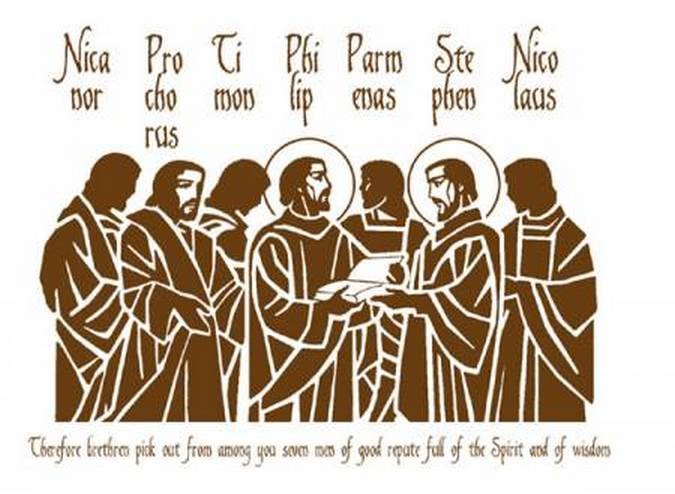
of the Holy Spirit, one God, for ever and ever.  Amen.

READING I

isaiah-icon-298x300.jpg

Is 2:1-5

This is what Isaiah, son of Amoz,

saw concerning Judah and Jerusalem.

In days to come,

the mountain of the LORD’s house

shall be established as the highest mountain

and raised above the hills.

All nations shall stream toward it;

many peoples shall come and say:

Come, let us climb the LORD’s mountain,

to the house of the God of Jacob,

that he may instruct us in his ways,

and we may walk in his paths.”

For from Zion shall go forth instruction,

and the word of the LORD from Jerusalem.

He shall judge between the nations,

and impose terms on many peoples.

They shall beat their swords into plowshares

and their spears into pruning hooks;

one nation shall not raise the sword against another,

nor shall they train for war again.

O house of Jacob, come,

let us walk in the light of the Lord!

CATECHISM OF THE CATHOLIC CHURCH (CCC)

CCC 64 Through the prophets, God forms his people in the hope of salvation, in the expectation of a new and everlasting Covenant intended for all, to be written on their hearts.1 The prophets proclaim a radical redemption of the People of God, purification from all their infidelities, a salvation which will include all the nations.2 Above all, the poor and humble of the Lord will bear this hope. Such holy women as Sarah, Rebecca, Rachel, Miriam, Deborah, Hannah, Judith and Esther kept alive the hope of Israel’s salvation. The purest figure among them is Mary.3

CCC 762 The remote preparation for this gathering together of the People of God begins when he calls Abraham and promises that he will become the father of a great people.4 Its immediate preparation begins with Israel’s election as the People of God. By this election, Israel is to be the sign of the future gathering of All nations.5 But the prophets accuse Israel of breaking the covenant and behaving like a prostitute. They announce a new and eternal covenant. “Christ instituted this New Covenant.”6

CCC 2317 Injustice, excessive economic or social inequalities, envy, distrust, and pride raging among men and nations constantly threaten peace and cause wars. Everything done to overcome these disorders contributes to building up peace and avoiding war:

Insofar as men are sinners, the threat of war hangs over them and will so continue until Christ comes again; but insofar as they can vanquish sin by coming together in charity, violence itself will be vanquished and these words will be fulfilled: “they shall beat their swords into plowshares, and their spears into pruning hooks; nation shall not lift up sword against nation, neither shall they learn war any more.”7

1 Cf. Isa 2:2-4; Jer 31:31-34; Heb 10:16.

2 Cf. Ezek 36; Isa 49:5-6; 53:11.

3 Cf. Ezek 2:3; Lk 1:38.

4 Cf. Gen 12:2; 15:5-6.

5 Cf. Ex 19:5-6; Deut 7:6; Isa 2:2-5; Mic 4:1-4.

6 LG 9; cf. Hos 1; Isa 1:2-4; Jer 2; 31:31-34; Isa 55:3.

7 GS 78 # 6; cf. Isa 2:4.

APPLICATION

Today, the first Sunday of Advent, is the ecclesiastical New Year’s day. The Church begins her annual liturgical cycle of feasts, with a period of four weeks’ preparation for Christmas–the great feast of Christ’s coming on earth. The readings selected for today, and the following three Sundays, are chosen to help us prepare for this, the greatest event that ever happened on our planet.

The Son of God took our human nature and “dwelt among us” for a while on earth, in order to bring us to heaven, where we shall dwell forever with the Blessed Trinity.

The whole of the Old Testament–the story of God’s dealings with the Chosen People–describes God’s long preparation for this, almost incredible, act of divine love and mercy, the Incarnation. God sent his Son in our lowly human nature, in order to raise us, mere creatures, to the dignity of adopted sons of God, brothers of Christ, and thus, heirs of the eternal life with him in heaven.

Today’s lesson from Isaiah contains one of the encouraging speeches which God’s great prophet addressed to his fellow-Jews, to help them persevere in their faith in God. Days of distress and tribulation lay ahead. Jerusalem, their beloved and holy city, the site of the temple where the true God manifested his power and his mercy among them, was to be razed one day to the ground, because of their sins. But when the great day came and God fulfilled his promises to them, Jerusalem would once more be the glory and the pride, not only of the Jews, but of all nations.

The “Word of the Lord,” the true Son of Man made flesh, would rebuild their temple, not with stones and mortar, but with living, human beings who would form his Church: the members of his mystical body on earth. His message, and his means of salvation for man, would go forth from Jerusalem to the ends of the earth.

This prophecy of Isaiah, spoken 700 years before the coming of Christ, has been fulfilled. “The Word was made flesh and dwelt among us.” And we today, thousands of miles from Jerusalem, and two thousand years after his coming among us, are preparing ourselves for the annual commemoration of that greatest event of history.

To do so, let the basic meaning and messages of the Incarnation, which Christmas commemorates, sink deeply into our minds: we were not created by God in order to live fifty, seventy, or even a hundred years in this world, we were created to be citizens of heaven for all eternity. This is God’s plan for us, and to bring it about, he chose that his divine Son should share in our humanity, so that we could share forever in his divinity.

What words of ours could express our gratitude for this stupendous act of God’s love? What sacrifices could we offer–even that of life itself–which could make us worthy of this divine generosity? But Christ has acted on our behalf, he has graciously shared his merits with us, and his merits were infinite because he was true God as well as true man.

RESPONSORIAL PSALM

12-icon-st-ephraim-prostration-the-OPF-300x246.jpg

Ps 122: 1-2, 3-4, 4-5, 6-7, 8-9

Let us go rejoicing to the house of the Lord.

I rejoiced because they said to me,

We will go up to the house of the LORD.”

And now we have set foot

within your gates, O Jerusalem.

Let us go rejoicing to the house of the Lord.

Jerusalem, built as a city

with compact unity.

To it the tribes go up,

the tribes of the LORD.

Let us go rejoicing to the house of the Lord.

According to the decree for Israel,

to give thanks to the name of the LORD.

In it are set up judgment seats,

seats for the house of David.

Let us go rejoicing to the house of the Lord.

Pray for the peace of Jerusalem!

May those who love you prosper!

May peace be within your walls,

prosperity in your buildings.

Let us go rejoicing to the house of the Lord.

Because of my brothers and friends

I will say, “Peace be within you!”

Because of the house of the LORD, our God,

I will pray for your good.

Let us go rejoicing to the house of the Lord.


READING II

images-7.jpg

Rom 13:11-14

Brothers and sisters:

You know the time;

it is the hour now for you to awake from sleep.

For our salvation is nearer now than when we first believed;

the night is advanced, the day is at hand.

Let us then throw off the works of darkness

and put on the armor of light;

let us conduct ourselves properly as in the day,

not in orgies and drunkenness,

not in promiscuity and lust,

not in rivalry and jealousy.

APPLICATION

These words of St. Paul to the Roman Christians of the year 58 A.D., are words that each one of us should apply to himself today. Advent begins today. We must prepare ourselves to celebrate worthily the commemoration of the greatest act of love and condescension which the God of infinite love deigned to do for us creatures. He sent his divine Son to become man, to become one of us, so that we could become his adopted sons, sharers in his divine life. This is what our annual feast of Christmas commemorates.

The fact that we are in existence, that we are alive here on earth, is a free gift of God to us. We had no hand, act or part in it. Life of itself is a wonderful gift, a gift we share with the beasts of the field and the birds of the air, and the fish of the sea. But we humans are far superior to these other creatures of God, because we have the extra gift of intelligence and free will. And because of these gifts, we have ambitions and desires which other creatures have not got. We have in our make-up a spiritual element which raises us above mere matter and makes us want to continue to live.

The cow in the field does not know that it is certain to die, and it does not care, but man knows and has a natural abhorrence of death. Should I, with all the gifts the Creator has given me, and all the reasonable ambitions and desires which these gifts arouse in me, end like the cow in the field: a mere handful of clay, finished with life forever?

Christmas gives an emphatic No to that frightening thought. The infinitely merciful and loving God planned from all eternity for man, the recipient of these superior gifts, a share in his own eternal life, once his short sojourn on this earth was over. The Incarnation–his divine Son sharing in our human nature–was the mysterious, but loving way God ordained to bring this about. Because of this decree of God, our true and unending life begins after our earthly death.

But we must do our part to earn this divine gift. All men are destined by God for eternal life, but to attain it each man must follow the path laid down by God. St. Paul tells us today some of the things we must avoid, and some of the things we must do, if we want to reach the eternal happiness planned for us. “We must,” he says, “put on the Lord Jesus Christ.” He made himself our brother, we must live as true brothers of his.

Advent is a glorious opportunity for each one of us to look into his own life and see if he is living as a true brother of Christ, as a true Christian. Few of us can honestly claim that we are doing this, but there is none among us who cannot improve and do better.

Think this morning, and think during the week, of all God has done, and is still doing, in order to give you an eternal life of happiness. Think also, that you could be unfortunate enough to lose this eternal happiness, if you were so foolish as to choose the “works of darkness” instead of the “armor of light,” which Christ has offered to you.

GOSPEL

christ uncreated light.jpg

Mt 24:37-44

Jesus said to his disciples:

As it was in the days of Noah,

so it will be at the coming of the Son of Man.

In those days before the flood,

they were eating and drinking,

marrying and giving in marriage,

up to the day that Noah entered the ark.

They did not know until the flood came and carried them all away.

So will it be also at the coming of the Son of Man.

Two men will be out in the field;

one will be taken, and one will be left.

Two women will be grinding at the mill;

one will be taken, and one will be left.

Therefore, stay awake!

For you do not know on which day your Lord will come.

Be sure of this: if the master of the house

had known the hour of night when the thief was coming,

he would have stayed awake

and not let his house be broken into.

So too, you also must be prepared,

for at an hour you do not expect, the Son of Man will come.”

http://www.usccb.org/bible/readings/112716.cfm

CATECHISM OF THE CATHOLIC CHURCH (CCC)

CCC 673 Since the Ascension Christ’s coming in glory has been imminent,1 even though “it is not for you to know times or seasons which the Father has fixed by his own authority.”2. This eschatological coming could be accomplished at any moment, even if both it and the final trial that will precede it are “delayed”.3

1 Cf. Rev 22:20.

2 Acts 1:7; Cf. Mk 13:32.

3 Cf. Mt 24:44; I Th 5:2; 2 Th 2:3-12.

APPLICATION

During this holy season of Advent we are all being called on and exhorted by the Church to prepare ourselves to commemorate worthily the first coming of Christ as our Brother and Savior. If we do that each year; if we let the full meaning of this great festival of Christmas enter into our innermost being, welcoming the Son of God in the form of the Babe of Bethlehem with a clean, sincere and grateful heart, then each year of our lives will be sanctified and a big step will be taken towards our eternal goal. Christmas each year should be a mile-stone on the road to heaven for every true Christian. It is a festival which vividly recalls to our minds the length our heavenly Father has gone to in order to make us adopted sons and sharers in his everlasting happiness.

If God cares so much for our true welfare–and the Incarnation surely proves that he does–we should surely have enough interest in our own future to cooperate with him in this affair of our eternal salvation.

In today’s gospel lesson it is Christ himself who is asking each one of us to live our lives so that no matter when we are called to judgment we shall not be found wanting. This does not mean that we must always be praying. Nor does it mean that we must take no interest in the affairs of this life. Of the two men working in the field and of the two women grinding corn, one of each was found unworthy, not because of the work he or she was doing, but because that work had for them wrongly excluded God and his purpose in life. The two found worthy had room for God and their own eternal welfare in their hearts–their work was part of their loyal service to God and was a means towards their salvation.

In this town (or city) of ours all adults are occupied one way or another with earthly affairs and necessarily so. But while these earthly affairs may, and do alas, become cruel task-masters for some and tie down their whole attention to the things of this earth, for others, thank God, their daily tasks are stepping stones to heaven. The day of reckoning will come, suddenly like a thief in the night for the former, and for the others it will not be a thief breaking in but the Master knocking at their door to take them to himself.

Christmas comes but once a year but its meaning, its lesson, must remain in our hearts and minds all the year round. God wants us in heaven forever. He sent his Son on earth to bring us there. Aided by God’s grace we resolve today so to live our lives that when death claims us we shall meet Christ, not as a condemning judge, but as a loving brother.

Applications written by Fr. Kevin O’Sullivan O.F.M. and used with permission from Franciscan Press.

BENEDICTUS

Advent” is a Latin word that can be translated as “presence” or “coming.” In the ancient world, it was a technical term, denoting the arrival of a person in office such as a king or an emperor. It could also indicate the coming of the deity, in which case the god’s advent was his emerging from concealment and making his presence known in power or else having it solemnly celebrated in an act of worship. Christians took over this word in order to express their particular relationship with Jesus Christ. For them, he was and is the king who has entered this wretched province, the earth, and enables it to celebrate his visit. What Christians mean in general by this word “Advent,” then, is: God is there. He has not withdrawn from the world. He has not left us alone. Even though we cannot see him or touch him as we can the things that surround us, he is still there and, what is more, he comes to us in many different ways. We have mentioned the world “visit” in this context. This word can be used in its happy, original, and almost literal sense of “going to see” a person, persons, or a place. It is, however, also used in the less pleasant sense of afflicting or punishing, when it is associated with such concepts as trouble, famine, plague, or illness. This word should therefore enable us to see that something of beauty of Advent can be found in difficulty. Illness and suffering can therefore, like a great joy, also be a personal Advent – a visit by God who wants to enter my life and turn toward me.

Pope Emeritus Benedict XVI

CLOSING PRAYER

Advent Prayer

Father, all powerful and ever-living God, we do well always and everywhere to give you thanks through Jesus Christ our Lord.

When he humbled himself to come among us, he fulfilled the plan you formed long ago and opened for us the way to salvation.

Now we watch for the day, hoping that the salvation promised us will be ours when Christ will come again in his glory.

And so, with all the choirs of angels in heaven we proclaim your glory and join in their unending hymn of praise:

Holy, holy, holy Lord,

God of power and might,

heaven and earth are full of your glory.

Hosanna in the highest.

Blessed is he who comes in the name of the Lord

Hosanna in the highest.

Amen.


Posted in Advent, agnostic, athiest, Benedictine oblate, Bible Study, Catholic, Christian, faith, Heaven, hell, Holy Spirit, Liturgy, mercy, Oblate, prayer, The Word of God, Uncategorized | Leave a comment

The Solemnity of Our Lord Jesus Christ, King of the Universe

the-crucifixion“Jesus, remember me when you come into your kingdom.”  He replied to him,”Amen, I say to you, today you will be with me in Paradise.”

OPENING PRAYER

Daily Renewal of Our Pledge of Love and Loyalty to Christ, Our King

Dear Sacred Heart of Jesus, we renew our pledge of love and loyalty to You. Keep us always close to Your loving Heart and to the most pure Heart of Your Mother. May we love one another more and more each day, forgiving each other’s faults as You forgive us our sins. Teach us to see You in the members of our family and those we meet outside our home, and to love them as you love them, especially the poor and the oppressed, that we may be instrumental in bringing about justice and peace.

Please help us to carry our cross daily out of love for You, and to strengthen this love by frequent Mass and Communion. Thank You, dear Jesus, King and Friend of our family, for all the blessings of this day. Protect us and all families during this night. Help us so to live that we may all get to heaven.

Most Sacred Heart of Jesus, have mercy on us!

Immaculate Heart of Mary, pray for us!

St. Joseph, pray for us!

Our Guardian Angels, pray for us!

Most Sacred Heart of Jesus, have mercy on us!

http://www.msgrjohnesseff.net/?page_id=522

COLLECT

Almighty ever-living God,

whose will is to restore all things

in your beloved Son, the King of the universe,

grant, we pray,

that the whole creation, set free from slavery,

may render your majesty service

and ceaselessly proclaim your praise.

Through our Lord Jesus Christ, your Son,

who lives and reigns with you in the unity

of the Holy Spirit,

one God, for ever and ever.

READING I

Paris_psaulter_gr139_fol6v

2 Sm 5:1-3

In those days, all the tribes of Israel came to David in Hebron and said:

“Here we are, your bone and your flesh.

In days past, when Saul was our king,

it was you who led the Israelites out and brought them back.

And the LORD said to you,

‘You shall shepherd my people Israel

and shall be commander of Israel.'”

When all the elders of Israel came to David in Hebron,

King David made an agreement with them there before the LORD,

and they anointed him king of Israel.

APPLICATION

The institution of the feast of the Kingship of Christ was intended to be a rallying-call to all Christians to acknowledge the sovereignty of Christ, not only over all Christians and all men but over all of creation. He is king of all creation because, as the second reading today says, “through him, by him and in him all things subsist.” Therefore, he is the sovereign Master, Ruler, Protector and Judge of all created things. The title of King was chosen to express all these prerogatives, because he himself, in his moment of deepest humiliation, admitted to Pilate that he was King. He is given this title in most of the Old Testament prophecies concerning him.

The story of David’s anointing as king over all of Israel is recalled on this feast of the Kingship of Christ, because David was seen in the Old Testament as a type, a representation, of the future messianic king. The prophet Nathan promised David that a descendant of his would come “who would establish his throne forever” (2 Sm. 7: 16). Isaiah says of the future Messiah, “he will sit on David’s kingly throne, to give it lasting foundations of justice and right” (Is. 9: 6-7). In the prophet Jeremiah we read: “Nay, a time is coming, the Lord says, when I will raise up, from the stock of David, a faithful scion at last. The land shall have a king to reign over it, and reign over it wisely, giving just sentence and due reward” (Jer. 23: 5). To crown and confirm the Davidic typology, the Angel Gabriel tells the Virgin Mary that the child she is to conceive “shall be known as the Son of the Most High; the Lord God will give him the throne of his ancestor, David, and he shall reign over the house of Jacob eternally and his kingdom will have no end” Lk. 1: 32-33).

David, although the greatest of the kings of Israel, was but a poor shadow of Christ the King, whose reign extends, not only over all Israel, but over all the universe and all things created in heaven as well as on earth. David’s reign lasted a mere forty years. Christ’s reign is eternal. David was a mere man, a creature, sinful but repentant. Christ was the God man, sinless and all-perfect, who died on the cross to free all men from their sins. When David died his kingdom was very soon divided and decayed. Christ’s death was the beginning of his everlasting reign. His cross was the solid foundation of his kingdom on earth, his Church. It was the preparatory stage of his eternal kingdom in heaven.

As far back as the history of man on earth goes, we learn that wherever men lived in groups in society they had a chief, a ruler or king whose laws they obeyed. This is still the case. Living in society would be impossible without some supreme authority with the power to make laws and see that they are carried out. Whether they be kings, presidents or chiefs, our earthly rulers can and should make our lives less difficult and more bearable. For this reason we are bound to respect and obey their laws. But their power is limited, their help is restricted. Even if they could give us all the comforts and privileges that this earth can supply they would be only for a few short years. They cannot reach beyond our graves. They cannot in any way fulfill or satisfy man’s higher ambitions.

The Sovereign and King whom we commemorate and honor today has the key to death and to unending life. During our lifetime on earth he takes an active interest in our welfare. However, his principal concern is for our real, lasting welfare. He came on earth to bring us to heaven. His power over us and for us does not end, but really begins when we die. When we close our eyes in death we will see him as he is, and realize what he has been to us and what he has done for us. He came so that we should have life and have it abundantly, “whoever lives and believes in me shall never die.”

Let us say a heartfelt “thank you” to our Lord and King, our beloved Savior, today. Let us promise him loyal and faithful service during the years that are left to us here below. When he calls us before his judgment seat we can feel assured that he will welcome us with a “well done good and faithful servant.”

RESPONSORIAL PSALM


Ps 122:1-2, 3-4, 4-5

Let us go rejoicing to the house of the Lord.

I rejoiced because they said to me,

“We will go up to the house of the LORD.”

And now we have set foot

within your gates, O Jerusalem.

Let us go rejoicing to the house of the Lord.

Jerusalem, built as a city

with compact unity.

To it the tribes go up,

the tribes of the LORD.

Let us go rejoicing to the house of the Lord.

According to the decree for Israel,

to give thanks to the name of the LORD.

In it are set up judgment seats,

seats for the house of David.

Let us go rejoicing to the house of the Lord.

READING II

jesus-christ-on-the-throne-__84929.1389672840.490.588.jpg

Col 1:12-20

Brothers and sisters:

Let us give thanks to the Father,

who has made you fit to share

in the inheritance of the holy ones in light.

He delivered us from the power of darkness

and transferred us to the kingdom of his beloved Son,

in whom we have redemption, the forgiveness of sins.

He is the image of the invisible God,

the firstborn of all creation.

For in him were created all things in heaven and on earth,

the visible and the invisible,

whether thrones or dominions or principalities or powers;

all things were created through him and for him.

He is before all things,

and in him all things hold together.

He is the head of the body, the church.

He is the beginning, the firstborn from the dead,

that in all things he himself might be preeminent.

For in him all the fullness was pleased to dwell,

and through him to reconcile all things for him,

making peace by the blood of his cross

through him, whether those on earth or those in heaven.

CATECHISM OF THE CATHOLIC CHURCH (CCC)

CCC 142 By his Revelation, “the invisible God, from the fullness of his love, addresses men as his friends, and moves among them, in order to invite and receive them into his own company.”1 The adequate response to this invitation is faith.

CCC 241 For this reason the apostles confess Jesus to be the Word: “In the beginning was the Word, and the Word was with God, and the Word was God”; as “the image of the invisible God”; as the “radiance of the glory of God and the very stamp of his nature”.2

CCC 291 “In the beginning was the Word. .. and the Word was God. .. all things were made through him, and without him was not anything made that was made.”3 The New Testament reveals that God created everything by the eternal Word, his beloved Son. In him “all things were created, in heaven and on earth. .. all things were created through him and for him. He is before all things, and in him all things hold together.”4 The Church’s faith likewise confesses the creative action of the Holy Spirit, the “giver of life”, “the Creator Spirit” (Veni, Creator Spiritus), the “source of every good”.5

CCC 299 Because God creates through wisdom, his creation is ordered: “You have arranged all things by measure and number and weight.”6 The universe, created in and by the eternal Word, the “image of the invisible God”, is destined for and addressed to man, himself created in the “image of God” and called to a personal relationship with God.7 Our human understanding, which shares in the light of the divine intellect, can understand what God tells us by means of his creation, though not without great effort and only in a spirit of humility and respect before the Creator and his work.8 Because creation comes forth from God’s goodness, it shares in that goodness – “And God saw that it was good. .. very good”9- for God willed creation as a gift addressed to man, an inheritance destined for and entrusted to him. On many occasions the Church has had to defend the goodness of creation, including that of the physical world.10

CCC 331 Christ is the center of the angelic world. They are his angels: “When the Son of man comes in his glory, and all the angels with him. .. ”11 They belong to him because they were created through and for him: “for in him all things were created in heaven and on earth, visible and invisible, whether thrones or dominions or principalities or authorities – all things were created through him and for him.”12 They belong to him still more because he has made them messengers of his saving plan: “Are they not all ministering spirits sent forth to serve, for the sake of those who are to obtain salvation?”13

CCC 504 Jesus is conceived by the Holy Spirit in the Virgin Mary’s womb because he is the New Adam, who inaugurates the new creation: “The first man was from the earth, a man of dust; the second man is from heaven.”14 From his conception, Christ’s humanity is filled with the Holy Spirit, for God “gives him the Spirit without measure.”15 From “his fullness” as the head of redeemed humanity “we have all received, grace upon grace.”16

CCC 517 Christ’s whole life is a mystery of redemption. Redemption comes to us above all through the blood of his cross,17 but this mystery is at work throughout Christ’s entire life:

already in his Incarnation through which by becoming poor he enriches us with his poverty;18

in his hidden life which by his submission atones for our disobedience;19

in his word which purifies its hearers;20

in his healings and exorcisms by which “he took our infirmities and bore our diseases”;21

and in his Resurrection by which he justifies us.22

CCC 624 “By the grace of God” Jesus tasted death “for every one”.23 In his plan of salvation, God ordained that his Son should not only “die for our sins”24 but should also “taste death”, experience the condition of death, the separation of his soul from his body, between the time he expired on the cross and the time he was raised from the dead. The state of the dead Christ is the mystery of the tomb and the descent into hell. It is the mystery of Holy Saturday, when Christ, lying in the tomb,25 reveals God’s great sabbath rest26 after the fulfillment27 of man’s salvation, which brings peace to the whole universe.28

CCC 753 In Scripture, we find a host of interrelated images and figures through which Revelation speaks of the inexhaustible mystery of the Church. The images taken from the Old Testament are variations on a profound theme: the People of God. In the New Testament, all these images find a new center because Christ has become the head of this people, which henceforth is his Body.29 Around this center are grouped images taken “from the life of the shepherd or from cultivation of the land, from the art of building or from family life and marriage.”30

CCC 792 Christ “is the head of the body, the Church.”31 He is the principle of creation and redemption. Raised to the Father’s glory, “in everything he [is] preeminent,”31 especially in the Church, through whom he extends his reign over all things.

CCC 1042 At the end of time, the Kingdom of God will come in its fullness. After the universal judgment, the righteous will reign for ever with Christ, glorified in body and soul. The universe itself will be renewed:

The Church. .. will receive her perfection only in the glory of heaven, when will come the time of the renewal of all things. At that time, together with the human race, the universe itself, which is so closely related to man and which attains its destiny through him, will be perfectly re-established in Christ.33

CCC 1250 Born with a fallen human nature and tainted by original sin, children also have need of the new birth in Baptism to be freed from the power of darkness and brought into the realm of the freedom of the children of God, to which all men are called.34 The sheer gratuitousness of the grace of salvation is particularly manifest in infant Baptism. The Church and the parents would deny a child the priceless grace of becoming a child of God were they not to confer Baptism shortly after birth.35

CCC 1701 “Christ,. .. in the very revelation of the mystery of the Father and of his love, makes man fully manifest to himself and brings to light his exalted vocation.”36 It is in Christ, “the image of the invisible God,”37 that man has been created “in the image and likeness” of the Creator. It is in Christ, Redeemer and Savior, that the divine image, disfigured in man by the first sin, has been restored to its original beauty and ennobled by the grace of God.38

CCC 2305 Earthly peace is the image and fruit of the peace of Christ, the messianic “Prince of Peace.”39 By the blood of his Cross, “in his own person he killed the hostility,”40 he reconciled men with God and made his Church the sacrament of the unity of the human race and of its union with God. “He is our peace.”41 He has declared: “Blessed are the peacemakers.”42

CCC 2641 “[Address] one another in psalms and hymns and spiritual songs, singing and making melody to the Lord with all your heart.”43 Like the inspired writers of the New Testament, the first Christian communities read the Book of Psalms in a new way, singing in it the mystery of Christ. In the newness of the Spirit, they also composed hymns and canticles in the light of the unheard-of event that God accomplished in his Son: his Incarnation, his death which conquered death, his Resurrection, and Ascension to the right hand of the Father.44 Doxology, the praise of God, arises from this “marvelous work” of the whole economy of salvation.45

CCC 2839 With bold confidence, we began praying to our Father. In begging him that his name be hallowed, we were in fact asking him that we ourselves might be always made more holy. But though we are clothed with the baptismal garment, we do not cease to sin, to turn away from God. Now, in this new petition, we return to him like the prodigal son and, like the tax collector, recognize that we are sinners before him.46 Our petition begins with a “confession” of our wretchedness and his mercy. Our hope is firm because, in his Son, “we have redemption, the forgiveness of sins.”47 We find the efficacious and undoubted sign of his forgiveness in the sacraments of his Church.48

1 DV 2; cf. Col 1:15; I Tim 1:17; Ex 33:11; Jn 15:14-15; Bar 3:38 (Vulg.).

2 Jn 1:1; Col 1:15; Heb 1:3.

3 Jn 1:1-3.

4 Col 1:16-17.

5 Cf. Nicene Creed: DS 150; Hymn “Veni, Creator Spiritus”; Byzantine Troparion of Pentecost Vespers, “O heavenly King, Consoler”.

6 Wis 11:20.

7 Col 1:15, Gen 1:26.

8 Cf. Ps 19:2-5; Job 42:3.

9 Gen 1:4,10,12,18,21,31.

10 Cf. DS 286; 455-463; 800; 1333; 3002.

11 Mt 25:31.

12 Col 1:16.

13 Heb 1:14.

14 I Cor 15:45,47.

15 Jn 3:34.

16 Jn 1:16; cf. Col 1:18.

17 Cf. Eph 1:7; Col 1:13-14; 1 Pt 1:18-19.

18 Cf. 2 Cor 8:9.

19 Cf. Lk 2:51.

20 Cf. Jn 15:3.

21 Mt 8:17; cf. Is 53:4.

22 Cf. Rom 4:25.

23 Heb 2:9.

24 I Cor 15:3.

25 Cf. Jn 19:42.

26 Cf. Heb 4:7-9.

27 Cf. Jn 19:30.

28 Cf Col 1: 18-20.

29 Cf. Eph 1:22; Col 1:18; LG 9.

30 LG 6.

31 Col 1:18.

32 Col 1:18.

33 LG 48; Cf. Acts 3:21; Eph 1:10; Col 1:20; 2 Pet 3:10-13.

34 Cf. Council of Trent (1546): DS 1514; cf. Col 1:12-14.

35 Cf. CIC, can. 867; CCEO, cann. 681; 686, 1.

36 GS 22.

37 Col 1:15; cf. 2 Cor 4:4.

38 Cf. GS 22.

39 Isa 9:5.

40 Eph 2:16 J.B.; cf. Col 1:20-22.

41 Eph 2:14.

42 Mt 5:9.

43 Eph 5:19; Col 3:16.

44 Cf. Phil 2:6-11; Col 1:15-20; Eph 5:14; 1 Tim 3:16; 6:15-16; 2 Tim 2:11-13.

45 Cf. Eph 1:3-14; Rom 16:25-27; Eph 3:20-21; Jude 24-25.

46 Cf. Lk 15:11-32, 18:13.

47 Col 1:14; Eph 1:7.

48 Cf. Mt 26:28; Jn 20:23.

APPLICATION

St. Paul tells the Colossians how grateful they ought to be to God for having made them Christians and citizens of Christ’s kingdom. The Apostle then goes on to describe who and what their new sovereign is, true God and true man, the true image of the invisible God and at the same time the perfect exemplar of true humanity. This portion of St. Paul’s epistle was aptly chosen for this great feast of the Kingship of Christ. Also, it calls to our minds how blessed, how fortunate we are to be Christians, citizens of his kingdom on earth with a guarantee of perpetual citizenship in his heavenly kingdom. This will be so only if we do the little he asks of us while here on earth.

Ninety-nine per cent of the citizens of any country on earth, whether it be small or great, rich or poor, are proud of their native land. They respect its ruler and its flag. If called on to defend their homeland against an aggressor they are willing to lay down their lives in its defense. Yet, our native country is ours for only a very limited time. The most it can give us is a few years of temporal happiness mixed with much hardship and trial.

On the other hand, Christians and all who, through no fault of their own, are non-Christians but try to do what is right, already have been selected and are being prepared to become free citizens in a kingdom, a home-land, which will last forever. It is one which will satisfy every rational longing of our human hearts. We have a king whose resources are infinite, whose realm is boundless, and whose generosity is without limit. His interest in our eternal happiness and his love for us have been proved beyond all possibility of doubt. “He humbled himself,” as St. Paul tells us, “assuming the nature of a slave and in obedience accepted even death–death on a cross” (Phil. 2: 7-8). He became man and allowed himself to be put to death by crucifixion, so as to reconcile us with God and make us citizens of his heavenly kingdom.

Therefore, when we have a King who has prepared for us an everlasting kingdom of happiness and perfect contentment, could we hesitate to make the few little preliminary preparations expected of us? Could any Christian be so foolish? Yes, we are all weak at times. We are of the earth, earthy. Things earthly can get a hold on us, but our Christian faith tells us how to free ourselves from our weaknesses and from our worldliness.

It tells us to think often of whither we are going, to examine our consciences and our habits of life to see if we are on the right road. It tells us too, to think often, never to forget in fact, all that the good God-man, our Savior Jesus Christ, has done for us and daily is doing for us so that we may reach our eternal homeland. Today is for all Christians a national day. Today, let us raise our Christian flag—the crucifix–aloft, and salute it with fervor and a promise of fervent loyalty. My King has suffered for me. For his sake, I am ready to suffer any trial that comes my way. If needs be, I am prepared to die for him. If he does not ask that supreme sacrifice, I am assuredly ready to live a life of faith, hope and sincere love for him, and of gratitude to him. Honor, glory and thanks forever to Christ our King!

GOSPEL

8PlXwZY13Ng4CemR0WhtDrENMEsuzecF8ja-HsFBmNdqUaD2l1Vgl9dSzNi5l64eV5JLUrNF7Qbuc8q-DDdQ-kHgsE1xtgl584mNUmsMCYUElrnOlsbvcczHUlt1GSWzTeINPO5eENcYRxOlhw=s0-d-e1-ft.jpg

Lk 23:35-43

The rulers sneered at Jesus and said,

“He saved others, let him save himself

if he is the chosen one, the Christ of God.”

Even the soldiers jeered at him.

As they approached to offer him wine they called out,

“If you are King of the Jews, save yourself.”

Above him there was an inscription that read,

“This is the King of the Jews.”

Now one of the criminals hanging there reviled Jesus, saying,

“Are you not the Christ?

Save yourself and us.”

The other, however, rebuking him, said in reply,

“Have you no fear of God,

for you are subject to the same condemnation?

And indeed, we have been condemned justly,

for the sentence we received corresponds to our crimes,

but this man has done nothing criminal.”

Then he said,

“Jesus, remember me when you come into your kingdom.”

He replied to him,

“Amen, I say to you,

today you will be with me in Paradise.”

http://www.usccb.org/bible/readings/112016.cfm

CATECHISM OF THE CATHOLIC CHURCH (CCC)

CCC 440 Jesus accepted Peter’s profession of faith, which acknowledged him to be the Messiah, by announcing the imminent Passion of the Son of Man.1 He unveiled the authentic content of his messianic kingship both in the transcendent identity of the Son of Man “who came down from heaven”, and in his redemptive mission as the suffering Servant: “The Son of Man came not to be served but to serve, and to give his life as a ransom for many.”2 Hence the true meaning of his kingship is revealed only when he is raised high on the cross.3 Only after his Resurrection will Peter be able to proclaim Jesus’ messianic kingship to the People of God: “Let all the house of Israel therefore know assuredly that God has made him both Lord and Christ, this Jesus whom you crucified.”4

CCC 1021 Death puts an end to human life as the time open to either accepting or rejecting the divine grace manifested in Christ.5 The New Testament speaks of judgment primarily in its aspect of the final encounter with Christ in his second coming, but also repeatedly affirms that each will be rewarded immediately after death in accordance with his works and faith. The parable of the poor man Lazarus and the words of Christ on the cross to the good thief, as well as other New Testament texts speak of a final destiny of the soul–a destiny which can be different for some and for others.6

CCC 2266 The efforts of the state to curb the spread of behavior harmful to people’s rights and to the basic rules of civil society correspond to the requirement of safeguarding the common good. Legitimate public authority has the right and duty to inflict punishment proportionate to the gravity of the offense. Punishment has the primary aim of redressing the disorder introduced by the offense. When it is willingly accepted by the guilty party, it assumes the value of expiation. Punishment then, in addition to defending public order and protecting people’s safety, has a medicinal purpose: as far as possible, it must contribute to the correction of the guilty party.7

CCC 2605 When the hour had come for him to fulfill the Father’s plan of love, Jesus allows a glimpse of the boundless depth of his filial prayer, not only before he freely delivered himself up (“Abba. .. not my will, but yours.”),8 but even in his last words on the Cross, where prayer and the gift of self are but one: “Father, forgive them, for they know not what they do”;9 “Truly, I say to you, today you will be with me in Paradise”, “Woman, behold your son” – “Behold your mother”;10 “I thirst.”;11 “My God, My God, why have you forsaken me?”;12 “It is finished”;13 “Father, into your hands I commit my spirit!”14 until the “loud cry” as he expires, giving up his spirit.15

CCC 2616 Prayer to Jesus is answered by him already during his ministry, through signs that anticipate the power of his death and Resurrection: Jesus hears the prayer of faith, expressed in words (the leper, Jairus, the Canaanite woman, the good thief)16 or in silence (the bearers of the paralytic, the woman with a hemorrhage who touches his clothes, the tears and ointment of the sinful woman).17 The urgent request of the blind men, “Have mercy on us, Son of David” or “Jesus, Son of David, have mercy on me!” has-been renewed in the traditional prayer to Jesus known as the Jesus Prayer: “Lord Jesus Christ, Son of God, have mercy on me, a sinner!”18 Healing infirmities or forgiving sins, Jesus always responds to a prayer offered in faith: “Your faith has made you well; go in peace.”

St. Augustine wonderfully summarizes the three dimensions of Jesus’ prayer: “He prays for us as our priest, prays in us as our Head, and is prayed to by us as our God. Therefore let us acknowledge our voice in him and his in us.”19

1 Cf. Mt 16:16-23.

2 Jn 3:13; Mt 20:28; cf. Jn 6:62; Dan 7:13; Is 53:10-12.

3 Cf. Jn 19:19-22; Lk 23:39-43.

4 Acts 2:36.

5 Cf. 2 Tim 1:9-10.

6 Cf. Lk 16:22; 23:43; Mt 16:26; 2 Cor 5:8; Phil 1:23; Heb 9:27; 12:23.

7 Cf. Lk 23:40-43.

8 Lk 22:42.

9 Lk 23:34.

10 Jn 19:26-27.

11 Jn 19:28.

12 Mk 15:34; cf. Ps 22:2.

13 Jn 19:30.

14 Lk 23:46.

15 Cf. Mk 15:37; Jn 19:30b.

16 Cf. Mk 1:40-41; 5:36; 7:29; Cf. Lk 23:39-43.

17 Cf. Mk 25; 5:28; Lk 7:37-38.

18 Mt 9:27, Mk 10:48.

19 St. Augustine, En. in Ps. 85, 1: PL 37, 1081; cf. GILH 7.

APPLICATION

Down through our history thousands and millions of subjects have died for their kings. This was their duty when the needs or the defence of their realms demanded such a sacrifice. They neither expected nor received much praise for it. But we Christians are serving a King who died for us. The ruler and head of our kingdom is Christ, the Incarnate Son of God, who accepted crucifixion as the climax of the perfect obedience to his Father. He became man in accordance with God’s eternal plan. He, as man, was the representative of all humanity. He gave perfect obedience to God and thus made atonement for all the disobedience, of the human race. All the acts of penance and atonement of the whole of humanity put together, could not reconcile us sinners with God. Christ, being God as well as man, was able to make and did bring about, this reconciliation. He has, as St. Paul says, “reconciled everything . . . making peace through the blood of his cross.”

Today we are honoring this King, a King who humbled himself in order to raise us up to the status of sons of God, a king who suffered the cruelest of deaths so that we could have an unending life of happiness when we leave this earth.

Do we really honor our king as we should? Do we really meditate often enough on all he has done for us? Do we really appreciate the supernatural privilege conferred on us by the Incarnation, death and resurrection of Christ? We are no longer mere mortals, we are sons of God. We are no longer enemies of our Creator and Lord, we have been reconciled to God and can call him “Our Father.” We have still to die our earthly death but it is now the door to heaven. Unfortunately, we still can sin but we have the means of atonement within our reach, in the sacraments which Christ left to us. Any Christian who fails to get possession of the eternal heritage which Christ has made available to him will fail because he willingly and knowingly wished to do so.

Please God there will be few such people because Christ our King is always with us, helping us on our journey to heaven. What we say of Christians is true also of all who are non-Christians, through no fault of their own. Many of us will get some pleasant surprises when we meet the elect of God on our arrival in heaven. To get there is our present principal preoccupation. But it is not so hard. Keeping the laws of one’s country and carrying out their legal obligations is not difficult for the vast majority of sane people. Keeping the laws of God’s Kingdom and being loyal to him is not difficult either. Serving God is a privilege not a duty for the Christian who realizes what God has done for him and who appreciates what a future reward God has in store for him.

Today let us renew our loyalty to Christ our King. We are privileged and proud to be his subjects. As members of his Church on earth we are as yet in the preparatory stage of that kingdom. If we do the little that he asks of us, during this period of preparation, we are assured of being full citizens in his eternal kingdom of happiness and peace.

Applications written by Fr. Kevin O’Sullivan O.F.M. and used with permission from Franciscan Press

BENEDICTUS

Christ the King

What is really remarkable is that God consented to Israel’s desire for a king and even provided an opportunity for that kingship to be renewed and fulfilled. Jesus was himself the son of David, the king. God entered mankind in him and espoused the cause of mankind in him. If we look more closely at this question, we can see that it is the fundamental form of God’s activity with mankind. He has no rigid plan that he has at all costs to carry out. On the contrary, he has many different ways of seeking man out and finding him. He even makes man’s devious and wrong ways into ways leading to him. This is clear, for example, in the case of Adam, whose very sin was made a happy sin in the second Adam, Christ, and it is clear in all the twisted ways of human history. This, then, is God’s kingship – a rule of love that seeks and finds man in ways that are always new. For us, this means a trust that cannot be shaken. God rules as king over us still and, what is more, he rules over each one of us. None of us should be afraid and none should capitulate. God can always be found. The pattern of our own lives should also be like this – we should always be available, never write anyone off, and try again and again to find others in the openness of our hearts. Our most important task is not to assert ourselves, but always to be ready to set off on the way to God and to each other. The feast of Christ the King is therefore not a feast of those who are subjugated, but a feast of those who know that they are in the hands of the one who writes straight on crooked lines.

Pope Emeritus Benedict XVI

CLOSING PRAYER

Prayer to Christ the King

O Christ Jesus,

I acknowledge You as King of the universe.

All that has been created has been made for You.

Exercise over me all Your rights.

I renew my baptismal promises,

Renouncing Satan and all his work and pomps.

I promise to live a good Christian life

And to do all in my power to procure

The triumph of the rights of God and Your Church.

Divine Heart of Jesus,

I offer you my poor actions

In order to obtain that all hearts

May acknowledge Your Sacred Royalty,

And that thus the reign of Your peace

May be established throughout the universe.

Amen.

Posted in agnostic, athiest, Benedictine oblate, Bible Study, Catholic, Christian, faith, Heaven, hell, Holy Spirit, Liturgy, mercy, Oblate, prayer, The Word of God, Uncategorized | Leave a comment

Thirty-Third Sunday in Ordinary Time – C

40-sevastiyskih-muchenikov-mid.jpg

“You will be hated by all because of my name, but not a hair on your head will be destroyed.  By your perseverance you will secure your lives.”

OPENING PRAYER

A Prayer for Perseverance

Lord Jesus Christ, I believe in You as my God and my Savior. Make me more faithful to Your Gospel and commandments. By sharing in the Eucharist, may I come to live more fully in the life You have given me. Keep Your Love alive within my heart and soul so that I may become worthy of You. Teach me to value and be thankful for all of Your Gifts. Help us to strive for eternal life.

COLLECT

Grant us, we pray, I Lord our God,

the constant gladness of being devoted to you,

for it is full and lasting happiness

to serve with constancy

the author of all that is good.

Through our Lord Jesus Christ, your Son,

who lives and reigns with you in the unity

of the Holy Spirit,

one God, for ever and ever.

READING I

resurrection3.jpg

Mal 3:19-20a

Lo, the day is coming, blazing like an oven,

when all the proud and all evildoers will be stubble,

and the day that is coming will set them on fire,

leaving them neither root nor branch,

says the LORD of hosts.

But for you who fear my name, there will arise

the sun of justice with its healing rays.

CATECHISM OF THE CATHOLIC CHURCH (CCC)

CCC 678 Following in the steps of the prophets and John the Baptist, Jesus announced the judgment of the Last Day in his preaching.1 Then will the conduct of each one and the secrets of hearts be brought to light.2 Then will the culpable unbelief that counted the offer of God’s grace as nothing be condemned.3 Our attitude to our neighbor will disclose acceptance or refusal of grace and divine love.4 On the Last Day Jesus will say: “Truly I say to you, as you did it to one of the least of these my brethren, you did it to me.”5

1 Cf. Dan 7:10; Joel 3-4; Mal 3: 19; Mt 3:7-12.

2 Cf Mk 12:38-40; Lk 12:1-3; Jn 3:20-21; Rom 2:16; I Cor 4:5.

3 Cf. Mt 11:20-24; 12:41-42.

4 Cf. Mt 5:22; 7:1-5.

5 Mt 25:40.

APPLICATION

This reminder of the day of the Lord, of the day of judgment, was chosen for this Sunday’s reading because it is, in a sense, the last Sunday of the liturgical year. Next Sunday is dedicated to the Feast of Christ the King, so it is only right and fitting that we should be reminded of our last end on the last Sunday of our liturgical year. The second reading and the Gospel have a somewhat similar theme.

It is true that many of the prophets of the Old Testament stressed the justice of God very much and seldom referred to his mercy. Malachi belongs to this group. We must not forget that they were dealing with a stubborn, selfish people, who served God more out of fear than out of love. When their earthly affairs prospered they forgot him and all his kindness to them. The vast majority of them thought of him only when some personal or national disaster threatened. Therefore, the prophets, the preachers whom God sent to them, spoke in the language they could understand.

However, we must not forget that they had not witnessed the infinite mercy of God, as shown in the Incarnation, which we Christians have witnessed. Neither had they heard of that divine mercy which our loving Father has for every human being whom he has put on earth. We have this knowledge from the lips of God’s divine Son, Christ our Lord, who tells us that God wants the eternal death of no sinner, no matter how wicked he be, but rather that that sinner be converted and live eternally.

Furthermore, the Jews had only a very limited revelation as regards the future life. They had some vague idea that those who had died in the Lord, at peace with God, would sometime in the remote future live again with God. For the time being, they were vague shadows living some form of inactive, attenuated life in the underworld, a place which they called Sheol. They expected their rewards and punishments in this life.

The prophet’s words, therefore, stressed the frightening aspect of God’s justice, without any hint at possible mercy. He knew the religious, or rather irreligious, outlook of his contemporaries. For the great majority of them, relations with God were governed by fear rather than by love. Thanks to the deeper knowledge of God which his Incarnate Son has given to us, we now know God as a loving Father who wants us all to be his loving, obedient and grateful children. He has made known to us what St. Paul calls: “the mystery hidden for generations and centuries and which has now been revealed to his saints. This mystery is Christ among you, your hope of glory” (Col. 1: 26-27). To his Ephesian converts Paul says : “Before the world was made he (God) chose us in Christ, to be holy and spotless and to live through love in his presence determining that we should become his adopted sons through Jesus Christ” (Eph. 1: 4-5). With this knowledge of the God of love we can put fear aside. We can strive instead to render all the thanks of which we are capable, for the wonderful, infinite love and mercy he has shown to us through sending his divine Son to us and making us his adopted children.

Children can of course sometimes be ungrateful to the kindest and most generous of parents. Let us look back today over the past year and see if we were always grateful, obedient children of the kindest and most generous of Fathers. If we failed now and then we can make up for that forgetfulness. We can ask him for forgiveness, and it will be gladly granted. We all are another year nearer to our eternal home. Please God we have made great strides on our journey to heaven already. With the help of God’s grace we will make even greater progress in the year or years that God may still give us.

“The sun of justice with its healing rays,” that is, the blessed vision of God in his and our eternal home, will rise for us some-day soon when the darkness of earthly death will close our bodily eyes. So may it be for each and every one of us.

RESPONSORIAL PSALM

Hristos_Vinogradnaya_loza._Angelos_Akotantos_Krit_15v._38h48._CHastn._koll..jpg

Ps 98:5-6, 7-8, 9

The Lord comes to rule the earth with justice.

Sing praise to the LORD with the harp,

with the harp and melodious song.

With trumpets and the sound of the horn

sing joyfully before the King, the LORD.

The Lord comes to rule the earth with justice.

Let the sea and what fills it resound,

the world and those who dwell in it;

let the rivers clap their hands,

the mountains shout with them for joy.

The Lord comes to rule the earth with justice.

Before the LORD, for he comes,

for he comes to rule the earth,

He will rule the world with justice

and the peoples with equity.

The Lord comes to rule the earth with justice.

READING II

christ+the+true+vine+icon+1.jpg

2 Thes 3:7-12

Brothers and sisters:

You know how one must imitate us.

For we did not act in a disorderly way among you,

nor did we eat food received free from anyone.

On the contrary, in toil and drudgery, night and day

we worked, so as not to burden any of you.

Not that we do not have the right.

Rather, we wanted to present ourselves as a model for you,

so that you might imitate us.

In fact, when we were with you,

we instructed you that if anyone was unwilling to work,

neither should that one eat.

We hear that some are conducting themselves among you in a

disorderly way,

by not keeping busy but minding the business of others.

Such people we instruct and urge in the Lord Jesus Christ to work quietly

and to eat their own food.

CATECHISM OF THE CATHOLIC CHURCH (CCC)

CCC 2427 Human work proceeds directly from persons created in the image of God and called to prolong the work of creation by subduing the earth, both with and for one another.1 Hence work is a duty: “If any one will not work, let him not eat.”2 Work honors the Creator’s gifts and the talents received from him. It can also be redemptive. By enduring the hardship of work3 in union with Jesus, the carpenter of Nazareth and the one crucified on Calvary, man collaborates in a certain fashion with the Son of God in his redemptive work. He shows himself to be a disciple of Christ by carrying the cross, daily, in the work he is called to accomplish.4 Work can be a means of sanctification and a way of animating earthly realities with the Spirit of Christ.

CCC 2830 “Our bread”: The Father who gives us life cannot not but give us the nourishment life requires – all appropriate goods and blessings, both material and spiritual. In the Sermon on the Mount, Jesus insists on the filial trust that cooperates with our Father’s providence.5 He is not inviting us to idleness,6 but wants to relieve us from nagging worry and preoccupation. Such is the filial surrender of the children of God:

To those who seek the kingdom of God and his righteousness, he has promised to give all else besides. Since everything indeed belongs to God, he who possesses God wants for nothing, if he himself is not found wanting before God.7

1 Cf. Gen 1:28; GS 34; CA 31.

2 2 Thess 3:10; Cf. 1 Thess 4:11.

3 Cf. Gen 3:14-19.

4 Cf. LE 27.

5 Cf. Mt 6:25-34.

6 Cf. 2 Thess 3:6-13.

7 St. Cyprian, De Dom. orat. 21 PL 4, 534A.

APPLICATION

Around the turn of the last century, and the first decade of this, it was customary for able-bodied male emigrants, going from Europe to America, to “work their passage.” This meant that they traveled free of charge provided they worked as crew members on the sailing ships which were then the means of transport across the Atlantic. For the vast majority of them, who had not the wherewithal to pay for their transport, this was not a hardship but a favor. The three to four weeks’ strenuous and tiring labor seemed as nothing when they thought of the land of freedom and plenty which it enabled them to reach.

We are on a voyage, the voyage of life, which will end on the shores of eternity. It is God’s plan for us that during our voyage we should earn entry into that land of freedom and plenty by “working our passage.” For our period of preparation, he created this earth for us to live on. For our needs he gave it the power to produce the fruits and vegetables, as well as the animals of the fields, the birds of the air and the fishes in the sea. He handed over to man all these gifts for his use and sustenance. Man was to use his gifts of mind and muscle to master the lower creatures and put them to his service. In other words, God provided the raw material. By his labor man had to produce the finished article.

From the beginning this was the law of God for man. Christianity did not change his obligation of labor in any way, except that it exalted man’s labor and gave him a more noble motive for his daily toil. The Christian labors not only to provide the necessities of life for himself but thereby to honor God and, where possible, help his needy neighbor.

There were some among the Thessalonian converts who thought that they were freed from this obligation of daily labor, because they should concentrate all their thoughts and time on the eternal life which was around the corner. St. Paul corrects this erroneous, view. He tells them that they must earn their living by honest labor, for the vice of idleness was no preparation for meeting their Judge.

The great Apostle has the same message for all of us too. It is for all, for the millionaire as well as for the penniless person, for the managing director as well as for the office-cleaner. We must all use the gifts of mind and body which God gave us. We are to do so not only to provide for our own temporal necessities but, where possible, to produce a surplus that is so badly needed by our fellowman in less developed parts of our world today. Laziness is still a vice and an evil inclination which can worm its way into any man no matter what his social status in life may be. Perhaps we are inclined to notice it more in the lower social grades, because the number of such workers is greater. Of course, there is no denying that far too many of these workers are not always honest in their dealings with their employers. Too often their ideal is to get the greatest amount of pay for the least amount of labor. Generally the result is that they do an injustice to their employers, to their fellow workers and to the consumers of the goods which they produce.

However, the employers and business managers can also do an injustice to their employees and to the general public. They do so if, through idleness, they waste the time which they should spend in planning and directing and working for the progress of the business concern which they own or manage. Their sin of laziness seldom gets the publicity it deserves, nor does it often register in their own consciences. Yet as far as the progress of his business and the general prosperity of his city or country is concerned, one negligent and idling director can do more harm than a hundred slacking factory-hands.

We all need to examine our consciences and see if we are honestly “working our passage” to heaven. Do we rest on our oars when we feel that we have enough for ourselves? Do we think of our neighbors at home and abroad who could be helped by a little extra labor on our part? Does the father of the family provide for his household or does he waste his working days because of drinking bouts or other sinful habits? Does the mother of the house work honestly and through her thrift and economy provide for her husband and children? Do the teenagers waste their earnings, or their parents’ earnings, on unnecessary amusements and luxuries while neighbors are short of bread?

As Christians, we should set the example to all others. We know that God gave us the mental and physical gifts we possess. We know too that we must one day render an account of the use we have made of the talents he gave us. If we use them honestly they will pay our passage to our heavenly home. If we abuse them and waste them we shall never see that promised land.

GOSPEL

holyapostles_icon.gif

Lk 21:5-19

While some people were speaking about

how the temple was adorned with costly stones and votive offerings,

Jesus said, “All that you see here–

the days will come when there will not be left

a stone upon another stone that will not be thrown down.”

Then they asked him,

“Teacher, when will this happen?

And what sign will there be when all these things are about to happen?”

He answered,

“See that you not be deceived,

for many will come in my name, saying,

‘I am he,’ and ‘The time has come.’

Do not follow them!

When you hear of wars and insurrections,

do not be terrified; for such things must happen first,

but it will not immediately be the end.”

Then he said to them,

“Nation will rise against nation, and kingdom against kingdom.

There will be powerful earthquakes, famines, and plagues

from place to place;

and awesome sights and mighty signs will come from the sky.

“Before all this happens, however,

they will seize and persecute you,

they will hand you over to the synagogues and to prisons,

and they will have you led before kings and governors

because of my name.

It will lead to your giving testimony.

Remember, you are not to prepare your defense beforehand,

for I myself shall give you a wisdom in speaking

that all your adversaries will be powerless to resist or refute.

You will even be handed over by parents, brothers, relatives, and friends,

and they will put some of you to death.

You will be hated by all because of my name,

but not a hair on your head will be destroyed.

By your perseverance you will secure your lives.”

http://www.usccb.org/bible/readings/111316.cfm

CATECHISM OF THE CATHOLIC CHURCH (CCC)

CCC 675 Before Christ’s second coming the Church must pass through a final trial that will shake the faith of many believers.1 The persecution that accompanies her pilgrimage on earth2 will unveil the “mystery of iniquity” in the form of a religious deception offering men an apparent solution to their problems at the price of apostasy from the truth. The supreme religious deception is that of the Antichrist, a pseudo-messianism by which man glorifies himself in place of God and of his Messiah come in the flesh.3

1 Cf. Lk 18:8; Mt 24:12.
2 Cf. Lk 21:12; Jn 15:19-20.
3 Cf. 2 Th 2:4-12; I Th 5:2-3; 2 Jn 7; I Jn 2:1 8, 22.

APPLICATION

The reason why these verses of St. Luke’s gospel were chosen for today’s Mass is that the Church wants us all to do a bit of spiritual stock-taking this morning. As next Sunday will be the special feastday of the Kingship of Christ, today’s Mass is really the last of our liturgical year. We begin our new liturgical year, the First Sunday of Advent, on next Sunday week.

To help us to be honest with ourselves in our stock-taking we are reminded today that this world will come to an end one day. We do not know when or how but that end will come. It will be followed immediately by the general judgment. Christ will come in power and glory to judge the whole human race. Each one will receive the sentence he merited while on earth. The just will enter with him into eternal glory. The wicked will go to their place of suffering, sorrow and remorse.

Long before that day comes everyone of us here present today, will already have faced his or her own particular judgment. It is this judgment which will seal our eternal fate. It is on this judgment that we should try to concentrate this morning. It is to help and encourage us to do just this, that the church brings the thought of the end of the world before our minds. The end of this world will come for each one of us when we draw our last breath. How will we stand in God’s sight when that moment comes? An eternity of happiness or grief will depend on our spiritual state at that moment.

The thought of death is a frightening thought for most people. They would rather put it far from their minds, but of all the other things that can possibly happen to them on this earth death is the one and only certainty. It would be utter folly then to try to ignore it or forget it. It is not the moment or the circumstances or the fact itself of death that matters. The vast majority, even of those dying of a slow illness, do not know that they are on the point of death. What matters is the judgment which follows death. How will we fare in that?

Each one of us can put the following simple question to himself this very moment. How would I fare if I were called before the judgment seat of God today? The best of us would certainly prefer to be better prepared. There is so much good I have left undone, so many faults for which I have not atoned properly, so many uncharitable thoughts about my friends and neighbors in my mind, so many acts of charity I kept postponing, so many acts of thanksgiving and praise I have not made to my loving God.

What of those who have even more serious sins on their consciences? Over two hundred thousand people will leave this world between now and midnight. If we were called, and we have no guarantee that we will not be called today, could we dare to face our judgment in our present state? “Today if you hear God’s voice harden not your heart” the scripture warns us. Today you have heard him speak to you. He has reminded you that your end is coming, that you should put your spiritual accounts in order. This is an act of God’s mercy. He does not need you, It is you who need him. Your eternal future will depend on whether you listen to his call today, as tomorrow may be too late. You can put your accounts straight this very day. Why take a risk with your own eternal welfare?

The Christian who wants to die in the state of grace, that is, in the friendship of God (and can there be any real Christian who would not want to?) has but one way of making sure of this. He is to try to live always in God’s friendship. The man who does this by living his Christian life daily need not fear death. It may be a sudden death, but it will never be an unprovided-for death.

Applications written by Fr. Kevin O’Sullivan O.F.M. and used with permission from Franciscan Press

BENEDICTUS

Judgement and Hope

It is not simply – as one might expect – God, the infinite, the unknown, the eternal, who judges. On the contrary, he has handed the judgement over to one who, as man, is our brother. It is not a stranger who judges us but he whom we know in faith. The judge will not advance to meet us as the other, but as one of us, who knows human existence from inside and has suffered. Thus over the judgement glows the dawn of hope; it is not only the day of wrath but also the second coming of our Lord. One is reminded of the mighty vision of Christ with which the Book of Revelation begins (1: 9-19): the seer sinks down as though dead before this being full of sinister power. But the Lord lays his hand on him and says to hum as once in the days when they were crossing the Lake of Gennesaret in wind and storm: “Fear not, it is I” (1: 17). The Lord of all power is the Jesus whose comrade the visionary had once been in faith. The Creed’s article about the judgment transfers this very idea to our meeting with the judge of the world. On that day of fear the Christian will be allowed to see in happy wonder that he “to whom all power is given in heaven and on earth” (Mt 28: 18) was the companion in faith of his days on earth, and it is as if through the words of the Creed Jesus were already laying his hands on him and saying: Be without fear, it is I. Perhaps the problem of the intertwining of justice and mercy can be answered in no more beautiful way than that it is the idea that stands in the background of our Creed.

Pope Emeritus Benedict XVI

CLOSING PRAYER

Prayer for a Happy Death

St. Raymond de Penafort

O God, great and omnipotent judge of the living and the dead, we are to appear before You after this short life to render an account of our works. Give us the grace to prepare for our last hour by a devout and holy life, and protect us against a sudden and unprovided death. Let us remember our frailty and mortality, that we may always live in the ways of Your commandments. Teach us to “watch and pray” (Luke 21, 36), that when Your summons comes for our departure from this world, we may go forth to meet You, experience a merciful judgment, and rejoice in everlasting happiness. We ask this through Christ our Lord. Amen.


Posted in agnostic, athiest, Benedictine, Bible Study, Catholic, Christian, faith, Heaven, hell, Holy Spirit, Liturgy, mercy, Oblate, prayer, The Word of God, Uncategorized | 1 Comment

Thirty-Second Sunday in Ordinary Time – C

holy2b10.jpg

“They can no longer die, for they are like angels; and they are the children of God because they are the ones who will rise.”

OPENING PRAYER

Prayer for Trust in Jesus

St. Ignatius of Loyola

O Christ Jesus,

when all is darkness

and we feel our weakness and helplessness,

give us the sense of Your presence,

Your love, and Your strength.

Help us to have perfect trust

in Your protecting love

and strengthening power,

so that nothing may frighten or worry us,

for, living close to You,

we shall see Your hand,

Your purpose, Your will through all things, in Christ our Lord.  Amen.

COLLECT

Almighty and merciful God,

graciously keep from us all adversity,

so that, unhindered in mind and body alike,

we may pursue in freedom of heart,

the things that are yours.

Through our Lord Jesus Christ, your Son,

who lives and reigns with you in the unity

of the Holy Spirit,

one God, for ever and ever.

READING I


images

2 Mc 7:1-2, 9-14

It happened that seven brothers with their mother were arrested

and tortured with whips and scourges by the king,

to force them to eat pork in violation of God’s law.

One of the brothers, speaking for the others, said:

“What do you expect to achieve by questioning us?

We are ready to die rather than transgress the laws of our ancestors.”

At the point of death he said:

“You accursed fiend, you are depriving us of this present life,

but the King of the world will raise us up to live again forever.

It is for his laws that we are dying.”

After him the third suffered their cruel sport.

He put out his tongue at once when told to do so,

and bravely held out his hands, as he spoke these noble words:

“It was from Heaven that I received these;

for the sake of his laws I disdain them;

from him I hope to receive them again.”

Even the king and his attendants marveled at the young man’s courage,

because he regarded his sufferings as nothing.

After he had died,

they tortured and maltreated the fourth brother in the same way.

When he was near death, he said,

“It is my choice to die at the hands of men

with the hope God gives of being raised up by him;

but for you, there will be no resurrection to life.”

CATECHISM OF THE CATHOLIC CHURCH (CCC)

CCC 922 From apostolic times Christian virgins1 and widows2, called by the Lord to cling only to him with greater freedom of heart, body, and spirit, have decided with the Church’s approval to live in the respective status of virginity or perpetual chastity “for the sake of the Kingdom of heaven.”3

1 Cf. Cor 7:34-36.

2 Cf. John Paul II, Vita consecrata 7.

3 Mt 19:12

APPLICATION

The example of these seven sons who, in the presence of one another and in the presence of their loving mother, were one by one slowly martyred for their faith, is an example that deserves to be forever preserved (and it is) in the annals of human history. Whether they expressed in words all that the inspired author attributes to them is not of great importance. They certainly expressed it in their pious and patient acceptance of their tortures at the hands of irreligious and inhuman tyrants. They were sustained and strengthened in their suffering by the pious exhortations of their truly loyal and faith-inspired mother. More especially were they sustained by the firm conviction that the God of the universe, the God of justice and love, for whose laws they were losing their earthly lives, had a glorious and eternal life in store for them.

Millions of Christians have died as noble martyrs for their faith, down through the ages. There are millions who are suffering slow martyrdom for that same faith today. They, however, had and have the example of Christ, the Son of God made man, who suffered the slow and cruel martyrdom of crucifixion for their takes. So in a sense the mother and seven brothers of today’s reading deserve greater admiration. However, it was the same God who gave the necessary grace to all martyrs. It is in the presence of that same God that all Jewish and Christian martyrs, and others who have died for conscience sake, are enjoying together their eternal reward today.

All of these are held up to us for our admiration, and we must indeed admire them. The atheist who has esteem for intellectual integrity and uprightness must admire one who is willing to sacrifice his life in defence of his convictions. However, for us Christians, admiration is not enough. Attempted imitation, at least is necessary. We may shrink now from the thought of ever having to face even half of what our martyrs suffered. They, too, most probably shivered at the very thought of what awaited them. But when the moment of trial came the grace of God gave them all the strength they needed. God’s grace would also come to our aid, if ever we were called on to suffer and die for our faith. Our only sure guarantee, however, is the present strength and meaningfulness of our faith in our daily lives.

There were many Jews in the days of the Maccabees who gave up their faith when the persecution began. There were many Christians, too, who went over to the enemy in order to save their earthly lives and property. There are many leaders of the anti-God and anti-Christian campaign today, who were once Christians of a kind. No martyr ever died willingly for a cause in which he did not believe. No Christian ever died for the faith unless he believed firmly in it and lived his daily life in accordance with its precepts.

This is a test which we can all apply to ourselves. We need not ask ourselves whether we would willingly accept torture and death for the sake of our faith. We must, however, ask ourselves if we are willingly and truly living that faith in our daily lives. That in itself is not an easy, painless effort for any one of us. For some it is one prolonged martyrdom. But think of the firm convictions that strengthened that Jewish mother and her seven sons. These convictions should be more firmly established still in the minds of all true Christians. If we are loyal to God, he will reward us. If we are faithful to his laws, he will be true to his promises. If, when called on to do so, we give our earthly lives for his sake, he has an eternal life of unending joy and happiness ready for us when we close our eyes in death.

RESPONSORIAL PSALM

christ uncreated light.jpg

Ps 17:1, 5-6, 8, 15

Lord, when your glory appears, my joy will be full.

Hear, O LORD, a just suit;

attend to my outcry;

hearken to my prayer from lips without deceit.

Lord, when your glory appears, my joy will be full.

My steps have been steadfast in your paths,

my feet have not faltered.

I call upon you, for you will answer me, O God;

incline your ear to me; hear my word.

Lord, when your glory appears, my joy will be full.

Keep me as the apple of your eye,

hide me in the shadow of your wings.

But I in justice shall behold your face;

on waking I shall be content in your presence.

Lord, when your glory appears, my joy will be full.

READING II

MostHolyTrinity-icon1200dpi-crop.jpg


2 Thes 2:16-3:5

Brothers and sisters:

May our Lord Jesus Christ himself and God our Father,

who has loved us and given us everlasting encouragement

and good hope through his grace,

encourage your hearts and strengthen them in every good deed

and word.

Finally, brothers and sisters, pray for us,

so that the word of the Lord may speed forward and be glorified,

as it did among you,

and that we may be delivered from perverse and wicked people,

for not all have faith.

But the Lord is faithful;

he will strengthen you and guard you from the evil one.

We are confident of you in the Lord that what we instruct you,

you are doing and will continue to do.

May the Lord direct your hearts to the love of God

and to the endurance of Christ.

APPLICATION

St. Paul was a man of God and one full of human understanding. He knew and appreciated the difficulties that converts from paganism to Christianity had to endure. He was ever ready to help them. He tells them that he is begging Christ, and God the Father, to console and strengthen them so that they may continue to live their faith.

He then asks for their prayers. These prayers are not for any personal needs of his own, and he had temporal and spiritual needs, but that the Gospel, the word of the Lord, might make progress, might reach out to more and more people. He is making this very same request of us today, through this reading from his Epistle.

We are living in one of the most troubled periods of man’s history on earth. A great part of our world has made immense progress in science, technology, medicine and other branches of learning, has raised the standard of living, increased the comforts of life and lengthened life expectancy. Yet, man’s social conscience has not kept pace with his material improvement. In fact, individual men and whole nations, have become more selfish and less inclined to take a human interest in their less fortunate neighbors.

There are millions living in destitution, not only in the underdeveloped parts of our globe but amidst the wealth and luxury of the richer nations too. Communism has been proposed and is being put into action in parts of the world as a cure for the unequal distribution of this world’s goods. However, the poor and the powerless under communism find that they have exchanged one set of selfish masters for a more selfish and more merciless set of tyrants. The theory of the common ownership of all things is based on the false premise that all men are equally honest, and that each will play his full part in producing the goods necessary for all. A more basic error still in the communist theory, is that man’s life ends like the cow or the ass, in the grave. There is no God and therefore no future life according to the communist preachers. If that theory were true, by what right could the rulers expect honesty, truth, self-sacrifice, brotherly love, from their subjects? If there is no higher law-giver and no higher ruler than the whip of the slave-driver, why should any sane man exert himself or put himself out to provide for the common good, as long as he can escape the eye of the whip-holder? What have men in common, if they are no different and have no higher end or purpose in life, than that of a herd of cattle in a field? What basis is this for brotherly love or interest in one’s neighbor?

Bad philosophy and worse theology can never cure this world’s ills. We need the truths of Christianity put into daily practise by rich and by poor, by nations as well as by individuals. All men on earth are adopted sons of God. All men on earth are brothers of one another, because they are brothers of Christ who became one of us, in order to bring all of us into the family of God. We must let these basic truths govern our lives and our actions. We must do all in our power to give the knowledge of these truths of the Christian faith to all the nations of the earth. St. Paul asks us today, to pray that this will come to pass. We must listen to his request. We should never allow a day to pass without fervently begging God to spread his kingdom throughout the whole world.

We must also give the lesson of good example to all those with whom we come in contact. We must take an active part and give whatever aid we can to those truly Christian societies which are working so hard to improve the lot of the underprivileged at home and abroad. We must exert our Christian influence on public opinion and on national politics. It should not be the success of one particular party that should interest us but the Christian principles of our public representatives. If the Christian nations were truly Christian, brotherly love would spread out from them to the whole world. The causes of unrest and strife within nations would be removed. Fear of aggression among nations would gradually disappear. Vast sums wasted on weapons of war could be spent in the improvement of the underprivileged nations.

The greatest need of our world today is a return to the open acknowledgement of the Fatherhood of God and the true brotherhood of all men. When these basic truths penetrate the social consciences of men and of nations, we can expect an end to hatred and division, to wars and to the wanton destruction of the gifts which God gave us. He gave us these to make our lives less difficult and more productive of good works.

GOSPEL

holy2b10

Lk 20:27-38

Some Sadducees, those who deny that there is a resurrection,

came forward and put this question to Jesus, saying,

“Teacher, Moses wrote for us,

If someone’s brother dies leaving a wife but no child,

his brother must take the wife

and raise up descendants for his brother.

Now there were seven brothers;

the first married a woman but died childless.

Then the second and the third married her,

and likewise all the seven died childless.

Finally the woman also died.

Now at the resurrection whose wife will that woman be?

For all seven had been married to her.”

Jesus said to them,

“The children of this age marry and remarry;

but those who are deemed worthy to attain to the coming age

and to the resurrection of the dead

neither marry nor are given in marriage.

They can no longer die,

for they are like angels;

and they are the children of God

because they are the ones who will rise.

That the dead will rise

even Moses made known in the passage about the bush,

when he called out ‘Lord, ‘

the God of Abraham, the God of Isaac, and the God of Jacob;

and he is not God of the dead, but of the living,

for to him all are alive.”

CATECHISM OF THE CATHOLIC CHURCH (CCC)

CCC 330 As purely spiritual creatures angels have intelligence and will: they are personal and immortal creatures, surpassing in perfection all visible creatures, as the splendor of their glory bears witness.1

1 Cf. Pius XII, Humani generis: DS 3891; Lk 20:36; Dan 10:9- 12.

APPLICATION

We can thank the Sadducees today. They came to our Lord with what they thought was a case that would make the doctrine of the resurrection look very ridiculous. It would have appeared so, if it were understood in the crude sense which they gave it, namely, that we would come forth again from the grave in the very same bodies which we now have, with all their needs and instincts.

Our Lord corrected that erroneous idea. We shall all rise to a new and eternal life, in a form and an existence very different from that of our present life. Thus, the question of ownership of wives or property will not, and cannot, arise in our new life. He gave us a brief but basic description of what our risen bodies will be. I am sure that most of us would love to know a lot more about what our future state will be like. But if we knew all, then where would our faith and trust in God come in? Some saints are said to have had brief visions of the joys of heaven. They wanted to die immediately in order to get there. God wants each one of us to earn heaven, by living our life on earth, and trusting in his word that heaven will be our eternal home if we do our part here below.

In his brief answer to the Sadducees, Christ gives us the essential facts concerning our future status. First, he affirms that all those who have proved themselves worthy while in this life will rise to an eternal life. In that life we will become like angels. We will not be angels, pure spirits without bodies, but we will be like them in that our bodies will become “spiritual.” They will lose all the restrictions and limitations imposed on them now, as mere material composites. They will no longer be subject to decline and decay as they now are. Therefore, they can never suffer from pain or sickness or weakness of any sort.

Second, he clearly affirmed that those risen from the dead are no longer liable to death. Leaving aside the other greater joys of heaven, such as the Beatific Vision, and the close association with Christ our Savior in his risen humanity, the meeting with our Blessed Mother and with all the Saints, including our relatives and friends, what a source of happiness and joy will it be for us, to know that we can never die again! The happiness and joy which we shall have will never end. We all have had moments of happiness in this life, great as these moments were, the thought that they had to end too soon cast a shadow on our joy. There will be no shadow to darken or lessen our future joy and happiness.

Many Christians, even good, pious Christians, fear death and try to keep the very thought of it far from their minds. This is very understandable for one who believes (if there is such a one) that death is the end. To a certain degree it is understandable in the case of the believer or the Christian, whose conscience is not at peace with God. That latter, however, has the means of removing his fears by removing his sins, and by putting himself right with God. The normal, pious Christian should see death as what it is, an end of his time of probation and the door to his eternal reward. It is not normal for a student to dread his graduation day. Death for the God-fearing, honest Christian is graduation day. Therefore, no Christian should be afraid of it.

Of course, part of the fears which death instills come from the fear of the judgment which accompanies it. If we think every now and then, that our death is around the comer, we will turn to the God of mercy, to our loving Father, and ask for his forgiveness. He never refuses pardon to those who with a sincere heart, ask for it.

Let each one of us look into his own conscience this morning. Let him ask himself, how he would fare if death should claim him tonight. If there are sins on my conscience, which I would not want there when facing my just Judge, I still have time to approach the merciful Father. The Christian who does this daily, or even weekly, will not worry when death calls. He can rest assured that it is the beginning of the true and everlasting life, planned for him by God before time began.

Applications written by Fr. Kevin O’Sullivan O.F.M. and used with permission from Franciscan Press.

BENEDICTUS

What Heaven Means

If heaven means being in Christ, then it also means co-being with all those who together form the one Body of Christ. There is no isolation in heaven. It is the open society of the saints and, consequently, also the fulfillment of all human togetherness, not in competition with the Beatific Vision, but rather in consequence thereof. Christian veneration of the saints depends on this knowledge, not on a mythical omniscience about the saints, but simply on the inviolable openness of every member of the whole Body of Christ to every other member, which presumes the unlimited closeness of love and is sure of finding God in everyone and everyone in God. There results from this an anthropological component. The integration of the I into the Body of Christ, its being at the disposal of the Lord and of everyone else, is not a dissolution of the I but its purification, which, at the same time, fulfills its highest potential. That is why heaven is different for each individual. Everyone sees God in his own way; everyone receives the love of the whole Body in his own unalterable uniqueness.

Pope Emeritus Benedict XVI

CLOSING PRAYER

Prayer to Our Holy Guardian Angels

Heavenly Father, Your infinite love for us has chosen a blessed angel in heaven and appointed him our guide during this earthly pilgrimage. Accept our thanks for so great a blessing. Grant that we may experience the assistance of our holy protector in all our necessities. And you, holy, loving angel and guide, watch over us with all the tenderness of your angelic heart. Keep us always on the way that leads to heaven, and cease not to pray for us until we have attained our final destiny, eternal salvation. Then we shall love you for all eternity. We shall praise and glorify you unceasingly for all the good you have done for us while here on earth. Especially be a faithful and watchful protector of our children. Take our place, and supply what may be wanting to us through human frailty, short-sightedness, or sinful neglect. Lighten, O you perfect servants of God, our heavy task. Guide our children, that they may become like unto Jesus, may imitate Him faithfully, and persevere till they attain eternal life. Amen.

http://www.catholic.org/prayers/prayer.php?p=849


Posted in agnostic, athiest, Benedictine, Benedictine oblate, Bible Study, Catholic, Christian, faith, Heaven, hell, Holy Spirit, Liturgy, mercy, prayer, The Word of God | Leave a comment

Solemnity of All Saints

-3.jpg

‘Blessed are you when they insult you and persecute you and utter every kind of evil against you falsely because of me.  Rejoice and be glad, for your reward will be great in heaven.”

PRAYER FOR THE WEEK

In Praise of the Saints

How shining and splendid are your gifts, O Lord

which you give us for our eternal well-being

Your glory shines radiantly in your saints, O God

In the honor and noble victory of the martyrs.

The white-robed company follow you,

bright with their abundant faith;

They scorned the wicked words of those with this world’s power.

For you they sustained fierce beatings, chains, and torments,

they were drained by cruel punishments.

They bore their holy witness to you

who were grounded deep within their hearts;

they were sustained by patience and constancy.

Endowed with your everlasting grace,

may we rejoice forever

with the martyrs in our bright fatherland.

O Christ, in your goodness,

grant to us the gracious heavenly realms of eternal life.

Unknown author, 10th century

COLLECT

God our Father,

source of all holiness,

the work of your hands is manifest in your saints,

the beauty of your truth is reflected in their faith.

May we who aspire to have part in their joy

be filled with the Spirit that blessed their lives,

so that having shared their faith on earth

we may also know their peace in your kingdom.

Grant this through Christ our Lord. Amen.

READING I

-11.jpg

Rv 7:2-4, 9-14

He cried out in a loud voice to the four angels

who were given power to damage the land and the sea,

“Do not damage the land or the sea or the trees

until we put the seal on the foreheads of the servants of our God.”

I heard the number of those who had been marked with the seal,

one hundred and forty-four thousand marked

from every tribe of the children of Israel.

After this I had a vision of a great multitude,

which no one could count,

from every nation, race, people, and tongue.

They stood before the throne and before the Lamb,

wearing white robes and holding palm branches in their hands.

They cried out in a loud voice:

“Salvation comes from our God, who is seated on the throne,

and from the Lamb.”

All the angels stood around the throne

and around the elders and the four living creatures.

They prostrated themselves before the throne,

worshiped God, and exclaimed:

“Amen. Blessing and glory, wisdom and thanksgiving,

honor, power, and might

be to our God forever and ever. Amen.”

Then one of the elders spoke up and said to me,

“Who are these wearing white robes, and where did they come from?”

I said to him, “My lord, you are the one who knows.”

He said to me,

“These are the ones who have survived the time of great distress;

they have washed their robes

and made them white in the Blood of the Lamb.”

CATECHISM OF THE CATHOLIC CHURCH (CCC)

CCC 163 Faith makes us taste in advance the light of the beatific vision, the goal of our journey here below. Then we shall see God “face to face”, “as he is”.1 So faith is already the beginning of eternal life:

When we contemplate the blessings of faith even now, as if gazing at a reflection in a mirror, it is as if we already possessed the wonderful things which our faith assures us we shall one day enjoy.2

CCC 1023 Those who die in God’s grace and friendship and are perfectly purified live for ever with Christ. They are like God for ever, for they “see him as he is,” face to face:3

By virtue of our apostolic authority, we define the following: According to the general disposition of God, the souls of all the saints. .. and other faithful who died after receiving Christ’s holy Baptism (provided they were not in need of purification when they died,. .. or, if they then did need or will need some purification, when they have been purified after death,. ..) already before they take up their bodies again and before the general judgment – and this since the Ascension of our Lord and Savior Jesus Christ into heaven – have been, are and will be in heaven, in the heavenly Kingdom and celestial paradise with Christ, joined to the company of the holy angels. Since the Passion and death of our Lord Jesus Christ, these souls have seen and do see the divine essence with an intuitive vision, and even face to face, without the mediation of any creature.4

CCC 1161 All the signs in the liturgical celebrations are related to Christ: as are sacred images of the holy Mother of God and of the saints as well. They truly signify Christ, who is glorified in them. They make manifest the “cloud of witnesses”5 who continue to participate in the salvation of the world and to whom we are united, above all in sacramental celebrations. Through their icons, it is man “in the image of God,” finally transfigured “into his likeness,”6 who is revealed to our faith. So too are the angels, who also are recapitulated in Christ:

Following the divinely inspired teaching of our holy Fathers and the tradition of the Catholic Church (for we know that this tradition comes from the Holy Spirit who dwells in her) we rightly define with full certainty and correctness that, like the figure of the precious and life-giving cross, venerable and holy images of our Lord and God and Savior, Jesus Christ, our inviolate Lady, the holy Mother of God, and the venerated angels, all the saints and the just, whether painted or made of mosaic or another suitable material, are to be exhibited in the holy churches of God, on sacred vessels and vestments, walls and panels, in houses and on streets.7

CCC 1692 The Symbol of the faith confesses the greatness of God’s gifts to man in his work of creation, and even more in redemption and sanctification. What faith confesses, the sacraments communicate: by the sacraments of rebirth, Christians have become “children of God,”8 “partakers of the divine nature.”9 Coming to see in the faith their new dignity, Christians are called to lead henceforth a life “worthy of the gospel of Christ.”10 They are made capable of doing so by the grace of Christ and the gifts of his Spirit, which they receive through the sacraments and through prayer.

CCC 2345 Chastity is a moral virtue. It is also a gift from God, a grace, a fruit of spiritual effort.11 The Holy Spirit enables one whom the water of Baptism has regenerated to imitate the purity of Christ.12

CCC 2519 The “pure in heart” are promised that they will see God face to face and be like him.13 Purity of heart is the precondition of the vision of God. Even now it enables us to see according to God, to accept others as “neighbors”; it lets us perceive the human body – ours and our neighbor’s – as a temple of the Holy Spirit, a manifestation of divine beauty.

CCC 2772 From this unshakeable faith springs forth the hope that sustains each of the seven petitions, which express the groanings of the present age, this time of patience and expectation during which “it does not yet appear what we shall be.”14 The Eucharist and the Lord’s Prayer look eagerly for the Lord’s return, “until he comes.”15

CCC 2822 Our Father “desires all men to be saved and to come to the knowledge of the truth.”16 He “is forbearing toward you, not wishing that any should perish.”17 His commandment is “that you love one another; even as I have loved you, that you also love one another.”18 This commandment summarizes all the others and expresses his entire will.

1 1 Cor 13:12; I Jn 3:2.

2 St. Basil De Spiritu Sancto 15, 36: PG 32, 132; cf. St. Thomas Aquinas, STh II-II, 4, 1.

3 1 Jn 3:2; cf. 1 Cor 13:12; Rev 22:4.

4 Benedict XII, Benedictus Deus (1336): DS 1000; cf. LG 49.

5 Heb 12:1.

6 Cf. Rom 8:29; 1 Jn 3:2.

7 Council of Nicaea II: DS 600.

8 Jn 1:12; 1 Jn 3:1.

9 2 Pet 1:4.

10 Phil 1:27.

11 Cf. Gal 5:22.

12 Cf. 1 Jn 3:3.

13 Cf. 1 Cor 13:12; 1 Jn 3:2.

14 1 Jn 3:2; Cf. Col 3:4.

15 1 Cor 11:26.

16 1 Tim 2:3-4.

17 2 Pet 3:9; cf. Mt 18:14.

18 Jn 13:34; cf. 1 Jn 3; 4; Lk 10:25-37.

APPLICATION

This vision of St. John is chosen for today’s reading in order to encourage us to persevere in our Christian faith. Firstly, those on earth (ourselves) have to be prepared to meet opposition in our Christian lives. From the very beginning Christ had his followers and opponents. Christ, the innocent lamb, was “led to the slaughter and opened not his mouth.” As our representative and Savior he saw that the perfect obedience which he was to give to his Father demanded that his enemies’ wicked plan should be carried out. Likewise, during the first three centuries of the Church thousands of his followers had to give their lives for his sake and for their faith. In the intervening centuries, up to and including our own day, thousands have been put to death because of their loyalty to Christ.

If not for most of us today, at least for many, it is not a quick martyrdom that is threatening us, but a subtle persecution which is trying to make us disloyal to Christ and to our Christian principles. Under various pretexts the enemies of Christ and of God are trying to undermine our faith. Open atheism is not the most dangerous of these enemies. Few sane men can be convinced that there is no God or nothing for man but the grave. That is the fate only of the dumb beast. The dangerous enemy is the one who, in theory, admits that there is a God and a future life, but that what we do in this life has no connexion with God or our future. We are free agents, they say. We can and should do what we like. Why should we accept any restrictions on our personal liberty? Why keep the commandments? Why control our natural instincts? We should get all the pleasure and wealth we can in this life and the next will look after itself.

Today, we are reminded that every Christian on earth and everyone who wants to go to heaven must face opposition. But St. John tells us that the followers of Christ are given the necessary graces to face and overcome this opposition. Their foreheads are imprinted with the seal of the servants of God. Try to remember this when the advocates of earthly pleasures, the agents of the powers of evil, are using their wiles to make you forget that you are God’s chosen servant. His grace is there for the taking. The Christian who perseveres is he who lives his daily life at peace with God and neighbor, drawing on the sources of God’s grace–prayer and the sacraments.

Another source of encouragement for us today, on this the feast day of all of God’s saints, is the countless numbers John saw in heaven. These countless numbers were men and women of flesh and blood like ourselves. They had the same weaknesses, the same human inclinations, the same faults and failings in many cases as we have. They never forgot God, they never gave up trying to live the Christian life. They died at peace with God and so went to heaven. Many good-living Christians would almost laugh if they were told that they will be saints. Yet, that is what they will be. The reason why they would laugh at this statement of fact is the wrong idea that some spiritual writers have given us of the essence of a saint. The few saints who are canonized by the Church, and whose lives are written to encourage and inspire us, were exceptional individuals. We have no written lives of the ordinary men and women who were not exceptional in any way but who lived in God’s friendship and died in his grace. They now are saints in heaven.

Christ died to save all mankind. His death on the cross was not for St. Paul or St. Augustine or St. Francis only. It was for plain Mrs. Murphy and Franz Allesmanner and Signora Benvenuta also. They didn’t work miracles or do anything extraordinary, but they fully lived the very ordinary, humdrum daily Christian life. Thanks to God’s infinite mercy and thanks to the Lamb of God who takes away the sins of the world, there are countless saints in heaven today. One day soon you and I, please God, will increase their number. There are close relatives of each one of us in heaven. Let us ask them and all the other millions today to intercede for us. We are anxious to get to heaven and we are anxious to do the things that will get us there. Each day we have to meet much opposition. This will obtain for us God’s grace and “we shall overcome.” We too will be saints in heaven praising and thanking the good God who brought us there.

RESPONSORIAL PSALM

-13.jpg

PS 24:1bc-2, 3-4ab, 5-6

The LORD’s are the earth and its fullness;

the world and those who dwell in it.

For he founded it upon the seas

and established it upon the rivers.

Lord, this is the people that longs to see your face.

Who can ascend the mountain of the LORD?

or who may stand in his holy place?

One whose hands are sinless, whose heart is clean,

who desires not what is vain.

Lord, this is the people that longs to see your face.

He shall receive a blessing from the LORD,

a reward from God his savior.

Such is the race that seeks him,

that seeks the face of the God of Jacob.

Lord, this is the people that longs to see your face.

READING II

jesus-682x346.jpg

1 Jn 3:1-3

Beloved:

See what love the Father has bestowed on us

that we may be called the children of God.

Yet so we are.

The reason the world does not know us

is that it did not know him.

Beloved, we are God’s children now;

what we shall be has not yet been revealed.

We do know that when it is revealed we shall be like him,

for we shall see him as he is.

Everyone who has this hope based on him makes himself pure,

as he is pure.

CATECHISM OF THE CATHOLIC CHURCH (CCC)

CCC 163 Faith makes us taste in advance the light of the beatific vision, the goal of our journey here below. Then we shall see God “face to face”, “as he is”.1 So faith is already the beginning of eternal life:

When we contemplate the blessings of faith even now, as if gazing at a reflection in a mirror, it is as if we already possessed the wonderful things which our faith assures us we shall one day enjoy.2

CCC 1023 Those who die in God’s grace and friendship and are perfectly purified live for ever with Christ. They are like God for ever, for they “see him as he is,” face to face:3

By virtue of our apostolic authority, we define the following: According to the general disposition of God, the souls of all the saints. .. and other faithful who died after receiving Christ’s holy Baptism (provided they were not in need of purification when they died,. .. or, if they then did need or will need some purification, when they have been purified after death,. ..) already before they take up their bodies again and before the general judgment – and this since the Ascension of our Lord and Savior Jesus Christ into heaven – have been, are and will be in heaven, in the heavenly Kingdom and celestial paradise with Christ, joined to the company of the holy angels. Since the Passion and death of our Lord Jesus Christ, these souls have seen and do see the divine essence with an intuitive vision, and even face to face, without the mediation of any creature.4

CCC 1161 All the signs in the liturgical celebrations are related to Christ: as are sacred images of the holy Mother of God and of the saints as well. They truly signify Christ, who is glorified in them. They make manifest the “cloud of witnesses”5 who continue to participate in the salvation of the world and to whom we are united, above all in sacramental celebrations. Through their icons, it is man “in the image of God,” finally transfigured “into his likeness,”6 who is revealed to our faith. So too are the angels, who also are recapitulated in Christ:

Following the divinely inspired teaching of our holy Fathers and the tradition of the Catholic Church (for we know that this tradition comes from the Holy Spirit who dwells in her) we rightly define with full certainty and correctness that, like the figure of the precious and life-giving cross, venerable and holy images of our Lord and God and Savior, Jesus Christ, our inviolate Lady, the holy Mother of God, and the venerated angels, all the saints and the just, whether painted or made of mosaic or another suitable material, are to be exhibited in the holy churches of God, on sacred vessels and vestments, walls and panels, in houses and on streets.7

CCC 1692 The Symbol of the faith confesses the greatness of God’s gifts to man in his work of creation, and even more in redemption and sanctification. What faith confesses, the sacraments communicate: by the sacraments of rebirth, Christians have become “children of God,”8 “partakers of the divine nature.”9 Coming to see in the faith their new dignity, Christians are called to lead henceforth a life “worthy of the gospel of Christ.”10 They are made capable of doing so by the grace of Christ and the gifts of his Spirit, which they receive through the sacraments and through prayer.

CCC 2345 Chastity is a moral virtue. It is also a gift from God, a grace, a fruit of spiritual effort.11 The Holy Spirit enables one whom the water of Baptism has regenerated to imitate the purity of Christ.12

CCC 2519 The “pure in heart” are promised that they will see God face to face and be like him.13 Purity of heart is the precondition of the vision of God. Even now it enables us to see according to God, to accept others as “neighbors”; it lets us perceive the human body – ours and our neighbor’s – as a temple of the Holy Spirit, a manifestation of divine beauty.

CCC 2772 From this unshakeable faith springs forth the hope that sustains each of the seven petitions, which express the groanings of the present age, this time of patience and expectation during which “it does not yet appear what we shall be.”14 The Eucharist and the Lord’s Prayer look eagerly for the Lord’s return, “until he comes.”15

CCC 2822 Our Father “desires all men to be saved and to come to the knowledge of the truth.”16 He “is forbearing toward you, not wishing that any should perish.”17 His commandment is “that you love one another; even as I have loved you, that you also love one another.”18 This commandment summarizes all the others and expresses his entire will.

1 1 Cor 13:12; I Jn 3:2.

2 St. Basil De Spiritu Sancto 15, 36: PG 32, 132; cf. St. Thomas Aquinas, STh II-II, 4, 1.

3 1 Jn 3:2; cf. 1 Cor 13:12; Rev 22:4.

4 Benedict XII, Benedictus Deus (1336): DS 1000; cf. LG 49.

5 Heb 12:1.

6 Cf. Rom 8:29; 1 Jn 3:2.

7 Council of Nicaea II: DS 600.

8 Jn 1:12; 1 Jn 3:1.

9 2 Pet 1:4.

10 Phil 1:27.

11 Cf. Gal 5:22.

12 Cf. 1 Jn 3:3.

13 Cf. 1 Cor 13:12; 1 Jn 3:2.

14 1 Jn 3:2; Cf. Col 3:4.

15 1 Cor 11:26.

16 1 Tim 2:3-4.

17 2 Pet 3:9; cf. Mt 18:14.

18 Jn 13:34; cf. 1 Jn 3; 4; Lk 10:25-37.

APPLICATION

We are celebrating the Feast of all Saints, that is, of the millions of men and women who are today in heaven. St. John’s words are intended to help us to persevere in our heavenward journey. The great, encouraging thought that John puts before us is the fact that God the Father has already placed us more than half-way on our road to heaven by making us his adopted children through the incarnation.

No father can forget his children. He is ever ready to protect, help and guide them. Could the heavenly, all-powerful, all-loving Father forget his children? Their adoption caused the humiliation of his beloved Son in taking human nature and the sacrifice of that same beloved Son on the cross of Calvary.

A human father can be inhuman and desert and neglect his human children. God can never be ungodlike. He cannot change his nature which is Love itself. He cannot forget us, his adopted children. This is surely an encouragement for us. At times we may find the uphill climb to heaven hard. But if we remember the all-loving, omnipotent Father who is watching over us, we can never despair, no matter how dark our nights of struggle and sorrow may seem.

We must never forget that a loving father may have to appear severe at times in order to be truly kind. The human father has to correct his child at times. He has to make him learn obedience, to do things necessary for his health and soundness of body. If he is to prepare him to face life and earn his living he has to make him study his lessons, a thing most children would gladly avoid. Most of this discipline can appear cruel to the unthinking child. Instead it is true love and kindness.

So it is with our heavenly Father’s dealings with us. We would all love to be free from all temptations, free from all anxieties, free from all physical pain but our loving Father sees otherwise. He sends us these messengers of his love in order to prepare us to face our true life and earn for ourselves an eternal living in the future. When we are looking down from heaven on the troubles and misfortunes that we thought no kind God should let us suffer, we shall see their purpose. We shall heartily thank God for having provided them to help us on our way to heaven.

The reward for a few years of very limited suffering here on earth will be an eternity of happiness in the company of God and all his saints. As St. John says, we have only a limited revelation as to the nature of our existence in heaven, but we have enough knowledge of heaven to make us exert all our endeavors to get there. We shall be in the presence of God, the source and author of all that is good and enjoyable. We shall see the Son of God in his human nature. In him we shall understand the love of God for us which brought about the incarnation and all that it entailed for Christ of humiliations and sufferings for our sake. We shall be in the company of our blessed Mother and all our fellow human beings who will be intimately united with us in singing the praises of God, our common Father. Added to these joys will be the certainty that this state of happiness will last forever. Never again shall anxiety or suffering enter our lives. Pain, death and separation from those we love will never again cast a shadow on our existence. We shall feel safe with God for all eternity.

God grant that every one of us will meet in this happy state some day in the future!

GOSPEL

-16.jpg

Mt 5:1-12a

When Jesus saw the crowds, he went up the mountain,

and after he had sat down, his disciples came to him.

He began to teach them, saying:

“Blessed are the poor in spirit,

for theirs is the Kingdom of heaven.

Blessed are they who mourn,

for they will be comforted.

Blessed are the meek,

for they will inherit the land.

Blessed are they who hunger and thirst for righteousness,

for they will be satisfied.

Blessed are the merciful,

for they will be shown mercy.

Blessed are the clean of heart,

for they will see God.

Blessed are the peacemakers,

for they will be called children of God.

Blessed are they who are persecuted for the sake of righteousness,

for theirs is the Kingdom of heaven.

Blessed are you when they insult you and persecute you

and utter every kind of evil against you falsely because of me.

Rejoice and be glad,

for your reward will be great in heaven.”

http://www.usccb.org/bible/readings/110116.cfm

CATECHISM OF THE CATHOLIC CHURCH (CCC)

CCC 520 In all of his life Jesus presents himself as our model. He is “the perfect man”,1 who invites us to become his disciples and follow him. In humbling himself, he has given us an example to imitate, through his prayer he draws us to pray, and by his poverty he calls us to accept freely the privation and persecutions that may come our way.2

CCC 544 The kingdom belongs to the poor and lowly, which means those who have accepted it with humble hearts. Jesus is sent to “preach good news to the poor”;3 he declares them blessed, for “theirs is the kingdom of heaven.”4 To them – the “little ones” the Father is pleased to reveal what remains hidden from the wise and the learned.5 Jesus shares the life of the poor, from the cradle to the cross; he experiences hunger, thirst and privation.6 Jesus identifies himself with the poor of every kind and makes active love toward them the condition for entering his kingdom.7

CCC 581 The Jewish people and their spiritual leaders viewed Jesus as a rabbi.8 He often argued within the framework of rabbinical interpretation of the Law.9 Yet Jesus could not help but offend the teachers of the Law, for he was not content to propose his interpretation alongside theirs but taught the people “as one who had authority, and not as their scribes”.10 In Jesus, the same Word of God that had resounded on Mount Sinai to give the written Law to Moses, made itself heard anew on the Mount of the Beatitudes.11 Jesus did not abolish the Law but fulfilled it by giving its ultimate interpretation in a divine way: “You have heard that it was said to the men of old. .. But I say to you. ..”12 With this same divine authority, he disavowed certain human traditions of the Pharisees that were “making void the word of God”.13

CCC 764 “This Kingdom shines out before men in the word, in the works and in the presence of Christ.”14 To welcome Jesus’ word is to welcome “the Kingdom itself.”14 The seed and beginning of the Kingdom are the “little flock” of those whom Jesus came to gather around him, the flock whose shepherd he is.16 They form Jesus’ true family.17 To those whom he thus gathered around him, he taught a new “way of acting” and a prayer of their own.18

CCC 1454 The reception of this sacrament ought to be prepared for by an examination of conscience made in the light of the Word of God. The passages best suited to this can be found in the Ten Commandments, the moral catechesis of the Gospels and the apostolic letters, such as the Sermon on the Mount and the apostolic teachings.19

CCC 1716 The Beatitudes are at the heart of Jesus’ preaching. They take up the promises made to the chosen people since Abraham. The Beatitudes fulfill the promises by ordering them no longer merely to the possession of a territory, but to the Kingdom of heaven:

Blessed are the poor in spirit, for theirs is the kingdom of heaven.

Blessed are those who mourn, for they shall be comforted.

Blessed are the meek, for they shall inherit the earth.

Blessed are those who hunger and thirst for righteousness, for they shall be satisfied.

Blessed are the merciful, for they shall obtain mercy.

Blessed are the pure in heart, for they shall see God.

Blessed are the peacemakers, for they shall be called sons of God.

Blessed are those who are persecuted for righteousness’ sake, for theirs is the kingdom of heaven.

Blessed are you when men revile you and persecute you and utter all kinds of evil against you falsely on my account.

Rejoice and be glad,

for your reward is great in heaven.20

CCC 1720 The New Testament uses several expressions to characterize the beatitude to which God calls man:

the coming of the Kingdom of God;21 – the vision of God: “Blessed are the pure in heart, for they shall see God”22

entering into the joy of the Lord;23

entering into God’s rest:24

There we shall rest and see, we shall see and love, we shall love and praise. Behold what will be at the end without end. For what other end do we have, if not to reach the kingdom which has no end?25

CCC 2305 Earthly peace is the image and fruit of the peace of Christ, the messianic “Prince of Peace.”26 By the blood of his Cross, “in his own person he killed the hostility,”27 he reconciled men with God and made his Church the sacrament of the unity of the human race and of its union with God. “He is our peace.”28 He has declared: “Blessed are the peacemakers.”29

CCC 2518 The sixth beatitude proclaims, “Blessed are the pure in heart, for they shall see God.”30 “Pure in heart” refers to those who have attuned their intellects and wills to the demands of God’s holiness, chiefly in three areas: charity;31 chastity or sexual rectitude;32 love of truth and orthodoxy of faith.33 There is a connection between purity of heart, of body, and of faith:

The faithful must believe the articles of the Creed “so that by believing they may obey God, by obeying may live well, by living well may purify their hearts, and with pure hearts may understand what they believe.”34

CCC 2546 “Blessed are the poor in spirit.”35 The Beatitudes reveal an order of happiness and grace, of beauty and peace. Jesus celebrates the joy of the poor, to whom the Kingdom already belongs:36

The Word speaks of voluntary humility as “poverty in spirit”; the Apostle gives an example of God’s poverty when he says: “For your sakes he became poor.”37

CCC 2763 All the Scriptures – the Law, the Prophets, and the Psalms – are fulfilled in Christ.38 The Gospel is this “Good News.” Its first proclamation is summarized by St. Matthew in the Sermon on the Mount;39 the prayer to our Father is at the center of this proclamation. It is in this context that each petition bequeathed to us by the Lord is illuminated:

The Lord’s Prayer is the most perfect of prayers. .. In it we ask, not only for all the things we can rightly desire, but also in the sequence that they should be desired. This prayer not only teaches us to ask for things, but also in what order we should desire them.40

1 GS 38; cf. Rom 1 5:5; Phil 2:5.

2 Cf. Jn 13:15; Lk 11:1; Mt 5:11-12.

3 Lk 4:18; cf. 7:22.

4 Mt 5:3.

5 Cf. Mt 11:25.

6 Cf. Mt 21:18; Mk 2:23-26; Jn 4:6 1; 19:28; Lk 9:58.

7 Cf. Mt 25:31-46.

8 Cf Jn 11:28; 3:2; Mt 22:23-24, 34-36.

9 Cf. Mt 12:5; 9:12; Mk 2:23-27; Lk 6:6-g; Jn 7:22-23.

10 Mt 7:28-29.

11 Cf. Mt 5:1.

12 Mt 5:33-34.

13 Mk 7:13; cf. 3:8.

14 LG 5.

15 LG 5.

16 Lk 12:32; cf. Mt 10:16; 26:31; Jn 10:1-21.

17 Cf. Mt 12:49.

18 Cf. Mt 5-6.

19 Cf. Mt 5-7; Rom 12-15; 1 Cor 12-13; Gal 5; Eph 4-6; etc.

20 Mt 5:3-12.

21 Cf. Mt 4:17.

22 Mt 5:8; cf. 1 Jn 2; 1 Cor 13:12.

23 Mt 25:21-23.

24 Cf. Heb 4:7-11.

25 St. Augustine, De civ. Dei 22, 30, 5: PL 41,804.

26 Isa 9:5.

27 Eph 2:16 J.B.; cf. Col 1:20-22.

28 Eph 2:14.

29 Mt 5:9.

30 Mt 5:8.

31 Cf. 1 Tim 4:3-9; 2 Tim 2:22.

32 Cf. 1 Thess 4:7; Col 3:5; Eph 4:19.

33 Cf. Titus 1:15; 1 Tim 1:3-4; 2 Tim 2:23-26.

34 St. Augustine, Defide et symbolo 10, 25: PL 40, 196.

35 Mt 5:3.

36 Cf. Lk 6:20.

37 St. Gregory of Nyssa, De beatitudinibus 1: PG 44, 1200D; cf. 2 Cor 8:9.

38 Cf. Lk 24:44.

39 Cf. Mt 5-7.

40 St. Thomas Aquinas, STh II-II, 83, 9.

APPLICATION

The eight Beatitudes are a resume of the Christian charter. They are the boundaries within which the Christian life is successfully lived. We are celebrating today the Feast of All Saints, that is, of all those who have lived their Christian life according to the ideals that Christ placed before them in the Sermon on the Mount. They have succeeded. They have reached heaven because they followed the rules which Christ laid down for them. They loved God and they showed that love in their daily living. They kept his commandment not only according to the letter but in spirit and in truth.

They bore the trials and troubles of life patiently, as part of God’s plan for their sanctification. They loved their neighbor and proved it by their deeds of charity and mercy. They forgave those who persecuted and injured them. They lived in peace with God and with their neighbor. They helped to promote peace among their fellowman wherever and whenever they could.

Some of the saints whose feasts we are celebrating today were outstanding in their sanctity. They lived their lives of mortification far beyond what was required of them. They loved God with an intensity that is not expected of ordinary mortals. They served their neighbor with a life-long dedication. They set an example and made an impression on the life of their contemporaries which will never be forgotten. God be thanked for such noble examples of saintly Christians!

But there are millions of others in heaven, saints of God also, who did nothing except their ordinary Christian duties. They did them sincerely and willingly. Their names are not inscribed in the Church’s Martyrology but they are written in the “Book of Life” in heaven. Most of us can only admire the first group from afar and thank God for the graces which their very saintly lives obtained, and are still obtaining, for the Church of God. However, we can all feel a little more confident today because of the lesser saints. What they did, we can do. Where they succeeded we too can succeed. With the help of God’s grace and the assistance of the major and minor saints in heaven we will and we shall succeed.

Heaven is the eternal home that God has planned for all men of goodwill. It was to raise us up to son-ship with God that Christ came down and lived and died as a man on earth. It was to help us on the way that he founded the Church and gave her the sacraments that sinners and weak mortals would need on their road to heaven. God knows the material of which we are made. He knows too how to make something far greater out of that same weak material. He has done so already with millions of very ordinary human beings. He is doing it daily and will continue to do it.

All that is needed is that we put ourselves in his hands. That he fashioned Adam out of a lump of clay may be a fact or a poetic description. What he can and will make out of me is a saint, a citizen of the kingdom of eternal happiness if only I will let him. May God give me the sense and the grace to do just that, so that when I close my eyes in death, I shall see God and become one of the millions of saints whose feast I am honoring today. So be it.

Applications written by Fr. Kevin O’Sullivan OFM and used with permission of Ignatius Press.

BENEDICTUS

The great feasts that structure the year of faith are feasts of Christ and precisely as such are ordered toward the one God who revealed himself to Moses in the burning bush and chose Israel as the confessor of faith in his uniqueness. In addition to the sun, which is the image of Christ, there is the moon, which has no light of its own but shines with a brightness that comes from the sun. This is a sign to us that we men are in constant need of a “little” light, whose hidden light helps us to know and love the light of the Creator, God one and triune. That is why the feasts of the saints from earliest times have formed part of the Christian year. We have already encountered Mary, whose person is so closely interwoven with the mystery of Christ that the development of the Christmas cycle inevitably introduced a Marian note into the Church’s year. The Marina dimension of the christological feasts was made visible. Then, in addition, come the commemorations of the Apostles and martyrs and, finally, the memorials of the saints of every century. One might say that the saints are, so to speak, new Christian constellations, in which the richness of God’s goodness is reflected. Their light, coming from God, enables us to know better the interior richness of God’s great light, which we cannot comprehend in the refulgence of its glory.

Pope Emeritus Benedict XVI

CLOSING PRAYER

Almighty God,

your saints are one with you

in the mystical body of Christ:

give us grace to follow them

in all virtue and holiness

until we come to those inexpressible joys

which you have prepared for those

who truly love you;

through Jesus Christ our Lord,

who is alive with you in the unity of the Holy Spirit,

one God now and for ever.

Amen.


Posted in agnostic, athiest, Benedictine oblate, Bible Study, Catholic, Christian, faith, Heaven, hell, Holy Spirit, Liturgy, mercy, Oblate, prayer, The Word of God, Uncategorized | Leave a comment