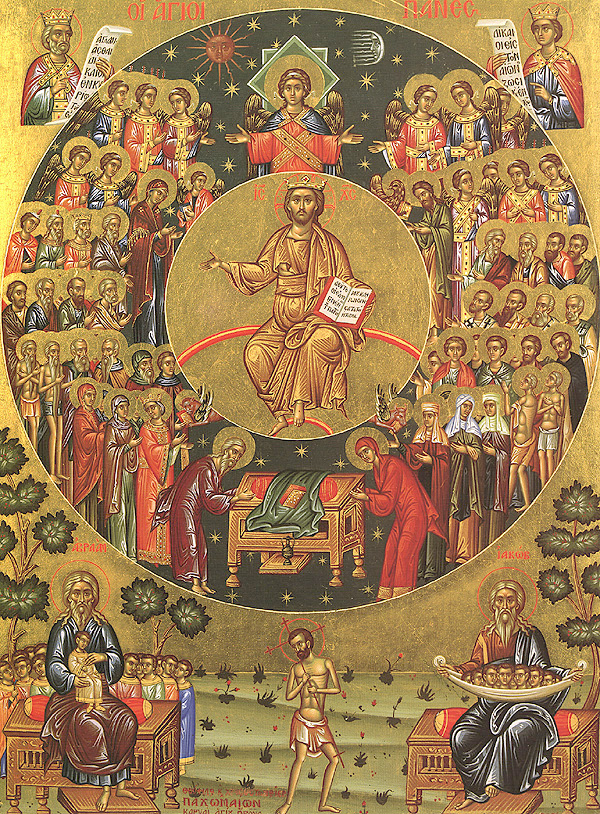
The Solemnity of All Saints

allsaints

“Blessed are the poor in spirit for theirs is the Kingdom of heaven.’

PRAYER FOR THE WEEK

In Praise of the Saints

How shining and splendid are your gifts, O Lord

which you give us for our eternal well-being

Your glory shines radiantly in your saints, O God

In the honor and noble victory of the martyrs.

The white-robed company follow you,

bright with their abundant faith;

They scorned the wicked words of those with this world’s power.

For you they sustained fierce beatings, chains, and torments,

they were drained by cruel punishments.

They bore their holy witness to you

who were grounded deep within their hearts;

they were sustained by patience and constancy.

Endowed with your everlasting grace,

may we rejoice forever

with the martyrs in our bright fatherland.

O Christ, in your goodness,

grant to us the gracious heavenly realms of eternal life.

Unknown author, 10th century

OPENING PRAYER FOR THE MASS

God our Father,

source of all holiness,

the work of your hands is manifest in your saints,

the beauty of your truth is reflected in their faith.

May we who aspire to have part in their joy

be filled with the Spirit that blessed their lives,

so that having shared their faith on earth

we may also know their peace in your kingdom.

Grant this through Christ our Lord. Amen.

READING I

Rv 7:2-4, 9-14

I, John, saw another angel come up from the East,

holding the seal of the living God.

He cried out in a loud voice to the four angels

who were given power to damage the land and the sea,

“Do not damage the land or the sea or the trees

until we put the seal on the foreheads of the servants of our God.”

I heard the number of those who had been marked with the seal,

one hundred and forty-four thousand marked

from every tribe of the children of Israel.

After this I had a vision of a great multitude,

which no one could count,

from every nation, race, people, and tongue.

They stood before the throne and before the Lamb,

wearing white robes and holding palm branches in their hands.

They cried out in a loud voice:

“Salvation comes from our God, who is seated on the throne,

and from the Lamb.”

All the angels stood around the throne

and around the elders and the four living creatures.

They prostrated themselves before the throne,

worshiped God, and exclaimed:

“Amen. Blessing and glory, wisdom and thanksgiving,

honor, power, and might

be to our God forever and ever. Amen.”

Then one of the elders spoke up and said to me,

“Who are these wearing white robes, and where did they come from?”

I said to him, “My lord, you are the one who knows.”

He said to me,

“These are the ones who have survived the time of great distress;

they have washed their robes

and made them white in the Blood of the Lamb.”

CATECHISM OF THE CATHOLIC CHURCH (CCC)

CCC 163 Faith makes us taste in advance the light of the beatific vision, the goal of our journey here below. Then we shall see God “face to face”, “as he is”.1 So faith is already the beginning of eternal life:

When we contemplate the blessings of faith even now, as if gazing at a reflection in a mirror, it is as if we already possessed the wonderful things which our faith assures us we shall one day enjoy.2

CCC 1023 Those who die in God’s grace and friendship and are perfectly purified live for ever with Christ. They are like God for ever, for they “see him as he is,” face to face:3

By virtue of our apostolic authority, we define the following: According to the general disposition of God, the souls of all the saints. .. and other faithful who died after receiving Christ’s holy Baptism (provided they were not in need of purification when they died,. .. or, if they then did need or will need some purification, when they have been purified after death,. ..) already before they take up their bodies again and before the general judgment – and this since the Ascension of our Lord and Savior Jesus Christ into heaven – have been, are and will be in heaven, in the heavenly Kingdom and celestial paradise with Christ, joined to the company of the holy angels. Since the Passion and death of our Lord Jesus Christ, these souls have seen and do see the divine essence with an intuitive vision, and even face to face, without the mediation of any creature.4

CCC 1161 All the signs in the liturgical celebrations are related to Christ: as are sacred images of the holy Mother of God and of the saints as well. They truly signify Christ, who is glorified in them. They make manifest the “cloud of witnesses”5 who continue to participate in the salvation of the world and to whom we are united, above all in sacramental celebrations. Through their icons, it is man “in the image of God,” finally transfigured “into his likeness,”6 who is revealed to our faith. So too are the angels, who also are recapitulated in Christ:

Following the divinely inspired teaching of our holy Fathers and the tradition of the Catholic Church (for we know that this tradition comes from the Holy Spirit who dwells in her) we rightly define with full certainty and correctness that, like the figure of the precious and life-giving cross, venerable and holy images of our Lord and God and Savior, Jesus Christ, our inviolate Lady, the holy Mother of God, and the venerated angels, all the saints and the just, whether painted or made of mosaic or another suitable material, are to be exhibited in the holy churches of God, on sacred vessels and vestments, walls and panels, in houses and on streets.7

CCC 1692 The Symbol of the faith confesses the greatness of God’s gifts to man in his work of creation, and even more in redemption and sanctification. What faith confesses, the sacraments communicate: by the sacraments of rebirth, Christians have become “children of God,”8 “partakers of the divine nature.”9 Coming to see in the faith their new dignity, Christians are called to lead henceforth a life “worthy of the gospel of Christ.”10 They are made capable of doing so by the grace of Christ and the gifts of his Spirit, which they receive through the sacraments and through prayer.

CCC 2345 Chastity is a moral virtue. It is also a gift from God, a grace, a fruit of spiritual effort.11 The Holy Spirit enables one whom the water of Baptism has regenerated to imitate the purity of Christ.12

CCC 2519 The “pure in heart” are promised that they will see God face to face and be like him.13 Purity of heart is the precondition of the vision of God. Even now it enables us to see according to God, to accept others as “neighbors”; it lets us perceive the human body – ours and our neighbor’s – as a temple of the Holy Spirit, a manifestation of divine beauty.

CCC 2772 From this unshakeable faith springs forth the hope that sustains each of the seven petitions, which express the groanings of the present age, this time of patience and expectation during which “it does not yet appear what we shall be.”14 The Eucharist and the Lord’s Prayer look eagerly for the Lord’s return, “until he comes.”15

CCC 2822 Our Father “desires all men to be saved and to come to the knowledge of the truth.”16 He “is forbearing toward you, not wishing that any should perish.”17 His commandment is “that you love one another; even as I have loved you, that you also love one another.”18 This commandment summarizes all the others and expresses his entire will.

1 1 Cor 13:12; I Jn 3:2.

2 St. Basil De Spiritu Sancto 15, 36: PG 32, 132; cf. St. Thomas Aquinas, STh II-II, 4, 1.

3 1 Jn 3:2; cf. 1 Cor 13:12; Rev 22:4.

4 Benedict XII, Benedictus Deus (1336): DS 1000; cf. LG 49.

5 Heb 12:1.

6 Cf. Rom 8:29; 1 Jn 3:2.

7 Council of Nicaea II: DS 600.

8 Jn 1:12; 1 Jn 3:1.

9 2 Pet 1:4.

10 Phil 1:27.

11 Cf. Gal 5:22.

12 Cf. 1 Jn 3:3.

13 Cf. 1 Cor 13:12; 1 Jn 3:2.

14 1 Jn 3:2; Cf. Col 3:4.

15 1 Cor 11:26.

16 1 Tim 2:3-4.

17 2 Pet 3:9; cf. Mt 18:14.

18 Jn 13:34; cf. 1 Jn 3; 4; Lk 10:25-37.

APPLICATION

This vision of St. John is chosen for today’s reading in order to encourage us to persevere in our Christian faith. Firstly, those on earth (ourselves) have to be prepared to meet opposition in our Christian lives. From the very beginning Christ had his followers and opponents. Christ, the innocent lamb, was “led to the slaughter and opened not his mouth.” As our representative and Savior he saw that the perfect obedience which he was to give to his Father demanded that his enemies’ wicked plan should be carried out. Likewise, during the first three centuries of the Church thousands of his followers had to give their lives for his sake and for their faith. In the intervening centuries, up to and including our own day, thousands have been put to death because of their loyalty to Christ.

If not for most of us today, at least for many, it is not a quick martyrdom that is threatening us, but a subtle persecution which is trying to make us disloyal to Christ and to our Christian principles. Under various pretexts the enemies of Christ and of God are trying to undermine our faith. Open atheism is not the most dangerous of these enemies. Few sane men can be convinced that there is no God or nothing for man but the grave. That is the fate only of the dumb beast. The dangerous enemy is the one who, in theory, admits that there is a God and a future life, but that what we do in this life has no connexion with God or our future. We are free agents, they say. We can and should do what we like. Why should we accept any restrictions on our personal liberty? Why keep the commandments? Why control our natural instincts? We should get all the pleasure and wealth we can in this life and the next will look after itself.

Today, we are reminded that every Christian on earth and everyone who wants to go to heaven must face opposition. But St. John tells us that the followers of Christ are given the necessary graces to face and overcome this opposition. Their foreheads are imprinted with the seal of the servants of God. Try to remember this when the advocates of earthly pleasures, the agents of the powers of evil, are using their wiles to make you forget that you are God’s chosen servant. His grace is there for the taking. The Christian who perseveres is he who lives his daily life at peace with God and neighbor, drawing on the sources of God’s grace–prayer and the sacraments.

Another source of encouragement for us today, on this the feast day of all of God’s saints, is the countless numbers John saw in heaven. These countless numbers were men and women of flesh and blood like ourselves. They had the same weaknesses, the same human inclinations, the same faults and failings in many cases as we have. They never forgot God, they never gave up trying to live the Christian life. They died at peace with God and so went to heaven. Many good-living Christians would almost laugh if they were told that they will be saints. Yet, that is what they will be. The reason why they would laugh at this statement of fact is the wrong idea that some spiritual writers have given us of the essence of a saint. The few saints who are canonized by the Church, and whose lives are written to encourage and inspire us, were exceptional individuals. We have no written lives of the ordinary men and women who were not exceptional in any way but who lived in God’s friendship and died in his grace. They now are saints in heaven.

Christ died to save all mankind. His death on the cross was not for St. Paul or St. Augustine or St. Francis only. It was for plain Mrs. Murphy and Franz Allesmanner and Signora Benvenuta also. They didn’t work miracles or do anything extraordinary, but they fully lived the very ordinary, humdrum daily Christian life. Thanks to God’s infinite mercy and thanks to the Lamb of God who takes away the sins of the world, there are countless saints in heaven today. One day soon you and I, please God, will increase their number. There are close relatives of each one of us in heaven. Let us ask them and all the other millions today to intercede for us. We are anxious to get to heaven and we are anxious to do the things that will get us there. Each day we have to meet much opposition. This will obtain for us God’s grace and “we shall overcome.” We too will be saints in heaven praising and thanking the good God who brought us there.

RESPONSORIAL PSALM

PS 24:1bc-2, 3-4ab, 5-6

Lord, this is the people that longs to see your face.

The LORD’s are the earth and its fullness;

the world and those who dwell in it.

For he founded it upon the seas

and established it upon the rivers.

Lord, this is the people that longs to see your face.

Who can ascend the mountain of the LORD?

or who may stand in his holy place?

One whose hands are sinless, whose heart is clean,

who desires not what is vain.

Lord, this is the people that longs to see your face.

He shall receive a blessing from the LORD,

a reward from God his savior.

Such is the race that seeks him,

that seeks the face of the God of Jacob.

Lord, this is the people that longs to see your face.

READING II

1 Jn 3:1-3

Beloved:

See what love the Father has bestowed on us

that we may be called the children of God.

Yet so we are.

The reason the world does not know us

is that it did not know him.

Beloved, we are God’s children now;

what we shall be has not yet been revealed.

We do know that when it is revealed we shall be like him,

for we shall see him as he is.

Everyone who has this hope based on him makes himself pure,

as he is pure.

CATECHISM OF THE CATHOLIC CHURCH (CCC)

CCC 163 Faith makes us taste in advance the light of the beatific vision, the goal of our journey here below. Then we shall see God “face to face”, “as he is”.1 So faith is already the beginning of eternal life:

When we contemplate the blessings of faith even now, as if gazing at a reflection in a mirror, it is as if we already possessed the wonderful things which our faith assures us we shall one day enjoy.2

CCC 1023 Those who die in God’s grace and friendship and are perfectly purified live for ever with Christ. They are like God for ever, for they “see him as he is,” face to face:3

By virtue of our apostolic authority, we define the following: According to the general disposition of God, the souls of all the saints. .. and other faithful who died after receiving Christ’s holy Baptism (provided they were not in need of purification when they died,. .. or, if they then did need or will need some purification, when they have been purified after death,. ..) already before they take up their bodies again and before the general judgment – and this since the Ascension of our Lord and Savior Jesus Christ into heaven – have been, are and will be in heaven, in the heavenly Kingdom and celestial paradise with Christ, joined to the company of the holy angels. Since the Passion and death of our Lord Jesus Christ, these souls have seen and do see the divine essence with an intuitive vision, and even face to face, without the mediation of any creature.4

CCC 1161 All the signs in the liturgical celebrations are related to Christ: as are sacred images of the holy Mother of God and of the saints as well. They truly signify Christ, who is glorified in them. They make manifest the “cloud of witnesses”5 who continue to participate in the salvation of the world and to whom we are united, above all in sacramental celebrations. Through their icons, it is man “in the image of God,” finally transfigured “into his likeness,”6 who is revealed to our faith. So too are the angels, who also are recapitulated in Christ:

Following the divinely inspired teaching of our holy Fathers and the tradition of the Catholic Church (for we know that this tradition comes from the Holy Spirit who dwells in her) we rightly define with full certainty and correctness that, like the figure of the precious and life-giving cross, venerable and holy images of our Lord and God and Savior, Jesus Christ, our inviolate Lady, the holy Mother of God, and the venerated angels, all the saints and the just, whether painted or made of mosaic or another suitable material, are to be exhibited in the holy churches of God, on sacred vessels and vestments, walls and panels, in houses and on streets.7

CCC 1692 The Symbol of the faith confesses the greatness of God’s gifts to man in his work of creation, and even more in redemption and sanctification. What faith confesses, the sacraments communicate: by the sacraments of rebirth, Christians have become “children of God,”8 “partakers of the divine nature.”9 Coming to see in the faith their new dignity, Christians are called to lead henceforth a life “worthy of the gospel of Christ.”10 They are made capable of doing so by the grace of Christ and the gifts of his Spirit, which they receive through the sacraments and through prayer.

CCC 2345 Chastity is a moral virtue. It is also a gift from God, a grace, a fruit of spiritual effort.11 The Holy Spirit enables one whom the water of Baptism has regenerated to imitate the purity of Christ.12

CCC 2519 The “pure in heart” are promised that they will see God face to face and be like him.13 Purity of heart is the precondition of the vision of God. Even now it enables us to see according to God, to accept others as “neighbors”; it lets us perceive the human body – ours and our neighbor’s – as a temple of the Holy Spirit, a manifestation of divine beauty.

CCC 2772 From this unshakeable faith springs forth the hope that sustains each of the seven petitions, which express the groanings of the present age, this time of patience and expectation during which “it does not yet appear what we shall be.”14 The Eucharist and the Lord’s Prayer look eagerly for the Lord’s return, “until he comes.”15

CCC 2822 Our Father “desires all men to be saved and to come to the knowledge of the truth.”16 He “is forbearing toward you, not wishing that any should perish.”17 His commandment is “that you love one another; even as I have loved you, that you also love one another.”18 This commandment summarizes all the others and expresses his entire will.

1 1 Cor 13:12; I Jn 3:2.

2 St. Basil De Spiritu Sancto 15, 36: PG 32, 132; cf. St. Thomas Aquinas, STh II-II, 4, 1.

3 1 Jn 3:2; cf. 1 Cor 13:12; Rev 22:4.

4 Benedict XII, Benedictus Deus (1336): DS 1000; cf. LG 49.

5 Heb 12:1.

6 Cf. Rom 8:29; 1 Jn 3:2.

7 Council of Nicaea II: DS 600.

8 Jn 1:12; 1 Jn 3:1.

9 2 Pet 1:4.

10 Phil 1:27.

11 Cf. Gal 5:22.

12 Cf. 1 Jn 3:3.

13 Cf. 1 Cor 13:12; 1 Jn 3:2.

14 1 Jn 3:2; Cf. Col 3:4.

15 1 Cor 11:26.

16 1 Tim 2:3-4.

17 2 Pet 3:9; cf. Mt 18:14.

18 Jn 13:34; cf. 1 Jn 3; 4; Lk 10:25-37.

APPLICATION

We are celebrating the Feast of all Saints, that is, of the millions of men and women who are today in heaven. St. John’s words are intended to help us to persevere in our heavenward journey. The great, encouraging thought that John puts before us is the fact that God the Father has already placed us more than half-way on our road to heaven by making us his adopted children through the incarnation.

No father can forget his children. He is ever ready to protect, help and guide them. Could the heavenly, all-powerful, all-loving Father forget his children? Their adoption caused the humiliation of his beloved Son in taking human nature and the sacrifice of that same beloved Son on the cross of Calvary.

A human father can be inhuman and desert and neglect his human children. God can never be ungodlike. He cannot change his nature which is Love itself. He cannot forget us, his adopted children. This is surely an encouragement for us. At times we may find the uphill climb to heaven hard. But if we remember the all-loving, omnipotent Father who is watching over us, we can never despair, no matter how dark our nights of struggle and sorrow may seem.

We must never forget that a loving father may have to appear severe at times in order to be truly kind. The human father has to correct his child at times. He has to make him learn obedience, to do things necessary for his health and soundness of body. If he is to prepare him to face life and earn his living he has to make him study his lessons, a thing most children would gladly avoid. Most of this discipline can appear cruel to the unthinking child. Instead it is true love and kindness.

So it is with our heavenly Father’s dealings with us. We would all love to be free from all temptations, free from all anxieties, free from all physical pain but our loving Father sees otherwise. He sends us these messengers of his love in order to prepare us to face our true life and earn for ourselves an eternal living in the future. When we are looking down from heaven on the troubles and misfortunes that we thought no kind God should let us suffer, we shall see their purpose. We shall heartily thank God for having provided them to help us on our way to heaven.

The reward for a few years of very limited suffering here on earth will be an eternity of happiness in the company of God and all his saints. As St. John says, we have only a limited revelation as to the nature of our existence in heaven, but we have enough knowledge of heaven to make us exert all our endeavors to get there. We shall be in the presence of God, the source and author of all that is good and enjoyable. We shall see the Son of God in his human nature. In him we shall understand the love of God for us which brought about the incarnation and all that it entailed for Christ of humiliations and sufferings for our sake. We shall be in the company of our blessed Mother and all our fellow human beings who will be intimately united with us in singing the praises of God, our common Father. Added to these joys will be the certainty that this state of happiness will last forever. Never again shall anxiety or suffering enter our lives. Pain, death and separation from those we love will never again cast a shadow on our existence. We shall feel safe with God for all eternity.

God grant that every one of us will meet in this happy state some day in the future!

GOSPEL

Mt 5:1-12a

When Jesus saw the crowds, he went up the mountain,

and after he had sat down, his disciples came to him.

He began to teach them, saying:

“Blessed are the poor in spirit,

for theirs is the Kingdom of heaven.

Blessed are they who mourn,

for they will be comforted.

Blessed are the meek,

for they will inherit the land.

Blessed are they who hunger and thirst for righteousness,

for they will be satisfied.

Blessed are the merciful,

for they will be shown mercy.

Blessed are the clean of heart,

for they will see God.

Blessed are the peacemakers,

for they will be called children of God.

Blessed are they who are persecuted for the sake of righteousness,

for theirs is the Kingdom of heaven.

Blessed are you when they insult you and persecute you

and utter every kind of evil against you falsely because of me.

Rejoice and be glad,

for your reward will be great in heaven.”

CATECHISM OF THE CATHOLIC CHURCH (CCC)

CCC 520 In all of his life Jesus presents himself as our model. He is “the perfect man”,1 who invites us to become his disciples and follow him. In humbling himself, he has given us an example to imitate, through his prayer he draws us to pray, and by his poverty he calls us to accept freely the privation and persecutions that may come our way.2

CCC 544 The kingdom belongs to the poor and lowly, which means those who have accepted it with humble hearts. Jesus is sent to “preach good news to the poor”;3 he declares them blessed, for “theirs is the kingdom of heaven.”4 To them – the “little ones” the Father is pleased to reveal what remains hidden from the wise and the learned.5 Jesus shares the life of the poor, from the cradle to the cross; he experiences hunger, thirst and privation.6 Jesus identifies himself with the poor of every kind and makes active love toward them the condition for entering his kingdom.7

CCC 581 The Jewish people and their spiritual leaders viewed Jesus as a rabbi.8 He often argued within the framework of rabbinical interpretation of the Law.9 Yet Jesus could not help but offend the teachers of the Law, for he was not content to propose his interpretation alongside theirs but taught the people “as one who had authority, and not as their scribes”.10 In Jesus, the same Word of God that had resounded on Mount Sinai to give the written Law to Moses, made itself heard anew on the Mount of the Beatitudes.11 Jesus did not abolish the Law but fulfilled it by giving its ultimate interpretation in a divine way: “You have heard that it was said to the men of old. .. But I say to you. ..”12 With this same divine authority, he disavowed certain human traditions of the Pharisees that were “making void the word of God”.13

CCC 764 “This Kingdom shines out before men in the word, in the works and in the presence of Christ.”14 To welcome Jesus’ word is to welcome “the Kingdom itself.”14 The seed and beginning of the Kingdom are the “little flock” of those whom Jesus came to gather around him, the flock whose shepherd he is.16 They form Jesus’ true family.17 To those whom he thus gathered around him, he taught a new “way of acting” and a prayer of their own.18

CCC 1454 The reception of this sacrament ought to be prepared for by an examination of conscience made in the light of the Word of God. The passages best suited to this can be found in the Ten Commandments, the moral catechesis of the Gospels and the apostolic letters, such as the Sermon on the Mount and the apostolic teachings.19

CCC 1716 The Beatitudes are at the heart of Jesus’ preaching. They take up the promises made to the chosen people since Abraham. The Beatitudes fulfill the promises by ordering them no longer merely to the possession of a territory, but to the Kingdom of heaven:

Blessed are the poor in spirit, for theirs is the kingdom of heaven.

Blessed are those who mourn, for they shall be comforted.

Blessed are the meek, for they shall inherit the earth.

Blessed are those who hunger and thirst for righteousness, for they shall be satisfied.

Blessed are the merciful, for they shall obtain mercy.

Blessed are the pure in heart, for they shall see God.

Blessed are the peacemakers, for they shall be called sons of God.

Blessed are those who are persecuted for righteousness’ sake, for theirs is the kingdom of heaven.

Blessed are you when men revile you and persecute you and utter all kinds of evil against you falsely on my account.

Rejoice and be glad,

for your reward is great in heaven.20

CCC 1720 The New Testament uses several expressions to characterize the beatitude to which God calls man:

the coming of the Kingdom of God;21 – the vision of God: “Blessed are the pure in heart, for they shall see God”22

entering into the joy of the Lord;23

entering into God’s rest:24

There we shall rest and see, we shall see and love, we shall love and praise. Behold what will be at the end without end. For what other end do we have, if not to reach the kingdom which has no end?25

CCC 2305 Earthly peace is the image and fruit of the peace of Christ, the messianic “Prince of Peace.”26 By the blood of his Cross, “in his own person he killed the hostility,”27 he reconciled men with God and made his Church the sacrament of the unity of the human race and of its union with God. “He is our peace.”28 He has declared: “Blessed are the peacemakers.”29

CCC 2518 The sixth beatitude proclaims, “Blessed are the pure in heart, for they shall see God.”30 “Pure in heart” refers to those who have attuned their intellects and wills to the demands of God’s holiness, chiefly in three areas: charity;31 chastity or sexual rectitude;32 love of truth and orthodoxy of faith.33 There is a connection between purity of heart, of body, and of faith:

The faithful must believe the articles of the Creed “so that by believing they may obey God, by obeying may live well, by living well may purify their hearts, and with pure hearts may understand what they believe.”34

CCC 2546 “Blessed are the poor in spirit.”35 The Beatitudes reveal an order of happiness and grace, of beauty and peace. Jesus celebrates the joy of the poor, to whom the Kingdom already belongs:36

The Word speaks of voluntary humility as “poverty in spirit”; the Apostle gives an example of God’s poverty when he says: “For your sakes he became poor.”37

CCC 2763 All the Scriptures – the Law, the Prophets, and the Psalms – are fulfilled in Christ.38 The Gospel is this “Good News.” Its first proclamation is summarized by St. Matthew in the Sermon on the Mount;39 the prayer to our Father is at the center of this proclamation. It is in this context that each petition bequeathed to us by the Lord is illuminated:

The Lord’s Prayer is the most perfect of prayers. .. In it we ask, not only for all the things we can rightly desire, but also in the sequence that they should be desired. This prayer not only teaches us to ask for things, but also in what order we should desire them.40

1 GS 38; cf. Rom 1 5:5; Phil 2:5.

2 Cf. Jn 13:15; Lk 11:1; Mt 5:11-12.

3 Lk 4:18; cf. 7:22.

4 Mt 5:3.

5 Cf. Mt 11:25.

6 Cf. Mt 21:18; Mk 2:23-26; Jn 4:6 1; 19:28; Lk 9:58.

7 Cf. Mt 25:31-46.

8 Cf Jn 11:28; 3:2; Mt 22:23-24, 34-36.

9 Cf. Mt 12:5; 9:12; Mk 2:23-27; Lk 6:6-g; Jn 7:22-23.

10 Mt 7:28-29.

11 Cf. Mt 5:1.

12 Mt 5:33-34.

13 Mk 7:13; cf. 3:8.

14 LG 5.

15 LG 5.

16 Lk 12:32; cf. Mt 10:16; 26:31; Jn 10:1-21.

17 Cf. Mt 12:49.

18 Cf. Mt 5-6.

19 Cf. Mt 5-7; Rom 12-15; 1 Cor 12-13; Gal 5; Eph 4-6; etc.

20 Mt 5:3-12.

21 Cf. Mt 4:17.

22 Mt 5:8; cf. 1 Jn 2; 1 Cor 13:12.

23 Mt 25:21-23.

24 Cf. Heb 4:7-11.

25 St. Augustine, De civ. Dei 22, 30, 5: PL 41,804.

26 Isa 9:5.

27 Eph 2:16 J.B.; cf. Col 1:20-22.

28 Eph 2:14.

29 Mt 5:9.

30 Mt 5:8.

31 Cf. 1 Tim 4:3-9; 2 Tim 2:22.

32 Cf. 1 Thess 4:7; Col 3:5; Eph 4:19.

33 Cf. Titus 1:15; 1 Tim 1:3-4; 2 Tim 2:23-26.

34 St. Augustine, Defide et symbolo 10, 25: PL 40, 196.

35 Mt 5:3.

36 Cf. Lk 6:20.

37 St. Gregory of Nyssa, De beatitudinibus 1: PG 44, 1200D; cf. 2 Cor 8:9.

38 Cf. Lk 24:44.

39 Cf. Mt 5-7.

40 St. Thomas Aquinas, STh II-II, 83, 9.

APPLICATION

The eight Beatitudes are a resume of the Christian charter. They are the boundaries within which the Christian life is successfully lived. We are celebrating today the Feast of All Saints, that is, of all those who have lived their Christian life according to the ideals that Christ placed before them in the Sermon on the Mount. They have succeeded. They have reached heaven because they followed the rules which Christ laid down for them. They loved God and they showed that love in their daily living. They kept his commandment not only according to the letter but in spirit and in truth.

They bore the trials and troubles of life patiently, as part of God’s plan for their sanctification. They loved their neighbor and proved it by their deeds of charity and mercy. They forgave those who persecuted and injured them. They lived in peace with God and with their neighbor. They helped to promote peace among their fellowman wherever and whenever they could.

Some of the saints whose feasts we are celebrating today were outstanding in their sanctity. They lived their lives of mortification far beyond what was required of them. They loved God with an intensity that is not expected of ordinary mortals. They served their neighbor with a life-long dedication. They set an example and made an impression on the life of their contemporaries which will never be forgotten. God be thanked for such noble examples of saintly Christians!

But there are millions of others in heaven, saints of God also, who did nothing except their ordinary Christian duties. They did them sincerely and willingly. Their names are not inscribed in the Church’s Martyrology but they are written in the “Book of Life” in heaven. Most of us can only admire the first group from afar and thank God for the graces which their very saintly lives obtained, and are still obtaining, for the Church of God. However, we can all feel a little more confident today because of the lesser saints. What they did, we can do. Where they succeeded we too can succeed. With the help of God’s grace and the assistance of the major and minor saints in heaven we will and we shall succeed.

Heaven is the eternal home that God has planned for all men of goodwill. It was to raise us up to sonship with God that Christ came down and lived and died as a man on earth. It was to help us on the way that he founded the Church and gave her the sacraments that sinners and weak mortals would need on their road to heaven. God knows the material of which we are made. He knows too how to make something far greater out of that same weak material. He has done so already with millions of very ordinary human beings. He is doing it daily and will continue to do it.

All that is needed is that we put ourselves in his hands. That he fashioned Adam out of a lump of clay may be a fact or a poetic description. What he can and will make out of me is a saint, a citizen of the kingdom of eternal happiness if only I will let him. May God give me the sense and the grace to do just that, so that when I close my eyes in death, I shall see God and become one of the millions of saints whose feast I am honoring today. So be it.

Applications written by Fr. Kevin O’Sullivan OFM and used with permission of Ignatius Press.

BENEDICTUS

The great feasts that structure the year of faith are feasts of Christ and precisely as such are ordered toward the one God who revealed himself to Moses in the burning bush and chose Israel as the confessor of faith in his uniqueness. In addition to the sun, which is the image of Christ, there is the moon, which has no light of its own but shines with a brightness that comes from the sun. This is a sign to us that we men are in constant need of a “little” light, whose hidden light helps us to know and love the light of the Creator, God one and triune. That is why the feasts of the saints from earliest times have formed part of the Christian year. We have already encountered Mary, whose person is so closely interwoven with the mystery of Christ that the development of the Christmas cycle inevitably introduced a Marian note into the Church’s year. The Marina dimension of the christological feasts was made visible. Then, in addition, come the commemorations of the Apostles and martyrs and, finally, the memorials of the saints of every century. One might say that the saints are, so to speak, new Christian constellations, in which the richness of God’s goodness is reflected. Their light, coming from God, enables us to know better the interior richness of God’s great light, which we cannot comprehend in the refulgence of its glory.

Pope Emeritus Benedict XVI

CLOSING PRAYER

Almighty God,

your saints are one with you

in the mystical body of Christ:

give us grace to follow them

in all virtue and holiness

until we come to those inexpressible joys

which you have prepared for those

who truly love you;

through Jesus Christ our Lord,

who is alive with you in the unity of the Holy Spirit,

one God now and for ever.

Amen.
Posted in Uncategorized | Leave a comment

Thirtieth Sunday in Ordinary Time – B

19986.jpg

“Son of David, have pity on me.”

PRAYER OF THE WEEK

Prayer to Discover and Follow my Vocation

My Lord and my God, you are Love itself, and the source of all love and goodness. Out of love you created me to know you, love you, and serve you in a unique way, as no one else can. I believe that you have a plan for my life, that you have a task in your Kingdom reserved just for me. Your plan and your task are far better than any other I might choose: they will glorify you, fulfill the desires of my heart, and save those souls who are depending on my generous response.

Lord, grant me the light I need to see the next step in that plan; grant me the generosity I need to set aside my own plans in favor of yours; and grant me the strength I need to put my hands to your plough and never turn back. You know me better than I know myself, so you know that I am sinful and weak. All the more reason that I need your grace to uphold the good desires of my heart, O Lord!

Show me your will for me, O gentle and eternal God, and help me to say with Mary, “I am the servant of the Lord; let it be done to me according to your word,” and to say with Jesus, “Let not my will be done, but yours.” Amen.

http://catholic.net/index.php?option=dedestaca&id=3357&grupo=Lifestyle&canal=Vocation

COLLECT

Almighty ever-living God,

increase our faith, hope and charity,

and make us love what you command,

so that we may merit what you promise.

Through our Lord Jesus Christ, your Son,

who lives and reigns with you in the unity

of the Holy Spirit,

one God, for ever and ever.

READING I

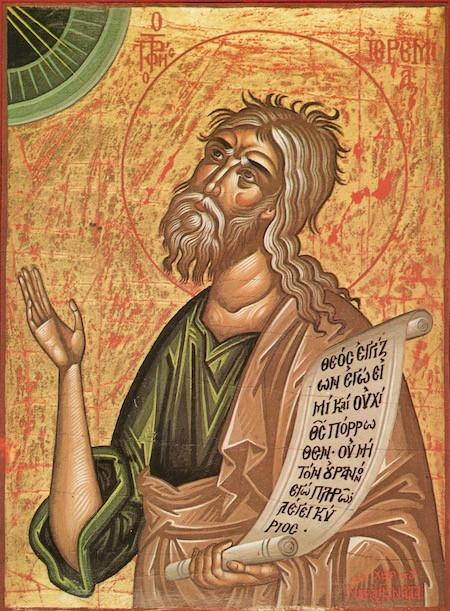
Orthodox_icon_of_Prophet_Jeremiah_1024x1024.jpg

Jer 31:7-9

Thus says the LORD:

Shout with joy for Jacob,

exult at the head of the nations;

proclaim your praise and say:

The LORD has delivered his people,

the remnant of Israel.

Behold, I will bring them back

from the land of the north;

I will gather them from the ends of the world,

with the blind and the lame in their midst,

the mothers and those with child;

they shall return as an immense throng.

They departed in tears,

but I will console them and guide them;

I will lead them to brooks of water,

on a level road, so that none shall stumble.

For I am a father to Israel,

Ephraim is my first-born.

APPLICATION

While granting that the prophet uses some hyperbole in his description of the return of the “remnant” of Israel, as he also does in describing the return of Judah in the following chapters, the fact that God did forgive and bring back such unworthy children is proof beyond compare of his infinite mercy and love. His Chosen People in both the northern and southern kingdom (Israel and Judah) had insulted and betrayed him for centuries, before he allowed the pagan nations they imitated to take them into captivity. They were the very people to whom he had been a kind father for centuries. He had brought them out of Egypt, set them up in Canaan–a country he gave them to be their own, had protected them again and again from aggressive enemies, yet these ungrateful ones forgot all this and abandoned the living God for idols of wood and stone. For generations he tolerated their apostasy; he sent his prophets to recall them to their senses, but in vain; finally, as a last resort, he allowed both kingdoms to be overrun by pagan powers who took his people as slaves into exile.

Although his Chosen People had abandoned him, he did not abandon them. He watched over them in exile and when he found that their exile had wrought a change of heart in some of his rebellious children, he brought them back to their homeland where once more they could be his elected ones. There in the Promised Land of Canaan they remained until the time was ripe for the sending of his divine Son on earth–in the human nature which he was to take from these same Chosen People, as he had promised to Abraham and his descendants.

This prophecy of Jeremiah, then, foretelling the return of a remnant of the Chosen People from exile is not merely a bit of Bible history which we should learn, it is a reminder to us Christians that God was thinking of us and preparing the way for our salvation centuries before Christ came on earth. According to God’s long-standing promise: the Messiah would be a descendant of Abraham, a son of David; he would be born in Bethlehem. But if some of the Chosen People had not been brought back from exile this could not have happened. Thus this return of the exiles, foretold by Jeremiah and later effected by God, was his preparation for the sending of Christ among us to be our Savior.

The first lesson we must learn from this bit of Bible history is, that God was planning for us and thinking of us from all eternity. We are not mere blobs of humanity groping our way in the dark on earth; we are individual human beings, very important in the eyes of God; individuals for whom he has planned a happiness, and he has been planning it from all eternity. The eighteen centuries of God’s dealings with his Chosen People, as described in the Old Testament, are but a short chapter of the history of God’s planning for our eternal happiness. However, it is a short chapter from which we can learn so much of his loving concern for us. If God has thought and planned for so long for our eternal happiness, surely we should be self-interested enough to make this, our eternal happiness, the governing thought of our short lives.

We, Christians, can surely “sing with gladness” today, as the prophet tells us, for the merciful and loving God has saved us. He has put us on the straight path to heaven, on a path made smooth and easy by the life, death and resurrection of his beloved Son whom he sent to lead us back to our merciful Father.

There is a second lesson for all of us in this prophecy of Jeremiah. It is: God’s mercy is without limit and he is ready to bestow it on us at the first sign we give him that we need it. Most of us have offended God and perhaps deserted him for long periods. Like the Chosen People, we did not appreciate all he had done and was doing for us. We were unfaithful to him and went after worldly idols perhaps, getting ourselves swamped in worldly ambitions and pleasures. But we are dealing with the same God of infinite mercy and forgiveness who brought back the unworthy Chosen People from the exile that their sins had brought on them. Can we have any doubt that he will bring us, too, back from that self-induced exile which our sins imposed on us? He is waiting for our word of petition, our humble request for forgiveness to take us back to his fatherly bosom. In fact, he is sending out his fatherly appeals to us to return to the path of virtue. He is sending them in many ways and guises, telling us that he is still our Father–that we are his first-born. Today’s reading is one of these loving calls. There may be other calls for us but there may not; let us not ignore this one–our eternal future depends on our response.

RESPONSORIAL PSALM

Ps 126:1-2, 2-3, 4-5, 6

The Lord has done great things for us; we are filled with joy.

When the LORD brought back the captives of Zion,

we were like men dreaming.

Then our mouth was filled with laughter,

and our tongue with rejoicing.

The Lord has done great things for us; we are filled with joy.

Then they said among the nations,

“The LORD has done great things for them.”

The LORD has done great things for us;

we are glad indeed.

The Lord has done great things for us; we are filled with joy.

Restore our fortunes, O LORD,

like the torrents in the southern desert.

Those that sow in tears

shall reap rejoicing.

The Lord has done great things for us; we are filled with joy.

Although they go forth weeping,

carrying the seed to be sown,

They shall come back rejoicing,

carrying their sheaves.

The Lord has done great things for us; we are filled with joy.

READING II

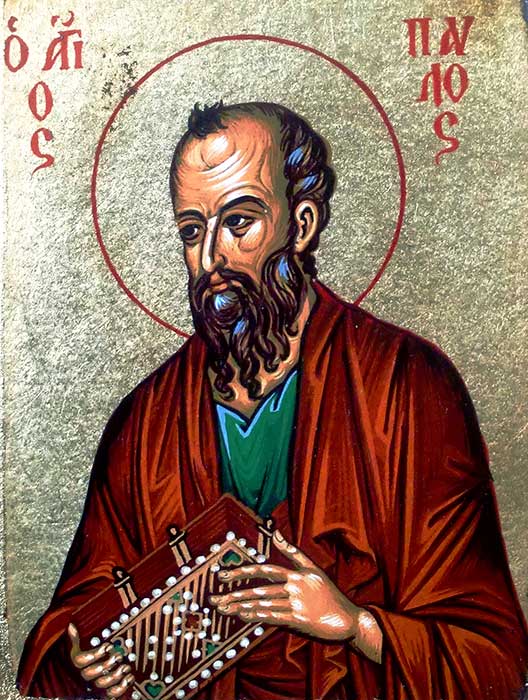
Saint-Paul-the-Apostle-4.jpg

Heb 5:1-6

Brothers and sisters:

Every high priest is taken from among men

and made their representative before God,

to offer gifts and sacrifices for sins.

He is able to deal patiently with the ignorant and erring,

for he himself is beset by weakness

and so, for this reason, must make sin offerings for himself

as well as for the people.

No one takes this honor upon himself

but only when called by God,

just as Aaron was.

In the same way,

it was not Christ who glorified himself in becoming high priest,

but rather the one who said to him:

You are my son:

this day I have begotten you;

just as he says in another place:

You are a priest forever

according to the order of Melchizedek.

CATECHISM OF THE CATHOLIC CHURCH (CCC)

CCC 784 On entering the People of God through faith and Baptism, one receives a share in this people’s unique, priestly vocation: “Christ the Lord, high priest taken from among men, has made this new people ‘a kingdom of priests to God, his Father.’ The baptized, by regeneration and the anointing of the Holy Spirit, are consecrated to be a spiritual house and a holy priesthood.”1

CCC 1537 The word order in Roman antiquity designated an established civil body, especially a governing body. Ordinatio means incorporation into an ordo. In the Church there are established bodies which Tradition, not without a basis in Sacred Scripture,2 has since ancient times called taxeis (Greek) or ordines. And so the liturgy speaks of the ordo episcoporum, the ordo presbyterorum, the ordo diaconorum. Other groups also receive this name of ordo: catechumens, virgins, spouses, widows,…

CCC 1539 The chosen people was constituted by God as “a kingdom of priests and a holy nation.”3 But within the people of Israel, God chose one of the twelve tribes, that of Levi, and set it apart for liturgical service; God himself is its inheritance.4 A special rite consecrated the beginnings of the priesthood of the Old Covenant. The priests are “appointed to act on behalf of men in relation to God, to offer gifts and sacrifices for sins.”5

CCC 1540 Instituted to proclaim the Word of God and to restore communion with God by sacrifices and prayer,6 this priesthood nevertheless remains powerless to bring about salvation, needing to repeat its sacrifices ceaselessly and being unable to achieve a definitive sanctification, which only the sacrifice of Christ would accomplish.7

CCC 1564 “Whilst not having the supreme degree of the pontifical office, and notwithstanding the fact that they depend on the bishops in the exercise of their own proper power, the priests are for all that associated with them by reason of their sacerdotal dignity; and in virtue of the sacrament of Holy Orders, after the image of Christ, the supreme and eternal priest, they are consecrated in order to preach the Gospel and shepherd the faithful as well as to celebrate divine worship as true priests of the New Testament.”8

CCC 1578 No one has a right to receive the sacrament of Holy Orders. Indeed no one claims this office for himself; he is called to it by God.9 Anyone who thinks he recognizes the signs of God’s call to the ordained ministry must humbly submit his desire to the authority of the Church, who has the responsibility and right to call someone to receive orders. Like every grace this sacrament can be received only as an unmerited gift.

1 LG 10; Cf. Heb 5:1-5; Rev 1:6.

2 Cf. Heb 5:6; 7:11; Ps 110:4.

3 Ex 19:6; cf. Isa 61:6.

4 Cf. Num 1:48-53; Josh 13:33.

5 Heb 5:1; cf. Ex 29:1-30; Lev 8.

6 Cf. Mal 2:7-9.

7 Cf. Heb 5:3; 7:27; 101-4.

8 LG 28 cf. Heb 5:1-10; 7:24; 9:11-28; Innocent I, Epist. ad Decentium:PL 20,554A; St. Gregory of Nazianzus, Oratio 2,22:PG 35,432B.

9 Cf. Heb 5:4.

APPLICATION

Through the incarnation of his divine Son, God has given us a High Priest who offered, once and for all, his own body on the cross as a sacrifice for the sins of all mankind. He entered the real holy of holies on our great day of atonement and will remain there as our intermediary with the Father until the last man has been saved. It is of this basic truth of our Christian faith that the Epistle to the Hebrews reminds us today. As the author was writing to Judaeo-Christians, who knew the Jewish cultic regulations of the temple in Jerusalem, he uses terms connected with the temple cult to bring home to his readers the full meaning that the death and glorification of Christ have for them.

It was God himself who appointed Aaron, Moses’ mouthpiece, to be the first high priest to have charge of the services of the Tent of the Meeting, when the Israelites fled from Egypt. His eldest son was to succeed him as high priest, and his other sons were also priests. This was to continue down through the ages. The high priest was the intermediary between the Chosen People and God. Once a year, on the Day of Atonement, he offered the sacrifice which made atonement for all the sins of the people. The high priest, therefore, had a very special place–the most important religious position–in the Jewish community. The Jewish converts to Christianity would understand very well what the author of this epistle meant when he called Christ our High Priest, appointed by God to make atonement for all the sins of the world. They already knew how this atonement was made. They knew who this high priest was–the Son of God who took human nature in which he could make this sacrifice which was of infinite value, and surpassed all the sacrifices offered by all the high priests of Jewish history. They knew that Christ’s sacrifice on the cross was for all men–not for the Jews alone, but for each and every member of the human race for all time.

We, Christians of the 20th century, know all of this as did the Christians of the seventies of the 1st century. We know God has planned from all eternity to give us a place in heaven when we die. We know the humiliations and sufferings his divine Son endured so that we could be made worthy of this honor, and therefore we should know how important it is that we do the little expected of us in order to fulfill God’s plan for us. Yet, there are many Christians today who are so entangled in the passing things of this world that they have no time or inclination to look to their eternal future. They live and act in this world as if it were to be their eternal world, and have no thought or time to prepare themselves for the future home which God has planned for them.

There will be a rude awakening when they are called to judgment. When they realize what they have lost, and when they look back on the follies and foibles on which they spent their days on earth, how they will despise themselves! Today, out of true Christian charity, let us pray that such deluded Christians will be very few in number.

GOSPEL

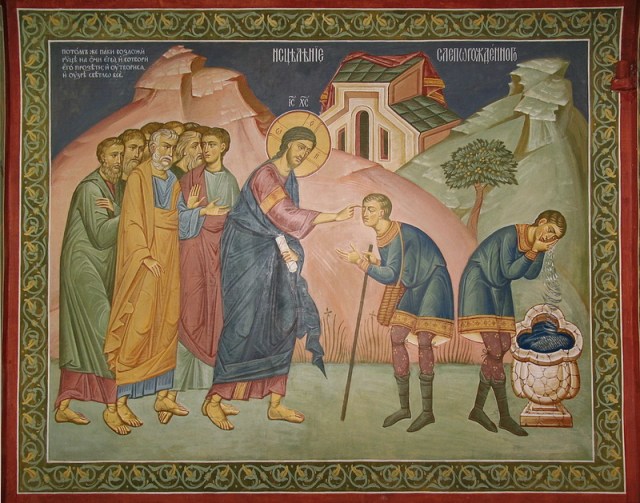
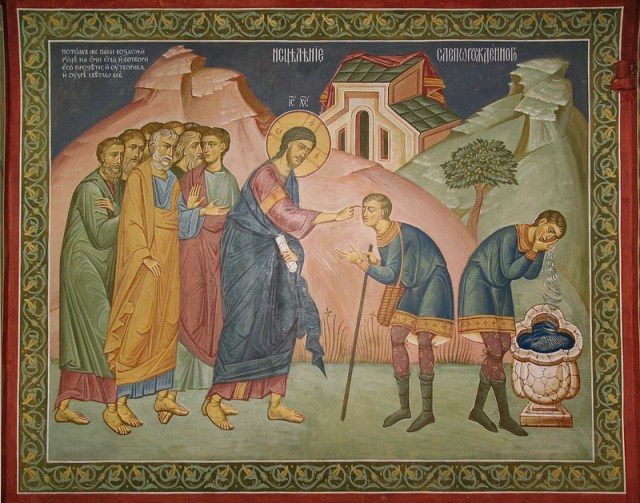
19986.jpg


Mk 10:46-52

As Jesus was leaving Jericho with his disciples and a sizable crowd,

Bartimaeus, a blind man, the son of Timaeus,

sat by the roadside begging.

On hearing that it was Jesus of Nazareth,

he began to cry out and say,

“Jesus, son of David, have pity on me.”

And many rebuked him, telling him to be silent.

But he kept calling out all the more,

“Son of David, have pity on me.”

Jesus stopped and said, “Call him.”

So they called the blind man, saying to him,

“Take courage; get up, Jesus is calling you.”

He threw aside his cloak, sprang up, and came to Jesus.

Jesus said to him in reply, “What do you want me to do for you?”

The blind man replied to him, “Master, I want to see.”

Jesus told him, “Go your way; your faith has saved you.”

Immediately he received his sight

and followed him on the way.

CATECHISM OF THE CATHOLIC CHURCH (CCC)

CCC 548 The signs worked by Jesus attest that the Father has sent him. They invite belief in him.1 To those who turn to him in faith, he grants what they ask.2 So miracles strengthen faith in the One who does his Father’s works; they bear witness that he is the Son of God.3 But his miracles can also be occasions for “offence”;4 they are not intended to satisfy people’s curiosity or desire for magic Despite his evident miracles some people reject Jesus; he is even accused of acting by the power of demons.5

CCC 2616 Prayer to Jesus is answered by him already during his ministry, through signs that anticipate the power of his death and Resurrection: Jesus hears the prayer of faith, expressed in words (the leper, Jairus, the Canaanite woman, the good thief)6 or in silence (the bearers of the paralytic, the woman with a hemorrhage who touches his clothes, the tears and ointment of the sinful woman).7 The urgent request of the blind men, “Have mercy on us, Son of David” or “Jesus, Son of David, have mercy on me!” has-been renewed in the traditional prayer to Jesus known as the Jesus Prayer: “Lord Jesus Christ, Son of God, have mercy on me, a sinner!”8 Healing infirmities or forgiving sins, Jesus always responds to a prayer offered in faith: “Your faith has made you well; go in peace.”

St. Augustine wonderfully summarizes the three dimensions of Jesus’ prayer: “He prays for us as our priest, prays in us as our Head, and is prayed to by us as our God. Therefore let us acknowledge our voice in him and his in us.”9

CCC 2667 This simple invocation of faith developed in the tradition of prayer under many forms in East and West. The most usual formulation, transmitted by the spiritual writers of the Sinai, Syria, and Mt. Athos, is the invocation, “Lord Jesus Christ, Son of God, have mercy on us sinners.” It combines the Christological hymn of Philippians 2:6-11 with the cry of the publican and the blind men begging for light.10 By it the heart is opened to human wretchedness and the Savior’s mercy.

1 cf. Jn 5:36; 10:25, 38.

2 Cf. Mk 5:25-34; 10:52; etc.

3 Cf. Jn 10:31-38.

4 Mt 11:6.

5 Cf. Jn 11:47-48; Mk 3:22.

6 Cf. Mk 1:40-41; 5:36; 7:29; Cf. Lk 23:39-43.

7 Cf. Mk 25; 5:28; Lk 7:37-38.

8 Mt 9:27, Mk 10:48.

9 St. Augustine, En. in Ps. 85, 1: PL 37, 1081; cf. GILH 7.

10 Cf. Mk 10:46-52; Lk 18:13.

APPLICATION

This blind man of Jericho was one of the very lucky men in the gospel story. He got the last chance of appealing in person to Jesus for the gift of his eyesight. He used that chance in spite of opposition, his faith and trust in Jesus were so strong that nobody could stop him from expressing them. He made his request while proclaiming his faith. He got, not only what he asked–the physical gift, but a spiritual insight was added as well and he became a faithful follower of Christ.

Our Lord had passed through Jericho a few times during his public ministry. Jericho was on the route from Galilee to Jerusalem. Bartimaeus was very probably sitting on the roadside begging for alms on these occasions also, but influenced by the lack of interest of his fellow-citizens he, too, had no time for all this talk about a Messiah and a miracle-worker. In any case, it was only on the occasion of Christ’s last journey through Jericho that his faith moved him to appeal aloud for help from the one and only person whom he was convinced could grant him his request. His appeal was heard.

There is a deep spiritual lesson for all of us in today’s gospel story. Like Bartimaeus, many of us have been sitting by the roadside for years, not moving a foot toward our eternal destination. We have been blind to our true interests; our sole preoccupation seems to be to collect the paltry alms that this world would deign to drop in our laps. But we are even more to be pitied than Bartimaeus–he knew that he was blind; we are not aware of our spiritual blindness–we think everything in the garden is rosy and colorful when we see only the colors we want to see and are blind to the things that really matter.

We said above that it is probable that Bartimaeus ignored the passing-by of Jesus on earlier occasions; it is certain that in, our case we have ignored the presence of Jesus in the many reminders he has sent us up to now. That parish retreat we did not attend; that sudden death of a close friend; that illness of a near relative; that car accident from which we miraculously escaped; these and many other incidents are examples of the many times our loving Lord passed close to us–ready to cure our spiritual blindness; but we did not see him.

It is possible that our Lord saw Bartimaeus sitting by the roadside on his earlier journeys through Jericho. Perhaps he could not help him, for the blind man was engaged in collecting alms with no thought for the greater gift–the return of his eyesight. It is certain that our Lord has often been near to us, anxious to give us back our spiritual vision. But like Bartimaeus, we were so busy gathering up this world’s paltry donations that we did not even think of the far greater grace we needed.

In the twenty centuries of our Christian history there have been some who have deliberately shut the eyes of their minds to the many calls to repentance which Jesus sent. This is a danger and a fatal mistake we can all avoid if we learn today’s gospel message. This story of the blind man of Jericho was not inspired and preserved for some literary reason, but as an instruction for us. It is read to us today, to make us examine our consciences and see the true state of our spiritual standing in the eyes of God. Are we steadily moving on toward heaven, carrying out daily duties to God and to our neighbor, bearing life’s crosses cheerfully–knowing that they come to us from a loving Father as part of our training for heaven? Or are we sitting idly by the roadside, engrossed and enmeshed in the affairs of this world, oblivious of our real purpose in life and turning deaf ears and blind eyes to all the danger signals that Christ our Savior regularly is sending out to us?

For some among us today this may be Christ’s last call. Will we be so utterly disinterested in our own eternal welfare as to ignore it? For all of us it is a call to put our house in order. We may not have been sitting by the roadside, but have we been keeping faithfully to the road to heaven–marked out for us by our Christian faith? Let us all call on Jesus, son of David and Son of God today, to give us the grace to see ourselves as we are–and then to see ourselves as, we ought to be. “Master, let me receive my sight.”

Applications written by Fr. Kevin O’Sullivan O.F.M. and used with permission of Franciscan Press.

BENEDICTUS

We are Meant to Rely on Receiving

Man is redeemed by the cross; the crucified Christ, as the completely opened being, as the true redemption of man – this is the central principle of Christian faith… in the last analysis of man, it expresses the primacy of acceptance over action, over ones own achievement… Accordingly, from the point of view of the Christian faith, man comes in the profoundest sense to himself not through what he does but through what he accepts. He must wait for the gift of love, and love can only be received as a gift. It cannot be “made” on one’s own, without anyone else; one must wait for it, let it be given to one. And one cannot become wholly man in any other way than by being loved, by letting oneself be loved. That love represents simultaneously both man’s highest possibility and his deepest need, and that this most necessary thing is at the same time the freest and the most unenforceable means precisely that for his “salvation” man is meant to rely on receiving. If he declines to let himself be presented with the gift, then he destroys himself. Activity that makes itself into an absolute, that aims at achieving humanity by its own efforts alone, is in contradiction with man’s being… The primacy of acceptance is not intended to condemn man to passivity; it does not mean that man can now sit idle. On the contrary, it alone makes it possible to do the things of this world in a spirit of responsibility, yet at the same time in an uncramped, cheerful, free way, and to put at them at the service of redemptive love.

Pope Emeritus Benedict XVI

CLOSING PRAYER

For Healing

Lord, You invite all who are burdened to come to You.

Allow your healing hand to heal me.

Touch my soul with Your compassion for others.

Touch my heart with Your courage and infinite love for all.

Touch my mind with Your wisdom, that my mouth may always proclaim Your praise. Teach me to reach out to You in my need, and help me to lead others to You by my example.

Most loving Heart of Jesus, bring me health in body and spirit that I may serve You with all my strength.

Touch gently this life which You have created, now and forever. Amen.

http://www.catholic.org/prayers/prayer.php?p=75

Posted in Uncategorized | 1 Comment

Twenty-ninth Sunday in Ordinary Time – B

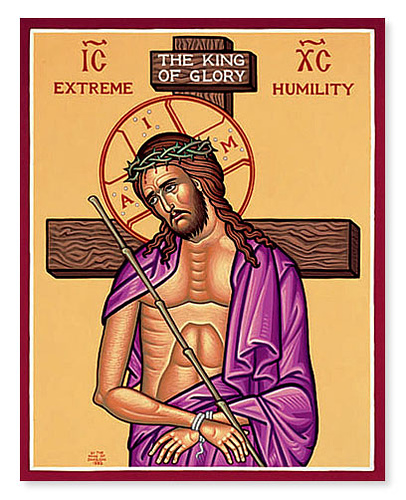
Featured image‘whoever wishes to be great among you will be your servant;

whoever wishes to be first among you will be the slave of all.”

PRAYER OF THE WEEK

Supplication of Christ in Agony (Ps 143: 1-10)

Hear my prayer, O God, give ear to my supplications! In your faithfulness answer me,

in your righteousness! Enter not into judgment with your servant for no one living is righteous before you.

For the enemy has pursued me, has crushed my life to the ground, and has made me sit in darkness like those long dead. Therefore my spirit faints within me; my heart within me is appalled. I remember the days of old, I meditate on all that you have done; I muse on what your hands have wrought, I stretch out my hands to you; my soul thirsts for you like a parched land.

Make haste to answer me, O God, My spirit fails! Hide not your face from me, lest I be like those who go down to the Pit, Let me hear in the mourning of your steadfast love, for in you I put my trust.

Teach me the way I should go, for to you I lift up my soul. Deliver me, O God, from my enemies.

I have fled to you for refuge!

Teach me to do your will for you are my God!

Let your good spirit lead me on a level path!

Glory be to the Father, and the Son, and the Holy Spirit. As it was in the beginning is now and ever shall be world without end.

Amen.

COLLECT

Almighty ever-living God,

grant that we may always conform our will to yours

and serve your majesty in sincerity of heart.

Through our Lord Jesus Christ, your Son,

who lives and reigns with you in the unity

of the Holy Spirit,

one God, for ever and ever.

READING I

Is 53:10-11

The LORD was pleased

to crush him in infirmity.

If he gives his life as an offering for sin,

he shall see his descendants in a long life,

and the will of the LORD shall be accomplished through him.

Because of his affliction

he shall see the light in fullness of days;

through his suffering, my servant shall justify many,

and their guilt he shall bear.

The word of the Lord.

CATECHISM OF THE CATHOLIC CHURCH (CCC)

CCC 64 Through the prophets, God forms his people in the hope of salvation, in the expectation of a new and everlasting Covenant intended for all, to be written on their hearts.1 The prophets proclaim a radical redemption of the People of God, purification from all their infidelities, a salvation which will include all the nations.2 Above all, the poor and humble of the Lord will bear this hope. Such holy women as Sarah, Rebecca, Rachel, Miriam, Deborah, Hannah, Judith and Esther kept alive the hope of Israel’s salvation. The purest figure among them is Mary.3

CCC 440 Jesus accepted Peter’s profession of faith, which acknowledged him to be the Messiah, by announcing the imminent Passion of the Son of Man.4 He unveiled the authentic content of his messianic kingship both in the transcendent identity of the Son of Man “who came down from heaven”, and in his redemptive mission as the suffering Servant: “The Son of Man came not to be served but to serve, and to give his life as a ransom for many.”5 Hence the true meaning of his kingship is revealed only when he is raised high on the cross.6 Only after his Resurrection will Peter be able to proclaim Jesus’ messianic kingship to the People of God: “Let all the house of Israel therefore know assuredly that God has made him both Lord and Christ, this Jesus whom you crucified.”7

CCC 579 This principle of integral observance of the Law not only in letter but in spirit was dear to the Pharisees. By giving Israel this principle they had led many Jews of Jesus’ time to an extreme religious zeal.8 This zeal, were it not to lapse into “hypocritical” casuistry,9 could only prepare the People for the unprecedented intervention of God through the perfect fulfillment of the Law by the only Righteous One in place of all sinners.10

CCC 601 The Scriptures had foretold this divine plan of salvation through the putting to death of “the righteous one, my Servant” as a mystery of universal redemption, that is, as the ransom that would free men from the slavery of sin.11 Citing a confession of faith that he himself had “received”, St. Paul professes that “Christ died for our sins in accordance with the scriptures.”12 In particular Jesus’ redemptive death fulfills Isaiah’s prophecy of the suffering Servant.13 Indeed Jesus himself explained the meaning of his life and death in the light of God’s suffering Servant.14 After his Resurrection he gave this interpretation of the Scriptures to the disciples at Emmaus, and then to the apostles.15

CCC 615 “For as by one man’s disobedience many were made sinners, so by one man’s obedience many will be made righteous.”16 By his obedience unto death, Jesus accomplished the substitution of the suffering Servant, who “makes himself an offering for sin”, when “he bore the sin of many”, and who “shall make many to be accounted righteous”, for “he shall bear their iniquities”.17 Jesus atoned for our faults and made satisfaction for our sins to the Father.18

CCC 1502 The man of the Old Testament lives his sickness in the presence of God. It is before God that he laments his illness, and it is of God, Master of life and death, that he implores healing.19 Illness becomes a way to conversion; God’s forgiveness initiates the healing.20 It is the experience of Israel that illness is mysteriously linked to sin and evil, and that faithfulness to God according to his law restores life: “For I am the Lord, your healer.”21 The prophet intuits that suffering can also have a redemptive meaning for the sins of others.22 Finally Isaiah announces that God will usher in a time for Zion when he will pardon every offense and heal every illness.23

1 Cf. Isa 2:2-4; Jer 31:31-34; Heb 10:16.

2 Cf. Ezek 36; Isa 49:5-6; 53:11.

3 Cf. Ezek 2:3; Lk 1:38.

4 Cf. Mt 16:16-23.

5 Jn 3:13; Mt 20:28; cf. Jn 6:62; Dan 7:13; Is 53:10-12.

6 Cf. Jn 19:19-22; Lk 23:39-43.

7 Acts 2:36.

8 Cf. Rom 10:2.

9 Cf. Mt 15:31; Lk 11:39-54.

10 Cf Is 53:11; Heb 9:15.

11 Is 53:11; cf. 53:12; Jn 8 34-36; Acts 3:14.

12 1 Cor 15:3; cf. also Acts 3:18; 7:52; 13:29; 26:22-23.

13 Cf. Is 53:7-8 and Acts 8:32-35.

14 Cf. Mt 20:28.

15 Cf. Lk 24:25-27, 44-45.

16 Rom 5:19.

17 Is 53:10-12.

18 Cf. Council of Trent (1547): DS 1529.

19 Cf. Pss 6:3; 38; Isa 38.

20 Cf. Pss 32:5; 38:5; 39:9, 12; 107:20; cf. Mk 2:5-12.

21 Ex 15:26.

22 Cf. Isa 53:11.

23 Cf. Isa 33:24.

APPLICATION

The lesson to be learned from these two verses of second-Isaiah (it would be well to read the entire prophecy, or Fourth Servant Oracle as it is called, in Is. 52: 13-53 : 12), is that God in his extraordinary, infinite love for us men and for our salvation, decreed that his divine Son in his assumed human nature, should suffer torture and death so that we might live eternally. The leaders of the Jews plotted his death, and forced the Roman authorities to condemn him to the shameful death of crucifixion, but this was all in God’s plan for us before he created the world. Christ, the Son of God, knew this all along; he tried to prepare his disciples for the shock his death and sufferings would cause them by foretelling on three distinct occasions, that he would suffer and be put to death, but that he would triumph over death and rise again (see Mk. 8: 31-33; 9: 30-32; 10: 32-34). In the garden of Gethsemane, as his hour drew near, he suffered agony because his human nature shrank from the tortures which he vividly foresaw; nevertheless he accepted what his Father had planned and humbly and submissively said: “yet not what I will but what thou wilt ” (Mk. 14: 36).

That Christ our Lord was the suffering obedient Servant foretold by the prophet is evident from the gospel story. He was “rejected by men, a man of sorrows and familiar with suffering . . . yet ours were the sufferings he bore, our sorrows he carried . . . he was crushed for our sins . . . We had all gone astray like sheep . . . Yahweh burdened him with the sins of us all . . . like a lamb that is led to the slaughter-house, like a sheep that is dumb before its shearers, never opening his mouth” (Is. 53: 3-7). This prophecy had its literal fulfillment in Christ. This is testified by all four gospels. It is not so much the fact that one might be tempted to question, but rather the reason, the necessity, why it had to be thus. Could not God have found other ways of bringing men to heaven without subjecting his divine Son to humiliations and sufferings?

God alone has the full and satisfying answer to this question, and part of our joy in heaven will be to learn the answers to this and to other theological questions which trouble us on earth. Both the Old and New Testaments indicate at least a partial answer to this particular question: when they tell us this was an effect of God’s infinite love for us. We, of course, can form no adequate idea of what infinite love is and does. But even finite love, if true and meaningful, can and does go to great extremes for the sake of those loved. For instance, true patriots in all ages have never hesitated to sacrifice their lives for their country and their fellow countrymen. Their finite love was sufficient to move them to make the supreme sacrifice. God was not dealing with the preservation of a country’s freedom or its liberation from an oppressor, he was dealing with the eternal freedom and happiness of the whole human race. The task was great, the end desired was of everlasting value, the life sacrificed was God’s own Son in his human nature–but the love of God which his Son shared with him, was infinite and therefore capable of any sacrifice.

Furthermore, if we knew our own weak, lazy, human nature as well as God knows it, we would see another reason for the extraordinary manifestation of his love. The cross of Christ, the scourging at the pillar, the crowning with thorns, the cruel nails through the hands and feet, are reminders that will touch a chord even in the coldest Christian heart. With these reminders of God’s love for us many of us are still all too slow to show our appreciation of all God has done for us. How much less responsive, how much less appreciative of what eternal life is worth, would such Christians be, if God had opened heaven for them in a less impressive way?

Our Savior took human nature–an act of extreme humiliation, in order to make us his brothers and therefore sons of God. He came into a world of sin where God the Creator was practically forgotten. He told those who “had ears to hear,” of God and of his desire to give unending life in his own eternal kingdom, to all who would follow the Christian precepts. He established a society–the Church–on earth which would continue until the end of time to proclaim God’s mercy and love. He was tortured and put to the cruelest of deaths because of the opposition and hatred of some of the Jews among whom he lived. But as God, and with God his Father, he foresaw all this and in the full knowledge that he would rise again, willingly accepted it notwithstanding the agonies it would cause him. While the resurrection made his life and death a success and an eternal triumph it did not make the pains of his passion any easier.

We may not understand what infinite love is, but we cannot fail to see the glorious effects that the infinite love of God has earned for us. We are citizens of heaven. We must expect to meet some obstacles on the way–there will be troubles and trials in our lives, but one look at our crucifix should make us realize how little we are asked to suffer for our own salvation when compared with what Christ has suffered to make salvation possible.

RESPONSORIAL PSALM

Ps 33:4-5, 18-19, 20, 22

Lord, let your mercy be on us, as we place our trust in you.

Upright is the word of the LORD,

and all his works are trustworthy.

He loves justice and right;

of the kindness of the LORD the earth is full.

Lord, let your mercy be on us, as we place our trust in you.

See, the eyes of the LORD are upon those who fear him,

upon those who hope for his kindness,

To deliver them from death

and preserve them in spite of famine.

Lord, let your mercy be on us, as we place our trust in you.

Our soul waits for the LORD,

who is our help and our shield.

May your kindness, O LORD, be upon us

who have put our hope in you.

R. Lord, let your mercy be on us, as we place our trust in you.

READING II

Heb 4:14-16

Brothers and sisters:

Since we have a great high priest who has passed through the heavens,

Jesus, the Son of God,

let us hold fast to our confession.

For we do not have a high priest

who is unable to sympathize with our weaknesses,

but one who has similarly been tested in every way,

yet without sin.

So let us confidently approach the throne of grace

to receive mercy and to find grace for timely help.

The word of the Lord.

CATECHISM OF THE CATHOLIC CHURCH (CCC)

CCC 784 On entering the People of God through faith and Baptism, one receives a share in this people’s unique, priestly vocation: “Christ the Lord, high priest taken from among men, has made this new people ‘a kingdom of priests to God, his Father.’ The baptized, by regeneration and the anointing of the Holy Spirit, are consecrated to be a spiritual house and a holy priesthood.”1

CCC 1537 The word order in Roman antiquity designated an established civil body, especially a governing body. Ordinatio means incorporation into an ordo. In the Church there are established bodies which Tradition, not without a basis in Sacred Scripture,2 has since ancient times called taxeis (Greek) or ordines. And so the liturgy speaks of the ordo episcoporum, the ordo presbyterorum, the ordo diaconorum. Other groups also receive this name of ordo: catechumens, virgins, spouses, widows,…

CCC 1539 The chosen people was constituted by God as “a kingdom of priests and a holy nation.”3 But within the people of Israel, God chose one of the twelve tribes, that of Levi, and set it apart for liturgical service; God himself is its inheritance.4 A special rite consecrated the beginnings of the priesthood of the Old Covenant. The priests are “appointed to act on behalf of men in relation to God, to offer gifts and sacrifices for sins.”5

CCC 1540 Instituted to proclaim the Word of God and to restore communion with God by sacrifices and prayer,6 this priesthood nevertheless remains powerless to bring about salvation, needing to repeat its sacrifices ceaselessly and being unable to achieve a definitive sanctification, which only the sacrifice of Christ would accomplish.7

CCC 1564 “Whilst not having the supreme degree of the pontifical office, and notwithstanding the fact that they depend on the bishops in the exercise of their own proper power, the priests are for all that associated with them by reason of their sacerdotal dignity; and in virtue of the sacrament of Holy Orders, after the image of Christ, the supreme and eternal priest, they are consecrated in order to preach the Gospel and shepherd the faithful as well as to celebrate divine worship as true priests of the New Testament.”8

CCC 1578 No one has a right to receive the sacrament of Holy Orders. Indeed no one claims this office for himself; he is called to it by God.9 Anyone who thinks he recognizes the signs of God’s call to the ordained ministry must humbly submit his desire to the authority of the Church, who has the responsibility and right to call someone to receive orders. Like every grace this sacrament can be received only as an unmerited gift.

1 LG 10; Cf. Heb 5:1-5; Rev 1:6.

2 Cf. Heb 5:6; 7:11; Ps 110:4.

3 Ex 19:6; cf. Isa 61:6.

4 Cf. Num 1:48-53; Josh 13:33.

5 Heb 5:1; cf. Ex 29:1-30; Lev 8.

6 Cf. Mal 2:7-9.

7 Cf. Heb 5:3; 7:27; 101-4.

8 LG 28 cf. Heb 5:1-10; 7:24; 9:11-28; Innocent I, Epist. ad Decentium:PL 20,554A; St. Gregory of Nazianzus, Oratio 2,22:PG 35,432B.

9 Cf. Heb 5:4.

APPLICATION

We Christians are God’s chosen people of today. Compared with his Chosen People of the Old Testament, we have infinitely greater blessings and advantages. They knew of the existence of the one true and only God, the Creator of all things, and they knew he was interested in them. Although they knew that he existed they knew very little else about him, and their chief interest in him was to obtain from him all earthly blessings: health, wealth and progeny. They had only a very hazy idea of the future life or what it held for them, yet they did know they were chosen by God so that through them God would send a great blessing on all nations; somehow, sometime they would have a share in that blessing.

We Christians are indeed fortunate that we know much more about God and our real purpose in life. Through the incarnation we have learned that God loves us so much that he sent his divine Son to live among us in order to make us heirs to heaven. That divine Son of God suffered and died in his human nature in order to make perfect atonement to his Father in our behalf. This, surely, was divine love for us creatures. Not only did God make us heirs to his eternal kingdom through the incarnation, but he gave us his own divine Son to be our leader and intermediary between himself and us.

Unlike the Jews of old we know clearly what our real purpose in life is. It is not to be found on this earth, it is the eternal happiness that awaits us after death. Life on earth is but a preparation for the real life to come. This knowledge coupled with the assurance that Christ our brother is pleading for us at the throne of grace, should fill every Christian with courage and hope. Christ knows our weaknesses and should we give in to them and the temptations of life, he is ready to obtain from our Father in heaven pardon the moment we repent of our fall.

We are fortunate to have such a loving and all-powerful high priest who has entered heaven before us and is preparing a place for us. No true Christian can ever despair. God has proved how much he loves us, and how anxious he is to share his heaven with us. Christ, the Son of God, endured the humiliation of the incarnation and the sufferings and pains of his life on earth, and his cruel death on the cross, because he gladly cooperated with the Father in making us heirs of heaven.

With such an intermediary and helper how can we fail to reach our goal? With God and his divine Son on our side, who is against us?

GOSPEL

Mk 10:35-45

James and John, the sons of Zebedee, came to Jesus and said to him,

“Teacher, we want you to do for us whatever we ask of you.”

He replied, “What do you wish me to do for you?”

They answered him, “Grant that in your glory

we may sit one at your right and the other at your left.”

Jesus said to them, “You do not know what you are asking.

Can you drink the cup that I drink

or be baptized with the baptism with which I am baptized?”

They said to him, “We can.”

Jesus said to them, “The cup that I drink, you will drink,

and with the baptism with which I am baptized, you will be baptized;

but to sit at my right or at my left is not mine to give

but is for those for whom it has been prepared.”

When the ten heard this, they became indignant at James and John.

Jesus summoned them and said to them,

“You know that those who are recognized as rulers over the Gentiles

lord it over them,

and their great ones make their authority over them felt.

But it shall not be so among you.

Rather, whoever wishes to be great among you will be your servant;

whoever wishes to be first among you will be the slave of all.

For the Son of Man did not come to be served

but to serve and to give his life as a ransom for many.”

The Gospel of the Lord.

CATECHISM OF THE CATHOLIC CHURCH (CCC)

CCC 548 The signs worked by Jesus attest that the Father has sent him. They invite belief in him.1 To those who turn to him in faith, he grants what they ask.2 So miracles strengthen faith in the One who does his Father’s works; they bear witness that he is the Son of God.3 But his miracles can also be occasions for “offence”;4 they are not intended to satisfy people’s curiosity or desire for magic Despite his evident miracles some people reject Jesus; he is even accused of acting by the power of demons.5

CCC 2616 Prayer to Jesus is answered by him already during his ministry, through signs that anticipate the power of his death and Resurrection: Jesus hears the prayer of faith, expressed in words (the leper, Jairus, the Canaanite woman, the good thief)6 or in silence (the bearers of the paralytic, the woman with a hemorrhage who touches his clothes, the tears and ointment of the sinful woman).7 The urgent request of the blind men, “Have mercy on us, Son of David” or “Jesus, Son of David, have mercy on me!” has-been renewed in the traditional prayer to Jesus known as the Jesus Prayer: “Lord Jesus Christ, Son of God, have mercy on me, a sinner!”8 Healing infirmities or forgiving sins, Jesus always responds to a prayer offered in faith: “Your faith has made you well; go in peace.”

St. Augustine wonderfully summarizes the three dimensions of Jesus’ prayer: “He prays for us as our priest, prays in us as our Head, and is prayed to by us as our God. Therefore let us acknowledge our voice in him and his in us.”9

CCC 2667 This simple invocation of faith developed in the tradition of prayer under many forms in East and West. The most usual formulation, transmitted by the spiritual writers of the Sinai, Syria, and Mt. Athos, is the invocation, “Lord Jesus Christ, Son of God, have mercy on us sinners.” It combines the Christological hymn of Philippians 2:6-11 with the cry of the publican and the blind men begging for light.10 By it the heart is opened to human wretchedness and the Savior’s mercy.

1 cf. Jn 5:36; 10:25, 38.

2 Cf. Mk 5:25-34; 10:52; etc.

3 Cf. Jn 10:31-38.

4 Mt 11:6.

5 Cf. Jn 11:47-48; Mk 3:22.

6 Cf. Mk 1:40-41; 5:36; 7:29; Cf. Lk 23:39-43.

7 Cf. Mk 25; 5:28; Lk 7:37-38.

8 Mt 9:27, Mk 10:48.

9 St. Augustine, En. in Ps. 85, 1: PL 37, 1081; cf. GILH 7.

10 Cf. Mk 10:46-52; Lk 18:13.

APPLICATION

Our own natural inclination most likely would be to react like the other ten Apostles and become vexed with James and John and to tell them what we thought of their selfish worldly ambitions. However, our Lord’s gentle answer: “you do not know what you are asking” shows us that ignorance of the nature of the kingdom he was going to set up, was the cause of their very human ambitions. They, with the other Apostles, had still the common Jewish idea of the messianic kingdom. They thought the Messiah–and they were now convinced that Jesus was the promised Messiah–would set up a political kingdom in Palestine, oust the pagan Romans and eventually extend his kingdom to all nations. That this kingdom he would set up would be universal, extending to all nations, was indicated in almost all the, messianic prophecies in the Old Testament, but that this kingdom would be spiritual not political, was not grasped by most of Christ’s contemporaries including the Apostles.

Jesus, knowing that his Apostles still had this wrong idea, was gentle with James and John. He took this opportunity to tell them that he would set up a glorious kingdom but that his sufferings and death would be a necessary prelude to its establishment. He had already referred to his sufferings and death three times, but the mention fell on deaf ears. Their argument was: how could he suffer death when he has still to establish his earthly kingdom? The truth in fact was that it was by means of his sufferings and death that he would establish his glorious kingdom. He challenged the two Apostles then to know if they were willing to pay the price for a high place in his glorious kingdom: were they prepared to follow him through suffering and death? He accepted their affirmation, knowing it to be true, but told them their position of honor depended on his Father’s decision. Once they realized the nature of his glorious kingdom they would be the last to look for positions of honor in it.

While no Christian today thinks that Christ came on earth in order to make us wealthy, happy and prosperous during our few years on earth, there are, unfortunately, many Christians who are unwilling to accept Christ’s teaching that the way to heavenly glory is the way of the cross. “All this and heaven too” is their motto. It would, of course, be marvelous if all our days on earth were days of peace, happiness and prosperity to be followed by eternal happiness–when we “shuffle off this mortal coil.” But any man who has the use of reason sees that our world is inhabited by weak, sin-inclined and usually sinful mortals, himself included–weak mortals who can and do disturb the peace and harmony that could regulate our mortal lives. There are “accidents” on our roads and highways every day of the year, frequently causing death or grave injury to hundreds. The rules of the road, if kept by all, would prevent ninety-nine per cent of such accidents–the other one per cent are caused by mechanical failure. Would any man be so naive as to expect that we could have even one day free from car accidents?

Because man has a free-will he is liable to abuse it by choosing what is sinful and wrong. Most of the crosses and trials we meet in life are caused by violations–by ourselves and others–of the rules of life and the laws of charity and justice. To prevent this abuse of free-will, God would have to deprive men of that essential gift which, with his intellect, makes him a man. Likewise, we could prevent all road accidents by removing the steering wheels from cars but then we would have no cars. Let us face the fact, almost all the hardships and sufferings which we have to bear in life, are caused by the unjust and uncharitable actions of our fellowman: and even God himself, following his own wise pattern of life for men on earth, cannot prevent such evil actions.

Would God want to prevent all such injustices and all this inhumanity of man toward his fellowman? Not that he approves of it, much less causes it, but can he not have a purpose in permitting it? How would we, his children on earth, earn heaven if this world were an earthly paradise? What loving father would keep his children from school because they found it a hardship, and when they could be so happy playing at home all day and every day? School is absolutely necessary for those children’s future, and it is because fathers are truly kind to their children that they compel them to undergo this temporary hardship. God is the kindest of fathers. He wants us all in heaven. He has mapped out the road which will lead us there. He allows these hardships to come our way so that we can prepare for our real future life.

With James and John, let us tell our divine Lord that we are ready to follow him on the path to Calvary; that we are ready to drink the cup of sufferings which he drank and to be immersed in the sorrows which he endured. He went through all of this for us; we are doing it for our own sakes. He carried the real cross–ours is light when compared with his; furthermore, he will help us to bear our daily trial and struggles. How could any Christian become weary and faint-hearted when he has Christ helping him on the road?

Applications written by Fr. Kevin O’Sullivan O.F.M. and used with permission of Franciscan Press

BENEDICTUS

Mission and Loosing Self

The encounter with the Word is a gift for us, too, which was given to us so that we might give it to others, freely, as we have received it. God made a choice… and we can only acknowledge in humility that we are unworthy messengers who do not proclaim ourselves but rather speak with a holy fear about something that is not ours but that comes from God. Only in this way can the missionary task be understood… The model for the missions is clearly prescribed in the way of the Apostles and of the early Church, especially in the commissioning discourses of Jesus. Missionary work requires, fors and foremost, being prepared for martyrdom, a willingness to lose oneself for the sake of the truth and for the sake of others. Only in this way does it become believable; again and again this has been the situation with the missions, and so it will always be. For only then do Christians raise the standard of primacy of the truth… The truth can and must have no other weapon but itself. Someone who believes has found in the truth the pearl of which he is ready to give everything, even himself. For he knows that he finds himself by losing himself, that only the grain of wheat that has died bears much fruit. Someone who can both believe and say, “We have found Love,” has to pass this gift on. He knows that in doing so he does no one violence, does not destroy anyone’s identity, does not disrupt cultures, but rather sets them free to realize their own great potential; he knows that he is fulfilling a responsibility.

Pope Emeritus Benedict XVI

CLOSING PRAYER

The Jesus Prayer

O Lord, Jesus Christ, Son of God, have mercy on me, a sinner.

John Chrysostom 407

Breath this prayer as you go about your day.

Posted in Uncategorized | Leave a comment

Twenty-eighth Sunday in Ordinary Time – B

Featured image

“You are lacking in one thing.  Go, sell what you have, and give to the poor and you will have treasure in heaven; then come, follow me.”

PRAYER OF THE WEEK

Prayer for the Gift of Wisdom

Great is the wisdom of the Lord!

God Almighty, Your Wisdom includes

An understanding of what is fair,

What is logical, what is true,

What is right and what is lasting.

It mirrors Your pure intellect!

I entreat You to grant me such Wisdom,

That my labors may reflect Your insight.

Your Wisdom expands in Your creations,

Displaying complexity and multiplicity.

Your Wisdom is an eternity ahead of man.

May Your wisdom flourish forever!

http://www.catholic.org/prayers/prayer.php?p=772

COLLECT

May your grace, O Lord, we pray,

at all times go before us and follow after

and make us always determined

to carry out good works.

Through our Lord Jesus Christ, your Son,

who lives and reigns with you in the unity

of the Holy Spirit,

one God, for ever and ever.

READING I

Wis 7:7-11

I prayed, and prudence was given me;

I pleaded, and the spirit of wisdom came to me.

I preferred her to scepter and throne,

and deemed riches nothing in comparison with her,

nor did I liken any priceless gem to her;

because all gold, in view of her, is a little sand,

and before her, silver is to be accounted mire.

Beyond health and comeliness I loved her,

and I chose to have her rather than the light,

because the splendor of her never yields to sleep.

Yet all good things together came to me in her company,

and countless riches at her hands.

The word of the Lord.

APPLICATION

Though this Book of Wisdom was written over two thousand years ago, the message we have read from it today is so timely and practical for us Christians that it might well

have been written last week! The reason is that real wisdom is unchangeable. It is a correct knowledge and understanding of the eternal truths that God has revealed to us and as these truths are unchanged and unchangeable so is our knowledge of them. The author clearly realized that reaching eternal life was the one and only aim worth striving for in this life; all his other occupations here below were only temporary and transient while eternal life is permanent and therefore well worth the sacrifice of all earthly attractions.

He was willing to forego all earthly wealth: gold, silver and precious gems, and all earthly power including a king’s throne, rather than desert wisdom which would lead him to everlasting wealth. This is what all sane men would and should do when they are convinced that an unending life of happiness awaits them. No Christian doubts this. The very meaning of Christianity is a rule of life which directs our actions while on this earth, so that we shall enter heaven when we die. Christ did not come on earth without a purpose; he did not suffer and die in vain. He became man and suffered and died so that those who would follow him and keep the rules he laid down for them would enter into heaven when they breathed their last breath.

It was not then to make life here hard for us but to put eternal life within our reach that he commanded us to bear our crosses, our troubles and trials in life. He told us not to let ourselves be ensnared by the attractions of this world, its wealth, its positions of honor, its pleasures. But he did not forbid us to use wisely, that is, in moderation and within his rules, the pleasures, power and goods of this world. As Christians, we can enjoy the pleasures and happiness of family life; we can own property; we can accept positions of authority–provided always that these things will not come between us and our real life which is eternal life.

It is here that too many Christians fail. They let themselves become so absorbed in their pursuit of pleasure, or in the acquisition of wealth or power, that they leave themselves no time for the things of God, the things that really matter. If such people only stopped and asked themselves the question: during the two thousands years of Christianity did any of those who lost heaven because they became too absorbed in the things of earth, ever get real happiness and satisfaction out of their few years on earth? Was there ever a rich man who was truly happy with all he had, and deliberately stopped getting richer? Was there ever a pleasure-lover who could say that he was content with all the pleasure he had received? Did not these very pleasures interfere with his health and shorten the already too-short span he had to enjoy himself?

No, chasing after the will-of-the-wisp attractions of this life is not the occupation of a sane man, much less of the truly wise man–as a Christian is by his profession. We have been given a period of time here during which we can earn our future reward; any days,

months or years wasted on other pursuits will be hard to replace. The mercy of God is infinite, and while there have been from time to time exceptional cases of deathbed conversions, the only sure way of passing our final examination is to have learned, during the years God gave us for this purpose here below, the answers to the questions we shall be asked.

RESPONSORIAL PSALM

Ps 90:12-13, 14-15, 16-17

Fill us with your love, O Lord, and we will sing for joy!

Teach us to number our days aright,

that we may gain wisdom of heart.

Return, O LORD! How long?

Have pity on your servants!

Fill us with your love, O Lord, and we will sing for joy!

Fill us at daybreak with your kindness,

that we may shout for joy and gladness all our days.

Make us glad, for the days when you afflicted us,

for the years when we saw evil.

Fill us with your love, O Lord, and we will sing for joy!

Let your work be seen by your servants

and your glory by their children;

and may the gracious care of the LORD our God be ours;

prosper the work of our hands for us!

Prosper the work of our hands!

Fill us with your love, O Lord, and we will sing for joy!

READING II

Saint-Paul-the-Apostle-5.jpg

Heb 4:12-13

Brothers and sisters:

Indeed the word of God is living and effective,

sharper than any two-edged sword,

penetrating even between soul and spirit, joints and marrow,

and able to discern reflections and thoughts of the heart.

No creature is concealed from him,

but everything is naked and exposed to

the eyes of him to whom we must render an account.

The word of the Lord.

CATECHISM OF THE CATHOLIC CHURCH (CCC)

CCC 302 Creation has its own goodness and proper perfection, but it did not spring forth complete from the hands of the Creator. The universe was created “in a state of journeying” (in statu viae) toward an ultimate perfection yet to be attained, to which God has destined it. We call “divine providence” the dispositions by which God guides his creation toward this perfection:

By his providence God protects and governs all things which he has made, “reaching mightily from one end of the earth to the other, and ordering all things well”. For “all are open and laid bare to his eyes”, even those things which are yet to come into existence through the free action of creatures.1

1 Vatican Council I, Dei Filius 1: DS 3003; cf. Wis 8:1; Heb 4:13.

APPLICATION

The sacred author of this epistle, writing for Jewish converts who presumably knew their history, is urging them not to make the same mistake as did their ancestors in the desert. They did not believe God’s promise and they disobeyed him. For that reason they did not enter into the Promised Land of Canaan, they died in the desert. Now Christians through Christ have been promised and are made heirs of God’s place of eternal rest, but unless they live their faith and obey God they too will end up like their disobedient ancestors in the desert.

Some of his intended readers may have been foolish themselves–pretending externally to be Christians while their thoughts and intentions were not. He reminds them of God’s omniscience. He knows not only their external actions but their every thought and their most secret intentions. Therefore, external observance will not earn the heavenly rest for them, their heart and spirit must be in their daily observance of the Christian way of life.

There is a warning here for all of us and it is that not a single thought or action of our lives can remain unknown to the God who will be our Judge on our day of reckoning. We can fool ourselves, and fool our neighbors by carrying out the externals of the Christian law while in our hearts we have evil thoughts, evil intentions and sentiments of rebellion against our Creator. The Christian who behaves in this way is foolish in the extreme and he is fooling only himself. He cannot hide his wrong intentions or his rebellious inclinations from God who reads his heart and his mind. Unless he changes his relations with God and humbly submits himself to God’s will he has little hope of entering the promised land of heaven.

Among us there are others who spoil and make useless those Christian acts that would earn heaven for them–by their refusal to repent of a sin or sins they have committed. To their friends and neighbors they may appear as model Christians but in the eyes of God they are proud and stubborn subjects who will not bend their knee to God and ask for the pardon which he is ever willing to give even to the greatest sinners. While they are in this state of sin they can earn no merit for heaven. Our God is a God of mercy, he has gone to incredible lengths to share his kingdom with us. He knows all our weaknesses and is ever ready to raise us up again when we fall–if we repent and turn to him. There is no sin we can commit, no matter how serious it be, that he cannot forgive and blot out

if only we ask him to do so. Of those Christians whom God will have to condemn on the judgement day not one will be condemned because he sinned: but he will be condemned because he did not repent and ask God’s pardon for his sins.

Let us never forget that God’s eyes are always on us, not only to see our innermost faults but also to be ever ready to succor and help us. He is a loving Father and he will not give us a cross too heavy to bear. If, when we have crosses, we stay close to him and ask for his help he will most certainly answer our call.

GOSPEL

Unknown.jpeg

Mk 10:17-30

As Jesus was setting out on a journey, a man ran up,

knelt down before him, and asked him,

“Good teacher, what must I do to inherit eternal life?”

Jesus answered him, “Why do you call me good?

No one is good but God alone.

You know the commandments: You shall not kill;

you shall not commit adultery;

you shall not steal;

you shall not bear false witness;

you shall not defraud;

honor your father and your mother.”

He replied and said to him,

“Teacher, all of these I have observed from my youth.”

Jesus, looking at him, loved him and said to him,

“You are lacking in one thing.

Go, sell what you have, and give to the poor

and you will have treasure in heaven; then come, follow me.”

At that statement his face fell,

and he went away sad, for he had many possessions.

Jesus looked around and said to his disciples,

“How hard it is for those who have wealth

to enter the kingdom of God!”

The disciples were amazed at his words.

So Jesus again said to them in reply,

“Children, how hard it is to enter the kingdom of God!

It is easier for a camel to pass through the eye of a needle

than for one who is rich to enter the kingdom of God.”

They were exceedingly astonished and said among themselves,

“Then who can be saved?”

Jesus looked at them and said,

“For human beings it is impossible, but not for God.

All things are possible for God.”

Peter began to say to him,

“We have given up everything and followed you.”

Jesus said, “Amen, I say to you,

there is no one who has given up house or brothers or sisters

or mother or father or children or lands

for my sake and for the sake of the gospel

who will not receive a hundred times more now in this present age:

houses and brothers and sisters

and mothers and children and lands,

with persecutions, and eternal life in the age to come.”

The Gospel of the Lord.

CATECHISM OF THE CATHOLIC CHURCH (CCC)

CCC 1618 Christ is the center of all Christian life. The bond with him takes precedence over all other bonds, familial or social.1 From the very beginning of the Church there have been men and women who have renounced the great good of marriage to follow the Lamb wherever he goes, to be intent on the things of the Lord, to seek to please him, and to go out to meet the Bridegroom who is coming.2 Christ himself has invited certain persons to follow him in this way of life, of which he remains the model:

For there are eunuchs who have been so from birth, and there are eunuchs who have been made eunuchs by men, and there are eunuchs who have made themselves eunuchs for the sake of the kingdom of heaven. He who is able to receive this, let him receive it.”3

CCC 1858 Grave matter is specified by the Ten Commandments, corresponding to the answer of Jesus to the rich young man: “Do not kill, Do not commit adultery, Do not steal, Do not bear false witness, Do not defraud, Honor your father and your mother.”4 The gravity of sins is more or less great: murder is graver than theft. One must also take into account who is wronged: violence against parents is in itself graver than violence against a stranger.

CCC 2728 Finally, our battle has to confront what we experience as failure in prayer: discouragement during periods of dryness; sadness that, because we have “great possessions,”5 we have not given all to the Lord; disappointment over not being heard according to our own will; wounded pride, stiffened by the indignity that is ours as sinners; our resistance to the idea that prayer is a free and unmerited gift; and so forth. The conclusion is always the same: what good does it do to pray? To overcome these obstacles, we must battle to gain humility, trust, and perseverance.

1 Cf. Lk 14:26; Mk 10:28-31.

2 Cf. Rev 14:4; 1 Cor 7:32; Mt 2:56.

3 Mt 19:12.

4 Mk 10:19.

5 Cf. Mk 10:22.

APPLICATION

By coming to Jesus with his problem this man has done all Christians a good turn. We have learned from Christ’s answer that over-attachment to worldly goods is one of the big obstacles to entering heaven. The man in this story was a good-living man, he kept all the commandments from his youth upward and he had an interest in eternal life, while many of his compatriots of that day had not. Reading this man’s heart like an open book, Christ saw that not only was he fit for eternal life but that he was one who could have a very high place in heaven if he would leave everything and become a close follower of his. Not only would be become a saint, but he would lead many to sanctity.

The price to pay for this privilege, however, seemed too high to this “good man.” “He had great possessions” and he was too attached to them so he could not accept Christ’s offer, “his countenance fell and he went away sorrowful.” Although his case was exceptional, Christ saw in him the makings of a saint and he asked him to make an exceptional sacrifice, one which he did not and does not ask of all his followers; his remark to the disciples later: “how hard it will be for those who have riches to enter the kingdom of God” holds for all time and for all mankind.

This statement of Christ, however, does not mean that a follower may not possess any of this world’s goods. He may possess and use those goods, but what he must not do is to allow them to take such a hold on him that he has no time for acquiring everlasting goods–the Christian virtues. Unfortunately, there are Christians whose whole purpose in this life is the accumulation of worldly goods. Concentration on such accumulation is wrong, but in many cases the methods of acquisition are unjust: defrauding laborers of their just wages; overcharging customers; cheating in business deals; giving false measures and many other devices which produce unearned wealth.

All this is far from Christian justice, and those who have let such sinful greed to regulate their lives are certainly not on the road, to heaven. There are other sins, of course, which can keep us from heaven, but of all the sins a man can commit this irrational greed for the wealth of this world seems the most unreasonable of them all. How utterly inane and foolish to have spent a lifetime collecting something from which we shall soon be parted forever! The rich man’s bank-book and his gilt-edged shares will be not only valueless in the after-life but they, if unjustly acquired, will be witnesses for the prosecution at the judgement on which one’s eternal future depends. While most of us are not guilty of such excessive greed for wealth, we all do need to examine our consciences as to how we acquire and use the limited wealth we have. There are very rich men who have acquired their wealth honestly and justly and who spend much of their wealth on charitable causes. Their wealth will not hinder them from reaching heaven. On the other hand, there are many in the middle and lower income-bracket who may be offending against justice through the means they use to acquire what they have, and in the little helps which they refuse to a needy neighbor. We may not be able to found a hospital for the poor, or pay an annuity to support the family of a disabled fellow workman, but we are not excused from bringing a little gift to our neighbors who are in hospital, or from supplying even part of a meal for the dependents of the injured workman.

Remember that Christ praised the widow who put a mite (a cent) into the collection-box for the poor in the temple area, and he also said that a cup of cold water given in his name would not go without reward. We need not be rich in order to be charitable; often

our own exaggerated sense of our poverty can make us hard-hearted and mean toward our fellowman who look to us for help. The true Christian, whose principal purpose in life is to serve God, will not overburden himself with unnecessary pieces of luggage; instead he will travel light and be ever ready to help others also to carry their burdens.

Applications written by Fr. Kevin O’Sullivan O.F.M. and used with permission of Ignatius Press.

BENEDICTUS

God Becomes Our Richness

The poverty that Jesus means – that the prophets mean – presupposes above all inner freedom from the greed for possession and the mania for power. This is a greater reality than merely a different distribution of possessions, which would still be in the material domain and thereby make hearts even harder. It is first and foremost a matter of purification of heart, through which one recognizes possession as responsibility, as a duty towards others, placing oneself under God’s gaze and letting oneself be guided by Christ, who from being rich became poor for our sake (cf. 2 Cor 8: 9). Inner freedom is the prerequisite for overcoming the corruption and greed that devastate the world today. This freedom can only be found if God becomes our richness; it can only be found in the patience of daily sacrifices, in which, as it were, true freedom develops. It is the King who points out to us the way to this goal: Jesus, whom we acclaim on Palm Sunday, whom we ask to take us with him on his way… He comes in all cultures and all parts of the world, everywhere, in wretched huts and in poor rural areas as well as in the splendor of cathedrals. He is the same everywhere, the One, and thus all those gathered with him in prayer and communion are also united in one body. Christ rules by making himself our Bread and giving himself to us. It is in this way that he builds his kingdom.

Pope Emeritus Benedict XVI

CLOSING PRAYER

Prayer to the Holy Family for the Synod

Jesus, Mary and Joseph, in you we contemplate the splendor of true love, to you we turn with trust. Holy Family of Nazareth, grant that our families too may be places of communion and prayer, authentic schools of the Gospel and small domestic Churches.

Holy Family of Nazareth, may families never again experience violence, rejection and division: may all who have been hurt or scandalized find ready comfort and healing.

Holy Family of Nazareth, may the Synod of Bishops make us once more mindful of the sacredness and inviolability of the family, and its beauty in God’s plan.

Jesus, Mary and Joseph,

graciously hear our prayer.

Amen

Posted in Uncategorized | Comments Off on Twenty-eighth Sunday in Ordinary Time – B