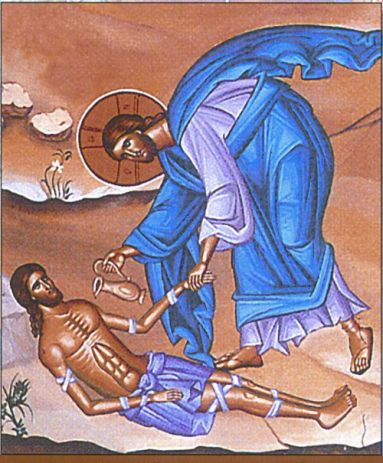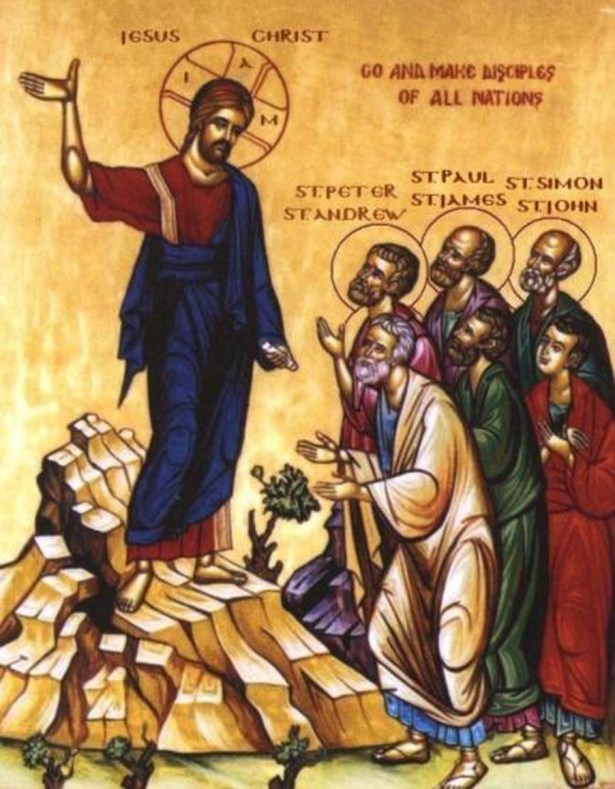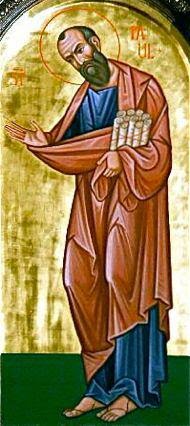
Seventeenth Sunday in Ordinary Time – C


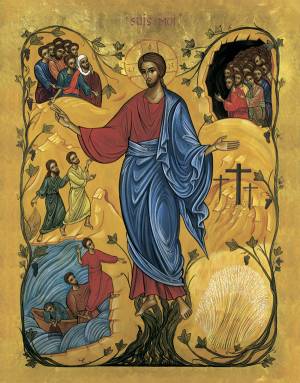
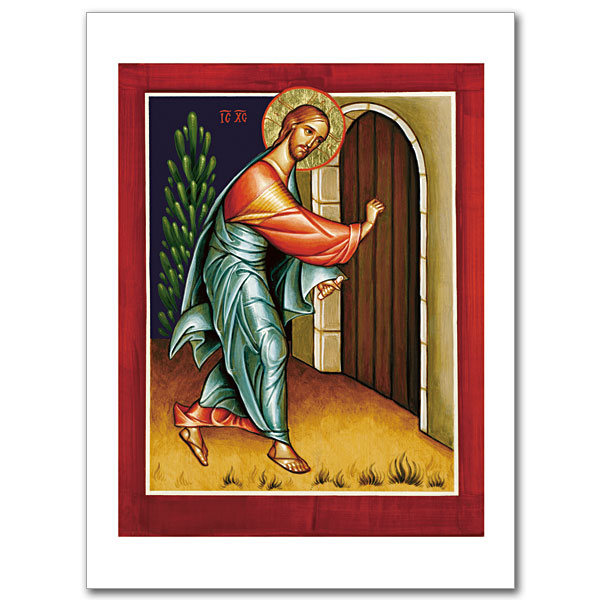
CA5078And I tell you, ask and you will receive; seek and you will find; knock and the door will be opened to you.”

OPENING PRAYER

Prayer for our Nation (U.S.A)

God our Father,

Giver of life,

we entrust the United States of America to Your loving care.

You are the rock on which this nation was founded.

You alone are the true source of our cherished rights to life,

liberty and the pursuit of happiness.

Reclaim this land for Your glory and dwell among Your people.

Send Your Spirit to touch the hearts of our nation´s leaders.

Open their minds to the great worth of human life and the responsibilities

that accompany human freedom.

Remind Your people that true happiness is rooted in

Seeking and doing Your will.

Through the intercession of Mary Immaculate,

Patroness of our land, grant us the courage to reject the “culture of death.”

Lead us into a new millennium of life.

We ask this through Christ Our Lord.

Amen.

http://www.catholic.org/prayers/prayer.php?p=800


COLLECT

O God, protector of those who hope in you,

without whom nothing has firm foundation

nothing is holy,

bestow in abundance your mercy upon us

and grant that, with you as our ruler and guide,

we may use the good things that pass

in such a way as to hold fast even now

to those that ever endure.

Through our Lord Jesus Christ, your Son,

who lives and reigns with you in the unity

of the Holy Spirit,

one God, for ever and ever.


READING I87ce6445bd1efeb4d18020cae2dd708a
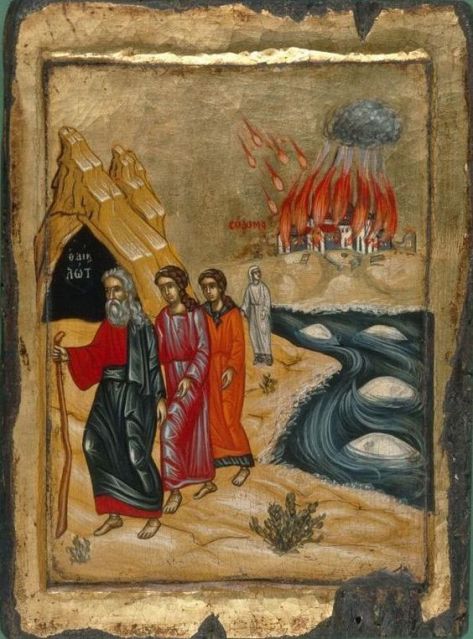
Reading 1 Gn 18:20-32

In those days, the LORD said: “The outcry against Sodom and Gomorrah is so great,

and their sin so grave,

that I must go down and see whether or not their actions

fully correspond to the cry against them that comes to me.

I mean to find out.”

While Abraham’s visitors walked on farther toward Sodom,

the LORD remained standing before Abraham.

Then Abraham drew nearer and said:

Will you sweep away the innocent with the guilty?

Suppose there were fifty innocent people in the city;

would you wipe out the place, rather than spare it

for the sake of the fifty innocent people within it?

Far be it from you to do such a thing,

to make the innocent die with the guilty

so that the innocent and the guilty would be treated alike!

Should not the judge of all the world act with justice?”

The LORD replied,

If I find fifty innocent people in the city of Sodom,

I will spare the whole place for their sake.”

Abraham spoke up again:

See how I am presuming to speak to my Lord,

though I am but dust and ashes!

What if there are five less than fifty innocent people?

Will you destroy the whole city because of those five?”

He answered, “I will not destroy it, if I find forty-five there.”

But Abraham persisted, saying “What if only forty are found there?”

He replied, “I will forbear doing it for the sake of the forty.”

Then Abraham said, “Let not my Lord grow impatient if I go on.

What if only thirty are found there?”

He replied, “I will forbear doing it if I can find but thirty there.”

Still Abraham went on,

Since I have thus dared to speak to my Lord,

what if there are no more than twenty?”

The LORD answered, “I will not destroy it, for the sake of the twenty.”

But he still persisted:

Please, let not my Lord grow angry if I speak up this last time.

What if there are at least ten there?”

He replied, “For the sake of those ten, I will not destroy it.”


CATECHISM OF THE CATHOLIC CHURCH (CCC)

CCC 343 Man is the summit of the Creator’s work, as the inspired account expresses by clearly distinguishing the creation of man from that of the other creatures.1

CCC 1867 The catechetical tradition also recalls that there are “sins that cry to heaven”: the blood of Abel,2 the sin of the Sodomites,3 the cry of the people oppressed in Egypt,4 the cry of the foreigner, the widow, and the orphan,5 injustice to the wage earner.6

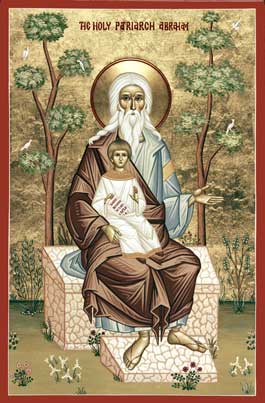
CCC 2571 Because Abraham believed in God and walked in his presence and in covenant with him,7 the patriarch is ready to welcome a mysterious Guest into his tent. Abraham’s remarkable hospitality at Mamre foreshadows the annunciation of the true Son of the promise.8 After that, once God had confided his plan, Abraham’s heart is attuned to his Lord’s compassion for men and he dares to intercede for them with bold confidence.9

1 Cf. Gen 1-26.

2 Cf. Gen 4:10.

3 Cf. Gen 18:20; 19:13.

4 Cf. Ex 3:7-10.

5 Cf. Ex 20:20-22.

6 Cf. Deut 24:14-15; Jas 5:4.

7 Cf. Gen 15:6; 17:1 f.

8 Cf. Gen 18:1-15; Lk 1:26-38.

9 Cf. Gen 18:16-33.


APPLICATION

The first lesson we can learn from this episode is the power of intercessory prayer. We can pray for others and God will hear and answer our prayers. Abraham has left us a wonderful example of love of neighbor. He did not wish to see the people of those cities suddenly sent to their death. He pleaded for them and he used God’s own justice as a lever to move him from his resolve. How could the just God condemn the innocent with the wicked? If only ten just men had been found in them, the cities and their inhabitants would have been saved, saved by Abraham’s intercession.

How often do we pray for our neighbors when they are in temporal or spiritual danger or difficulties? Most of us can answer truthfully and admit that we do not do so half as often as we should. We entreat God when we ourselves are in need, but God will be much more ready to answer us in our need if we have proved true brothers to our fellowman by pleading for them when they need the divine assistance.

We can learn another valuable lesson, also, from this story. The presence of a group of pious people in our midst, people who are close to God, is a guarantee that we shall be protected from the divine vengeance which we may have thoroughly deserved. There are Catholics who question the purpose of enclosed communities of women or men who devote all their time to prayer and the liturgy. Why don’t they teach or nurse, or earn their bread in some way? Why should the people have to support them? These were the very sentiments expressed by the Reformers when they knocked down the convents in England and banished the sisters. Some Catholics are still of this opinion today.

They forget, however, that the prayers of these devout lovers of God have often saved them from the temporal punishments that they deserve. The contemplatives are the spiritual lightning-conductors in our parishes and towns. They sacrifice their personal freedom and enclose themselves for life behind their convent walls in order to intercede for all sinners, for all of us.

Instead of criticizing them and questioning their sanity, we should thank God for them and pray that they will never be short of vocations–new members in their communities who will continue their good work. The parish or the town that has a community of enclosed religious has a divine blessing in its midst. It has a power-house of prayer which will spread the light of God’s grace amongst the citizens of that town and parish, and will turn away the just wrath of God from those who, by their sins, deserve it. “For the sake of those ten innocent people,” said the Lord to Abraham, “I will not destroy the cities.”

Imitate Abraham’s true, unselfish love of neighbor by always remembering your needy neighbor in your prayers. Help to protect your city and your fellow citizens, by a special prayer today for an increase in the number of just men living in it.


RESPONSORIAL PSALM

Ps 138:1-2, 2-3, 6-7, 7-8

Lord, on the day I called for help, you answered me.

I will give thanks to you, O LORD, with all my heart,

for you have heard the words of my mouth;

in the presence of the angels I will sing your praise;

I will worship at your holy temple

and give thanks to your name.

Lord, on the day I called for help, you answered me.

Because of your kindness and your truth;

for you have made great above all things

your name and your promise.

When I called you answered me;

you built up strength within me.

Lord, on the day I called for help, you answered me.

The LORD is exalted, yet the lowly he sees,

and the proud he knows from afar.

Though I walk amid distress, you preserve me;

against the anger of my enemies you raise your hand.

Lord, on the day I called for help, you answered me.

Your right hand saves me.

The LORD will complete what he has done for me;

your kindness, O LORD, endures forever;

forsake not the work of your hands.

Lord, on the day I called for help, you answered me.


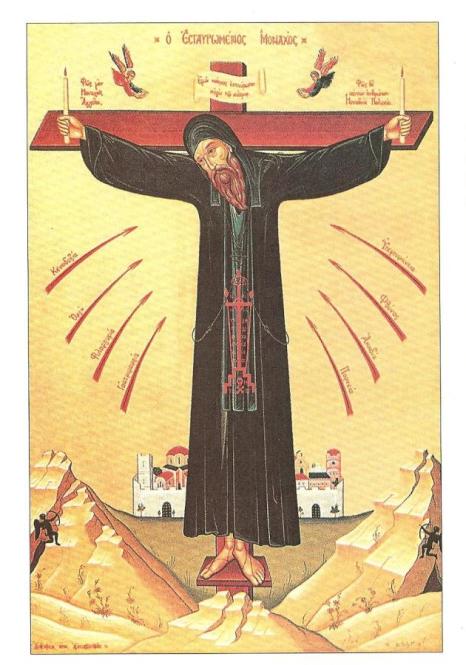
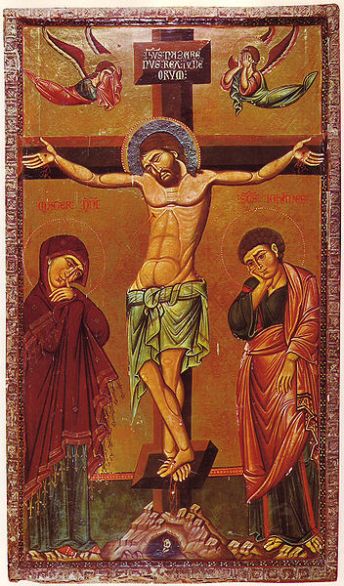
READING IICrucifixion
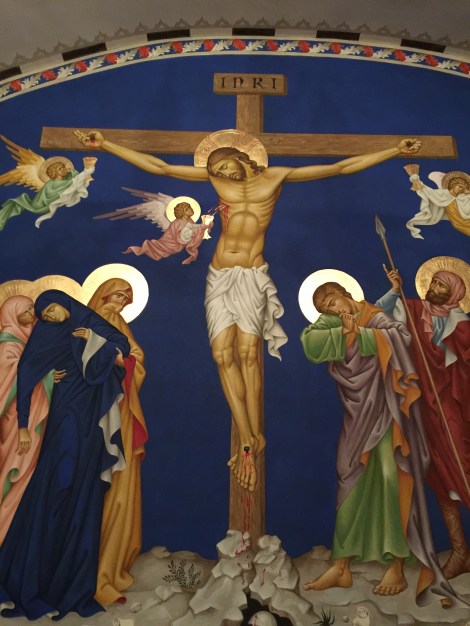
Col 2:12-14

Brothers and sisters:

You were buried with him in baptism,

in which you were also raised with him

through faith in the power of God,

who raised him from the dead.

And even when you were dead

in transgressions and the uncircumcision of your flesh,

he brought you to life along with him,

having forgiven us all our transgressions;

obliterating the bond against us, with its legal claims,

which was opposed to us,

he also removed it from our midst, nailing it to the cross.


CATECHISM OF THE CATHOLIC CHURCH (CCC)

CCC 527 Jesus’ circumcision, on the eighth day after his birth,1 is the sign of his incorporation into Abraham’s descendants, into the people of the covenant. It is the sign of his submission to the Law2 and his deputation to Israel’s worship, in which he will participate throughout his life. This sign prefigures that “circumcision of Christ” which is Baptism.3

CCC 628 Baptism, the original and full sign of which is immersion, efficaciously signifies the descent into the tomb by the Christian who dies to sin with Christ in order to live a new life. “We were buried therefore with him by baptism into death, so that as Christ was raised from the dead by the glory of the Father, we too might walk in newness of life.”4

CCC 1002 Christ will raise us up “on the last day”; but it is also true that, in a certain way, we have already risen with Christ. For, by virtue of the Holy Spirit, Christian life is already now on earth a participation in the death and Resurrection of Christ:

And you were buried with him in Baptism, in which you were also raised with him through faith in the working of God, who raised him from the dead. .. If then you have been raised with Christ, seek the things that are above, where Christ is, seated at the right hand of God.5

CCC 1214 This sacrament is called Baptism, after the central rite by which it is carried out: to baptize (Greek baptizein) means to “plunge” or “immerse”; the “plunge” into the water symbolizes the catechumen’s burial into Christ’s death, from which he rises up by resurrection with him, as “a new creature.”6

CCC 1227 According to the Apostle Paul, the believer enters through Baptism into communion with Christ’s death, is buried with him, and rises with him:

Do you not know that all of us who have been baptized into Christ Jesus were baptized into his death? We were buried therefore with him by baptism into death, so that as Christ was raised from the dead by the glory of the Father, we too might walk in newness of life.7

The baptized have “put on Christ.”8 Through the Holy Spirit, Baptism is a bath that purifies, justifies, and sanctifies.9

CCC 1694 Incorporated into Christ by Baptism, Christians are “dead to sin and alive to God in Christ Jesus” and so participate in the life of the Risen Lord.10 Following Christ and united with him,11 Christians can strive to be “imitators of God as beloved children, and walk in love”12 by conforming their thoughts, words and actions to the “mind. .. which is yours in Christ Jesus,”13 and by following his example.14

1 Cf. Lk 2:21.

2 Cf. Gal 4:4.

3 Cf. Col 2:11-13.

4 Rom 6:4; cf. Col 2:12; Eph 5:26.

5 Col 2:12; 3:1.

6 2 Cor 5:17; Gal 6:15; Cf. Rom 6:34; Col 2:12.

7 Rom 6:3-4; cf. Col 2:12.

8 Gal 3:27.

9 CE 1 Cor 6:11; 12:13.

10 Rom 6:11 and cf. 6:5; cf. Col 2:12.

11 Cf. Jn 15:5.

12 Eph 5:1-2.

13 Phil 2:5.

14 Cf. Jn 13:12-16.


APPLICATION

How can we ever thank God for all he has done for us! Eternity itself will not be long enough for us to sing him our full hymn of gratitude. He created us and gave us wonderful gifts. We abused his gifts, and went so far as to use the very gifts he gave us to insult him. He had planned to make us heirs to heaven, but we were more interested in this fleeting world. We lost interest in his plans for our good. Nevertheless, he did not lose interest in us. He sent his divine Son on earth to take our human nature and thus gather the whole human race into himself, thereby making us sons of his heavenly Father.

If the Incarnation had not taken place we could never reach heaven. Mere man could never of himself become a citizen of that kingdom to which his nature gave him no claim. An alien, coming to live in a country not his by birth, needs a special act, a gratuitous act on the part of that country, to become its citizen. Similarly man, a native of earth, needed a special gratuitous act on the part of God to make him a citizen of heaven.

This is what the Incarnation did for us. The Son of God deigned to share our humanity with us. We are thus enabled to share his divinity with him. We have been given the citizenship of heaven. The conferring of that citizenship on us takes place in baptism as arranged by Christ. In baptism we die with Christ. That means that we cast off the man of flesh, the mere mortal man of this earth, and rise from the baptismal waters, clothed with divinity, because Christ has made us one with him, who is God and Man.

Of course, we are not yet in heaven. But we have a heavenly passport: we have the right to get there, and what is more we have been given in abundance the means of getting there. Christ saw to that. He knew our weaknesses. He provided us with his Church to which he gave and gives, his sacraments. He also gives, through the Holy Spirit, the divine assistance which will ensure for us a safe journey.

How truly fortunate we followers of Christ are! We have a passport, a ticket from him. We have sufficient means to pay for all our needs on the journey homewards. Let us thank God from our hearts this morning, for his infinite kindness to us. Let us turn our thoughts for a moment to our unfortunate fellowman, who are also brothers of Christ and heirs to heaven. They are also brothers of ours. They either do not know God and all that he has done for them, or, worse still, they know him but despise him and his gifts. Thus, they are seriously risking their own future happiness. God wants them all in heaven. Christ died for all. The heavenly citizenship is there for all, though it cannot be forced on any man.

We can do much to help these brothers of ours. To do so will be the best way we can show our appreciation of God’s goodness to us, the best way to prove our gratitude. Prayer is a way of helping that is open to all, young and old, rich and poor. Every day of our lives, we should beg God to put a knowledge of his infinite love into the hearts of those who do not have it. When we need some temporal favor for ourselves, the best way we can pray for it is to forget our little needs and to pray instead for this most essential need of the neighbor who does not know God, and is jeopardizing his future–his eternal future. God will, in his own way and his own time, answer that prayer of true charity. Our temporal needs will not be forgotten either.

Most of us can help by cooperating financially and otherwise with those who are giving their lives to spreading the knowledge of God and his goodness among the pagans, old and new. We have many of the latter right in our midst. Each one of us can find a way to get this knowledge to those nearest him. For those living in their own pagan countries, we can, besides praying, help to support the generous men and women who have gone to these lands and are doing God’s work, and our work there for us.

Finally, if each one of us would give the good example of a Christian life, Christ would soon have more followers. We would show that our Christian life is lived by one who appreciates it; by one who realizes that he is on the way to heaven and that he will not allow earthly attractions or earthly trials to impede his journey.

All I can do is one man’s part. However, I am ready to do that much. I hope that many others will follow suit. God grant that it may be so.


prayer

GOSPEL

Lk 11:1-13

Jesus was praying in a certain place, and when he had finished,

one of his disciples said to him,

Lord, teach us to pray just as John taught his disciples.”

He said to them, “When you pray, say:

Father, hallowed be your name,

your kingdom come.

Give us each day our daily bread

and forgive us our sins

for we ourselves forgive everyone in debt to us,

and do not subject us to the final test.”

And he said to them, “Suppose one of you has a friend

to whom he goes at midnight and says,

Friend, lend me three loaves of bread,

for a friend of mine has arrived at my house from a journey

and I have nothing to offer him,’

and he says in reply from within,

Do not bother me; the door has already been locked

and my children and I are already in bed.

I cannot get up to give you anything.’

I tell you,

if he does not get up to give the visitor the loaves

because of their friendship,

he will get up to give him whatever he needs

because of his persistence.

And I tell you, ask and you will receive;

seek and you will find;

knock and the door will be opened to you.

For everyone who asks, receives;

and the one who seeks, finds;

and to the one who knocks, the door will be opened.

What father among you would hand his son a snake

when he asks for a fish?

Or hand him a scorpion when he asks for an egg?

If you then, who are wicked,

know how to give good gifts to your children,

how much more will the Father in heaven

give the Holy Spirit to those who ask him?”

http://www.usccb.org/bible/readings/072416.cfm


CATECHISM OF THE CATHOLIC CHURCH (CCC)

CCC 385 God is infinitely good and all his works are good. Yet no one can escape the experience of suffering or the evils in nature which seem to be linked to the limitations proper to creatures: and above all to the question of moral evil. Where does evil come from? “I sought whence evil comes and there was no solution”, said St. Augustine,1 and his own painful quest would only be resolved by his conversion to the living God. For “the mystery of lawlessness” is clarified only in the light of the “mystery of our religion”.2 The revelation of divine love in Christ manifested at the same time the extent of evil and the superabundance of grace.3 We must therefore approach the question of the origin of evil by fixing the eyes of our faith on him who alone is its conqueror.4

CCC 443 Peter could recognize the transcendent character of the Messiah’s divine sonship because Jesus had clearly allowed it to be so understood. To his accusers’ question before the Sanhedrin, “Are you the Son of God, then?” Jesus answered, “You say that I am.”5 Well before this, Jesus referred to himself as “the Son” who knows the Father, as distinct from the “servants” God had earlier sent to his people; he is superior even to the angels.6 He distinguished his sonship from that of his disciples by never saying “our Father”, except to command them: “You, then, pray like this: ‘Our Father’”, and he emphasized this distinction, saying “my Father and your Father”.7

CCC 520 In all of his life Jesus presents himself as our model. He is “the perfect man”,8 who invites us to become his disciples and follow him. In humbling himself, he has given us an example to imitate, through his prayer he draws us to pray, and by his poverty he calls us to accept freely the privation and persecutions that may come our way.9

CCC 700 The finger. “It is by the finger of God that [Jesus] cast out demons.”10 If God’s law was written on tablets of stone “by the finger of God,” then the “letter from Christ” entrusted to the care of the apostles, is written “with the Spirit of the living God, not on tablets of stone, but on tablets of human hearts.”11 The hymn Veni Creator Spiritus invokes the Holy Spirit as the “finger of the Father’s right hand.”12

CCC 728 Jesus does not reveal the Holy Spirit fully, until he himself has been glorified through his Death and Resurrection. Nevertheless, little by little he alludes to him even in his teaching of the multitudes, as when he reveals that his own flesh will be food for the life of the world.13 He also alludes to the Spirit in speaking to Nicodemus,14 to the Samaritan woman,15 and to those who take part in the feast of Tabernacles.16 To his disciples he speaks openly of the Spirit in connection with prayer17 and with the witness they will have to bear.18

CCC 1425 “You were washed, you were sanctified, you were justified in the name of the Lord Jesus Christ and in the Spirit of our God.”19 One must appreciate the magnitude of the gift God has given us in the sacraments of Christian initiation in order to grasp the degree to which sin is excluded for him who has “put on Christ.”20 But the apostle John also says: “If we say we have no sin, we deceive ourselves, and the truth is not in us.”21 And the Lord himself taught us to pray: “Forgive us our trespasses,”22 linking our forgiveness of one another’s offenses to the forgiveness of our sins that God will grant us.

CCC 1969 The New Law practices the acts of religion: almsgiving, prayer and fasting, directing them to the “Father who sees in secret,” in contrast with the desire to “be seen by men.”23 Its prayer is the Our Father.24

CCC 2601 “He was praying in a certain place and when he had ceased, one of his disciples said to him, ‘Lord, teach us to pray.”’25 In seeing the Master at prayer the disciple of Christ also wants to pray. By contemplating and hearing the Son, the master of prayer, the children learn to pray to the Father.

CCC 2613 Three principal parables on prayer are transmitted to us by St. Luke:

The first, “the importunate friend,”26 invites us to urgent prayer: “Knock, and it will be opened to you.” To the one who prays like this, the heavenly Father will “give whatever he needs,” and above all the Holy Spirit who contains all gifts.

The second, “the importunate widow,”27 is centered on one of the qualities of prayer: it is necessary to pray always without ceasing and with the patience of faith. “And yet, when the Son of Man comes, will he find faith on earth?”

The third parable, “the Pharisee and the tax collector,”28 concerns the humility of the heart that prays. “God, be merciful to me a sinner!” The Church continues to make this prayer its own: Kyrie eleison!

CCC 2632 Christian petition is centered on the desire and search for the Kingdom to come, in keeping with the teaching of Christ.29 There is a hierarchy in these petitions: we pray first for the Kingdom, then for what is necessary to welcome it and cooperate with its coming. This collaboration with the mission of Christ and the Holy Spirit, which is now that of the Church, is the object of the prayer of the apostolic community.30 It is the prayer of Paul, the apostle par excellence, which reveals to us how the divine solicitude for all the churches ought to inspire Christian prayer.31 By prayer every baptized person works for the coming of the Kingdom.

CCC 2671 The traditional form of petition to the Holy Spirit is to invoke the Father through Christ our Lord to give us the Consoler Spirit.32 Jesus insists on this petition to be made in his name at the very moment when he promises the gift of the Spirit of Truth.33 But the simplest and most direct prayer is also traditional, “Come, Holy Spirit,” and every liturgical tradition has developed it in antiphons and hymns.

Come, Holy Spirit, fill the hearts of your faithful and enkindle in them the fire of your love.34

Heavenly King, Consoler Spirit, Spirit of Truth, present everywhere and filling all things, treasure of all good and source of all life, come dwell in us, cleanse and save us, you who are All Good.35

CCC 2759 Jesus “was praying at a certain place, and when he ceased, one of his disciples said to him, ‘Lord, teach us to pray, as John taught his disciples.’”36 In response to this request the Lord entrusts to his disciples and to his Church the fundamental Christian prayer. St. Luke presents a brief text of five petitions,37 while St. Matthew gives a more developed version of seven petitions.38 The liturgical tradition of the Church has retained St. Matthew’s text:

Our Father who art in heaven,

hallowed be thy name.

Thy kingdom come.

Thy will be done on earth, as it is in heaven.

Give us this day our daily bread,

and forgive us our trespasses, as we forgive those who trespass against us,

and lead us not into temptation,

but deliver us from evil.

1 St. Augustine, Conf. 7,7,11: PL 32,739.

2 2 Thess 2:7; 1 Tim 3:16.

3 Cf. Rom 5:20.

4 Cf. Lk 11:21-22; Jn 16:11; 1 Jn 3:8.

5 Lk 22:70; cf. Mt 26:64; Mk 14:61-62.

6 Cf. Mt 11:27; 21:34-38; 24:36.

7 Mt 5:48; 6:8-9; 7:21; Lk 11:13; Jn 20:17.

8 GS 38; cf. Rom 1 5:5; Phil 2:5.

9 Cf. Jn 13:15; Lk 11:1; Mt 5:11-12.

10 Lk 11:20.

11 Ex 31:18; 2 Cor 3:3.

12 LH, Easter Season after Ascension, Hymn at Vespers: digitus paternae dexterae.

13 Cf. Jn 6:27, 51, 62-63.

14 Cf. Jn 3:5-8.

15 Cf. Jn 4:10, 14, 23-24.

16 Cf. Jn 7:37-39.

17 Cf. Lk 11:13.

18 Cf. Mt 10:19-20.

19 1 Cor 6:11.

20 Gal 3:27.

21 1 Jn 1:8.

22 Cf. Lk 11:4; Mt 6:12.

23 Cf. Mt 6:1-6; 16-18.

24 Cf. Mt 6:9-13; Lk 11:2-4.

25 Lk 11:1.

26 Cf. Lk 11:5-13.

27 Cf. Lk 18:1-8.

28 Cf. Lk 18:9-14.

29 Cf. Mt 6:10, 33; Lk 11:2,13.

30 Cf. Acts 6:6; 13:3.

31 Cf. Rom 10:1; Eph 1:16-23; Phil 1911; Col 1:3-6; 4:3-4, 12.

32 Cf. Lk 11:13.

33 Cf. Jn 14:17; 15:26; 16:13.

34 Roman Missal, Pentecost Sequence.

35 Byzantine Liturgy, Pentecost Vespers, Troparion.

36 Lk 11:1.

37 Cf. Lk 11:2-4.

38 Cf. Mt 6:9-13.


APPLICATION

The disciples asked to be taught how to pray to God. Jesus told them how. He gave them a formula which contains the essence of all prayer. God is addressed as our Father. He really is, since he made his Son our brother. We praise and honor him and wish that all will honor him. Then we ask for our daily, temporal needs, and especially for our spiritual needs. We ask forgiveness of all our offenses, while we likewise promise to forgive our brothers if they offend us.

Jesus then went on to stress the necessity of perseverance in our prayers. We must honor God daily and pray that all will honor him. We must also keep on asking for our temporal and spiritual needs. This is the meaning of the parable. The Father may delay the granting of our request because he wants us to continue to trust in him. This very perseverance in our prayer is bringing us closer and making us dearer to God. This is a greater blessing for us than the favor for which we were asking.

As regards requests for help in our spiritual life, we can rest assured that, if God delays his answer, the reason is that he has some more important spiritual gift for us. Our perseverance in prayer will bring it to us. Many great saints often wondered why God did not answer their fervent prayers and remove some temptation, or some lack of virtue which they felt was impeding their progress. They found out later that it was because God was slow in granting their requests that they actually progressed in sanctity.

As far as temporal favors are concerned, we do not always know what is best for us. God does. Of this we can be sure: if our requests for temporal favors are sincere and persevering, we are sure to get an answer. Christ himself says so. The answer, however, may not always be what we asked. If not, it will be something better, something we do not even know we need. God knows it and gives it to us, instead of the less essential gift we were asking for.

Looking back over our lives, many of us can see now how fortunate we were that some of the favors we sought so fervently from God in our youth were not given us. He gave us instead some gift which we had not even thought of, but which changed the course of our lives and saved us from the tribulations, spiritual and temporal, which the gift we were so anxiously seeking would have caused us, if God had granted it. There are thousands of men and women in heaven today who would not be there had God granted them the temporal favors they thought they needed so badly. One of our joys in heaven, among the lesser ones perhaps, will be in discovering how cleverly our heavenly Father helped us to get there by refusing certain of our requests, and by giving us others for which we had not asked.

Not only, therefore, may we, but we must, ask our heavenly Father for our spiritual and temporal needs. This we are told to do by Christ. We must continue to ask. He has put us in this world in order to earn heaven. Our life here is of its very nature a journey. All journeys entail some, and often many, hardships. For one on his way home, the journey’s hardships are bearable. For some they may at times border on the unbearable, but such people can turn to their heavenly Father. He has a personal knowledge of, and interest in, each individual’s progress. Ask him to remove the cross, for the time being at least. Loving Father that he is, he will do just that, or he will strengthen the shoulder that has to bear it.

Remember our Lord’s advice to us: “Ask and you shall receive, seek and you will find, knock and it shall be opened to you.

Applications written by Fr. Kevin O’Sullivan O.F.M. and used with permission from Franciscan Press


BENEDICTUS

Our Father

In teaching his disciples to pray, Jesus told them to say “Our Father.” (Mt. 6: 9). No one but he can say “my Father.” Everyone else is only entitled , as a member of the community, to use that “we” which Jesus made possible for them; i.e., they have the right to address God as Father because they are all created by God and for one another. To recognize and accept God’s Fatherhood always means accepting that we are set in relation to one another: man is entitled to call God “Father” to the extent that he participates in that “we” – which is the form under which God’s love seeks for him… No one can build a bridge to the Infinite by his won strength. No one’s voice is loud enough to summon the Infinite. No intelligence can adequately and securely conceive who God is, whether he hears us and how we should act toward him… Even the awareness that religion must rest on a higher authority than that of one’s own reason, and that it needs a community as a “carrier,” is part of mankind’s basic knowledge, though found in manifold forms and even distortions… Jesus’ task was to renew the People of God by deepening its relationship to God and by opening it up for all mankind… He achieved this by transforming his death into an act of prayer, an act of love, and thus by making himself communicable. Jesus has made it possible for people to participate in his most intimate and personal act of being, i.e., his dialogue with the Father. That is the deepest layer of meaning of that process in which he taught his disciples to say “Our Father.”

Pope Emeritus Benedict XVI


CLOSING PRAYER

The Lord’s Prayer

by Sr. Rosemary

Our Father

Has there ever been a more powerful or more important prayer than the Our Father? The Catechism of the Catholic Church teaches that the Our Father “is truly the summary of the whole Gospel”. (#2761) Jesus isn’t just suggesting a prayer for us to say; what he said is: “This is how you are to pray.” 

Since the time he taught us the Our Father himself, it has been recited by every Christian church, in every service from baptism to burial. It’s also at the heart of our private devotions. People who might otherwise differ on points of doctrine are united by their common use of this beautiful prayer. How easy, though, it can be for us to say it routinely and without much thought.

With that in mind, let’s reflect together in a prayerful way on each powerful phrase of the Our Father.

I cannot say “our” if I live only for myself.

I cannot say “Father” if I do not approach God like a child.

I cannot say “who art in heaven” if I am not laying up some treasure there right now.

I cannot say “hallowed be thy name” if I am careless with that name.

I cannot say “Thy kingdom come” if I am not working to bring it about in the here and now.

I cannot say “thy will be done” if I am resentful of that will for me at this moment.

I cannot say “on earth as it is in heaven” if I don’t look on heaven as my future home.

I cannot say “give us our daily our daily bread” if I am overanxious about tomorrow.

I cannot say “forgive us our trespasses as we forgive those who trespass against us” if I am waiting to settle a score with someone.

I cannot say ‘lead us not into temptation’ if I deliberately put myself in a place to be tempted.

I cannot say ‘deliver us from evil’ if I am not prepared to pray as though everything depends on God and work as though everything depends on me.

And finally, I cannot say “amen’ with my lips if my heart does not believe the words Our Lord himself has given us to pray.

© St Margaret Mary Church 2016.
Posted in agnostic, athiest, Benedictine oblate, Bible Study, Catholic, Christian, faith, Holy Spirit, Liturgy, mercy, Oblate, prayer, The Word of God, Uncategorized | Leave a comment

Sixteenth Sunday in Ordinary Time – C

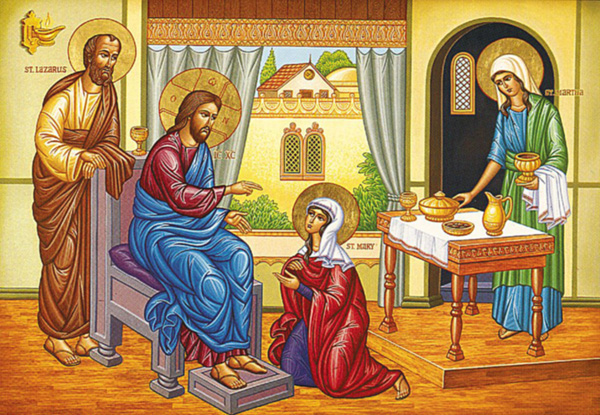
MaryMartha Email

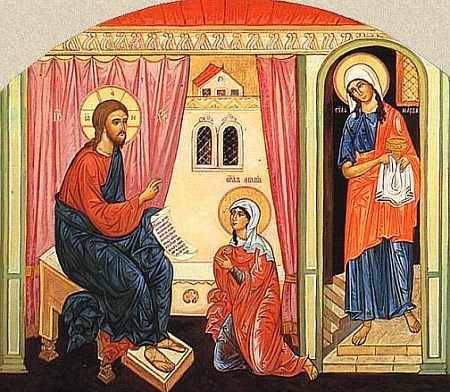
“There is need of only one thing.  Mary has chosen the better part and it will not be taken from her.”


OPENING PRAYER

Prayer for Grace and Guidance

Oh my God, You know my weakness and failings, and that without Your help I can accomplish nothing for the good of souls, my own and others’. Grant me, therefore, the help of Your grace. Grant it according to my particular needs this day. Enable me to see the task You will set before me in the daily routine of my life, and help me work hard at my appointed tasks. Teach me to bear patiently all the trials of suffering or failure that may come to me today. Amen.

http://www.ourcatholicprayers.com/prayers-for-grace-and-guidance.html

COLLECT

Show favor, O Lord, to your servants

and mercifully increase the gifts of your grace,

that, made fervent in hope, faith and charity,

they may be ever watchful in keeping your commands.

Through our Lord Jesus Christ, your Son,

who lives and reigns with you in the unity

of the Holy Spirit,

one God, for ever and ever.

READING I01-anonymous-the-hospitality-of-abraham-duomo-di-monreale-monreale-sicily-itGn 18:1-10a

The LORD appeared to Abraham by the terebinth of Mamre, as he sat in the entrance of his tent, while the day was growing hot.

Looking up, Abraham saw three men standing nearby.

When he saw them, he ran from the entrance of the tent to greet them;

and bowing to the ground, he said:

Sir, if I may ask you this favor,

please do not go on past your servant.

Let some water be brought, that you may bathe your feet,

and then rest yourselves under the tree.

Now that you have come this close to your servant,

let me bring you a little food, that you may refresh yourselves;

and afterward you may go on your way.”

The men replied, “Very well, do as you have said.”

Abraham hastened into the tent and told Sarah,

Quick, three measures of fine flour! Knead it and make rolls.”

He ran to the herd, picked out a tender, choice steer,

and gave it to a servant, who quickly prepared it.

Then Abraham got some curds and milk,

as well as the steer that had been prepared,

and set these before the three men;

and he waited on them under the tree while they ate.

They asked Abraham, “Where is your wife Sarah?”

He replied, “There in the tent.”

One of them said, “I will surely return to you about this time next year,

and Sarah will then have a son.”


CATECHISM OF THE CATHOLIC CHURCH (CCC)

CCC 343 Man is the summit of the Creator’s work, as the inspired account expresses by clearly distinguishing the creation of man from that of the other creatures.1

CCC 489 Throughout the Old Covenant the mission of many holy women prepared for that of Mary. At the very beginning there was Eve; despite her disobedience, she receives the promise of a posterity that will be victorious over the evil one, as well as the promise that she will be the mother of all the living.2 By virtue of this promise, Sarah conceives a son in spite of her old age.3 Against all human expectation God chooses those who were considered powerless and weak to show forth his faithfulness to his promises: Hannah, the mother of Samuel; Deborah; Ruth; Judith and Esther; and many other women.4 Mary “stands out among the poor and humble of the Lord, who confidently hope for and receive salvation from him. After a long period of waiting the times are fulfilled in her, the exalted Daughter of Sion, and the new plan of salvation is established.”5

CCC 706 Against all human hope, God promises descendants to Abraham, as the fruit of faith and of the power of the Holy Spirit.6 In Abraham’s progeny all the nations of the earth will be blessed. This progeny will be Christ himself,7 in whom the outpouring of the Holy Spirit will “gather into one the children of God who are scattered abroad.”8 God commits himself by his own solemn oath to giving his beloved Son and “the promised Holy Spirit. .. [who is] the guarantee of our inheritance until we acquire possession of it.”9

CCC 2571 Because Abraham believed in God and walked in his presence and in covenant with him,10 the patriarch is ready to welcome a mysterious Guest into his tent. Abraham’s remarkable hospitality at Mamre foreshadows the annunciation of the true Son of the promise.11 After that, once God had confided his plan, Abraham’s heart is attuned to his Lord’s compassion for men and he dares to intercede for them with bold confidence.12

1 Cf. Gen 1-26.

2 Cf. Gen 3:15, 20.

3 Cf. Gen 18:10-14; 21:1-2.

4 Cf. I Cor 1:17; I Sam 1.

5 LG 55.

6 Cf. Gen 18:1-15; Lk 1:26-38. 54-55; Jn 1:12-13; Rom 4:16-21.

7 Cf. Gen 12:3; Gal 3:16.

8 Cf. In 11:52.

9 Eph 1:13-14; cf. Gen 22:17-19; Lk 1:73; Jn 3:16; Rom 8:32; Gal 3:14.

10 Cf. Gen 15:6; 17:1 f.

11 Cf. Gen 18:1-15; Lk 1:26-38.

12 Cf. Gen 18:16-33.


APPLICATION

This incident which happened to the Father and Founder of the Jewish race, the Chosen People, nearly four thousand years ago, would seem at first sight to have little if any interest for us Christians of the twentieth century. Yet it has. That is why it is read in our liturgy today. Whether things happened exactly as described, or whether the inspired writer later used his poetic imagination to drive home to his readers, and to all of us, some very important lessons, matters but little. The basic fact of the narrative is that Abraham, after years of faithful trust in God, was finally given a definite guarantee that God’s promise to him would be fulfilled within a year.

The fulfillment of that promise has more meaning and importance for us than it had even for Abraham. It was the beginning of God’s preparation for sending the Messiah, his divine Son in human nature, to raise us men above our natural capacities and make us heirs of an eternal life. We call Abraham “our father in faith” in the Mass and rightly so. We owe it, after God, to his faith and trust in God, that the way was prepared, according to God’s eternal plan, for the coming of Christ amongst us. This resulted in the supernatural change in man and in his relationship with God.

How slowly, how patiently, but how effectively and successfully, God works when dealing with weak, worldly and often stubborn man. The whole story of salvation is an example of divine, infinite patience and almost incredible tolerance in the face of human ingratitude, infidelity and, frequently, utter unworthiness. Yet, he carried out his plan and opened heaven for us unworthy and ungrateful men.

That was all before Christ came on earth. Has man been much more grateful, much more obedient, much more reverent towards God, even since he sent his Son to raise us up to the dignity of sonship with himself? There have been noble exceptions, thank God. Down through the two thousand years of Christianity, men and women have given their lives totally and exclusively to the task of thanking God for all he has done for mankind. But the vast majority of all generations have taken God’s gifts as they take the weather. They grumble when it rains. They are thankless when the sun shines.

Human nature has changed very little. Thanks be to God, he does not change either. He is still tolerant. He is still patient. He is still forgiving and more anxious to get us to heaven than even we ourselves are. We have much to learn from Abraham’s faith. When God seems to be slow in answering our urgent request, when he seems to forget the pressing spiritual needs we have put before him, when he seems to be kinder to his enemies than to us his children, it is well for us to think of Abraham’s years of patient trust and absolute confidence in God’s promise. God has his reasons which we cannot see or understand. Of this we can be certain though: he makes no mistakes. Our prayers and our requests are and will always be answered in God’s time and in God’s way. That means, at the right time and in the manner best for us. We are the very worst judges in our own cases. Leave it to the all-wise judge.

It is worth noting also in today’s lesson that Abraham was given his final, definite guarantee after he had proved himself a true, kind, generous neighbor to complete strangers. Perhaps if we all forget self a little more, and think, instead, of our needy neighbor, then God would come more quickly to our own aid. There is a strong stubborn and selfish strain in every man. Overcoming that selfishness is one of the principal obligations of a Christian. We have all failed miserably in this duty in the past. We have all failed often. But we must keep on trying. There are occasions every day for practicing brotherly love, which is the true mark of Christianity, not only on our doorsteps but within the walls of our own homes. These are the means God is sending us to help us to earn eternal life. Unless we use them we shall live and die as selfish, self-centered individuals. There is no place in heaven for the self-centered, selfish man.

Heaven is the home of the great and loving family, where each is for all and where all are for God.


RESPONSORIAL PSALM

Ps 15:2-3, 3-4, 5

He who does justice will live in the presence of the Lord.

One who walks blamelessly and does justice;

who thinks the truth in his heart

and slanders not with his tongue.

He who does justice will live in the presence of the Lord.

Who harms not his fellow man,

nor takes up a reproach against his neighbor;

by whom the reprobate is despised,

while he honors those who fear the LORD.

He who does justice will live in the presence of the Lord.

Who lends not his money at usury

and accepts no bribe against the innocent.

One who does these things

shall never be disturbed.

He who does justice will live in the presence of the Lord.


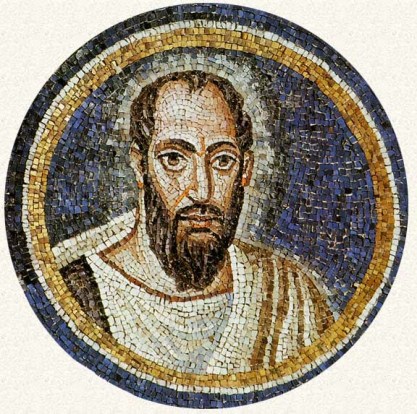
READING IIsaint_paul+(blue+older+icon)

Col 1:24-28

Brothers and sisters:

Now I rejoice in my sufferings for your sake,

and in my flesh I am filling up

what is lacking in the afflictions of Christ

on behalf of his body, which is the church,

of which I am a minister

in accordance with God’s stewardship given to me

to bring to completion for you the word of God,

the mystery hidden from ages and from generations past.

But now it has been manifested to his holy ones,

to whom God chose to make known the riches of the glory

of this mystery among the Gentiles;

it is Christ in you, the hope for glory.

It is he whom we proclaim,

admonishing everyone and teaching everyone with all wisdom,

that we may present everyone perfect in Christ.


CATECHISM OF THE CATHOLIC CHURCH (CCC)

CCC 307 To human beings God even gives the power of freely sharing in his providence by entrusting them with the responsibility of “subduing” the earth and having dominion over it.1 God thus enables men to be intelligent and free causes in order to complete the work of creation, to perfect its harmony for their own good and that of their neighbors. Though often unconscious collaborators with God’s will, they can also enter deliberately into the divine plan by their actions, their prayers and their sufferings.2 They then fully become “God’s fellow workers” and co-workers for his kingdom.3

CCC 618 The cross is the unique sacrifice of Christ, the “one mediator between God and men”.4 But because in his incarnate divine person he has in some way united himself to every man, “the possibility of being made partners, in a way known to God, in the paschal mystery” is offered to all men.5 He calls his disciples to “take up [their] cross and follow [him]”,6 for “Christ also suffered for [us], leaving [us] an example so that [we] should follow in his steps.”7 In fact Jesus desires to associate with his redeeming sacrifice those who were to be its first beneficiaries.8 This is achieved supremely in the case of his mother, who was associated more intimately than any other person in the mystery of his redemptive suffering.9

Apart from the cross there is no other ladder by which we may get to heaven.10

CCC 772 It is in the Church that Christ fulfills and reveals his own mystery as the purpose of God’s plan: “to unite all things in him.”11 St. Paul calls the nuptial union of Christ and the Church “a great mystery.” Because she is united to Christ as to her bridegroom, she becomes a mystery in her turn.12 Contemplating this mystery in her, Paul exclaims: “Christ in you, the hope of glory.”13

CCC 1499 “By the sacred anointing of the sick and the prayer of the priests the whole Church commends those who are ill to the suffering and glorified Lord, that he may raise them up and save them. And indeed she exhorts them to contribute to the good of the People of God by freely uniting themselves to the Passion and death of Christ.”14

CCC 1508 The Holy Spirit gives to some a special charism of healing15 so as to make manifest the power of the grace of the risen Lord. But even the most intense prayers do not always obtain the healing of all illnesses. Thus St. Paul must learn from the Lord that “my grace is sufficient for you, for my power is made perfect in weakness,” and that the sufferings to be endured can mean that “in my flesh I complete what is lacking in Christ’s afflictions for the sake of his Body, that is, the Church.”16

1 Cf. Gen 1:26-28.

2 Cf. Col 1:24.

3 1 Cor 3:9; 1 Thes 3:2; Col 4:11.

4 1 Tim 2:5.

5 GS 22 # 5; cf. # 2.

6 Mt 16:24.

7 I Pt 2:21.

8 Cf Mk 10:39; Jn 21:18-19; Col 1:24.

9 Cf. Lk 2:35.

10 St. Rose of Lima: cf. P. Hansen, Vita mirabilis (Louvain, 1668).

11 Eph 1:10.

12 Eph 5:32; 3:9-11; 5:25-27.

13 Col 1:27.

14 LG 11; cf. Jas 5:14-16; Rom 8:17; Col 1:24; 2 Tim 2:11-12; 1 Pet 4:13.

15 Cf. 1 Cor 12:9, 28, 30.

16 2 Cor 12:9; Col 1:24.

APPLICATION

What a startling and amazing piece of news the gospel must have been for the Gentiles! Up till then, they had heard of many gods–the products of men’s hands and imaginings. These gods were powerless to help man. They were stone deaf to his prayers. Men may have had a desire to live for ever, but what a hopeless piece of wishful thinking it must have appeared to them as they saw even the richest and most powerful among them invariably end in the grave.

Now they hear of one all-wise, all-powerful, all-loving God, who made all things and cares for all things. That all-loving, all-powerful God, who gave such marvelous gifts to man, has still greater plans for the masterpiece of his creation. He intends that man should share his own eternal happiness with him, so man’s desire to live forever turns out to be something that can and will be fulfilled. Man’s created, finite nature could of itself have no claim on, or reason to expect such an extraordinary privilege. But God planned from all eternity to unite the human with the divine. This he did through the Incarnation. The Son of God became man–humanity was united to the divinity in him. Human nature was thus enabled to share, in a finite way, in the divinity of God. Only God could do this, and only infinite love could move God to act in that way towards a mere creature.

Because God acted in such a manner, man’s lot on earth was radically changed. The troubles and hardships of this life mattered little now. The grave no longer meant the end of everything. It was, rather, the beginning of man’s true life. The moment of death, when they would meet Christ in his glorified human nature, united to his divinity, was something to be looked forward to, and not a thing to be dreaded. No wonder these first Gentile converts led exemplary Christian lives. They appreciated sincerely all that God and Christ had done for them. The best that they could do was not half enough to show their heartfelt gratitude.

“Familiarity breeds contempt,” the proverb says. After almost twenty centuries of Christianity, we have indeed grown familiar with it, and some, alas, have the rudeness to despise and ignore it. A true familiarity with God’s love for us, however, should rather increase our respect and our gratitude for the extraordinary gift of his divine love, Christ’s Incarnation–with all its consequences for us. It has made new creatures of us. It has raised us up above our ordinary selves. It has made us sons of God. We know there is an eternal life awaiting us when we finish with this earthly life. The marvelous powers of intellect and will which God gave us and which make us the highest of his creatures on earth, will have their full scope and satisfaction in that eternal life. All human problems will be solved, and all human pain and sorrow will end. There will be no more tears nor cause for tears. Heaven will be a place of unending happiness and peace.

The conditions we must fulfill in order to merit this happy, everlasting abode are not impossible. With the aid of God’s grace, which is there for the asking, they are not even difficult. The trials of life, which we all have to face and bear, are made so much easier for us. We can see in them God’s mercies, sent to cleanse us and prepare us for what lies beyond.

What most of us need is a great bit of that fervor which animated the early Christians. If we meditated and pondered more often on the gift of Christ and what the Christian faith means to us, we would live our daily Christian live a little more fervently. Our love for God and for neighbor (the proof of love for God) would grow stronger. Not only would we make sure of our future happiness, but our good example would spur the careless Christians, that we encounter, to love and esteem the blessings which Christ and Christianity have made available to them.

GOSPELbiserica-maria-magdalena-ierusalim-9

Lk 10:38-42

Jesus entered a village where a woman whose name was Martha welcomed him.

She had a sister named Mary

who sat beside the Lord at his feet listening to him speak.

Martha, burdened with much serving, came to him and said,

Lord, do you not care

that my sister has left me by myself to do the serving?

Tell her to help me.”

The Lord said to her in reply,

Martha, Martha, you are anxious and worried about many things.

There is need of only one thing.

Mary has chosen the better part

and it will not be taken from her.”

http://www.usccb.org/bible/readings/071716.cfm

APPLICATION

This story concerning Mary and Martha has often been used by spiritual writers to prove the superiority of the contemplative life over the active, pastoral form of life. That there is room and necessity for some members of Christ’s body, the Church, to dedicate their lives solely and entirely to meditation and prayer needs no proof. Each member of the body can and must help the other members. Most Christians cannot give much time to prayer, contemplation of God, and acts of thanksgiving for all he has done and is doing for them. There are members set apart for this very purpose. With their material needs provided for by the other members, they can act in the name of the whole body. They can represent all its members in their prayers and acts of thanksgiving. It is God himself who has thought of this form of religious life and who provides the vocations to keep it going.

The more correct lesson which the story of Martha and Mary seems to have is that we must not let the affairs of this life, innocent though they be in themselves, prevent us from attending primarily to the one affair that really matters, our future life. The emphasis, then, is on Martha rather than on Mary. In her over-excitement to prove herself a kind and true hostess, she bent all her energies to preparing an excellent meal. She had no time to listen to the Master’s words of divine wisdom. The work she was doing was excellent and faultless in itself. She need not and should not have excluded learning from Christ’s teaching while doing that good work.

Like Martha, many “good” Christians are “anxious and upset” about many earthly concerns. These concerns are necessary. This we know. A man must earn his daily bread; a wife must cook and wash and labor for her husband and family. This is what God himself expects us to do. What we need not and must not do, however, is to forget or exclude God in the process. Our daily tasks, whether in the office, workshop, or home, are prayers that are honoring God and thanking him for the many gifts of mind and body that he has given us, if we offer them to him and do them with this intention, they are indeed perfect prayers.

This is where so many fail. They spend days, months, maybe years, intent solely on their earthly tasks, without a thought for their future fate in the life that is to come. Yet a truly profitable Christian life is so easy for the vast majority of true Christians. A short morning prayer can be said while dressing. Thus we offer to God the day with all its joys and sorrows, all its trials and tests. It will mean that the day is registered to our account in the Book of Life. A few moments of thought for God and his goodness every now and then during the day will help immensely to keep our morning offering alive and active. A few moments on one’s knees beside the bed before retiring to rest, thanking God for the day he has given us, and asking pardon for the faults committed, is not too difficult for anyone.

A day such as this is a day spent in the service of God, such as will ensure a happy future when our last day comes. Mass and Holy Communion will round out each week for all practicing Christians. Besides, everyone ought to do some good reading. The knowledge gained from reading is a must today for anyone who really wants to help his fellowman many of whom have lost their bearings and need a helping hand to put them back on the right road.

Yes, while active in the necessary affairs of this world, providing for the earthly necessities of ourselves and our dependents, we can at the same time, if we are sensible and sincere Christians, be storing up merits for ourselves. These merits will give us a pleasant surprise when the day of reckoning comes.

Applications written by Fr. Kevin O’Sullivan O.F.M. and used with permission from Franciscan Press.

BENEDICTUS

Why Listening is a Part of Life

Man ought not to try to be self-sufficient, and he must have the humility to learn, to accept something – “incline thy head.” He must find the way to follow the call into listening. And listening means not just giving ear to whatever is going the rounds, but also listening to the depths, or to the heights, since what the Master says is basically the application of Holy Scripture, the application of this fundamental rule of human existence… We can see in the Rule of Saint Benedict how nothing that is truly human ever becomes old-fashioned. Anything that really comes from the depths of our being remains a counsel of life that is always relevant… Perhaps we are beginning to see again that God’s service, stepping outside the mentality of mere achievement, is what we need. That listening – for the service of God is to a great extent a matter of letting God in and of listening – must be a part of life. Just as discipline and right measure and order belong together, just like obedience and freedom, so, equally, tolerating each other in the spirit of faith is not merely a basic rule for any monastic community, but all these things are, when you come down to it, essential elements for building any and every society. This is a rule that springs from what is truly human, and it was able to formulate what was truly human because it looked out and listened beyond what is human and perceived the divine. Man becomes really human when he is touched by God.

Pope Emeritus Benedict XVI

CLOSING PRAYER

Act of Hope

For Your mercies’ sake, O Lord my God,

tell me what You are to me.

Say to my soul: “I am your salvation.”

So speak that I may hear, O Lord;

my heart is listening;

open it that it may hear You,

and say to my soul: “I am your salvation.”

After hearing this word,

may I come in haste to take hold of you.

Hide not Your face from me.

Let me see Your face even if I die,

lest I die with longing to see it.

The house of my soul is too small to receive You;

let it be enlarged by You.

It is all in ruins;

do You repair it.

There are thing in it,

I confess and I know,

that must offend Your sight.

But who shall cleanse it?

Or to what others besides You shall I cry out?

From my secret sins cleanse me, O Lord,

and from those of others spare your servant.

Amen.

Saint Augustine of Hippo

Posted in agnostic, athiest, Benedictine oblate, Bible Study, Catholic, Christian, faith, Holy Spirit, Liturgy, mercy, Oblate, prayer, The Word of God, Uncategorized | Tagged , , , , , , , , , , , , , , , , | Leave a comment

Fifteenth Sunday in Ordinary Time – C


Good-Samaritan-1

Teacher, what must I do to inherit eternal life?”

OPENING PRAYER

For Healing

Lord, You invite all who are burdened to come to You. Allow your healing hand to heal me. Touch my soul with Your compassion for others. Touch my heart with Your courage and infinite love for all. Touch my mind with Your wisdom, that my mouth may always proclaim Your praise. Teach me to reach out to You in my need, and help me to lead others to You by my example. Most loving Heart of Jesus, bring me health in body and spirit that I may serve You with all my strength. Touch gently this life which You have created, now and forever. Amen.

http://www.catholic.org/prayers/prayer.php?p=75

COLLECT

O God, who show the light of your truth

to those who go astray,

so that they may return to the right path,

give all who for the faith they profess

are accounted Christians

the grace to reject whatever is contrary to the name

of Christ

and to strive after all that does it honor.

Through our Lord Jesus Christ, your Son,

who lives and reigns with you in the unity

of the Holy Spirit,

one God, for ever and ever.

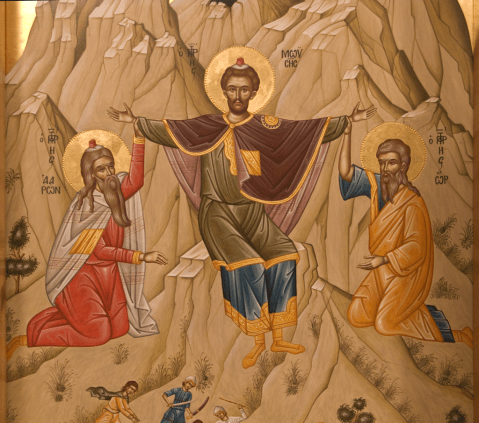
READING I46Rephidim

Dt 30:10-14

Moses said to the people:

If only you would heed the voice of the LORD, your God,

and keep his commandments and statutes

that are written in this book of the law,

when you return to the LORD, your God,

with all your heart and all your soul.

For this command that I enjoin on you today

is not too mysterious and remote for you.

It is not up in the sky, that you should say,

Who will go up in the sky to get it for us

and tell us of it, that we may carry it out?’

Nor is it across the sea, that you should say,

Who will cross the sea to get it for us

and tell us of it, that we may carry it out?’

No, it is something very near to you,

already in your mouths and in your hearts;

you have only to carry it out.”

CATECHISM OF THE CATHOLIC CHURCH (CCC)

CCC 708 This divine pedagogy appears especially in the gift of the Law.1 God gave the Law as a “pedagogue” to lead his people toward Christ.2 But the Law’s powerlessness to save man deprived of the divine “likeness,” along with the growing awareness of sin that it imparts,3 enkindles a desire for the Holy Spirit. The lamentations of the Psalms bear witness to this.

1 Cf. Ex 19-20; Deut 1-11; 29-30.

2 Gal 3:24.

3 Cf. Rom 3:20.

APPLICATION

The history of Israel has a lot in common with the life-history of many, if not most, individual Christians. The Israelites served God while in need of his material help. Their first three centuries in the Promised Land, which he had given them and which he was helping them to occupy, were years of fairly loyal service. When, under David and Solomon, they acquired a political and economic standing among the nations, they gradually began to lose interest in their divine Protector. Under Solomon’s successor a schism came, a political and religious separation of the northern Tribes from Judah and Jerusalem where God’s Temple was situated. Gradually things went from bad to worse. The north was wiped out. Soon the south was over-run by the Babylonians. The city and Temple were destroyed. The people were taken as prisoners to Babylon. They had practically ignored God during the previous centuries of prosperity, and had even taken an interest in the false gods of the pagan nations.

Their years of exile made them think. They repented. They turned back to God and asked him to forgive them and give them another chance. He did, on condition that they would remain loyal this time. He would be their protector and would give them temporal rewards, provided that their loyalty came from their hearts, not from their lips only.

How many Christians thank God when everything is going well with them? How many do so when their health is the best, when their business is prospering? And worse still, there are Christians who not only do not think of God when all is going well with them, but who go out of their way to offend God by abusing the very gifts which he has given them. They break his commandments and they ignore their obligations. The world sniffles on them for a while. If their worldly prosperity lasts until their end comes, they have every likelihood of leaving this world without knowing God, and of being unknown to him when they meet him as their Judge.

Thank God, however, for this is God’s kindness to weak man. Very few, even of the healthiest and the wealthiest, go through life without reminders of their need for God, even in this world. He sends his warnings to earth-bound man through illnesses and business failures, or grave disappointments. This he does in order to awaken man to the realization that he has not here a lasting city. The Christian, unless he has put himself beyond the reach of God’s mercy, and this is a possibility but an exceptional occurrence, will then turn to God once more. He will cry for help, as the Jewish exiles in Babylon did. God is still merciful and will remove the temporary cross or give the necessary strength to bear it. God will and does expect thanks in return, however, and as today’s lesson puts it, the thanks he expects is that his law be kept in future.

What we have said of God sending his messengers of mercy to awaken sinners, must by no means be taken to indicate that all sickness and sufferings are due to sins and injustices on the part of the suffering individual. Many of God’s saints had their share of heavy crosses. This was not in order to awaken them from their sins, but to make them into greater saints. Many good-living Christians, too, get more than their share of life’s troubles. If they remain close to God they will weather these storms and end up closer to God.

What we all need is to keep the God of love always before, our minds. Let us also remember the commandments he gave us for our own good. By doing so the saint will become more saintly and the sinner will grow gradually less sinful. Remember, always, that God can do without you, but you cannot do without God.

RESPONSORIAL PSALM

Ps 69:14, 17, 30-31, 33-34, 36, 37

Turn to the Lord in your need, and you will live.

I pray to you, O LORD,

for the time of your favor, O God!

In your great kindness answer me

with your constant help.

Answer me, O LORD, for bounteous is your kindness:

in your great mercy turn toward me.

Turn to the Lord in your need, and you will live.

I am afflicted and in pain;

let your saving help, O God, protect me.

I will praise the name of God in song,

and I will glorify him with thanksgiving.

Turn to the Lord in your need, and you will live.

See, you lowly ones, and be glad;

you who seek God, may your hearts revive!

For the LORD hears the poor,

and his own who are in bonds he spurns not.”

Turn to the Lord in your need, and you will live.

For God will save Zion

and rebuild the cities of Judah.

The descendants of his servants shall inherit it,

and those who love his name shall inhabit it.

Turn to the Lord in your need, and you will live.

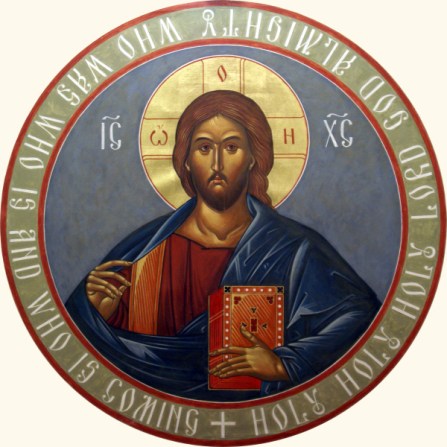
READING IIChrist_Pantocrator.jpg

Col 1:15-20

Christ Jesus is the image of the invisible God,

the firstborn of all creation.

For in him were created all things in heaven and on earth,

the visible and the invisible,

whether thrones or dominions or principalities or powers;

all things were created through him and for him.

He is before all things,

and in him all things hold together.

He is the head of the body, the church.

He is the beginning, the firstborn from the dead,

that in all things he himself might be preeminent.

For in him all the fullness was pleased to dwell,

and through him to reconcile all things for him,

making peace by the blood of his cross

through him, whether those on earth or those in heaven.

CATECHISM OF THE CATHOLIC CHURCH (CCC)

CCC 142 By his Revelation, “the invisible God, from the fullness of his love, addresses men as his friends, and moves among them, in order to invite and receive them into his own company.”1 The adequate response to this invitation is faith.

CCC 241 For this reason the apostles confess Jesus to be the Word: “In the beginning was the Word, and the Word was with God, and the Word was God”; as “the image of the invisible God”; as the “radiance of the glory of God and the very stamp of his nature”.2

CCC 291 “In the beginning was the Word. .. and the Word was God. .. all things were made through him, and without him was not anything made that was made.”3 The New Testament reveals that God created everything by the eternal Word, his beloved Son. In him “all things were created, in heaven and on earth. .. all things were created through him and for him. He is before all things, and in him all things hold together.”4 The Church’s faith likewise confesses the creative action of the Holy Spirit, the “giver of life”, “the Creator Spirit” (Veni, Creator Spiritus), the “source of every good”.5

CCC 299 Because God creates through wisdom, his creation is ordered: “You have arranged all things by measure and number and weight.”6 The universe, created in and by the eternal Word, the “image of the invisible God”, is destined for and addressed to man, himself created in the “image of God” and called to a personal relationship with God.7 Our human understanding, which shares in the light of the divine intellect, can understand what God tells us by means of his creation, though not without great effort and only in a spirit of humility and respect before the Creator and his work.8 Because creation comes forth from God’s goodness, it shares in that goodness – “And God saw that it was good. .. very good”9- for God willed creation as a gift addressed to man, an inheritance destined for and entrusted to him. On many occasions the Church has had to defend the goodness of creation, including that of the physical world.10

CCC 331 Christ is the center of the angelic world. They are his angels: “When the Son of man comes in his glory, and all the angels with him. .. ”11 They belong to him because they were created through and for him: “for in him all things were created in heaven and on earth, visible and invisible, whether thrones or dominions or principalities or authorities – all things were created through him and for him.”12 They belong to him still more because he has made them messengers of his saving plan: “Are they not all ministering spirits sent forth to serve, for the sake of those who are to obtain salvation?”13

CCC 504 Jesus is conceived by the Holy Spirit in the Virgin Mary’s womb because he is the New Adam, who inaugurates the new creation: “The first man was from the earth, a man of dust; the second man is from heaven.”14 From his conception, Christ’s humanity is filled with the Holy Spirit, for God “gives him the Spirit without measure.”15 From “his fullness” as the head of redeemed humanity “we have all received, grace upon grace.”16

CCC 624 “By the grace of God” Jesus tasted death “for every one”.17 In his plan of salvation, God ordained that his Son should not only “die for our sins”18 but should also “taste death”, experience the condition of death, the separation of his soul from his body, between the time he expired on the cross and the time he was raised from the dead. The state of the dead Christ is the mystery of the tomb and the descent into hell. It is the mystery of Holy Saturday, when Christ, lying in the tomb,19 reveals God’s great sabbath rest20 after the fulfillment21 of man’s salvation, which brings peace to the whole universe.22

CCC 753 In Scripture, we find a host of interrelated images and figures through which Revelation speaks of the inexhaustible mystery of the Church. The images taken from the Old Testament are variations on a profound theme: the People of God. In the New Testament, all these images find a new center because Christ has become the head of this people, which henceforth is his Body.23 Around this center are grouped images taken “from the life of the shepherd or from cultivation of the land, from the art of building or from family life and marriage.”24

CCC 792 Christ “is the head of the body, the Church.”25 He is the principle of creation and redemption. Raised to the Father’s glory, “in everything he [is] preeminent,”25 especially in the Church, through whom he extends his reign over all things.

CCC 1042 At the end of time, the Kingdom of God will come in its fullness. After the universal judgment, the righteous will reign for ever with Christ, glorified in body and soul. The universe itself will be renewed:

The Church. .. will receive her perfection only in the glory of heaven, when will come the time of the renewal of all things. At that time, together with the human race, the universe itself, which is so closely related to man and which attains its destiny through him, will be perfectly re-established in Christ.27

CCC 1701 “Christ,. .. in the very revelation of the mystery of the Father and of his love, makes man fully manifest to himself and brings to light his exalted vocation.”28 It is in Christ, “the image of the invisible God,”29 that man has been created “in the image and likeness” of the Creator. It is in Christ, Redeemer and Savior, that the divine image, disfigured in man by the first sin, has been restored to its original beauty and ennobled by the grace of God.30

CCC 2305 Earthly peace is the image and fruit of the peace of Christ, the messianic “Prince of Peace.”31 By the blood of his Cross, “in his own person he killed the hostility,”32 he reconciled men with God and made his Church the sacrament of the unity of the human race and of its union with God. “He is our peace.”33 He has declared: “Blessed are the peacemakers.”34

CCC 2641 “[Address] one another in psalms and hymns and spiritual songs, singing and making melody to the Lord with all your heart.”35 Like the inspired writers of the New Testament, the first Christian communities read the Book of Psalms in a new way, singing in it the mystery of Christ. In the newness of the Spirit, they also composed hymns and canticles in the light of the unheard-of event that God accomplished in his Son: his Incarnation, his death which conquered death, his Resurrection, and Ascension to the right hand of the Father.36 Doxology, the praise of God, arises from this “marvelous work” of the whole economy of salvation.37

1 DV 2; cf. Col 1:15; I Tim 1:17; Ex 33:11; Jn 15:14-15; Bar 3:38 (Vulg.).

2 Jn 1:1; Col 1:15; Heb 1:3.

3 Jn 1:1-3.

4 Col 1:16-17.

5 Cf. Nicene Creed: DS 150; Hymn “Veni, Creator Spiritus”; Byzantine Troparion of Pentecost Vespers, “O heavenly King, Consoler”.

6 Wis 11:20.

7 Col 1:15, Gen 1:26.

8 Cf. Ps 19:2-5; Job 42:3.

9 Gen 1:4,10,12,18,21,31.

10 Cf. DS 286; 455-463; 800; 1333; 3002.

11 Mt 25:31.

12 Col 1:16.

13 Heb 1:14.

14 I Cor 15:45,47.

15 Jn 3:34.

16 Jn 1:16; cf. Col 1:18.

17 Heb 2:9.

18 I Cor 15:3.

19 Cf. Jn 19:42.

20 Cf. Heb 4:7-9.

21 Cf. Jn 19:30.

22 Cf Col 1: 18-20.

23 Cf. Eph 1:22; Col 1:18; LG 9.

24 LG 6.

25 Col 1:18.

26 Col 1:18.

27 LG 48; Cf. Acts 3:21; Eph 1:10; Col 1:20; 2 Pet 3:10-13.

28 GS 22.

29 Col 1:15; cf. 2 Cor 4:4.

30 Cf. GS 22.

31 Isa 9:5.

32 Eph 2:16 J.B.; cf. Col 1:20-22.

33 Eph 2:14.

34 Mt 5:9.

35 Eph 5:19; Col 3:16.

36 Cf. Phil 2:6-11; Col 1:15-20; Eph 5:14; 1 Tim 3:16; 6:15-16; 2 Tim 2:11-13.

37 Cf. Eph 1:3-14; Rom 16:25-27; Eph 3:20-21; Jude 24-25.

APPLICATION

Philosophers, thinking men of all ages and races, who had not the blessing of revelation, have puzzled their brains searching for the meaning and purpose of man’s life on earth. It cannot be riches, for no man ever seems to have had enough, and there are not enough riches in the world to make even ten per cent of men moderately rich. It cannot be pleasure, for life on earth is too short to enjoy a fraction of the pleasures that would satisfy men. It isn’t power, for only a few can have it, and their hold on it is tenuous and too short-lived.

Through his divine revelation. God has given us the answer to the problem that baffled millions. We are not to look for man’s purpose in life here on this earth. We were created by God for a future life in which we would share in his eternal, everlasting happiness. In that life, and only in that, will all the rational desires and all the rational powers which man possesses be completely fulfilled.

This is the consoling truth, the foundation-stone of our Christian religion, that St. Paul puts before us for our consideration and our consolation today. He tells us God created us as intelligent beings, capable of seeing truth and beauty and of enjoying happiness. He did so with the image of his Incarnate Son before his mind. Through the assumption of our human nature by his divine Son, we would be made brothers and sisters of Christ, children of God, and heirs to his own eternal kingdom.

This was an act of sheer love of which only the infinite God could be capable. We shall need all eternity to get even a vague grasp of what such infinite love means, but in the meantime all we can and must do is to say “thank you God, for the infinite love you have shown us.” When the appointed time had come, the Son of God came on earth, took our human nature, went about telling people of God’s great love for them and what they should do to profit by this love. In all of this, although he was God, Christ hid his divinity under the veil of his humanity. He put up with insults, abuse, hard-heartedness, disbelief and, finally, permitted his enemies to crucify him. The world’s only benefactor died as a malefactor, hanging between two crucified thieves on Mount Calvary, beside Jerusalem.

But his enemies’ victory was short-lived. The Father raised him from the tomb, revealed the divinity that had been hidden, and gave him a glorified body fit for heaven. He was “the first-born of the dead.” This phrase means that Christ was the first of millions of human beings to be raised like him from the dead, given glorified bodies and transferred to heaven to enjoy an eternal happiness for which God created them. It is the one and only answer to the philosopher’s problem: “What is man’s purpose in life?”

Let us say a heartfelt “thank you” to God today. Let us also thank his divine Son, our beloved Christ, who planned and executed such an act of benevolence for our sakes, unworthy though we are of such love. Even the holiest amongst us are unworthy. We know where we are going and we have all the means necessary to get us there. It is no harm to remember that thinking pagans found the trivial things of life of no real value to man. As Christians, should we allow them to come between us and the eternal life in which our human nature will find its eternal fulfillment, as well as the one and only real explanation of its existence?

GOSPELChrist-samaritan

Lk 10:25-37

There was a scholar of the law who stood up to test him and said,

Teacher, what must I do to inherit eternal life?”

Jesus said to him, “What is written in the law?

How do you read it?”

He said in reply,

You shall love the Lord, your God,

with all your heart,

with all your being,

with all your strength,

and with all your mind,

and your neighbor as yourself.”

He replied to him, “You have answered correctly;

do this and you will live.”

But because he wished to justify himself, he said to Jesus,

And who is my neighbor?”

Jesus replied,

A man fell victim to robbers

as he went down from Jerusalem to Jericho.

They stripped and beat him and went off leaving him half-dead.

A priest happened to be going down that road,

but when he saw him, he passed by on the opposite side.

Likewise a Levite came to the place,

and when he saw him, he passed by on the opposite side.

But a Samaritan traveler who came upon him

was moved with compassion at the sight.

He approached the victim,

poured oil and wine over his wounds and bandaged them.

Then he lifted him up on his own animal,

took him to an inn, and cared for him.

The next day he took out two silver coins

and gave them to the innkeeper with the instruction,

Take care of him.

If you spend more than what I have given you,

I shall repay you on my way back.’

Which of these three, in your opinion,

was neighbor to the robbers’ victim?”

He answered, “The one who treated him with mercy.”

Jesus said to him, “Go and do likewise.”

http://www.usccb.org/bible/readings/071016.cfm

CATECHISM OF THE CATHOLIC CHURCH (CCC)

CCC 1293 In treating the rite of Confirmation, it is fitting to consider the sign of anointing and what it signifies and imprints: a spiritual seal.

Anointing, in Biblical and other ancient symbolism, is rich in meaning: oil is a sign of abundance and joy;1 it cleanses (anointing before and after a bath) and limbers (the anointing of athletes and wrestlers); oil is a sign of healing, since it is soothing to bruises and wounds;2 and it makes radiant with beauty, health, and strength.

CCC 1825 Christ died out of love for us, while we were still “enemies.”3 The Lord asks us to love as he does, even our enemies, to make ourselves the neighbor of those farthest away, and to love children and the poor as Christ himself.4

The Apostle Paul has given an incomparable depiction of charity: “charity is patient and kind, charity is not jealous or boastful; it is not arrogant or rude. Charity does not insist on its own way; it is not irritable or resentful; it does not rejoice at wrong, but rejoices in the right. Charity bears all things, believes all things, hopes all things, endures all things.”5

CCC 2083 Jesus summed up man’s duties toward God in this saying: “You shall love the Lord your God with all your heart, and with all your soul, and with all your mind.”6 This immediately echoes the solemn call: “Hear, O Israel: the LORD our God is one LORD.”7

God has loved us first. The love of the One God is recalled in the first of the “ten words.” The commandments then make explicit the response of love that man is called to give to his God.

CCC 2196 In response to the question about the first of the commandments, Jesus says: “The first is, ‘Hear, O Israel: The Lord our God, the Lord is one; and you shall love the Lord your God with all your heart, and with all your soul, and with all your mind, and with all your strength.’ The second is this, ‘You shall love your neighbor as yourself.’ There is no other commandment greater than these.”8

The apostle St. Paul reminds us of this: “He who loves his neighbor has fulfilled the law. The commandments, ‘You shall not commit adultery, You shall not kill, You shall not steal, You shall not covet,‘ and any other commandment, are summed up in this sentence, ‘You shall love your neighbor as yourself.’ Love does no wrong to a neighbor; therefore love is the fulfilling of the law.”9

CCC 2822 Our Father “desires all men to be saved and to come to the knowledge of the truth.”10 He “is forbearing toward you, not wishing that any should perish.”11 His commandment is “that you love one another; even as I have loved you, that you also love one another.”12 This commandment summarizes all the others and expresses his entire will.

1 Cf. Deut 11:14; Pss 23:5; 104:15.

2 Cf. Isa 1:6; Lk 1034.

3 Rom 5:10.

4 Cf. Mt 5:44; Lk 10:27-37; Mk 9:37; Mt 25:40, 45.

5 1 Cor 13:4-7.

6 Mt 22:37; cf. Lk 10:27:“… and with all your strength.”

7 Deut 6:4.

8 Mk 12:29-31; cf. Deut 6:4-5; Lev 19:18; Mt 22:34-40; Lk 10:25-28.

9 Rom 13:8-10.

10 1 Tim 2:3-4.

11 2 Pet 3:9; cf. Mt 18:14.

12 Jn 13:34; cf. 1 Jn 3; 4; Lk 10:25-37.

APPLICATION

Whether this lawyer acted in good or bad faith when he questioned our Lord, need not trouble us now. We can be thankful that his question brought forth this beautiful parable which has a lesson for us today as fresh as it had for all those who heard it from the lips of Jesus.

The roads of life, no matter where we live, have neighbors lying injured by the wayside. They are waiting and hoping that some fellow-man will come to give them a helping hand. We can shut our eyes or turn away, as the priest and levite did. No doubt, these two men had urgent business or they had troubles enough of their own. Perhaps they had helped a few other similar cases already that day. Our Lord does not seem to excuse them on any of these scores. Even the lawyer did not find any justifying excuse for them. They behaved badly. They showed that they had no interest in their neighbor when he was in need. They did not keep the command that God had given them through Moses.

Judged in the light of that parable, are my dealings with my neighbor such as would earn the praise or the condemnation of our Lord? Would he number me with the priest and levite, or with the Samaritan? If I give a helping hand to the neighbors whom I see in corporal or spiritual need, as often as I possibly can, he will number me among the good Samaritans. If, instead, I turn a blind eye and busy myself with my own affairs, I am classing myself with the condemned priest and levite.

I have excuses. We all have. They sound plausible to ourselves. We have more than enough to do to look after our own affairs, material and spiritual. So too had the priest and levite. We have had to go through similar hardships and nobody gave us a helping hand. Two wrongs don’t make a right. These people in corporal or spiritual need brought this on themselves. Let them get themselves out of their difficulties now. Why should I be expected to help? People who are so foolish and so thoughtless as to bring such difficulties on themselves are the very ones who need help, advice and encouragement. They need it from one who has not their particular weakness of character. I must do all I can to save them from their own folly.

Our excuses for not helping our neighbor, who is every man of any description without distinction of race, creed or color, may sound plausible to us now. But will we dare repeat them on the judgement day? When describing the judgement scene, our Lord told certain people that they were being excluded from heaven because they refused to help him when he was in need. They cried out in consternation: “Lord when did we see you hungry, thirsty, naked and did not come to your aid?” His answer was: “you saw my neighbor, my ‘little ones.’ my friends, in need and you did not help.”

Today, with so much social provision for the less fortunate in most countries, we are not called on so often to exercise the corporal works of mercy. Never before, however, was there more need for sincere Christians to carry out the spiritual works of mercy. We are living in a world which is growing daily further and further away from God. We find people in every walk of life whose one purpose is to get all they can out of their few short years here on earth. They completely ignore or forget that their real purpose in life is to get to heaven.

Of course, we cannot go out and preach the truths of faith to these people on every street corner. Even if we did they would not listen to us. There are many other more effective ways of getting a neighbor to see his mistakes, if we but take the trouble. Start by taking an interest in your neighbor, in his work, his family, his recreations. Show by your way of living and by your outlook on life that God is never far from your thoughts. Show that your concern is more with the future life than with the present one. The neighbor will bring up the question of religion, not you. When he does, be ready to give him a simple explanation of what makes you live and act as you do. You will not win him over immediately. You may not win him over at all. But you will have sown a seed which will blossom forth somewhere, some day.

Where there is true love of God, there will be true love of neighbor. There must be. That love will find a way into the heart of the neighbor. Resolve, today, to be a Good Samaritan, especially towards those who are injured spiritually and who will not reach heaven unless you give them a helping hand. Never forget that it is the Lord who is with you doing nine-tenths of the work, while you strive to help a neighbor spiritually or physically. What you did to your neighbor, to “one of his little ones,” you did to him, and he will not forget it when your hour of judgement comes.

Applications written by Fr. Kevin O’Sullivan O.F.M. and used with permission of Franciscan Press.

BENEDICTUS

How Love is Possible

Love of neighbor is thus shown to be possible in the way proclaimed by the Bible, by Jesus. It consists in the very fact that, in God and with God, I love even the person whom I do not like or know. This can only take place on the basis of an estimate encounter with God, an encounter which has become a communion of will, even affecting my feelings. Then I learn to look on this other person not simply with my eyes and my feelings, but from the perspective of Jesus Christ. His friend is my friend. Going beyond exterior appearances, I perceive in others an interior desire for a sign of love, of concern. This I can offer them not only through the organizations intended for such purposes, accepting it perhaps as a political necessity. Seeing with the eyes of Christ, I can give to others much more than their outward necessities: I can give them the look of love which they crave… If I have no contact whatsoever with God in my life, then I cannot see in the other anything more than the other, and I am incapable of seeing in him the image of God. But if in my life I fail completely to heed others, solely out of a desire to be “devout” and to perform my “religious duties,” then my relationship with God will also grow arid. It becomes merely “proper,” but loveless. Only my readiness to encounter my neighbor and to show him love makes me sensitive to God as well. Only if I serve my neighbor can my eyes be opened to what God does for me and how much he loves me.

Pope Emeritus Benedict XVI

CLOSING PRAYER

Act of Love

O God, all that I am and all that I have is from you. You have given me my gifts of body and soul. You have numbered me among your favored children. You have showered me with countless graces and blessings. From all eternity you have thought of me and loved me. How shall I ever love you in return?

And now in your merciful goodness you are coming into my soul to unit yourself most intimately with me. You came into the world for love of man, but now you are coming from the altar for love of me. You are coming to fill me heart with your holy love, my Creator, my Redeemer, my Sanctifier, my God.

O Jesus, I want to return this love. I want to love you with all the powers of my soul. I want to belong only to you, to consecrate myself to you alone. Jesus, let me live for you; let me die for you. Living and dying may I be yours.

http://www.catholic.org/prayers/prayer.php?p=433

Posted in agnostic, athiest, Benedictine, Benedictine oblate, Bible Study, Catholic, Christian, faith, Holy Spirit, Liturgy, mercy, Oblate, prayer, The Word of God, Uncategorized | Tagged , , , , , , , , , , , , , , , , | Leave a comment

Fourteenth Sunday in Ordinary Time – C

great-commission

      “Go on your way; behold, I am sending you like lambs among wolves.”

OPENING PRAYER

Petitions to St. Peter and St. Paul

Feast day June 29th

O holy Apostles, Peter and Paul, I choose you this day and forever to be my special patrons and advocates; thee, Saint Peter, Prince of the Apostles, because thou art the Rock, upon which Almighty God hath built His Church; thee, Saint Paul, because thou wast fore-chosen by God as the Vessel of election and the Preacher of truth in the whole world. Obtain for me, I pray you, lively faith, firm hope, and burning love; complete detachment from myself, contempt of the world, patience in adversity, humility in prosperity, attention in prayer, purity of heart, a right intention in all my works, diligence in fulfilling the duties of my state of life, constancy in my resolutions, resignation to the will of God and perseverance in the grace of God even unto death; that so, by means of your intercession and your glorious merits, I may be able to overcome the temptations of the world, the flesh and the devil, and may be made worthy to appear before the chief and eternal Shepherd of souls, Jesus Christ, Who with the Father and the Holy Ghost liveth and reigneth for endless ages, to enjoy His presence and love Him forever. Amen.

http://catholicharboroffaithandmorals.com/St.%20Peter%20and%20Paul%20popup.html


COLLECT

O God, who in the abasement of your Son

have raised up a fallen world,

fill your faithful with holy joy,

for on those you have rescued from slavery to sin

you bestow eternal gladness.

Through our Lord Jesus Christ, your Son,

who lives and reigns with you in the unity

of the Holy Spirit,

one God, for ever and ever.

READING INew Jerusalem

Is 66:10-14c

Thus says the LORD:

Rejoice with Jerusalem and be glad because of her,

all you who love her;

exult, exult with her,

all you who were mourning over her!

Oh, that you may suck fully

of the milk of her comfort,

that you may nurse with delight

at her abundant breasts!

For thus says the LORD:

Lo, I will spread prosperity over Jerusalem like a river,

and the wealth of the nations like an overflowing torrent.

As nurslings, you shall be carried in her arms,

and fondled in her lap;

as a mother comforts her child,

so will I comfort you;

in Jerusalem you shall find your comfort.

When you see this, your heart shall rejoice

and your bodies flourish like the grass;

the LORD’s power shall be known to his servants.

CATECHISM OF THE CATHOLIC CHURCH (CCC)

CCC 239 By calling God “Father”, the language of faith indicates two main things: that God is the first origin of everything and transcendent authority; and that he is at the same time goodness and loving care for all his children. God’s parental tenderness can also be expressed by the image of motherhood,1 which emphasizes God’s immanence, the intimacy between Creator and creature. The language of faith thus draws on the human experience of parents, who are in a way the first representatives of God for man. But this experience also tells us that human parents are fallible and can disfigure the face of fatherhood and motherhood. We ought therefore to recall that God transcends the human distinction between the sexes. He is neither man nor woman: he is God. He also transcends human fatherhood and motherhood, although he is their origin and standard:2 no one is father as God is Father.

CCC 370 In no way is God in man’s image. He is neither man nor woman. God is pure spirit in which there is no place for the difference between the sexes. But the respective “perfections” of man and woman reflect something of the infinite perfection of God: those of a mother and those of a father and husband.3

1 Cf. Isa 66:13; Ps 131:2.

2 Cf. Ps 27:10; Eph 3:14; Isa 49:15.

3 Cf. Is 49:14-15; 66: 13; Ps 131:2-3; Hos 11:1-4; Jer 3:4- 19.

APPLICATION

These words of the prophet encouraged the returned exiles to rebuild the city and to continue hoping for the Messianic days in which, according to all the prophets, there would be a new Jerusalem and a new world of peace and plenty for all.

The prophecy was never fulfilled in the earthly capital of Palestine. They were never intended to be fulfilled there. They are already partially fulfilled in Christ’s messianic kingdom on earth, but it is only in his heavenly kingdom that they will be really and truly fulfilled.

The Church which Christ established is the new Jerusalem on earth. It is the capital and the home of all races and all nations. It has the means to lead and direct all mankind to the everlasting “Jerusalem which is above.” It has the sacraments, actions with effective power given it by Christ, by means of which men can become citizens of the new kingdom, can be nourished on their heaven-ward journey, can be cleansed from any stains they bring on themselves through sin. The sacraments are as well special helps for the particular mode of life which they elect to live in this kingdom. They have, also, appointed leaders to whom God has promised the assistance of his Holy Spirit. These leaders can safely and without fear of error lead their people through the obstacles and hindrances of this world to their heavenly home above.

Surely, we Christians can rejoice and exult over our new Jerusalem. It has all we need to speed us on our way. But it is only a mode of transport. Whilst we can feel safe and absolutely secure on board the barque of Peter, to change the metaphor, we are still on a voyage which of its very nature entails some strains and stresses. We are not all good seamen. Most of us are land-lubbers who dread the sea. God, however, knew this when he invited us to join the ship. He has his sick-bay on board to renew the health and the spirits of the sea-sick members.

If we stay on board, the barque of Peter will bring us safely to our new and everlasting home notwithstanding, nay, maybe in most cases because of, the many hardships we have to endure on the voyage.

The heavenly Jerusalem awaits us all. There we shall find a life of plenty, a life to fulfill all our desires, a life of perfect security, as comfortable and as happy and as carefree as the suckling, babe on its mother’s bosom. That life will have no end. Together with this personal happiness of each one of us, there will be the enjoyment of the company of the Blessed Trinity, the glorified human nature of Christ, our blessed Mother and all our fellow creatures who received the same gracious gift of eternal salvation from God, which we ourselves received.

What are all the earthly joys and pleasures that ever were or ever will be, compared with the joys and the happiness of heaven? What is earthly life at its best and its longest when compared to an eternal life? Which shall I choose–could I hesitate even for an instant?

RESPONSORIAL PSALM

Ps 66:1-3, 4-5, 6-7, 16, 20

Let all the earth cry out to God with joy.

Shout joyfully to God, all the earth,

sing praise to the glory of his name;

proclaim his glorious praise.

Say to God, “How tremendous are your deeds!”

Let all the earth cry out to God with joy.

Let all on earth worship and sing praise to you,

sing praise to your name!”

Come and see the works of God,

his tremendous deeds among the children of Adam.

Let all the earth cry out to God with joy.

He has changed the sea into dry land;

through the river they passed on foot;

therefore let us rejoice in him.

He rules by his might forever.

Let all the earth cry out to God with joy.

Hear now, all you who fear God, while I declare

what he has done for me.

Blessed be God who refused me not

my prayer or his kindness!

R. Let all the earth cry out to God with joy.

READING IIa7c08eaab84808e8be7d581354d80058

Gal 6:14-18

Brothers and sisters:

May I never boast except in the cross of our Lord Jesus Christ,

through which the world has been crucified to me,

and I to the world.

For neither does circumcision mean anything, nor does uncircumcision,

but only a new creation.

Peace and mercy be to all who follow this rule

and to the Israel of God.

From now on, let no one make troubles for me;

for I bear the marks of Jesus on my body.

The grace of our Lord Jesus Christ be with your spirit,

brothers and sisters. Amen.

CATECHISM OF THE CATHOLIC CHURCH (CCC)

CCC 1214 This sacrament is called Baptism, after the central rite by which it is carried out: to baptize (Greek baptizein) means to “plunge” or “immerse”; the “plunge” into the water symbolizes the catechumen’s burial into Christ’s death, from which he rises up by resurrection with him, as “a new creature.”1

CCC 1460 The penance the confessor imposes must take into account the penitent’s personal situation and must seek his spiritual good. It must correspond as far as possible with the gravity and nature of the sins committed. It can consist of prayer, an offering, works of mercy, service of neighbor, voluntary self-denial, sacrifices, and above all the patient acceptance of the cross we must bear. Such penances help configure us to Christ, who alone expiated our sins once for all. They allow us to become co-heirs with the risen Christ, “provided we suffer with him.”2

The satisfaction that we make for our sins, however, is not so much ours as though it were not done through Jesus Christ. We who can do nothing ourselves, as if just by ourselves, can do all things with the cooperation of “him who strengthens” us. Thus man has nothing of which to boast, but all our boasting is in Christ. .. in whom we make satisfaction by bringing forth “fruits that befit repentance.” These fruits have their efficacy from him, by him they are offered to the Father, and through him they are accepted by the Father.3

1 2 Cor 5:17; Gal 6:15; Cf. Rom 6:34; Col 2:12.

2 Rom 8:17; Rom 3:25; 1 Jn 2:1-2; cf. Council of Trent (1551): DS 1690.

3 Council of Trent (1551): DS 1691; cf. Phil 4:13; 1 Cor 1:31; 2 Cor 10:17; Gal 6:14; Lk 3:8.

APPLICATION

If only we all could, at all times, be like St. Paul and appreciate and realize what being a Christian is, the difference it has made in our relationship with God and the new, proper outlook it gives us on life! The pagan who has not yet heard of the true God, or of the marvelous dignity he conferred on man when he sent his own divine Son to become one of us so that we could become one with him, has yet some ray of light to brighten the gloom of life, through his belief in his ancestral gods and through the graces God can and does send him. But yet he is lacking so much that we already have.

Compared with the pagan whose education is minimal or non-existent and who seldom reflects on life and its purpose, how much more distressing and insoluble must be the meaning of life for the educated man of our western world who has denied the existence of God! He is bound to reflect frequently on life and its brevity. But he has cast from him the one solution to all of life’s enigmas by denying the existence of a personal God, who has created all things and plans and provides for all his creation.

It is no wonder that such disbelievers in God and a future life rush headlong into pleasure-seeking or/and into the acquisition of this world’s goods. They see nothing to satisfy the normal intellectual aspirations of every intelligent person in this world. Theirs is a vain attempt to fill with temporal substitutes, which can last but a few short years, the vacuum created by their godless philosophy. They are trying to empty the ocean with a sea-shell!

These words are said not in derision but in sadness. Every true follower of Christ who knows, and has experienced, God’s infinite love for his human creatures, must and does wish and pray that all his human children will come to know their loving heavenly Father. He wants them all in heaven. He wants and expects us to help in bringing them there. The pagans whom we can help by co-operating with the missionary societies of the Church are numerous. Our godless neighbors can be helped in divers ways. Love will find a way. If we really love God and our neighbor who is out of contact with God, we shall find a way to get them to meet.

The good example of our own Christian life is the best incentive to move others to think of their way of living and of its many unanswered riddles. We should pray, for a short while maybe, but fervently and often, for the grace of light for our neighbor who is blind to things spiritual. Such a prayer, if motivated by pure charity and free from all taint of selfishness, will not be left unanswered. God still loves his prodigal sons, even when they are loudly and joyfully celebrating his death. He is looking for only the smallest opening to pour his grace into their hearts. Your small prayer may soon produce that little opening.

A third duty incumbent on all of us is to learn all we can about God’s wonderful gift of Christianity to mankind. We Christians take too much for granted. We do not learn enough about our religion. We should be able to stand up and defend our faith if an occasion arises. This demands previous study. There are books available. There are study circles within the easy reach of most of us. We should avail ourselves of these helps and thus be able charitably and kindly to correct one who is making (unknowingly perhaps) false statements about things religious. Many an erring child of God has been quietly led back to the heavenward road by a few simple explanations of the Christian faith given during an argument by a sincere follower of Christ.

GOSPELimages-4

LK 10:1-9

At that time the Lord

appointed seventy-two

others whom he sent ahead

of him in pairs to every town

and place he intended to

visit.

He said to them,

The harvest is abundant but the laborers are few;

so ask the master of the harvest to send out laborers for his harvest.

Go on your way;

behold, I am sending you like lambs among wolves.

Carry no money bag, no sack, no sandals;

and greet no one along the way.

Into whatever house you enter, first say,

Peace to this household.’

If a peaceful person lives there,

your peace will rest on him;

but if not, it will return to you.

Stay in the same house and eat and drink what is offered to you,

for the laborer deserves his payment.

Do not move about from one house to another.

Whatever town you enter and they welcome you,

eat what is set before you,

cure the sick in it and say to them,

The kingdom of God is at hand for you.’”

http://www.usccb.org/bible/readings/070316.cfm

CATECHISM OF THE CATHOLIC CHURCH (CCC)

CCC 765 The Lord Jesus endowed his community with a structure that will remain until the Kingdom is fully achieved. Before all else there is the choice of the Twelve with Peter as their head.1 Representing the twelve tribes of Israel, they are the foundation stones of the new Jerusalem.2 The Twelve and the other disciples share in Christ’s mission and his power, but also in his lot.3 By all his actions, Christ prepares and builds his Church.

CCC 787 From the beginning, Jesus associated his disciples with his own life, revealed the mystery of the Kingdom to them, and gave them a share in his mission, joy, and sufferings.4 Jesus spoke of a still more intimate communion between him and those who would follow him: “Abide in me, and I in you. .. I am the vine, you are the branches.”5 And he proclaimed a mysterious and real communion between his own body and ours: “He who eats my flesh and drinks my blood abides in me, and I in him.”6

CCC 2122 “The minister should ask nothing for the administration of the sacraments beyond the offerings defined by the competent authority, always being careful that the needy are not deprived of the help of the sacraments because of their poverty.”7 The competent authority determines these “offerings” in accordance with the principle that the Christian people ought to contribute to the support of the Church’s ministers. “The laborer deserves his food.”8

CCC 2611 The prayer of faith consists not only in saying “Lord, Lord,” but in disposing the heart to do the will of the Father.9 Jesus calls his disciples to bring into their prayer this concern for cooperating with the divine plan.10

1 Cf. Mk 3:14-15.

2 Cf. Mt 19:28; Lk 22:30; Rev 21:12-14.

3 Cf. Mk 6:7; Lk 10:1-2; Mt 10:25; Jn 15:20.

4 Cf. Mk 1:16-20; 3:13-19; Mt 13:10-17; Lk 10:17-20; 22:28-30.

5 Jn 15:4-5.

6 Jn 6:56.

7 CIC, can. 848.

8 Mt 10:10; cf. Lk 10:7; 2 Cor 9:5-18; 1 Tim 5:17-18.

9 Cf. Mt 7:21.

10 Cf. Mt 9:38; Lk 10:2; Jn 4:34.

APPLICATION

God’s ways of dealing with us mortals are amazing when we think over them. He calls on men to help him bring themselves and their fellowman to heaven, when he could do this far more effectively himself without any help from man. The Son of God when he was on earth, could have worked some extraordinary signs or miracles which would have made the whole Roman empire, as well as the Jews, sit up and take notice. He could have stayed longer on earth, and could have preached his gospel in Greece and Rome. He could have converted the leading lights in the empire, and thus have made the spread of his gospel so much easier and quicker.

Instead, he chose weak, human creatures who spent years doing work which he could have done in a month or less. Today’s gospel story is an example of this method. One half-hour of Christ in the towns and villages, in which these seventy-two disciples spent some weeks, would have been far more efficacious. He could have brought those people to his feet by one word of command. Yet, he still depends on mere humans to bring the good news of his gospel to their fellowmen, and to bring these fellowmen to heaven. Instead of this slow and often unsuccessful method, he himself could have appeared for a short period over each country in the world and addressed the people. He could have proved to them by a startling miracle or two that it was he. He could have made it clear that unless human beings carried out his commands for the rest of their lives, he had power to see to it that the remainder of the life of those who disobeyed would be very brief indeed.

I seem to remember, a Sunday or two ago, hearing James and John the “Sons of Thunder,” expounding some similar idea. They asked him to call down fire from heaven on some unfortunate Samaritans. Yes, God and Christ, who is God’s divine Son, could do all the things suggested. God’s ways are not our ways. Thank God for that too. He could, without the slightest difficulty, force all men to accept his gospel and live according to it. Men have done harder things when a powerful fellowman was standing over them. What would they not do if their Creator and Lord was standing menacingly over them?

The fact is, of course, that God wants no forced-laborers in heaven. He wants free citizens, who have elected to go there of their own free will. Nor would those men, forced to live the gospel through fear of the all-powerful Master, earn heaven by this kind of obedience. It is because God wants all men in heaven that he leaves each one absolutely free to choose the path that leads there. Only thus can men enjoy heaven. He has marked that path clearly and vividly for all who wish to see. He has placed marked human guides (his pastors) along the way to help the weak and warn travelers of possible wrong turnings.

In other words, he has dealt with us humans in a very human way. He acts, even with his prodigal sons, as a loving father, ever ready to help them as he would help those who remain at home near him. He is almost readier still to welcome back the spendthrifts and wastrels, and lay on a home-coming party for them.

Plaintively, rather than authoritatively, he tells us all in today’s lesson that he needs more helpers to help their fellowmen. This is not only a loving call to the priesthood and the religious life. It is a call to all true Christians. He needs guides on the long road to heaven. The layman or laywoman who is traveling that road can be, and is, as good a guide as the priest or religious. This call from the loving heart of Christ is intended today as much for them as for priests and religious. Up to now, how much have I done to help Christ bring men to heaven? It is time I began, if hitherto I have done nothing in this very important matter. I may be very keen on getting to heaven, but I may be a long time waiting if I arrive alone at the gate! No one can get to heaven unless he loves God. No one can love God unless he loves his neighbor. No one can love his neighbor, and look on without concern while that neighbor is wandering miles from the road which Christ has marked out as the road to heaven. If I am a true Christian, I am thereby a disciple also. I am called on today to do the work of a disciple.

Applications written by Fr. Kevin O’Sullivan O.F.M. and used with permission of Franciscan Press

BENEDICTUS

Christ is the Answer

We ourselves have this very deep certainty that Christ is the answer and that without the concrete God, the God with the Face of Christ, the world destroys itself; and there is growing evidence that a closed rationalism, which thinks that human beings can rebuild the world better on their own, is not true. On the contrary, without the restraint of the true God, human beings destroy themselves. We see this with our own eyes. We ourselves must have a renewed certainty: he is the Truth; only by walking in his footsteps do we go in the right direction, and it is in this direction that we must walk and lead others. In all our suffering, not only should we keep our certainty that Christ really is the Face of God, but we should also deepen this certainty and the joy of knowing it and thus truly be ministers of the future of the world, of the future of every person. We should deppen this certainty in a personal relationship with the Lord because certainty can also grow with rationsl considerations. A sincere reflection that is also rationally convincing but becomes personal, strong, and demanding by virtue of a friendship lived personally, every day, with Christ, truly seems to me to be very important.

Pope Emeritus Benedict XVI

CLOSING PRAYER2619e73e15243ea552471df681b6e4f6

Prayer to St. Michael the Archangel

Pope Leo XIII

O Glorious Archangel St. Michael, Prince of the heavenly host, be our defense in the terrible warfare which we carry on against principalities and Powers, against the rulers of this world of darkness, spirits of evil. Come to the aid of man, whom God created immortal, made in his own image and likeness, and redeemed at a great price from the tyranny of the devil.

Fight this day the battle of the Lord, together with the holy angels, as already thou hast fought the leader of the proud angels, Lucifer, and his apostate host, who were powerless to resist thee, nor was there place for them any longer in Heaven.

That cruel, that ancient serpent, who is called the devil or Satan, who seduces the whole world, was cast into the abyss with his angels. Behold, this primeval enemy and slayer of men has taken courage. Transformed into an angel of light, he wanders about with all the multitude of wicked spirits, invading the earth in order to blot out the name of God and of his Christ, to seize upon, slay and cast into eternal perdition souls destined for the crown of eternal glory. This wicked dragon pours out, as a most impure flood, the venom of his malice on men of depraved mind and corrupt heart, the spirit of lying, of impiety, of blasphemy, and the pestilent breath of impurity, and of every vice and iniquity.

These most crafty enemies havefilled and inebriated with gall and bitterness the Church, the spouse of the immaculate Lamb, and have laid impious hands on her most sacred possessions.

In the Holy Place itself, where has been set up the See of the most holy Peter and the Chair of Truth for the light of the world, they have raised the throne of their abominable impiety, with the iniquitous design that when the Pastor has been struck, the sheep may be scattered.

Arise then, O invincible Prince, bring help against the attacks of the lost spirits to the people of God, and give them the victory. They venerate thee as their protector and Patron; in thee holy Church glories as her defense against the malicious power of hell; to thee has God entrusted the souls of men to be established in heavenly beatitude. Oh, pray to the God of peace that He may put Satan under our feet, so far conquered that he may no longer be able to hold men in captivity and harm the Church. Offer our prayers in the sight of the Most High, so that they may quickly conciliate the mercies of the Lord; and beating down the dragon, the ancient serpent, who is the devil and Satan, do thou again make him captive in the abyss, that he may no longer seduce

the nations. Amen.

Behold the Cross of the Lord; be scattered ye hostile powers.

The Lion of the tribe of Judah has conquered, the root of David.

Let thy mercies be upon us, O Lord.

As we have hoped in thee.

O Lord, hear my prayer.

And let my cry come unto thee.

Let us pray.

O God, the Father of our Lord Jesus Christ, we call upon thy holy name, and as suppliants we implore thy clemency, that by the intercession of Mary, ever Virgin immaculate and our Mother, and of the glorious Archangel St. Michael, thou wouldst deign to help us against Satan and all other unclean spirits, who wander about the world for the injury of the human race and the ruin of souls.

Amen.

The prayer was taken from The Raccolta, 1930, Benziger Bros., pp. 314-315.


Posted in agnostic, athiest, Benedictine, Benedictine oblate, Bible Study, Catholic, Christian, faith, Holy Spirit, Holy Week, Liturgy, mercy, Oblate, prayer, The Word of God, Uncategorized | Leave a comment

Thirteenth Sunday in Ordinary Time – C

A+BARCA+DE+CRISTO

No one who sets a hand to the plow and looks to what was left behind is fit for the kingdom of God.”


OPENING PRAYER

Psalm 19 (18), 8-14

The law of God source of formation

The precepts of the Lord are right,

rejoicing the heart; the commandment of the Lord is pure,

enlightening the eyes;

the fear of the Lord is clean, enduring for ever;

the ordinances of the Lord are true,

and righteous altogether.

More to be desired are they than gold,

even much fine gold;

sweeter also than honey and drippings of the honeycomb.

Moreover by them is thy servant warned;

in keeping them there is great reward.

But who can discern his errors?

Clear thou me from hidden faults.

Keep back thy servant also from presumptuous sins;

let them not have dominion over me!

Then I shall be blameless,

and innocent of great transgression.

Let the words of my mouth and the meditation of my heart

be acceptable in thy sight, O Lord,

my rock and my redeemer.

COLLECT

O God, who through the grace of adoption

chose us to be children of light,

grant, we pray,

that we may not be wrapped in the darkness of error

but always be seen to stand in the bright light of truth.

Through our Lord Jesus Christ, your Son,

who lives and reigns with you in the unity

of the Holy Spirit,

one God, for ever and ever.


READING IParis_psaulter_gr139_fol6v

1 Kgs 19:16b, 19-21

The LORD said to Elijah:

You shall anoint Elisha, son of Shaphat of Abelmeholah,

as prophet to succeed you.”

Elijah set out and came upon Elisha, son of Shaphat,

as he was plowing with twelve yoke of oxen;

he was following the twelfth.

Elijah went over to him and threw his cloak over him.

Elisha left the oxen, ran after Elijah, and said,

Please, let me kiss my father and mother goodbye,

and I will follow you.”

Elijah answered, “Go back!

Have I done anything to you?”

Elisha left him, and taking the yoke of oxen, slaughtered them;

he used the plowing equipment for fuel to boil their flesh,

and gave it to his people to eat.

Then Elisha left and followed Elijah as his attendant.

CATECHISM OF THE CATHOLIC CHURCH (CCC)

CCC 436 The word “Christ” comes from the Greek translation of the Hebrew Messiah, which means “anointed”. It became the name proper to Jesus only because he accomplished perfectly the divine mission that “Christ” signifies. In effect, in Israel those consecrated to God for a mission that he gave were anointed in his name. This was the case for kings, for priests and, in rare instances, for prophets.1 This had to be the case all the more so for the Messiah whom God would send to inaugurate his kingdom definitively.2 It was necessary that the Messiah be anointed by the Spirit of the Lord at once as king and priest, and also as prophet.3 Jesus fulfilled the messianic hope of Israel in his threefold office of priest, prophet and king.

1 Cf. Ex 29:7; Lev 8:12; 1 Sam 9:16; 10:1; 16:1, 12-13; I Kings 1:39; 19:16.

2 Cf. Ps 2:2; Acts 4:26-27.

3 Cf. Is 11:2; 61:1; Zech 4:14; 6:13; Lk 4:16-21.

APPLICATION

God’s ways are indeed mysterious to us. Elijah, whom he had sent to Israel (the breakaway northern kingdom) did heroic work there to preserve the knowledge of the true God. It was a period when pagan infiltration was at its strongest under King Achab and his wicked wife, Queen Jezebel, a pagan from Tyre. God called a successor for Elijah, who carried on his great work and it is due to these two men of God that the ordinary people of Israel preserved, more or less, the true faith. This was so, notwithstanding the efforts of their rulers during the ninth century B.C. to introduce paganism.

Why does God allow evil in the world he created? Why does he create men whom he knew would spread their evil influence? Through their example and their power, which they so often succeed in acquiring, they make the eternal salvation of thousands, even of millions of their fellowman, most difficult, if not impossible.

This is a question which has troubled the minds of many down through the ages. It would be so easy for God not to create men whom he knows will lead evil lives and cause so many others to follow them in their evil ways. Would not our religious life today, and our faithful service of God, be so much easier and better if there were not so many practical (and to a less harmful degree, theoretical) atheists amongst us, and so many promoters of sin and its occasions?

Yet, any sane, sound-thinking man will have to admit that surely the all-intelligent God knows what is best for his world. Man has intelligence and free will, the gifts of God which raise him above all other earthly creatures. Yet he is liable to abuse these gifts and offend his Creator. The animals do not sin, because they lack these gifts. Neither can they know God, nor have they the possibility of enjoying an eternal heaven in his company. If God denied us intelligence and free will — the only way of preventing sin — then we, like the animals, could never earn or enjoy heaven.

Furthermore, would our religious life, our respect for God and for his laws be really better and more sincere, if we had no opposition? The example of countries and peoples who suffered persecutions from the opponents of the faith in the past (and this is true of parts of our world still today) would seem to prove the opposite. The early Church spread rapidly through the Roman Empire, not only in spite of violent persecutions, but because of them. “The blood of martyrs is the seed of Christians.”

Today we live in a world which seems in theory and in practice to be moving more and more away from God. Unfortunately, as always, some of the leaders of this secularism and this disrespect for and negation of God’s rights and claims, are or were men in positions of authority. This makes the scandal and the evil infection all the more widespread. However, we still trust in the all-wise God who knows all the thoughts and the doings of men–he has his purpose in allowing this state of affairs to exist in his Church and in the world. We shall understand it in the next life. During our years here below let us do our own part, and then we can safely leave the rest to God.

Elijah and Elisha, and the thousands of others which their active apostolate influenced, might never have been saints in heaven today, if God had not permitted paganism to be introduced into Israel by its sinful rulers. Our modern semi-paganism, too, will produce more active love for and service of God amongst the faithful and make saints of many who might otherwise have led a lukewarm, half-hearted Christian life.

God preserved the Chosen People of the Old Testament in spite of the apostasy and wickedness of many of them, until the time was right to send his Son amongst us. He will preserve his Church, the kingdom of his Son, Christ, notwithstanding the apostasy and opposition of so many he wished to save, until the last of the human race has left this earth. Let us do our part not only for our own salvation, but also for the salvation of those very ones who are opposing God and his Church. We can safely leave the outcome to God. It is in his all-wise, all-powerful hands.

RESPONSORIAL PSALM

Ps 16:1-2, 5, 7-8, 9-10, 11

You are my inheritance, O Lord.

Keep me, O God, for in you I take refuge;

I say to the LORD, “My Lord are you.

O LORD, my allotted portion and my cup,

you it is who hold fast my lot.”

You are my inheritance, O Lord.

I bless the LORD who counsels me;

even in the night my heart exhorts me.

I set the LORD ever before me;

with him at my right hand I shall not be disturbed.

You are my inheritance, O Lord.

Therefore my heart is glad and my soul rejoices,

my body, too, abides in confidence

because you will not abandon my soul to the netherworld,

nor will you suffer your faithful one to undergo corruption.

You are my inheritance, O Lord.

You will show me the path to life,

fullness of joys in your presence,

the delights at your right hand forever.

You are my inheritance, O Lord.


christ_as_the_good_samaritanREADING II

Gal 5:1, 13-18

Brothers and sisters:

For freedom Christ set us free;

so stand firm and do not submit again to the yoke of slavery.

For you were called for freedom, brothers and sisters.

But do not use this freedom

as an opportunity for the flesh;

rather, serve one another through love.

For the whole law is fulfilled in one statement,

namely, .

But if you go on biting and devouring one another,

beware that you are not consumed by one another.

I say, then: live by the Spirit

and you will certainly not gratify the desire of the flesh.

For the flesh has desires against the Spirit,

and the Spirit against the flesh;

these are opposed to each other,

so that you may not do what you want.

But if you are guided by the Spirit, you are not under the law.

CATECHISM OF THE CATHOLIC CHURCH (CCC)

CCC 1454 The reception of this sacrament ought to be prepared for by an examination of conscience made in the light of the Word of God. The passages best suited to this can be found in the Ten Commandments, the moral catechesis of the Gospels and the apostolic letters, such as the Sermon on the Mount and the apostolic teachings.1

CCC 1741 Liberation and salvation. By his glorious Cross Christ has won salvation for all men. He redeemed them from the sin that held them in bondage. “For freedom Christ has set us free.”2 In him we have communion with the “truth that makes us free.”3 The Holy Spirit has been given to us and, as the Apostle teaches, “Where the Spirit of the Lord is, there is freedom.”4 Already we glory in the “liberty of the children of God.”5

CCC 2515 Etymologically, “concupiscence” can refer to any intense form of human desire. Christian theology has given it a particular meaning: the movement of the sensitive appetite contrary to the operation of the human reason. The apostle St. Paul identifies it with the rebellion of the “flesh” against the “spirit.”6 Concupiscence stems from the disobedience of the first sin. It unsettles man’s moral faculties and, without being in itself an offense, inclines man to commit sins.7

CCC 2744 Prayer is a vital necessity. Proof from the contrary is no less convincing: if we do not allow the Spirit to lead us, we fall back into the slavery of sin.8 How can the Holy Spirit be our life if our heart is far from him?

Nothing is equal to prayer; for what is impossible it makes possible, what is difficult, easy. .. For it is impossible, utterly impossible, for the man who prays eagerly and invokes God ceaselessly ever to sin.9

Those who pray are certainly saved; those who do not pray are certainly damned.10

CCC 2819 “The kingdom of God [is] righteousness and peace and joy in the Holy Spirit.”11 The end-time in which we live is the age of the outpouring of the Spirit. Ever since Pentecost, a decisive battle has been joined between “the flesh” and the Spirit.12

Only a pure soul can boldly say: “Thy kingdom come.” One who has heard Paul say, “Let not sin therefore reign in your mortal bodies,” and has purified himself in action, thought and word will say to God: “Thy kingdom come!”13

1 Cf. Mt 5-7; Rom 12-15; 1 Cor 12-13; Gal 5; Eph 4-6; etc.

2 Gal 5:1.

3 Cf. In 8:32.

4 2 Cor 17.

5 Rom 8:21.

6 Cf. Gal 5:16, 17, 24; Eph 2:3.

7 Cf. Gen 3:11; Council of Trent: DS 1515.

8 Cf. Gal 5:16-25.

9 St. John Chrysostom, De Anna 4, 5: PG 54, 666.

10 St. Alphonsus Liguori, Del gran Mezzo della preghiera.

11 Rom 14:17.

12 Cf. Gal 5:16-25.

13 St. Cyril of Jerusalem, Catech. myst. 5, 13: PG 33, 1120A; cf. Rom 6:12.

APPLICATION

We are no longer troubled by Judaizers or by anyone trying to force us to keep the practices of the Mosaic law. This trouble lasted for only one generation in the early Church. We are, however, surrounded on all sides today by the other seduction against which St. Paul warns us–the call to give “free rein to the flesh.”

Freedom from all authority, freedom to do as we will with our lives, freedom from any restraint, divine or human, is the new gospel of the permissive society. But in fact it is not new. It is the old paganism of the pre-Christian era in an even more pernicious form. The old pagans had respect for their gods. They had respect for their social laws and for social authority. The new pagans have no gods but themselves. There are no social laws or no authority, which they respect. They are the supreme arbiters of all their actions; they are responsible to nobody or to no power but to their own selves.

This insidious doctrine has not come from the peoples of Africa and Asia who have not yet heard the Christian message. It comes from countries that once were Christian but which gradually lost the sense of Christianity and the true meaning of its good news. There are millions of men and women today who are ignorant of, or else ignore, their true purpose in life. The only meaning they evidently find for being a few short years on this earth is to get all the pleasure, power and plenty they can out of it. That pleasure, power and plenty, however, is very restricted and limited. Their philosophy, if it could possibly be called that, must of necessity lead once more to the law of the jungle, the survival of the fittest, until in a short while one more strong than themselves comes along.

A permissive society is not a society in any sense of the word. A society means a group of people living in harmony, working together for the common good of each and all its members. Rules must be drawn up and obeyed. Leaders with the right to interpret these rules and to command their execution must be in command. Each individual’s person and, rights must be respected and protected, regardless of age or position. While democracy and freedom of speech for each member is to be commended, the obligation on each member of the society to think seriously and cogitate carefully on all the implications of all decisions to be taken is all the greater.

This true form of democracy, and freedom to express considered and carefully weighed opinions, is not the norm that governs the agitators for the permissive society. They want freedom for themselves only. They do not care if others have to suffer as long as they get their own freedom to do what they will. Hence their advocacy of pre-marital sex relations, facile divorce, abortion and euthanasia, among other crimes, against human society. The unborn, the weak, the old, are hindrances to their pleasure and plenty, and so must be eliminated!

Needless to say, St. Paul, when warning his converts to keep the animal-man in check, could not foresee such incredible abuses of human reasoning, and such a depth of selfishness even in animal-man. He is reminding us Christians that we must be an example to our fellowman in the society in which we live, and that example must be shown especially in our real love for our fellowman. We must be ready to help our neighbor in his need, not only when doing so is not too inconvenient, but even when it puts us to grave inconvenience. We must do for him what we would wish to be done to ourselves. We would all surely be convinced that the greatest help a neighbor could give us would be to put us back on the right road to eternal life if we had strayed from the path.

Many of our neighbors today are in dire need of help to find their true bearings on the sea of this life. We can and must help them by prayer, and ask God to give them light and direction. We can sometimes get in a quiet word of advice at the opportune moment. We can and we must openly express our total rejection of any and every suggested legislation proposed and sponsored by the permissive groups denying the right of the weaker members. Such legislation would be destructive of all rational human society. Rationality will prevail. God still rules his world.

GOSPEL71247_Hrist_Boston

Lk 9:51-62

When the days for Jesus’ being taken up were fulfilled,

he resolutely determined to journey to Jerusalem,

and he sent messengers ahead of him.

On the way they entered a Samaritan village

to prepare for his reception there,

but they would not welcome him

because the destination of his journey was Jerusalem.

When the disciples James and John saw this they asked,

Lord, do you want us to call down fire from heaven

to consume them?”

Jesus turned and rebuked them, and they journeyed to another village.

As they were proceeding on their journey someone said to him,

I will follow you wherever you go.”

Jesus answered him,

Foxes have dens and birds of the sky have nests,

but the Son of Man has nowhere to rest his head.”

And to another he said, “Follow me.”

But he replied, “Lord, let me go first and bury my father.”

But he answered him, “Let the dead bury their dead.

But you, go and proclaim the kingdom of God.”

And another said, “I will follow you, Lord,

but first let me say farewell to my family at home.”

To him Jesus said, “No one who sets a hand to the plow

and looks to what was left behind is fit for the kingdom of God.”

http://usccb.org/bible/readings/062616.cfm

CATECHISM OF THE CATHOLIC CHURCH (CCC)

CCC 544 The kingdom belongs to the poor and lowly, which means those who have accepted it with humble hearts. Jesus is sent to “preach good news to the poor”;1 he declares them blessed, for “theirs is the kingdom of heaven.”2 To them – the “little ones” the Father is pleased to reveal what remains hidden from the wise and the learned.3 Jesus shares the life of the poor, from the cradle to the cross; he experiences hunger, thirst and privation.4 Jesus identifies himself with the poor of every kind and makes active love toward them the condition for entering his kingdom.5

1 Lk 4:18; cf. 7:22.

2 Mt 5:3.

3 Cf. Mt 11:25.

4 Cf. Mt 21:18; Mk 2:23-26; Jn 4:6 1; 19:28; Lk 9:58.

5 Cf. Mt 25:31-46.

APPLICATION

Among the various incidents gathered together by Luke in these verses of his gospel we have read today, perhaps the lesson that should strike all of us most is his insistence on total dedication on the part of his true followers to his service. We cannot be for Christ and against him at the same time. “He who gathers not with me, scatters,” he himself said. We are followers of Christ since our baptism. In theory this is the fact, but in practice how real is this fact for many of us? Are we really following Christ during the twenty-four hours of every day of our lives? Are our eyes always fixed on the true future which awaits us? Are we prepared to plow a straight furrow no matter what snags or obstacles may be on our way? How few of us can answer “yes, we are,” to these straight questions?

We have, of course, explanations ready at hand for our forgetfulness, our laxity, our earthly entanglements. We are tied down by family and a hundred other earthly cares. Our days, our weeks, our year are so fully occupied that we find it hard to spare even a short hour on Sundays to give to God. This answer shows a misunderstanding of what Christ demands of us. He knows his followers must live for a few years in this world and must, for the most part, struggle to earn a living for themselves during that period. But it is by living this earthly life properly, by being loyal to spouse and family, by earning one’s living honestly, by living not only peacefully but helpfully with one’s neighbors, that we are living our Christian life.

The man who keeps within the limits that Christian law lays down for him, while working his way through this life, is a true follower of Christ and is on the road to heaven, plowing a straight furrow. He may not have much time for prayer, and each morning he may rush off to work. But God understands half-sentences and even single words. At night he needs recreation and relaxation, and God does not expect long prayers from him–if he has worked honestly and has given the example of true Christianity to his fellow-workers, he has honored God all day. He has prayed well. A few words of thanks to God, a request for pardon for all the mistakes made since morning, before lying down to sleep at night, will give such a man nothing to fear should God call him to judgment during the night hours.

If we only realized how reasonable God’s demands are, and how every demand he makes on us is for our own benefit and not his, we would be a little more generous in our response to his calls. He does not need us–we need him. We could slip in a few more short prayers during the day; we could find more time to take a true interest in the eternal and less in the temporal. We could manage to give a helping hand and a word of encouragement to a needy neighbor. Yes, all of us could do a lot more to show to Christ and to the world that we are following him gladly and honestly. We are not looking back while plowing our Christian furrow.

Applications written by Fr. Kevin O’Sullivan O.F.M. and used with permission of Franciscan Press.

BENEDICTUS

The Destiny of Those Who were Called

The destiny of those who were “called” would henceforth be closely bound to that of Jesus. An apostle is one who is sent, but even before that he is an “expert” on Jesus. This very aspect is highlighted by the Evangelist John from Jesus’ very first encounter with the future apostles… The meeting takes place on the banks of the Jordan. The presence of the future disciples, who, like Jesus, also came from Galilee to receive the baptism administered by John, sheds light on their spiritual world. They were men who were waiting for the kingdom of God, anxious to know the Messiah whose coming had been proclaimed as imminent. It was enough for John the Baptist to point out Jesus to them as the Lamb of God, to inspire in them the desire for a personal encounter with the Teacher. The lines of Jesus’ conversation with the first two future Apostles are most expressive. To his question “What do you seek?”, they replied with another question: “Rabbi, where are you staying?” Jesus answer was an invitation: “Come and see.” Come, so that you will be able to see. The Apostles’ adventure began as an encounter of people who are open to one another. For the disciples, it was the beginning of a direct acquaintance with the Teacher, seeing where he was staying and starting to get to know him. Indeed, they were not to proclaim an idea, but to witness to a person. Before being sent out to preach, they had to “be” with Jesus, establishing a personal relationship with him. On this basis, evangelization was to be no more than the proclamation of what they felt and an invitation to enter into the mystery of communion with Christ.

Pope Emeritus Benedict XVI

CLOSING PRAYER

The Prayer At The Foot Of The Cross

In the name of the Father,

and of the Son,

and of the Holy Spirit.

I will go to the altar of God.

To God who gives joy to my youth.

Judge me, O God,

and take up my cause against the nation that is not holy.

Free me from the unjust and deceitful man.

For You, O God, are my strength,

why have You cast me off?

And why do I walk in sorrow,

while the enemy troubles me?

Send forth Your light and Your truth,

they have led me,

and brought me to Your holy hill,

and to Your dwelling.

I will go to the altar of God,

to God who gives joy to my youth.

To You, O God, my God,

I will give praise upon the harp,

why are you sad, O my soul?

And why do you trouble me?

Hope in God, for I will still praise Him,

the salvation of my countenance and my God.

Glory be to the Father,

and to the Son,

and to the Holy Spirit.

As it was in the beginning,

is now and ever shall be,

world without end.

Amen.

Posted in agnostic, athiest, Benedictine, Benedictine oblate, Bible Study, Catholic, Christian, faith, Holy Spirit, Liturgy, mercy, prayer, The Word of God, Uncategorized | Leave a comment

Twelfth Sunday in Ordinary Time – C


take up your cross

If anyone wishes to come after me, he must deny himself and take up his cross daily and follow me.’

OPENING PRAYER

Prayer to Discover and Follow My Vocation

My Lord and my God, you are Love itself, and the source of all love and goodness. Out of love you created me to know you, love you, and serve you in a unique way, as no one else can. I believe that you have a plan for my life, that you have a task in your Kingdom reserved just for me. Your plan and your task are far better than any other I might choose: they will glorify you, fulfill the desires of my heart, and save those souls who are depending on my generous response.

Lord, grant me the light I need to see the next step in that plan; grant me the generosity I need to set aside my own plans in favor of yours; and grant me the strength I need to put my hands to your plough and never turn back. You know me better than I know myself, so you know that I am sinful and weak. All the more reason that I need your grace to uphold the good desires of my heart, O Lord!

Show me your will for me, O gentle and eternal God, and help me to say with Mary, “I am the servant of the Lord; let it be done to me according to your word,” and to say with Jesus, “Let not my will be done, but yours.”

by Catholic.net Staff Writer


COLLECT

Grant, O Lord,

that we may always revere and love your holy name,

for you never deprive of your guidance

those you set firm on the foundation of your love.

Through our Lord Jesus Christ, your Son,

who lives and reigns with you in the unity

of the Holy Spirit,

one God, for ever and ever.


READING ICriucified Monk-2.jpg

Zec 12:10-11; 13:1

Thus says the LORD:

I will pour out on the house of David

and on the inhabitants of Jerusalem

a spirit of grace and petition;

and they shall look on him whom they have pierced,

and they shall mourn for him as one mourns for an only son,

and they shall grieve over him as one grieves over a firstborn.

On that day the mourning in Jerusalem shall be as great

as the mourning of Hadadrimmon in the plain of Megiddo.

On that day there shall be open to the house of David

and to the inhabitants of Jerusalem,

a fountain to purify from sin and uncleanness.


CATECHISM OF THE CATHOLIC CHURCH (CCC)

CCC 1432 The human heart is heavy and hardened. God must give man a new heart.1 Conversion is first of all a work of the grace of God who makes our hearts return to him: “Restore us to thyself, O LORD, that we may be restored!”2 God gives us the strength to begin anew. It is in discovering the greatness of God’s love that our heart is shaken by the horror and weight of sin and begins to fear offending God by sin and being separated from him. The human heart is converted by looking upon him whom our sins have pierced:3

Let us fix our eyes on Christ’s blood and understand how precious it is to his Father, for, poured out for our salvation it has brought to the whole world the grace of repentance.

CCC 2561 “You would have asked him, and he would have given you living water.”4 Paradoxically our prayer of petition is a response to the plea of the living God: “They have forsaken me, the fountain of living waters, and hewn out cisterns for themselves, broken cisterns that can hold no water!”5 Prayer is the response of faith to the free promise of salvation and also a response of love to the thirst of the only Son of God.6

1 Cf. Ezek 36:26-27.

2 Lam 5:21.

3 Cf. Jn 19:37; Zech 12:10.

4 Jn 4:10.

5 Jer 2:13.

6 Cf. Jn 7:37-39; 19:28; Isa 12:3; 51:1; Zech 12:10; 13:1.


APPLICATION

From all eternity God had decided, through the Incarnation of his own divine Son, to raise man, his creature, to the dignity of divine adopted sonship, and make him a sharer in his own eternal happiness. He foresaw, and the Son foresaw, all the humiliations and sufferings this would entail because of the sins and wickedness of the very creatures he was exalting. Yet he was willing, not only to accept these humiliations and sufferings, but to forgive the offenders. He was also willing to give them the grace to repent of and to regret their crimes, and thus make them worthy to share in the benefits of the Incarnation.

It is hard for us, whose minds are so finite and limited, even to begin to understand such infinite, magnanimous love and forgiveness. Yet this very forgiveness, the fruit and proof of love, was foretold centuries before the crucifixion took place, by the prophet we have read today, and indeed by almost all the prophets. These prophecies were confirmed by Christ himself as he was about to die on the cross, when he prayed for his executioners: “Father forgive them, for they know not what they do.”

We are all sinners. It was not only the Jewish Sanhedrin that condemned Christ to the death of the cross. We, his professed followers, his own Christians, “crucify again the Son of God” in a certain manner, every time we sin grievously. We despise him when we despise his laws. We insult him when we refuse to recognize his authority. We put him to death when, by mortal sin, we drive his holy Spirit from us.

But the promises he made to the citizens of Jerusalem are for us too, and even more so for us than for them. He foresaw our sins, but he has told us that he is not only ready but anxious to forgive us. There is no sin so serious, no sinner so wicked, as to be beyond the reach and cleansing power of the grace of God. Christ did not become man to be an occasion for sending us to hell. He came to bring us to heaven. There are sinners who, unfortunately, are wrongly but truly afraid of God. It should not be so. God dislikes sin but he still loves the sinner. He wants no man to be eternally lost. He went to great lengths, which are to us almost unbelievable, in order to share his heaven with us. Will he miss any opportunity of bringing us there after all he has already done for us?

Today, think seriously on God’s infinite love for you. If you have offended him, ask humbly for pardon. You are certain to get it. If only we would keep God’s love for us before our minds, not only would we not be afraid to ask for forgiveness, but our normal sense of decency would keep us from offending such a loving Father, and our need for forgiveness would not exist.


RESPONSORIAL PSALM

Ps 63:2, 3-4, 5-6, 8-9

My soul is thirsting for you, O Lord my God.

O God, you are my God whom I seek;

for you my flesh pines and my soul thirsts

like the earth, parched, lifeless and without water.

My soul is thirsting for you, O Lord my God.

Thus have I gazed toward you in the sanctuary

to see your power and your glory,

For your kindness is a greater good than life;

my lips shall glorify you.

My soul is thirsting for you, O Lord my God.

Thus will I bless you while I live;

lifting up my hands, I will call upon your name.

As with the riches of a banquet shall my soul be satisfied,

and with exultant lips my mouth shall praise you.

My soul is thirsting for you, O Lord my God.

You are my help,

and in the shadow of your wings I shout for joy.

My soul clings fast to you;

your right hand upholds me.

My soul is thirsting for you, O Lord my God.


READING IIdecendants of abraham

Gal 3:26-29

Brothers and sisters:

Through faith you are all children of God in Christ Jesus.

For all of you who were baptized into Christ

have clothed yourselves with Christ.

There is neither Jew nor Greek,

there is neither slave nor free person,

there is not male and female;

for you are all one in Christ Jesus.

And if you belong to Christ,

then you are Abraham’s descendant,

heirs according to the promise.


CATECHISM OF THE CATHOLIC CHURCH (CCC)

CCC 791 The body’s unity does not do away with the diversity of its members: “In the building up of Christ’s Body there is engaged a diversity of members and functions. There is only one Spirit who, according to his own richness and the needs of the ministries, gives his different gifts for the welfare of the Church.”1 The unity of the Mystical Body produces and stimulates charity among the faithful: “From this it follows that if one member suffers anything, all the members suffer with him, and if one member is honored, all the members together rejoice.”2 Finally, the unity of the Mystical Body triumphs over all human divisions: “For as many of you as were baptized into Christ have put on Christ. There is neither Jew nor Greek, there is neither slave nor free, there is neither male nor female; for you are all one in Christ Jesus.”3

CCC 1227 According to the Apostle Paul, the believer enters through Baptism into communion with Christ’s death, is buried with him, and rises with him:

Do you not know that all of us who have been baptized into Christ Jesus were baptized into his death? We were buried therefore with him by baptism into death, so that as Christ was raised from the dead by the glory of the Father, we too might walk in newness of life.4

The baptized have “put on Christ.”5 Through the Holy Spirit, Baptism is a bath that purifies, justifies, and sanctifies.6

CCC 1243 The white garment symbolizes that the person baptized has “put on Christ,”7 has risen with Christ. The candle, lit from the Easter candle, signifies that Christ has enlightened the neophyte. In him the baptized are “the light of the world.”8

The newly baptized is now, in the only Son, a child of God entitled to say the prayer of the children of God: “Our Father.”

CCC 1425 “You were washed, you were sanctified, you were justified in the name of the Lord Jesus Christ and in the Spirit of our God.”9 One must appreciate the magnitude of the gift God has given us in the sacraments of Christian initiation in order to grasp the degree to which sin is excluded for him who has “put on Christ.”10 But the apostle John also says: “If we say we have no sin, we deceive ourselves, and the truth is not in us.”11 And the Lord himself taught us to pray: “Forgive us our trespasses,”12 linking our forgiveness of one another’s offenses to the forgiveness of our sins that God will grant us.

CCC 2348 All the baptized are called to chastity. The Christian has “put on Christ,”13 the model for all chastity. All Christ’s faithful are called to lead a chaste life in keeping with their particular states of life. At the moment of his Baptism, the Christian is pledged to lead his affective life in chastity.

1 LG 7 # 3.

2 LG 7 # 3; cf. 1 Cor 12:26.

3 Gal 3:27-28.

4 Rom 6:3-4; cf. Col 2:12.

5 Gal 3:27.

6 CE 1 Cor 6:11; 12:13.

7 Gal 3:27.

8 Mt 5:14; cf. Phil 2:15.

9 1 Cor 6:11.

10 Gal 3:27.

11 1 Jn 1:8.

12 Cf. Lk 11:4; Mt 6:12.

13 Gal 3:27.


APPLICATION

What a consoling and, at the same time, what a frighten-thought is contained in these outright words of St. Paul for me today! “You are a son of God,” he tells me. It is surely consoling to know that God is my Father, a loving father who is interested in me and who has a great inheritance to give me. He thought of me before creation began. Before he created the world he planned to make me his own son and to share his eternal, happy home with me. Every human father, worthy of the name, does all in his power to educate and prepare his children to make their way in this world. But how limited are the human father’s powers! They begin and end in this very finite life and world.

God, my father in heaven, is infinite in his power and love. He can and does help me to succeed in this life, even in my very temporal affairs. He can and does help me to be a success in the future everlasting life also. That is the real life and the real success. Surely, then, I have reason to rejoice, and be consoled at the thought that God has made me his son.

But when I think of my unworthiness, of my earthiness, of my meanness to the Father who has been so good to me, I have reason to be frightened, frightened that through my own fault I could exclude myself from my father’s home. It has happened to others. It certainly can happen to me. It need not. It will not happen because of my past faults–I have the means of ridding myself of them. God foresaw my weakness and provided the great sacrament of his mercy, the sacrament of Penance, so that I could return once more to his friendship and love. If I fail to use the means he gave me, if I persevere in being a prodigal son, ignoring my father and my real home, then indeed I have reason to fear. Not even God himself, my loving Father, can save me from my own folly.

However, God’s mercy is available to the greatest sinner until he draws his last breath. God keeps sending reminders and messengers to his prodigal sons, inviting them home–right up to the last minute. Why should any decent son delay returning to such a loving Father? Let each one of us look honestly at his conduct, in relation to God and his commandments, and if he really appreciates what God has intended for him by making him his son, he will put himself right with his heavenly Father. He will do all in his power to remain a faithful, thankful son, until he is called to his Father’s eternal home.


GOSPEL-15

Lk 9:18-24

Once when Jesus was praying in solitude,

and the disciples were with him,

he asked them, “Who do the crowds say that I am?”

They said in reply, “John the Baptist;

others, Elijah;

still others, ‘One of the ancient prophets has arisen.’”

Then he said to them, “But who do you say that I am?”

Peter said in reply, “The Christ of God.”

He rebuked them and directed them not to tell this to anyone.

He said, “The Son of Man must suffer greatly

and be rejected by the elders, the chief priests, and the scribes,

and be killed and on the third day be raised.”

Then he said to all,

If anyone wishes to come after me, he must deny himself

and take up his cross daily and follow me.

For whoever wishes to save his life will lose it,

but whoever loses his life for my sake will save it.”


CATECHISM OF THE CATHOLIC CHURCH (CCC)

CCC 1435 Conversion is accomplished in daily life by gestures of reconciliation, concern for the poor, the exercise and defense of justice and right,1 by the admission of faults to one’s brethren, fraternal correction, revision of life, examination of conscience, spiritual direction, acceptance of suffering, endurance of persecution for the sake of righteousness. Taking up one’s cross each day and following Jesus is the surest way of penance.2

CCC 2600 The Gospel according to St. Luke emphasizes the action of the Holy Spirit and the meaning of prayer in Christ’s ministry. Jesus prays before the decisive moments of his mission: before his Father’s witness to him during his baptism and Transfiguration, and before his own fulfillment of the Father’s plan of love by his Passion.3 He also prays before the decisive moments involving the mission of his apostles: at his election and call of the Twelve, before Peter’s confession of him as “the Christ of God,” and again that the faith of the chief of the Apostles may not fail when tempted.4 Jesus’ prayer before the events of salvation that the Father has asked him to fulfill is a humble and trusting commitment of his human will to the loving will of the Father.

1 Cf. Am 5:24; Isa 1:17.

2 Cf. Lk 9:23.

3 Cf. Lk 3:21; 9:28; 22:41-44.

4 Cf. Lk 6:12; 9:18-20; 22:32.


APPLICATION

The lesson intended for us in this passage of Luke’s gospel is most likely in the last few lines. A true follower of Christ if he values eternal life must be ready to carry his cross and, if necessary, must be ready to be nailed to it, as Christ was. We are Christians because we sincerely want to have the everlasting life he came on earth to give us. He went through the excruciating death by crucifixion, the most painful and the most humiliating form of execution then known. He did so in order to enable us to merit heaven. He was the Son of God. He had no sins or faults of any kind to atone for. His sufferings were all willingly undertaken for our sakes.

It is hardly surprising, therefore, that we should be expected to imitate him for our own sakes and in so far as God will demand it of us, by carrying our daily crosses. Down through the nineteen and a half centuries of the Church’s history, there have been heroic examples of men and women who have undergone torture and martyrdom rather than deny Christ or risk their eternal life. We respect them and we honor them. Most of us may feel we would be unable to face such a test of our faith. But God will see to that. When he sends a heavy cross, he strengthens the shoulder that has to bear it.

What the vast majority of us are called on and expected to do, is to bear our own relatively little daily crosses cheerfully and gladly–keeping God’s commandments when temptations to break them are strong around us. Bearing patiently with one’s state in life when others seem to have the best of everything, putting up with a nagging wife or husband, often is a slow and private martyrdom. Forgiving those who injure us and not seeking revenge is a heavy cross, too. Bearing ill-health patiently, instead of perpetually grumbling against God and against those around us, is another form of Christian martyrdom.

These are but a sample of the many crosses that all men have to bear. Those unfortunate ones who have never heard of God or of a future life, or who refuse to believe in anything beyond the grave, have the same crosses to bear as we have. We have the marvelous help of our faith. We know that there is an eternal life awaiting us, if we live our Christian life as Christ told us to live it. This surely lightens our crosses, whereas the atheist has nothing to lighten his load of sorrow, no future to look forward to, and the present life is a misery until the grave puts an end to it.

Thank you, God, for the gift of faith. Thank you, Christ, for having made eternal life available to me, and for showing me how to reach it. Please give me the grace and the strength to show myself worthy of my heavenly calling by carrying cheerfully every day the crosses you wish to send me.

Applications written by Fr. Kevin O’Sullivan O.F.M. and used with permission of Franciscan Press.


BENEDICTUS

What it Means to Follow

What does “the following of Christ” really mean? Is this following a real possibility for modern men and women? Does it perhaps even point out the only way of becoming and being a human person? If so, then a Christian may assert that the following of Christ embodies the decisive possibility for the human race and that only this following brings to light the real nature of the enigma that is man… What does “the following of Christ” mean?… “Following” is something quite external but at the same time something very interior as well. Something external: an actual walking behind Jesus on his journey around Palestine. Something interior: a new direction for one’s life, which no longer has business, the earning of a livelihood, and one’s own wishes and ideas as its central points of reference but is surrendered to the will of another, so that being with this other and being at his disposal are now the really important content of a human existence… To follow really means to go behind, to move in the direction prescribed, even if this direction is completely contrary to one’s own wishes. Precisely because the word “follow” is meant so literally, it affects the innermost depths of the human person. The words “Follow me!” contain, first of all, a summons to give up a previous calling. At a deeper level, however, they are a summons to give up one’s very self in order to live entirely for him who, for his part, willed to live entirely for the Word of God: so much so that later reflection could recognize in him the incarnate Word of God himself.

Pope Emeritus Benedict XVI


CLOSING PRAYER

O Lord, help me know your will for me.

Let your light shine in the depths of my heart,

that I may know what you want me to do with my life.

Help me believe that you have a special plan for me.

Lord, I know I pass through this life only once,

help me decide how you want me to make a difference.

Like our Blessed Mother, give me the wisdom to hear your voice

and the courage to answer your call.

Above all give me peace of mind and heart.

I offer this prayer in the name of Jesus Christ our Lord.

Amen.

http://www.usccb.org/prayer-and-worship/prayers/prayers-for-vocations.cfm

Posted in agnostic, athiest, Benedictine, Benedictine oblate, Bible Study, Catholic, Christian, faith, Holy Spirit, Liturgy, mercy, Oblate, prayer, The Word of God, Uncategorized | Leave a comment

Eleventh Sunday in Ordinary Time – C

onction

“Your faith has saved you; go in peace.”


OPENING PRAYER

Almighty God,

You have listened patiently to my concerns and consoled me in times of hardship.

Let me remember Your presence and love for me when I am called upon to forgive another person for an unkind word or action.

You have shown me how to act, what to say, what to do, and yet I sometimes react in anger and find it difficult to forgive others as You so often have forgiven me.

Grant that I may recognize this failing in myself and remember Your words and example whenever I have need of a forgiving spirit.

Through Christ our Lord, Amen.

COLLECT

O God, strength of those who hope in you,

graciously hear our pleas,

and, since without you mortal frailty can do nothing,

grant us always the help of your grace,

that in following your commands

we may please you by our resolve and our deeds.

Through our Lord Jesus Christ, your Son,

who lives and reigns with you in the unity

of the Holy Spirit,

one God, for ever and ever. Amen.

READING IKing-David

2 Sm 12:7-10, 13

Nathan said to David:

Thus says the LORD God of Israel:

I anointed you king of Israel.

I rescued you from the hand of Saul.

I gave you your lord’s house and your lord’s wives for your own.

I gave you the house of Israel and of Judah.

And if this were not enough, I could count up for you still more.

Why have you spurned the Lord and done evil in his sight?

You have cut down Uriah the Hittite with the sword;

you took his wife as your own,

and him you killed with the sword of the Ammonites.

Now, therefore, the sword shall never depart from your house,

because you have despised me

and have taken the wife of Uriah to be your wife.’

Then David said to Nathan,

I have sinned against the LORD.”

Nathan answered David:

The LORD on his part has forgiven your sin:

you shall not die.”

CATECHISM OF THE CATHOLIC CHURCH (CCC)

CCC 1736 Every act directly willed is imputable to its author:

Thus the Lord asked Eve after the sin in the garden: “What is this that you have done?”1 He asked Cain the same question.2 The prophet Nathan questioned David in the same way after he committed adultery with the wife of Uriah and had him murdered.3

An action can be indirectly voluntary when it results from negligence regarding something one should have known or done: for example, an accident arising from ignorance of traffic laws.

1 Gen 3:13.

2 Cf. Gen 4:10.

3 Cf. 2 Sam 12:7-15.

APPLICATION

This incident in the life of King David, who lived three thousand years ago, has been preserved in the Sacred Scripture because it contains a lesson for all men. It shows us the weakness of human nature, even in one so exalted as the king whom God had placed over his people. At the same time it shows the infinite mercy of God when he is dealing with a repentant sinner.

David had sinned grievously in his adultery with Bathsheba. How often does it not happen that one sin leads to another, and even to a worse or greater sin? In trying to cover up his adultery, David had the husband whom he had offended, murdered. This magnified his guilt a hundredfold. In the eyes of men his adultery might have gone unnoticed. The death of Uriah, in battle, could have been laid at nobody’s door. But God, who sees even the secrets of our hearts, was not deceived, and he did not delay in telling David so.

Adultery and murder are serious sins against the neighbor. They are expressly forbidden by God in his commandments. David did injury, and serious injury, not only to Uriah but to God also. He knew this, for he knew the commandments and knew he was bound to observe them. However, he had the good grace to admit his sins when challenged by God’s representative, the prophet Nathan. He made no excuses and no attempt, on this occasion, to cover up his faults. He knew it was God who was speaking through Nathan. He could, perhaps, have claimed some exemption from the commandments, because he was king, the highest power in the land. Lesser men have done so down through our history. David, however, was a man of strong faith. He realized full well that the word of the Lord, the commandments of God, bound both king and people.

Because he humbly admitted his sins (“I have sinned against God’) he had thrown himself on God’s mercy–and God’s mercy did not fail. God forgave him. He remained loyal to God and his commandments for the rest of his life. He suffered many heart-breaks from the members of his own family. These were, as Nathan told him, punishment for the serious sins of his life. He bore them with great patience to the end of his days.

There are few amongst us who can, in all honesty, point the finger of shame at David. We may not, thank God, have committed such serious sins as he did on that occasion. We have, however, offended God in lesser ways, through lesser injuries to our neighbor. But have we always had the humility and the honesty of David to admit our guilt as sincerely as David did?

If we are sincerely repentant in our confessions we have the word of God assuring us that we are forgiven, just as definitely as David was. The priest’s words of absolution, “I absolve you from your sins in the name of the Father, Son and Holy Spirit,” are a repetition of, and as effective as, the words of Nathan to David: “God for his part forgives your sin.” Thus, the infinite mercy of God is there for us sinners too, as it was for David, if we turn to him with a truly contrite heart.

We are all weak. We are all capable of offending God, and thus of losing eternal life. But our God is a merciful father, who is ever ready to forgive the repentant sinner and to welcome the prodigal son home.

RESPONSORIAL PSALM

PS 32:1-2, 5, 7, 11

Lord, forgive the wrong I have done.

Blessed is the one whose fault is taken away,

whose sin is covered.

Blessed the man to whom the LORD imputes not guilt,

in whose spirit there is no guile.

Lord, forgive the wrong I have done.

I acknowledged my sin to you,

my guilt I covered not.

I said, “I confess my faults to the LORD,”

and you took away the guilt of my sin.

Lord, forgive the wrong I have done.

You are my shelter; from distress you will preserve me;

with glad cries of freedom you will ring me round.

Lord, forgive the wrong I have done.

Be glad in the LORD and rejoice, you just;

exult, all you upright of heart.

Lord, forgive the wrong I have done.

READING IINewImages_Sinai13thcCrucifixion

Gal 2:16, 19-21

Brothers and sisters:

We who know that a person is not justified by works of the law

but through faith in Jesus Christ,

even we have believed in Christ Jesus

that we may be justified by faith in Christ

and not by works of the law,

because by works of the law no one will be justified.

For through the law I died to the law,

that I might live for God.

I have been crucified with Christ;

yet I live, no longer I, but Christ lives in me;

insofar as I now live in the flesh,

I live by faith in the Son of God

who has loved me and given himself up for me.

I do not nullify the grace of God;

for if justification comes through the law,

then Christ died for nothing.

CATECHISM OF THE CATHOLIC CHURCH (CCC)

CCC 478 Jesus knew and loved us each and all during his life, his agony and his Passion, and gave himself up for each one of us: “The Son of God. .. loved me and gave himself for me.”1 He has loved us all with a human heart. For this reason, the Sacred Heart of Jesus, pierced by our sins and for our salvation,2 “is quite rightly considered the chief sign and symbol of that. .. love with which the divine Redeemer continually loves the eternal Father and all human beings” without exception.3

CCC 616 It is love “to the end”4 that confers on Christ’s sacrifice its value as redemption and reparation, as atonement and satisfaction. He knew and loved us all when he offered his life.5 Now “the love of Christ controls us, because we are convinced that one has died for all; therefore all have died.”6 No man, not even the holiest, was ever able to take on himself the sins of all men and offer himself as a sacrifice for all. The existence in Christ of the divine person of the Son, who at once surpasses and embraces all human persons, and constitutes himself as the Head of all mankind, makes possible his redemptive sacrifice for all.

CCC 1380 It is highly fitting that Christ should have wanted to remain present to his Church in this unique way. Since Christ was about to take his departure from his own in his visible form, he wanted to give us his sacramental presence; since he was about to offer himself on the cross to save us, he wanted us to have the memorial of the love with which he loved us “to the end,”7 even to the giving of his life. In his Eucharistic presence he remains mysteriously in our midst as the one who loved us and gave himself up for us,8 and he remains under signs that express and communicate this love:

The Church and the world have a great need for Eucharistic worship. Jesus awaits us in this sacrament of love. Let us not refuse the time to go to meet him in adoration, in contemplation full of faith, and open to making amends for the serious offenses and crimes of the world. Let our adoration never cease.9

CCC 2666 But the one name that contains everything is the one that the Son of God received in his incarnation: JESUS. The divine name may not be spoken by human lips, but by assuming our humanity The Word of God hands it over to us and we can invoke it: “Jesus,” “YHWH saves.”10 The name “Jesus” contains all: God and man and the whole economy of creation and salvation. To pray “Jesus” is to invoke him and to call him within us. His name is the only one that contains the presence it signifies. Jesus is the Risen One, and whoever invokes the name of Jesus is welcoming the Son of God who loved him and who gave himself up for him.11

1 Cal 2:20.

2 Cf. Jn 19:34.

3 Pius XII, Enc. Haurietis aquas (1956): DS 3924; cf. DS 3812.

4 Jn 13:1.

5 Cf. Gal 2:20; Eph 5:2, 25.

6 2 Cor 5:14.

7 Jn 13:1.

8 Cf. Gal 2:20.

9 John Paul II, Dominicae cenae, 3.

10 Cf. Ex 3:14; 33: 19-23; Mt 1:21.

11 Rom 10:13; Acts 2:21; 3:15-16; Gal 2:20.

APPLICATION

St. Paul, once a fanatical defender of the old law, the Jewish religion, never misses an opportunity to stress the superiority of the New Law, the Christian faith. It is good for us, too, that the Church often recalls to our minds during the year the privilege and good fortune we have as Christians. The Jews had a knowledge of the true God. They knew that he was the Creator and Lord of all that existed. They knew that he had a plan for mankind which in “the fullness of time” would be put into effect, when the Messiah came. Their religion was a religion of preparation for the coming of the Messiah. Therefore, once he had come, their religion’s reason for existing would end.

This was Paul’s oft-repeated answer to the Judaizers. Christians have no need for circumcision or other practices of the Mosaic law. Through Christ’s Incarnation, Death and Resurrection they have become his brothers. The human race has been raised to the dignity of adopted sons of God. When their life on this earth ends, they will rise like Christ from the dead to begin their immortal, eternal life.

We need to be reminded of this often. This earth is not our home. We are travelers on our way to our real home. We may, and we do, meet with snags and hindrances on our way; but any traveler must expect and accept this. The eternal happiness that awaits us in our real home is worth any and every difficulty that we meet on this earth.

This is St. Paul’s and the Church’s message to us today. Christ has earned heaven for us. He represented us in his human life here on earth, and in our name he gave perfect obedience to the Father. That obedience entailed death on the cross, to be followed by his being raised by the Father from the grave. Now, as our brother and Mediator, he sits at the right hand of the Father in heaven. Our resurrection is thus assured. He was “the first-fruits of all who have died” (1 Cor. 15: 20); so we will be the full harvest which will follow in due course.

He has opened the gates of heaven for us. He has earned an eternal life for us. He has given us all the help and all the aid we need on our journey to that eternal life. Any Christian who fails to reach his true home can have only himself to blame. God has done his part, and Christ not only did his part and suffered so much for us, but he is with us every day and every moment, encouraging us to persevere in doing good and avoiding evil. This morning’s reminder of our real destiny is his doing and is an example of his interest in our eternal welfare. Could we be so foolish as to turn a deaf car to his reminder? Could we go back to our careless, cold, or worse still, our positively sinful way of living, which was perhaps our so called Christian life? Could we ignore the fact that our whole eternal future depends on how we spend, and live, the few short years that still remain to us in this earthly world? God grant that no one here present could be so foolish, so oblivious of his own true welfare.

GOSPELsinful woman

Lk 7:36—8:3

A Pharisee invited Jesus to dine with him,

and he entered the Pharisee’s house and reclined at table.

Now there was a sinful woman in the city

who learned that he was at table in the house of the Pharisee.

Bringing an alabaster flask of ointment,

she stood behind him at his feet weeping

and began to bathe his feet with her tears.

Then she wiped them with her hair,

kissed them, and anointed them with the ointment.

When the Pharisee who had invited him saw this he said to himself,

If this man were a prophet,

he would know who and what sort of woman this is who is touching him,

that she is a sinner.”

Jesus said to him in reply,

Simon, I have something to say to you.”

Tell me, teacher, ” he said.

Two people were in debt to a certain creditor;

one owed five hundred days’ wages and the other owed fifty.

Since they were unable to repay the debt, he forgave it for both.

Which of them will love him more?”

Simon said in reply,

The one, I suppose, whose larger debt was forgiven.”

He said to him, “You have judged rightly.”

Then he turned to the woman and said to Simon,

Do you see this woman?

When I entered your house, you did not give me water for my feet,

but she has bathed them with her tears

and wiped them with her hair.

You did not give me a kiss,

but she has not ceased kissing my feet since the time I entered.

You did not anoint my head with oil,

but she anointed my feet with ointment.

So I tell you, her many sins have been forgiven

because she has shown great love.

But the one to whom little is forgiven, loves little.”

He said to her, “Your sins are forgiven.”

The others at table said to themselves,

Who is this who even forgives sins?”

But he said to the woman,

Your faith has saved you; go in peace.”

Afterward he journeyed from one town and village to another,

preaching and proclaiming the good news of the kingdom of God.

Accompanying him were the Twelve

and some women who had been cured of evil spirits and infirmities,

Mary, called Magdalene, from whom seven demons had gone out,

Joanna, the wife of Herod’s steward Chuza,

Susanna, and many others who provided for them

out of their resources.

http://usccb.org/bible/readings/061216.cfm


CATECHISM OF THE CATHOLIC CHURCH (CCC)

CCC 575 Many of Jesus’ deeds and words constituted a “sign of contradiction”,1 but more so for the religious authorities in Jerusalem, whom the Gospel according to John often calls simply “the Jews”,2 than for the ordinary People of God.3 To be sure, Christ’s relations with the Pharisees were not exclusively polemical. Some Pharisees warn him of the danger he was courting;4 Jesus praises some of them, like the scribe of Mark 12:34, and dines several times at their homes.5 Jesus endorses some of the teachings imparted by this religious elite of God’s people: the resurrection of the dead,6 certain forms of piety (almsgiving, fasting and prayer),7 the custom of addressing God as Father, and the centrality of the commandment to love God and neighbor.8

CCC 588 Jesus scandalized the Pharisees by eating with tax collectors and sinners as familiarly as with themselves.9 Against those among them “who trusted in themselves that they were righteous and despised others”, Jesus affirmed: “I have not come to call the righteous, but sinners to repentance.”10 He went further by proclaiming before the Pharisees that, since sin is universal, those who pretend not to need salvation are blind to themselves.11

CCC 1441 Only God forgives sins.12 Since he is the Son of God, Jesus says of himself, “The Son of man has authority on earth to forgive sins” and exercises this divine power: “Your sins are forgiven.”13 Further, by virtue of his divine authority he gives this power to men to exercise in his name.14

CCC 2616 Prayer to Jesus is answered by him already during his ministry, through signs that anticipate the power of his death and Resurrection: Jesus hears the prayer of faith, expressed in words (the leper, Jairus, the Canaanite woman, the good thief)15 or in silence (the bearers of the paralytic, the woman with a hemorrhage who touches his clothes, the tears and ointment of the sinful woman).16 The urgent request of the blind men, “Have mercy on us, Son of David” or “Jesus, Son of David, have mercy on me!” has-been renewed in the traditional prayer to Jesus known as the Jesus Prayer: “Lord Jesus Christ, Son of God, have mercy on me, a sinner!”17 Healing infirmities or forgiving sins, Jesus always responds to a prayer offered in faith: “Your faith has made you well; go in peace.”

St. Augustine wonderfully summarizes the three dimensions of Jesus’ prayer: “He prays for us as our priest, prays in us as our Head, and is prayed to by us as our God. Therefore let us acknowledge our voice in him and his in us.”18

CCC 2712 Contemplative prayer is the prayer of the child of God, of the forgiven sinner who agrees to welcome the love by which he is loved and who wants to respond to it by loving even more.19 But he knows that the love he is returning is poured out by the Spirit in his heart, for everything is grace from God. Contemplative prayer is the poor and humble surrender to the loving will of the Father in ever deeper union with his beloved Son.

1 Lk 2:34.

2 Cf. Jn 1:19; 2:18; 5:10; 7:13; 9:22; 18:12; 19:38; 20:19.

3 Jn 7:48-49.

4 Cf Lk 13:31.

5 Cf. Lk 7:36; 14:1.

6 Cf. Mt 22:23-34; Lk 20:39.

7 Cf. Mt 6:18.

8 Cf. Mk 12:28-34.

9 Cf. Lk 5:30; 7:36; 11:37; 14:1.

10 Lk 18:9; 5:32; cf. Jn 7:49; 9:34.

11 Cf. Jn 8:33-36; 9:40-41.

12 Cf. Mk 2:7.

13 Mk 2:5, 10; Lk 7:48.

14 Cf. Jn 20:21-23.

15 Cf. Mk 1:40-41; 5:36; 7:29; Cf. Lk 23:39-43.

16 Cf. Mk 25; 5:28; Lk 7:37-38.

17 Mt 9:27, Mk 10:48.

18 St. Augustine, En. in Ps. 85, 1: PL 37, 1081; cf. GILH 7.

19 Cf. Lk 7:36-50; 19:1-10.

APPLICATION

While the mercy of God for sinners and the willingness, even eagerness, with which he welcomes back the sinner is the principal teaching in this gospel story, most if not all of us, can be cheered by that teaching. But there are two other lessons in it for us. The first lesson is that the pardoned sinner should show gratitude to God. One of the greatest proofs of gratitude is the firm resolution to avoid offending our good God anymore. Do we really mean it when we solemnly promise in our act of contrition in confession “never more to offend you and to amend my life”? There is great danger that we may make this promise out of habit of routine, without seriously intending or meaning what we say. Non-Catholics often accuse us of hypocrisy in this. “You Catholics can sin and just tell it in confession, be forgiven, and go back and sin again.” This is not so. The priest’s power to forgive sin, given by Christ himself, has effect only on a repentant sinner. If a person goes to confession with serious sins and has no intention of avoiding those sins and the occasions which cause them, he is not only not forgiven, but is adding a further sin to his conscience by abusing and insulting God in that great gift of his mercy, the Sacrament of Penance. Such cases are rare, thank God. We are repentant and we mean to avoid such sins in future. However, the fact that one may fall again is always possible. This does not prove the previous confession to be invalid. But the penitent’s attempts to avoid the occasions will be proof of one’s sincere repentance. It will also be a sign of his gratitude to the merciful God who forgave him his sins.

The second reading is for those amongst us who succeed, thanks to God’s grace, in avoiding serious sins: it is that we must avoid the sin of the Pharisees. They were, on the whole, devout men and did many a good deed. But they gave all the credit, not to God, but to themselves. They grew proud of their good works and despised all others who did not do as they did. The good Christian must avoid any such temptation. He must never say, as the Pharisee did, “thank God I am not like the rest of men, tax-gatherers and sinners,” but rather say what the saints said when they saw or heard of some great sinner: “there would be St. Francis only for the grace of God “.

Yes, the avoidance of serious sin is something which we must thank God for. We should never praise ourselves because of this, and never, never should we despise the neighbor who is not so fortunate. Instead, we must help that neighbor by every means in our power to return to God’s friendship through sincere repentance. This will prove our love for God and neighbor, and our sincere appreciation of the great graces given us by our merciful Lord to keep us free from grave sins.

Applications written by Fr. Kevin O’Sullivan O.F.M. and used with permission of Franciscan Press.

BENEDICTUS

The Denial of Sin

It is precisely the existence of sin that modern man is unable to take seriously. Because of this rejection of the concept of sin, no one is directly touched today by the Gospel claim that the evidence of Jesus’ divine nature is based on his power to forgive sin. Most people do not explicitly deny the existence of God, but they do not believe that he is of any importance in the ream of human life. Hardly anyone seriously thinks nowadays that men’s wrong actions may concern God so much that he regards them as sinful and offensive to himself, with the result that such sin must be forgiven by him alone. Even theologians have discussed the possibility of replacing the practice of confessing sin by conversations with psychologists, sociologists, and lawyers. Sin does not really exist. There are only problems, and these can be settled with the help of experts. Sin has disappeared and with it forgiveness, and behind that disappearance there is also the disappearance of a God who is turned toward man. In this situation, Christians can only turn to the Gospel, which can give us courage to grasp the truth. Only the truth can make us free. But the truth is that there is guilt and that we ourselves are guilty. It is Christ’s new truth that there is also forgiveness by the one who has the power to forgive. The Gospel calls on us to accept this truth. There is a God. Sin exists and there is also forgiveness. We need that forgiveness if we are not to seek refuge in the lie of excuses and thus destroy ourselves… Where there is forgiveness, there is also healing.

Pope Emeritus Benedict XVI

CLOSING PRAYER

Prayer for Forgiveness

O God, mercy and forgiveness

are Yours by nature and by right.

Receive our humble petitions.

Though we are bound tightly by the chain of our sins,

set us free by the power of Your great mercy,

Through our Lord, Jesus Christ,

Who lives and reigns forever.

Amen.


Posted in agnostic, athiest, Benedictine, Benedictine oblate, Bible Study, Catholic, Christian, faith, Holy Spirit, Liturgy, mercy, prayer, The Word of God, Uncategorized | Leave a comment

Tenth Sunday in Ordinary Time – C

Raising-of-the-Son-of-the-Widow-of-Nain-2

      “Young man, I tell you, arise!”

OPENING PRAYER

For Healing

Lord, You invite all who are burdened to come to You. Allow your healing hand to heal me. Touch my soul with Your compassion for others. Touch my heart with Your courage and infinite love for all. Touch my mind with Your wisdom, that my mouth may always proclaim Your praise. Teach me to reach out to You in my need, and help me to lead others to You by my example. Most loving Heart of Jesus, bring me health in body and spirit that I may serve You with all my strength. Touch gently this life which You have created, now and forever. Amen.

http://www.catholic.org/prayers/prayer.php?p=75

COLLECT

O God, from whom all good things come,

grant that we, who call on you in our need,

may at your prompting discern what is right,

and by your guidance do it.

Through our Lord Jesus Christ, your Son,

who lives and reigns with you in the unity

of the Holy Spirit,

one God, for ever and ever.

READING I0e45fdc7064197d20c2883f6f4910d3f

1 Kgs 17:17-24

Elijah went to to the house of a widow.

The son of the mistress of the house fell sick,

and his sickness grew more severe until he stopped breathing.

So she said to Elijah,

Why have you done this to me, O man of God?

Have you come to me to call attention to my guilt

and to kill my son?”

Elijah said to her, “Give me your son.”

Taking him from her lap, he carried the son to the upper room

where he was staying, and put him on his bed.

Elijah called out to the LORD:

O LORD, my God,

will you afflict even the widow with whom I am staying

by killing her son?”

Then he stretched himself out upon the child three times

and called out to the LORD:

O LORD, my God,

let the life breath return to the body of this child.”

The LORD heard the prayer of Elijah;

the life breath returned to the child’s body and he revived.

Taking the child, Elijah brought him down into the house

from the upper room and gave him to his mother.

Elijah said to her, “See! Your son is alive.”

The woman replied to Elijah,

Now indeed I know that you are a man of God.

The word of the LORD comes truly from your mouth.”

CATECHISM OF THE CATHOLIC CHURCH (CCC)

CCC 2583 After Elijah had learned mercy during his retreat at the Wadi Cherith, he teaches the widow of Zarephath to believe in The Word of God and confirms her faith by his urgent prayer: God brings the widow’s child back to life.1

The sacrifice on Mount Carmel is a decisive test for the faith of the People of God. In response to Elijah’s plea, “Answer me, O LORD, answer me,” the Lord’s fire consumes the holocaust, at the time of the evening oblation. The Eastern liturgies repeat Elijah’s plea in the Eucharistic epiclesis.

Finally, taking the desert road that leads to the place where the living and true God reveals himself to his people, Elijah, like Moses before him, hides “in a cleft of he rock” until the mysterious presence of God has passed by.2 But only on the mountain of the Transfiguration will Moses and Elijah behold the unveiled face of him whom they sought; “the light of the knowledge of the glory of God [shines] in the face of Christ,” crucified and risen.3

1 Cf. 1 Kings 17:7-24.

2 Cf. 1 Kings 19:1-14; cf. Ex 33:19-23.

3 2 Cor 4:6; cf. Lk 9:30-35.

APPLICATION

Many of us worry quite a bit about the state of our world. Wickedness and godlessness seem to have the upper hand all around us and God seems not to care, or so many of us may think. But God is always in charge. He has his reasons for permitting lawlessness and evil in this world. He is able to end these evils when the opportune moment arrives, and able also to bring good out of these very evils. When he gave his prophetic mission to Elijah, the northern kingdom of Israel was at its lowest depths in religious knowledge and practice. Elijah put an end to this sad state of affairs by his victory over the prophets of the false god Baal, on Mount Carmel. The power and the glory of the one true God was once more recognized.

The same is true in the lives of individuals. There are those who are loyal to God, exemplary Christians, charitable to their neighbor and an example to all. Yet God allows sickness and sorrow to haunt them and their families. It would seem as if God was ignoring their good works and having no interest whatever in their lives. But we can rest assured that this is not the case. God has a purpose in this, a purpose we cannot see now, but which will be clear as daylight to us some day. This kind widow who sheltered Elijah when hiding from Ahab, the cruel king, is a case in point. Why should her son come to death’s door? Why should God forget her present good works and remember some sins she had committed in the past?

Of course, God was not doing any such thing. The illness and death, or the certainty of death which would have quickly followed had not the prophet interceded with God, was intended to strengthen the faith and resolution of that widow, and to convince her that Elijah was a true man of God, and that the God of Elijah was the one and only true God.

Let us not forget that there are saints high in heaven today who would not be there if God had not sent trials and adversity to them during their earthly lives. There are thousands of martyrs surrounding the throne of God who might never have reached heaven if God had not permitted tyrants to persecute the Church.

An Englishman, named Cromwell, who put thousands of Irish Catholics to death by the sword, and burned and tortured others because of their faith, did almost as much to plant the faith deep in the hearts of the Irish as St. Patrick. There have been, and there still are, Cromwell’s around who, no matter how wicked and sinful their own motives, are doing God’s work for him.

If we, as true Christians, look on this life as a means of reaching the one life that matters, the true life beyond the grave, what happens to us during our few short years here is really of relatively little importance. We should begin to worry if life is running too smoothly and too comfortably, lest we be on the broad and smooth road that leads to destruction. Our Lord has warned us that the road that leads to heaven is the steep climb to Calvary, carrying our cross behind our Savior. “If anyone will come after me (to heaven, that is) let him take up his cross daily and follow me.”

RESPONSORIAL PSALM

Ps 30:2, 4, 5-6, 11, 12, 13

I will praise you, Lord, for you have rescued me.

I will extol you, O LORD, for you drew me clear

and did not let my enemies rejoice over me.

O LORD, you brought me up from the nether world;

you preserved me from among those going down into the pit.

I will praise you, Lord, for you have rescued me.

Sing praise to the LORD, you his faithful ones,

and give thanks to his holy name.

For his anger lasts but a moment;

a lifetime, his good will.

At nightfall, weeping enters in,

but with the dawn, rejoicing.

I will praise you, Lord, for you have rescued me.

Hear, O LORD, and have pity on me;

O LORD, be my helper.

You changed my mourning into dancing;

O LORD, my God, forever will I give you thanks.

I will praise you, Lord, for you have rescued me.


READING IIurl]

Gal 1:11-19

I want you to know, brothers and sisters,

that the gospel preached by me is not of human origin.

For I did not receive it from a human being, nor was I taught it,

but it came through a revelation of Jesus Christ.

For you heard of my former way of life in Judaism,

how I persecuted the church of God beyond measure

and tried to destroy it, and progressed in Judaism

beyond many of my contemporaries among my race,

since I was even more a zealot for my ancestral traditions.

But when God, who from my mother’s womb had set me apart

and called me through his grace,

was pleased to reveal his Son to me,

so that I might proclaim him to the Gentiles,

I did not immediately consult flesh and blood,

nor did I go up to Jerusalem

to those who were apostles before me;

rather, I went into Arabia and then returned to Damascus.

Then after three years I went up to Jerusalem

to confer with Cephas and remained with him for fifteen days.

But I did not see any other of the apostles,

only James the brother of the Lord.

CATECHISM OF THE CATHOLIC CHURCH (CCC)

CCC 153 When St. Peter confessed that Jesus is the Christ, the Son of the living God, Jesus declared to him that this revelation did not come “from flesh and blood”, but from “my Father who is in heaven”.1 Faith is a gift of God, a supernatural virtue infused by him. “Before this faith can be exercised, man must have the grace of God to move and assist him; he must have the interior helps of the Holy Spirit, who moves the heart and converts it to God, who opens the eyes of the mind and ‘makes it easy for all to accept and believe the truth.’”2

CCC 442 Such is not the case for Simon Peter when he confesses Jesus as “the Christ, the Son of the living God”, for Jesus responds solemnly: “Flesh and blood has not revealed this to you, but my Father who is in heaven.”3 Similarly Paul will write, regarding his conversion on the road to Damascus, “When he who had set me apart before I was born, and had called me through his grace, was pleased to reveal his Son to me, in order that I might preach him among the Gentiles. ..”4 “And in the synagogues immediately [Paul] proclaimed Jesus, saying, ‘He is the Son of God.’”5 From the beginning this acknowledgment of Christ’s divine sonship will be the center of the apostolic faith, first professed by Peter as the Church’s foundation.6

CCC 500 Against this doctrine the objection is sometimes raised that the Bible mentions brothers and sisters of Jesus.7 The Church has always understood these passages as not referring to other children of the Virgin Mary. In fact James and Joseph, “brothers of Jesus”, are the sons of another Mary, a disciple of Christ, whom St. Matthew significantly calls “the other Mary”.8 They are close relations of Jesus, according to an Old Testament expression.9

CCC 659 “So then the Lord Jesus, after he had spoken to them, was taken up into heaven, and sat down at the right hand of God.”10 Christ’s body was glorified at the moment of his Resurrection, as proved by the new and supernatural properties it subsequently and permanently enjoys.11 But during the forty days when he eats and drinks familiarly with his disciples and teaches them about the kingdom, his glory remains veiled under the appearance of ordinary humanity.12 Jesus’ final apparition ends with the irreversible entry of his humanity into divine glory, symbolized by the cloud and by heaven, where he is seated from that time forward at God’s right hand.13 Only in a wholly exceptional and unique way would Jesus show himself to Paul “as to one untimely born”, in a last apparition that established him as an apostle.14

CCC 752 In Christian usage, the word “church” designates the liturgical assembly,15 but also the local community16 or the whole universal community of believers.17 These three meanings are inseparable. “The Church” is the People that God gathers in the whole world. She exists in local communities and is made real as a liturgical, above all a Eucharistic, assembly. She draws her life from the word and the Body of Christ and so herself becomes Christ’s Body.

1 Mt 16:17; cf. Gal 1:15; Mt 11:25.

2 DV 5; cf. DS 377; 3010.

3 Mt 16:16-17.

4 Gal 1:15-16.

5 Acts 9:20.

6 Cf. I Th 1:10; Jn 20:31; Mt 16:18.

7 Cf. Mk 3:31-35; 6:3; I Cor 9:5; Gal 1:19.

8 Mt 13:55; 28:1; cf. Mt 27:56.

9 Cf. Gen 13:8; 14:16; 29:15; etc.

10 Mk 16:19.

11 Cf Lk 24:31; Jn 20:19, 26.

12 Cf. Acts 1:3; 10:41; Mk 16:12; Lk 24:15; Jn 20:14-15; 21:4.

13 Cf. Acts 1:9; 2:33; 7:56; Lk 9:34-35; 24:51; Ex 13:22; Mk 16:19; Ps 110:1.

14 1 Cor 15:8; cf. 9:1; Gal 1:16.

15 Cf. 1 Cor 11:18; 14:19,28,34,35.

16 Cf. 1 Cor 1:2; 16:1.

17 Cf. 1 Cor 15:9; Gal 1:13; Phil 3:6.

APPLICATION

The ways of God are surely not our ways. First he lets Paul, whose Jewish name was Saul, persecute his Christian Church and cause havoc among the Christians in Jerusalem. When Paul thought that he had succeeded there, he got authority from the priests and leaders of the Jews in Jerusalem to go to Damascus in Syria, where the Christian Church was growing strong. There he was to persecute and annihilate that branch of the Church. On the way he was converted, and from a persecutor was turned into one of the greatest of the Apostles of the Christian faith, and one of its most able defenders.

Apart from the marvelous work of spreading the Christian faith among the pagan peoples of the Roman Empire, his conversion–due solely to the grace of God—has an apologetic value of great importance for us. Saul was a man deeply versed in the religion of the Old Testament. He had left his native Tarsus to study under the ablest Jewish masters in Jerusalem, so that he himself could become a Rabbi (teacher). He was firmly convinced of the truth of his religion, one of the basic doctrines of which was the strict unity or oneness of God (which distinguished it from all the religions of the time). He sincerely felt that Christianity was not only a heretical Jewish sect, but a form of pagan polytheism, because Christianity claimed that Christ was the Son of God. He felt bound in conscience to do all in his power to exterminate the sinful doctrine that had somehow risen up amongst his people.

Yet one vision of the Risen Christ changed his whole religious outlook. He became an absolutely firm believer in the divinity of Christ. He accepted the doctrine most difficult for a Jew to accept–three persons in one God. He still remained convinced that there was and is but one God. He saw, for the first time, the whole purpose of the Old Law, fulfilled in Christ and Christianity. “The fullness of time had come.” The Old Covenant was but a period of preparation–the New Covenant was God’s plan from eternity put into action. Man was, through the Incarnation, made an adopted son of God, brother of Christ and heir to the kingdom of heaven.

This change of mind in the educated, intelligent man Paul, implies and demands convincing proofs which only God and his grace could produce. This change of Saul into Paul, of the fanatic, convinced Jew into the dedicated, zealous preacher of the Christian religion, should of itself convince any open-minded man of the backing from God which that religion has. It should also convince him of its unquestioned or unquestionable truth–that God cannot deceive or be deceived.

While we say a sincere “thank you” to God for having given this outstanding defender and preacher to the infant Church, let us try to show, in our daily Christian lives, our appreciation of God’s goodness to us. He has made us his adopted sons, heirs of heaven. He has given us, through Christ in the Church, all the necessary means and aids to gain our promised inheritance. Let us use these means and, following the great St. Paul, let us do all in our power by word and especially by the example of our own truly Christian lives, to make Christianity, the gift of God to man, known to all.

GOSPELresurrection-fils-veuve-main-centrebethanie.org_

Lk 7:11-17

Jesus journeyed to a city called Nain,

and his disciples and a large crowd accompanied him.

As he drew near to the gate of the city,

a man who had died was being carried out,

the only son of his mother, and she was a widow.

A large crowd from the city was with her.

When the Lord saw her,

he was moved with pity for her and said to her,

Do not weep.”

He stepped forward and touched the coffin;

at this the bearers halted,

and he said, “Young man, I tell you, arise!”

The dead man sat up and began to speak,

and Jesus gave him to his mother.

Fear seized them all, and they glorified God, exclaiming,

A great prophet has arisen in our midst, ”

and “God has visited his people.”

This report about him spread through the whole of Judea

and in all the surrounding region.

CATECHISM OF THE CATHOLIC CHURCH (CCC)

CCC 545 Jesus invites sinners to the table of the kingdom: “I came not to call the righteous, but sinners.”1 He invites them to that conversion without which one cannot enter the kingdom, but shows them in word and deed his Father’s boundless mercy for them and the vast “joy in heaven over one sinner who repents”.2 The supreme proof of his love will be the sacrifice of his own life “for the forgiveness of sins”.3

CCC 994 But there is more. Jesus links faith in the resurrection to his own person: “I am the Resurrection and the life.”4 It is Jesus himself who on the last day will raise up those who have believed in him, who have eaten his body and drunk his blood.5 Already now in this present life he gives a sign and pledge of this by restoring some of the dead to life,6 announcing thereby his own Resurrection, though it was to be of another order. He speaks of this unique event as the “sign of Jonah,”7 the sign of the temple: he announces that he will be put to death but rise thereafter on the third day.8

CCC 1503 Christ’s compassion toward the sick and his many healings of every kind of infirmity are a resplendent sign that “God has visited his people”9 and that the Kingdom of God is close at hand. Jesus has the power not only to heal, but also to forgive sins;10 he has come to heal the whole man, soul and body; he is the physician the sick have need of.11 His compassion toward all who suffer goes so far that he identifies himself with them: “I was sick and you visited me.”12 His preferential love for the sick has not ceased through the centuries to draw the very special attention of Christians toward all those who suffer in body and soul. It is the source of tireless efforts to comfort them.

1 Mk 2:17; cf. l Tim 1:15.

2 Lk 15:7; cf. 7:11-32.

3 Mt 26:28.

4 Jn 11:25.

5 Cf. Jn 5:24-25; 6:40,54.

6 Cf. Mk 5:21-42; Lk 7:11-17; Jn 11.

7 Mt 12:39.

8 Cf. Mk 10:34; Jn 2:19-22.

9 Lk 7:16; cf. Mt 4:24.

10 Cf. Mk 2:5-12.

11 Cf. Mk 2:17.

12 Mt 25:36.

APPLICATION

The lesson we have to learn from this story today is the real, sincere compassion which Christ had for the human sufferings of men in this life. He became man in order to bring mankind into heaven. That was the principal motive of his Incarnation. The sorrows and trials of this earthly life are of relatively small importance when compared with the unending future of happiness which is prepared for us if we conduct ourselves, as he has ordained, during our few years on this planet of ours. Knowing our human nature better than we can ever hope to, and knowing how easily we can become entangled in the affairs of this world, and especially how easily sorrows and trials can depress us and make us forget our real goal in life, he has proved to us during his sojourn amongst us that he is interested in our earthly life as well.

Although he is now at the right hand of the Father, his interest in us is just as strong, and as sincere, as it was while he was here on earth. There are Christians who at times feel that they are getting more than their due share of earth’s hardships, and that the all-merciful Savior seems to have forgotten or abandoned them. It is not so. We are all inclined to exaggerate our sufferings, to forget the months, the years of health and happiness which we have had. How many of us ever stop to think of the twenty-eight useful, healthy teeth we have had for years, until one or two of them begin to ache and pain? So it is with all the other numerous gifts given us by God.

Our Christian religion teaches us that trials and troubles are a very important part of our training for heaven. But of this we can rest assured: when God sends a cross, he also gives the strength to the one who has to shoulder it. Our part is to turn to the God of compassion and ask him for the grace and the strength to carry out his will. Such a prayer is never left unanswered. He will give us the strength. He will never let us be crushed by the cross which he sends.

We often see very sad cases where the bread-winner of the family is taken, and we may wonder why the good God allows this to happen. If we knew all the facts however, and if we could read the divine plan, we might see that this very happening was a divine blessing for the departed one and for those left to suffer his loss.

There are divine miracles of healing going on around us today but they are not recognized as such. There are also savings from sudden death, of which those saved are utterly ignorant. It is only when we reach the future life that we shall be able to fully comprehend the divine compassion which regulated our lives from the cradle to the grave.

Be assured, then, that Christ still has compassion for all mankind. Put your trust in that compassion and thank him daily for it. He may not always save a beloved one from an early death, or save us from a long illness (a request we see as all-essential for us, and as a very apt occasion for Christ to prove his compassion), but that fervent request of ours is answered in another way, in a favor of which we had or could not have dreamed at that time.

Thank God each day for his mercies. Ask him daily for his divine compassion. Leave the decision to him who knows what our real needs are.

BENEDICTUS

Apostolic Life

IF the “apostolic” element is the place of movements in the Church, then the desire for the vita apostolica must be fundamental to her in all ages. The renunciation of property, of descendants, of any effort to impose one’s own idea of the Church – that is, obedience in following Christ – have in all ages been regarded as the essential elements of the apostolic life, which cannot of course apply in the same way for all those participating in a movement but which are in varying ways pointing orienting each person’s own life that are revelant for everyone. The apostolic life, in turn, is not an end in itself; rather, it creates freedom to serve. An apostolic life calls out for apostolic action: there is in the first place – again, in varying fashion – the proclaiming the Gospel to the poor. Yet this never takes place through words alone: love, which constitutes its inner heart, both the center of its truth and the proclamation. Thus social service is always associated with the Gospel in some form or other. All this presupposes… a personal encounter with Christ at a deep level… Only when a person has been touched by Christ and opened up by him in his deepest heart can the other person also be touched in his heart; only in that case can reconciliation be effected in the Holy Spirit; only then can true community grow.

Pope Emeritus Benedict XVI

CLOSING PRAYER

A Prayer for America

Father, we beg Your blessing for the Right to Life, the Unborn, the weak, the sick and the old; all who are finding themselves being targets of the vicious culture of death;

That our Lord Jesus bless and protect all who stand up for the Christian dignity of persons.

That God enlighten those who are traveling down death’s highway by their involvement, in any way, with either the contemporary death culture, selfism, relativism, or any of the new age errors of our times,

That God envelop our culture with His Divine protection and help us both individually and as a nation to true enlightenment, conversion and repentance of our selves and our culture.

O God, Help us to turn from our national sin of abortion, and return to, and once again become a Christian nation, on the narrow road, that is, the path to becoming a nation and culture, under God we ask through Jesus Christ our Lord. Amen.

http://straymonds.org/prayer-for-america

Posted in Uncategorized | Leave a comment

The Solemnity of the Most Holy Body and Blood of Christ

Prepare to Recieve The Word of God

He said to them, “Give them some food yourselves.”

OPENING PRAYER

O God, send forth your Holy Spirit into my heart that I may perceive, into my mind that I may remember, and into my soul that I may meditate. Inspire me to speak with piety, holiness, tenderness and mercy. Teach, guide and direct my thoughts and senses from beginning to end. May your grace ever help and correct me, and may I be strengthened now with wisdom from on high, for the sake of your infinite mercy. Amen.

Saint Anthony of Padua

COLLECT

O God, who in this wonderful Sacrament

have left us a memorial of your Passion,

grant us, we pray,

so to revere the sacred mysteries of your Body and Blood

that we may always experience in ourselves

the fruits of your redemption.

Who live and reign with God the Father

in the unity of the Holy Spirit,

one God, for ever and ever.

READING I  -13

Gn 14:18-20

In those days, Melchizedek, king of Salem, brought out bread and wine,

and being a priest of God Most High,

he blessed Abram with these words:

“Blessed be Abram by God Most High,

the creator of heaven and earth;

and blessed be God Most High,

who delivered your foes into your hand.”

Then Abram gave him a tenth of everything.

CATECHISM OF THE CATHOLIC CHURCH (CCC)

CCC 58 The covenant with Noah remains in force during the times of the Gentiles, until the universal proclamation of the Gospel.1 The Bible venerates several great figures among the Gentiles: Abel the just, the king-priest Melchizedek – a figure of Christ – and the upright “Noah, Daniel, and Job”.2 Scripture thus expresses the heights of sanctity that can be reached by those who live according to the covenant of Noah, waiting for Christ to “gather into one the children of God who are scattered abroad”.3

CCC 343 Man is the summit of the Creator’s work, as the inspired account expresses by clearly distinguishing the creation of man from that of the other creatures.4

CCC 1333 At the heart of the Eucharistic celebration are the bread and wine that, by the words of Christ and the invocation of the Holy Spirit, become Christ’s Body and Blood. Faithful to the Lord’s command the Church continues to do, in his memory and until his glorious return, what he did on the eve of his Passion: “He took bread. ..” “He took the cup filled with wine. ..” The signs of bread and wine become, in a way surpassing understanding, the Body and Blood of Christ; they continue also to signify the goodness of creation. Thus in the Offertory we give thanks to the Creator for bread and wine,5 fruit of the “work of human hands,” but above all as “fruit of the earth” and “of the vine” – gifts of the Creator. The Church sees in the gesture of the king-priest Melchizedek, who “brought out bread and wine,” a prefiguring of her own offering.6

CCC 1544 Everything that the priesthood of the Old Covenant prefigured finds its fulfillment in Christ Jesus, the “one mediator between God and men.”7 The Christian tradition considers Melchizedek, “priest of God Most High,” as a prefiguration of the priesthood of Christ, the unique “high priest after the order of Melchizedek”;8 “holy, blameless, unstained,”9 “by a single offering he has perfected for all time those who are sanctified,”10 that is, by the unique sacrifice of the cross.

1 Cf. Gen 9:16; Lk 21:24; DV 3.

2 Cf. Gen 14:18; Heb 7:3; Ezek 14:14.

3 Jn 11:52.

4 Cf. Gen 1-26.

5 Cf. Ps 104:13-15.

6 Gen 14:18; cf. Roman Missal, EP I (Roman Canon) 95.

7 2 Tim 2:5.

8 Heb 5:10; cf. 6:20; Gen 14:18.

9 Heb 7:26.

10 Heb 10:14.

APPLICATION

Because Psalm 110 saw in Melchizedek a figure or type of the future Messiah: “You are a priest of the order of Melchizedek and forever” and “royal dignity was yours from the day you were born” (Ps. 110: 4; 3), the New Testament (Hebrews 7), and the Fathers read a messianic meaning into this meeting of Abraham with Melchizedek. Clement of Alexandria saw in the bread and wine offered by Melchizedek a figure of the Eucharist. He was followed by others and eventually this offering by Melchizedek found a place in the Canon of the Mass.

That Melchizedek was a king and a priest, and that he offered bread in some form of sacrifice, makes him worthy of mention in the Canon and in today’s feastday. Christ was King and Priest and he offered himself, and continues to offer himself daily, as a true sacrifice to God the Father on our behalf, under the, form of bread and wine in the blessed Eucharist–the holy Sacrifice of the Mass.

That Christ who was the Son of God in human nature could do this we cannot doubt. He who, during the years of his life on earth, hid his divinity, “emptied himself of it,” as St. Paul says, can hide his divinity and humanity under the form of food, bread and wine, is less surprising and certainly not impossible for one who is God. The fact that he did so is clearly established. In St. John’s Gospel, we are told of his promise to do so (Jn. 6). In the Synoptics and in St. Paul, the occasion (the Last Supper) and the words he used, as well as his command to his disciples to continue doing this, are given us. The Acts of the Apostles and the practice of the Church from its very beginning show that the Apostles understood what he had done, and what they were commanded to do. He did what he commanded them. The mystery of the Blessed Eucharist, that is, that Christ is present, for our spiritual nourishment, in the bread and wine after the consecration in the Mass, is not whether it could be done, but rather why the infinite love and thoughtfulness of the Son of God for us led him to do so.

But though our small minds cannot understand divine love, they can do something to show their gratitude for this proof of God’s love. Christ wished to remain with his Church until the last human being leaves this earth. He wished to remain under a form which would help us on our way. To live his earthly life man needs food. He also needs spiritual food which Christ has provided in the Eucharist.

Not only is Christ in his divinity and humanity present in us every time we receive the Blessed Eucharist, but he deigns to remain under the sacramental species in our churches to welcome us and to encourage us in our daily struggles, when we call to visit him. Surely, if the Chosen People of the Old Testament could exclaim: “What great nation has its gods so close to it, as the Lord our God is to us” (Dt. 4: 7), with how much more conviction and certitude can we not say this? He comes personally to each one of us when we receive him in Holy Communion. He remains personally in all our churches throughout the world in order to help us on the road to heaven.

Today, the feastday of Corpus Christi, Christ in the Blessed Eucharist reminds us again of all that God has done and is still doing for us. What am I doing for him in return? I could visit him more often as a sign of my appreciation. I could receive him more often with greater love and fervor. I know I am not worthy of this supreme honor, but if he says the word, “I shall be healed.” I shall be made worthy.

RESPONSORIAL PSALM

Ps 110:1, 2, 3, 4

You are a priest for ever, in the line of Melchizedek.

The LORD said to my Lord: “Sit at my right hand

till I make your enemies your footstool.”

You are a priest for ever, in the line of Melchizedek.

The scepter of your power the LORD will stretch forth from Zion:

“Rule in the midst of your enemies.”

You are a priest for ever, in the line of Melchizedek.

“Yours is princely power in the day of your birth, in holy splendor;

before the daystar, like the dew, I have begotten you.”

You are a priest for ever, in the line of Melchizedek.

The LORD has sworn, and he will not repent:

“You are a priest forever, according to the order of Melchizedek.”

You are a priest for ever, in the line of Melchizedek.

images-1

READING II

1 Cor 11:23-26

Brothers and sisters:

In the same way also the cup, after supper, saying,

“This cup is the new covenant in my blood.

Do this, as often as you drink it, in remembrance of me.”

For as often as you eat this bread and drink the cup,

you proclaim the death of the Lord until he comes.

CATECHISM OF THE CATHOLIC CHURCH (CCC)

CCC 610 Jesus gave the supreme expression of his free offering of himself at the meal shared with the twelve Apostles “on the night he was betrayed”.1 On the eve of his Passion, while still free, Jesus transformed this Last Supper with the apostles into the memorial of his voluntary offering to the Father for the salvation of men: “This is my body which is given for you.” “This is my blood of the covenant, which is poured out for many for the forgiveness of sins.”2

CCC 611 The Eucharist that Christ institutes at that moment will be the memorial of his sacrifice.3 Jesus includes the apostles in his own offering and bids them perpetuate it.4 By doing so, the Lord institutes his apostles as priests of the New Covenant: “For their sakes I sanctify myself, so that they also may be sanctified in truth.”5

CCC 671 Though already present in his Church, Christ’s reign is nevertheless yet to be fulfilled “with power and great glory” by the King’s return to earth.6 This reign is still under attack by the evil powers, even though they have been defeated definitively by Christ’s Passover.7 Until everything is subject to him, “until there be realized new heavens and a new earth in which justice dwells, the pilgrim Church, in her sacraments and institutions, which belong to this present age, carries the mark of this world which will pass, and she herself takes her place among the creatures which groan and travail yet and await the revelation of the sons of God.”8 That is why Christians pray, above all in the Eucharist, to hasten Christ’s return by saying to him:9 Marana tha! “Our Lord, come!”10

CCC 781 “At all times and in every race, anyone who fears God and does what is right has been acceptable to him. He has, however, willed to make men holy and save them, not as individuals without any bond or link between them, but rather to make them into a people who might acknowledge him and serve him in holiness. He therefore chose the Israelite race to be his own people and established a covenant with it. He gradually instructed this people. .. All these things, however, happened as a preparation for and figure of that new and perfect covenant which was to be ratified in Christ. .. the New Covenant in his blood; he called together a race made up of Jews and Gentiles which would be one, not according to the flesh, but in the Spirit.”11

CCC 1076 The Church was made manifest to the world on the day of Pentecost by the outpouring of the Holy Spirit.12 The gift of the Spirit ushers in a new era in the “dispensation of the mystery” the age of the Church, during which Christ manifests, makes present, and communicates his work of salvation through the liturgy of his Church, “until he comes.”13 In this age of the Church Christ now lives and acts in and with his Church, in a new way appropriate to this new age. He acts through the sacraments in what the common Tradition of the East and the West calls “the sacramental economy”; this is the communication (or “dispensation”) of the fruits of Christ’s Paschal mystery in the celebration of the Church’s “sacramental” liturgy.

It is therefore important first to explain this “sacramental dispensation” (chapter one). The nature and essential features of liturgical celebration will then appear more clearly (chapter two).

CCC 1130 The Church celebrates the mystery of her Lord “until he comes,” when God will be “everything to everyone.”14 Since the apostolic age the liturgy has been drawn toward its goal by the Spirit’s groaning in the Church: Marana tha!15 The liturgy thus shares in Jesus’ desire: “I have earnestly desired to eat this Passover with you. .. until it is fulfilled in the kingdom of God.”16 In the sacraments of Christ the Church already receives the guarantee of her inheritance and even now shares in everlasting life, while “awaiting our blessed hope, the appearing of the glory of our great God and Savior Christ Jesus.”17 The “Spirit and the Bride say, ‘Come. .. Come, Lord Jesus!”’18

St. Thomas sums up the various aspects of sacramental signs: “Therefore a sacrament is a sign that commemorates what precedes it- Christ’s Passion; demonstrates what is accomplished in us through Christ’s Passion – grace; and prefigures what that Passion pledges to us – future glory.”19

CCC 1328 The inexhaustible richness of this sacrament is expressed in the different names we give it. Each name evokes certain aspects of it. It is called:

Eucharist, because it is an action of thanksgiving to God. The Greek words eucharistein20 and eulogein21 recall the Jewish blessings that proclaim – especially during a meal – God’s works: creation, redemption, and sanctification.

CCC 1329 The Lord’s Supper, because of its connection with the supper which the Lord took with his disciples on the eve of his Passion and because it anticipates the wedding feast of the Lamb in the heavenly Jerusalem.22

The Breaking of Bread, because Jesus used this rite, part of a Jewish meat when as master of the table he blessed and distributed the bread,23 above all at the Last Supper.24 It is by this action that his disciples will recognize him after his Resurrection,25 and it is this expression that the first Christians will use to designate their Eucharistic assemblies;26 by doing so they signified that all who eat the one broken bread, Christ, enter into communion with him and form but one body in him.27

The Eucharistic assembly (synaxis), because the Eucharist is celebrated amid the assembly of the faithful, the visible expression of the Church.28

CCC 1339 Jesus chose the time of Passover to fulfill what he had announced at Capernaum: giving his disciples his Body and his Blood:

Then came the day of Unleavened Bread, on which the passover lamb had to be sacrificed. So Jesus sent Peter and John, saying, “Go and prepare the passover meal for us, that we may eat it. ..” They went. .. and prepared the passover. And when the hour came, he sat at table, and the apostles with him. And he said to them, “I have earnestly desired to eat this passover with you before I suffer; for I tell you I shall not eat it again until it is fulfilled in the kingdom of God.”… And he took bread, and when he had given thanks he broke it and gave it to them, saying, “This is my body which is given for you. Do this in remembrance of me.” And likewise the cup after supper, saying, “This cup which is poured out for you is the New Covenant in my blood.”29

CCC 1344 Thus from celebration to celebration, as they proclaim the Paschal mystery of Jesus “until he comes,” the pilgrim People of God advances, “following the narrow way of the cross,”30 toward the heavenly banquet, when all the elect will be seated at the table of the kingdom.

CCC 1356 If from the beginning Christians have celebrated the Eucharist and in a form whose substance has not changed despite the great diversity of times and liturgies, it is because we know ourselves to be bound by the command the Lord gave on the eve of his Passion: “Do this in remembrance of me.”31

CCC 1366 The Eucharist is thus a sacrifice because it re-presents (makes present) the sacrifice of the cross, because it is its memorial and because it applies its fruit:

[Christ], our Lord and God, was once and for all to offer himself to God the Father by his death on the altar of the cross, to accomplish there an everlasting redemption. But because his priesthood was not to end with his death, at the Last Supper “on the night when he was betrayed,” [he wanted] to leave to his beloved spouse the Church a visible sacrifice (as the nature of man demands) by which the bloody sacrifice which he was to accomplish once for all on the cross would be re-presented, its memory perpetuated until the end of the world, and its salutary power be applied to the forgiveness of the sins we daily commit.32

CCC 1376 The Council of Trent summarizes the Catholic faith by declaring: “Because Christ our Redeemer said that it was truly his body that he was offering under the species of bread, it has always been the conviction of the Church of God, and this holy Council now declares again, that by the consecration of the bread and wine there takes place a change of the whole substance of the bread into the substance of the body of Christ our Lord and of the whole substance of the wine into the substance of his blood. This change the holy Catholic Church has fittingly and properly called transubstantiation.”33

CCC 1393 Holy Communion separates us from sin. The body of Christ we receive in Holy Communion is “given up for us,” and the blood we drink “shed for the many for the forgiveness of sins.” For this reason the Eucharist cannot unite us to Christ without at the same time cleansing us from past sins and preserving us from future sins:

For as often as we eat this bread and drink the cup, we proclaim the death of the Lord. If we proclaim the Lord’s death, we proclaim the forgiveness of sins. If, as often as his blood is poured out, it is poured for the forgiveness of sins, I should always receive it, so that it may always forgive my sins. Because I always sin, I should always have a remedy.34

CCC 1566 “It is in the Eucharistic cult or in the Eucharistic assembly of the faithful (synaxis) that they exercise in a supreme degree their sacred office; there, acting in the person of Christ and proclaiming his mystery, they unite the votive offerings of the faithful to the sacrifice of Christ their head, and in the sacrifice of the Mass they make present again and apply, until the coming of the Lord, the unique sacrifice of the New Testament, that namely of Christ offering himself once for all a spotless victim to the Father.”35 From this unique sacrifice their whole priestly ministry draws its strength.36

CCC 2772 From this unshakeable faith springs forth the hope that sustains each of the seven petitions, which express the groanings of the present age, this time of patience and expectation during which “it does not yet appear what we shall be.”37 The Eucharist and the Lord’s Prayer look eagerly for the Lord’s return, “until he comes.”38

1 Roman Missal, EP III; cf. Mt 26:20; I Cor 11:23.

2 Lk 22:19; Mt 26:28; cf. I Cor 5:7.

3 1 Cor 11:25.

4 Cf. Lk 22:19.

5 Jn 17:19; cf. Council of Trent: DS 1752; 1764.

6 Lk 21:27; cf. Mt 25:31.

7 Cf. 2 Th 2:7.

8 LG 48 # 3; cf. 2 Pt 3:13; Rom 8:19-22; I Cor 15:28.

9 Cf. I Cor 11:26; 2 Pt 3:11-12.

10 1 Cor 16:22; Rev 22:17,20.

11 LG 9; Cf. Acts 10:35; 1 Cor 11:25.

12 Cf. SC 6; LG 2.

13 1 Cor 11:26.

14 1 Cor 11:26; 15:28.

15 1 Cor 16:22.

16 Lk 22:15.

17 Titus 2:13.

18 Rev 22:17, 20.

19 St. Thomas Aquinas, STh III, 60, 3.

20 Cf. Lk 22:19; 1 Cor 11:24.

21 Cf. Mt 26:26; Mk 14:22.

22 Cf. 1 Cor 11:20; Rev 19:9.

23 Cf. Mt 14:19; 15:36; Mk 8:6, 19.

24 Cf. Mt 26:26; 1 Cor 11:24.

25 Cf. Lk 24:13-35.

26 Cf. Acts 2:42, 46; 20:7, 11.

27 Cf. 1 Cor 10:16-17.

28 Cf. 1 Cor 11:17-34.

29 Lk 22:7-20; Cf. Mt 26:17-29; Mk 14:12-25; 1 Cor 11:23-26.

30 AG 1; cf. 1 Cor 11:26.

31 1 Cor 11:24-25.

32 Council of Trent (1562): DS 1740; cf. 1 Cor 11:23; Heb 7:24, 27.

33 Council of Trent (1551): DS 1642; cf. Mt 26:26 ff.; Mk 14:22 ff.; Lk 22:19 ff.; 1 Cor 11:24 ff.

34 St. Ambrose, De Sacr. 4, 6, 28: PL 16, 446; cf. 1 Cor 11:26.

35 LG 28; cf. 1 Cor 11:26.

36 Cf. PO 2.

37 1 Jn 3:2; Cf. Col 3:4.

38 1 Cor 11:26.

APPLICATION

These words of St. Paul to the Corinthians, written in 57 A.D., can leave no doubt in our minds as to the belief of the great Apostle and that of his converts in the reality of the gift of himself which Our Lord gave to us in that central sacrament of our Christian faith, the Blessed Eucharist, or the Body of Christ, as today’s feast calls it. The meeting for “the breaking of bread,” that is, the celebration of the Eucharist, was the chief act of divine worship performed by the Christians. It was also the bond of love which kept them united from the very first days of the Church.

They knew that in the consecration of the bread and wine, the Mass as it was later called, they were repeating, in an unbloody but real manner, the salvific action of Christ in his death and Resurrection. He returned to heaven in his glorified humanity to take his place as the God-man at the right hand of the Father. But in his love for us, he found a way in which he could still remain with us, and re-offer the sacrifice of the cross through us and for us.

As an essential part in all the sacrifices of the Old Testament (and in pagan religions too) the priests and the laity offering the sacrifice ate part of the sacrifice offered. It was a sign of their union with God and with one another. Thus Christ gave us the re-offering of himself, “his body and blood,” under the form of food and drink so that we could partake of it and thus become united to God and to one another.

The Mass and the receiving of Holy Communion are the full participation in the re-enactment of Calvary. By offering the Mass we are giving infinite honor and satisfaction to God, and by receiving part of what is sacrificed we become intimately united with God and with one another–we are members of the one divine family, partaking of the same divine meal. This community participation in the eucharistic sacrifice was stressed and practiced very much in the early Church and down through the first centuries. This is being stressed again in recent years, and so it ought to be. We give honor to God by being present and participating in the Mass, in the offering of Christ’s sacrifice to the Father. But we participate fully and receive the full benefits of this sacrificial act only when we partake of the sacrifice with our fellow-worshippers by receiving Christ in Holy Communion.

There are many, of course, who feel they are not worthy. They are not worthy if they are conscious of serious sins which are unforgiven. But the means of forgiveness, left to us by Christ in another sacrament, are so easily available that to neglect to make use of these means shows a lack of interest, not only in our own salvation, but in the good God who is offering himself to us as our spiritual food on the road to heaven. For those not conscious of any serious offense, an act of love of God will cleanse them of any minor faults or failings. Then the Good Lord will make them worthy. He is willing and anxious to enter their humble and lowly homes.

The ideal to be aimed at is that everyone present at the Mass should also gather around the communion table and take part in the community, sacrificial meal. This will then strengthen the bonds of love that unite them with God and with one another.

GOSPEL7642-600x368

Lk 9:11b-17

Jesus spoke to the crowds about the kingdom of God,

and he healed those who needed to be cured.

As the day was drawing to a close,

the Twelve approached him and said,

“Dismiss the crowd

so that they can go to the surrounding villages and farms

and find lodging and provisions;

for we are in a deserted place here.”

He said to them, “Give them some food yourselves.”

They replied, “Five loaves and two fish are all we have,

unless we ourselves go and buy food for all these people.”

Now the men there numbered about five thousand.

Then he said to his disciples,

They did so and made them all sit down.

Then taking the five loaves and the two fish,

and looking up to heaven,

he said the blessing over them, broke them,

and gave them to the disciples to set before the crowd.

They all ate and were satisfied.

And when the leftover fragments were picked up,

they filled twelve wicker baskets.

http://usccb.org/bible/readings/052916.cfm

APPLICATION

It should not surprise us that Jesus, who miraculously fed over five thousand people out of sheer generosity, to prevent them feeling any pangs of hunger on their return journey home, could and would find a miraculous way to feed his faithful followers on their way to heaven. Many, if not most, of that five thousand had little or no interest in his teaching (he said so the next day; see Jn. 6: 26), but were ready to take all the earthly benefits he would give them. Yet he wanted to prevent them from suffering any undue hardship.

We, his followers, have learned and appreciated his teaching and the supernatural future life which he has earned for us and promised us. We are trying to live Christian lives according to the rules he gave us. We are struggling along towards heaven, each in his own way, fervent at times, careless or cold often, perhaps but still most anxious not to miss the glorious future he has prepared for us. With this proof of his kindness and generosity in helping this more or less indifferent multitude in the matter of earthly food, it is much easier for us to see him provide generously for the spiritual nourishment of his followers on their journey to their true and lasting home.

That he did so we have the certainty of the centuries-long tradition of generations of Christians, based on his own words recorded in the inspired writings. Christ has arranged to remain with us under the form of food for our spiritual sustenance in the sacred sacrifice of the Mass, in which we can partake of his sacred body and blood, soul and divinity. This is, we can receive the Incarnate Son of God in the Sacrament of Holy Communion.

How he could do that is only a small mystery for our finite minds. He was God as well as man. But why he should do this for us unworthy creatures is the greater mystery by far. Infinite love, which we finite beings cannot even begin to understand, is the answer and the explanation. Instead, then, of wasting any time on trying to solve this mystery, which we know to be a fact, let us try to thank him for it and use this gift of his love as often as possible. This will be the greatest proof that we appreciate this divine gift. We know that we are not worthy to receive our divine Lord “under our roof.” Perhaps, we are even more unworthy than the pagan Centurion who was first to use these words. But we also know that Jesus can and will make us worthy if we ask him in all sincerity: “to say but the word” and we shall be healed.

“It is not the healthy who need the doctor but the sick,” Christ said when accused of being too friendly with sinners (Mt. 9: 12). We Christians are more often spiritually sick and dead than healthy. However, we have our doctor and he cares for us. It is only by following his advice, and by using the spiritual medical nourishment he prescribes for us, that we can overcome our illnesses and weaknesses and keep on the straight and narrow road to heaven.

Applications written by Fr. Kevin O’Sullivan O.F.M. and used with permission of Franciscan Press.

BENEDICTUS

Corpus Christi and Hope

It is only because God himself is the eternal dialogue of love that he can speak and be spoken to. Only because he himself is relationship can we relate to him; only because he is love can he love and be loved in return. Only because he is threefold can he be the grain of wheat which dies and the bread of eternal life. Ultimately, then, Corpus Christi is an expression of faith in God, in love, in the fact that God is love. All that is said and done on Corpus Christi is in fact a single variation on the theme of love, what it is and what it does. In one of his Corpus Christi hymns Thomas Aquinas puts it beautifully: nec sumptus consumitur – love does not consume: it gives and, in giving, receives. And in giving it is not used up but renews itself. Since Corpus Christi is a confession of faith in love, it is totally appropriate that the day should focus on the mystery of transubstantiation. Love is transubstantiation, transformation. Corpus Christi tells us: Yes, there is such a thing as love, and therefore there is transformation, therefore there is hope. And hope gives us the strength to live and face the world. Perhaps it was good to have experienced doubts about the meaning of celebrating Corpus Christi, for it has led us to the rediscovery of a feast which, today, we need more than ever.

Pope Emeritus Benedict XVI

CLOSING PRAYER

You are Christ

You are Christ, my Holy Father, my Tender God, my Great King, my Good Shepherd, my Only Master, my Best Helper, my Most Beautiful and my Beloved, my Living Bread, my Priest Forever, my Leader to my Country, my True Light, my Holy Sweetness, my Straight Way, my Excellent Wisdom, my Pure Simplicity, my Peaceful Harmony, my Entire Protection, my Good Portion, my Everlasting Salvation.

Christ Jesus, Sweet Lord, why have I ever loved, why in my whole life have I ever desired anything except You, Jesus my God? Where was I when I was not in spirit with You? Now, from this time forth, do you, all my desires, grow hot, and flow out upon the Lord Jesus: run . . . you have been tardy until now; hasten where you are going; seek Whom you are seeking. O, Jesus may he who loves You not be an anathema; may he who loves You not be filled with bitterness.

O, Sweet Jesus, may every good feeling that is fitted for Your praise, love You, delight in You, adore You! God of my heart, and my Portion, Christ Jesus, may my heart faint away in spirit, and may You be my Life within me! May the live coal of Your Love grow hot within my spirit and break forth into a perfect fire; may it burn incessantly on the altar of my heart; may it glow in my innermost being; may it blaze in hidden recesses of my soul; and in the days of my consummation may I be found consummated with You! Amen.

St. Augustine of Hippo

Posted in agnostic, athiest, Benedictine, Benedictine oblate, Bible Study, Catholic, Christian, faith, Holy Spirit, Liturgy, mercy, prayer, The Word of God, Uncategorized | Tagged , , , , , , , , , , , , , , , , | Leave a comment

The Solemnity of the Most Holy Trinity

-8

He will glorify me, because he will take from what is mine and declare it to you.

OPENING PRAYER

Prayer to the Holy Trinity

Glory be to the Father,

Who by His almighty power and love created me,

making me in the image and likeness of God.

Glory be to the Son,

Who by His Precious Blood delivered me from hell,

and opened for me the gates of heaven.

Glory be to the Holy Spirit,

Who has sanctified me in the sacrament of Baptism,

and continues to sanctify me

by the graces I receive daily from His bounty.

Glory be to the Three adorable Persons of the Holy Trinity,

now and forever.

Amen.

http://www.catholic.org/prayers/prayer.php?p=784

COLLECT

God our Father, who by sending into the world

the Word of truth and the Spirit of sanctification

made known to the human race your wondrous mystery,

grant us, we pray, that in professing the true faith,

we may acknowledge the Trinity of eternal glory

and adore your Unity, powerful in majesty.

Through our Lord Jesus Christ, your Son,

who lives and reigns with you in the unity

of the Holy Spirit,

one God, for ever and ever.

READING I-2

Prv 8:22-31

Thus says the wisdom of God:

“The LORD possessed me, the beginning of his ways,

the forerunner of his prodigies of long ago;

from of old I was poured forth,

at the first, before the earth.

When there were no depths I was brought forth,

when there were no fountains or springs of water;

before the mountains were settled into place,

before the hills, I was brought forth;

while as yet the earth and fields were not made,

nor the first clods of the world.

“When the Lord established the heavens I was there,

when he marked out the vault over the face of the deep;

when he made firm the skies above,

when he fixed fast the foundations of the earth;

when he set for the sea its limit,

so that the waters should not transgress his command;

then was I beside him as his craftsman,

and I was his delight day by day,

playing before him all the while,

playing on the surface of his earth;

and I found delight in the human race.”


CATECHISM OF THE CATHOLIC CHURCH (CCC)

CCC 288 Thus the revelation of creation is inseparable from the revelation and forging of the covenant of the one God with his People. Creation is revealed as the first step towards this covenant, the first and universal witness to God’s all-powerful love.1 And so, the truth of creation is also expressed with growing vigor in the message of the prophets, the prayer of the psalms and the liturgy, and in the wisdom sayings of the Chosen People.2

CCC 721 Mary, the all-holy ever-virgin Mother of God, is the masterwork of the mission of the Son and the Spirit in the fullness of time. For the first time in the plan of salvation and because his Spirit had prepared her, the Father found the dwelling place where his Son and his Spirit could dwell among men. In this sense the Church’s Tradition has often read the most beautiful texts on wisdom in relation to Mary.3 Mary is acclaimed and represented in the liturgy as the “Seat of Wisdom.”

In her, the “wonders of God” that the Spirit was to fulfill in Christ and the Church began to be manifested:

1 Cf. Gen 15:5; Jer 33:19-26.

2 Cf. Isa 44:24; Ps 104; Prov 8:22-31.

3 Cf. Prov 8:1-9:6; Sir 24.


APPLICATION

The fact that there are three Persons in the one God has been clearly revealed by Christ himself. He spoke of being equal to the Father yet a distinct Person from the Father; then he spoke of the Holy Spirit as a Person with distinct actions of his own, whom he and the Father would send on earth, to complete the work of man’s salvation. The Church accepted this fact and this doctrine without hesitation from its very beginning, as it was given to it on Christ’s undoubted and undoubtable authority.

This doctrine was not revealed to the Jews of the Old Testament, and for a very good reason. They were surrounded by pagan nations who had many gods, and anything that even remotely looked like polytheism was anathema to their strict monotheism. But there were many hints at the possibility of more than one Person in their God–one of which we have just read in Proverbs today–but the Jews did not see the hints for their minds were closed against any such idea.

What is remarkable is the ease with which the Jewish converts of the early Church, and they were numbered in thousands, accepted this doctrine once they accepted the divinity of Christ. The one followed of necessity from the other. The Gentiles accepted it too without question, not because their former paganism allowed many gods, for Christianity had but one God (in whom there were three Persons), but because the authority from whom this truth came was none other than Christ who was one of the divine persons of the Triune God.

The doctrine of the Trinity is the basic mystery of our religion. We too accept it, not because we can understand it but because we have it from Christ. Granted that we cannot understand how the one divine nature has three distinct persons in it, we can use our reason and see that, because our intelligence is so finite and limited, to comprehend or to understand the inner nature and qualities of the infinite is something entirely beyond us. In fact, if we could understand God and grasp his nature, fully, then he would not be God but something finite and limited like ourselves.

Today, let us humbly adore the Blessed Trinity and let us thank the three divine Persons for all the knowledge concerning themselves which they have revealed to us. We know enough about the goodness and the love of God the Father, Son and Holy Spirit for us to make us want and wish to spend eternity thanking them. We know enough about the plans they have made for us, so that we can share in their eternal happiness. We know more than enough, to make any sensible human being do all in his power to cooperate with them in the work of his own salvation.

We were baptized in the name of the Father, the Son and the Holy Spirit. If we strive to live lives faithful to our baptismal vows, we can be sure that the same Father, Son and Holy Spirit will receive us into the eternal mansions when we depart from this world.


RESPONSORIAL PSALM

Ps 8:4-5, 6-7, 8-9

O Lord, our God, how wonderful your name in all the earth!

When I behold your heavens, the work of your fingers,

the moon and the stars which you set in place —

What is man that you should be mindful of him,

or the son of man that you should care for him?

O Lord, our God, how wonderful your name in all the earth!

You have made him little less than the angels,

and crowned him with glory and honor.

You have given him rule over the works of your hands,

putting all things under his feet:

O Lord, our God, how wonderful your name in all the earth!

All sheep and oxen,

yes, and the beasts of the field,

The birds of the air, the fishes of the sea,

and whatever swims the paths of the seas.

O Lord, our God, how wonderful your name in all the earth!


READING IIpentecost1

Rom 5:1-5

Brothers and sisters:

Therefore, since we have been justified by faith,

we have peace with God through our Lord Jesus Christ,

through whom we have gained access by faith

to this grace in which we stand,

and we boast in hope of the glory of God.

Not only that, but we even boast of our afflictions,

knowing that affliction produces endurance,

and endurance, proven character,

and proven character, hope,

and hope does not disappoint,

because the love of God has been poured out into our hearts

through the Holy Spirit that has been given to us.


CATECHISM OF THE CATHOLIC CHURCH (CCC)

CCC 368 The spiritual tradition of the Church also emphasizes the heart, in the biblical sense of the depths of one’s being, where the person decides for or against God.1

CCC 733 “God is Love”2 and love is his first gift, containing all others. “God’s love has been poured into our hearts through the Holy Spirit who has been given to us.”3

CCC 1820 Christian hope unfolds from the beginning of Jesus’ preaching in the proclamation of the beatitudes. The beatitudes raise our hope toward heaven as the new Promised Land; they trace the path that leads through the trials that await the disciples of Jesus. But through the merits of Jesus Christ and of his Passion, God keeps us in the “hope that does not disappoint.”4 Hope is the “sure and steadfast anchor of the soul. .. that enters. .. where Jesus has gone as a forerunner on our behalf.”5 Hope is also a weapon that protects us in the struggle of salvation: “Let us. .. put on the breastplate of faith and charity, and for a helmet the hope of salvation.”6 It affords us joy even under trial: “Rejoice in your hope, be patient in tribulation.”7 Hope is expressed and nourished in prayer, especially in the Our Father, the summary of everything that hope leads us to desire.

CCC 2658 “Hope does not disappoint us, because God’s love has been poured into our hearts by the Holy Spirit who has been given to us.”8 Prayer, formed by the liturgical life, draws everything into the love by which we are loved in Christ and which enables us to respond to him by loving as he has loved us. Love is the source of prayer; whoever draws from it reaches the summit of prayer. In the words of the Cure of Ars:

l love you, O my God, and my only desire is to love you until the last breath of my life. I love you, O my infinitely lovable God, and I would rather die loving you, than live without loving you. I love you, Lord, and the only grace I ask is to love you eternally. .. My God, if my tongue cannot say in every moment that I love you, I want my heart to repeat it to you as often as I draw breath.9

CCC 2734 Filial trust is tested – it proves itself – in tribulation.10 The principal difficulty concerns the prayer of petition, for oneself or for others in intercession. Some even stop praying because they think their petition is not heard. Here two questions should be asked: Why do we think our petition has not been heard? How is our prayer heard, how is it “efficacious”?

CCC 2847 The Holy Spirit makes us discern between trials, which are necessary for the growth of the inner man,11 and temptation, which leads to sin and death.12 We must also discern between being tempted and consenting to temptation. Finally, discernment unmasks the lie of temptation, whose object appears to be good, a “delight to the eyes” and desirable,13 when in reality its fruit is death.

God does not want to impose the good, but wants free beings. .. There is a certain usefulness to temptation. No one but God knows what our soul has received from him, not even we ourselves. But temptation reveals it in order to teach us to know ourselves, and in this way we discover our evil inclinations and are obliged to give thanks for the goods that temptation has revealed to us.14

1 Cf. Jer 31:33; Dt 6:5; 29:3; Is 29:13; Ezek 36:26; Mt 6:21; Lk 8:15; Rom 5:5.

2 1 Jn 4:8,1.

3 Rom 5:5.

4 Rom 5:5.

5 Heb 6:19-20.

6 1 Thess 5:8.

7 Rom 12:12.

8 Rom 5:5.

9 St. John Vianney, Prayer.

10 Cf. Rom 5:3-5.

11 Cf. Lk. 8:13-15; Acts 14:22; Rom 5:3-5; 2 Tim 3:12.

12 Cf. Jas 1:14-15.

13 Cf. Gen 3:6.

14 Origen, De orat. 29 PG 11, 544CD.


APPLICATION

That there are three Persons in the one God, each one infinite in power, in glory, in wisdom, is a fact we accept because the Triune God has revealed it to us. No intelligent Christian, or for that matter, no intelligent human being, who hears of this mystery, can even think of questioning this truth once he admits its existence has been revealed by God “who cannot deceive or be deceived.” The human mind, let it be that of the greatest genius the world has ever produced, is finite and limited; it cannot even begin to grasp or study the infinite, much less deny anything the Infinite tells us of itself.

As Christians then we accept without question that there are three Persons in the One God and we bow down in humble adoration before them. But there is another mystery in the Blessed Trinity which can and should cause us wonder and amazement. It is, the mystery of this Triune God’s love for us. St. Paul’s words in today’s reading shows us the three divine Persons cooperating on our behalf. The Father, Son and Holy Spirit have each a part in the work of enabling us, finite, fragile and fickle creatures, to share in their infinite happiness.

But why? They are infinitely perfect and infinitely happy in themselves, they need nothing from us. Here again is where our small, finite intelligence fails us. We can understand human love and human generosity which is hardly ever without a tinge of selfish interest, and which at its greatest is but a temporary and very limited quality and quantity. But God’s love for us is infinite. It is completely and entirely without self-interest. It is not a limited gift but the promise of an unending state of happiness, if we do what is asked of us during our few years of probation in this world.

We know the fact that it has been clearly and very definitely revealed to us–God loves us with an infinite love. The three Persons of the Blessed Trinity have proved and are still proving this fact to us. We cannot in this life understand why, but we can and we must show our gratitude for this fact of divine generosity and love.

Today, the feastday of the Blessed Trinity, let us thank, from our hearts, the three divine Persons for all they have done and are continuing to do for us. Let us resolve to make ourselves less unworthy of their divine love, by doing what they ask of us, by living our faith in charity and by keeping ever before our minds the hope of the eternal reward, so generously offered to us. If we do this, one day soon, we shall meet the three divine Persons, we shall get to know them a little more intimately, and we shall share personally, joyfully and gratefully in their divine, eternal happiness.


GOSPELtrinity-icon-21-300x255

Jn 16:12-15

Jesus said to his disciples:

“I have much more to tell you, but you cannot bear it now.

But when he comes, the Spirit of truth,

he will guide you to all truth.

He will not speak on his own,

but he will speak what he hears,

and will declare to you the things that are coming.

He will glorify me,

because he will take from what is mine and declare it to you.

Everything that the Father has is mine;

for this reason I told you that he will take from what is mine

and declare it to you.”

CATECHISM OF THE CATHOLIC CHURCH (CCC)

CCC 91 All the faithful share in understanding and handing on revealed truth. They have received the anointing of the Holy Spirit, who instructs them1 and guides them into all truth.2

CCC 243 Before his Passover, Jesus announced the sending of “another Paraclete” (Advocate), the Holy Spirit. At work since creation, having previously “spoken through the prophets”, the Spirit will now be with and in the disciples, to teach them and guide them “into all the truth”.3 The Holy Spirit is thus revealed as another divine person with Jesus and the Father.

CCC 244 The eternal origin of the Holy Spirit is revealed in his mission in time. The Spirit is sent to the apostles and to the Church both by the Father in the name of the Son, and by the Son in person, once he had returned to the Father.4 The sending of the person of the Spirit after Jesus’ glorification5 reveals in its fullness the mystery of the Holy Trinity.

CCC 485 The mission of the Holy Spirit is always conjoined and ordered to that of the Son.6 The Holy Spirit, “the Lord, the giver of Life”, is sent to sanctify the womb of the Virgin Mary and divinely fecundate it, causing her to conceive the eternal Son of the Father in a humanity drawn from her own.

CCC 687 “No one comprehends the thoughts of God except the Spirit of God.”7 Now God’s Spirit, who reveals God, makes known to us Christ, his Word, his living Utterance, but the Spirit does not speak of himself. The Spirit who “has spoken through the prophets” makes us hear the Father’s Word, but we do not hear the Spirit himself. We know him only in the movement by which he reveals the Word to us and disposes us to welcome him in faith. The Spirit of truth who “unveils” Christ to us “will not speak on his own.”8 Such properly divine self-effacement explains why “the world cannot receive [him], because it neither sees him nor knows him,” while those who believe in Christ know the Spirit because he dwells with them.9

CCC 690 Jesus is Christ, “anointed,” because the Spirit is his anointing, and everything that occurs from the Incarnation on derives from this fullness.10 When Christ is finally glorified,11 he can in turn send the Spirit from his place with the Father to those who believe in him: he communicates to them his glory,12 that is, the Holy Spirit who glorifies him.13 From that time on, this joint mission will be manifested in the children adopted by the Father in the Body of his Son: the mission of the Spirit of adoption is to unite them to Christ and make them live in him:

The notion of anointing suggests. .. that there is no distance between the Son and the Spirit. Indeed, just as between the surface of the body and the anointing with oil neither reason nor sensation recognizes any intermediary, so the contact of the Son with the Spirit is immediate, so that anyone who would make contact with the Son by faith must first encounter the oil by contact. In fact there is no part that is not covered by the Holy Spirit. That is why the confession of the Son’s Lordship is made in the Holy Spirit by those who receive him, the Spirit coming from all sides to those who approach the Son in faith.14

CCC 692 When he proclaims and promises the coming of the Holy Spirit, Jesus calls him the “Paraclete,” literally, “he who is called to one’s side,” ad-vocatus.15 “Paraclete” is commonly translated by “consoler,” and Jesus is the first consoler.16 The Lord also called the Holy Spirit “the Spirit of truth.”17

CCC 729 Only when the hour has arrived for his glorification does Jesus promise the coming of the Holy Spirit, since his Death and Resurrection will fulfill the promise made to the fathers.18 The Spirit of truth, the other Paraclete, will be given by the Father in answer to Jesus’ prayer; he will be sent by the Father in Jesus’ name; and Jesus will send him from the Father’s side, since he comes from the Father. The Holy Spirit will come and we shall know him; he will be with us for ever; he will remain with us. The Spirit will teach us everything, remind us of all that Christ said to us and bear witness to him. The Holy Spirit will lead us into all truth and will glorify Christ. He will prove the world wrong about sin, righteousness, and judgment.

CCC 1117 As she has done for the canon of Sacred Scripture and for the doctrine of the faith, the Church, by the power of the Spirit who guides her “into all truth,” has gradually recognized this treasure received from Christ and, as the faithful steward of God’s mysteries, has determined its “dispensation.”19 Thus the Church has discerned over the centuries that among liturgical celebrations there are seven that are, in the strict sense of the term, sacraments instituted by the Lord.

CCC 1287 This fullness of the Spirit was not to remain uniquely the Messiah’s, but was to be communicated to the whole messianic people.20 On several occasions Christ promised this outpouring of the Spirit,21 a promise which he fulfilled first on Easter Sunday and then more strikingly at Pentecost.22 Filled with the Holy Spirit the apostles began to proclaim “the mighty works of God,” and Peter declared this outpouring of the Spirit to be the sign of the messianic age.23 Those who believed in the apostolic preaching and were baptized received the gift of the Holy Spirit in their turn.24

CCC 1615 This unequivocal insistence on the indissolubility of the marriage bond may have left some perplexed and could seem to be a demand impossible to realize. However, Jesus has not placed on spouses a burden impossible to bear, or too heavy – heavier than the Law of Moses.25 By coming to restore the original order of creation disturbed by sin, he himself gives the strength and grace to live marriage in the new dimension of the Reign of God. It is by following Christ, renouncing themselves, and taking up their crosses that spouses will be able to “receive” the original meaning of marriage and live it with the help of Christ.26 This grace of Christian marriage is a fruit of Christ’s cross, the source of all Christian life.

CCC 2466 In Jesus Christ, the whole of God’s truth has been made manifest. “Full of grace and truth,” he came as the “light of the world,” he is the Truth.27 “Whoever believes in me may not remain in darkness.”28 The disciple of Jesus continues in his word so as to know “the truth [that] will make you free” and that sanctifies.29 To follow Jesus is to live in “the Spirit of truth,” whom the Father sends in his name and who leads “into all the truth.”30 To his disciples Jesus teaches the unconditional love of truth: “Let what you say be simply ‘Yes or No.’”31

CCC 2671 The traditional form of petition to the Holy Spirit is to invoke the Father through Christ our Lord to give us the Consoler Spirit.32 Jesus insists on this petition to be made in his name at the very moment when he promises the gift of the Spirit of Truth.33 But the simplest and most direct prayer is also traditional, “Come, Holy Spirit,” and every liturgical tradition has developed it in antiphons and hymns.

Come, Holy Spirit, fill the hearts of your faithful and enkindle in them the fire of your love.34

Heavenly King, Consoler Spirit, Spirit of Truth, present everywhere and filling all things, treasure of all good and source of all life, come dwell in us, cleanse and save us, you who are All Good.35

1 Cf. 1 Jn 2:20,27.

2 Cf. Jn 16:13.

3 Cf. Gen 1:2; Nicene Creed (DS 150); Jn 14:17, 26; 16:13.

4 Cf. Jn 14:26; 15:26; 16:14.

5 Cf. Jn 7:39.

6 Cf. Jn 16:14-15.

7 1 Cor 2:11.

8 Jn 16:13.

9 Jn 14:17.

10 Cf. Jn 3:34.

11 Jn 7:39.

12 Cf. Jn 17:22.

13 Cf. Jn 16:14.

14 St. Gregory of Nyssa, De Spiritu Sancto, 16: PG 45, 1321A-B.

15 In 14:16, 26; 15:26; 16:7.

16 Cf. I Jn 2:1.

17 In 16:13.

18 Cf. Jn 14:16-17, 26; 15:26; 16:7-15; 17:26.

19 Jn 16:13; cf. Mt 13:52; 1 Cor 4:1.

20 Cf. Ezek 36:25-27; Joel 3:1-2.

21 Cf. Lk 12:12; Jn 3:5-8; 7:37-39; 16:7-15; Acts 1:8.

22 Cf. Jn 20:22; Acts 2:1-14.

23 Acts 2:11; Cf. 2:17-18.

24 Cf. Acts 2:38.

25 Cf. Mk 8:34; Mt 11:29-30.

26 Cf. Mt 19:11.

27 Jn 1:14; 8:12; Cf. 14:6.

28 Jn 12:46.

29 Jn 8:32; Cf. 17:17.

30 Jn 16:13.

31 Mt 5:37.

32 Cf. Lk 11:13.

33 Cf. Jn 14:17; 15:26; 16:13.

34 Roman Missal, Pentecost Sequence.

35 Byzantine Liturgy, Pentecost Vespers, Troparion.

APPLICATION

In St. Paul’s letter to the Romans, read at today’s Mass, we have a clear statement of the faith of the infant Church in the doctrine of the Blessed Trinity. In these verses from St. John–a part of the discourse at the Last Supper–we have St. Paul’s, and the Church’s source of the truth of that doctrine, Christ himself, who was the second Person of the Blessed Trinity become man for our salvation. As regards this basic dogma of our Faith then, that there are three Persons in the One God, there is no room for doubt, we have it on the authority of Christ who is God. If we cannot understand how this can be, we need not be surprised–our human minds are very limited, they depend on our human senses for their images of things. A man, deaf from birth, has no image in his mind of sound, a man blind from birth has no mental idea of color, but it would be irrational of these to deny the existence of sound and color.

We Christians, however, have no difficulty in admitting the existence of the Blessed Trinity, and today as we honor the three divine Persons, our central thought should concentrate on gratitude to each of the three; the loving Father who planned not only our creation but our elevation to adopted sonship; the all-obedient loving Son, who carried out the Father’s plan, sharing with us our humanity so that we could share in the divinity; the Holy Spirit, fruit of the love of Father and Son, who has come to dwell in the Church and in each individual member, in order to fill our hearts with a true love of God.

We know we are unworthy of this divine generosity. The greatest saints that ever lived on earth were unworthy of such divine interest. That should not and must not stop us from availing of this divine generosity. We can show our gratitude in one way only, that is by appreciating our privilege and by striving to show our appreciation of it in our daily lives.

The Father, Son and Holy Spirit know all our human weaknesses, they knew them before they arranged to make us sharers in their own eternal happiness. They know also that it is those of us who try and try again to rise above our human weaknesses, who will finally share their heaven with them.

This possibility is open to all. The Blessed Trinity will exclude nobody from heaven. What we know of their plans for mans sanctification makes such a thought impossible. If some fail the fault will lie completely and entirely with themselves, they did not do the little that was asked of them.

May God the Father, Son, and Holy Spirit grant us the strength to overcome our human weaknesses and live and die in their love so that we may share their eternal kingdom with them.

Applications written by Fr. Kevin O’Sullivan and used with permission of Franciscan Press.

BENEDICTUS

The sustaining Force of the Blessed Trinity

The Spirit does not speak, as it were, from himself, but is a listening to and a making clear of the Son, who in turn does not speak on his authority, but is, as the one sent by the Father, his distinct presence. The Father also gives himself to the Son so completely that everything that he has belongs to the Son. Each of the three Persons of the Trinity points to the other two. In this circle of love flowing and intermingling, there is the highest degree of unity and constancy and this in turn gives unity and constancy to everything that exists… What sustains us is the movement of the heart and spirit that leaves itself and is on the way to the other… It is only if each Christian makes his whole being available to the Word in the passage of time that time can as a whole be made open to Christ… The Trinity, then, provides us with the means by which both the individual and the community of the Church can disentangle the confusion of time. We shall not solve the problems that trouble us today by theorizing, but by spiritual means, by entering, in other words, into the form of the Trinity… The selflessness of those who bear witness to Christ gives authenticity to the Church, just as Christ’s selflessness bore authentic testimony to himself and to the Spirit. It is in this way that a living interrelationship can develop, that growth can come about and that we can be led into the fullness of truth, a truth that is richer and greater than anything that we can invent.

Pope Emeritus Benedict XVI

CLOSING PRAYER

Oh, the depth of the riches of the wisdom and of the knowledge of God! How incomprehensible are His judgments and how unsearchable His ways! For “Who has known the mind of the Lord, or who has been His counselor? Or who has first given to Him, that recompense should be made to him?” For from Him and through Him and unto Him are all things. To Him be the glory forever. Amen

Rom. 11: 33-36

Posted in agnostic, athiest, Benedictine, Benedictine oblate, Bible Study, Catholic, Christian, faith, Holy Spirit, Liturgy, mercy, Oblate, prayer, Uncategorized | Tagged , , , , , , , , , , , , , , | Leave a comment

Pentecost Sunday


pentecost-feast

As the Father has sent me, so I send you.”

OPENING PRAYER

Come, O Holy Spirit, come and take pity on me! Clothe me with Yourself, and graciously hear my prayers, that, according to multitude of your mercies, my littleness may be pleasing to Your greatness, and my weakness to Your strength, through Jesus Christ, my Savior, who, with the Father, lives and reigns in unity with You, forever and ever. Amen.”

St. Augustine

COLLECT

O God, who by the mystery of today’s great feast,

sanctify your whole Church in every people and nation,

pour out, we pray, the gifts of the Holy Spirit

across the face of the earth

and, with the divine grace that was at work

when the Gospel was first proclaimed,

fill now once more the hearts of believers.

Though our Lord Jesus Christ, your Son,

who lives and reigns with you in the unity

of the Holy Spirit,

one God, for ever and ever.


READING Ipenecost-icon-copy-2

Acts 2:1-11

When the time for Pentecost was fulfilled,

they were all in one place together.

And suddenly there came from the sky

a noise like a strong driving wind,

and it filled the entire house in which they were.

Then there appeared to them tongues as of fire,

which parted and came to rest on each one of them.

And they were all filled with the Holy Spirit

and began to speak in different tongues,

as the Spirit enabled them to proclaim.

Now there were devout Jews from every nation under heaven

staying in Jerusalem.

At this sound, they gathered in a large crowd,

but they were confused

because each one heard them speaking in his own language.

They were astounded, and in amazement they asked,

Are not all these people who are speaking Galileans?

Then how does each of us hear them in his native language?

We are Parthians, Medes, and Elamites,

inhabitants of Mesopotamia, Judea and Cappadocia,

Pontus and Asia, Phrygia and Pamphylia,

Egypt and the districts of Libya near Cyrene,

as well as travelers from Rome,

both Jews and converts to Judaism, Cretans and Arabs,

yet we hear them speaking in our own tongues

of the mighty acts of God.”

CATECHISM OF THE CATHOLIC CHURCH (CCC)

CCC 659 “So then the Lord Jesus, after he had spoken to them, was taken up into heaven, and sat down at the right hand of God.”1 Christ’s body was glorified at the moment of his Resurrection, as proved by the new and supernatural properties it subsequently and permanently enjoys.2 But during the forty days when he eats and drinks familiarly with his disciples and teaches them about the kingdom, his glory remains veiled under the appearance of ordinary humanity.3 Jesus’ final apparition ends with the irreversible entry of his humanity into divine glory, symbolized by the cloud and by heaven, where he is seated from that time forward at God’s right hand.4 Only in a wholly exceptional and unique way would Jesus show himself to Paul “as to one untimely born”, in a last apparition that established him as an apostle.5

CCC 696 Fire. While water signifies birth and the fruitfulness of life given in the Holy Spirit, fire symbolizes the transforming energy of the Holy Spirit’s actions. The prayer of the prophet Elijah, who “arose like fire” and whose “word burned like a torch,” brought down fire from heaven on the sacrifice on Mount Carmel.6 This event was a “figure” of the fire of the Holy Spirit, who transforms what he touches. John the Baptist, who goes “before [the Lord] in the spirit and power of Elijah,” proclaims Christ as the one who “will baptize you with the Holy Spirit and with fire.”7 Jesus will say of the Spirit: “I came to cast fire upon the earth; and would that it were already kindled!”8 In the form of tongues “as of fire,” the Holy Spirit rests on the disciples on the morning of Pentecost and fills them with himself9 The spiritual tradition has retained this symbolism of fire as one of the most expressive images of the Holy Spirit’s actions.10 “Do not quench the Spirit.”11

CCC 1287 This fullness of the Spirit was not to remain uniquely the Messiah’s, but was to be communicated to the whole messianic people.12 On several occasions Christ promised this outpouring of the Spirit,13 a promise which he fulfilled first on Easter Sunday and then more strikingly at Pentecost.14 Filled with the Holy Spirit the apostles began to proclaim “the mighty works of God,” and Peter declared this outpouring of the Spirit to be the sign of the messianic age.15 Those who believed in the apostolic preaching and were baptized received the gift of the Holy Spirit in their turn.16

CCC 2623 On the day of Pentecost, the Spirit of the Promise was poured out on the disciples, gathered “together in one place.”17 While awaiting the Spirit, “all these with one accord devoted themselves to prayer.”18 The Spirit who teaches the Church and recalls for her everything that Jesus said19 was also to form her in the life of prayer.

1 Mk 16:19.

2 Cf Lk 24:31; Jn 20:19, 26.

3 Cf. Acts 1:3; 10:41; Mk 16:12; Lk 24:15; Jn 20:14-15; 21:4.

4 Cf. Acts 1:9; 2:33; 7:56; Lk 9:34-35; 24:51; Ex 13:22; Mk 16:19; Ps 110:1.

5 1 Cor 15:8; cf. 9:1; Gal 1:16.

6 Sir 48:1; cf. 1 Kings 18:38-39.

7 Lk 1:17; 3:16.

8 Lk 12:49.

9 Acts 2:3-4.

10 Cf. St. John of the Cross, The Living Flame of Love, in The Collected Works of St. John of the Cross, tr. K. Kavanaugh, OCD, and O. Rodriguez, OCD (Washington DC: Institute of Carmelite Studies, 1979), 577 ff.

11 1 Thess 5:1.

12 Cf. Ezek 36:25-27; Joel 3:1-2.

13 Cf. Lk 12:12; Jn 3:5-8; 7:37-39; 16:7-15; Acts 1:8.

14 Cf. Jn 20:22; Acts 2:1-14.

15 Acts 2:11; Cf. 2:17-18.

16 Cf. Acts 2:38.

17 Acts 2:1.

18 Acts 1:14.

19 Cf. Jn 14:26.

APPLICATION

Pentecost day is called the “birth-day” of the Church. The Apostles had already received the Holy Spirit on Christ’s first appearance to them after his resurrection (Jn. 20: 22). But on Pentecost day the descent of the Holy Spirit was a public manifestation intended to impress and amaze the crowds of local and foreign Jews who thronged Jerusalem on that great festive occasion. The signs and wonders that manifested his coming brought these Jews in huge crowds to the place where the Apostles were staying, and immediately the gift of tongues was used by the Apostles to explain the occurrence. It was a marvel wrought by God, a necessary consequence of the sojourn of Christ among them. He was the Christ whom the Jews had crucified but whom God had raised from the dead, thus proving he was the promised Messiah and his own beloved Son. Christ had chosen the Apostles to bring his good news to all nations—the good news that all men were once more reconciled to God their Creator, and were now adopted sons of God and heirs to heaven.

Today was the day chosen for the opening of this mission of the Apostles. That they were backed by the divine power of the Holy Spirit was proved not only by the gift of tongues but more especially by the change his coming wrought on the Apostles. From this day forward they were men dedicated to one purpose and to one purpose only, to bring the good news, the Gospel of Christ, to the world.

When Peter, representing the eleven, preached Christ, crucified, raised from the tomb by the power of the Father, and now seated at his right hand in heaven, he raised the Christian standard aloft. He and his fellow-Apostles (including Matthias and Paul later) gave their lives gladly to plant it throughout the Roman empire. The remaining twenty six chapters of the book of Acts and the inspired letters of the Apostles tell the story of the growth of the infant Church. It was brought about by frail and mortal men, turned into spiritual heroes by the power of the Holy Spirit.

Twenty centuries separate us from those heroic men of God, but the truth of their labors is with us still thanks to the same Holy Spirit who has remained with the Church down through the years. From generation to generation the message and the means of salvation have been handed down, sometimes through periods of peace and evident progress, but more often through years of persecution and apparent near-extermination. The Church survived because men of God valued eternal life, and the Church as the means of reaching it, more than their own comfort or personal safety.

Our own generation too needs men of principle, men of generosity, men who will put the eternal values before personal conveniences or earthly gain. The Church today has her enemies. They shout loud and long—the same centuries-old themes are put to some of the present-day pop music. But we need not fear. The voice of the Holy Spirit is still as strong as it was on that first Pentecost day in Jerusalem. His powers are divine and will never diminish. He is still at the helm of the barque of Peter and will continue to bring millions to the shores of the eternal kingdom as he has done during the past two thousand years.

“Come, Holy Spirit, enkindle in the hearts of the faithful the fire of divine love.”

RESPONSORIAL PSALM

Ps 104:1, 24, 29-30, 31, 34

Lord, send out your Spirit, and renew the face of the earth.

Bless the LORD, O my soul!

O LORD, my God, you are great indeed!

How manifold are your works, O LORD!

the earth is full of your creatures;

Lord, send out your Spirit, and renew the face of the earth.

May the glory of the LORD endure forever;

may the LORD be glad in his works!

Pleasing to him be my theme;

I will be glad in the LORD.

Lord, send out your Spirit, and renew the face of the earth.

If you take away their breath, they perish

and return to their dust.

When you send forth your spirit, they are created,

and you renew the face of the earth.

Lord, send out your Spirit, and renew the face of the earth.


READING II-6

1 Cor 12:3b-7, 12-13

Brothers and sisters:

No one can say, “Jesus is Lord,” except by the Holy Spirit.

There are different kinds of spiritual gifts but the same Spirit;

there are different forms of service but the same Lord;

there are different workings but the same God

who produces all of them in everyone.

To each individual the manifestation of the Spirit

is given for some benefit.

As a body is one though it has many parts,

and all the parts of the body, though many, are one body,

so also Christ.

For in one Spirit we were all baptized into one body,

whether Jews or Greeks, slaves or free persons,

and we were all given to drink of one Spirit.

CATECHISM OF THE CATHOLIC CHURCH (CCC)

CCC 249 From the beginning, the revealed truth of the Holy Trinity has been at the very root of the Church’s living faith, principally by means of Baptism. It finds its expression in the rule of baptismal faith, formulated in the preaching, catechesis and prayer of the Church. Such formulations are already found in the apostolic writings, such as this salutation taken up in the Eucharistic liturgy: “The grace of the Lord Jesus Christ and the love of God and the fellowship of the Holy Spirit be with you all.”1

CCC 308 The truth that God is at work in all the actions of his creatures is inseparable from faith in God the Creator. God is the first cause who operates in and through secondary causes: “For God is at work in you, both to will and to work for his good pleasure.”2 Far from diminishing the creature’s dignity, this truth enhances it. Drawn from nothingness by God’s power, wisdom and goodness, it can do nothing if it is cut off from its origin, for “without a Creator the creature vanishes.”3 Still less can a creature attain its ultimate end without the help of God’s grace.4

CCC 683 “No one can say ‘Jesus is Lord’ except by the Holy Spirit.”5 “God has sent the Spirit of his Son into our hearts, crying, ‘Abba! Father!”’6 This knowledge of faith is possible only in the Holy Spirit: to be in touch with Christ, we must first have been touched by the Holy Spirit. He comes to meet us and kindles faith in us. By virtue of our Baptism, the first sacrament of the faith, the Holy Spirit in the Church communicates to us, intimately and personally, the life that originates in the Father and is offered to us in the Son.

Baptism gives us the grace of new birth in God the Father, through his Son, in the Holy Spirit. For those who bear God’s Spirit are led to the Word, that is, to the Son, and the Son presents them to the Father, and the Father confers incorruptibility on them. And it is impossible to see God’s Son without the Spirit, and no one can approach the Father without the Son, for the knowledge of the Father is the Son, and the knowledge of God’s Son is obtained through the Holy Spirit.7

CCC 694 Water. The symbolism of water signifies the Holy Spirit’s action in Baptism, since after the invocation of the Holy Spirit it becomes the efficacious sacramental sign of new birth: just as the gestation of our first birth took place in water, so the water of Baptism truly signifies that our birth into the divine life is given to us in the Holy Spirit. As “by one Spirit we were all baptized,” so we are also “made to drink of one Spirit.”8 Thus the Spirit is also personally the living water welling up from Christ crucified9 as its source and welling up in us to eternal life.10

CCC 790 Believers who respond to God’s word and become members of Christ’s Body, become intimately united with him: “In that body the life of Christ is communicated to those who believe, and who, through the sacraments, are united in a hidden and real way to Christ in his Passion and glorification.”11 This is especially true of Baptism, which unites us to Christ’s death and Resurrection, and the Eucharist, by which “really sharing in the body of the Lord,. .. we are taken up into communion with him and with one another.”12

CCC 798 The Holy Spirit is “the principle of every vital and truly saving action in each part of the Body.”13 He works in many ways to build up the whole Body in charity:14 by God’s Word “which is able to build you up”;15 by Baptism, through which he forms Christ’s Body;16 by the sacraments, which give growth and healing to Christ’s members; by “the grace of the apostles, which holds first place among his gifts”;17 by the virtues, which make us act according to what is good; finally, by the many special graces (called “charisms”), by which he makes the faithful “fit and ready to undertake various tasks and offices for the renewal and building up of the Church.”18

CCC 801 It is in this sense that discernment of charisms is always necessary. No charism is exempt from being referred and submitted to the Church’s shepherds. “Their office [is] not indeed to extinguish the Spirit, but to test all things and hold fast to what is good,”19 so that all the diverse and complementary charisms work together “for the common good.”20

CCC 1227 According to the Apostle Paul, the believer enters through Baptism into communion with Christ’s death, is buried with him, and rises with him:

Do you not know that all of us who have been baptized into Christ Jesus were baptized into his death? We were buried therefore with him by baptism into death, so that as Christ was raised from the dead by the glory of the Father, we too might walk in newness of life.21

The baptized have “put on Christ.”22 Through the Holy Spirit, Baptism is a bath that purifies, justifies, and sanctifies.23

CCC 1267 Baptism makes us members of the Body of Christ: “Therefore. .. we are members one of another.”24 Baptism incorporates us into the Church. From the baptismal fonts is born the one People of God of the New Covenant, which transcends all the natural or human limits of nations, cultures, races, and sexes: “For by one Spirit we were all baptized into one body.”25

CCC 1396 The unity of the Mystical Body: the Eucharist makes the Church. Those who receive the Eucharist are united more closely to Christ. Through it Christ unites them to all the faithful in one body – the Church. Communion renews, strengthens, and deepens this incorporation into the Church, already achieved by Baptism. In Baptism we have been called to form but one body.26 The Eucharist fulfills this call: “The cup of blessing which we bless, is it not a participation in the blood of Christ? The bread which we break, is it not a participation in the body of Christ? Because there is one bread, we who are many are one body, for we all partake of the one bread:”27

If you are the body and members of Christ, then it is your sacrament that is placed on the table of the Lord; it is your sacrament that you receive. To that which you are you respond “Amen” (“yes, it is true!”) and by responding to it you assent to it. For you hear the words, “the Body of Christ” and respond “Amen.” Be then a member of the Body of Christ that your Amen may be true.28

CCC 1454 The reception of this sacrament ought to be prepared for by an examination of conscience made in the light of the Word of God. The passages best suited to this can be found in the Ten Commandments, the moral catechesis of the Gospels and the apostolic letters, such as the Sermon on the Mount and the apostolic teachings.29

CCC 1988 Through the power of the Holy Spirit we take part in Christ’s Passion by dying to sin, and in his Resurrection by being born to a new life; we are members of his Body which is the Church, branches grafted onto the vine which is himself:30

[God] gave himself to us through his Spirit. By the participation of the Spirit, we become communicants in the divine nature. .. For this reason, those in whom the Spirit dwells are divinized.31

CCC 2003 Grace is first and foremost the gift of the Spirit who justifies and sanctifies us. But grace also includes the gifts that the Spirit grants us to associate us with his work, to enable us to collaborate in the salvation of others and in the growth of the Body of Christ, the Church. There are sacramental graces, gifts proper to the different sacraments. There are furthermore special graces, also called charisms after the Greek term used by St. Paul and meaning “favor,” “gratuitous gift,” “benefit.”32 Whatever their character – sometimes it is extraordinary, such as the gift of miracles or of tongues – charisms are oriented toward sanctifying grace and are intended for the common good of the Church. They are at the service of charity which builds up the Church.33

CCC 2670 “No one can say ‘Jesus is Lord’ except by the Holy Spirit.”34 Every time we begin to pray to Jesus it is the Holy Spirit who draws us on the way of prayer by his prevenient grace. Since he teaches us to pray by recalling Christ, how could we not pray to the Spirit too? That is why the Church invites us to call upon the Holy Spirit every day, especially at the beginning and the end of every important action.

If the Spirit should not be worshiped, how can he divinize me through Baptism? If he should be worshiped, should he not be the object of adoration?35

1 2 Cor 13:14; cf. 1 Cor 12:4-6; Eph 4:4-6.

2 Phil 2:13; cf. 1 Cor 12:6.

3 GS 36 § 3.

4 Cf. Mt 19:26; Jn 15:5; 14:13

5 1 Cor 12:3.

6 Gal 4:6.

7 St. Irenaeus, Dem. ap. 7: SCh 62, 41-42.

8 1 Cor 12:13.

9 Jn 19:34; 1 Jn 5:8.

10 Cf. Jn 4:10-14; 738; Ex 17:1-6; Isa 55:1; Zech 14:8; 1 Cor 10:4; Rev 21:6; 22:17.

11 LG 7.

12 LG 7; cf. Rom 6:4-5; 1 Cor 12:13.

13 Pius XII, encyclical, Mystici Corporis: DS 3808.

14 Cf. Eph 4:16.

15 Acts 20:32.

16 Cf. 1 Cor 12:13.

17 LG 7 # 2.

18 LG 12 # 2; cf. AA 3.

19 LG 12; cf. 30; 1 Thess 5:12, 19-21; John Paul II, Christifideles Laici, 24.

20 1 Cor 12:7.

21 Rom 6:3-4; cf. Col 2:12.

22 Gal 3:27.

23 CE 1 Cor 6:11; 12:13.

24 Eph 4:25.

25 1 Cor 12:13.

26 Cf. 1 Cor 12:13.

27 1 Cor 10:16-17.

28 St. Augustine, Sermo 272: PL 38, 1247.

29 Cf. Mt 5-7; Rom 12-15; 1 Cor 12-13; Gal 5; Eph 4-6; etc.

30 Cf. 1 Cor 12; Jn 15:1 4.

31 St. Athanasius, Ep. Serap. 1, 24: PG 26, 585 and 588.

32 Cf. LG 12.

33 Cf. 1 Cor 12.

34 1 Cor 12:3.

35 St. Gregory of Nazianzus, Oratio, 31, 28: PG 36, 165.

APPLICATION

These verses of St. Paul are very suitable on this the feast day of the descent of the Holy Spirit on the Apostles. Not only did he make his presence felt by the external exercise of his powers, on that first Pentecost day, but he continued to do so for some years until the Church had laid solid foundations in the Gentile world.

These gifts of the Spirit were foretold in the Old Testament as signs of the Messiah’s arrival (see Joel 3: 1ff; Acts 2: 16ff), and were manifested in the early Church in Jerusalem (Acts 2: 4), Samaria (8: 17), Ephesus (19: 6), Rome (Rom. 12: 6), Galatia (Gal. 3 : 5), and in Corinth. St. Paul has much to say of the gifts given in Corinth because there was evidently some abuse of them or some dissensions because of them in that city.

But for us the important point to bear in mind today on this, the anniversary of the public manifestation of the descent of the Holy Spirit on the Apostles, is the infinite love of God for us, his Chosen People of the new covenant. Through the Incarnation men are empowered to become adopted sons of God; through baptism we become members of Christ’s body, his Church. Through the direct reception of the Holy Spirit in the Sacrament of Confirmation, we are made active members of the Christian Church, with all the strength and powers necessary to be effective members, on active service daily, true soldiers of Christ.

Let each one of us take an honest look at himself today, and ask himself: Am I really an active member of the body of Christ? Am I spiritually healthy, living in God’s grace and thus helping the whole body to be healthy? Or am I a diseased member, and not only sickly and weak through my personal sins, but spreading that sickness and weakness to my neighboring members by my bad example? But perhaps I can claim I have no very big sins and give no grave scandal, but I am lukewarm in the practice of my religion. I haven’t much time for things of that sort. If I am one of these two types–a diseased member or a lukewarm one, I could hardly call myself a soldier of Christ on active service. Deserters and dishonest draft-dodgers are not at the front.

Thank God, a large percentage of Christians do strive to remain healthy members of his mystical body–they may weaken now and then but they call on their divine physician and put things right again. This is as it should be, but is it all that is expected of us?

The Holy Spirit came to us in confirmation with his gifts and graces to enable us to work for the whole Church, for the whole body of Christ. We are made soldiers to form an army that will work together for the protection of our nation and our freedom. No man is put into military uniform in order to look after his own interests. We too are not made soldiers of Christ in order to save our own souls only–we are soldiers in order to help our fellow-Christians and all men in their common fight against sin and Godlessness. We must then take an active part in the battles of the Church, against everything that impedes the practice of the Christian virtues.

There is a place for everyone in the Church’s line of battle. We need not search far to find it. We need not be physical or intellectual giants in order to fulfill the role destined for us. What we need is sincerity and a bit of moral courage; sincerity in our belief that it is the future life that counts–the present is only a few years of training; moral courage to face opposition and criticism from enemies and often from false friends. When God and the Holy Spirit are on our side, we need not worry about the opinions or sneers of worldly-minded men. If we are true soldiers of Christ we shall win our battles, not by crushing our enemies but by making them too children of God and our brothers for all eternity.


GOSPELJesus appearing

Jn 20:19-23

On the evening of that first day of the week,

when the doors were locked, where the disciples were,

for fear of the Jews,

Jesus came and stood in their midst

and said to them, “Peace be with you.”

When he had said this, he showed them his hands and his side.

The disciples rejoiced when they saw the Lord.

Jesus said to them again, “Peace be with you.

As the Father has sent me, so I send you.”

And when he had said this, he breathed on them and said to them,

Receive the Holy Spirit.

Whose sins you forgive are forgiven them,

and whose sins you retain are retained.”

http://www.usccb.org/bible/readings/051516-pentecost-day.cfm

CATECHISM OF THE CATHOLIC CHURCH (CCC)

CCC 575 Many of Jesus’ deeds and words constituted a “sign of contradiction”,1 but more so for the religious authorities in Jerusalem, whom the Gospel according to John often calls simply “the Jews”,2 than for the ordinary People of God.3 To be sure, Christ’s relations with the Pharisees were not exclusively polemical. Some Pharisees warn him of the danger he was courting;4 Jesus praises some of them, like the scribe of Mark 12:34, and dines several times at their homes.5 Jesus endorses some of the teachings imparted by this religious elite of God’s people: the resurrection of the dead,6 certain forms of piety (almsgiving, fasting and prayer),7 the custom of addressing God as Father, and the centrality of the commandment to love God and neighbor.8

CCC 643 Given all these testimonies, Christ’s Resurrection cannot be interpreted as something outside the physical order, and it is impossible not to acknowledge it as an historical fact. It is clear from the facts that the disciples’ faith was drastically put to the test by their master’s Passion and death on the cross, which he had foretold.9 The shock provoked by the Passion was so great that at least some of the disciples did not at once believe in the news of the Resurrection. Far from showing us a community seized by a mystical exaltation, the Gospels present us with disciples demoralized (“looking sad”10) and frightened. For they had not believed the holy women returning from the tomb and had regarded their words as an “idle tale”.11 When Jesus reveals himself to the Eleven on Easter evening, “he upbraided them for their unbelief and hardness of heart, because they had not believed those who saw him after he had risen.”12

CCC 645 By means of touch and the sharing of a meal, the risen Jesus establishes direct contact with his disciples. He invites them in this way to recognize that he is not a ghost and above all to verify that the risen body in which he appears to them is the same body that had been tortured and crucified, for it still bears the traces of his Passion.13 Yet at the same time this authentic, real body possesses the new properties of a glorious body: not limited by space and time but able to be present how and when he wills; for Christ’s humanity can no longer be confined to earth, and belongs henceforth only to the Father’s divine realm.14 For this reason too the risen Jesus enjoys the sovereign freedom of appearing as he wishes: in the guise of a gardener or in other forms familiar to his disciples, precisely to awaken their faith.15

CCC 659 “So then the Lord Jesus, after he had spoken to them, was taken up into heaven, and sat down at the right hand of God.”16 Christ’s body was glorified at the moment of his Resurrection, as proved by the new and supernatural properties it subsequently and permanently enjoys.17 But during the forty days when he eats and drinks familiarly with his disciples and teaches them about the kingdom, his glory remains veiled under the appearance of ordinary humanity.18 Jesus’ final apparition ends with the irreversible entry of his humanity into divine glory, symbolized by the cloud and by heaven, where he is seated from that time forward at God’s right hand.19 Only in a wholly exceptional and unique way would Jesus show himself to Paul “as to one untimely born”, in a last apparition that established him as an apostle.20

CCC 730 At last Jesus’ hour arrives:21 he commends his spirit into the Father’s hands22 at the very moment when by his death he conquers death, so that, “raised from the dead by the glory of the Father,”23 he might immediately give the Holy Spirit by “breathing” on his disciples.24 From this hour onward, the mission of Christ and the Spirit becomes the mission of the Church: “As the Father has sent me, even so I send you.”25

CCC 788 When his visible presence was taken from them, Jesus did not leave his disciples orphans. He promised to remain with them until the end of time; he sent them his Spirit.26 As a result communion with Jesus has become, in a way, more intense: “By communicating his Spirit, Christ mystically constitutes as his body those brothers of his who are called together from every nation.”27

CCC 858 Jesus is the Father’s Emissary. From the beginning of his ministry, he “called to him those whom he desired;. .. And he appointed twelve, whom also he named apostles, to be with him, and to be sent out to preach.”28 From then on, they would also be his “emissaries” (Greek apostoloi). In them, Christ continues his own mission: “As the Father has sent me, even so I send you.”29 The apostles’ ministry is the continuation of his mission; Jesus said to the Twelve: “he who receives you receives me.”30

CCC 976 The Apostle’s Creed associates faith in the forgiveness of sins not only with faith in the Holy Spirit, but also with faith in the Church and in the communion of saints. It was when he gave the Holy Spirit to his apostles that the risen Christ conferred on them his own divine power to forgive sins: “Receive the Holy Spirit. If you forgive the sins of any, they are forgiven; if you retain the sins of any, they are retained.”31

(Part Two of the catechism will deal explicitly with the forgiveness of sins through Baptism, the sacrament of Penance, and the other sacraments, especially the Eucharist. Here it will suffice to suggest some basic facts briefly.)

CCC 1087 Thus the risen Christ, by giving the Holy Spirit to the apostles, entrusted to them his power of sanctifying:32 they became sacramental signs of Christ. By the power of the same Holy Spirit they entrusted this power to their successors. This “apostolic succession” structures the whole liturgical life of the Church and is itself sacramental, handed on by the sacrament of Holy Orders.

CCC 1120 The ordained ministry or ministerial priesthood is at the service of the baptismal priesthood.33 The ordained priesthood guarantees that it really is Christ who acts in the sacraments through the Holy Spirit for the Church. The saving mission entrusted by the Father to his incarnate Son was committed to the apostles and through them to their successors: they receive the Spirit of Jesus to act in his name and in his person.34 The ordained minister is the sacramental bond that ties the liturgical action to what the apostles said and did and, through them, to the words and actions of Christ, the source and foundation of the sacraments.

CCC 1287 This fullness of the Spirit was not to remain uniquely the Messiah’s, but was to be communicated to the whole messianic people.35 On several occasions Christ promised this outpouring of the Spirit,36 a promise which he fulfilled first on Easter Sunday and then more strikingly at Pentecost.37 Filled with the Holy Spirit the apostles began to proclaim “the mighty works of God,” and Peter declared this outpouring of the Spirit to be the sign of the messianic age.38 Those who believed in the apostolic preaching and were baptized received the gift of the Holy Spirit in their turn.39

CCC 1441 Only God forgives sins.40 Since he is the Son of God, Jesus says of himself, “The Son of man has authority on earth to forgive sins” and exercises this divine power: “Your sins are forgiven.”41 Further, by virtue of his divine authority he gives this power to men to exercise in his name.42

CCC 1556 To fulfill their exalted mission, “the apostles were endowed by Christ with a special outpouring of the Holy Spirit coming upon them, and by the imposition of hands they passed on to their auxiliaries the gift of the Spirit, which is transmitted down to our day through episcopal consecration.”43

CCC 2839 With bold confidence, we began praying to our Father. In begging him that his name be hallowed, we were in fact asking him that we ourselves might be always made more holy. But though we are clothed with the baptismal garment, we do not cease to sin, to turn away from God. Now, in this new petition, we return to him like the prodigal son and, like the tax collector, recognize that we are sinners before him.44 Our petition begins with a “confession” of our wretchedness and his mercy. Our hope is firm because, in his Son, “we have redemption, the forgiveness of sins.”45 We find the efficacious and undoubted sign of his forgiveness in the sacraments of his Church.46

1 Lk 2:34.

2 Cf. Jn 1:19; 2:18; 5:10; 7:13; 9:22; 18:12; 19:38; 20:19.

3 Jn 7:48-49.

4 Cf Lk 13:31.

5 Cf. Lk 7:36; 14:1.

6 Cf. Mt 22:23-34; Lk 20:39.

7 Cf. Mt 6:18.

8 Cf. Mk 12:28-34.

9 Cf. Lk 22:31-32.

10 1 Lk 24:17; cf. Jn 20:19.

11 Lk 24:11; cf. Mk 16:11, 13.

12 Mk 16:14.

13 Cf. Lk 24:30,39-40, 41-43; Jn 20:20, 27; 21:9,13-15.

14 Cf. Mt 28:9, 16-17; Lk 24:15, 36; Jn 20:14, 17, 19, 26; 21:4.

15 Cf. Mk 16:12; Jn 20:14-16; 21:4, 7.

16 Mk 16:19.

17 Cf Lk 24:31; Jn 20:19, 26.

18 Cf. Acts 1:3; 10:41; Mk 16:12; Lk 24:15; Jn 20:14-15; 21:4.

19 Cf. Acts 1:9; 2:33; 7:56; Lk 9:34-35; 24:51; Ex 13:22; Mk 16:19; Ps 110:1.

20 1 Cor 15:8; cf. 9:1; Gal 1:16.

21 Cf. Jn 13:1; 17:1.

22 Cf. Lk 23:46; Jn 19:30.

23 Rom 6:4.

24 Cf. Jn 20:22.

25 Jn 20:21; cf. Mt 28:19; Lk 24:47-48; Acts 1:8.

26 Cf. Jn 14:18; 20:22; Mt 28:20; Acts 2:33.

27 LG 7.

28 Mk 3:13-14.

29 Jn 20:21; cf. 13:20; 17:18.

30 Mt 10:40; cf. Lk 10:16.

31 Jn 20:22-23.

32 Cf. Jn 20:21-23.

33 Cf. LG 10 # 2.

34 Cf. Jn 20:21-23; Lk 24:47; Mt 28:18-20.

35 Cf. Ezek 36:25-27; Joel 3:1-2.

36 Cf. Lk 12:12; Jn 3:5-8; 7:37-39; 16:7-15; Acts 1:8.

37 Cf. Jn 20:22; Acts 2:1-14.

38 Acts 2:11; Cf. 2:17-18.

39 Cf. Acts 2:38.

40 Cf. Mk 2:7.

41 Mk 2:5, 10; Lk 7:48.

42 Cf. Jn 20:21-23.

43 LG 21; cf. Acts 1:8; 24; Jn 20:22-23; 1 Tim 4:14; 2 Tim 1:6-7.

44 Cf. Lk 15:11-32, 18:13.

45 Col 1:14; Eph 1:7.

46 Cf. Mt 26:28; Jn 20:23.

APPLICATION

The liturgical cycle, which each year represents to us God’s mercy and kindness in our regard, closes today with this great feast of Pentecost the public solemn descent of the Holy Spirit, the Sanctifier, on the Christian Church. During Advent we try to prepare ourselves for the coming of the Son of God to dwell as man among us. Christmas recalls to our minds and hearts the great act of divine love. Lent prepares us for the sufferings endured by Christ during Holy Week on our behalf. Easter is the feast of triumph, Christ’s triumph over death, the guarantee of our final triumph and union with him in his eternal glory. Pentecost crowns Christ’s work among us. The Holy Spirit comes to abide with the Church, directing and effectively aiding its leaders to preserve, explain and spread the gospel of hope and love which Christ had brought on earth. This same spirit helps and aids each member of the Church to live a life of holiness by following the teaching of Christ and by helping his fellowman to do likewise.

Briefly, this annual series of Church feast days recalls to our minds the infinite love of the Blessed Trinity for us finite, mortal men. At the same time it shows us the part played by each of the divine Persons in the eternal plan to share with us the perfect peace and the unending happiness which they enjoy in their heavenly kingdom.

God the Father created us with the intention and plan to raise us up to adopted sonship with him. God the Son took human nature so that we might share in the divinity. Representing all men he gave perfect obedience and reverence to the Creator “even unto death on a cross,” and thus merited sonship for us. The Holy Spirit, the “fruit of divine love,” came from the Father and the Son to bring to perfection the work of our sanctification. Thus the three divine Persons of the Blessed Trinity have cooperated in the great work of infinite love and condescension which opens for us a future of unending happiness, if only we have the common sense to appreciate what has been done for us, and the simple common decency to do in return the few relatively easy little tasks asked of us.

May the Holy Spirit today fill us with gratitude for all that God has done for us.

Applications written by Fr. Kevin O’Sullivan O.F.M. and used with permission from Franciscan Press.

BENEDICTUS

Spirit and Pentecost

Mind, on the one hand, is the sum of the receptive, logical, and pragmatic powers of knowing. Spirit, on the other hand, discovers the values that lie beyond facts, the freedom that lies beyond law, the kind of existence in which justice is given priority over self-interest. Spirit, thus understood, is not the object of calculation and computer storage; it is correlated precisely with what is incalculable. It is a name for an attitude “which brings happiness to the self by bursting through the limitations of self-centeredness”; an attitude, in other words, that requires a decision of the heart, or whole person… What is the real Christian message of Pentecost? What is this “Holy Spirit” of which it speaks?… World history is a struggle between two kinds of love: self-love to the point of hatred for God, and love of God to the point of self-renunciation. This second love brings the redemption of the world and the self. In my opinion it would already be a giant step forward if during the days of Pentecost we were to turn to a reflection on our responsibility; if these days were to become the occasion for moving beyond purely rational thinking, beyond the kind of knowledge that is used in planning and can be stored up, to a discovery of “spirit,” of the responsibility truth brings, and of the values of conscience and love… The Holy Spirit is truly “spirit” in the fullest possible sense of the world. In all probability we must make our stumbling way to him anew from the midst of a world profoundly changed.

Pope Emeritus Benedict XVI

CLOSING PRAYER

O Christ, our Lord, You have transmitted to Your Church the sovereign power which You have received. By virtue of Your dignity, You have made her Queen and Spouse. You have given her supreme power over the entire universe. You have commanded all men to submit to her judgment. She is the Mother of all the living, and her dignity increases with the number of her children.

Every day she gives birth to new children by the operation of the Holy Spirit. As a vine, her branches cover the whole world. Her boughs are upheld by the wood of the Cross and they reach up to the Kingdom of heaven.

Your Church, O Christ, is a strong city built on a mountain, visible to all and enlightening all. You are her Founder and foremost Citizen, O Jesus Christ, Son of God and our Lord.

We beseech You, eternal King of souls, Christ our Lord, stretch Your omnipotent Hands over Your holy Church and holy people who belong to You; defend them, guard them, preserve them; combat, challenge, subdue all their enemies.

May Your Church always remain pure and living! May she chant Your praises under the guidance of the holy angels! We pray to You for all her members; grant them pardon and remission of all their sins; grant that they may sin no more. Be their defense; take away from them all temptation. Have pity on men, women, and children; reveal Yourself to all, and let the knowledge of Your Holy Name be written in their hearts” (from an ancient Liturgy).

Fr. Gabriel of St. Mary Magdalen O.C.D.

Divine Intimacy

Colloquy pg. 188

Posted in agnostic, athiest, Benedictine, Benedictine oblate, Bible Study, Catholic, Christian, faith, Liturgy, mercy, prayer, The Word of God, Uncategorized | Tagged , , , , , , , , , , , , , , | Leave a comment

Solemnity of the Ascension of the Lord


Ascension_of_Our_Lord_icon

“And behold I am sending the promise of my Father upon you; but stay in the city until you are clothed with power from on high.”


OPENING PRAYER

Ascension Prayer

Grant, we beseech Thee, almighty God,

that we who believe

Thine only-begotten Son our Redeemer,

to have ascended this day into heaven,

may ourselves dwell in spirit amid heavenly things.

COLLECT

Gladden us with holy joys, almighty God,

and make us rejoice with devout thanksgiving,

for the Ascension of Christ your Son

is our exaltation,

and, where the Head has gone before in glory,

the Body is called to follow in hope.

Through our Lord Jesus Christ, your Son,

who lives and reigns with you in the unity

of the Holy Spirit,

one God, for ever and ever.


fe7ee729b6a7a79287e4230ed9cba744.jpg


READING I

Acts 1:1-11

In the first book, Theophilus,

I dealt with all that Jesus did and taught

until the day he was taken up,

after giving instructions through the Holy Spirit

to the apostles whom he had chosen.

He presented himself alive to them

by many proofs after he had suffered,

appearing to them during forty days

and speaking about the kingdom of God.

While meeting with them,

he enjoined them not to depart from Jerusalem,

but to wait for “the promise of the Father

about which you have heard me speak;

for John baptized with water,

but in a few days you will be baptized with the Holy Spirit.”

When they had gathered together they asked him,

Lord, are you at this time going to restore the kingdom to Israel?”

He answered them, “It is not for you to know the times or seasons

that the Father has established by his own authority.

But you will receive power when the Holy Spirit comes upon you,

and you will be my witnesses in Jerusalem,

throughout Judea and Samaria,

and to the ends of the earth.”

When he had said this, as they were looking on,

he was lifted up, and a cloud took him from their sight.

While they were looking intently at the sky as he was going,

suddenly two men dressed in white garments stood beside them.

They said, “Men of Galilee,

why are you standing there looking at the sky?

This Jesus who has been taken up from you into heaven

will return in the same way as you have seen him going into heaven.”

CATECHISM OF THE CATHOLIC CHURCH (CCC)

CCC 126 We can distinguish three stages in the formation of the Gospels:

  1. The life and teaching of Jesus. The Church holds firmly that the four Gospels, “whose historicity she unhesitatingly affirms, faithfully hand on what Jesus, the Son of God, while he lived among men, really did and taught for their eternal salvation, until the day when he was taken up.”1

2. The oral tradition. “For, after the ascension of the Lord, the apostles handed on to their hearers what he had said and done, but with that fuller understanding which they, instructed by the glorious events of Christ and enlightened by the Spirit of truth, now enjoyed.”2

3. The written Gospels. “The sacred authors, in writing the four Gospels, selected certain of the many elements which had been handed on, either orally or already in written form; others they synthesized or explained with an eye to the situation of the churches, the while sustaining the form of preaching, but always in such a fashion that they have told us the honest truth about Jesus.”2

CCC 333 From the Incarnation to the Ascension, the life of the Word incarnate is surrounded by the adoration and service of angels. When God “brings the firstborn into the world, he says: ‘Let all God’s angels worship him.’”4 Their song of praise at the birth of Christ has not ceased resounding in the Church’s praise: “Glory to God in the highest!”5 They protect Jesus in his infancy, serve him in the desert, strengthen him in his agony in the garden, when he could have been saved by them from the hands of his enemies as Israel had been.6 Again, it is the angels who “evangelize” by proclaiming the Good News of Christ’s Incarnation and Resurrection.7 They will be present at Christ’s return, which they will announce, to serve at his judgement.8

CCC 474 By its union to the divine wisdom in the person of the Word incarnate, Christ enjoyed in his human knowledge the fullness of understanding of the eternal plans he had come to reveal.9 What he admitted to not knowing in this area, he elsewhere declared himself not sent to reveal.10

CCC 512 Concerning Christ’s life the Creed speaks only about the mysteries of the Incarnation (conception and birth) and Paschal mystery (passion, crucifixion, death, burial, descent into hell, resurrection and ascension). It says nothing explicitly about the mysteries of Jesus’ hidden or public life, but the articles of faith concerning his Incarnation and Passover do shed light on the whole of his earthly life. “All that Jesus did and taught, from the beginning until the day when he was taken up to heaven”,11 is to be seen in the light of the mysteries of Christmas and Easter.

CCC 659 “So then the Lord Jesus, after he had spoken to them, was taken up into heaven, and sat down at the right hand of God.”12 Christ’s body was glorified at the moment of his Resurrection, as proved by the new and supernatural properties it subsequently and permanently enjoys.13 But during the forty days when he eats and drinks familiarly with his disciples and teaches them about the kingdom, his glory remains veiled under the appearance of ordinary humanity.14 Jesus’ final apparition ends with the irreversible entry of his humanity into divine glory, symbolized by the cloud and by heaven, where he is seated from that time forward at God’s right hand.15 Only in a wholly exceptional and unique way would Jesus show himself to Paul “as to one untimely born”, in a last apparition that established him as an apostle.16

CCC 672 Before his Ascension Christ affirmed that the hour had not yet come for the glorious establishment of the messianic kingdom awaited by Israel17 which, according to the prophets, was to bring all men the definitive order of justice, love and peace.18 According to the Lord, the present time is the time of the Spirit and of witness, but also a time still marked by “distress” and the trial of evil which does not spare the Church19 and ushers in the struggles of the last days. It is a time of waiting and watching.20

CCC 673 Since the Ascension Christ’s coming in glory has been imminent,21 even though “it is not for you to know times or seasons which the Father has fixed by his own authority.”22. This eschatological coming could be accomplished at any moment, even if both it and the final trial that will precede it are “delayed”.23

CCC 697 Cloud and light. These two images occur together in the manifestations of the Holy Spirit. In the theophanies of the Old Testament, the cloud, now obscure, now luminous, reveals the living and saving God, while veiling the transcendence of his glory – with Moses on Mount Sinai,24 at the tent of meeting,25 and during the wandering in the desert,26 and with Solomon at the dedication of the Temple.27 In the Holy Spirit, Christ fulfills these figures. The Spirit comes upon the Virgin Mary and “overshadows” her, so that she might conceive and give birth to Jesus.28 On the mountain of Transfiguration, the Spirit in the “cloud came and overshadowed” Jesus, Moses and Elijah, Peter, James and John, and “a voice came out of the cloud, saying, ‘This is my Son, my Chosen; listen to him!’”29 Finally, the cloud took Jesus out of the sight of the disciples on the day of his ascension and will reveal him as Son of man in glory on the day of his final coming.30

CCC 730 At last Jesus’ hour arrives:31 he commends his spirit into the Father’s hands32 at the very moment when by his death he conquers death, so that, “raised from the dead by the glory of the Father,”33 he might immediately give the Holy Spirit by “breathing” on his disciples.34 From this hour onward, the mission of Christ and the Spirit becomes the mission of the Church: “As the Father has sent me, even so I send you.”35

CCC 735 He, then, gives us the “pledge” or “first fruits” of our inheritance: the very life of the Holy Trinity, which is to love as “God [has] loved us.”36 This love (the “charity” of 1 Cor 13) is the source of the new life in Christ, made possible because we have received “power” from the Holy Spirit.37

CCC 857 The Church is apostolic because she is founded on the apostles, in three ways:

she was and remains built on “the foundation of the Apostles,”38 the witnesses chosen and sent on mission by Christ himself;39

with the help of the Spirit dwelling in her, the Church keeps and hands on the teaching,40 the “good deposit,” the salutary words she has heard from the apostles;41

she continues to be taught, sanctified, and guided by the apostles until Christ’s return, through their successors in pastoral office: the college of bishops, “assisted by priests, in union with the successor of Peter, the Church’s supreme pastor”:42

You are the eternal Shepherd

who never leaves his flock untended.

Through the apostles

you watch over us and protect us always.

You made them shepherds of the flock

to share in the work of your Son. ..43

CCC 1287 This fullness of the Spirit was not to remain uniquely the Messiah’s, but was to be communicated to the whole messianic people.44 On several occasions Christ promised this outpouring of the Spirit,45 a promise which he fulfilled first on Easter Sunday and then more strikingly at Pentecost.46 Filled with the Holy Spirit the apostles began to proclaim “the mighty works of God,” and Peter declared this outpouring of the Spirit to be the sign of the messianic age.47 Those who believed in the apostolic preaching and were baptized received the gift of the Holy Spirit in their turn.48

CCC 1556 To fulfill their exalted mission, “the apostles were endowed by Christ with a special outpouring of the Holy Spirit coming upon them, and by the imposition of hands they passed on to their auxiliaries the gift of the Spirit, which is transmitted down to our day through episcopal consecration.”49

CCC 1565 Through the sacrament of Holy Orders priests share in the universal dimensions of the mission that Christ entrusted to the apostles. The spiritual gift they have received in ordination prepares them, not for a limited and restricted mission, “but for the fullest, in fact the universal mission of salvation ‘to the end of the earth,”’50 “prepared in spirit to preach the Gospel everywhere.”51

1 DV 19; cf. Acts 1:1-2.

2 DV 19.

3 DV 19.

4 Heb 1:6.

5 Lk 2:14.

6 Cf. Mt 1:20; 2:13,19; 4:11; 26:53; Mk 1:13; Lk 22:43; 2 Macc 10:29-30; 11:8.

7 Cf. Lk 2:8-14; Mk 16:5-7.

8 Cf. Acts 1:10-11; Mt 13:41; 24:31; Lk 12:8-9. The angels in the life of the Church

9 Cf. Mk 8:31; 9:31; 10:33-34; 14:18-20, 26-30.

10 Cf. Mk 13:32, Acts 1:7.

11 Acts 1:1-2.

12 Mk 16:19.

13 Cf Lk 24:31; Jn 20:19, 26.

14 Cf. Acts 1:3; 10:41; Mk 16:12; Lk 24:15; Jn 20:14-15; 21:4.

15 Cf. Acts 1:9; 2:33; 7:56; Lk 9:34-35; 24:51; Ex 13:22; Mk 16:19; Ps 110:1.

16 1 Cor 15:8; cf. 9:1; Gal 1:16.

17 Cf. Acts 1:6-7.

18 Cf. Is 11:1-9.

19 Cf. Acts 1:8; I Cor 7:26; Eph 5:16; I Pt 4:17.

20 Cf. Mt 25:1, 13; Mk 13:33-37; I Jn 2:18; 4:3; I Tim 4:1.

21 Cf. Rev 22:20.

22 Acts 1:7; Cf. Mk 13:32.

23 Cf. Mt 24:44; I Th 5:2; 2 Th 2:3-12.

24 Cf. Ex 24:15-18.

25 Cf. Ex 33:9-10.

26 Cf. Ex 40:36-38; 1 Cor 10:1-2.

27 Cf. 1 Kings 8:10-12.

28 Lk 1:35.

29 Lk 9:34-35.

30 Cf. Acts 1:9; cf. Lk 21:27.

31 Cf. Jn 13:1; 17:1.

32 Cf. Lk 23:46; Jn 19:30.

33 Rom 6:4.

34 Cf. Jn 20:22.

35 Jn 20:21; cf. Mt 28:19; Lk 24:47-48; Acts 1:8.

36 1 Jn 4: 12; cf. Rom 8:23; 2 Cor 1:21.

37 Acts 1:8; cf. 1 Cor 13.

38 Eph 2:20; Rev 21:14.

39 Cf. Mt 28:16-20; Acts 1:8; 1 Cor 9:1; 15:7-8; Gal 1:1; etc.

40 Cf. Acts 2:42.

41 Cf. 2 Tim 1:13-14.

42 AG 5.

43 Roman Missal, Preface of the Apostles I.

44 Cf. Ezek 36:25-27; Joel 3:1-2.

45 Cf. Lk 12:12; Jn 3:5-8; 7:37-39; 16:7-15; Acts 1:8.

46 Cf. Jn 20:22; Acts 2:1-14.

47 Acts 2:11; Cf. 2:17-18.

48 Cf. Acts 2:38.

49 LG 21; cf. Acts 1:8; 24; Jn 20:22-23; 1 Tim 4:14; 2 Tim 1:6-7.

50 PO 10; OT 20; cf. Acts 1:8.

51 OT 20

APPLICATION

The Ascension or the return of Christ to heaven, in his human but glorified body, is the culmination, the sign and seal of the accomplishment of his salvific mission on earth. He, the Son of God, the second divine Person of the Blessed Trinity, became man, lived and died on this earth so that we men could live with God forever in heaven. By his death on the cross, he reconciled sinful man with his divine Creator. His human death earned for us a share in the divine life. His resurrection is the divine guarantee that we too shall rise again, and his ascension to the Father is the prelude to our entrance into God’s everlasting kingdom.

Christ, our Savior, our intimate friend, who suffered hardships, humiliations, and finally the painful and degrading death on the cross for our sakes, while here on earth, is now seated in the place of honor at the right hand of the Father in heaven. He is there as our representative and as our intercessor. He has gone to heaven to prepare a place there for us. He said to his Apostles (and through them to all of us) at the Last Supper: “In my Father’s house there are many dwelling places…I am going to prepare a place for you and then I shall come back to take you with me, that where I am you also may be” (Jn. 14: 2-3).

What a consolation, what a source of joy this feast of the ascension is for any true believer! It is the natural desire (indeed the supernatural desire, for it is instilled in our very nature at creation) of every human being to keep on living—death is the negation of everything we love and have. However, we know that earthly death awaits every one of us. Our human make-up is of its nature mortal. How sad it would be, and how dreadful it must be for those who do not believe in God, if the grave were the final end for us.

We Christians know it is not the end but rather the beginning and today’s feast is the reminder of this consoling fact. We shall all leave this world some day soon, but for a true Christian, this thought should be a cause for joy rather than sadness. We leave this valley of tears to go on an eternal holiday. Christ has won this divine heritage for us; he has promised he is preparing a place in his own heavenly home for us and he is helping us on our way there. What have we to fear from earthly death? It is not the entrance to a perpetual prison but rather the door to our eternal happiness.

RESPONSORIAL PSALM

Ps 47:2-3, 6-7, 8-9

God mounts his throne to shouts of joy: a blare of trumpets for the Lord.

All you peoples, clap your hands,

shout to God with cries of gladness,

For the LORD, the Most High, the awesome,

is the great king over all the earth.

God mounts his throne to shouts of joy: a blare of trumpets for the Lord.

God mounts his throne amid shouts of joy;

the LORD, amid trumpet blasts.

Sing praise to God, sing praise;

sing praise to our king, sing praise.

God mounts his throne to shouts of joy: a blare of trumpets for the Lord.

For king of all the earth is God;

sing hymns of praise.

God reigns over the nations,

God sits upon his holy throne.

God mounts his throne to shouts of joy: a blare of trumpets for the Lord.


READING IIIcon+of+Paul

Eph 1:17-23

Brothers and sisters:

May the God of our Lord Jesus Christ, the Father of glory,

give you a Spirit of wisdom and revelation

resulting in knowledge of him.

May the eyes of your hearts be enlightened,

that you may know what is the hope that belongs to his call,

what are the riches of glory

in his inheritance among the holy ones,

and what is the surpassing greatness of his power

for us who believe,

in accord with the exercise of his great might:

which he worked in Christ,

raising him from the dead

and seating him at his right hand in the heavens,

far above every principality, authority, power, and dominion,

and every name that is named

not only in this age but also in the one to come.

And he put all things beneath his feet

and gave him as head over all things to the church,

which is his body,

the fullness of the one who fills all things in every way.

CATECHISM OF THE CATHOLIC CHURCH (CCC)

CCC 158 “Faith seeks understanding”:1 it is intrinsic to faith that a believer desires to know better the One in whom he has put his faith, and to understand better what He has revealed; a more penetrating knowledge will in turn call forth a greater faith, increasingly set afire by love. The grace of faith opens “the eyes of your hearts”2 to a lively understanding of the contents of Revelation: that is, of the totality of God’s plan and the mysteries of faith, of their connection with each other and with Christ, the center of the revealed mystery. “The same Holy Spirit constantly perfects faith by his gifts, so that Revelation may be more and more profoundly understood.”3 In the words of St. Augustine, “I believe, in order to understand; and I understand, the better to believe.”4

CCC 272 Faith in God the Father Almighty can be put to the test by the experience of evil and suffering. God can sometimes seem to be absent and incapable of stopping evil. But in the most mysterious way God the Father has revealed his almighty power in the voluntary humiliation and Resurrection of his Son, by which he conquered evil. Christ crucified is thus “the power of God and the wisdom of God. For the foolishness of God is wiser than men, and the weakness of God is stronger than men.”5 It is in Christ’s Resurrection and exaltation that the Father has shown forth “the immeasurable greatness of his power in us who believe”.6

CCC 648 Christ’s Resurrection is an object of faith in that it is a transcendent intervention of God himself in creation and history. In it the three divine persons act together as one, and manifest their own proper characteristics. The Father’s power “raised up” Christ his Son and by doing so perfectly introduced his Son’s humanity, including his body, into the Trinity. Jesus is conclusively revealed as “Son of God in power according to the Spirit of holiness by his Resurrection from the dead”.7 St. Paul insists on the manifestation of God’s power8 through the working of the Spirit who gave life to Jesus’ dead humanity and called it to the glorious state of Lordship.

CCC 668 “Christ died and lived again, that he might be Lord both of the dead and of the living.”9 Christ’s Ascension into heaven signifies his participation, in his humanity, in God’s power and authority. Jesus Christ is Lord: he possesses all power in heaven and on earth. He is “far above all rule and authority and power and dominion”, for the Father “has put all things under his feet.”10 Christ is Lord of the cosmos and of history. In him human history and indeed all creation are “set forth” and transcendently fulfilled.11

CCC 669 As Lord, Christ is also head of the Church, which is his Body.12 Taken up to heaven and glorified after he had thus fully accomplished his mission, Christ dwells on earth in his Church. The redemption is the source of the authority that Christ, by virtue of the Holy Spirit, exercises over the Church. “The kingdom of Christ [is] already present in mystery”, “on earth, the seed and the beginning of the kingdom”.13

CCC 753 In Scripture, we find a host of interrelated images and figures through which Revelation speaks of the inexhaustible mystery of the Church. The images taken from the Old Testament are variations on a profound theme: the People of God. In the New Testament, all these images find a new center because Christ has become the head of this people, which henceforth is his Body.14 Around this center are grouped images taken “from the life of the shepherd or from cultivation of the land, from the art of building or from family life and marriage.”15

CCC 830 The word “catholic” means “universal,” in the sense of “according to the totality” or “in keeping with the whole.” The Church is catholic in a double sense:

First, the Church is catholic because Christ is present in her. “Where there is Christ Jesus, there is the Catholic Church.”16 In her subsists the fullness of Christ’s body united with its head; this implies that she receives from him “the fullness of the means of salvation”17 which he has willed: correct and complete confession of faith, full sacramental life, and ordained ministry in apostolic succession. The Church was, in this fundamental sense, catholic on the day of Pentecost18 and will always be so until the day of the Parousia.

CCC 2045 Because they are members of the Body whose Head is Christ,19 Christians contribute to building up the Church by the constancy of their convictions and their moral lives. The Church increases, grows, and develops through the holiness of her faithful, until “we all attain to the unity of the faith and of the knowledge of the Son of God, to mature manhood, to the measure of the stature of the fullness of Christ.”20

CCC 2632 Christian petition is centered on the desire and search for the Kingdom to come, in keeping with the teaching of Christ.21 There is a hierarchy in these petitions: we pray first for the Kingdom, then for what is necessary to welcome it and cooperate with its coming. This collaboration with the mission of Christ and the Holy Spirit, which is now that of the Church, is the object of the prayer of the apostolic community.22 It is the prayer of Paul, the apostle par excellence, which reveals to us how the divine solicitude for all the churches ought to inspire Christian prayer.23 By prayer every baptized person works for the coming of the Kingdom.

1 St. Anselm, Prosl. prooem. PL 153 225A.

2 Eph 1:18.

3 DV 5.

4 St. Augustine, Sermo 43, 7, 9: PL 38, 257-258.

5 1 Cor 1:24-25.

6 Eph 1:19-22.

7 Rom I 3-4; cf. Acts 2:24.

8 Cf. Rom 6:4; 2 Cor 13:4; Phil 3:10; Eph 1:19-22; Heb 7:16.

9 Rom 14:9.

10 Eph 1:20-22.

11 Eph 1:10; cf. 4:10; 1 Cor 15:24, 27-28.

12 Cf. Eph 1:22.

13 LG 3; 5; cf. Eph 4:11-13.

14 Cf. Eph 1:22; Col 1:18; LG 9.

15 LG 6.

16 St. Ignatius of Antioch, Ad Smyrn. 8,2:Apostolic Fathers,II/2,311.

17 UR 3; AG 6; Eph 1:22-23.

18 Cf. AG 4.

19 Cf. Eph 1:22.

20 Eph 4:13; cf. LG 39.

21 Cf. Mt 6:10, 33; Lk 11:2,13.

22 Cf. Acts 6:6; 13:3.

23 Cf. Rom 10:1; Eph 1:16-23; Phil 1911; Col 1:3-6; 4:3-4, 12.

APPLICATION

St. Paul reminded the Ephesians nearly nineteen and a half centuries ago of the marvelous generosity and goodness of God who had made them Christians and sharers-to-be in the glory of Christ, which was the eternal glory of God. The words the Apostle wrote to those first converts were written for us also and are as applicable to us today as they were in the year 61 A.D. He prayed that God would enlighten their minds to try to understand and appreciate the marvelous things God had done for them through the Incarnation, death, resurrection and ascension of our Savior, Jesus Christ.

Which of us can say that we really appreciate, as we should, these same marvelous things God has done for us? Because Christ came on earth we have been given the power to go to heaven. As mere creatures we have no such power and not even the slightest claim to any such extraordinary gift. We, as creatures, are by our very nature, mortal. Death on earth should be our final end. But because the infinitely good and generous God wished to raise us up to the status of adopted sons of his, and to make us capable of sharing, in as far as our limited nature could, in his eternal life and happiness, he sent his divine Son on earth to share in our humanity.

This is the mystery of the Incarnation, the mystery of God’s love for us, a love of which we are utterly unworthy. Today we are commemorating the final act in this drama of divine love. God the Son, returning to his Father, bearing our human nature and guaranteeing to each one of us that, we too, when we leave this earth, will find our true life, our unending life, in the home of the Father with Christ, our true Brother.

Cast your eyes heavenwards today, where Christ now dwells surrounded by millions of our fellowman, and say to yourself: There is my true home, there is where I shall be forever at peace with God, with neighbor and with myself. Millions of my fellowman have already got there. I have the same weaknesses which they had. I have the same strength and helps that they got. Why should I not make it? The one and only person who could stop me from getting to my heavenly home is myself. Could I ever be so foolish? God forbid!


119780.p

GOSPEL

Lk 24:46-53

Jesus said to his disciples:

“Thus it is written that the Christ would suffer
and rise from the dead on the third day
and that repentance, for the forgiveness of sins,
would be preached in his name
to all the nations, beginning from Jerusalem.
You are witnesses of these things.
And behold I am sending the promise of my Father upon you;
but stay in the city
until you are clothed with power from on high.”

Then he led them out as far as Bethany,
raised his hands, and blessed them.
As he blessed them he parted from them
and was taken up to heaven.
They did him homage
and then returned to Jerusalem with great joy,
and they were continually in the temple praising God.

http://usccb.org/bible/readings/050816-ascension.cfm

CATECHISM OF THE CATHOLIC CHURCH (CCC)

CCC 112 1. Be especially attentive “to the content and unity of the whole Scripture”. Different as the books which compose it may be, Scripture is a unity by reason of the unity of God’s plan, of which Christ Jesus is the center and heart, open since his Passover.1

The phrase “heart of Christ” can refer to Sacred Scripture, which makes known his heart, closed before the Passion, as the Scripture was obscure. But the Scripture has been opened since the Passion; since those who from then on have understood it, consider and discern in what way the prophecies must be interpreted.2

CCC 627 Christ’s death was a real death in that it put an end to his earthly human existence. But because of the union which the person of the Son retained with his body, his was not a mortal corpse like others, for “it was not possible for death to hold him” 3 4 and therefore “divine power preserved Christ’s body from corruption.” Both of these statements can be said of Christ: “He was cut off out of the land of the living”,5 and “My flesh will dwell in hope. For you will not abandon my soul to Hades, nor let your Holy One see corruption.”6 Jesus’ resurrection “on the third day” was the sign of this, also because bodily decay was held to begin on the fourth day after death.7

CCC 659 “So then the Lord Jesus, after he had spoken to them, was taken up into heaven, and sat down at the right hand of God.”8 Christ’s body was glorified at the moment of his Resurrection, as proved by the new and supernatural properties it subsequently and permanently enjoys.9 But during the forty days when he eats and drinks familiarly with his disciples and teaches them about the kingdom, his glory remains veiled under the appearance of ordinary humanity.10 Jesus’ final apparition ends with the irreversible entry of his humanity into divine glory, symbolized by the cloud and by heaven, where he is seated from that time forward at God’s right hand.11 Only in a wholly exceptional and unique way would Jesus show himself to Paul “as to one untimely born”, in a last apparition that established him as an apostle.12

CCC 730 At last Jesus’ hour arrives:13 he commends his spirit into the Father’s hands14 at the very moment when by his death he conquers death, so that, “raised from the dead by the glory of the Father,”15 he might immediately give the Holy Spirit by “breathing” on his disciples.16 From this hour onward, the mission of Christ and the Spirit becomes the mission of the Church: “As the Father has sent me, even so I send you.”17

CCC 981 After his Resurrection, Christ sent his apostles “so that repentance and forgiveness of sins should be preached in his name to all nations.”18 The apostles and their successors carry out this “ministry of reconciliation,” not only by announcing to men God’s forgiveness merited for us by Christ, and calling them to conversion and faith; but also by communicating to them the forgiveness of sins in Baptism, and reconciling them with God and with the Church through the power of the keys, received from Christ:19

[The Church] has received the keys of the Kingdom of heaven so that, in her, sins may be forgiven through Christ’s blood and the Holy Spirit’s action. In this Church, the soul dead through sin comes back to life in order to live with Christ, whose grace has saved us.20

CCC 1094 It is on this harmony of the two Testaments that the Paschal catechesis of the Lord is built,21 and then, that of the Apostles and the Fathers of the Church. This catechesis unveils what lay hidden under the letter of the Old Testament: the mystery of Christ. It is called “typological” because it reveals the newness of Christ on the basis of the “figures” (types) which announce him in the deeds, words, and symbols of the first covenant. By this re-reading in the Spirit of Truth, starting from Christ, the figures are unveiled.22 Thus the flood and Noah’s ark prefigured salvation by Baptism,23 as did the cloud and the crossing of the Red Sea. Water from the rock was the figure of the spiritual gifts of Christ, and manna in the desert prefigured the Eucharist, “the true bread from heaven.”24

CCC 1120 The ordained ministry or ministerial priesthood is at the service of the baptismal priesthood.25 The ordained priesthood guarantees that it really is Christ who acts in the sacraments through the Holy Spirit for the Church. The saving mission entrusted by the Father to his incarnate Son was committed to the apostles and through them to their successors: they receive the Spirit of Jesus to act in his name and in his person.26 The ordained minister is the sacramental bond that ties the liturgical action to what the apostles said and did and, through them, to the words and actions of Christ, the source and foundation of the sacraments.

CCC 1122 Christ sent his apostles so that “repentance and forgiveness of sins should be preached in his name to all nations.”27 “Go therefore and make disciples of all nations, baptizing them in the name of the Father and of the Son and of the Holy Spirit.”28 The mission to baptize, and so the sacramental mission, is implied in the mission to evangelize, because the sacrament is prepared for by the word of God and by the faith which is assent to this word:

The People of God is formed into one in the first place by the Word of the living God. .. The preaching of the Word is required for the sacramental ministry itself, since the sacraments are sacraments of faith, drawing their origin and nourishment from the Word.29

CCC 1304 Like Baptism which it completes, Confirmation is given only once, for it too imprints on the soul an indelible spiritual mark, the “character,” which is the sign that Jesus Christ has marked a Christian with the seal of his Spirit by clothing him with power from on high so that he may be his witness.30

1 Cf. Lk 24:25-27, 44-46.

2 St. Thomas Aquinas, Expos. in Ps. 21, 11; cf. Ps 22:14.

3 St. Thomas Aquinas, STh III, 51, 3.

4 Acts 2:24.

5 Is 53:8.

6 Acts 2:26-27; cf. Ps 16:9-10.

7 Cf. I Cor 15:4; Lk 24:46; Mt 12:40; Jon 2:1; Hos 6:2; cf. Jn 11:39.

8 Mk 16:19.

9 Cf Lk 24:31; Jn 20:19, 26.

10 Cf. Acts 1:3; 10:41; Mk 16:12; Lk 24:15; Jn 20:14-15; 21:4.

11 Cf. Acts 1:9; 2:33; 7:56; Lk 9:34-35; 24:51; Ex 13:22; Mk 16:19; Ps 110:1.

12 1 Cor 15:8; cf. 9:1; Gal 1:16.

13 Cf. Jn 13:1; 17:1.

14 Cf. Lk 23:46; Jn 19:30.

15 Rom 6:4.

16 Cf. Jn 20:22.

17 Jn 20:21; cf. Mt 28:19; Lk 24:47-48; Acts 1:8.

18 Lk 24:47.

19 2 Cor 5:18.

20 St. Augustine, Sermo 214,11:PL 38,1071-1072.

21 Cf. DV 14-16; Lk 24:13-49.

22 Cf. 2 Cor 3:14-16.

23 Cf. 1 Pet 3:21.

24 Jn 6:32; cf. 1 Cor 10:1-6.

25 Cf. LG 10 # 2.

26 Cf. Jn 20:21-23; Lk 24:47; Mt 28:18-20.

27 Lk 24:47.

28 Mt 28:19.

29 PO 4 ## 1, 2.

30 Cf. Council Of Trent (1547): DS 1609; Lk 24:48-49.

APPLICATION

The death of a member of his family or of a loved friend, must be the saddest event imaginable in the life of an atheist. He is one who really is convinced that there is no God, no future life and therefore that the relative or friend is to turn into dust in the grave, never to be met with again. The thought that every day that passes is bringing him too nearer to that same sad fate, death, which will be the end of all his ambitions, all his enjoyments, the end of everything he thought he was or had, must be something hard to live with.

Thank God, we have the good fortune to know, and reason and faith convince us of this truth, that death is not the end of man. It is rather the real beginning. Today’s feast—the Ascension of our Lord in his human nature—to his Father’s and our Father’s home, is the confirmation and the guarantee of this doctrine of our faith. We shall all rise from the grave with new, glorified bodies and ascend to heaven, as Christ did. There we’ll begin our true life of eternal happiness.

While it is true that even for good Christians the death of a beloved one is a cause of sorrow and tears, this is natural as we still are of the earth earthly. Yet the certitude that our beloved one has gone to his true life and will be there to meet us when our turn comes, is always at the back of our minds to console and comfort us. What all human beings want is to live on forever with our dear ones. Death breaks that continuity but only for a little while. That break is necessary for the new life to begin.

It is only in heaven that this natural desire of an unending life with all those we love can be realized and death on earth is the door to that eternal life.

Look up to heaven today. See Christ ascending to his Father and our Father. Say: Thank you, God, for creating me, and for giving me, through the Incarnation of your beloved Son, the possibility and the assurance that if I do my part here, when death comes it will not be an enemy but a friend, to speed me on my way to the true, supernatural life which you have, in your love, planned and prepared for me.

It was written, and foretold, that Christ should suffer and so enter into his glory. The servant is not above the Master. I too must suffer. I too must accept the hardships and the trials of this life, if I want, and I do, to enter into the life of glory. Christ, who was sinless, suffered hardship and pain. I have earned many, if not all of my hardships, by my own sins. I should be glad of the opportunity to make some atonement for my past offenses, by willingly accepting the crosses he sends me. These crosses are signs of God’s interest in my true welfare. Through him he is giving me a chance to prepare myself for the day of reckoning, for the moment of my death which will decide my eternal future. For every prayer I say for success in life, I should say three for a successful death, a death free from sin and at peace with God.

Applications written by Fr. Kevin O’Sullivan O.F.M. and used with permission of Franciscan Press.

BENEDICTUS

The Ascension

The Ascension of Christ means that he no longer belongs to the world of corruption and death, which conditions our life. It means that he belongs completely to God. He, the eternal Son, has taken our human being to the presence of God; he has taken with him flesh and blood in a transfigured form. Man finds a place in God through Christ; the human being has been taken unti the very life of God. And, given that Go embraces and sustains the whole cosmos, the Lord’s Ascension means that Christ has not gone far away from us. But that now, thanks to the fact he is with the Father, he is close to each one of us forever. Each one of us may address him familiarly; each one may turn to him. We can live with our backs turned to him, but he always awaits us, and is always close to us… Jesus told his disciples everything, as he is the living word of God, and God can give no more than himself. In Jesus, God gave himself totally to us, that is, he gave us everything. In addition to this, or together with this, there can be no other revelation able to communicate something else, or to complete, in a certain sense, the revelation of Christ. In him, in the Son, we were told everything, we were given everything. But our ability to understand is limited; for this reason the mission of the Spirit consists in introducing the Church in an ever new way, from generation to generation, into the grandeur of the mystery of Christ… Thus, the Holy Spirit is the force through which Christ makes us experience his closeness.

Pope Emeritus Benedict XVI

CLOSING PRAYER

Prayer to Christ Ascended Into Heaven

O Lord Jesus, I adore You, Son of Mary,

my Savior and my Brother, for You are God.

I follow You in my thoughts, O first-fruits of our race,

as I hope one day by Your grace to follow You in my person

into heavenly glory.

In the meantime, do let me neglect the earthly task

that You have given me.

Let me labor diligently all my life

with a greater appreciation for the present.

Let me realize that only by accomplishing

true human fulfillment can I attain Divine fulfillment

and ascend to You at the completion of my work.

New Saint Joseph People’s Prayer Book


Posted in agnostic, athiest, Benedictine, Benedictine oblate, Bible Study, Catholic, Christian, faith, Liturgy, mercy, Oblate, prayer, The Word of God, Uncategorized | Tagged , , , , , , , , , , , , , , , | Leave a comment